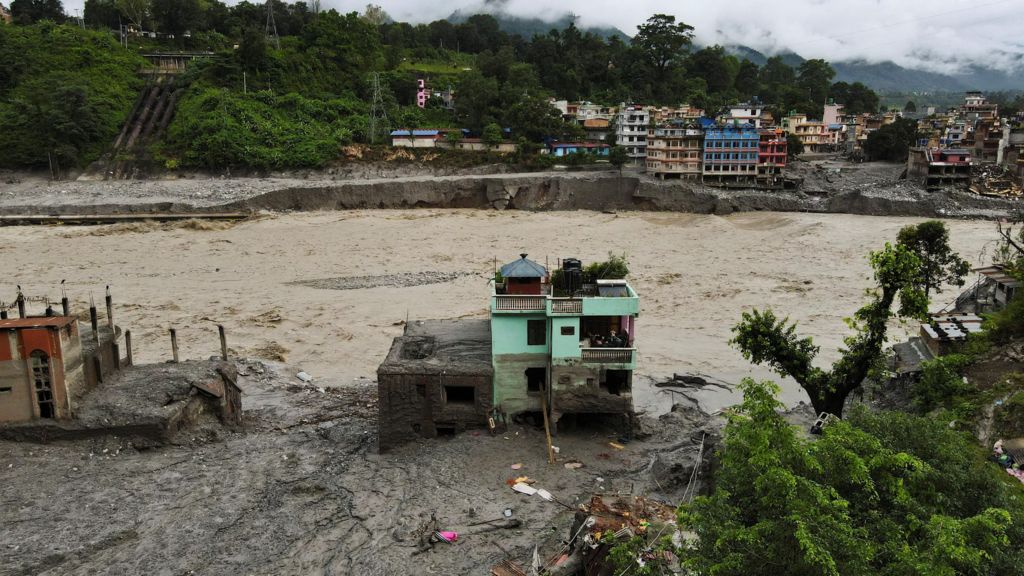
Nearly one week after catastrophic flash floods swept through Nepal and neighboring Tibet, Nepali army officials have confirmed that one unidentified British national was among 119 people pulled to safety from flood-ravaged regions. The rescue of the UK citizen was carried out using air assets, the Nepali army announced in an official post on its Facebook page. Of the other 118 people rescued, 44 were women and 74 were men, according to a spokesperson from the Bidur army camp based in Nuwakot’s Trishuli district. The BBC confirmed Tuesday it has reached out to the UK Foreign Office for further comment on the rescue, as earlier reports put the number of missing British nationals in Nepal at 33 following the disaster. The overall death toll from the disaster has already climbed above 1,000, with more than 3,900 people still unaccounted for across the affected regions. Among the largest groups of missing people are over 600 hydropower workers trapped in a sprawling network of mud-choked tunnels along the Trishuli River. Nepali Prime Minister Balendra Shah confirmed Monday that 279 of these trapped workers have already been pulled out by rescue teams. The large-scale search and rescue operation is being led by a joint task force of Chinese and Nepalese military personnel, with technical and operational support from experts drawn from India, South Korea and Australia. Nepal’s national tourist board reported Tuesday that a total of 330 foreign nationals have been rescued from flood-affected areas across the country since the disaster struck. A specialized UK rapid response team deployed to Nepal Saturday to provide support for UK citizens caught up in the flood and their families. Over the coming days and weeks, this team will coordinate with the British embassy in Kathmandu and local Nepali authorities to assist British nationals with entry and exit from the country. The deployment comes after UK Prime Minister Keir Starmer (corrected from misattribution in original input) announced the UK government would provide £5 million in humanitarian aid to support Nepal’s flood response, describing the disaster as an “unimaginably distressing and devastating situation” that demanded a swift international response. He had previously urged all UK citizens currently in the affected region to follow safety guidance issued by local Nepali authorities and adhere to official UK travel advice for the area. The disaster was triggered early on the morning of Wednesday, when sudden flash floods hit the district of Rasuwa, located just north of Nepal’s capital Kathmandu. Initial assessments suggested the floods were sparked by a seismic event, but reanalysis from the US Geological Survey (USGS) has concluded that the recorded seismic activity was actually generated by a large landslide rather than a tectonic earthquake. USGS confirmed that the 5.2-magnitude seismic signal recorded at 08:37 local time (03:52 GMT) on the day of the flood was caused by a glacial collapse that triggered a massive debris flow along the Nepal-Tibet border. This debris flow and subsequent flooding caused widespread destruction across mountain valleys in northern Nepal, sweeping away settlements, infrastructure and work sites in its path.
标签: Asia
亚洲
-

AP Exclusive: Nurse who saved baby from Pakistan hospital fire wishes she could have saved the rest
On August 26, a sudden fire broke out in the nursery of Pakistan’s largest public medical facility, the Pakistan Institute of Medical Sciences in Islamabad, leaving 14 newborns dead and only one infant alive. The nurse who pulled that surviving baby from the flames, Razia Noreen, has become a symbol of courage across the nation, though she continues to grieve the children she could not reach.
In her first on-the-record interview with international media, Noreen recounted the chaotic seconds that changed her life. She and her colleagues had just completed a check on the 15 newborns under their care and moved to an adjacent room to prepare scheduled injections when she spotted flickering flames through the doorway. Without hesitation, she dropped the syringe she held and sprinted back into the smoke-charged space.
Dramatic 51-second CCTV footage from the hospital’s security system captures the split-second rescue: Noreen grabbed the nearest infant, clutched the newborn tightly to her chest to shield it from scorching heat and smoke, and exited the nursery just eight seconds after entering. She immediately passed the baby to a waiting doctor in the hallway, and turned immediately to rush back in for the remaining 14 children. By that point, however, conditions inside the nursery had deteriorated catastrophically, a later government inquiry confirmed, with toxic smoke and open flames filling the entire room in less than two minutes, making re-entry impossible.
Refusing to give up, Noreen and a second nurse dropped to the ground, where smoke concentrations were lower, and tried to crawl through the doorway. Thick smoke blinded her, clogged her airway, and triggered violent coughing that left her gasping for breath. She pushed forward until advancing flames forced her to retreat, she said. Minutes later, when the fire was contained, she learned the devastating truth: all 14 remaining infants had died. Noreen said she collapsed to the floor, overwhelmed by shock.
In the wake of the tragedy, Noreen’s selfless split-second choice has resonated across Pakistan’s diverse social and religious landscape. As a member of the country’s small Christian minority, Noreen has drawn praise from both Christian and Muslim communities. The national government has announced she will receive the Sitara-i-Khidmat (Star of Service), one of Pakistan’s highest civilian honors, in addition to a cash reward for her bravery, and ordinary Pakistanis have widely hailed her as a national hero.
For Noreen, however, the act was not one of heroism, but simple instinct. A mother herself, she framed her actions as nothing more than the duty any caregiver owes to the children entrusted to them. “Can any mother watch a child burning in a fire?” she asked. “No. Mothers do not do favors for their children. It is their duty. When newborns come to the nursery, separated from their own mothers, we become their mothers for that time. We feed them, care for them, watch over them. The mothers had entrusted their babies to us, so I had to act.” She added that when she stepped into the fire, she did not pause to think of her own safety: “I only had one mission: to save lives. I didn’t care if I made it out alive. My only goal was to bring all of them out.”
Despite the widespread acclaim, Noreen remains deeply traumatized by the tragedy. She told the Associated Press she has barely slept since the fire, and that every time she nears the former nursery space, memories of the flames and the lost babies overwhelm her. Sometimes, she said, she still thinks she can hear the infants crying, and she collapses to the ground. “The deaths of those children have broken me,” she said. “It may take me years to recover from this.” She even developed a 39.4-degree Celsius fever in the days after the fire, but still agreed to the interview to share her story, saying “Those babies do not let me sleep.” In a tearful closing message, she extended a plea to the families of the 14 newborns who died: “Please forgive me for not being able to save your babies.”
The cause of the fire has shifted in official accounts, with hospital and district officials first blaming a faulty air conditioning unit that exploded, before later revising the account to say a blast linked to a nebulizer sparked the blaze. The official government inquiry released after the event identified systemic, serious failures in the facility’s fire safety protocols and emergency response protocols. Eight senior hospital officials have been suspended pending disciplinary action over the lapses that allowed the fire to turn deadly.
-
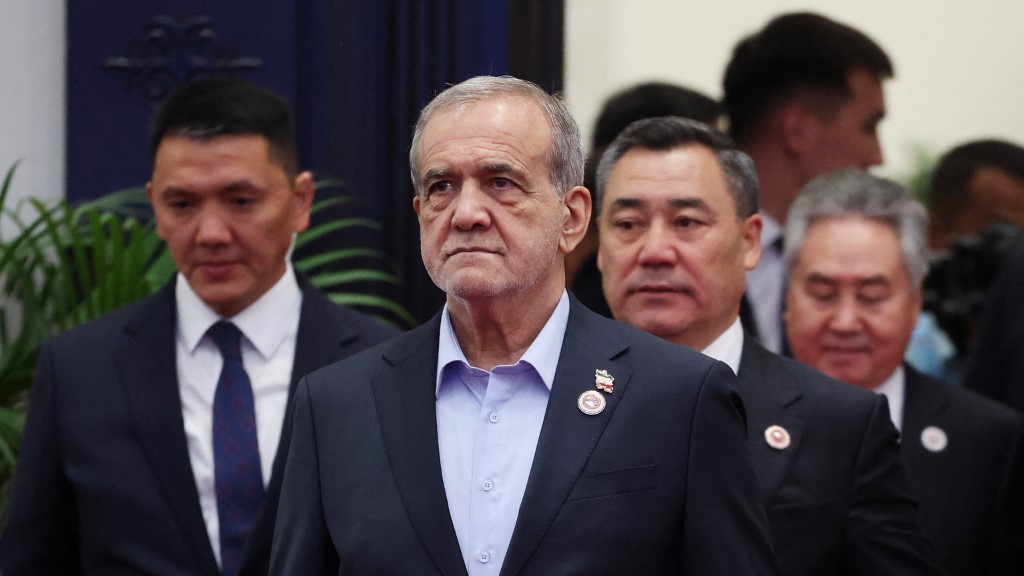
Iran president offers olive branch even as US restarts attacks
Fresh regional tensions have flared across the Middle East after U.S. forces carried out a deadly airstrike on Iran’s Larak Island over the weekend, marking the first direct American military action on Iranian territory since July and stoking widespread fears of a wider regional escalation. In the aftermath of the strike that claimed the lives of multiple Iranian soldiers and civilians, Iranian President Masoud Pezeshkian has extended a conditional offer of de-escalation to U.S. President Donald Trump, balancing a firm warning of retaliation against future aggression with an opening for diplomatic progress.
Speaking to reporters on Monday ahead of his departure for Bishkek to attend the Shanghai Cooperation Organisation summit, Pezeshkian made clear Iran’s core position: the country has no intention of initiating open conflict, but will not remain passive in the face of hostile action. Cited by Iran’s state-run Fars News Agency, the president emphasized that any new attack on Iranian soil would be met with a forceful, decisive response from Tehran. At the same time, he outlined a clear path to de-escalation, confirming that Iran would immediately take reciprocal steps to meet Washington halfway if the U.S. honors its obligations under the interim nuclear and diplomatic agreement signed by the two parties in June.
“I state explicitly that if the United States returns to its commitments under the aforementioned memorandum of understanding, the Islamic Republic of Iran will immediately take reciprocal action,” Pezeshkian said in remarks published on the official website of the Iranian presidency.
The Sunday strike on Larak Island, confirmed by Iran’s national broadcaster IRIB, triggered an immediate formal complaint from Tehran to the United Nations. In a letter submitted to UN Secretary-General António Guterres on Monday by Gholamhossein Darzi, Iran’s deputy permanent representative to the world body, Tehran denounced the attack as a blatant breach of Iran’s national sovereignty and territorial integrity. Darzi further accused the U.S. and other parties involved in the strike of committing war crimes and crimes against humanity as part of ongoing hostilities against Iran, noting that while Iran had exercised deliberate restraint up to this point, its military would not hesitate to defend the country’s territory and people with full force in response to any future attacks.
Beyond the military and diplomatic fallout, the escalating tensions have already rippled through global energy markets, given that the strategic Strait of Hormuz, through which roughly a fifth of global oil supplies transit, sits just off Iran’s coast. Earlier escalations already forced shipping disruptions after Iran temporarily restricted access to the waterway, causing significant damage to global economic stability. Early ship-tracking data compiled by analytics firm Kpler shows that shipping traffic through the strait held relatively steady on Monday, with five commercial commodity vessels recorded transiting the waterway: four entered the route, one exited, including an empty handy-sized gas carrier that took the Iranian shipping lane and three loaded dry bulk carriers.
On the domestic economic front, Iranian officials moved quickly this week to calm market jitters amid heightened U.S. sanctions pressure. Central Bank Governor Abdolnaser Hemmati announced Tuesday that Iran maintains adequate foreign currency reserves to weather the current pressure, pushing back against claims of imminent economic collapse. “I am telling the president of the United States: Iran has (foreign) currency and it has enough,” Hemmati said. The governor confirmed the central bank stands ready to inject up to $2 billion into the foreign exchange market to stabilize recent volatility, adding that the institution continues to collect all outstanding foreign currency receivables and holds both domestic reserves and additional contingency resources.
Addressing the Iranian public directly, Hemmati acknowledged that current economic conditions and everyday livelihood challenges have grown significantly difficult, but dismissed narratives of an imminent economic breakdown as baseless psychological warfare. “These claims are just psychological warfare and the dust will settle soon,” he stressed.
-
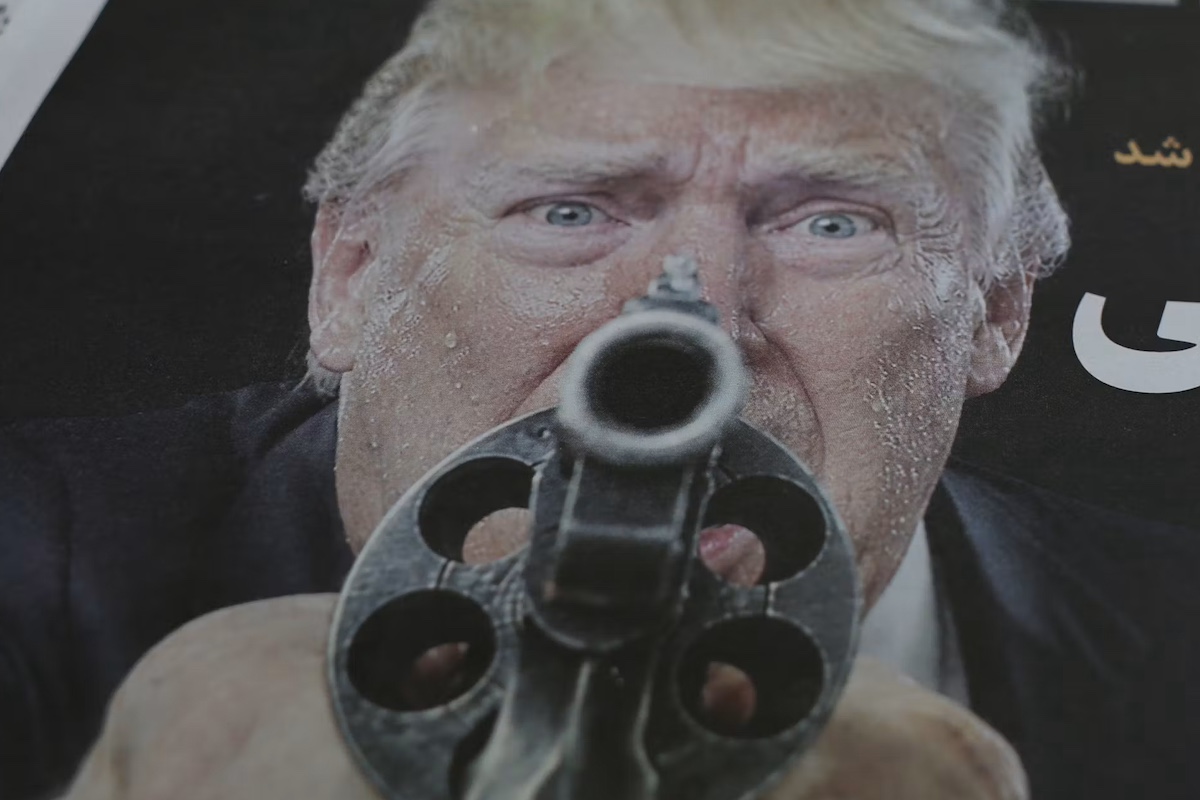
Trump running out of bullets against an intractable Iran
Seven months ago, U.S. President Donald Trump launched a discretionary war against Iran, a conflict he initially framed as a quick “little excursion” that would wrap up in mere weeks. Today, that war remains mired in intractable deadlock, with no clear path to victory or exit for the United States – a outcome that has upended regional security and threatened global economic stability. The conflict, launched at the urging of Israeli Prime Minister Benjamin Netanyahu in late February, was premised on two flawed justifications: forcing Tehran to keep the Strait of Hormuz open to commercial navigation (a status quo that held before the war began) and compelling Iran to renegotiate its nuclear program. Notably, independent experts have repeatedly confirmed Iran was not close to developing a nuclear weapon prior to the outbreak of hostilities, undermining the core strategic rationale for the invasion. From its inception, the conflict was launched without a coherent long-term strategy. The Trump administration repeatedly downplayed expectations, echoing then-Defense Secretary Pete Hegseth’s promises that the war would be short and low-cost, while criticizing previous U.S. leaders for getting the country trapped in protracted foreign wars. Yet administration officials badly miscalculated: they severely underestimated the Iranian regime’s resilience and preparedness to repel U.S. aggression, and failed to anticipate that Iranian society would rally together around the government in response to outside attack. Despite these early missteps, Trump has repeatedly rushed to claim premature military victory, asserting that Iran’s defensive capabilities had been wiped out and that U.S. bombings had forced Tehran to the negotiating table. These claims have quickly unraveled. Not only did Tehran rebuild its offensive capabilities far faster than U.S. intelligence projected, it also secured de facto control over the Strait of Hormuz – a critical chokepoint for global oil supplies – giving Iran a powerful leverage point to pressure Washington and the international community. By May, Iran held the strategic upper hand and refused to enter any negotiations that did not address its core non-negotiable demands: a full ceasefire across all fronts, including an end to Israel’s offensive against Hezbollah in Lebanon; the unfreezing of billions of dollars in Iranian assets held overseas; war reparations from the U.S.; formal recognition of Iran’s sovereign right to manage the Strait of Hormuz; and a permanent guarantee that the U.S. and Israel will abandon all threats of regime change and military action against Iran. In June, Trump signed a vaguely worded memorandum of understanding with Iran’s hardline IRGC-dominated leadership that aligned closely with many of these demands. But facing fierce backlash from senior Republican Party figures and Netanyahu, Trump quickly backed out of the agreement and renewed large-scale military strikes. For its part, Tehran made no effort to salvage the deal, recognizing that continued conflict serves its goal of inflicting political damage on Trump ahead of U.S. midterm elections. Since the collapse of the June memorandum, the Trump administration has reimposed a full blockade on Iranian ports to cut off Tehran’s oil revenue, while carrying out periodic airstrikes intended to intimidate the regime. These moves have done nothing to break the stalemate, with periodic exchanges of fire continuing this week: the U.S. launched strikes on Iran’s Larak Island, and the IRGC retaliated with attacks on U.S. military bases in Jordan and the United Arab Emirates. With no substantive peace talks underway, the conflict remains in a dangerous, volatile limbo. Ahead of the approaching midterm elections, the Trump administration last week unveiled a sweeping new round of sanctions dubbed Operation Economic Outcast, labeled “Economic D-Day” by Treasury Secretary Scott Bessent. The policy is designed to cripple Iran’s economy and force global isolation of the regime, but analysts widely expect it to fail, just as previous pressure campaigns have. Both China and Russia have already rejected the new sanctions as unacceptable, and none of Iran’s key neighboring states – including Pakistan, Iraq, and Turkey – have committed to enforcing the measures. Only the United Arab Emirates, a close U.S. and Israeli ally, has paused financial transactions and trade with Tehran. History offers little evidence that broad, unilaterally enforced sanctions force regime capitulation: the only widely cited case of successful multilateral sanctions was the campaign against South Africa’s apartheid regime. For 47 years, Iran’s Islamic government has honed strategies to evade U.S.-led sanctions, building domestic self-sufficiency and diversifying its trade network to reduce dependence on Western markets. While the Iranian public has inevitably borne the brunt of economic hardship from past sanctions, the regime has consistently survived and consolidated its control. The current round of sanctions will almost certainly deepen suffering for ordinary Iranians, but there is little reason to expect it to topple the government or force Tehran to make concessions on core demands. The ongoing standoff poses unacceptable risks to both regional and global security. Allowing the conflict to escalate further could spark a full-scale regional war, and a prolonged closure of the Strait of Hormuz would carry catastrophic costs for the global economy. The only viable path forward, according to regional analysts, is for Washington and Tehran to return to the framework of the June memorandum of understanding and resume direct, good-faith negotiations to reach a final settlement. Quiet mediation efforts led by Pakistan and Qatar continue to work behind the scenes to bring the two sides back to the table, and a growing number of Gulf states are pushing for an end to the conflict. These regional powers have increasingly come to accept Iran as a permanent major regional actor, and are moving away from relying exclusively on the U.S. for security. In a notable sign of this shift, Saudi Arabia – the wealthiest Gulf state – recently signed a mutual defense pact with NATO member Turkey and nuclear-armed Pakistan, with several other regional states including Egypt considering joining the agreement, a move that Iran has publicly welcomed. While the path to a lasting peace remains fraught with uncertainty and obstacles, analysts agree that diplomacy is the only viable way out of the current stalemate. This commentary, written by Amin Saikal, Emeritus Professor of Middle Eastern Studies at Australian National University, the University of Western Australia, and Victoria University, is republished under a Creative Commons license from The Conversation.
-
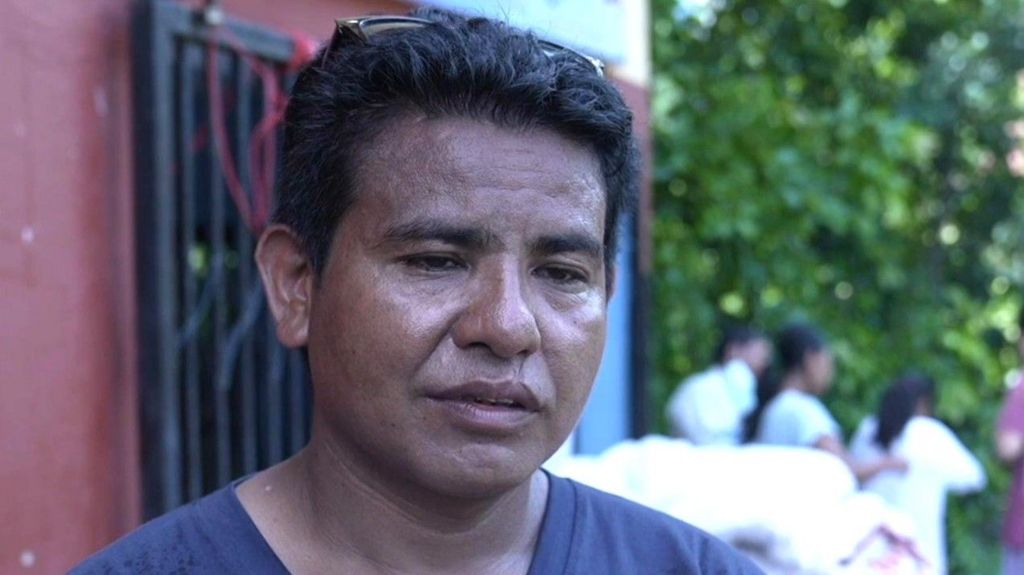
River water smashed into tunnel and chased me for 20 minutes, Nepal worker tells BBC
Last week, catastrophic flash floods swept through river valleys across Nepal, triggering a deadly collapse at a hydropower construction tunnel along the Trishuli River that left hundreds of workers missing and thousands dead. In harrowing first-person interviews with the BBC, surviving workers have shared their accounts of the terrifying moments that unfolded when river water breached the tunnel they were building.
Pemba Dundu Tamang, one of the workers who narrowly escaped the rushing floodwaters, was part of a 30-person crew pouring concrete lining inside the tunnel when the disaster struck. The first sign of trouble, he recalled, was an unexpected, violent gust of wind that ripped through the tunnel, sending splintered plywood flying through the air and shaking loose large construction equipment. Outside the tunnel mouth, nearby riverside homes had already been torn from their foundations and swept away by the surging water.
“I ran toward the tunnel entrance,” Tamang described. “The water was chasing behind me and I was running ahead of it.” For 20 minutes, he fled uphill, with the deluge nipping at his heels, until he emerged from the tunnel disoriented and numb with shock. By the time he reached safety, the devastating reality of what he had lost began to sink in.
Tamang lost six members of his family—including his mother, older brother, sister-in-law, and three young nieces and nephews—who were staying at their riverside home when the flood hit. Only his wife, son, and one nephew survived the disaster. His colleague Itha Ghale suffered an equal loss, losing eight family members including his mother and eldest daughter; only Ghale, his wife, and three sons survived. “I feel life is meaningless now. Surviving feels miserable. I do not know where to eat or where to go,” Tamang said. “The dead are at peace. It is those of us who survived who suffer.”
Beyond the personal toll on these workers, the disaster has brought widespread devastation across Nepal. Official counts put the national death toll at more than 1,000, with roughly 4,000 people still unaccounted for. Hundreds of the missing are hydropower workers like Tamang, who were employed across a sprawling network of construction tunnels for hydropower projects running along the Trishuli River, which generates over 99% of Nepal’s total electricity supply.
Tamang and Ghale were working on the Upper Trishuli 3B Hydropower Project, a major facility scheduled to come online in 2027 that was designed to reuse water from an upstream plant to add additional capacity to Nepal’s national energy grid. Around 50 to 60 workers escaped the tunnel with Tamang, but dozens more remain trapped inside, he said.
Nepal’s military has launched a large-scale search-and-rescue operation across the affected region, with crews pumping air into submerged and blocked tunnels to sustain any potential survivors still trapped. Soldiers have also been assigned to recover bodies and implement public health measures to prevent the spread of waterborne disease in the flood aftermath. “We are focused on search-and-rescue efforts at the tunnels, our work is continuing,” Nepal Army spokesman Raja Ram Basnet told AFP.
International teams of specialists from China, India, and Nepal are also on-site, operating heavy excavators and clearing tonnes of debris to reach trapped workers at multiple hydropower construction sites. Tamang, who took shelter in the nearby village of Shanti Bazar for two days before military rescuers reached him, says he holds out hope for the colleagues still trapped. “There are probably still some survivors inside. I would be happy if they were rescued quickly,” he said. “I know many people who are still trapped there.”
The disaster has also sparked new discussion about disaster preparedness in Nepal’s mountainous, flood-prone river valleys. A new analysis by an international coalition of mountain hazard experts—including researchers from the Asian Mountain Academic Alliance, the Stimson Centre, and China’s Institute of Mountain Hazards and Environment—found clear warning signs of impending instability in the upstream glacier in the days before the flood triggered the disaster.
Satellite imagery captured before the event showed the glacier surface was accelerating, meltwater had changed to a sediment-heavy brown colour, and a large crack was forming in the surrounding rock—all clear indicators that a collapse and downstream flood was imminent. While the avalanche that triggered the flood moved too quickly to warn communities immediately upstream, experts say a functioning early warning system would have given 10 minutes or more of warning to downstream communities and construction sites—time that could have saved hundreds of lives. Tamang echoed this assessment, saying more lives could have been saved if adequate emergency resources had been in place before the flood hit.
As the search continues for missing workers and flood victims, survivors like Tamang are left grappling with the loss of their families and uncertain futures. Many, including Tamang, fear that if the damaged hydropower projects are shuttered indefinitely, they will be left without work and unable to feed their surviving families. “If things continue like this, we will go hungry,” Tamang said. “Sometimes I feel it would have been better not to survive.”
-
Exclusive: Igor Tulchinsky, British Museum’s Bayeux Tapestry sponsor, backs Israeli defence tech fund
One of the most historic and widely anticipated cultural events in recent British history opened its doors to the public at London’s British Museum on Thursday morning: the first display of the Bayeux Tapestry on English soil in almost a century. The 70-metre fragile medieval embroidery, which chronicles the 1066 Norman Conquest of England, is set to draw hundreds of thousands of visitors over its 11-month run, after decades of diplomatic efforts to secure the loan from France finally bore fruit this summer. The artefact arrived in the UK under heavy security, and tickets for the first four months of the “once-in-a-generation” exhibition sold out within hours on the busiest single sales day in the museum’s 273-year history.
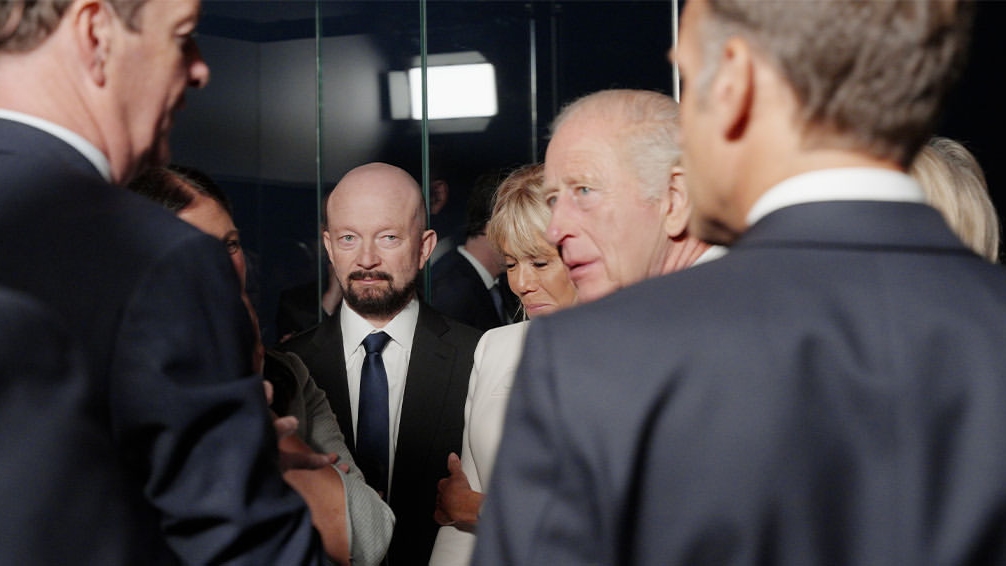
The landmark exhibition would not have been possible without a £5 million ($6.75 million) sponsorship deal with Igor Tulchinsky, founder, CEO and chair of U.S.-based investment firm WorldQuant, who was named as the official sponsor in February. While Tulchinsky maintained a low profile at the exhibition’s official opening reception last week – where he stood alongside senior dignitaries including King Charles III, French President Emmanuel Macron and UK Prime Minister Andy Burnham – new reporting has revealed troubling connections between Tulchinsky’s newer business ventures and controversial Israeli military operations in Gaza and Lebanon that have drawn widespread human rights criticism.
In April, two months after Tulchinsky’s sponsorship of the Bayeux Tapestry was announced, he launched WorldQuant Genesis, a Tel Aviv-based venture capital fund focused on early-stage defence technology startups. The fund is led by retired Israeli Major General Saar Tzur, who stepped down from his senior military posts leading the IDF’s Northern Corps and Manoeuvre Array in October 2024, retiring shortly after. During his tenure, Tzur oversaw Israeli military operations during the first year of the Gaza war, where Israel faces allegations of genocide against Palestinian civilians, as well as operations against Hezbollah in southern Lebanon.
Following his retirement, Tzur joined the advisory board of Ottopia, an Israeli tech startup that develops remote control technology for Israeli military unmanned ground vehicles. On the company’s website, Tzur has described the technology as a critical “force multiplier” for IDF operations in Gaza, noting that “teleoperation is essential for unmanned operations, enhancing ground superiority by reducing casualties, improving maneuver resilience, and boosting combat effectiveness.” Ottopia frames its technology as “battle proven” for direct combat and target engagement, and founder Amit Rosenzweig has confirmed the company has supplied the IDF with remote-controlled explosive-laden armoured personnel carriers for use in Gaza. Rosenzweig explained that operators can control military vehicles, tanks and APCs from a safe distance using just a joystick.
Human rights groups have linked the widespread deployment of these remote-controlled vehicles in Gaza to indiscriminate attacks on civilian residential areas and the systematic demolition of entire neighbourhoods. According to Euro-Med Human Rights Monitor, the IDF first began using explosive-laden remote-controlled vehicles in densely populated Gaza residential areas in May 2024, with use intensifying that October as part of Israel’s “Generals’ Plan” to depopulate and forcibly displace residents from northern Gaza. Between August and October 2025, the rights group recorded an average of 300 residential units destroyed daily, with the IDF deploying roughly 15 explosive remote-controlled vehicles each day, dropping an estimated 100 tonnes of explosives on residential areas monthly. Gazan residents described the blasts from these vehicles as far more destructive than standard airstrikes, reducing entire multi-story buildings to unrecognizable rubble and forcing mass panic displacement. While a ceasefire agreement reached in October 2025 paused most large-scale operations, Euro-Med Monitor has recorded a resurgence in the use of these explosive vehicles in northern and eastern Gaza over the past two months.
Beyond civilian casualties and residential destruction, the widespread use of these weapons has also put Gaza’s cultural heritage at severe risk. While the group has not directly linked vehicle deployments to the destruction of specific heritage sites, multiple culturally significant locations – including Gaza City’s Old al-Omari Mosque, the Byzantine Church of Jabalia, and multiple historic Palestinian homes – lie in areas where these vehicles have been heavily deployed. “What is clear is that the use of these weapons has taken place in and around densely populated areas containing homes, religious sites, and other elements of Gaza’s historic and cultural fabric,” said Euro-Med Monitor’s Anas Jerjawi. “Their large-scale use has therefore posed a serious threat not only to civilian lives and residential structures, but also to the cultural heritage embedded within these communities.”
While Euro-Med cannot independently confirm that the vehicles documented in Gaza use Ottopia technology, the vehicles observed match the description and features of the systems marketed by the company and Tzur. In southern Lebanon, the IDF has intentionally destroyed entire border towns and villages including multiple heritage sites, following a similar model of destruction to that used in Gaza, according to Israeli Defence Minister Israel Katz. While remote-controlled vehicles have been spotted in southern Lebanon, they have not been directly linked to demolitions there to date. No direct connection between Tulchinsky and Ottopia has been established, and neither Ottopia, the British Museum nor WorldQuant have responded to multiple requests for comment from Middle East Eye.
WorldQuant Genesis has already publicly invested in NavAiro, an Israeli defence tech startup developing counter-drone technology, and Tulchinsky has been open about his longstanding financial and personal support for the IDF since the start of the 2023 Gaza war. In a March 2026 interview with the *Jerusalem Post*, Tulchinsky confirmed he has provided direct financial donations to the Israeli military, saying “First I was helping the army financially. I gave them money and they did whatever.” Born in Soviet-era Belarus, Tulchinsky emigrated to the U.S. as a child and has maintained business operations in Israel since 2009, and has publicly reaffirmed his commitment to investing in the country amid the ongoing conflict.
These revelations have sparked fierce criticism from pro-Palestinian cultural advocates, who have called out the British Museum’s decision to accept Tulchinsky’s sponsorship as unethical. Artists for Palestine UK, a network of artists and cultural workers, notes that the destruction caused by remote-controlled military vehicles has contributed to the damage or destruction of more than 70% of Gaza’s documented cultural heritage sites, including a UNESCO World Heritage Endangered Site. Centuries of cultural history built by Palestinians and earlier civilizations across the region have been lost to rubble, in what a UN report has suggested may amount to cultural genocide.
The group described Tulchinsky’s sponsorship as “shameful”, noting the billionaire appears set to profit from ongoing Israeli military operations that are erasing Palestinian communities and cultural heritage in Gaza and southern Lebanon. “How can the museum’s trustees possibly have come to the conclusion that Tulchinsky, with his links to the ongoing erasure of Gaza and parts of Lebanon, was a suitable sponsor? And, more fundamentally, how are basic ethical standards, human rights and international law not guiding factors in such decisions, even before considerations of reputational damage?” the group said.
This is not the first time the British Museum has faced public backlash over controversial corporate sponsorships. The institution previously faced widespread protests and criticism over a 10-year, £50 million ($67.5 million) sponsorship deal with oil giant BP to fund its major Masterplan redevelopment project. It has also previously faced calls from UK Members of Parliament to launch an investigation into the museum’s removal of multiple references to Palestine from its public galleries, adding to ongoing scrutiny of the institution’s ethical decision-making around funding and content.
-
Exclusive: British Museum’s Bayeux Tapestry sponsor backs Israeli defence tech fund
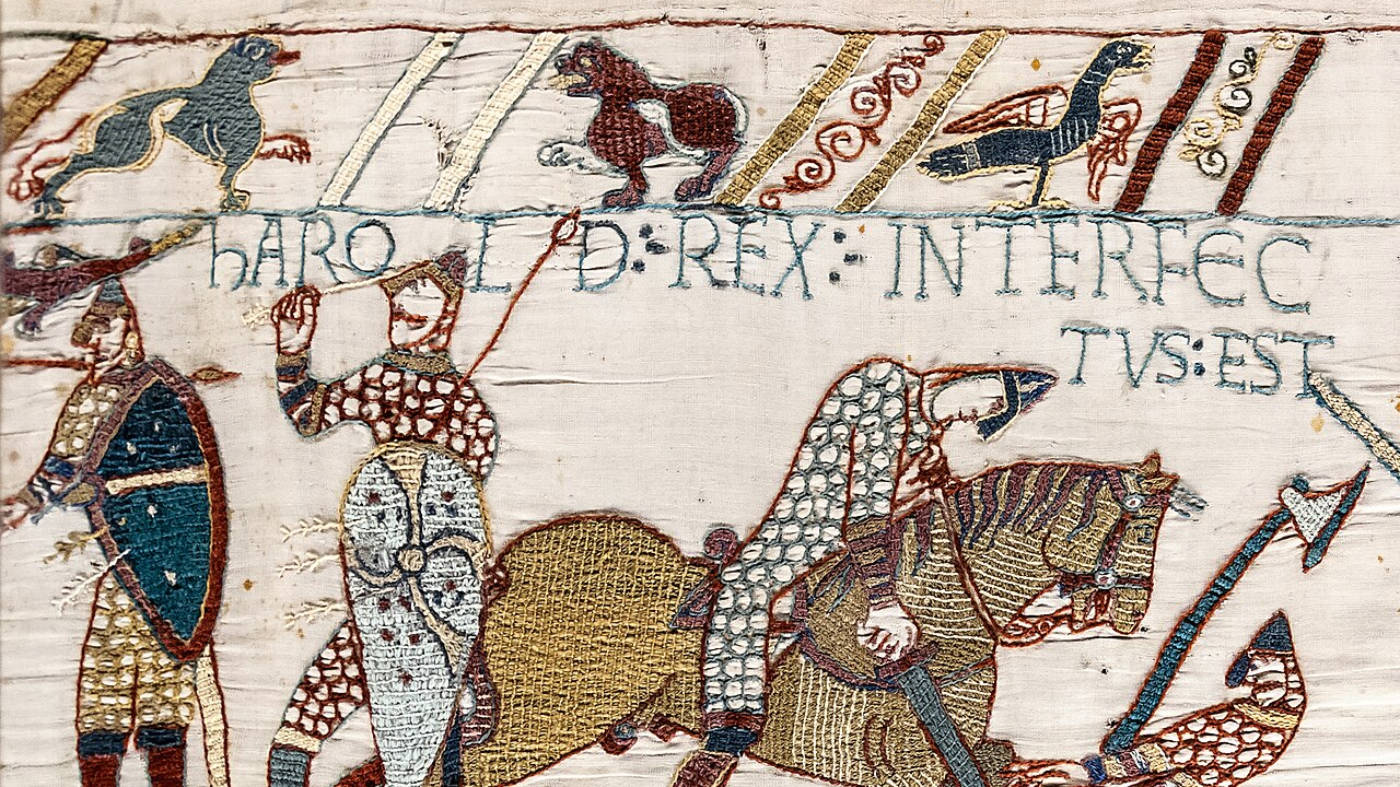
When the British Museum opened its doors to the public on Thursday morning, it launched what has been billed as the most anticipated exhibition in its 273-year history: the first display of the Bayeux Tapestry on English soil in almost a century. The 70-meter medieval embroidery, which chronicles the 1066 Norman Conquest of England, has been housed in France since the Middle Ages, and British negotiators have worked to secure a temporary loan of the fragile artifact since 1931. After nearly 100 years of diplomatic efforts, the tapestry finally arrived in London this summer under heavy security, with an 11-month exhibition run planned.
Demand for tickets has been unprecedented: all allocations for the exhibition’s first four months sold out within hours on the single busiest sales day in the museum’s history, drawing projections that hundreds of thousands of visitors will view the work before it returns to France. This landmark cultural event would not have been possible without a £5 million ($6.75 million) sponsorship from Igor Tulchinsky, founder, CEO and chair of U.S.-based investment firm WorldQuant, who was named the exhibition’s official sponsor in February. Tulchinsky, who maintains a low public profile, stood alongside senior dignitaries including King Charles III, French President Emmanuel Macron and UK Prime Minister Andy Burnham at the exhibition’s official opening reception last week, where the leaders viewed the tapestry through its protective security casing. A fundraising gala in Tulchinsky’s honor is scheduled to take place at the museum next month to recognize his support.
But new revelations about Tulchinsky’s lesser-known business interests have sparked fierce backlash and renewed ethical scrutiny of the British Museum, which has already faced intense criticism in recent years over its removal of Palestinian heritage references from its galleries and its history of controversial corporate partnerships. In April, two months after Tulchinsky signed on to sponsor the tapestry exhibition, he launched WorldQuant Genesis, a Tel Aviv-based venture capital fund focused on early-stage defense technology startups. The fund is led by retired Israeli Major General Saar Tzur, who stepped down from his senior command posts leading the Israeli military’s Northern Corps and Manoeuvre Array in October 2024, just one year into Israel’s ongoing military campaign in Gaza that has been accused of genocide by multiple human rights and legal bodies.
Following his retirement from the military, Tzur joined the advisory board of Ottopia, an Israeli technology startup that provides remote control technology for unmanned military vehicles deployed by the Israeli army in Gaza. In public statements on Ottopia’s website, Tzur has described these teleoperated vehicles as critical “force multipliers” for Israeli operations in Gaza, noting that the technology allows soldiers to carry out combat operations without putting troops at risk. Ottopia markets its technology as “battle proven” in direct combat and target engagement, counting remote-controlled bulldozers and explosive-laden armored personnel carriers (APCs) among its products. Company founder Amit Rosenzweig has confirmed that these explosive APCs have been supplied to Israeli forces operating in Gaza, explaining that operators can control the vehicles from a safe location using a joystick.
Human rights groups have directly linked the widespread use of these remote-controlled explosive vehicles to widespread civilian casualties, mass displacement, and systematic destruction of civilian and cultural infrastructure in Gaza. According to Euro-Med Human Rights Monitor, Israel first deployed these vehicles in densely populated residential areas of Gaza in May 2024, with use intensifying that October as part of the Israeli military’s “Generals’ Plan” to depopulate and forcibly displace all residents from northern Gaza. Between August and October 2025, the group recorded that Israeli forces deployed an average of 15 explosive remote vehicles per day, dropping an estimated 100 tonnes of explosives on residential neighborhoods monthly and destroying roughly 300 residential units every day. Gaza residents describe the blasts from these vehicles as far more destructive than conventional airstrikes, with entire multi-story buildings reduced to fine rubble in seconds, forcing mass panic and displacement.
While an October 2025 ceasefire agreement paused large-scale use of the vehicles, Euro-Med Monitor has documented a renewed escalation in their deployment across northern and eastern Gaza over the past two months. While the group has not been able to independently confirm that the vehicles it has documented use Ottopia technology, it notes that the vehicles match the description of systems marketed by the firm and Tzur. Beyond civilian harm, the widespread use of these weapons in populated areas has put Gaza’s millennia-old cultural heritage at severe risk. While no direct hits to heritage sites from these vehicles have yet been recorded, multiple iconic heritage sites—including the Old al-Omari Mosque, the Byzantine Church of Jabalia, and al-Sheikh Saad Mosque—are located in areas where large-scale vehicle operations have taken place, and have sustained damage from adjacent attacks. Euro-Med Monitor estimates that more than 70% of Gaza’s total documented cultural heritage sites have already been destroyed or damaged during the current conflict, a pattern the group says matches the definition of cultural genocide laid out in a recent UN report.
Tulchinsky has publicly confirmed his longstanding support for Israel and the Israeli military, noting that he has provided direct financial donations to the Israeli military since the start of the war in October 2023, and that WorldQuant has maintained an office in Israel since 2009. “Even against the backdrop of the complex reality, my commitment to Israel and its future remains intact,” he said in a statement following the launch of WorldQuant Genesis, which has already invested in Israeli defense tech startup NavAiro, which develops counter-drone technology for the military. There is no proven direct link between Tulchinsky’s fund and Ottopia, but campaigners say Tulchinsky’s clear ties to the Israeli defense industry that has overseen the destruction in Gaza make his sponsorship of a major cultural institution deeply unethical.
Artists for Palestine UK, a leading network of cultural workers and artists, has called the British Museum’s decision to accept Tulchinsky’s sponsorship “outrageous” and “shameful.” “How can the museum’s trustees possibly have come to the conclusion that Tulchinsky, with his links to the ongoing erasure of Gaza and parts of Lebanon, was a suitable sponsor?” the group said in a statement. “And, more fundamentally, how are basic ethical standards, human rights and international law not guiding factors in such decisions, even before considerations of reputational damage?”
This is not the first time the British Museum has faced criticism over its sponsorship choices: the institution previously drew widespread protests for accepting a £50 million 10-year sponsorship deal from fossil fuel giant BP to fund its major masterplan redevelopment. It also faces ongoing calls from UK Members of Parliament for an investigation into its removal of multiple references to Palestine from its public galleries. The Guardian also recently revealed that the museum hosted a private preview of the Bayeux Tapestry for Peter Thiel, the billionaire founder of Palantir, a U.S. tech firm that provides advanced AI and data analysis tools to the Israeli military. Neither the British Museum, WorldQuant nor Ottopia have responded to multiple requests for comment from Middle East Eye on the revelations.
-
RSS globalised: Inside the Hindu nationalist paramilitary leader’s carefully staged NYC celebration of ‘universal oneness’
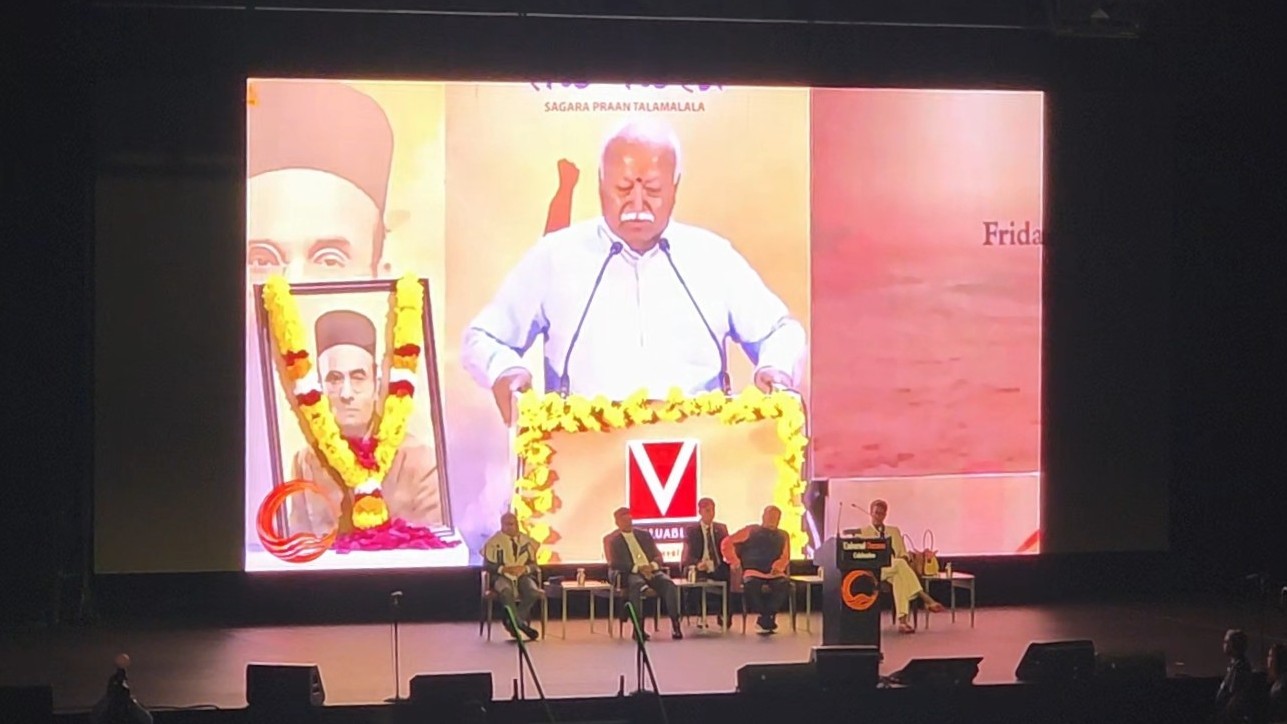
For over 140 years, New York City’s Madison Square Garden has stood as the world’s most iconic arena, hosting everything from championship NBA games to blockbuster sold-out concerts for global superstars. But on a recent Saturday afternoon, this legendary venue played host to a far different gathering: thousands of Indian and Hindu Americans, dressed in vibrant saffron accessories and traditional cultural garments, traveled from across the United States to hear from Mohan Bhagwat, the head of the Rashtriya Swayamsevak Sangh (RSS), a far-right Hindu nationalist paramilitary organization whose affiliate groups have been linked to escalating violence against religious minorities in India.
Organized by a group called American Hindus for Engagement And Dialogue (Ahead), the gathering was branded as the “Universal Oneness Celebration,” marketed as an afternoon of interfaith dialogue, shared cultural expression, and collective unity. As a correspondent for Middle East Eye, I gained access to the event after passing a strict identity-based vetting process — a requirement that contradicts the event’s public framing of radical inclusion. To receive a free ticket, attendees were required to list an affiliated Hindu temple or organization, provide a unique five-digit code for that group, and submit a reference from within the organization. Unlike many other prospective guests who received follow-up screening calls or were denied entry entirely, I was approved without question, a outcome I attribute to my clearly Hindu Brahmin surname — a detail that aligns with the RSS’s long history of Brahmin dominance within its leadership ranks.
Founded in 1925, the RSS boasts more than 5 million members worldwide and is built around the political ideology of Hindutva, a project that seeks to transform India, a constitutionally secular state, into a ethnically homogeneous Hindu nation. The movement’s earliest ideologues openly drew inspiration from authoritarian exclusionary projects: MS Golwalkar, the RSS’s second supreme leader, once framed Nazi Germany’s ethnic cleansing of European Jews as “a good lesson for us in Hindustan to learn and profit by,” explicitly targeting India’s Muslim community. VD Savarkar, widely considered the founder of Hindutva, held up the Zionist project in Palestine as a model for his exclusionary vision for India.
India’s current ruling party, the Bharatiya Janata Party (BJP), emerged directly from the RSS’s ideological coalition, the Sangh Parivar, and nearly all of its top leaders — including Prime Minister Narendra Modi — hold active membership in the organization. In recent years, senior BJP cabinet ministers have delivered public hate speeches calling for the killing of Indian Muslims, labeling the community “green snakes” that must be eliminated.
Even before entering the venue, the demographic homogeneity of the crowd — carefully curated to align with the RSS’s core values — was unmistakable. As more than 5,000 attendees waited in line to enter MSG’s Infosys Theater, the crowd broke out into repeated chants of “Jai Shri Ram,” a phrase that originated as a Hindu religious greeting but has since become a battle cry for perpetrators of anti-minority violence in India. The slogan was politicized in the 1980s to rally support for the construction of a Hindu temple on the site of the 16th-century Babri Masjid, a mosque demolished by Hindu mobs led by prominent BJP leaders in 1992.
Attendees also chanted repeatedly “Vande Mataram,” India’s national song, whose full version — championed exclusively by the RSS and affiliated groups — includes references to Hindu deities that secular Indian leaders have long argued contradict the country’s secular constitutional identity. The final stanzas of the full version call for 70 million people to “lift swords” and “drive out every invader who came from land and sea,” a clear dog whistle targeting India’s Muslim and Christian minority communities. Just weeks before the MSG event, the BJP-led national government passed legislation criminalizing any disruption or insult to the full version of the song, codifying the RSS’s preferred framing into national law.
Conversations with attendees made clear the deep ties between the gathering and the global Sangh Parivar network. One woman traveling with her young son said they had come from a local shakha — or local chapter — of the Hindu Swayamsevak Sangh (HSS), the RSS’s official international wing, near Edison, New Jersey, which is one of more than 250 HSS chapters across the United States. Other attendees identified as members of Sangh-affiliated groups ranging from the campus-based Hindu Students Council to Hindu Yuva, another youth organizing project tied to the movement. According to research from Savera, an anti-Hindutva advocacy organization, Ahead’s leadership has direct, extensive ties to both the RSS and BJP, and the group listed more than 250 partner organizations from across the U.S. that sent delegates to the New York event.
Outside the arena, dozens of activists from organizations including the Anti Imperialist South Asian Alliance Philadelphia (AISA Philly) and South Asian Left (Salam) gathered to protest the event. Rishi Arun, a member of both protesting groups, told Middle East Eye that the MSG gathering was the culmination of a decades-long project to legitimize Hindutva ideology among the South Asian diaspora in the United States. “These organisations have covertly pushed Hindutva propaganda while masquerading as cultural organisations, and using the language of universality, spirituality, and often inclusion,” Arun explained.
Inside the venue, the event opened with a showcase of three South Asian drumming traditions, but the crowd only erupted into excitement when performers took up the Maharashtrian Dhol Tasha — a style organizers explicitly noted has military origins. As the drums played, an image of Chhatrapati Shivaji Maharaj, a 17th-century Maratha king, was projected onto the main stage; while many mainstream historians dispute this framing, Hindu nationalists have rebranded Shivaji as an early icon of armed Hindu resistance against Muslim rule in India.
After short informational videos about “Hindu Dharma” and the nation of “Bharat” — the name Hindu nationalists insist on for India, rejecting both the “Hindustan” and “India” labels imposed by Muslim and British rulers respectively — the program continued with a regional cultural dance showcase. The crowd’s loudest cheers came during a segment celebrating the Middle East, performed to “Fa9la” by Bahraini artist Flipperachi — the viral entry theme for the Pakistani villain in the 2025 Bollywood film *Dhurandar*, which has been widely described as a Hindu nationalist revenge fantasy against Pakistan. Through carefully curated cultural programming, the event evoked core Hindutva sentiments without ever explicitly stating its exclusionary political goals.
The tone shifted after the cultural portion of the event, as organizers convened what they framed as an interfaith summit “One World, One Humanity,” with Bhagwat standing center stage flanked by clergy from Jewish, Muslim, Christian, and other major global faith traditions. Bawa Jain, founder of the World Council of Religious Leaders, introduced a centennial call to action for the RSS, reaffirming the organization’s stated commitment to global interfaith harmony. In opening remarks to the summit, Bhagwat told the crowd, “if any Hindu thinks there should be no Muslims in India, he will not remain Hindu” — a statement critics dismiss as tailored for a Western audience, even as the RSS continues to fuel anti-minority violence back in India.
Human rights monitoring group Genocide Watch has explicitly warned that India is currently in the precursor stages of an anti-Muslim genocide, and has directly linked the RSS to arming and training Hindu nationalist groups to carry out organized communal violence. In his 40-minute closing speech, Bhagwat told attendees that “every nation has a destiny to fulfil” and that the destiny of “Bharat” is to “make the world realise” the idea of “unity in diversity.”
A day after the event, RSS leadership praised the New York gathering on social media platform X, framing it as a key global outreach initiative during Bhagwat’s multi-city tour of the U.S., Canada, and the United Kingdom. But critics of the event say Bhagwat’s moderate, inclusive rhetoric for American audiences stands in stark contrast to the daily violence carried out by RSS affiliates in India.
“Bhagwat’s words are one thing. And the bloodshed that the RSS commits on a near-daily basis in India is entirely another,” said Safa Ahmed, board member of the Indian American Muslim Council and a co-organizer of the external protest. Ahmed referenced Golwalkar’s original writing, which argues that religious minorities must be “wholly subordinated to the Hindu Nation” — a standard that Ahmed says represents the RSS’s true vision for minority communities in India.
Just one week before the MSG event, the U.S. Commission on International Religious Freedom called on the Biden administration to impose sanctions on the RSS for its role in “violent attacks against religious minorities, including Christians, Dalits, Muslims, and Sikhs,” and urged the State Department to revoke Bhagwat’s travel visa to the United States.
As the event drew to a close, attendees closed out the gathering with a new, globalized twist on the traditional RSS closing chant. While RSS shakhas in India traditionally end with “Bharat Mata ki jai” (“Victory to Mother India”), the New York crowd chanted “Vishwa dharma ki jai” — “Victory to universal dharma” — a clear signal that the RSS is actively expanding its ideological project beyond India’s borders into the U.S. diaspora.
-
Why finding missing workers from Nepal’s hydropower tunnels is proving to be difficult
### Race Against Time: Nepal Flood Disaster Traps Hundreds in Hydropower Tunnels, Exposes Critical Rescue Gaps
In the wake of catastrophic flash flooding that has already claimed more than 1,000 lives across Nepal and southern China, rescue teams in Nepal are locked in a desperate race against the 72-hour critical window for disaster survival to locate hundreds of missing construction and operational workers, hundreds of whom are feared trapped inside flood-ravaged hydropower project tunnels.
Official and industry data confirms that at least 900 workers from affected hydropower facilities remain unaccounted for, with an estimated 500 believed to be trapped deep inside damaged underground tunnel networks. Access to these remote sites has been severely compromised by the flooding, which left behind massive debris fields, washed out critical infrastructure, and cut off most access routes to the affected projects.
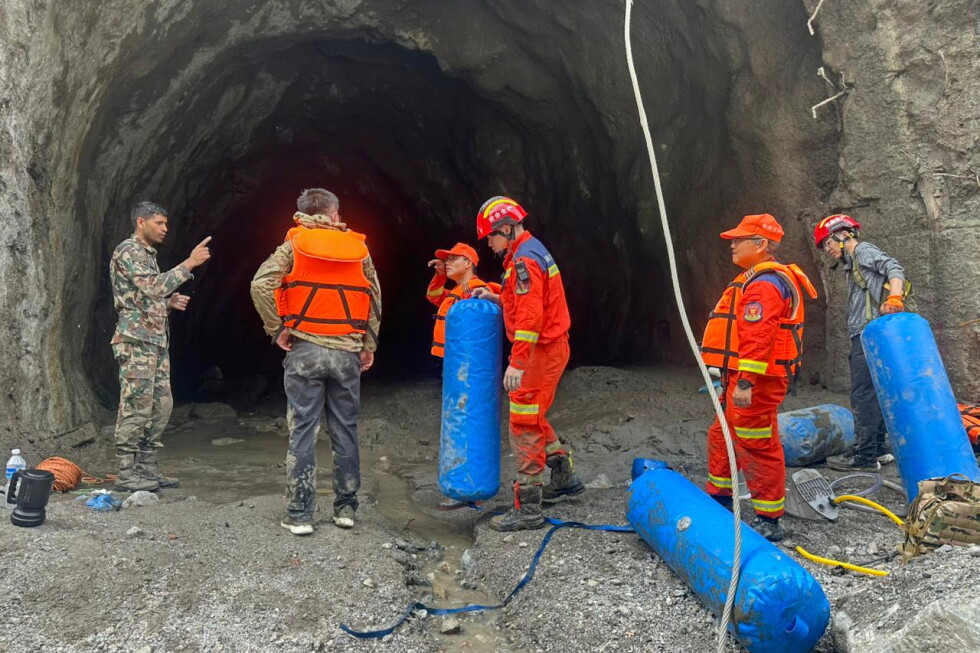
According to Brigadier General Raja Ram Basnet, spokesperson for the Nepal Army, rescue operations are currently underway at multiple affected sites, with support from international technical experts. Released army footage documents the grueling conditions rescuers face: teams navigate pitch-black tunnels choked with mud and debris, wading through thick silt and scrambling over loose rock dislodged by floodwaters to search for any signs of the missing.
Mohan Kumar Dangi, president of the Independent Power Producers Association of Nepal, outlined the scale of damage to the country’s hydropower sector: at least 12 projects spanning the Rasuwa and Nuwakot districts, with a total combined energy generation capacity of 670 megawatts, have sustained major damage. Of the affected facilities, four were still under active construction, seven were fully operational, and one was in pre-launch testing when the floods struck on August 26. Despite mandatory risk assessments and geological surveys completed prior to construction, Dangi described the extreme flood event as “something unimaginable” that exceeded all projected disaster scenarios.
The single greatest barrier to rescue efforts remains access to the trapped workers. Most of Nepal’s hydropower projects are sited in remote, steep mountainous terrain, where narrow, winding roads are already vulnerable to disruption. The flooding compounded these challenges, destroying paved routes and leaving few passable paths to project sites. Even when tunnel entrances can be reached, floodwaters carried massive boulders, mud, and timber debris into underground passages, collapsing entire tunnel sections and blocking entry deeper into the networks. Crews must clear thousands of tons of debris before they can begin searching for trapped workers.
Locating the missing has been made even more difficult by the extreme conditions inside tunnels. Manish Maharjan, a documentary filmmaker and skilled drone pilot who has volunteered his expertise to support the Nepal Army’s efforts, explained that many tunnels are completely filled with packed mud, comparing the conditions to “toothpaste in a tube.” During one search mission, Maharjan flew a drone through the entire length of an accessible tunnel to search for signs of life, returning with no evidence of survivors. In the immediate aftermath of the flood, some trapped workers were able to make emergency contact for help, and escapees confirmed colleagues remained underground. As of now, there has been no update on whether rescuers have reestablished contact or whether any of the missing are still alive.
Disaster response experts emphasize that the first 72 hours following a disaster are the most critical for finding living trapped people. While people trapped underground can survive for several days without food, the limited supply of breathable air and clean drinking water in enclosed tunnel spaces quickly turns the situation life-threatening, making every hour of delay count.
The crisis has laid bare longstanding gaps in Nepal’s ability to respond to large-scale complex disasters, particularly in remote industrial sites. Anil Pokhrel, a disaster risk reduction expert and former head of Nepal’s national disaster management authority, said that the operation has exposed critical weaknesses in the country’s rescue infrastructure. Rescuers lost critical hours early on just confirming the exact coordinates and entry points of the trapped tunnels, and operations have been hampered by a lack of heavy excavation equipment and properly trained personnel for technical tunnel rescues.
“Harsh and remote locations with inclement weather worsened the situation. Also, we didn’t have adequately trained human resources to undertake such operations,” Pokhrel noted. Despite more than a century of experience designing and constructing hydropower tunnels across the country’s mountainous terrain, Nepal remains woefully underprepared for large-scale tunnel rescue operations. “We are focused on tunnel design and construction but are not adequately prepared for rescue operations,” he added.
(Reporting from Kathmandu, Nepal by Kafle)
-
Trump admin is urged to end sanctions impacting Iranian students
On Monday, the most prominent grassroots advocacy organization representing Iranian American communities, the National Iranian American Council (NIAC), issued a formal appeal to top officials in the Trump administration demanding an urgent reversal of new sanctions that have effectively sent a message the United States is in conflict with the Iranian public, while calling for permanent exemptions for all humanitarian, educational and cultural initiatives.
NIAC’s open letter was addressed to Treasury Secretary Scott Bessent and Secretary of State Marco Rubio, and it warned that the imminent withdrawal of long-standing general licenses will deepen growing harm already being felt across sectors that have long connected U.S. and Iranian communities. These licenses previously cleared the way for U.S. universities, educational testing providers and other non-governmental entities to offer life-changing academic opportunities to Iranian citizens.
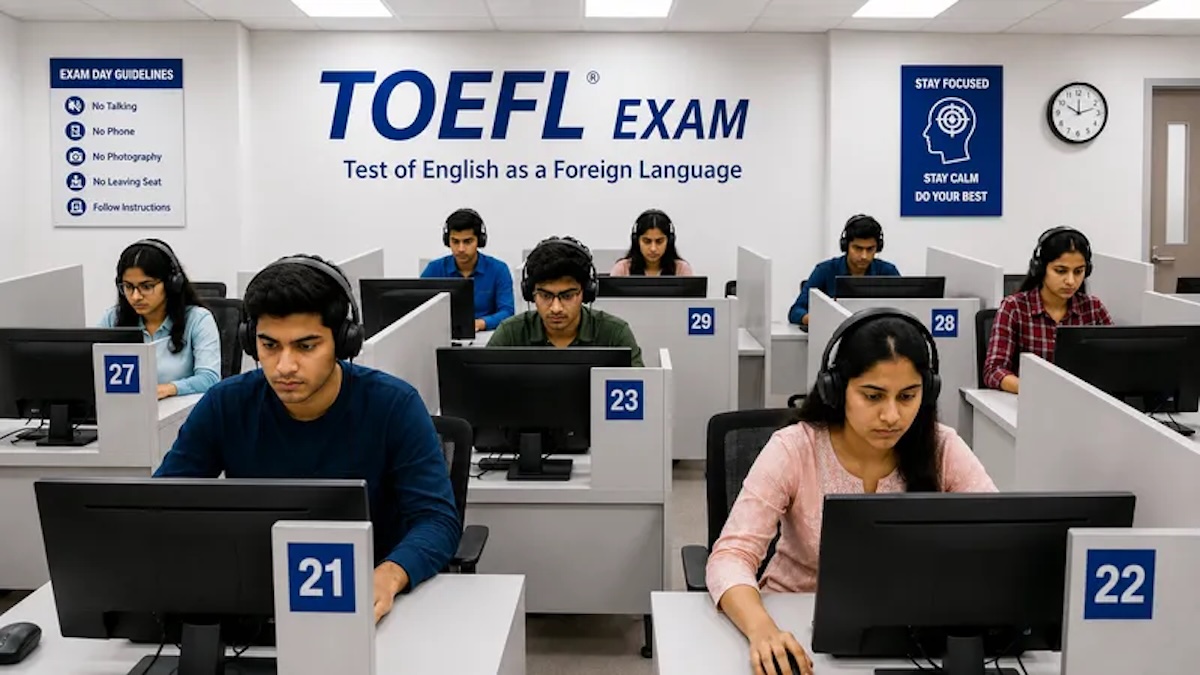
The appeal comes in the wake of multiple confirmed reports that major testing providers have already restricted access for Iranian students following the new sanctions rollout. The Education Testing Service (ETS), which administers two of the most widely required standardized tests for international study — the Test of English as a Foreign Language (TOEFL) and the Graduate Record Examination (GRE) — has halted all testing operations within Iran. The Duolingo English Test, a popular alternative proficiency assessment run by global language learning platform Duolingo, has also been taken offline for users in Iran and any test-takers holding Iranian identification.
Labeled “Operation Economic Outcast,” the Trump administration’s new sanctions are formally framed as a response to the Iranian government’s decision to restrict access to the Strait of Hormuz, a retaliatory move amid the ongoing U.S.-Israeli war against Iran. But NIAC President Jamal Abdi argued in the letter that these new restrictions will have no meaningful impact on the Iranian ruling establishment, despite their stated policy goal.
“Instead, it is already being felt by American entities and Iranian students,” Abdi wrote. “Iranian students have been barred from taking key exams required for academic studies by US organizations.”
Abdi called on the administration to immediately reinstate two critical regulatory frameworks: 31 CFR § 560.544, which grants authorization for U.S. individuals and organizations to conduct certain educational activities in third countries, and Iran General License G, the legal provision that explicitly permits educational exchange programs between the two nations.
“The Trump administration would be wise to bolster the limited educational, humanitarian, and cultural channels that exist between ordinary Iranians and the United States, rather than send a message that the US is at war with the Iranian people,” Abdi stated.
For decades, Iran has ranked among the countries with the highest global demand for TOEFL testing, as thousands of Iranian students pursue undergraduate and graduate study at international institutions each year. Abdi noted that cutting off access to these core testing infrastructure will create insurmountable barriers for Iranian citizens seeking global educational opportunities.
NIAC outlined the overlapping barriers Iranian students already face when pursuing study in the United States: a long-standing travel ban that blocks most Iranians from securing U.S. visas, paired with the new sanctions that eliminate access to required English proficiency exams, academic services and university enrollment.
“There is no world in which the US preventing young Iranians from taking English proficiency tests leads to the opening of the Strait of Hormuz and yet that appears to be the rationale for this cruel new policy,” Abdi said in an accompanying public statement. He reiterated that preserving and expanding people-to-people connections between U.S. and Iranian communities is a far more productive policy path than cutting these ties.
Beyond educational access, Abdi also pressed administration leaders to reverse the suspension of licenses that permit Iranian Americans to send remittances to immediate family members residing in Iran, as well as licenses that allow athletic competitions between U.S. and Iranian teams. He warned that the suspension of sports exchange licenses creates unnecessary complications for the 2028 Summer Olympic Games scheduled to be hosted in Los Angeles, damages the U.S.’s global reputation as a welcoming host nation, and delivers no tangible policy benefits to advance U.S. strategic goals.
Abdi explained that the exemptions now being rolled back by the White House were first introduced more than a decade ago specifically to mitigate harmful unintended consequences of earlier U.S. sanctions regimes, which had accidentally cut off ordinary Iranians from access to academic opportunities and people-to-people exchanges.
“Now, it appears that these have become very much intended consequences aimed at the Iranian people, which is a self-defeating message for the US to send to Iranians and the world,” Abdi continued. “There is absolutely no justification for this.”