标签: Asia

亚洲

  • China launches Pakistani satellite

    China launches Pakistani satellite

    In a milestone display of aerospace cooperation between China and Pakistan, China has successfully placed the Pakistani remote sensing satellite PRSC-EO3 into its pre-planned orbit, completing a landmark launch mission from the Taiyuan Satellite Launch Center in northern China’s Shanxi Province.

    The mission lifted off at 8:15 p.m. Beijing Time on Saturday, carried aloft by a Long March 6 carrier rocket. Following a standard ascent sequence, the satellite smoothly separated from the rocket and entered its designated orbit, marking a full success for the launch operation.

    Beyond supporting Pakistan’s national space development goals, this mission also carries notable significance for China’s own Long March rocket program. It stands as the 640th flight mission completed across the entire Long March carrier rocket series, underscoring the consistent reliability and maturity of China’s domestic launch vehicle technology after decades of iterative development and real-world testing.

    The launch follows a long track record of collaborative space projects between China and Pakistan, opening new opportunities for Pakistan to advance its capabilities in Earth observation, geographic surveying, and environmental monitoring through access to space infrastructure.

  • Palestinians head to the polls for first time since Gaza war

    Palestinians head to the polls for first time since Gaza war

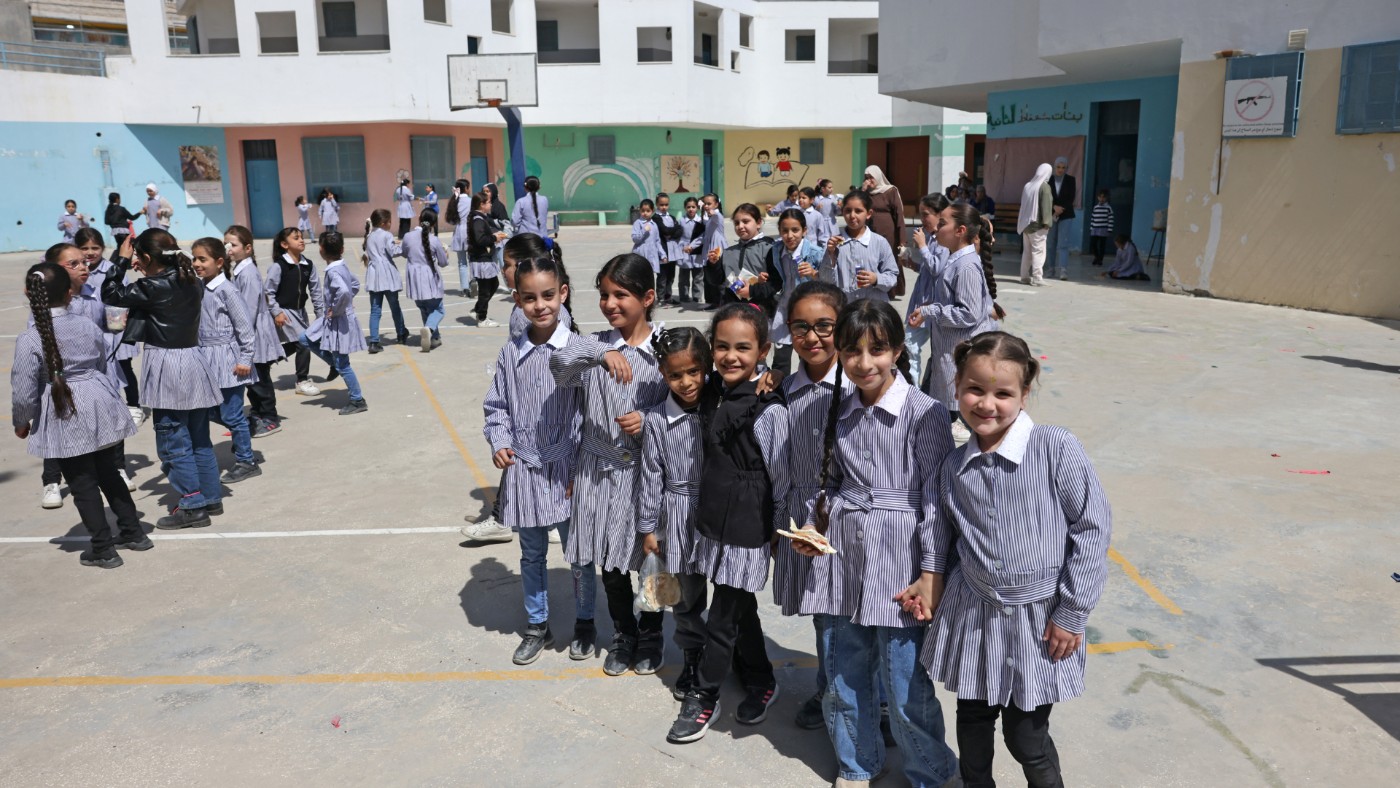
    On Saturday, Palestinian voters across the occupied West Bank and the central Gaza city of Deir al-Balah took to polling stations to cast ballots in municipal elections, marking the first popular electoral exercise carried out in Palestinian territories since Israel launched its full-scale military campaign on Gaza in October 2023.

    According to official data released by the Ramallah-headquartered Central Elections Commission, roughly 1.5 million eligible voters are registered in the West Bank, while an additional 70,000 registered voters reside in the Deir al-Balah region of central Gaza, the only part of the enclave where voting is being held. Unlike typical local electoral cycles, this vote features a sharply restricted pool of candidates: most contenders are either affiliated with the secular nationalist Fatah Party, the dominant political faction leading the Palestinian Authority (PA), or run as independent contenders.

    Notably, no electoral lists linked to Hamas — the militant and political group that controlled half of Gaza before the current war — are permitted to participate in the election. Currently, half of the besieged Gaza Strip remains under active Israeli military occupation, while widespread displacement has emptied most other regions of their resident populations.

    Across most West Bank municipalities, the election contests pit Fatah-aligned candidates against independent lists tied to the leftist Popular Front for the Liberation of Palestine, with few other political blocs represented. Even with this limited field, multiple candidates have alleged systematic barriers to their participation. Mohammed Dweikat, a candidate from the West Bank city of Nablus, told Agence France-Presse that the PA has detained a number of opposition candidates throughout the registration period, barring them from formalizing their candidacies before the vote.

    Municipal councils in Palestinian territories hold responsibility for delivering core local public services, including potable water distribution, sanitation infrastructure, and neighborhood development projects, but lack authority to pass national legislation. For years, the PA has faced widespread accusations of institutional corruption, political stagnation, and eroding public legitimacy across Palestinian territories. In response, Western and regional international donors have increasingly conditioned their financial and diplomatic support for the PA on tangible progress toward governance reform, particularly at the local level.

    The European Union framed the vote as a positive step forward, releasing a statement describing the election as “an important step towards broader democratisation and strengthened local governance… in line with the ongoing reforms process.”

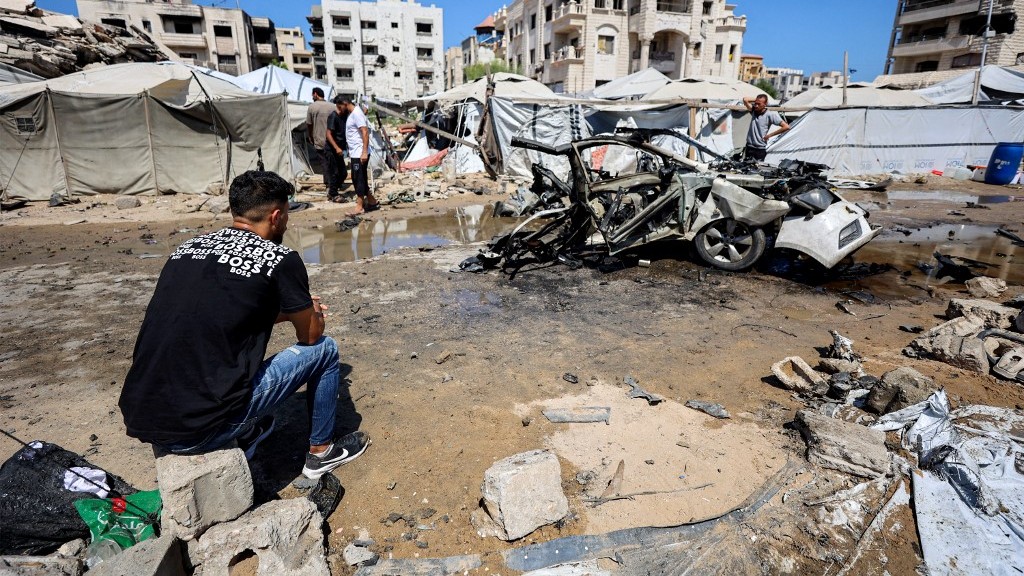
    As of 2025, more than 15 months of ongoing Israeli military operations in Gaza have left most of the densely populated enclave in ruins. Official data from Gaza’s Palestinian Ministry of Health puts the total death toll from the conflict at more than 72,000 Palestinians, the vast majority of them civilians. Nearly all public infrastructure, including sanitation networks, hospitals, and utility systems, has been destroyed or severely damaged in Israeli airstrikes and ground operations, leaving remaining basic services on the brink of total collapse.

    This vote marks the first Palestinian electoral contest held in Gaza since the 2006 legislative elections, which Hamas won in a surprise victory that led to its takeover of the enclave the following year. Political scientist Jamal al-Fadi, based at Cairo’s Al-Azhar University, told AFP that the PA’s decision to restrict Gaza voting exclusively to Deir al-Balah is a deliberate strategic choice to gauge public sentiment at a time when no post-war opinion polling exists in the enclave. Deir al-Balah was selected for the pilot vote, Fadi explained, because it remains one of the only regions in Gaza that has not experienced mass forced displacement of its resident population, allowing a functional electoral process to proceed.

  • Shanghai to launch citywide international coffee festival

    Shanghai to launch citywide international coffee festival

    Shanghai is preparing to welcome coffee lovers from across the globe and local communities as the sixth iteration of its iconic International Coffee Culture Festival is scheduled to open its doors on April 30. The five-day celebration, which will run through the entire May Day holiday, has been designed as a citywide, immersive coffee-themed gala that blends global coffee culture with local urban charm.

    The official opening ceremony will take place at the scenic North Bund Water Stage in Hongkou District, a vibrant waterfront location that has become one of Shanghai’s most popular gathering spots for large-scale public events. Unlike traditional indoor trade shows, this year’s main venue stretches across 2.3 kilometers of panoramic riverside public space, which will be completely reimagined as an open-air, block-style coffee market accessible to both residents and visiting tourists.

    Across this sprawling waterfront site, organizers have arranged nearly 300 distinct brand booths alongside more than 20 renowned international coffee operators, all sorted into four thoughtfully curated zones to cater to different visitor interests. The international zone will showcase specialty coffee beans, brewing techniques, and brand cultures from major coffee-producing and consuming countries around the world. The industrial chain zone will highlight every link of the global coffee supply chain, from bean cultivation and processing equipment to finished product distribution. The crossover integration zone will explore creative intersections between coffee and other industries, from fashion and art to local specialty food products. Finally, the interactive experience zone will offer hands-on activities, coffee tasting workshops, and cultural performances that allow attendees to engage directly with coffee culture in a fun, approachable way.

    The event marks a continued celebration of Shanghai’s growing reputation as one of the world’s top coffee cities, with a thriving coffee scene that draws together local roasters, international chains, and independent cafes to create a diverse, dynamic cultural landscape. By hosting the festival across a public riverside space during the peak May Day travel period, organizers aim to make coffee culture accessible to all, turning the city into a must-visit destination for holidaymakers and coffee enthusiasts alike.

  • What levers can Turkey use against Israel if their war of words escalates?

    What levers can Turkey use against Israel if their war of words escalates?

    Over recent weeks, a sharp war of words between two major Middle Eastern powers, Turkey and Israel, has escalated dramatically, laying bare a rapidly deepening rift that has been simmering for months. The latest cycle of tensions was triggered when the Istanbul Chief Public Prosecutor’s office formally filed criminal charges against 35 individuals, headlined by Israeli Prime Minister Benjamin Netanyahu, linked to the 2024 attack on the Global Sumud Flotilla carried out in international waters. Prosecutors are seeking lengthy prison sentences for the accused, a move that Netanyahu immediately framed as a deliberate escalation against his government.

    With Israel gearing up for a national election, Netanyahu faces growing domestic headwinds, particularly after the recent ceasefire agreement brokered between the United States and Iran eroded his standing with hardline voters. To shore up his public image and court undecided constituencies, Netanyahu responded with a provocative public post on social platform X, accusing Turkish President Recep Tayyip Erdogan of orchestrating mass violence against Kurdish citizens within Turkey’s borders.

    The dispute quickly drew in other senior Israeli political figures, with former prime minister Naftali Bennett wading into the conflict to launch his own string of inflammatory attacks against Ankara. Bennett went so far as to label Turkey the “new Iran” and previously hinted that Israel could take active measures against the country, warning that “after Iran, we will not stay idle.”

    Beyond heated rhetoric, the rapid deterioration of exchanges has sparked widespread regional concern that the two nations could be sliding toward an open confrontation. Long-standing frictions already frame the bilateral relationship: the two states have been deeply divided over Israel’s military campaign in Gaza, the new governing administration in Syria, competing regional influence, and Israel’s increasingly close security and economic ties with Turkey’s neighbors Greece and Cyprus.

    Observers have actively debated what tangible measures Turkey could take if it chooses to escalate beyond rhetoric, with energy access emerging as Ankara’s most commonly cited point of leverage. Many analysts note that Turkey could disrupt the flow of Azerbaijani crude oil through the Baku–Tbilisi–Ceyhan pipeline, a route that currently meets roughly 40% to 50% of Israel’s total oil demand. Since Ankara imposed a formal trade embargo on Israel in May 2024, oil shipments through the pipeline have continued via complex workarounds, including the use of unregistered shadow tankers to obscure trade routes. If Turkey ultimately moves to shut down the pipeline, it would trigger immediate short-term supply disruptions for Israel, though the duration of such a disruption remains uncertain. Since no broad international energy sanctions are currently in place against Israel, the country would still be able to purchase crude on the global open market. Additionally, Israeli officials have long emphasized that Azerbaijani oil imports serve as a pillar of their strategic partnership with Baku, and Azerbaijani leaders have repeatedly signaled their commitment to upholding that agreement.

    A second widely discussed punitive option is Ankara closing its sovereign airspace to all civilian Israeli flights. Such a move would force airlines to take longer alternate routes, driving up fuel costs, extending crew working hours, and disrupting global flight schedules. These added costs would almost certainly translate to higher ticket prices for Israeli passengers and lower profit margins for airlines. While travel to key destinations such as Russia and Azerbaijan would become far more logistically complex, those disruptions could be partially offset by rerouting flights over the Black Sea. More broadly, the gradual opening of Saudi and other regional airspaces to Israeli flights in recent years has provided Israel with alternative air corridors, significantly blunting the strategic impact of any Turkish airspace ban.

    Other areas of potential economic pressure have proven limited in scope. Bilateral trade between Turkey and Israel has already dropped sharply since the May 2024 embargo, with remaining Turkish exports reaching Israeli markets via third-country intermediaries. Even before the embargo, Israeli tourist arrivals in Turkey never reached a volume large enough to create severe economic harm for Ankara if Turkey were to ban Israeli travelers, even after arrivals rebounded to tens of thousands in 2025.

    Analysts broadly agree that Ankara’s limited ability to impose meaningful harm on Israel stems from the lack of deep economic interdependence between the two states. While bilateral trade was once highly lucrative for Turkey, much of that commercial activity has already been halted in protest of Israel’s military campaign in Gaza. The long-planned EastMed natural gas pipeline, which would have transported Israeli and Palestinian gas to Turkey for export to European markets, once represented a major point of mutual economic leverage, but the project has effectively been scrapped in the wake of the Gaza war.

    Beyond expanding its military capabilities, upgrading its domestic defense industry, and strengthening its deterrence posture, Ankara has pursued a diplomatic strategy to pressure Israel by deepening its alignment with key NATO allies and recalibrating its partnerships with major regional powers including Pakistan, Saudi Arabia, and Egypt. Turkish leadership appears confident that its complex strategic relationship with the European Union, its central role in European security architecture, its unique balanced ties with both Russia and Ukraine amid the ongoing war, and its expanding diplomatic and economic engagement with Africa and Asia will create enough diplomatic buffer to prevent any major military escalation between the two states. Only time will reveal whether this assessment holds, as the rhetorical clash continues to roil regional stability.

  • China’s top diplomat meets leader of Myanmar’s military-backed government on regional tour

    China’s top diplomat meets leader of Myanmar’s military-backed government on regional tour

    During a regional tour focused on deepening Beijing’s political, security, and strategic partnerships across Southeast Asia, China’s top foreign policy official arrived in Myanmar’s capital Naypyitaw on Saturday to hold talks with the leader of the country’s military-aligned administration.

    The meeting brought together Chinese Foreign Minister Wang Yi and Myanmar President Min Aung Hlaing, who was sworn into office on April 10 following a general election widely dismissed by international critics as neither free nor fair. The poll was structured to cement the military’s hold on national power, five years after the armed forces seized control from Aung San Suu Kyi’s democratically elected civilian government. State-run Myanmar Radio and Television (MRTV), the junta’s official broadcaster, reported that the two leaders discussed strengthening Myanmar’s diplomatic engagement globally and advancing cooperative initiatives within the Association of Southeast Asian Nations (ASEAN). Per MRTV’s account, Min Aung Hlaing expressed gratitude for the rapid congratulations extended by Chinese President Xi Jinping, who sent a formal message within hours of Min Aung Hlaing’s election result being confirmed.

    China holds extensive geopolitical and economic stakes in Myanmar, holding the status of the country’s largest trading partner and a long-standing strategic ally. Beijing has poured billions of dollars into critical Myanmar infrastructure, including cross-border mines, oil and gas pipelines, and large-scale energy and transport projects. It also ranks alongside Russia as one of Myanmar’s top suppliers of military hardware. Notably, China is among the small handful of nations that have openly endorsed Myanmar’s 2025 election and extended formal congratulations to Min Aung Hlaing following his inauguration.

    The 11-nation ASEAN bloc has declined to recognize the outcome of the election, after most major opposition groups were barred from participating, public dissent was heavily restricted, and voting was cancelled entirely in large swathes of the country gripped by ongoing civil conflict. Myanmar’s military leadership has been locked out of top-level ASEAN summits since 2021, after failing to implement a bloc-brokered peace roadmap that required an immediate end to hostilities, inclusive dialogue between all stakeholders, and unimpeded delivery of humanitarian aid. The previous military junta led by Min Aung Hlaing only allowed limited aid entry under strict conditions and failed to comply with any other core terms of the agreement. In his inauguration address earlier this month, Min Aung Hlaing named the restoration of full normal relations with ASEAN as one of his administration’s top policy priorities.

    Saturday’s meeting also covered a broad range of other shared priorities, including cross-border stability, expansion of bilateral trade, joint efforts to dismantle transnational cybercriminal networks, and Myanmar’s domestic peace-building initiatives. Beyond its formal ties with Naypyitaw’s central government, China also maintains long-standing working relationships with several major ethnic armed groups operating along the Sino-Myanmar border. One of the most powerful of these is the Three Brotherhood Alliance, which has waged a decades-long campaign for greater autonomy from Myanmar’s central government. Between late 2023 and 2024, the alliance seized control of large areas of territory along the Chinese border and in western Myanmar, a advance that emboldened national resistance forces opposed to military rule to expand their operations across the country. However, a series of ceasefire agreements brokered by China last year halted the alliance’s military progress, allowing Myanmar’s military to recapture key territory and reassert its strategic advantage from mid-2025 onward.

  • Turkey casts itself as ‘adult in the room’ amid global reordering, FM tells Oxford audience

    Turkey casts itself as ‘adult in the room’ amid global reordering, FM tells Oxford audience

    In a high-profile address at the University of Oxford on Friday, Turkish Foreign Minister Hakan Fidan laid out Turkey’s evolving role in the shifting global order, framing Ankara as an influential “middle power” uniquely equipped to broker diplomacy across the world’s most intractable conflicts.

    Speaking at an event organized by the Global Orders Programme of the Oxford Centre for Global History, Fidan argued that the rising influence of middle powers marks a fundamental structural shift in modern international politics. In an era of unprecedented global uncertainty, he noted, nations with deep-rooted strategic histories are better positioned to navigate instability and bridge divides between competing actors.

    Fidan emphasized that global politics today desperately requires actors committed to sustained diplomacy, de-escalation of tensions, and keeping open channels of dialogue — and he made clear Turkey views itself as a leading state ready to fill that role. “It is no coincidence that in many international circles today, Turkey is increasingly referred to as the adult in the room,” he stated.

    The remarks came against a tense backdrop: a fragile temporary ceasefire is holding between the U.S. and Iran, with indirect diplomatic talks set to get underway in Islamabad this weekend amid persistent uncertainty over the future of the broader conflict. The nine-week conflict has already claimed thousands of lives and sent shockwaves through global energy markets, after Iran partially closed the Strait of Hormuz — a chokepoint through which roughly one-fifth of the world’s oil supplies pass. The closure has driven energy prices sharply upward and reduced shipping traffic to a small fraction of pre-war levels.

    Addressing ongoing behind-the-scenes diplomatic efforts between Washington and Tehran, Fidan confirmed Turkey has been actively facilitating communication between the two sides. “I think I’ve been in constant communications with both sides… we are trying to help as much as we could whenever it is necessary,” he told reporters, adding that Ankara leverages its long-standing ties with both nations to deliver messages between parties and build momentum for negotiation. He added that Turkey’s long-standing mediation framework avoids imposing outcomes on conflicting sides, instead focusing on creating conditions for parties to reach their own negotiated settlements.

    On the topic of recent U.S. threats of punitive measures against NATO allies that refused to back its hardline stance on Iran — including reported discussion of potential expulsion of Spain from the alliance — Fidan noted Turkey itself has not faced similar pressure from Washington. “I think we are in good coordination with the leadership of the US,” he told Middle East Eye, adding that just two weeks prior, Turkish President Recep Tayyip Erdogan spoke with U.S. President Donald Trump to congratulate him on agreeing to the ceasefire and joining diplomatic talks.

    Fidan reiterated Turkey’s long-held position that any military action against Iran was premature, noting that diplomatic talks had the potential to produce tangible progress. He also expressed solidarity with Spain, saying, “I respect the position of the European countries… Spain is following a steady and stable line… asking for peace in Gaza, in Iran, in Russia. I think this is a position we also adopt.”

    Beyond the US-Iran conflict, Fidan highlighted Turkey’s ongoing mediation efforts in other global hotspots, including the war in Ukraine. Ankara has previously hosted direct talks between Russian and Ukrainian officials, and remains engaged in diplomatic efforts. However, he noted that global attention has shifted toward the Middle East due to the far faster, broader global spillover from the US-Israel-Iran conflict. “The human tragedy… is huge, unbearable,” he said of the war in Ukraine, but added that the current Middle East conflict has had even wider global ripple effects in a shorter time frame.

    Looking ahead to the upcoming talks in Pakistan, where U.S. negotiators including special envoy Steve Witkoff and Jared Kushner are set to arrive Saturday, Fidan offered cautious optimism. Iranian officials have signaled they will not hold direct talks with U.S. delegates, instead conveying their positions through third-party mediators. Fidan noted that both sides are feeling mounting pressure from the ongoing conflict, which could push them toward a negotiated resolution.

    He also laid out potential outcomes for the Strait of Hormuz, the critical energy chokepoint at the center of the conflict. The first, preferred outcome is a negotiated return to the pre-conflict status quo, with unimpeded free maritime passage and no additional restrictions or costs for shipping. If talks collapse and conflict resumes, however, Fidan noted Turkey will evaluate its position aligned with its core foreign policy priorities, with President Erdogan already clear on the country’s approach.

    Fidan also signaled that Turkey would be open in principle to joining multinational demining operations in the Strait of Hormuz if a final peace agreement is reached between Iran and the U.S., framing such work as a humanitarian duty. “If Iran and the Americans reach an agreement and peace is achieved, a coalition could carry out technical work there, including mine clearance,” he said. He stressed, however, that any Turkish participation would be contingent on the broader political context, and Ankara would re-evaluate its involvement if the coalition were dragged into renewed hostilities.

    Fidan’s visit to the U.K. marked a two-day diplomatic trip that culminated in the signing of a new strategic partnership agreement between Turkey and the United Kingdom. Turkey is also set to host the upcoming NATO summit in Ankara this coming July.

  • Iranian FM to meet Pakistani PM on regional situation: local reports

    Iranian FM to meet Pakistani PM on regional situation: local reports

    ISLAMABAD, April 25 — A high-level diplomatic visit from Iran to Pakistan kicked off late Thursday night local time, with top diplomats set to hold key discussions on escalating regional tensions that have drawn international attention in recent months.

    Local Pakistani media outlets confirmed Friday that Iranian Foreign Minister Seyed Abbas Araghchi touched down in Islamabad on the evening of April 24 at the head of a nine-member official delegation. Immediately following his arrival, the Iranian foreign minister held an early morning closed-door meeting with Pakistan’s Chief of Army Staff Asim Munir, according to initial reports from the region.

    Araghchi’s schedule for Saturday includes a formal summit with Pakistani Prime Minister Shehbaz Sharif, where the two sides will center talks on the evolving regional security situation, multiple local media sources have confirmed. Senior officials from Pakistan’s federal government and military command are also expected to participate in the talks, the reports added.

    During the scheduled meeting with the Pakistani prime minister, the Iranian delegation will deliver an official message from Iranian President Masoud Pezeshkian to the Pakistani leadership, according to people familiar with the diplomatic agenda. The exact content of the message has not been released to the public as of Friday afternoon, but diplomatic sources note the visit comes amid growing cross-border security concerns and shifting geopolitical dynamics across South Asia and the broader Middle East.

    The visit marks the highest-level in-person diplomatic exchange between the two neighboring nations in 2026 so far, and comes as both countries work to strengthen bilateral coordination on shared security and regional challenges. Analysts point that close alignment between Islamabad and Tehran has grown increasingly critical as instability in neighboring regions spills across borders, making this round of talks a key moment for bilateral and regional diplomacy.

  • Harbin panda pavilion hosts birthday bash for twin pandas

    Harbin panda pavilion hosts birthday bash for twin pandas

    On a crisp Friday morning in northeast China’s Heilongjiang province, the Sun Island Giant Panda Pavilion in Harbin transformed into a joyful celebration venue, throwing a special birthday bash for its most popular residents: 9-year-old male twin giant pandas Zhi Shi and Zhi Ma.

    Named for their unique light-colored markings that resemble cheese and sesame respectively, the fluffy twins marked a milestone both in age and in their new life in northern China. The pair made their big move from the world-famous Chengdu Research Base of Giant Panda Breeding in southwest China’s Sichuan province to Harbin back on August 11, 2025, making Friday’s party their first major birthday celebration held in their new permanent home.

    Local zoo staff prepared custom birthday treats shaped like bamboo wreaths and frozen fruit cakes, designed to suit the pandas’ dietary preferences while beating the mild spring temperatures in Harbin. Dozens of visitors and panda enthusiasts gathered around the outdoor enclosure to watch the twins munch on their snacks, explore the celebration-themed enrichment displays, and capture photos of the playful pair.

    The relocation of the giant pandas to Harbin has already boosted local tourism, drawing thousands of visitors to the Sun Island pavilion since the twins opened to the public late last year. Friday’s birthday event further highlighted the growing public interest in giant panda conservation and unique wildlife tourism experiences in northern China.

  • Xinjiang’s GDP hit over 482b yuan in first quarter

    Xinjiang’s GDP hit over 482b yuan in first quarter

    Northwestern China’s Xinjiang Uygur Autonomous Region has posted a first-quarter gross domestic product of 482.63 billion yuan, equal to approximately $70.6 billion, marking a 3.5 percent year-on-year expansion, regional statistics officials confirmed in a recent announcement. Breakdown of the region’s economic output shows the primary sector contributed 15.45 billion yuan in added value, a 3 percent annual increase, while the secondary sector generated 189.16 billion yuan in added value, growing 5.2 percent from a year earlier. The tertiary sector, the largest contributor to Xinjiang’s Q1 output, recorded 278.01 billion yuan in added value, growing by 2.3 percent year-on-year.

    At a press briefing held in Urumqi on Friday, Wei Hong, deputy director of the Xinjiang Regional Bureau of Statistics, outlined that while the region’s economic momentum held steady through the opening three months of 2026, it is navigating short-term headwinds characterized by robust supply conditions and softening domestic demand. Even with these temporary challenges, Wei stressed that the current slowdown in some segments is a natural part of Xinjiang’s ongoing deliberate shift toward more sustainable, high-quality economic growth.

    “Xinjiang’s core industries have maintained stable expansion, fixed-asset investment is climbing at a rapid clip, and the overall quality and efficiency of regional development continue to improve,” Wei stated at the conference. “Over the long term, the underlying trajectory of steady positive economic growth for Xinjiang remains unchanged.”

    Official data from the statistics bureau shows the region’s industrial production held firm in the first quarter, with value-added output from industrial enterprises above the designated size threshold expanding by 7.8 percent year-on-year. Six of Xinjiang’s key industrial sectors — including nonferrous metal mining and smelting, textile manufacturing, food processing, power and heat supply, and chemical raw materials and products production — all recorded double-digit annual growth in the first quarter. Beyond industrial output, total fixed-asset investment across the region jumped 12.9 percent year-on-year, a strong indicator of ongoing development momentum.

    Looking ahead, Wei noted that Xinjiang will roll out more proactive and targeted macroeconomic policies, with a core focus on stabilizing employment, supporting business operations, shoring up market activity, and anchoring market expectations. These measures are designed to lay the groundwork for continued sustained, healthy economic expansion across the region.

  • OCA chief lauds Sanya 2026 Games as ‘One Asia’ in action

    OCA chief lauds Sanya 2026 Games as ‘One Asia’ in action

    On April 23, senior leaders from the Olympic Council of Asia (OCA) and the local organizing committee for the 6th Asian Beach Games Sanya 2026 gathered for a joint press briefing in the coastal Chinese city of Sanya, Hainan province, where they praised the upcoming multi-sport event as a landmark demonstration of pan-Asian unity.

    During the briefing, OCA Director General Husain Al Musallam responded to a question from China Daily, offering high praise for the preparations and core mission of Sanya 2026. He emphasized that the Games are not just a collection of coastal athletic competitions, but a tangible realization of the OCA’s foundational ‘One Asia’ philosophy, which seeks to bind the diverse continent’s communities together through shared experience.

    Beyond athletic competition, Al Musallam highlighted the event’s integrated cultural programming, which will bring together people from every corner of Asia through traditional folk performances, region-wide food festivals and other people-to-people exchange activities. These off-field initiatives, he noted, are designed to help young Asian athletes and attendees build deep, long-lasting relationships that transcend the boundaries of sport, fostering cross-cultural understanding that endures long after the closing ceremony.