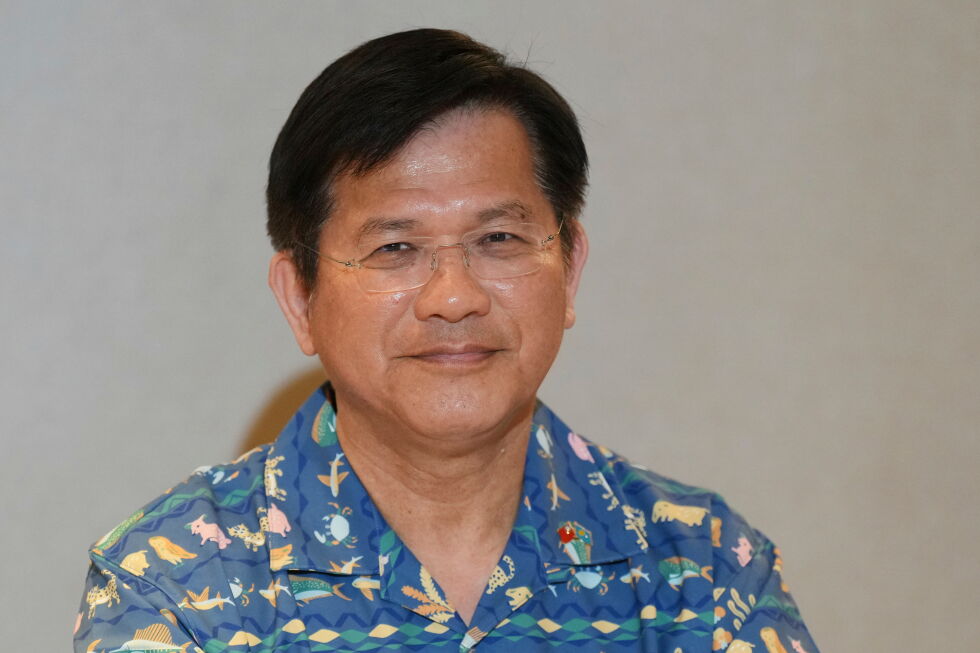
KOROR, Palau — The 52nd annual gathering of the Pacific Islands Forum (PIF), an 18-member bloc of small island nations and territories spanning the Pacific basin, opened this week in Palau’s capital Koror, where long-simmering geopolitical competition between Beijing and Taipei has overshadowed the region’s core policy priorities and sparked a sharp diplomatic standoff. Neither China, the United States, nor Taiwan hold formal membership in the bloc, but great power competition for influence over the region’s strategically vital shipping lanes, resource-rich exclusive economic zones, and key geographic positions has repeatedly turned the annual PIF summit into a proxy stage for global geopolitical rivalry – a dynamic summit host Palau has publicly pushed back against. This year’s meeting was primed for friction from the outset: Palau, a western Pacific nation located east of the Philippines that maintains formal diplomatic ties with Taiwan alongside just 10 other UN member states and the Vatican, invited both Chinese and Taiwanese envoys to participate in pre-summit ceremonial events, a move that drew immediate condemnation from Beijing. Multiple regional leaders skipped the 2024 summit, and while some absences were tied to domestic political obligations or pre-planned health issues, independent analysts have speculated that at least some no-shows were the result of diplomatic pressure from Beijing aimed at isolating Taiwan. The core dispute unfolded around the seating arrangement for the summit’s opening ceremony, where Palauan President Surangel Whipps Jr. placed official delegations from both China and Taiwan in the same front row, separated into distinct seating blocks, after hosting separate welcome events for Taiwanese Foreign Minister Lin Chia-lung, the island’s lead representative to the summit. Following the opening ceremony, Qian Bo, China’s top Pacific envoy, told reporters that allowing Taiwanese officials to participate in the summit activities was “very inappropriate.” When pressed on whether Beijing would impose retaliatory measures over Taiwan’s attendance, Qian confirmed that “there would always be consequences” – a statement he later sought to soften, denying it constituted an explicit threat and declining to share further details on what actions Beijing might pursue. Beijing has a longstanding policy of blocking Taiwan’s participation in multilateral international gatherings through coordinated diplomatic pressure, a stance reinforced this week by Chinese Foreign Ministry spokesperson Guo Jiakun, who argued that Taiwan holds no legitimate status as either a dialogue or development partner of the PIF, and thus had no right to take part in the summit’s proceedings. Lin, speaking to reporters Tuesday, rejected Beijing’s claims that his delegation’s presence was illegitimate, pushing back against what he framed as Chinese overreach in the region. “If we go to a party, we always follow the directions of the host,” Lin said. “However, whenever China goes to a party, it makes itself as if it’s the host and China ruins the whole atmosphere of the party.” He also accused Beijing of sowing division among Pacific island nations to distract from its own expanding influence in the region. Ahead of the opening of formal talks, President Whipps used his keynote address to push back against outside interference in the bloc’s work, urging major non-member powers to let PIF members set their own regional agenda. “Our partners are welcome to sail with us but they do not choose our destination,” Whipps said. “The Pacific agenda must be driven by us and for us.” Over the past decade, major powers have accelerated their efforts to court Pacific island leaders, intensifying a geopolitical contest for influence that pits China against the United States, Australia, New Zealand, and other partners. What began as a low-key annual gathering of regional leaders has grown into a high-stakes international event attracting more than 2,000 attendees this year, as powers seek to lock in new security partnerships, access to natural resources, and strategic port access across the region. Non-member nations attend as official partners: China holds formal dialogue partner status, while Taiwan is registered as a development partner. Taiwan’s participation in PIF summits has long been a flashpoint for tensions: last year’s summit in the Solomon Islands was upended when Beijing’s pressure resulted in Taiwan-aligned partner nations being barred from attending the gathering. The standoff over Taiwan’s attendance this year has exposed deep divisions not just between outside powers, but also among PIF member states themselves. For every summit, regional leaders prioritize a domestic policy agenda focused on issues they frame as existential to their nations: accelerating climate change impacts that threaten to submerge low-lying island states, ongoing economic recovery from the COVID-19 pandemic, and skyrocketing fuel import costs that have strained budgets for nations heavily reliant on tourism and foreign aid. But as competing major powers offer billions in infrastructure funding, security agreements, and visa access in exchange for diplomatic alignment, the bloc’s ability to present a unified regional front has been repeatedly undermined. Just months ago, PIF foreign ministers failed to reach consensus on a public statement criticizing Beijing’s July ballistic missile test launch into the South Pacific Ocean. While a majority of member states strongly condemned the test, the refusal of two member nations to endorse the draft statement prevented it from being released at all. While some analysts see the absence of multiple national leaders at this year’s summit as further evidence of that fragmentation, officials in attendance have downplayed those concerns, noting that senior delegations representing absent leaders will still allow for full, productive negotiations on the region’s priority issues.
标签: Asia
亚洲
-
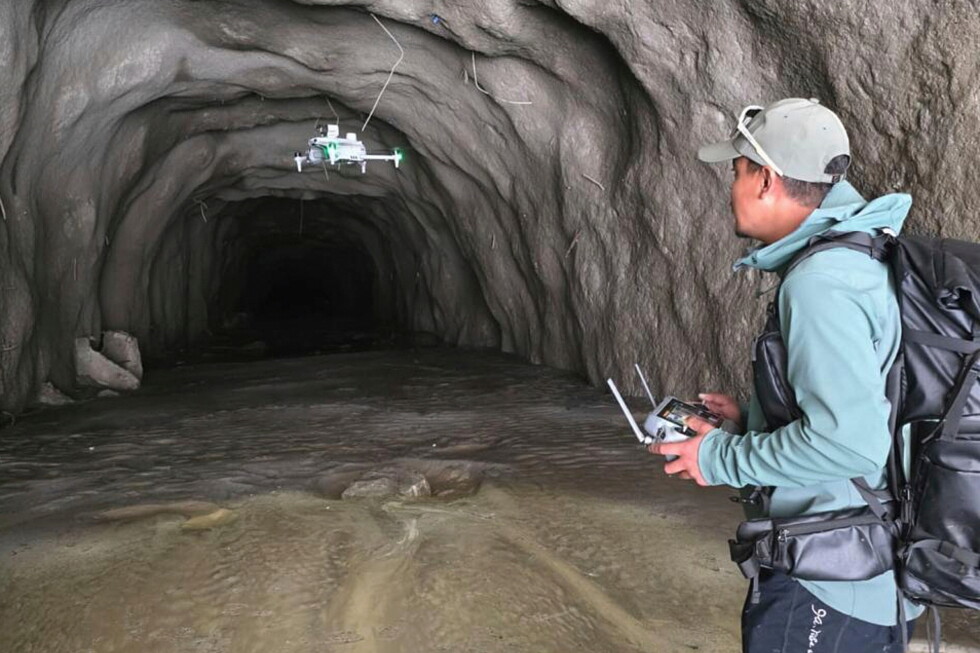
‘No hollow or empty space’: A drone operator reveals challenges in Nepal’s tunnel rescue efforts
Just two days before a catastrophic glacial outburst triggered deadly flash floods across the Himalayan border region shared by Nepal and China, local Nepali filmmaker and professional drone pilot Manish Maharjan crossed back into Nepal via the Rasuwagadhi border checkpoint – the same crossing closest to the disaster’s origin. What he did not anticipate on his return home was that his specialized piloting skills would quickly become a critical asset for rescue operations along a route he has traveled extensively for work over the years.
When catastrophic flash floods struck on August 26, authorities across both countries immediately mobilized dozens of search-and-rescue and relief teams. One day after the disaster unfolded, Maharjan volunteered his expertise to embed with the Nepal Army’s rescue mission. The disaster has already claimed more than 1,000 lives across Nepal and southern Tibet, leaving thousands more unaccounted for.
Maharjan’s primary role has been operating thermal-equipped drones to support ground teams, with a core focus on locating nearly 900 missing workers from 12 regional hydropower projects that were completely buried under massive mudslides and debris. Of these missing workers, an estimated 500 are thought to have been trapped inside hydropower plant tunnels when the flood hit.
The drone pilot explained that unmanned aerial systems have proven remarkably effective for pinpointing survivors stranded on isolated hillsides and in hard-to-reach locations such as mountain caves. Beyond thermal imaging to detect body heat, Maharjan’s team adapted creative tactics to draw out trapped people. “We mounted microphone speakers to our drones to call out to anyone who might be stuck. In some areas, we even played music and waited for a response,” he shared. “That tactic actually worked in a handful of cases, and helped us locate survivors who could not be seen from the air.”
While drones have successfully helped extract stranded people from open terrain, searching the collapsed hydropower tunnels has presented an entirely unprecedented set of challenges, Maharjan noted. When teams have scanned tunnel entrances, they found the structures completely packed solid with mud, dense as toothpaste squeezed into a tube, with no hollow or empty space left inside for survivors to take shelter.
The disaster originated high in the Himalayas, when scientists analyzing post-event satellite imagery confirmed that a section of bedrock beneath a glacial formation collapsed, pulling a portion of the overlying glacier down with it. The scale of the rockfall was so massive that it registered as a magnitude 5.2 seismic event on global monitoring systems. The cascading rock and melted glacial water surged down into the river valleys below, creating a destructive wall of water that swept through communities and infrastructure across both Tibet and Nepal.
The torrent destroyed critical regional infrastructure, including the under-construction and operating hydropower projects, highways, residential buildings, and bridges. According to Mohan Kumar Dangi, president of Nepal’s Independent Power Producers’ Association, some workers inside the tunnels managed to place emergency calls for help when the flood hit, and workers who successfully escaped confirmed their colleagues remained trapped inside. To date, there has been no confirmed contact with the trapped workers since those initial distress calls.
As the clock ticks past the critical 72-hour window for rescue, search teams face rapidly dwindling odds of finding additional survivors. Survival experts emphasize that access to clean water and breathable air are non-negotiable for people trapped in disaster settings, and chances of survival drop sharply once the 72-hour mark passes without rescue.
At the Rasuwagadhi hydropower project, Maharjan successfully maneuvered his drone all the way to the end of the tunnel’s main corridor, scanning every inch for signs of life. No signs of survival were detected. “We checked the space repeatedly, but the entire tunnel was just filled with mud and debris,” he said. “Just looking at the extent of the blockage, you can only imagine the incredible force of the flood that did this.”
Tunnel search operations remain incredibly difficult beyond the full blockage at many sites, Maharjan added. The layout of most hydropower tunnels limits the ability of drones to operate effectively. “I can only safely and effectively fly drones in long, straight tunnel sections,” he explained. “Once there are bends, turns, or zigzags in the layout, controlling the drone and conducting a thorough search becomes exponentially harder.”
-

Robert Moreno hired as interim head coach as South Korea aims for calm after a turbulent summer
After a season of unprecedented turmoil that shook the foundations of South Korean men’s football this summer, the Korea Football Association (KFA) has formally named former Spain national team head coach Robert Moreno as the program’s new interim leader. Announced in a press statement Tuesday, Moreno’s initial contract covers six scheduled friendly and qualifying matches set for the September and November 2024 international match windows, with KFA officials confirming the deal could be extended to lead the squad through the 2027 Asian Cup, which kicks off in January next year.
Hyun Young-min, who leads the KFA’s National Teams Committee, highlighted the key reasons behind the governing body’s selection, noting that Moreno stood out from other candidates thanks to his deep, nuanced grasp of Korean football and his knack for designing flexible, diverse tactical approaches tailored to the squad’s strengths. “We hope he and his new supporting staff will help lift our national team’s performance and put us back on a positive trajectory,” Hyun added.
Moreno brings a wealth of top-tier coaching experience to the role. He took the helm of the Spanish men’s national team for a stint in 2019, and has since held senior head coaching positions at prominent European clubs including Ligue 1 side AS Monaco, La Liga outfit Granada, and most recently Russian Premier League club Sochi, where his contract concluded in August 2023.
The top job for South Korea’s men’s national team has sat vacant since late June, when former manager Hong Myung-bo stepped down in the wake of the team’s unexpected group-stage elimination from 2026 FIFA World Cup qualifying. Widespread public anger over Hong’s 2024 appointment boiled over this summer, forcing not only Hong’s exit but also the resignation of long-time KFA president Chung Mong-gyu. Both figures were later called to testify under questioning during a parliamentary hearing held in July, capping a period of intense public and political scrutiny of the country’s football governing body.
One of Moreno’s core mandates, KFA officials confirmed, is to reset the culture and mood of the national team as it works to rebuild following a brutal stretch of off-field and on-field disappointment. Moreno will make his debut on the South Korean sideline on September 24, when the team hosts Ecuador in a friendly match in Suwon, a major city just south of the capital Seoul.
-
US-Venezuela oil deal deepens China’s energy security squeeze
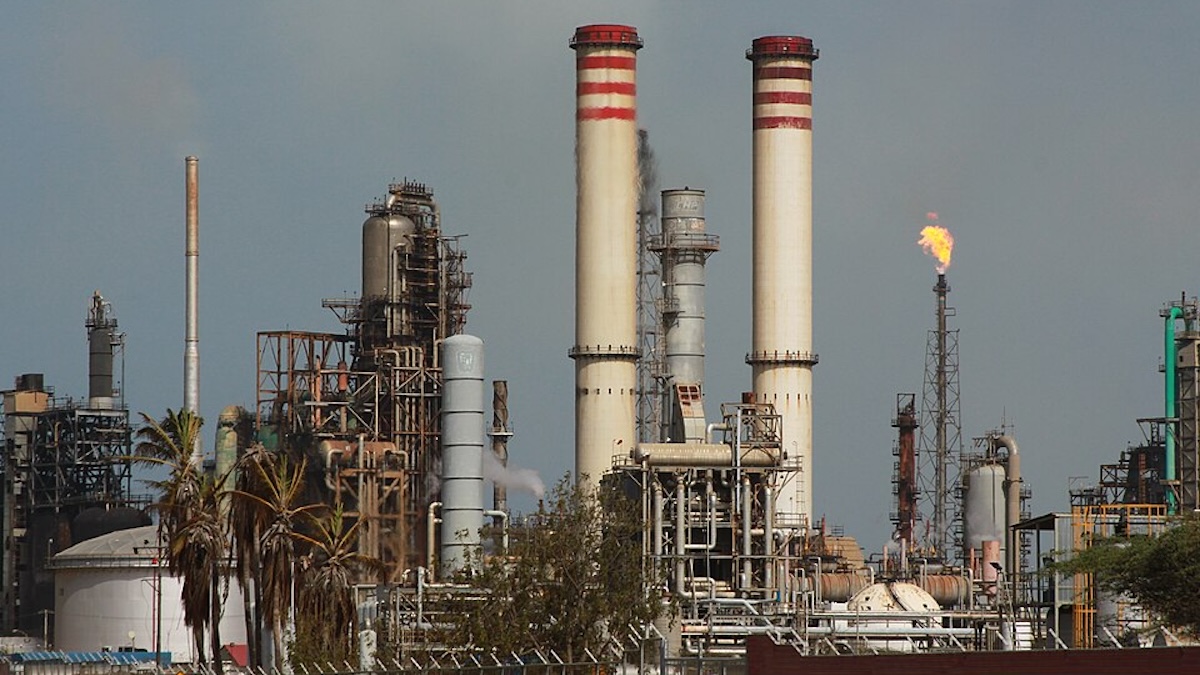
In a move that promises to upend decades of global energy market dynamics and reconfigure geopolitical power balances, the United States has announced a historic oil agreement with Venezuela that analysts warn could cut off Chinese refiners from a longstanding source of low-cost crude and grant Washington unprecedented influence over international oil pricing.
U.S. President Donald Trump first made the deal public on August 28, framing it as the largest oil transaction in modern world history. Under the terms of the arrangement, the U.S. secures majority control of more than 65 billion barrels of Venezuela’s proven oil reserves without any financial burden on American taxpayers. A U.S.-backed private venture will hold a 55% stake in oil production across 17 development blocks, with exploitation rights extending for a full century. Venezuelan authorities project the deal will generate more than $209 billion in additional tax revenue for Caracas and attract nearly $100 billion in private sector investment to the country’s energy sector.
“This deal is a huge win for both the American and Venezuelan people,” stated Secretary of State Marco Rubio, the lead U.S. negotiator who finalized the agreement alongside Defense Secretary Pete Hegseth and Venezuela’s acting President Delcy Rodríguez.
The geopolitical picture grows more complex when paired with a parallel U.S. sanctions campaign targeting Iran. Just four days before the Venezuela deal was announced, Treasury Secretary Scott Bessent unveiled Operation Economic Outcast, a sweeping set of sanctions designed to cut off all remaining government revenue streams for Iran. The campaign also intentionally restricts China’s access to discounted Iranian crude, with preliminary August data showing Chinese imports of Iranian oil falling to 534,000 barrels per day, down sharply from 823,000 bpd in July. The sanctions have disrupted the tanker, brokerage, and banking networks that facilitate China’s Iranian oil purchases, driving the steep decline.
Chinese analysts have largely characterized the U.S.-Venezuela agreement as a significant setback for Beijing’s long-term energy security strategy. The consensus among most commentators is that the deal will allow the U.S. to reduce its reliance on oil imports from Canada and the Middle East, while forcing China to turn to more expensive crude supplies, particularly from Canada, leading to higher domestic fuel costs in China even as American consumers see lower prices at the pump.
“The U.S. is already the world’s largest oil producer, and with control over these 65 billion barrels added on, its say over global oil prices will reach an unprecedented level,” wrote a Shaanxi-based columnist who uses the pen name Xiaoche. “The Organization of the Petroleum Exporting Countries (OPEC) will see its influence further weakened, and the geopolitical standing of traditional producers like Saudi Arabia and the United Arab Emirates will be challenged.”
Xiaoche added that for China, a major net energy importer, the U.S. now holds an additional leverage point that can be deployed at any time to exert targeted pressure. “If Washington one day says it wants oil prices below a certain level, it may actually be able to make that happen,” he noted. He also argued that Venezuela has effectively become an economic dependency of the U.S., ceding full control over production, pricing, and sales of its massive reserve, with Rodríguez’s political position now dependent on U.S. backing that leaves Caracas with very limited policy independence. “This episode shows how, when the stakes are large enough, rules can be rewritten and sovereignty redefined,” he said. However, he also pointed out that China and Russia, both of which hold substantial Venezuelan debt claims, are unlikely to accept the U.S. takeover passively. The two countries are expected to use diplomatic pressure and targeted economic support to back anti-U.S. factions within Venezuela, creating long-term obstacles for Washington’s ambitions.
Following the announcement of the deal, Bloomberg reported on August 29 that Venezuelan officials are actively considering a full withdrawal from OPEC, a move that aligns with Caracas’s deepening alignment with U.S. interests following the capture of former President Nicolás Maduro by U.S. forces earlier this year. While the proposal has been discussed with U.S. officials, no final decision has been made. A withdrawal from OPEC would free Venezuela from the cartel’s production quotas at a time when the country, currently pumping just 1.16 million barrels per day, is looking to sharply increase output under the new U.S. development deal.
Shaanxi-based energy commentator Zhenqing noted that a full Venezuelan exit from OPEC would trigger a profound restructuring of the global energy market, touching three core pillars of the current system: First, the U.S. dollar would almost certainly regain its status as Venezuela’s primary currency for oil settlement, reversing a partial shift toward the euro, yuan, and cryptocurrencies that was pushed forward by previous sanctions, strengthening the decades-old petrodollar system. Second, U.S. Treasury yields would become more stable, as increased U.S.-controlled oil supply reduces the risk of extreme price volatility, easing domestic inflation pressure and giving the Federal Reserve more flexibility to manage interest rates. Third, the cohesion of the broader OPEC+ alliance would face additional strain, as available spare capacity would become even more concentrated in Saudi Arabia and Russia, particularly if Venezuela ramps up output outside of OPEC+ production caps. This would complicate the alliance’s market management efforts through 2027.
Zhenqing added that while China would face indirect headwinds from these shifts, the direct impact on Chinese refiners would be mild and manageable, since Venezuelan crude accounts for less than 3% of China’s total oil imports, even after the loss of discounted supply.
The new agreement is the most visible outcome of a broader shift in U.S. grand strategy toward the Western Hemisphere, rooted in the Trump administration’s December 2025 National Security Strategy that introduced a “Trump Corollary” to the 19th-century Monroe Doctrine. The doctrine pledges to expand U.S. military and economic influence across the Americas, prioritize development of the region’s strategic resources in partnership with regional allies, reposition U.S. military forces to address hemispheric threats, and make energy dominance across oil, gas, coal, and nuclear power a core national priority to create domestic jobs, lower energy costs, and curb the influence of rival global powers.
Chinese state media has framed the U.S. strategic shift to the Americas as a victory for Beijing in the ongoing U.S.-China trade war, arguing that it represents a U.S. retreat from the Indo-Pacific region. Following the release of the new strategy, the Trump administration moved quickly to implement its agenda: U.S. forces captured Maduro on January 3, 2026, and launched direct strikes against Iran on February 28 – a country outside the Western Hemisphere, but central to the U.S. goal of global energy dominance as a major oil producer.
Not all Chinese commentary has been uniformly negative, however. Some analysts have pointed to potential silver linings, noting that deeper U.S. involvement in Venezuela’s oil sector could help Chinese stakeholders recover decades of outstanding investments in the country. “Over the past decade or so, China has provided Venezuela with total loans of $50 billion to $60 billion through platforms including the China-Venezuela Joint Fund, mostly financing infrastructure such as railways, power plants, housing and oilfield upgrades,” explained Henan-based commentator Tangtangtutu. “Venezuela agreed to repay the principal and interest by channeling part of its oil export earnings into designated accounts.”
Tangtangtutu noted that outstanding loans still total between $10 billion and $20 billion, and the original “oil-for-debt” repayment mechanism was cut off after the U.S. took control of Venezuela’s oil sales. But he added that expanded Venezuelan exports under the new deal could improve Caracas’s fiscal position, making debt repayment to China more likely than it has been in recent years. Under current expectations, Beijing is likely to either extend the repayment timeline or continue accepting oil in lieu of cash payments, rather than agreeing to major debt write-downs.
Other commentators have noted that even though Chinese refiners are being forced to switch to more expensive Canadian heavy crude – which currently trades $8 to $9 higher per barrel than Venezuelan heavy crude – the shift is not entirely a negative outcome. Yunnan-based writer Xiaoman pointed out that Canadian oil sands crude has a similar chemical profile to Venezuela’s heavy crude, requiring only minor adjustments to Chinese refinery infrastructure. Additionally, shorter shipping routes from Canada to China mean faster delivery turnaround times and more consistent supply chains, offsetting some of the higher per-barrel cost.
-
Indonesia doubles down on coal to power its aluminum expansion
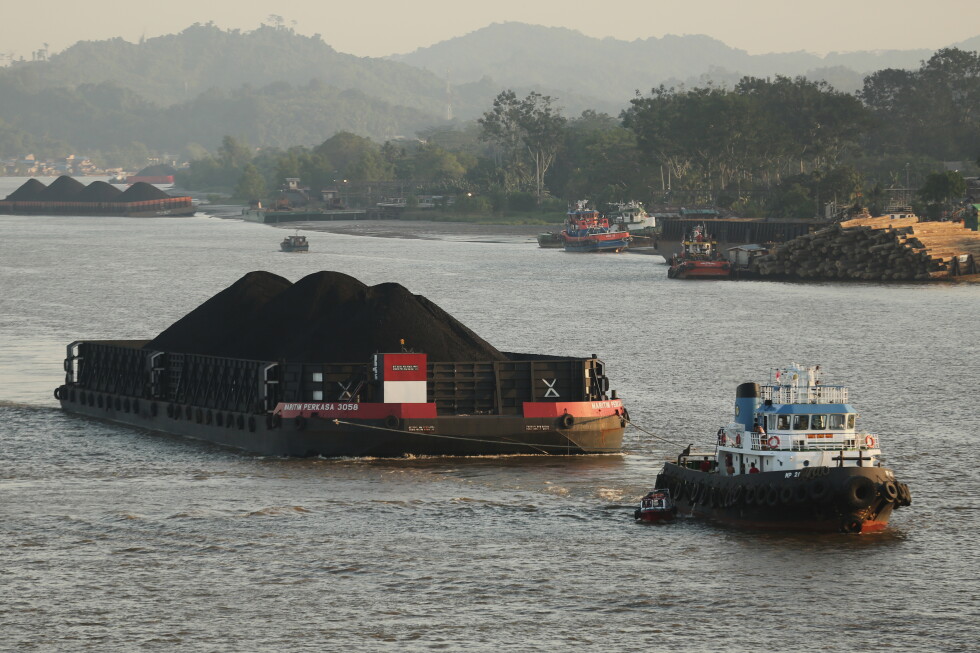
The ongoing Iran war has sent shockwaves through the global aluminum market, disrupting regional supply chains and opening an unexpected window of opportunity for resource-rich Indonesia to dramatically scale up its production of the ubiquitous industrial metal. But the Southeast Asian nation’s ambitious expansion plan, powered almost entirely by newly built coal-fired facilities, stands in direct contradiction to global and national pledges to cut carbon emissions and curb the worst effects of climate change.
Aluminum, a lightweight silver metal used in everything from consumer packaging and power transmission infrastructure to smartphones and electric vehicles, has long relied on the Middle East for roughly 9% of global annual output. Commodities analytics firm Fastmarkets projects that regional production will plummet by 44% this year compared to pre-conflict 2025 levels, driven by widespread energy shortages, Iranian strikes that damaged key industrial facilities in Bahrain, and production cuts across major producers including Qatar Aluminium Ltd. Emirates Global Aluminium has even been forced to exit existing supply deals amid persistent energy instability.
This supply shock has sent global aluminum prices swinging: prior to the outbreak of the war, a metric ton of aluminum traded between $3,150 and $3,250, peaking at $3,780 per metric ton in June before settling at around $3,400 in recent trading. Andy Farida of Fastmarkets explained that the uncertainty around Middle Eastern supply has forced industrial end-users to seek alternative sources, accelerating a global shift in aluminum production that has catapulted Indonesia into a new role as a major global supplier. “When that supply is so unsure, end users look for alternatives,” Farida said. “The war has really accelerated this transformation and put Indonesia on the map.”
Indonesia’s expansion targets are aggressive: according to the Centre for Research on Energy and Clean Air (CREA), a Finland-based non-profit research organization, the country aims to quadruple its alumina output to 32.5 million metric tons by the end of the decade, and ramp up primary aluminum production from roughly 1 million metric tons in 2025 to 14.5 million metric tons by 2030. Unlike many decarbonization-focused production projects, however, nearly all new Indonesian smelters will be powered by dedicated off-grid coal-fired power plants, referred to as “captive coal” facilities. CREA is currently tracking 32 planned captive coal projects exclusively built to power aluminum smelters, most of which are developed by private companies.
Syahdiva Moezbar, a Jakarta-based researcher with CREA, noted that there is a striking lack of public emissions data for these facilities, creating a largely unmonitored expansion of highly polluting energy infrastructure. “This captive coal boom all over Indonesia is essentially not tracked. That is why it’s very concerning,” Moezbar said. The plan directly contradicts Indonesia’s existing international pledges to phase out coal, the most carbon-intensive major fossil fuel and a leading driver of global warming. It also mirrors the environmental tradeoffs already seen in Indonesia’s rapid expansion of its nickel industry, where widespread deforestation and ecosystem degradation have been traded for rapid industrial growth.
The global aluminum industry already accounts for roughly 2% of annual global greenhouse gas emissions, equal to around 1.1 billion tons of carbon dioxide equivalent per year — more than the total annual emissions of most entire countries, according to the World Economic Forum. Even more concerning, CREA estimates that if all planned Indonesian projects come online by 2030, the country’s domestic bauxite ore reserves, the core raw material for aluminum production, will be depleted in less than 12 years.
Indonesia’s aluminum boom would not be possible without major Chinese investment. CREA data shows Chinese firms have already poured between $5.5 billion and $6 billion into Indonesia’s aluminum sector, with total investment projected to surge to $30 billion by 2030. Putra Adhiguna, a researcher with the Jakarta-based Energy Shift Institute, explained that Chinese investment flows follow a decade-old policy shift: after Beijing imposed a domestic cap on aluminum production in 2017 to curb overcapacity and cut domestic pollution, Chinese firms began shifting high-emission smelting operations to countries with looser environmental regulations, including Indonesia.
Indonesia classifies aluminum and nickel as “transition minerals” due to their widespread use in clean energy technologies such as electric vehicle batteries and solar panels. This classification creates a critical regulatory loophole that allows coal-powered production projects to be framed as consistent with global climate commitments — even despite Chinese President Xi Jinping’s 2021 pledge to halt public funding for overseas coal-fired power projects. Binbin Mariana, a policy analyst with environmental advocacy group Market Forces, called this loophole extraordinarily large, saying the framing of coal-powered aluminum as a green product amounts to blatant greenwashing. “It is a huge loophole, an elephant can go through the loophole,” Mariana said. “You say it’s a green product, but it is powered by coal… That’s definitely greenwashing.”
While aluminum smelting can run on lower-emission energy sources such as hydropower, building that renewable infrastructure would require more time and larger upfront investment. Adhiguna said Indonesia has chosen to prioritize speed to capitalize on the supply opportunity created by the Iran war, and that rush to develop is the root of much of the environmental and social risk. “The speed factor is really what is causing the havoc,” Adhiguna said. “This is really running against the grain, against the spirit, of the commitment to the climate movement.”
Muhammad Al Amin, a senior official with WALHI, Indonesia’s largest environmental advocacy nonprofit, warned that expanding captive coal capacity for aluminum will worsen the toxic seasonal haze that regularly blankets major Southeast Asian cities including Jakarta. WALHI has already led campaigns against coal expansion on Sulawesi, the island at the center of Indonesia’s nickel production boom, where local communities have already reported widespread health and livelihood impacts from coal-powered industrial development. “If companies want to expand captive coal to aluminum, I think it is very bad news and a very bad development,” Al Amin said. “We have seen it, we have felt it — how communities suffer from the captive coal impact.”
-
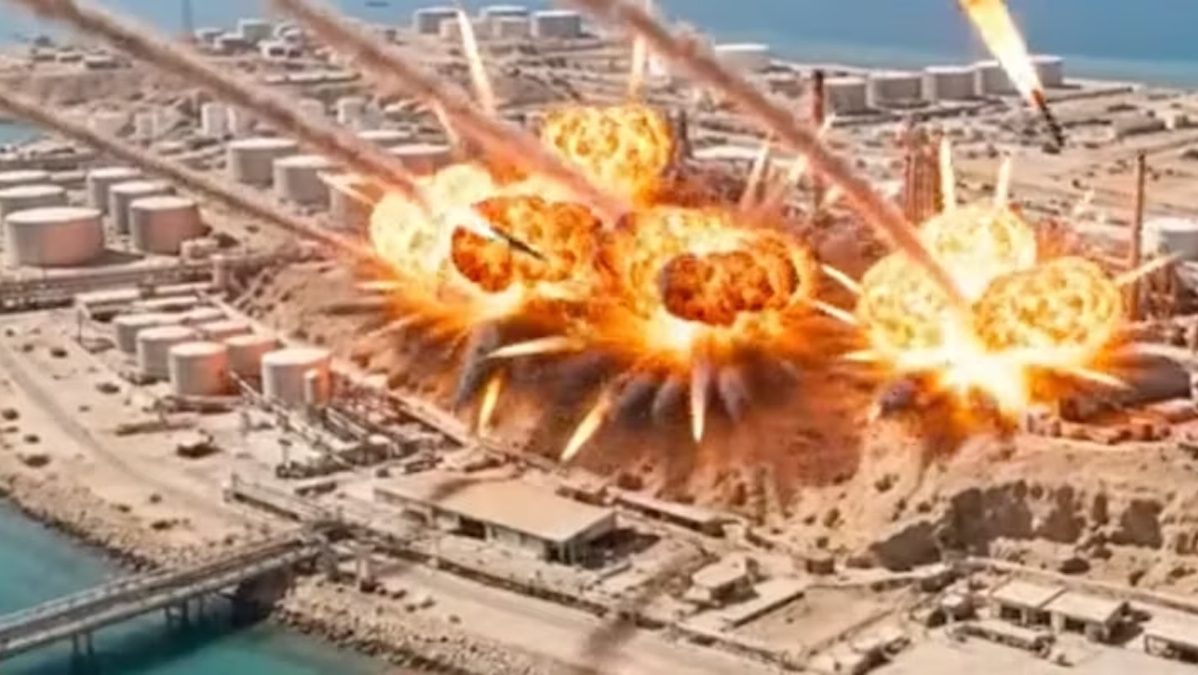
Trump posts AI slop of Iran bombing
Over a 24-hour period spanning late Sunday and early Monday, former and current U.S. President Donald Trump posted a series of erratic messages on his Truth Social platform, one of which featured an artificial intelligence-generated deepfake video falsely claiming to show U.S. military forces destroying Kharg Island—Iran’s central export hub for crude oil. This inflammatory post came only hours after U.S. military forces carried out a targeted strike on Larak Island, a position located hundreds of kilometers to the east of Kharg Island within the strategic Strait of Hormuz.
In the caption accompanying the deepfake, Trump declared “Kharg Island being blown to smithereens!!!” The U.S. leader, who regularly shares nonsensical AI-generated content with his 13 million followers on the platform, has a long history of public threats to seize or destroy Kharg Island, leading political analysts to speculate whether he intentionally misidentified the target of Sunday’s strike or confused the two Iranian sites.
Shortly after Trump’s post circulated online, an anonymous senior U.S. official confirmed to Reuters that no U.S. attack targeting Kharg Island had been carried out during Sunday’s operations. The head of Iran’s state-owned national oil company, Hamid Bovard, dismissed the false post as absurd, confirming that operations on Kharg Island remained “calm and appropriate” with no disruptions to oil export activity.
The incident has escalated already heightened tensions between the two nations: in response to the U.S. strike on Larak Island, Iran launched a retaliatory drone attack against two U.S. military bases located in Jordan, and formally denounced the latest U.S. aggression as a clear violation of the United Nations Charter. In an official statement, the Iranian Foreign Ministry placed full blame for any future escalation on the U.S. government, noting that Washington’s ongoing economic war, maritime blockade, and military strikes against Iranian territory are illegal under international law, and that any parties complicit in these actions would bear responsibility for the consequences.
This direct military exchange between U.S. and Iranian forces marks the first major escalation in weeks, amid stalled diplomatic efforts to end the ongoing conflict launched by Trump and Israeli Prime Minister Benjamin Netanyahu in late February. The war, which remains broadly unpopular globally, triggered a severe international energy crisis that drove up domestic gasoline prices across the U.S. and sparked widespread international warnings of an impending global food security emergency.
In a separate early Monday Truth Social post, Trump doubled down on his aggressive rhetoric, claiming Iran is “officially a Failed Nation” and shouting in all capital letters, “IT IS DEAD!” He went on to list alleged failures of the Iranian government, claiming the country no longer has functional naval or air forces, its currency has collapsed, it cannot pay military and police personnel, inflation has surged to 300%, and national leadership is in complete disarray. Trump also called for Iranian leaders to be tried for alleged war crimes against humanity—a demand that carries notable irony, as the U.S. president himself has faced credible, well-documented accusations of committing war crimes in Iran and other global conflict zones.
Trump’s bombastic claims of total U.S. military victory over Iran directly contradict internal assessments from top U.S. national security officials. Earlier this month, senior defense advisors reportedly warned Pentagon Secretary Pete Hegseth that continuing large-scale combat operations against Iran is unsustainable long-term, and puts U.S. national security at risk by eroding Washington’s ability to respond to other threats, including those targeting the U.S. homeland. U.S. intelligence assessments have also confirmed that, contrary to Trump’s public claims, the Iranian government remains fully functional after six months of continuous U.S. bombing campaigns.
Domestic political opponents have seized on the incident to criticize Trump’s mental stability and judgment. Representative Ted Lieu, a California Democrat who has backed congressional efforts to end the unauthorized war, wrote in a social media post Monday that “The president of the United States is mentally unwell and has been for quite some time. He fantasized blowing up Iran’s Kharg Island. Except it didn’t happen.” Lieu also highlighted a clear contradiction in Trump’s public claims: “And why would Trump need to blow it up if, as Trump claims, the U.S. has total control of the Strait?”
-
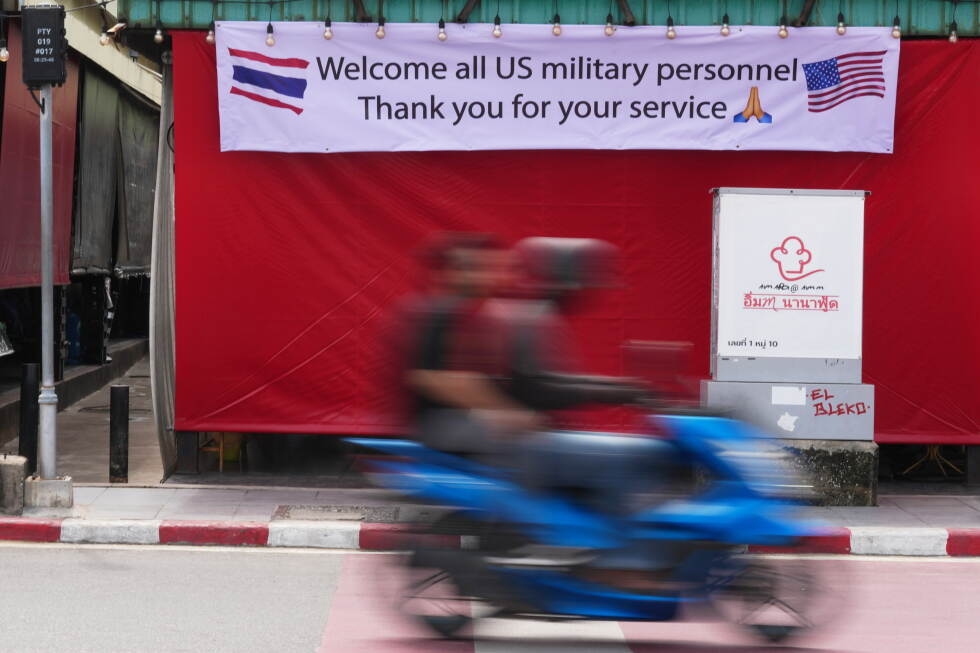
Thailand’s Pattaya anticipates USS Abraham Lincoln visit following its Middle East deployment
The coastal Thai city of Pattaya is preparing to welcome thousands of U.S. military personnel, as the USS Abraham Lincoln, a nuclear-powered American aircraft carrier, makes a scheduled port stop this week en route back to the United States after a months-long deployment supporting U.S. military operations against Iran in the Middle East. The massive warship passed Singapore over the weekend, with current navigation placing it on track to dock in Thailand’s Chonburi Province, according to confirmation from Thai government authorities. A second U.S. vessel, the destroyer USS Frank E. Petersen Jr., will dock at a separate Thai port as part of the same stopover.
Onboard the Abraham Lincoln are more than 5,000 active-duty service members, and Pattaya’s city leadership projects that a large share of the crew will take leave to visit the city’s famed beachfront and tourism districts. Pattaya Mayor Poramet Ngampichet has framed the visit as a rare and much-needed opportunity to revitalize the city’s struggling tourism sector, which has been hit hard by a global drop in international travel spurred by skyrocketing fuel prices linked to ongoing Middle East tensions. For years, Pattaya has worked to reframe its global reputation from a destination known primarily for nightlife to a top family-friendly natural and cultural vacation spot, and city officials see repeated military port calls as a way to solidify its standing as a key international travel hub. Poramet emphasized that the city welcomes future U.S. military stops, whether for training exercises or rest and relaxation for troops heading back to the U.S.
To ensure the visit proceeds smoothly, Thai authorities have put in place a series of rules and security measures. Poramet confirmed after a Monday meeting with U.S. diplomatic and military officials that all visiting service members will be barred from participating in specific recreational activities such as parasailing, as well as from using marijuana. The ban is particularly notable after Thailand legalized medical cannabis in 2022, leading to a rapid expansion of licensed dispensaries across major Thai cities including Pattaya. Local law enforcement has also increased patrols across high-traffic tourist areas, including Pattaya Beach and the iconic Walking Street entertainment district, and the Thai government has issued a formal warning to local businesses against price gouging visiting sailors. City Police Chief Anek Srathongyoo confirmed that any U.S. service member who violates Thai law will face full prosecution under local regulations. The heightened security is designed to prevent incidents that could harm the city’s reputation and discourage future visits.
Local business owners have mixed reactions to the upcoming port call, echoing broader uncertainty about the potential economic impact. Many businesses struggling from the tourism downturn linked to the Iran conflict have openly embraced the visit, with one beachfront bar hanging a large banner reading “Welcome all US military personnel Thank you for your service.” But other local operators are far more cautious. Souvenir shop owner Somkiet Noree, who operates on Walking Street, noted that Pattaya’s tourism sector remains far quieter than pre-tension levels, and while he hopes the visiting troops will boost his sales, he is not counting on a major windfall. Bualuang Ponok, a bar employee on the same street, echoed that skepticism, pointing out that even with 5,000 service members in the area, it remains unclear how many will actually visit the downtown entertainment and shopping districts where small local businesses operate. She noted that past visits saw only a small share of troops venture into the area, leading to little tangible increase in local spending.
The port call comes after an unprecedented deployment for the Abraham Lincoln. Normally based in the Asia-Pacific region, the carrier was relieved of its Middle East duties in early August by the USS George Washington. Its deployment stretched to more than 250 uninterrupted days at sea, marking a new record for U.S. Navy deployments. The extended time at sea sparked widespread public concern over reports of deteriorating crew mental health and critical shortages of essential supplies including food and hygiene products. Former U.S. President Donald Trump downplayed these concerns at the time, telling reporters the deployment was “not nearly long enough.” After completing its stop in Thailand, the Abraham Lincoln will continue its journey home to the United States, according to Thai official statements.
-
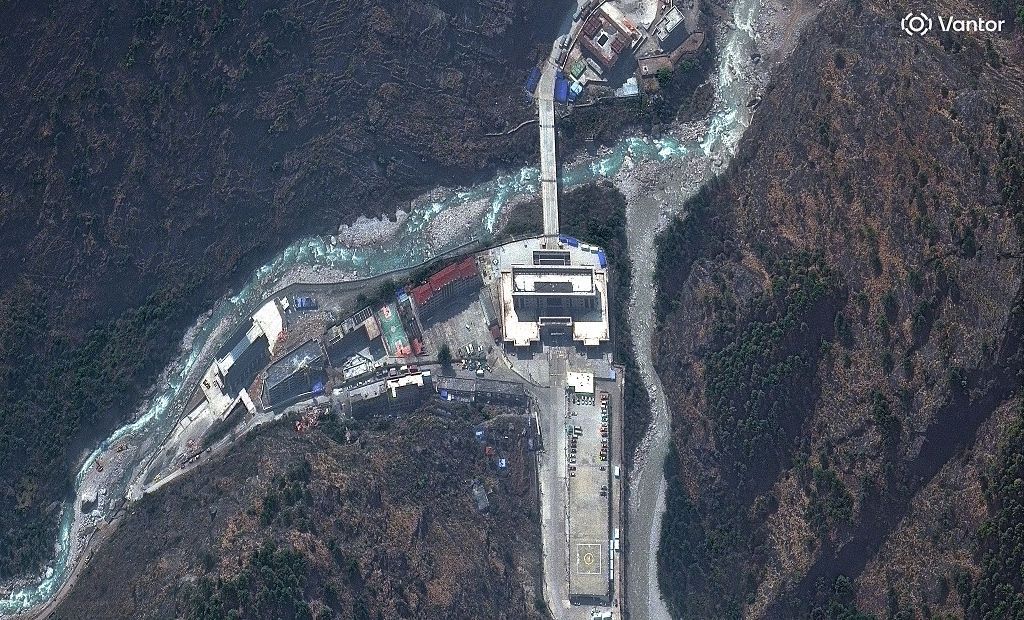
How catastrophic flash flood unfolded at remote Nepal-China border point
On August 26, a catastrophic glacial outburst flood tore through the high-altitude border region between Nepal and China, wiping out infrastructure, destroying the iconic cross-border Friendship Bridge, and leaving hundreds of people unaccounted for in one of the deadliest natural disasters to hit the Himalayas in recent years. Visual evidence captured through pre- and post-disaster satellite imagery and local CCTV footage has begun to reveal the full scale of the destruction that unfolded in mere minutes.
A few seconds of chilling CCTV footage from Gyirong, the Chinese side of the border crossing, captures the moment disaster struck: what first resembles a dark, foreboding cloud sweeping over the ridgeline behind border buildings rapidly resolves into a churning mass of water, mud, ice, boulders, and rock surging down the valley at deadly speed. The footage is timestamped 10:59:53 local Tibet time, just seven minutes after a glacial collapse triggered the torrent high in the mountains, per Chinese disaster assessments, and less than 10 minutes after Nepal’s immigration system logged its final transaction at the Rasuwagadhi crossing.
In the wake of the surge, large swathes of the border’s built infrastructure simply vanished. Most of the Gyirong border complex was swept clean off the valley floor, while across the international frontier in Nepal’s Rasuwa district, the destruction was equally severe. The Friendship Bridge, the decades-old structural link between the two nations, was torn from its foundations and washed away, alongside Nepal’s entire immigration and customs compound. Timure, the small mountain trading settlement that had grown up around the busy crossing, was left in ruins.
Geographically, this key trans-Himalayan route has long been recognized as a high-risk zone. Ajay Dixit, a leading Kathmandu-based hydrologist, explains that the corridor is a historic travel link between Kathmandu and the Tibet Autonomous Region of China, defined by steep gorges, fast-flowing sediment-heavy rivers prone to carrying massive debris downstream, and inherent geological instability that makes flash floods a persistent threat. Today, the crossing remains a vital economic and cultural gateway, traversed daily by Mount Kailash pilgrims, cross-border traders, truck drivers, customs officials, tourists, and local border communities.
In the hours before the flood hit, the crossing was unusually busy. Electronic immigration records from Nepal confirm that 89 foreign and Nepali nationals had cleared exit checks to enter Tibet, while four people had registered for entry into Nepal. That count, however, only captures a fraction of the people present in the border zone. Tika Ram Pokharel, a senior immigration assistant at Rasuwagadhi who was the only office staff member to survive—he had traveled to Kathmandu to take a mandatory work exam that morning—told reporters that between 300 and 400 people were waiting to cross into Tibet, with additional travelers from the Chinese side also in the area.
The full extent of the human toll remains uncertain, weeks after the disaster. India’s foreign ministry confirms that at least 275 Indian nationals are missing across Nepal, with more than 100 of those unaccounted for believed to have been at the Rasuwagadhi crossing when the flood hit. Among the missing are 32 Indian nationals who cleared Nepali exit checks that morning, as well as 77 pilgrims with the Isha Foundation returning from Mount Kailash who were at the Chinese border facility. Four senior Nepali immigration staff, including the head of the Rasuwagadhi office, are also missing; his body was recovered days later far downstream, while the female officer who logged the final immigration transactions remains unaccounted for. Pokharel, who lost 40 to 50 close friends in the disaster, estimates the actual death toll could be far higher than official counts, suggesting between 2,000 and 2,500 people may have been caught in the surge—an estimate that has not been independently verified.
The geologic timeline of the disaster has left many questions about why so many people were trapped. Seismic sensors detected glacial movement above the border just two minutes after the final immigration transaction was logged, at 8:37 a.m. Nepal local time. Researchers confirmed the seismic shift marked the collapse of a section of mountain glacier that triggered the outburst flood. Once travelers cleared Nepali immigration, it took 15 to 20 minutes to walk the 3.5-kilometer stretch from the immigration office at Ghatte Khola Bazar to the Friendship Bridge, meaning most of the 89 people who cleared exit checks that morning would still have been en route when the flood hit. Ghatte Khola itself, which was home to 50 to 60 local houses, hotels, shops, four hydropower facilities, and a bus terminal for Kathmandu-bound travelers, was completely submerged, with floodwaters surging higher than the 100-meter elevation of the immigration office itself.
Personal accounts from families of the missing underscore the suddenness of the disaster. For many pilgrims, the morning began as a routine wait to cross the border. Sudipto Bhattacharya received final updates from his wife Subhrasree Chakraborty, who was traveling with a group of 60 pilgrims: at 7:57 a.m., she sent a photo of her exit stamp, confirming Nepali immigration was complete. At 8:03 a.m., she sent one last message: “We are waiting to enter China.” Communications cut out moments later, and she has not been heard from since.
When Chinese rescue teams reached the devastated Gyirong border area on August 28, they found a landscape of total destruction. “As far as the eye could see, there was nothing but ruins,” one rescuer told Reuters. The disaster comes just 18 months after a separate major flood shut the crossing for nearly six months, which only reopened on January 1 after Chinese engineers constructed a temporary replacement bridge. By June of this year, cross-border traffic had returned to pre-flood levels, with Chinese authorities recording more than 100,000 crossings through Gyirong in the first half of 2026, and Nepali immigration recording 53,742 total arrivals and departures in the 12 months to mid-July.
Beyond the human cost, the disaster has major economic implications for Nepal, which relies heavily on the Rasuwagadhi crossing for trade with China. Posh Kumar Pandey, chairman emeritus of the Kathmandu-based South Asia Watch on Trade, Economics and Environment, notes that Rasuwagadhi is one of Nepal’s only two major land trade ports with China, accounting for roughly one-third of Nepal’s total $2.95 billion in annual trade with its northern neighbor. Up to 70 cargo trucks crossed the border daily, carrying Chinese electronics, machinery, vehicles, clothing, and fruit into Nepal, and the route handles an estimated 80% of all of Nepal’s electric vehicle imports from China.
With both Rasuwagadhi destroyed and Nepal’s second major trade crossing at Tatopani temporarily closed by Chinese authorities due to ongoing landslide risks, Nepal is currently left with no active major land trade routes with China. Pandey warns that the disaster exposes the risks of Nepal’s overreliance on a small number of high-risk border corridors. “We have put all eggs here,” he said. “We need to develop an alternative border port.” He added that Nepal should also reconsider its strategy of concentrating dozens of hydropower projects along the same geologically unstable river system.
For the few survivors like Pokharel, the disaster carries a deeply personal weight. He recalled that after the 2025 flood, his colleagues were acutely aware of the ongoing flood risk, often checking the river at night after feeling seismic vibrations and discussing emergency escape routes uphill if another flood struck. “But my friends could not get that chance,” he said. Search and rescue operations are still ongoing in the region, with Chinese helicopters delivering emergency supplies to cut-off areas and recovery teams working to locate missing persons amid the mud and debris.
-

Police officer admits to closing missing person cases to avoid work
A damaging institutional scandal has rocked South Korea’s law enforcement community, after a senior police officer on the popular tourist island of Jeju admitted to intentionally closing dozens of missing person investigations without completing required work to avoid additional workload pressure. The officer, identified only by his surname Bu, was taken into custody earlier this month following allegations that he falsified records to shut down active cases and lied to grieving family members of missing individuals.
In the wake of growing public outrage over the revelation, Jeju Provincial Police launched belated search operations for the long-neglected missing persons, recovering four dead bodies in recent weeks. Investigations have confirmed Bu deliberately prematurely closed at least two high-profile cases, for which he now faces three formal criminal charges: forgery of public electronic records, obstruction of official duties, and gross dereliction of duty.
Court documents and police statements detail that in both confirmed cases, Bu falsely recorded that he had made contact with the missing individuals, then closed the cases without ever verifying their locations or confirming their safety. During interrogation, Bu told investigators his decision stemmed from workload and administrative pressure: he stated, “The missing person was a typical adult so I thought about it carelessly. If the case was not closed, there would have been a lot to take care of, and out of a sense of pressure over the case handover, I falsely closed it.”
One of the falsified cases involved 37-year-old Jang Mi-ran, who went missing in May after her boyfriend filed a missing person report. Bu told Jang’s boyfriend that he had spoken to her, and that she explicitly refused to meet with police or have any contact with her boyfriend – a claim authorities have confirmed was entirely fabricated. Bu entered the false narrative into official police records, even logged that Jang had been killed in a traffic collision, before permanently closing the case. Last week, search teams found Jang’s remains near a palm tree plantation on Jeju.
The second confirmed case involved a man in his 60s reported missing in July. Bu repeated the same pattern, falsely claiming he had contacted the man and that the man requested no further contact. The man’s body was discovered earlier this month.
Investigators now suspect Bu may have improperly closed as many as 25 additional missing person cases, though officials note that some of those individuals have since been independently confirmed alive and unharmed.
Contextual data on missing persons in South Korea frames the severity of the scandal: while violent crime rates are extremely low across the country, South Korea has one of the highest suicide rates in the developed world. More than 70,000 adults are reported missing every year, and 99% of those cases are officially marked as resolved within 30 days – a statistic that has now come under renewed scrutiny following Bu’s admission.
The scandal has erupted at an extraordinarily sensitive political juncture for South Korean law enforcement. Just weeks before the arrest, the national government passed landmark legislation shifting full investigative authority from public prosecutors to the national police, a reform designed to reduce prosecutors’ outsized influence over political affairs. However, the transfer of power has already faced widespread public pushback, as many South Koreans have long raised concerns about systemic corruption and institutional incompetence within police ranks.
In response to the growing outcry over the Jeju scandal, South Korean President Lee Jae Myung has publicly pledged to implement sweeping police reforms. In a formal address Tuesday, Lee expressed regret over the incident, noting that a small number of unethical officers “who muddy the well water” are eroding public trust and damaging the reputation of the vast majority of hardworking, honest law enforcement personnel across the country.
-

More than 1,000 dead from catastrophic Nepal-China floods
On Tuesday, disaster management authorities confirmed that the combined death toll from catastrophic flash flooding triggered by a Himalayan glacial collapse has exceeded 1,000 across Nepal and southern Tibet, China, as rescue crews race against time to reach thousands of missing people trapped in cut-off, disaster-ravaged communities. As of the latest official update from Nepal’s national disaster management agency, the country has recorded 987 confirmed fatalities, with another 3,916 people still unaccounted for – a figure that includes 583 foreign nationals. China’s most recent official update, released Sunday, reported 16 confirmed deaths in the Tibetan region affected by the disaster.
The unprecedented disaster unfolded on August 26, originating high in the Himalayan mountain range in a sequence of catastrophic natural events. The crisis began when a glacial formation experienced a full collapse, sending massive volumes of broken ice, displaced rock, and glacial meltwater surging into lower river valleys, which rapidly triggered powerful downstream flash floods that swept through both Nepalese and Tibetan communities. Researchers analyzing satellite imagery of the disaster site have determined that the collapse was tied to the failure of the bedrock supporting the glacial formation. The force of the resulting massive rockfall was powerful enough to be detected as a magnitude 5.2 seismic event by global monitoring networks.
The enormous surge of water and debris pushed into transboundary rivers that flow through Tibetan and Nepalese valleys, causing water levels to skyrocket in a matter of hours. Floodwaters and debris wiped out entire residential structures, public buildings, highway networks, and bridge crossings, leaving entire regions isolated with no overland access for emergency response. To date, Nepalese authorities confirm that more than 11,814 people have been pulled from danger and evacuated, with emergency teams relying heavily on helicopter and fixed-wing aircraft operations to reach stranded communities after landslides and flooding destroyed most overland routes.
The most urgent priority for rescue teams right now is locating roughly 900 missing workers from 12 damaged hydropower development projects across the affected region. Officials estimate that around 500 of these workers may still be trapped inside flooded project tunnels, cut off from outside contact. Footage released by the Nepalese Army shows rescue teams navigating narrow, debris-clogged tunnels, wading through chest-deep muddy floodwater, and climbing over piles of broken rock and rubble in the search for any surviving trapped workers.
Bimal Sharma, a helicopter pilot who has flown continuous rescue missions since the disaster struck, described the profound scale of destruction to Timure, a remote Nepalese border town near the Tibetan boundary that he has flown to for years. “It felt like I was flying over an entirely different landscape,” Sharma said. The pilot added that while he has had little time to speak at length with the survivors he airlifts to safety, their unspoken grief is impossible to miss. “I can see the pain in their eyes. It’s heartbreaking,” he said.
As rescue operations continue, teams are also working to deliver food, clean water, medical care, and emergency shelter to thousands of survivors who remain in isolated regions with damaged or destroyed transportation infrastructure. The disaster has already drawn attention to the growing risks of glacial hazard events in the Himalayas, a region that has accelerated glacial melt and retreat driven by rising global temperatures.