标签: Asia

亚洲

  • Syria begins trial of first Assad-era official in Damascus

    Syria begins trial of first Assad-era official in Damascus

    On a landmark Sunday morning in central Damascus, Syria, a metal cage was positioned at the heart of the courtroom in the Palace of Justice, steps from the bustling al-Hamidiyah souk. Shortly before 11 a.m., Atef Najib, the cousin of ousted former president Bashar al-Assad and a one-time top security official, was led into the enclosure. Clad in a brown striped prison uniform and wearing a blank, unreadable expression, he took his seat as the courtroom fell quiet.

    Najib stands accused of orchestrating one of the earliest and deadliest crackdowns on anti-government demonstrators that erupted at the start of the 2011 Syrian uprising, with formal charges of “crimes against the Syrian people” brought against him. Mounted directly opposite the defendant’s dock was a portrait of Hamza al-Khatib, the 13-year-old boy who became a global symbol of the uprising’s human cost after he was killed and tortured by security forces in 2011.

    The roots of this trial stretch back 15 years to the 2011 Arab Spring, when a group of teenagers in the southern Syrian city of Deraa spray-painted anti-regime slogans on a local school wall. One line, “Doctor, it’s your turn,” cut directly at Assad, a trained ophthalmologist. The detention and brutal torture of those young children by security forces sparked the first widespread anti-government protests across the country. At the time, Najib was the top political security chief in Deraa, overseeing the sweeping campaign of mass arrests and violent repression that followed.

    Sunday’s opening session marks the first public trial of a senior Assad-era official since the fall of the former government in December 2024. Najib was among the first high-ranking figures arrested, taken into custody on Syria’s coast in January 2025, just weeks after Assad fled the country to Russia. For more than a year, families of victims of the Assad regime’s crackdown have waited for this moment of accountability.

    In the courtroom, emotions ran high as victim’s families passed the dock in front of international and local reporters. A young woman held aloft a photo of Hamza al-Khatib, as chants broke out across the room: “The martyrs are the heroes. Atef, you are the dog.” The trial comes as Syria’s new transitional authorities work to demonstrate progress on long-awaited transitional justice, a key demand from Syrians who spent 14 years under the repressive Assad regime during the civil war.

    Just two days before Najib’s trial opened, Syrian security forces announced the arrest of Amjad Youssef, the primary suspect in the 2013 Tadamon massacre, where nearly 300 unarmed civilians were executed and dumped into a mass grave. Footage of Youssef personally shooting victims before they were thrown into the pit was widely circulated after the massacre, and his arrest in the Al-Ghab Plain area of Hama province near his hometown was publicly shared by the interior ministry to broad attention across the country.

    Since Assad was toppled on December 8, 2024, Syrians have consistently demanded full accountability for the thousands of crimes committed under his government. But the transitional justice process has moved slowly in a country fractured and worn down by 14 years of violent conflict.

    Addressing the court on Sunday, Damascus Public Prosecutor Hosam Khatab framed the trial as a foundational step for the new Syrian justice system. “Transitional justice begins with him, trust the state and justice,” Khatab told the court. He called Najib “the first ‘pharaoh’ when he gave the orders to fire on protesters,” using the term Syrians have adopted to refer to abusive former regime officials. “This will be neither the first nor the last. We will pursue them all.”

    Turning directly to Najib in the dock, Khatab raised his voice: “Our God has given us what we wanted. And as for you: did your God, Bashar al-Assad, give you what he promised?” Najib offered no response. The prosecutor then went on to announce a list of 10 additional high-profile suspects who will face trial in coming months, topped by Bashar al-Assad himself. Other names on the list include Assad’s younger brother Maher al-Assad, who commanded the elite 4th Armoured Division — the regime’s primary armed wing that led multiple crackdowns; Wassim al-Assad, another close relative of the ousted president; former Grand Mufti Ahmed Badreddin Hassoun; and multiple other military and security officials arrested in recent months. Bashar al-Assad, who remains in exile in Russia, will be tried in absentia.

    Sunday’s opening session was limited to preliminary administrative and legal procedures, and the judge did not question Najib directly. A second full hearing is scheduled for May 10.

    Currently, Syria retains the death penalty as a legal punishment, but the legal definitions of crimes against humanity and war crimes have not yet been formally codified into the country’s national law. An independent observer monitoring the trial’s impartiality on site spoke to Middle East Eye, noting the challenge of upholding judicial standards in the wake of mass atrocities. “We must maintain a degree of neutrality and avoid overly political language to meet the standards of justice, even if it is difficult in the face of victims,” the observer said. “It will happen gradually. This was the first day.”

    As Najib was led out of the courtroom at the end of the session, the iconic chants from the 2011 uprising rang out across the chamber once again: “Syria is ours, not the Assad family’s.”

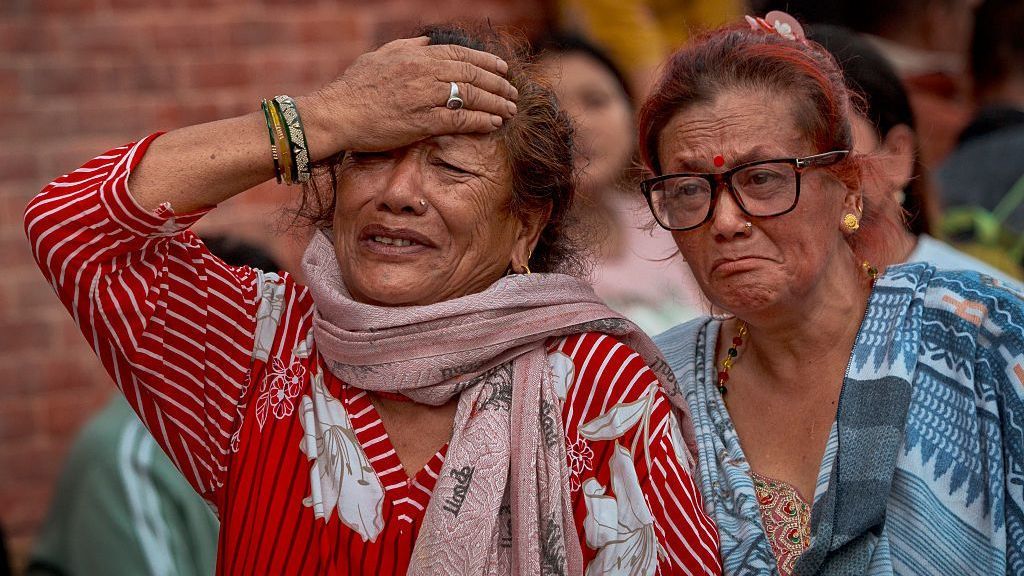
    Outside the Palace of Justice after the hearing, dozens of victim’s families from Deraa waited for buses to carry them back to their southern home city, sitting on plastic chairs as traffic slowed around the building. Many mothers, their eyes wet with tears, embraced one another, comforting each other after the emotional day.

    Among them was 50-something Warda, whose son — an unarmed bystander — was killed when security forces stormed the al-Omari Mosque area in Deraa in late March 2011. Dozens of protesters were killed that day when forces used tear gas and live ammunition to break up weeks of ongoing sit-ins and demonstrations. Warda said she believes Najib will ultimately face the death penalty for his role in the violence. “This is the most beautiful day of my life. God has put him in a cage. We hope justice will prevail,” she told Middle East Eye.

  • Global voices meet Confucian culture in Nishan

    Global voices meet Confucian culture in Nishan

    Between April 24 and 26, 2026, Qufu, the ancient birthplace of the renowned Chinese philosopher Confucius located in Jining, Shandong Province, opened its gates to a special cross-cultural gathering. Hosted under the theme “Nishan Sacred Land: A Vision Shared with the World”, the event welcomed 28 digital content creators from more than a dozen nations across the globe, including the United States, France, and Russia, inviting them to dive deep into centuries-old Confucian heritage.

  • China pushes contracts, pay reforms for gig workers

    China pushes contracts, pay reforms for gig workers

    China has introduced a landmark, high-level policy framework designed to enhance regulatory oversight and support services for the rapidly expanding cohort of workers in new internet platform-linked business models, a group that includes food delivery riders, online livestreamers and other gig economy employees.

    The policy document, released jointly by the General Office of the Communist Party of China Central Committee and the State Council, China’s top executive body, sets clear, time-bound targets to standardize employment practices, upgrade working conditions and strengthen legal protections for this growing new employment group by 2027.

    According to the roadmap laid out in the guideline, over the next three to five years, China aims to build a more resilient management and service system for platform-based workers, foster more harmonious labor relations, and deliver more substantial progress across all areas of the sector’s sustainable development.

    To meet these ambitious goals, the policy urges internet platform operators, courier service providers and other relevant enterprises to overhaul their internal labor management frameworks. It specifically calls for broader adoption of formal labor contracts and customized written agreements that align with the unique characteristics of different platform-based industries and meet the practical needs of their workers.

    The guideline also emphasizes the core accountability of corporate headquarters in ensuring that affiliated partners, franchisees and local branch operations fulfill their legal and ethical obligations to workers. This includes requirements to crack down on uncivilized workplace conduct, as well as mandates to upgrade workplace safety management systems to protect on-the-job safety and occupational health for all employees.

    A key focus of the new policy is strengthening safeguards for workers’ legal rights and interests. The document requires firms to set remuneration levels in direct proportion to workers’ actual workload and labor intensity, and guarantees full, on-time wage payments. It also pushes for the establishment of accessible internal channels for workers to voice concerns, improvements to labor dispute resolution mechanisms, and the fair handling of worker complaints and appeals.

    In addition, the policy encourages internet platforms to meet their social responsibilities by adjusting their algorithm management practices and increasing operational transparency. It requires platforms to optimize and revise algorithmic rules for work allocation after incorporating input from trade unions and elected representatives of platform-based workers.

  • Honolulu mayor says getting giant pandas to Hawaii would be ‘incredible’

    Honolulu mayor says getting giant pandas to Hawaii would be ‘incredible’

    During an official visit to Fuzhou, the capital city of China’s Fujian Province, Honolulu Mayor Rick Blangiardi has publicly expressed his ambition to bring giant pandas to Hawaii, framing the potential cross-Pacific wildlife exchange as a powerful symbol of the deepening friendship between Honolulu and its Chinese sister city Fuzhou.

    Blangiardi made the remarks Saturday during a tour of Fuzhou Panda World, the city’s premier panda exhibition and conservation facility. While walking through the venue’s exhibition hall, the mayor also asked detailed questions about the daily feeding protocols and long-term care regimens that keep the facility’s giant pandas healthy. A photo from the tour, taken by Qiu Yuwen for China Daily, documented the mayor’s visit to the popular attraction.

    “If we were fortunate enough to get pandas to come to Hawaii, that would be incredible,” Blangiardi told reporters during his stop at the venue.

    The push for pandas comes as part of ongoing people-to-people and cultural exchanges between the two sister cities, which have built cooperative ties across tourism, culture, trade and municipal governance in recent years. Giant pandas have long served as iconic cultural ambassadors for China, with panda exchanges between nations historically helping to deepen public connection and diplomatic goodwill between partner countries. If the initiative moves forward, Hawaii would become one of the few regions outside of continental China to host the globally adored endangered species, drawing significant public and tourist interest to the islands.

  • Iran foreign minister returns to Pakistan despite Trump cancelling envoys’ trip

    Iran foreign minister returns to Pakistan despite Trump cancelling envoys’ trip

    Amid a rapidly shifting regional crisis in the Middle East, overlapping diplomatic efforts and fresh security incidents have created a tangled landscape of negotiations and ongoing conflict over the weekend, with major powers and regional actors clashing over war termination and territorial control.

    Iran’s top diplomatic envoy Abbas Araghci made a return trip to Islamabad on Sunday to advance peace negotiations aimed at ending the ongoing Iran war, even after former US President Donald Trump scrapped a planned trip by his own negotiating team to the Pakistani capital. Araghchi’s visit marked the second stop in a regional diplomatic tour: he first met with senior Pakistani officials including Prime Minister Shehbaz Sharif, Foreign Minister Ishaq Dar, and powerful military chief Asim Munir — a key mediator in the talks — last Saturday, before traveling to Oman for additional negotiations on Sunday. After the initial round of Pakistani talks, Iranian envoys returned to Tehran to receive updated guidance on proposals to end the conflict, Iran’s state-run Isna news agency confirmed.

    In Muscat, Araghchi held closed-door talks with Sultan Haitham bin Tariq al-Said, covering navigation security in the strategically critical Strait of Hormuz and wider Gulf waters, as well as coordinated diplomatic pushes to end the war. In remarks carried by an Iranian foreign ministry statement, Araghchi argued that long-standing US military presence in the Middle East has exacerbated regional instability and deepened divisions between local actors, calling for a new regional security architecture built without external interference. Following the conclusion of Sunday’s talks in Pakistan, the foreign minister is scheduled to travel to Moscow for further consultations, according to diplomatic sources.

    The Iranian diplomatic push came as Trump made a last-minute reversal of a planned trip by his own Middle East envoy Steve Witkoff and senior advisor Jared Kushner, his son-in-law, to Islamabad. Speaking to Fox News, Trump said he called off the trip because he saw no value in what he described as unproductive talks, and dismissed Tehran’s initial negotiating position as inadequate. In a surprising twist, Trump added that Tehran revised its proposal just 10 minutes after he announced the cancellation. “They gave us a paper that should have been better and — interestingly — immediately when I cancelled it, within 10 minutes, we got a new paper that was much better,” he told reporters, declining to share further details on the content of the revised proposal. When asked if the cancelled trip would lead to a resumption of full-scale hostilities, Trump downplayed the risk, saying “No, it doesn’t mean that. We haven’t thought about it yet.”

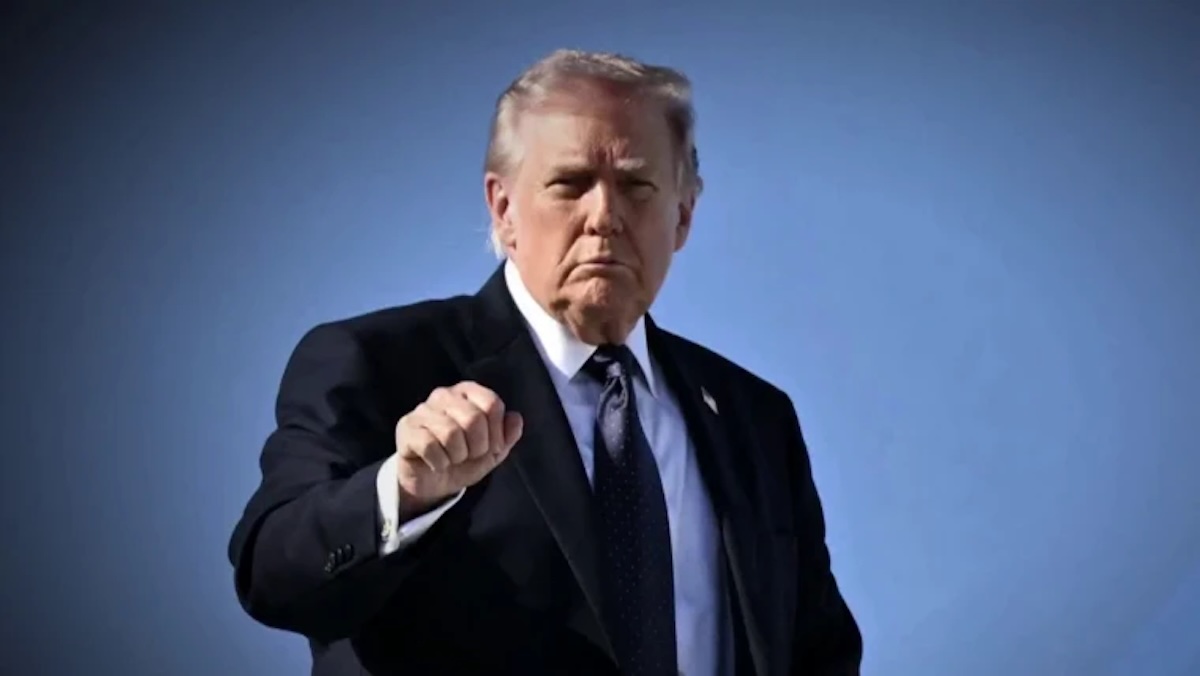
    Hours after Trump announced the cancellation of the envoy trip, a security incident near the White House Correspondents’ Association Dinner held at the Washington Hilton forced an emergency evacuation of Trump and other top US leaders. A shooting outside the venue left a Secret Service agent wounded by gunfire, but the agent survived after a bulletproof vest stopped the round, Trump confirmed. In a statement to reporters after the evacuation, Trump said the incident would not change his policy in Iran. “It’s not going to deter me from winning the war in Iran,” he said, adding that he did not believe the shooting was connected to the ongoing conflict. The president later posted an image on his social platform Truth Social showing the suspected shooter, hand cuffed and lying face down, topless, on the ground.

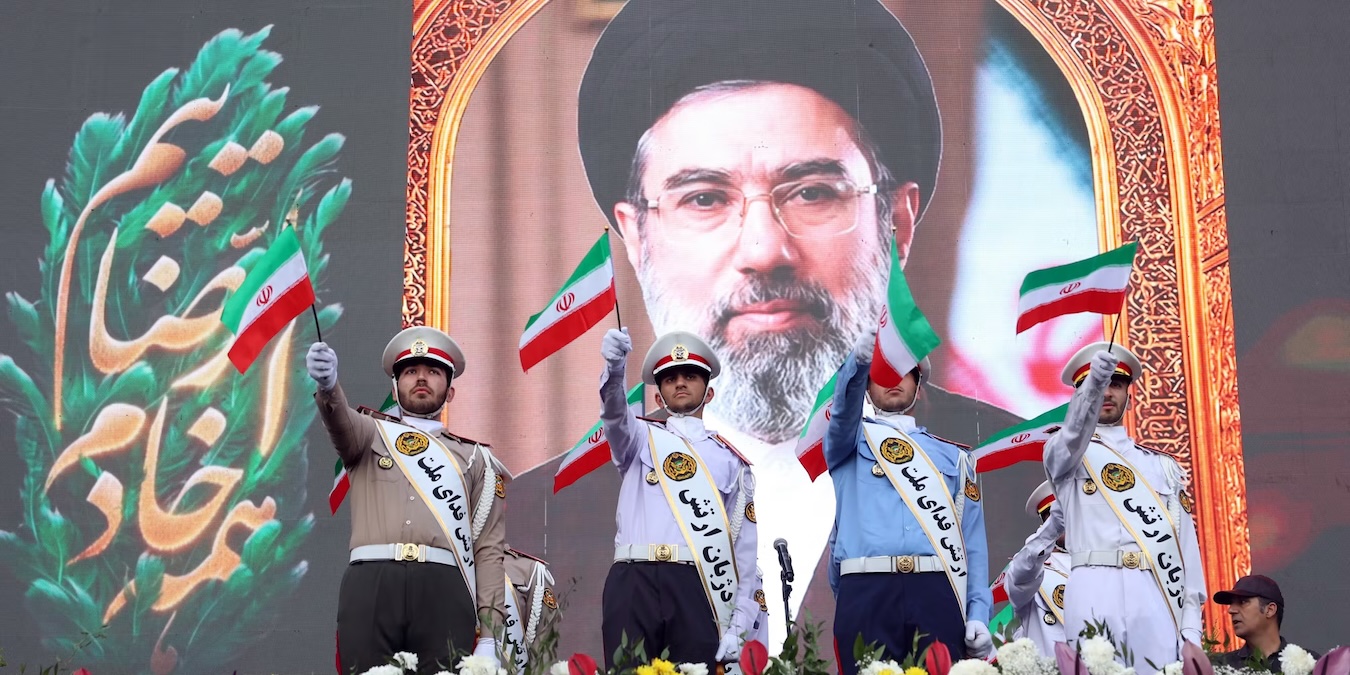
    Despite the diplomatic flurry over ending the Iran war, Iran’s Islamic Revolutionary Guard Corps (IRGC) reaffirmed it has no plans to lift its current blockade of the Strait of Hormuz, the chokepoint through which roughly one-fifth of the world’s total crude oil and liquefied natural gas shipments pass each year. “Controlling the Strait of Hormuz and maintaining the shadow of its deterrent effects over America and the White House’s supporters in the region is the definitive strategy of Islamic Iran,” the IRGC said in a post on its official Telegram channel. The US has responded with its own blockade of Iranian ports, escalating the standoff over the critical waterway.

    Separately, in Lebanon, ongoing violations of a existing ceasefire by the Israeli military have left multiple civilians dead and deepened humanitarian suffering over the weekend. Lebanon’s state-run National News Agency reported that Israeli airstrikes targeted multiple villages in southern Lebanon’s Nabatieh, Bint Jbeil, and Sour districts on Sunday, killing three people. The strikes mark the latest in a string of repeated Israeli attacks since a ceasefire between Israel and Lebanese armed groups came into effect on 17 April.

    Israeli forces continue to occupy a roughly 10-kilometer deep buffer zone inside southern Lebanon it calls the “yellow line,” and has barred displaced residents from returning to their homes in the area. Over the weekend, the Israeli military dropped leaflets over the village of Mansouri in the Sour district, warning civilians against entering nearly two dozen villages in the occupied zone. In a post on the social platform X, Israeli army spokesperson Avichay Adraee renewed warnings to civilians against entering areas near the Litani River, Wadi Salhania and Saluki, and published a list of dozens of villages within the yellow line where residents are officially barred from returning.

    Lebanon’s health ministry reported Sunday that the total death toll from Israeli attacks on Lebanon since 2 March has risen to 2,496, with more than 7,725 people wounded. The strikes come a day after four people were killed in Israeli airstrikes in southern Lebanon, even under the current ceasefire framework.

  • Global influencers experience Chinese cultural charm in Qufu

    Global influencers experience Chinese cultural charm in Qufu

    From April 24 to 26, 28 influential global digital content creators gathered in Qufu, the birthplace of Confucius located in Jining, Shandong Province, for a three-day cultural immersion event titled “Nishan Sacred Land: A Vision Shared with the World”. The event, designed to showcase China’s profound traditional heritage to an international audience, brought the creators through a curated journey of historical sites and folk cultural experiences unique to the region.

    On the second day of the event, the group kicked off their exploration at the Nishan Confucian Temple, the cradle of Confucianism that has stood for centuries on the sacred Nishan Mountain. They walked through the sprawling temple complex, visiting iconic historic landmarks including the grand Dacheng Hall, the main ceremonial hall dedicated to Confucius, and the riverside Guanchuan Pavilion, where Confucius is said to have reflected on the passage of time. Throughout their tour, the influencers soaked in the quiet, contemplative atmosphere of the sacred site, gaining first-hand insight into the depth and nuance of 2,500-year-old Confucian culture that has shaped East Asian civilization for millennia.

    In the afternoon, the group traveled to the nearby Nishan Luyuan Village Scenic Area, a popular cultural tourism destination that seamlessly blends traditional rural Chinese heritage with modern leisure infrastructure. Stepping fully into the experience, the creators put on authentic hanfu, the traditional clothing of China’s Han ethnic group, before joining hands-on activities rooted in ancient Chinese culture. Among these activities was traditional archery, one of the Six Arts that formed the core of ancient Chinese scholar education system, allowing the influencers to gain personal experience of traditional cultural practices rather than just observing them from a distance.

    As evening drew over the scenic area, the group joined a vibrant festive fish lantern parade, winding through the stone-paved historic alleys of the village. The evening’s highlight came after the parade, when the crowd gathered to watch datiehwa, the centuries-old folk performance art also known as molten iron fireworks. Artisans flung thousand-degree molten iron into the night sky, where it shattered into thousands of sparkling, showering sparks that lit up the dark hillside, drawing gasps of amazement from the international guests.

    The event closed with a curated performance of traditional Chinese music and folk dance, wrapping up a three-day experience that gave the global creators a holistic, intimate introduction to both Confucian philosophy and vibrant northern Chinese folk culture. Organizers of the event noted that the gathering aims to build cross-cultural understanding, letting international audiences see and feel authentic Chinese culture through the perspectives of creators they trust.

  • No driver, no pilot, no problem

    No driver, no pilot, no problem

    For decades, a world fully powered by autonomous, unmanned systems was nothing more than a far-fetched science fiction concept: aircraft that fly without human pilots, passenger vehicles that navigate roads without drivers, and delivery services that ship goods via flying drones. Today, that futuristic vision has moved from the pages of speculative stories to real-world demonstration, right in the heart of Luogang Park in Hefei, the capital city of East China’s Anhui province.

    On April 24, two well-known international content creators, Oluwabunmi Jimoh and Joe Burns, traveled to the park to get a first-hand look at Hefei’s cutting-edge progress in the field of unmanned mobility. During their visit, the pair got up close to watch electric vertical take-off and landing (eVTOL) autonomous aircraft complete test operations, experienced a fully hands-free trip around the park on a driverless electric shuttle bus, and got a close look at the efficiency of the park’s automated drone delivery network, which can drop off orders directly to visitors across the green space.

    The demonstration showcases how far China has advanced in developing and testing commercial-ready autonomous mobility solutions, positioning Hefei as a growing hub for innovation in the unmanned technology sector. Visitors and industry observers can access additional visual coverage of the event through a published original video to see the technology in action.

  • Trump says shooting at press dinner ‘won’t deter him’ from Iran war

    Trump says shooting at press dinner ‘won’t deter him’ from Iran war

    A dramatic shooting incident outside the venue of the annual White House Correspondents’ Association Dinner on Saturday night triggered an emergency evacuation of former President Donald Trump and dozens of top ranking U.S. administration officials, leaving a Secret Service agent wounded and the high-profile event postponed indefinitely. The incident, which marks the third documented assassination attempt targeting Trump in less than a year, has sent shockwaves through Washington D.C.’s political circles even as authorities move forward with criminal charges against the identified suspect.

    Emergency response protocols were activated immediately after attendees reported hearing between five and eight gunshots ring out near the Washington Hilton’s banquet hall, where the dinner was already underway. Video footage captured from the scene shows White House Press Secretary Karoline Leavitt and First Lady Melania Trump visibly stunned by the sudden gunfire, before security personnel rushed the pair offstage alongside Trump, who was pulled to the ground by his protective detail for safety.

    In an update to reporters shortly after the situation was contained, Trump confirmed that the suspected shooter had been taken into custody, labeling him a “lone wolf” and a “very sick person.” U.S. law enforcement later identified the 31-year-old suspect as Cole Tomas Allen, a resident of Torrance, California. Washington’s police chief confirmed Allen was found armed with a shotgun, a handgun, and multiple knives, and preliminary investigations indicate he was registered as a guest at the Hilton hotel where the event was held. According to anonymous sources cited by CBS News, Allen told arresting officers he specifically intended to target senior Trump administration officials. The U.S. Attorney for the District of Washington has already filed initial charges of illegal firearms possession and assault of a federal officer with a dangerous weapon, confirming that additional felony counts are forthcoming.

    One Secret Service agent was hit by gunfire during the incident, but survived unharmed after a bulletproof vest stopped the round, a detail Trump confirmed to reporters. In the hours after the evacuation, the former president drew controversy for posting an image on his Truth Social platform that showed a shirtless Allen lying face-down on the ground with his hands cuffed behind his back.

    Addressing reporters after the incident, Trump sought to link the latest attempt on his life to his high-profile policy agenda, drawing a parallel between himself and iconic former President Abraham Lincoln. “They don’t go after the ones that don’t do much,” he told reporters Saturday evening. “I hate to say I’m honoured by that, but we’ve done a lot.” This incident marks the third documented assassination attempt against Trump since July 2024, when he narrowly escaped an attempt at a Pennsylvania campaign rally that left a bullet grazing his upper body. Two months after that rally attack, a second suspect armed with a rifle was arrested at Trump’s southern Florida golf course, and was ultimately sentenced to life in prison on attempted assassination charges.

    When asked if the shooting could be connected to ongoing U.S. military tensions with Iran, Trump initially said “you never know” but quickly walked back that suggestion to align with preliminary law enforcement findings. “I don’t know if that had anything to do with it, I really don’t think so, based on what we know,” he stated. The former president went on to reaffirm his unwavering stance on U.S. policy toward Iran, saying the shooting would not deter him from advancing his priorities in the ongoing conflict. “It’s not going to deter me from winning the war in Iran,” he emphasized. The comment came just hours after Trump confirmed he had canceled a planned trip by his diplomatic envoys to hold peace talks with Iranian officials, telling reporters Tehran could “call us” whenever it was ready to negotiate.

    Officials with the White House Correspondents’ Association confirmed the dinner would be postponed to a later date, with no new scheduling details released as of Sunday morning.

  • Former Italian PM: China and EU should cooperate to restore multilateralism

    Former Italian PM: China and EU should cooperate to restore multilateralism

    Against a backdrop of escalating global geopolitical fragmentation that has shaken the foundations of long-standing international cooperation, a former leader of Italy has issued a clear call for coordinated action between China and the European Union to rebuild the global multilateral system. In an exclusive interview with China Daily conducted on the sidelines of the 2026 Shanghai Forum, which brought together global policymakers and scholars from April 24 to 26, Enrico Letta — current dean of the IE School of Politics, Economics & Global Affairs at IE University and former Italian Prime Minister — warned that the world is currently grappling with what he described as a major geopolitical ‘earthquake’ that threatens to unravel decades of collaborative progress. Letta stressed that this moment of global instability demands that two of the world’s largest economic and political actors, China and the EU, set aside differences and work in lockstep to reverse the retreat from multilateral cooperation. He specifically pushed back against the growing adoption of ‘law of the jungle’ power politics that has eroded trust between nations in recent years, reaffirming his strong commitment to upholding a rules-based international order anchored in the United Nations framework. The 2026 Shanghai Forum, which served as the stage for Letta’s remarks, has long functioned as a key platform for open dialogue between Asian and global stakeholders, making it a fitting venue for a discussion focused on repairing fractured international cooperation. Letta’s intervention comes at a time when growing unilateralism, trade tensions, and geopolitical rivalries have put the post-Cold War multilateral system under unprecedented strain, with many global leaders and analysts calling for renewed collective action to address shared challenges ranging from climate change to economic inequality.

  • Smoking dispute resolved amicably in Shenzhen

    Smoking dispute resolved amicably in Shenzhen

    A public dispute that sparked widespread online discussion over enforcement of China’s strict anti-smoking regulations has been resolved amicably between the two involved parties, an official joint investigation confirmed Saturday. The confrontation unfolded Friday evening at a non-smoking designated bus stop in Guangming District, Shenzhen, a southern Chinese metropolis known for enforcing the toughest tobacco control rules in the country.

    The clash erupted between 29-year-old Wang and 33-year-old Chen around dusk, after an attempt by one party to intervene in Chen’s smoking at the restricted public space escalated into mutual conflict. According to the investigation’s official account, Wang first poured her juice onto Chen’s cigarette-holding right hand and discarded her plastic cup onto the nearby road. In retaliation, Chen picked up the discarded cup and threw it back toward Wang. Bystanders contacted local law enforcement, who responded promptly to the incident.

    The confrontation quickly went viral on Chinese social media, spurring intense public debate across multiple key issues. Online commentators questioned whether Chen should face formal penalties for violating smoking bans, whether Wang’s counteraction was excessive relative to the initial offense, and whether law enforcement had overstepped procedural boundaries after Wang shared details of the police processing on her personal social media accounts.

    To address widespread public concern and clarify the facts of the case, local authorities assembled a joint investigation team drawing representatives from Guangming District’s health authority, public security bureau, transport department, and subdistrict office. Investigators confirmed that both parties initially demanded legal action be taken against the other, so officers transported them to a formal case handling center to complete the investigation process. In compliance with standard operational protocols, law enforcement conducted mandatory personal safety checks, with a female staff member completing Wang’s screening in a private, enclosed space to protect her privacy.

    Responding to public questions regarding the application of local smoking rules, the investigation’s official statement confirmed that Chen had violated Shenzhen’s longstanding smoking control regulations, which strictly ban smoking in all public spaces including covered and open bus stops. The local transport enforcement department has formally issued a correction order to Chen and imposed an administrative fine for the violation, bringing the public interest case to a close while upholding the city’s strict tobacco control framework.