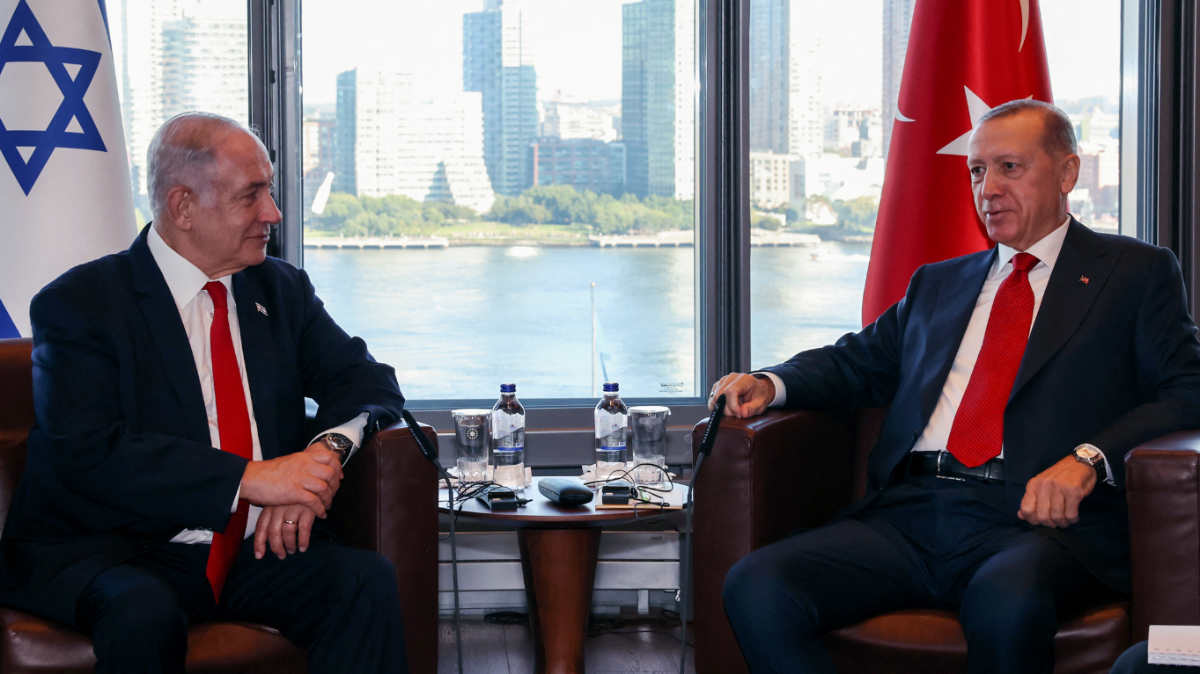
Over recent weeks, a sharp war of words between two major Middle Eastern powers, Turkey and Israel, has escalated dramatically, laying bare a rapidly deepening rift that has been simmering for months. The latest cycle of tensions was triggered when the Istanbul Chief Public Prosecutor’s office formally filed criminal charges against 35 individuals, headlined by Israeli Prime Minister Benjamin Netanyahu, linked to the 2024 attack on the Global Sumud Flotilla carried out in international waters. Prosecutors are seeking lengthy prison sentences for the accused, a move that Netanyahu immediately framed as a deliberate escalation against his government.
With Israel gearing up for a national election, Netanyahu faces growing domestic headwinds, particularly after the recent ceasefire agreement brokered between the United States and Iran eroded his standing with hardline voters. To shore up his public image and court undecided constituencies, Netanyahu responded with a provocative public post on social platform X, accusing Turkish President Recep Tayyip Erdogan of orchestrating mass violence against Kurdish citizens within Turkey’s borders.
The dispute quickly drew in other senior Israeli political figures, with former prime minister Naftali Bennett wading into the conflict to launch his own string of inflammatory attacks against Ankara. Bennett went so far as to label Turkey the “new Iran” and previously hinted that Israel could take active measures against the country, warning that “after Iran, we will not stay idle.”
Beyond heated rhetoric, the rapid deterioration of exchanges has sparked widespread regional concern that the two nations could be sliding toward an open confrontation. Long-standing frictions already frame the bilateral relationship: the two states have been deeply divided over Israel’s military campaign in Gaza, the new governing administration in Syria, competing regional influence, and Israel’s increasingly close security and economic ties with Turkey’s neighbors Greece and Cyprus.
Observers have actively debated what tangible measures Turkey could take if it chooses to escalate beyond rhetoric, with energy access emerging as Ankara’s most commonly cited point of leverage. Many analysts note that Turkey could disrupt the flow of Azerbaijani crude oil through the Baku–Tbilisi–Ceyhan pipeline, a route that currently meets roughly 40% to 50% of Israel’s total oil demand. Since Ankara imposed a formal trade embargo on Israel in May 2024, oil shipments through the pipeline have continued via complex workarounds, including the use of unregistered shadow tankers to obscure trade routes. If Turkey ultimately moves to shut down the pipeline, it would trigger immediate short-term supply disruptions for Israel, though the duration of such a disruption remains uncertain. Since no broad international energy sanctions are currently in place against Israel, the country would still be able to purchase crude on the global open market. Additionally, Israeli officials have long emphasized that Azerbaijani oil imports serve as a pillar of their strategic partnership with Baku, and Azerbaijani leaders have repeatedly signaled their commitment to upholding that agreement.
A second widely discussed punitive option is Ankara closing its sovereign airspace to all civilian Israeli flights. Such a move would force airlines to take longer alternate routes, driving up fuel costs, extending crew working hours, and disrupting global flight schedules. These added costs would almost certainly translate to higher ticket prices for Israeli passengers and lower profit margins for airlines. While travel to key destinations such as Russia and Azerbaijan would become far more logistically complex, those disruptions could be partially offset by rerouting flights over the Black Sea. More broadly, the gradual opening of Saudi and other regional airspaces to Israeli flights in recent years has provided Israel with alternative air corridors, significantly blunting the strategic impact of any Turkish airspace ban.
Other areas of potential economic pressure have proven limited in scope. Bilateral trade between Turkey and Israel has already dropped sharply since the May 2024 embargo, with remaining Turkish exports reaching Israeli markets via third-country intermediaries. Even before the embargo, Israeli tourist arrivals in Turkey never reached a volume large enough to create severe economic harm for Ankara if Turkey were to ban Israeli travelers, even after arrivals rebounded to tens of thousands in 2025.
Analysts broadly agree that Ankara’s limited ability to impose meaningful harm on Israel stems from the lack of deep economic interdependence between the two states. While bilateral trade was once highly lucrative for Turkey, much of that commercial activity has already been halted in protest of Israel’s military campaign in Gaza. The long-planned EastMed natural gas pipeline, which would have transported Israeli and Palestinian gas to Turkey for export to European markets, once represented a major point of mutual economic leverage, but the project has effectively been scrapped in the wake of the Gaza war.
Beyond expanding its military capabilities, upgrading its domestic defense industry, and strengthening its deterrence posture, Ankara has pursued a diplomatic strategy to pressure Israel by deepening its alignment with key NATO allies and recalibrating its partnerships with major regional powers including Pakistan, Saudi Arabia, and Egypt. Turkish leadership appears confident that its complex strategic relationship with the European Union, its central role in European security architecture, its unique balanced ties with both Russia and Ukraine amid the ongoing war, and its expanding diplomatic and economic engagement with Africa and Asia will create enough diplomatic buffer to prevent any major military escalation between the two states. Only time will reveal whether this assessment holds, as the rhetorical clash continues to roil regional stability.