标签: Asia

亚洲

  • Iran questions Africa’s silence as US-Israeli war grinds on

    Iran questions Africa’s silence as US-Israeli war grinds on

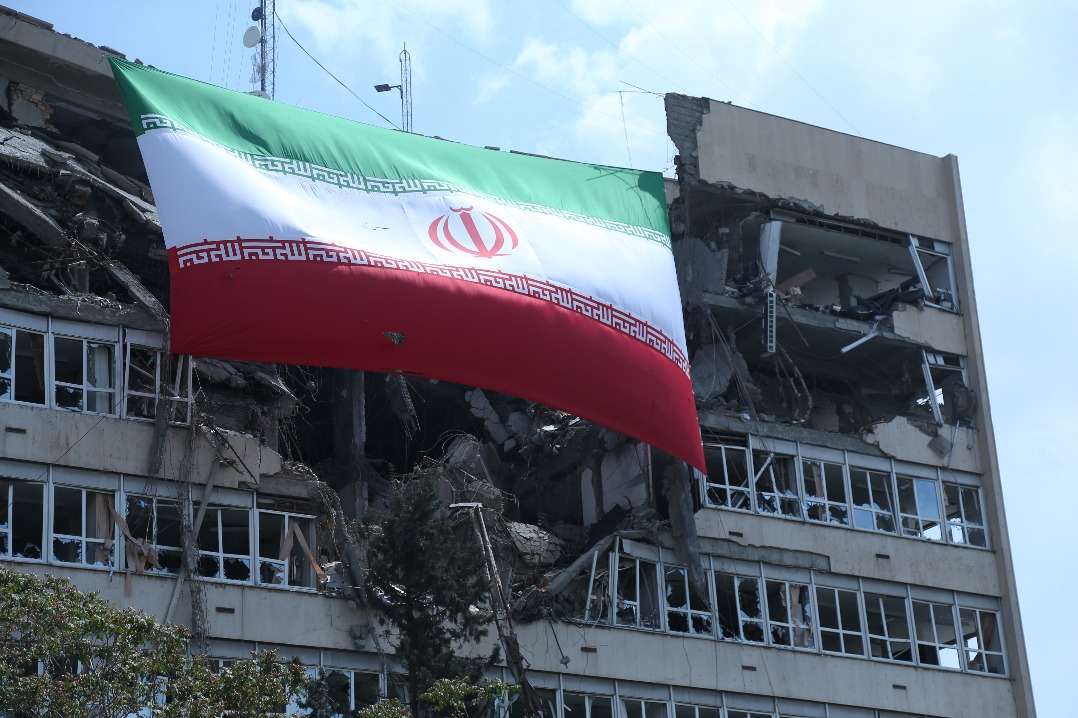
    A notable diplomatic silence from African nations regarding US-Israeli military actions against Iran has sparked allegations from Tehran that Israel is utilizing its growing continental influence to suppress criticism of Middle Eastern operations. Since hostilities escalated in late February, the majority of African states alongside pan-continental organizations like the African Union (AU) have predominantly avoided direct commentary on the crisis, opting instead for generalized appeals for de-escalation while specifically condemning Iranian retaliatory measures in the Gulf region.

    Analysts point to Africa’s constrained geopolitical leverage and vulnerability to global economic disruptions as primary reasons for this cautious approach. However, Iran’s Ambassador to South Africa, Mansour Shakib Mehr, offers a more accusatory interpretation. In statements to Middle East Eye, Mehr asserted that Israel is leveraging its relationships with African nations to obfuscate its historical actions in Palestine and West Asia, attempting to ‘reverse the roles of oppressor and victim.’

    Scholars monitoring Israel-Africa relations acknowledge that while Tehran’s claims are politically motivated, they contain elements of truth. Raouf Farrah, co-author of a significant work on African solidarity with Palestine, confirmed that Israel has methodically expanded its diplomatic and political footprint across Africa over the past twenty years. This expansion continues unabated despite the ongoing conflict in Gaza, evidenced by recent diplomatic advancements in regions like Somaliland and a persistent push for AU observer status—a move previously thwarted by South Africa and Algeria.

    Underpinning Africa’s reserved stance, experts argue, is a palpable concern over potential punitive measures from the United States. Farrah notes that new agreements with the US in critical sectors like digital infrastructure and health data systems create structural dependencies that heighten the political cost of adopting positions that might endanger these strategic partnerships. The perceived transactional and unpredictable nature of US foreign policy under the current administration further encourages this continental restraint, pushing many states toward strategic ambiguity to avoid diplomatic or economic repercussions.

    The African Union’s official responses mirror this cautious calculus. Commission Chairperson Mahmoud Ali Youssouf has expressed concern over US-Israeli strikes while simultaneously issuing strong condemnations of Iranian retaliatory actions. An AU spokesperson emphasized the body’s consistent calls for restraint and adherence to international law in all global conflicts. Nonetheless, governance experts like the University of Pretoria’s Tendai Mbanje contend that the AU’s institutional and financial reliance on Western donors significantly limits its capacity to adopt a more forceful position. The absence of consensus among member states—with nations like South Africa condemning Israeli actions while others benefit from Israeli or US cooperation—further entrenches neutrality as the default, lowest-risk diplomatic stance.

  • ‘They burned everything’: Israeli settlers torch West Bank clinics, homes and cars

    ‘They burned everything’: Israeli settlers torch West Bank clinics, homes and cars

    A surge of coordinated settler violence has erupted across the occupied West Bank, targeting Palestinian communities in one of the most extensive attack campaigns in recent memory. Over the weekend, armed Israeli settlers launched systematic assaults on multiple towns, resulting in widespread destruction, numerous injuries, and significant property damage.

    The violence commenced with raids on educational institutions, including a boys’ secondary school in Hawara where settlers replaced the Palestinian flag with an Israeli banner and inscribed death threats on school walls. The attacks rapidly escalated into coordinated nighttime assaults involving hundreds of settlers moving in organized groups through Palestinian communities.

    In al-Fandaqumiya and Silat ad-Dhahr south of Jenin, more than 200 settlers participated in simultaneous attacks, setting homes and vehicles ablaze with Molotov cocktails. Hussam al-Zu’bi returned to find his home completely destroyed by fire, with roof tiles torn away and incendiary devices thrown through windows. Similar scenes unfolded in Silat al-Dhahr where settlers sprayed racist graffiti and issued explicit threats to burn residents inside their homes.

    The medical infrastructure suffered deliberate targeting, with clinics torched in Burqa and Jalud, where the Medical Relief Society building sustained significant fire damage. Emergency response was systematically hindered by Israeli military forces who blocked main entrances to affected towns, preventing firefighting vehicles and ambulances from reaching victims of smoke inhalation and injuries.

    According to local residents, the attacks displayed military-level coordination, with settlers advancing on foot in organized groups and striking multiple locations simultaneously. The violence resulted in at least nine injuries in Deir al-Hatab alone, including gunshot wounds, with additional reports of skull fractures and serious burns among Palestinian residents.

    The escalation follows social media calls by settler groups for demonstrations protesting the death of a settler in a vehicle-related incident. Palestinian authorities have issued travel warnings amid ongoing attacks on roadways, where settlers have stoned vehicles and blocked major transit routes, stranding numerous Palestinians overnight.

    This represents a significant intensification of settler violence that has surged since October 2023, with at least six Palestinian fatalities attributed to settler attacks since the beginning of the recent regional conflict.

  • US lobby firm secures $2m contract to whitewash image of Libya’s Haftar

    US lobby firm secures $2m contract to whitewash image of Libya’s Haftar

    A prominent Washington lobbying firm with deep ties to the Trump administration has entered into a $2 million agreement to represent Libyan military commander Khalifa Haftar, whose forces face extensive allegations of human rights violations. Ballard Partners, staffed by former Trump administration officials, will advocate for Haftar and his son Saddam, deputy commander of the Libyan Arab Armed Forces (LAAF), according to lobbying disclosures obtained by the Washington Post.

    Human Rights Watch has documented grave abuses within detention centers operated by Haftar’s security forces, including systematic torture, extrajudicial killings, and mutilation of corpses. The organization has called for investigations into these violations, noting that political dissidents have been subjected to unlawful detention, torture, and forced displacement.

    Haftar faces multiple legal challenges in US courts, where Libyan families have accused him of war crimes and deliberate torture. While some cases have been dismissed, a 2022 US court ruling found him liable for war crimes against several families. His legal representatives deny all allegations.

    The lobbying agreement coincides with Haftar’s consolidation of power in eastern Libya, where his five sons hold key positions. Recent diplomatic engagements include meetings between Saddam Haftar and US officials, including Trump’s Arab and African affairs advisor Massad Boulos and US charge d’affaires Jeremy Brent.

    Hanan Salah, HRW’s assistant director for the Middle East and North Africa, criticized the normalization of relations with figures implicated in abuses, stating it undermines accountability efforts. Meanwhile, Africa Intelligence reports suggest US officials are considering a power-sharing arrangement that would maintain Haftar’s military control while preserving Abdul Hamid Dbeibah’s civilian leadership, potentially bypassing elections.

  • Israel kills four in Gaza attack on police car during Eid holidays

    Israel kills four in Gaza attack on police car during Eid holidays

    Israeli military operations in Gaza escalated during the Eid al-Fitr holiday, resulting in multiple casualties and exacerbating the territory’s humanitarian crisis. On Sunday, an Israeli airstrike targeted a police vehicle in the Nuseirat refugee camp in central Gaza, killing at least four officers and injuring several others while they were performing their duties, according to a statement from Gaza’s Ministry of Interior.

    Simultaneously, another Israeli strike north of Gaza City claimed the life of a Palestinian civilian and wounded multiple others during the third day of Eid celebrations marking the end of Ramadan. The Palestinian health ministry reported that Israeli attacks since the beginning of the holiday have resulted in nine fatalities and 30 injuries.

    These recent incidents continue a pattern of near-daily violations occurring since a ceasefire agreement took effect in October. During this period, Israeli forces have killed 687 people and wounded 1,845, with the overall death toll surpassing 72,000 Palestinians since the conflict began. The offensive has also destroyed approximately 80% of Gaza’s infrastructure.

    The humanitarian situation has deteriorated further due to intensified restrictions on aid and medical evacuations. The Rafah crossing, a critical gateway for civilians and assistance, has remained largely closed since Israeli forces seized control in May 2024. Although it temporarily reopened on Thursday after being closed since February 28th, movement remains severely limited.

    Since March 19th, only 24 patients and their companions have been evacuated through the crossing. The closure of key entry points has had severe consequences, restricting humanitarian relief, preventing Palestinian returns, and blocking thousands of urgent medical evacuations. In a concerning development, Israeli forces arrested a Palestinian attempting to return to Gaza via Rafah crossing on Monday, an action reported as violating the terms governing its reopening.

  • Iran’s insurgent playbook for outlasting US-Israel firepower

    Iran’s insurgent playbook for outlasting US-Israel firepower

    Despite overwhelming US military superiority accounting for 37% of global defense expenditures compared to Iran’s sub-1% share, Tehran is effectively employing asymmetric warfare tactics that historically frustrated American objectives in Vietnam, Iraq and Afghanistan. Iranian strategy centers on four insurgent methodologies designed to force US withdrawal through protracted engagement rather than direct confrontation.

    Iran’s tactical approach involves systematically targeting critical infrastructure and military installations throughout the Persian Gulf, deliberately provoking escalated US military response. This calculated provocation serves dual purposes: diminishing domestic support for the Islamic regime as civilian casualties mount—already exceeding 1,400 fatalities and 18,000 injuries according to Iranian health authorities—while simultaneously eroding American public backing for continued engagement, with recent polls indicating only 27% of US citizens support the conflict.

    The regime is simultaneously executing a ‘spoiling’ campaign against Gulf neighbors including Saudi Arabia, UAE, Oman, Kuwait, Qatar and Bahrain. Despite long-term regional implications, this strategy aims to disrupt security relationships between Gulf states and their traditional US protector, potentially reshaping Middle Eastern power dynamics in Iran’s favor.

    Maritime warfare innovations represent Tehran’s most effective asymmetric advantage. Following early conventional naval losses, Iran implemented an irregular naval strategy utilizing fast-attack craft, naval mines and specialized midget submarines optimized for the Gulf’s shallow waters. This has effectively threatened international shipping lanes through the strategically vital Strait of Hormuz, granting Iran disproportionate influence over global energy markets and critical mineral flows.

    Civilian infrastructure targeting completes Tehran’s insurgent methodology. Threats against airports, desalination plants and energy facilities increase pressure on Gulf governments while creating global economic disruption through transportation hub closures. This psychological warfare component destabilizes populations and increases international pressure for US disengagement.

    Historical precedent suggests weaker military actors can achieve strategic victory by outlasting their opponent’s political will rather than achieving battlefield dominance. While the Iranian regime faces significant medium-term challenges, its immediate survival strategy relies on exhausting American commitment through protracted insurgent warfare.

    Effective US counterstrategy would require implementing proven counterinsurgency principles emphasizing civilian protection and ‘hearts and minds’ engagement—approaches notably absent from current operations characterized by substantial civilian casualties including the devastating bombing of a girls’ school that killed 175 predominantly children.

  • A special school for humanoid robots

    A special school for humanoid robots

    Within a Beijing office complex in Shijingshan district, an unprecedented educational experiment is underway where nearly 200 human instructors teach 100 humanoid robots through immersive motion-capture technology. The instructors, equipped with specialized headsets and control levers, demonstrate precise movements that their mechanical students immediately replicate in real-time.

    This cutting-edge facility represents China’s largest humanoid robot data-training center, established through a collaboration between the Shijingshan district government and Leju Robotics. The training environment features meticulously reconstructed factory floors and domestic settings that mirror actual working conditions with exceptional accuracy.

    The curriculum focuses on practical task mastery rather than theoretical knowledge. Robot trainees practice routine operations including retrieving medicine bottles from cabinets, transporting industrial goods, sorting packages on conveyor systems, and handling office documentation. These 1.66-meter-tall humanoid machines undergo continuous skill development through repetitive motion exercises.

    Similar training grounds are emerging nationwide where robots acquire capabilities for diverse applications ranging from medical assistance and elderly care to energy exploration and emergency response operations. Each training session brings these machines closer to seamless integration into real-world environments, marking significant progress toward widespread robotic implementation in society.

  • Xi inspects Xiong’an New Area in North China’s Hebei province

    Xi inspects Xiong’an New Area in North China’s Hebei province

    Chinese President Xi Jinping, serving as General Secretary of the Communist Party of China Central Committee, undertook a significant inspection tour of the Xiong’an New Area in Hebei Province on Monday. The visit highlighted the substantial progress made in this ambitious national project designed to advance regional integration and alleviate pressure on Beijing’s urban infrastructure.

    During his comprehensive assessment, President Xi examined construction advancements within the start-up zone, demonstrating particular interest in the area’s development trajectory. His itinerary included detailed visits to key facilities, notably China Huaneng Group Co., Ltd., a major energy corporation, and the newly established Xiong’an campus of Beijing No. 4 High School, an institution renowned for academic excellence.

    The inspection also provided an opportunity for President Xi to engage with representatives of officials and staff from organizations participating in the capital’s function-relocation initiative. This strategic program transfers non-essential administrative functions from Beijing to the new area, effectively redistributing resources while maintaining the capital’s core governance role. The President’s interactions underscored the human dimension of this large-scale urban planning endeavor, acknowledging the contributions of those implementing this national strategy.

  • Xi congratulates Thongloun on re-election as president of Laos

    Xi congratulates Thongloun on re-election as president of Laos

    Chinese President Xi Jinping, serving concurrently as General Secretary of the Communist Party of China Central Committee, formally congratulated Thongloun Sisoulith on Monday following his successful re-election as President of the Lao People’s Democratic Republic. The message underscores the continuing diplomatic engagement between the two neighboring socialist states. This exchange occurs within the framework of longstanding bilateral relations characterized by mutual political support and cooperative partnerships across multiple sectors. The congratulatory gesture aligns with diplomatic protocols observed among allied nations and reflects China’s sustained interest in maintaining stable political ties with Laos. The communication represents another chapter in the ongoing dialogue between the two Asian nations, both of which maintain single-party political systems and share ideological common ground. The reaffirmation of leadership in Laos ensures continuity in the countries’ joint initiatives and regional cooperation efforts.

  • Splendid auroras witnessed in NE China’s Heilongjiang

    Splendid auroras witnessed in NE China’s Heilongjiang

    Residents and skywatchers in Northeast China’s Heilongjiang province were treated to a spectacular natural light show as vibrant auroras painted the night sky from March 22 through the early hours of March 23, 2026. The celestial phenomenon, typically associated with polar regions, became visible across multiple locations in China’s northernmost province due to intensified geomagnetic activity.

    The auroral display was particularly prominent in Mohe city, China’s northernmost settlement, where photographers captured stunning images of the dancing lights. The phenomenon occurred as charged particles from solar winds interacted with Earth’s magnetosphere, creating the colorful patterns that shimmered across the heavens.

    Scientists note that such visible aurora displays at relatively low latitudes remain uncommon, making this event particularly noteworthy for both astronomical observers and the general public. The occurrence provides valuable research opportunities for space weather specialists studying the effects of solar activity on Earth’s magnetic field.

    The event attracted significant attention from photography enthusiasts and nature lovers who braved the cold nighttime temperatures to witness the rare atmospheric spectacle. Local tourism officials reported increased visitor interest in the region following the celestial event.

  • Shanghai university launches ‘future youth leaders’ program

    Shanghai university launches ‘future youth leaders’ program

    Shanghai Jiao Tong University has officially inaugurated its groundbreaking ‘Future Youth Leaders’ global competence program, marking a significant advancement in international talent development. The initiative, launched during a formal opening ceremony on March 20, 2026, represents a strategic response to evolving global dynamics and increasing international interconnectedness.

    The comprehensive program is designed to foster patriotic commitment while simultaneously developing global perspectives, professional capabilities, and practical implementation skills among participants. Through nine specialized project groups, the university provides continuous support in research training, issue analysis, and practical development frameworks. This structured approach aims to cultivate professionals equipped with multilingual communication abilities, technical expertise, regional knowledge, and industry-specific competencies.

    During the inaugural ceremony, distinguished professors and guest speakers emphasized the critical need for young leaders possessing global vision, strategic thinking, and actionable implementation capabilities. They highlighted the importance of aligning personal development with national progress and worldwide transformations, encouraging active participation across various industries, international organizations, and global governance platforms.

    The program emerges as part of institutional reforms in international talent cultivation, specifically addressing China’s growing requirements for skilled professionals in global governance roles. By integrating academic rigor with practical application, the university seeks to contribute meaningfully to international peace, stability, and collaborative development through empowered youth leadership.