For years, Chinese researchers have watched a growing share of their precious public research funding flow not into lab experiments, equipment or fieldwork, but into the pocket of international academic publishers in the form of soaring article processing charges (APCs) for open-access publications. Now, the country is rolling out a sweeping set of reforms to its scientific research evaluation and funding systems, designed to redirect that money back to actual experimental work and boost the overall quality of Chinese scientific output.
The shift comes as the global academic publishing industry has undergone a major structural transformation over the past two decades. Traditionally, publishing operated under a subscription model, where institutions and readers paid to access published research, and authors bore no cost to submit or publish their work. The move to open access was intended to tear down paywalls, making cutting-edge scientific research freely available to scholars, clinicians and the public worldwide to speed up knowledge dissemination. But under the dominant open-access model today, the costs of publishing are shifted entirely to authors, and APCs have climbed steadily year after year, putting an unsustainable strain on research budgets.
Data from the National Science Library of the Chinese Academy of Sciences (CAS) underscores the scale of the financial drain. In 2024 alone, the average APC for a single article published in an international open-access journal exceeded $3,000. Chinese scholars contributed nearly one-third of all open-access articles published globally that year, totaling 313,500 papers, and collectively spent more than $909 million on APCs — a 20% year-over-year jump in total spending.
Many researchers argue that this situation amounts to Chinese public research funding effectively subsidizing large international publishing groups, and the systemic impact goes far beyond drained budgets. High APCs entrench existing academic hierarchies, they say, widening gaps in academic discourse power along financial lines: well-funded labs can afford to publish dozens of papers a year, while early-career researchers and teams working at smaller institutions are locked out of high-profile publishing opportunities simply because they cannot cover the fees. Even for established teams, the rising costs eat directly into resources for core research.
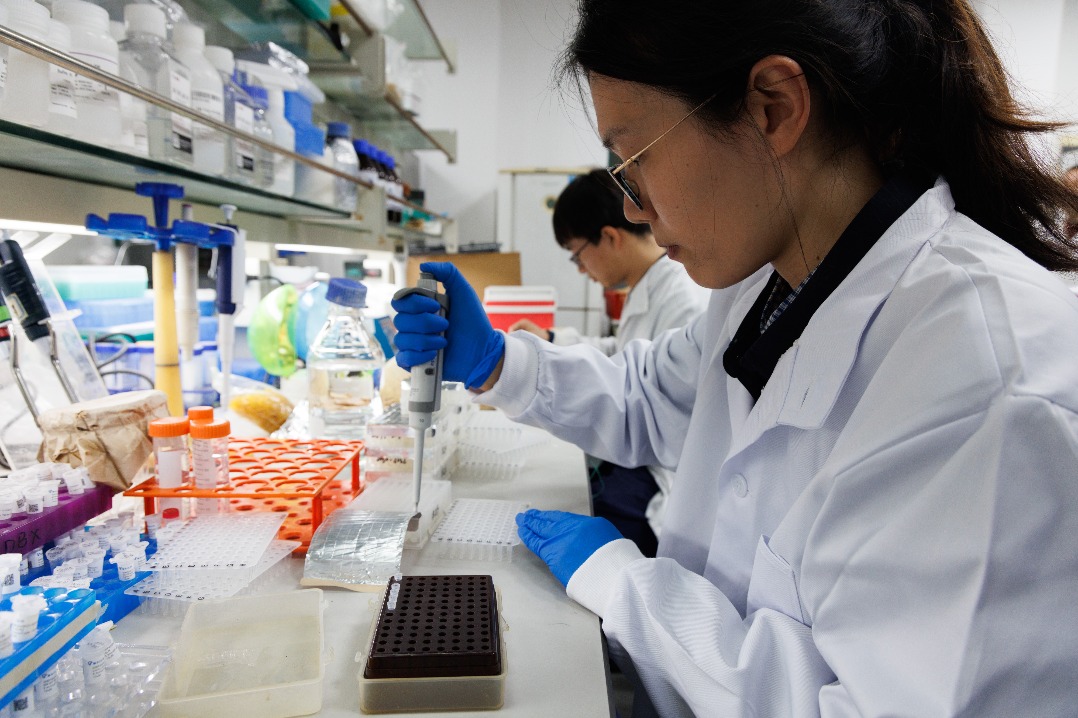
A graduate student at CAS’s Nanjing Institute of Astronomical Optics and Technology told China Central Television that when APCs eat up a large chunk of a research project’s total budget, there is no way to avoid cuts to the experimental work that is the core of scientific progress.
Prominent CAS academician Yan Ning has been one of the most vocal critics of the current system. Late last year, she took to Chinese social platform Weibo to point out that while the open-access model was founded on good intentions, APCs have grown to excessive levels. Her lab has stopped paying publication fees for journals that charge exorbitant APCs, she said, instead sharing new work as freely available preprints and only publishing in formal journals if fee waivers are granted.
“It feels like researchers are being exploited, making us suffer. Why should the funding we apply for be taken by middlemen?” Yan told CCTV, noting that most major publishing groups are publicly traded companies driven first by commercial profit. She called for efforts to restore a healthy, equitable publishing ecosystem that serves the global academic community, rather than shareholder interests.
To break the current deadlock, China is pursuing two interconnected tracks of reform: curbing unreasonable spending on international journal fees, and building up a robust, high-quality ecosystem of domestic open-access academic journals that serve researchers worldwide. One notable new entry is *Vita*, a new open-access journal focused on life sciences and biomedicine, which will launch its print edition in June 2026. The journal’s main content is freely accessible to researchers globally, and the first paper published online in *Vita* comes from Yan Ning’s own research team.
In a landmark policy shift that drew global academic attention, CAS stopped covering APCs for 30 major international open-access journals — including high-profile titles such as *Nature Communications*, *Cell Reports* and *Science Advances* — using academic funds and central government allocations starting in March 2026, according to the journal *Science*. The policy also prohibits reimbursement for APCs for any articles published in journals suspected of academic misconduct, with the dual goals of strengthening oversight of academic publishing and bringing charges down to reasonable levels.
Additional national policies have been introduced to encourage researchers to prioritize high-quality work over publication in high-fee international journals, and to support the growth of domestic academic publishing. Revised guidelines for national science and technology awards, issued by the Ministry of Science and Technology, call for a gradual increase in the weight given to major research publications published in domestic Chinese journals. The National Natural Science Foundation of China has introduced a new requirement for all projects funded starting in 2025: at least 20% of a project’s representative research papers must be published in domestic journals to meet funding requirements.
At the institutional level, many leading Chinese universities are revising their faculty evaluation and recruitment criteria to move away from an overreliance on publication metrics like impact factor and total paper count, creating a more flexible, supportive environment for long-term original research. Tsinghua University now asks faculty to submit up to five works that best represent their actual academic standing — which can include papers, monographs or patents — rather than rewarding quantity or impact factor rankings. Fudan University has launched a special pilot zone for basic research, providing long-term support for original work for up to 10 years with minimal disruptive interim evaluations.
Zhao Dongyuan, a CAS academician and dean of Fudan University’s Xianghui Academy, emphasized the transformative impact of these new evaluation models in an interview with CCTV. “Over a 10-year period, instead of formal high-stakes evaluations, we organize regular salons and academic activities where researchers present their ongoing work. These presentations allow us to observe the progress of their research firsthand,” Zhao explained. “By fostering such a supportive research environment, we enable them to pursue ambitious work and achieve significant breakthroughs that would not be possible under a pressure-driven, metric-heavy evaluation system.”