
A devastating early-morning road accident in central Bangladesh has claimed the lives of at least 15 people and left 10 more injured, local law enforcement confirmed, striking as families across the country prepared for the major Islamic festival Eid al-Adha. The crash unfolded around 5 a.m. Monday in the Soratoil area of Tangail district, a region located roughly 52 miles northwest of Bangladesh’s capital city Dhaka, according to Fuad Hossain, chief of local police. The truck, which was transporting iron rods along the country’s major highway, was traveling from Dhaka to the nation’s northern region when its driver lost control, causing the vehicle to flip. Tragically, the truck was carrying far more people than it was legally permitted to hold, with dozens of extra hitchhiking passengers seeking travel to their hometowns for the holiday. Hossain confirmed that 15 passengers died instantly at the scene of the crash. Most of those killed were day laborers, who were making the journey to reunite with their family members for the four-day festival, a time marked by feasting, prayer and community gatherings in Muslim-majority Bangladesh. Immediately after the crash, local residents who heard the sound of the accident rushed to the site to begin rescue efforts, pulling trapped survivors out of the wreckage before emergency services arrived. Injured victims were quickly transported to nearby medical facilities for treatment. This latest fatal crash highlights a long-running and deadly public safety crisis in Bangladesh, a densely populated nation of more than 170 million people. Thousands of people die in road accidents across the country each year, a crisis fueled by systemic issues including lax enforcement of traffic safety regulations, poorly maintained highway infrastructure, and large numbers of unqualified or under-trained drivers operating heavy commercial vehicles. As the country enters one of its busiest travel seasons of the year, safety advocates have repeatedly called for urgent government action to address these gaps and prevent preventable deaths on Bangladesh’s roads.
标签: Asia
亚洲
-

GOP hawks alarmed as Trump mulls deal to end his Iran war
Over the recent weekend, former U.S. President Donald Trump made public that he is actively considering a negotiated agreement to bring an end to the ongoing U.S. war with Iran, a development that has sparked urgent pushback from hardline, pro-conflict factions within the Republican Party.
Per a Sunday report from The New York Times, critical details of the prospective peace deal remain deeply unclear, most notably the future of Iran’s enriched uranium program, whose status is still unresolved. Compounding the uncertainty, official statements from both U.S. and Iranian representatives have offered conflicting accounts of what the agreement would entail, confirming that extensive negotiations still lie ahead before any final pact can be reached.
Even before a full draft of the deal has emerged, three of the Senate’s most prominent Republican Iran hawks moved on Saturday to outline sharp objections to the emerging framework. The lawmakers warned that any agreement that leaves Iran strategically stronger than it was before Trump launched military operations in late February would be unacceptable for U.S. national security.
Senator Lindsey Graham of South Carolina, who repeatedly pressured Trump to launch military strikes on Iran in the lead-up to the war, argued that a deal that allows the Iranian government to retain power and grow its influence over time would only exacerbate existing instability across the Middle East. “If it is perceived in the region that a deal with Iran allows the regime to survive and become more powerful over time, we will have poured gasoline on the conflicts in Lebanon and Iraq,” Graham wrote. He added that an agreement that lets Iran maintain future control over the Strait of Hormuz would supercharge the capabilities of Hezbollah in Lebanon and Iranian-aligned Shia militias operating in Iraq.
Senator Ted Cruz of Texas, another longstanding advocate of hardline policy toward Iran, said he is “deeply concerned” by early details of the proposed deal, singling out the risk of sanction relief for Iran while it retains the capacity to close off the Strait of Hormuz, a critical global oil chokepoint. “If the result of all that is to be an Iranian regime – still run by Islamists who chant ‘death to America’ – now receiving billions of dollars, being able to enrich uranium and develop nuclear weapons, and having effective control over the Strait of Hormuz, then that outcome would be a disastrous mistake,” Cruz said.
Senator Roger Wicker of Mississippi went even further in his rejection of the reported agreement, calling the rumored 60-day ceasefire that would precede final negotiations a fundamental mistake. “The rumored 60-day ceasefire – with the belief that Iran will ever engage in good faith – would be a disaster,” Wicker wrote. “Everything accomplished by Operation Epic Fury would be for naught.”
That claim drew immediate pushback from foreign policy critics of the war, starting with Ben Rhodes, a former deputy national security adviser to President Barack Obama. Rhodes flatly rejected Wicker’s assertion that the U.S. military campaign had achieved any meaningful gains. “Nothing was accomplished by Operation Epic Fury,” Rhodes wrote, “except putting the Islamic Revolutionary Guard Corps in charge of Iran and the Strait of Hormuz.”
Rhodes’ critique was echoed by Stephen Wertheim, a senior fellow at the Carnegie Endowment for International Peace, who wrote that “everything accomplished by Operation Epic Fury is already for naught.”
Ali Vaez, director of the Iran Project at the International Crisis Group, pushed back against the hawks’ core argument that continued military pressure would force Iran to surrender. Vaez noted that hardline policymakers have already secured two wars, sweeping international sanctions, and a naval blockade that has disrupted global energy markets, yet still demand further escalation to achieve their goals. “DC’s Iran hawks got two wars, nearly every conceivable sanction designation, a blockade, threw a wrench in global economy,” Vaez wrote, “and will still claim that just a little more pressure and a touch more bombing will magically yield the concessions they still won’t be satisfied with.”
-

Indian billionaires buy foreign companies as growth slows at home
In late April 2026, India’s largest pharmaceutical company Sun Pharmaceuticals finalized a landmark $11.75 billion all-cash agreement to acquire Organon & Co, a New York-listed global leader in women’s health and biosimilars. The deal stands as the largest cross-border acquisition by an Indian firm in nearly 20 years, and it caps a months-long streak of high-profile international purchases by Indian companies that has experts calling it a new wave of global expansion.
This recent string of deals extends far beyond Sun Pharma’s mega-purchase. Earlier in 2025, automaker Tata Motors acquired Italy’s Turin-based Iveco for $4.4 billion, IT services provider Coforge purchased Silicon Valley-based artificial intelligence firm Encora for $2.35 billion, and the Bajaj Group secured a 23% stake in global insurance giant Allianz SE. Data from global advisory firm Grant Thornton reveals that 162 Indian firms spent a combined $18 billion on outbound acquisitions across 2025, marking a 34% jump in total deal value from the prior year. Sumeet Abrol, national leader and partner at Grant Thornton, projects that India could cross the $15 billion mark for outbound deal value in the first half of 2026 alone.
Many industry observers have drawn parallels between this current expansion push and the early 2000s buying spree that saw Tata Group snap up iconic global assets including Jaguar Land Rover and Corus Steel, in a moment of widespread Indian corporate global ambition. But analysts note that the motivations driving today’s deals differ sharply from those of two decades ago. Rather than chasing high-profile trophy assets as symbols of global status, modern Indian firms are pursuing international acquisitions for clear strategic and operational gains.
The broader economic context that frames this new wave is also drastically different from the early 2000s expansion. During the last acquisition boom, India was riding a booming domestic bull market that fueled corporate confidence. Today, the country faces a drastically different landscape: it is contending with large-scale outflows of foreign portfolio investment, a steep decline in net foreign direct inflows, and persistently stagnant private sector investment within the country, even after the Indian government rolled out major tax cuts and production-linked incentive subsidies to spur domestic spending.
V Anantha Nageswaran, India’s chief economic advisor, recently highlighted this disconnect at a national policy conference, noting that even after posting 30.8% annual profit growth among the country’s top 500 post-pandemic companies, private sector capital formation has remained far lower than policymakers expected. This gap between strong corporate balance sheets and lackluster domestic investment is a core driver of the outbound trend, experts say. Even as the government urges domestic firms to invest more at home, growing dissatisfaction with domestic operating conditions, paired with more attractive opportunities for diversification and capability building abroad, has pushed corporate leaders to look overseas.
Saurabh Mukherjea, founder of leading Indian asset manager Marcellus Investment Managers, told the BBC that billions in Indian corporate capital is already flowing across borders. “Even among the companies we hold in our portfolio, many are building greenfield factories in the US and other regions where industrial land is nearly free, and accessing working capital is far simpler than it is here,” he explained. This trend is not limited to India’s largest corporate conglomerates either. While the Sun Pharma deal and unconfirmed reports of Mukesh Ambani backing a $300 billion oil refinery project in Brownsville, Texas—announced by former U.S. President Donald Trump—grab headlines, Mukherjea notes that dozens of small and mid-sized Indian firms are making smaller acquisitions and greenfield investments across the globe.
Neha Singh, co-founder of data intelligence firm Tracxn, notes that this expansion is supported by far stronger corporate balance sheets and improved access to global capital markets than Indian firms had two decades ago. “Indian companies are increasingly looking overseas to access ready-made consumer markets, established global brands, cutting-edge technological capabilities, specialized R&D expertise, and mature distribution networks that would take decades to build from scratch organically,” she explained. The rising trend has also accelerated amid growing global trade volatility, as companies move to secure resilient supply chains amid rising geopolitical tensions and the increasing use of trade tariffs and supply chokepoints as geopolitical weapons.
Despite the momentum, outbound acquisitions still carry significant risks for Indian firms. Mukherjea points to Tata Steel’s decades-long struggle with its 2000s acquisition of Corus Steel, which became a persistent financial albatross that dragged on the company’s performance for years. A second notable risk, he adds, is the almost universal reliance on all-cash deal structures: even Sun Pharma’s $11.75 billion mega-deal was completed entirely in cash, leaving companies exposed to greater financial strain than share-based deals would offer.
Still, experts agree that this outbound wave is far from over. Mukherjea projects that the raft of new free trade agreements India has signed with the European Union, United Kingdom, Australia, and other major economies will accelerate the trend, leading to a flood of outbound deals as Indian firms build operational bases in Western markets in coming years. He adds that a generational shift is also at play: many next-generation leaders of Indian family conglomerates study and reside abroad, and have a growing incentive to hold assets in foreign currencies, particularly as the Indian rupee has consistently lost roughly 40% of its value against the U.S. dollar every decade.
For the Indian domestic economy, this expansion abroad is likely to be paired with continued selective caution on large domestic investments, Singh notes. The country remains stuck in a cycle of weak consumer demand and anaemic private investment, a trend that has been worsened by recent global energy price shocks and growing uncertainty over the impact of generative AI on India’s already tight domestic job market.
Abrol of Grant Thornton notes that it remains unclear whether India will surpass 2025’s $18 billion outbound deal total this year, amid ongoing geopolitical volatility that creates uncertainty for global dealmaking. Still, the long-term trajectory is clear: Indian companies are increasingly hedging against economic and policy uncertainty within Asia’s third-largest economy, even as the Indian government works to stem dollar outflows and attract new foreign capital to reignite the country’s domestic growth engine.
-

Hajj pilgrims press on despite Iran war uncertainty
For Shahid Ali and his wife, the dream of completing Hajj was decades in the making. For years, the East London couple stashed savings in a dented tin box hidden in their home, skipping vacations, putting off home repairs and cutting out all non-essential luxuries to afford the once-in-a-lifetime religious journey they hoped to take before old age stole their chance. But when open conflict broke out between Israel, the United States and Iran, what should have been a period of quiet anticipation curdled into worry and doubt.
“My children asked us to reconsider, but we have waited our lives for this,” Ali told Middle East Eye shortly before his departure. “There was massive uncertainty after mass flight cancellations, but we never changed our plans. It still looks like we’re going.”
Ali’s anxiety is shared by Muslim pilgrims gathering in homes and mosques across the globe ahead of this year’s annual pilgrimage to Mecca, one of the five central pillars of Islam. Yet that shared uncertainty has not stopped hundreds of thousands of worshippers from moving forward with their long-planned journeys, even as the regional conflict upends travel logistics and drives up costs.
The ongoing conflict has already disrupted regional air travel, pushed up living costs worldwide, and forced commercial carriers to implement costly detours and new surcharges to navigate restricted airspace. Even with these disruptions, Saudi authorities announced Saturday that more than 1.5 million international pilgrims have already arrived in the kingdom for this year’s Hajj – a number that already surpasses the total international arrivals recorded in 2024.
The shadow of geopolitical tension has hung heavily over the pilgrimage season. Earlier this week, two senior officials confirmed to Middle East Eye that former U.S. President Donald Trump delayed a planned offensive against Iran after senior Gulf allies and his own national security team warned against launching new military operations during the Hajj. In subsequent statements, Trump noted that a new agreement was “largely negotiated,” and multiple reports over the weekend indicated that Washington and Tehran are close to finalizing a 60-day extension of an existing ceasefire alongside a formal memorandum of understanding.
For Muslims worldwide, Hajj is a sacred religious obligation that every believer is expected to complete at least once in their lifetime if they are physically and financially able. For many working-class and low-income families, saving for the journey takes decades, and waiting lists for official Hajj slots in many parts of the Global South can stretch to 10 years or more. For elderly pilgrims in particular, postponement is unthinkable: many worry they will not live long enough to get another chance.
“There’s uncertainty everywhere now,” said Farzana Begum, a retired teacher from Birmingham who is preparing to depart for Mecca. “But if God has invited you, you cannot refuse because of politics.”
Despite the hopeful signs of a ceasefire, the conflict has created severe logistical hurdles for travel operators and pilgrims alike. Airspace restrictions and fears of sudden escalation have forced Gulf commercial airlines to reroute all flights passing through sensitive areas of the region, with some carriers suspending routes entirely. The longer flight paths and elevated fuel costs have caused Hajj package prices to spike sharply in recent weeks, according to travel operators based in Jordan, Pakistan and Indonesia.
“Every single day the situation changes,” explained one Jordan-based Hajj organizer who requested anonymity due to the sensitivity of the topic. “Flights are being rerouted constantly, prices shift from one day to the next, and pilgrims are calling every hour asking if the journey is still safe. When the war first started, anxiety was through the roof, but that panic has mostly died down now.”
Saudi officials have moved quickly to reassure pilgrims, emphasizing that the kingdom has put extensive contingency plans in place to ensure the safety and smooth operation of the pilgrimage. Even so, some countries with large Muslim populations have passed on the new added costs to worshippers. India, for example, has added an extra 10,000 rupees ($105) to all official Hajj packages, while Indonesia – home to the world’s largest Muslim population – has announced it will absorb the additional costs to avoid burdening pilgrims.
While a ceasefire agreement appears imminent, concerns persist that tensions could reignite at any moment. The Gulf region hosts some of the busiest and most congested air corridors in the world, and any sudden escalation of hostilities would trigger widespread further disruption to global travel networks. Most pilgrims traveling from Europe, South Asia and Africa transit through major regional hubs including Doha, Dubai and Jeddah, leaving their travel plans vulnerable to any sudden shift in security conditions. For many, this persistent uncertainty has added a heavy layer of emotional stress to what is already an intensely spiritual and costly journey.
At London’s Heathrow Airport earlier this week, groups of British pilgrims gathered around luggage trolleys stacked with suitcases and rolled prayer mats, waiting for their flights. Some said they were nervously refreshing news updates every few minutes ahead of departure, while others chose to avoid political coverage entirely to focus on their pilgrimage. One woman traveling with her 78-year-old mother said her entire family had begged the pair to cancel their trip and rebook for next year.
“My brothers said we should wait another year,” she explained. “But my mother said: ‘What if I don’t have another year?’”
This year’s Hajj is also shaped by the broader wave of turmoil roiling the Middle East. Many pilgrims preparing for the journey say they carry deep sorrow over the ongoing wars and humanitarian crises across the region, particularly the conflict in Gaza. For many, the fact that thousands of Palestinian Muslims trapped under siege and war are unable to perform Hajj this year weighs heavily on their hearts.
“We will pray for them when we are there,” Begum said. “You cannot separate Hajj from what is happening to Muslims elsewhere.”
Historically, the Hajj has persisted through wars, pandemics and political upheaval across the centuries. Long before the advent of commercial aviation, pilgrims traveled for months by foot, camel and ship to reach Mecca, even during periods of regional conflict. More recently, the global COVID-19 pandemic forced Saudi Arabia to restrict Hajj to only a tiny handful of domestic worshippers, the first such large-scale cancellation in modern history, leaving millions of believers around the world heartbroken.
The return of large-scale international Hajj after the pandemic initially brought widespread renewed optimism for both travel operators and worshippers. The new tensions sparked by the Iran conflict have introduced a fresh wave of uncertainty to the pilgrimage season. Analysts note that the situation lays bare just how vulnerable global religious travel has become to sudden geopolitical shocks.
“Hajj depends on massive international coordination across dozens of countries,” explained one Gulf-based aviation expert who requested anonymity over fears of professional repercussions. “When airspace becomes militarized or unstable, the consequences spread quickly through the entire travel network. Some pilgrims may even end up stuck in Saudi Arabia longer than planned if disruptions worsen.”
Yet for most pilgrims, fear takes a backseat to faith. At a pre-Hajj informational seminar held at a mosque in west London earlier this week, organizers walked attendees through emergency protocols, insurance requirements and potential travel delays. Time and again, however, the conversation circled back to spiritual purpose rather than political risk. Imams leading the seminar reminded attendees that hardship has always been an inherent part of the Hajj journey.
“The essence of Hajj is sacrifice,” one speaker told the congregation. “People throughout history traveled under far more dangerous conditions than we face today.”
That message has resonated deeply with worshippers preparing to depart. Some pilgrims openly acknowledge they feel afraid, and many say their family members remain deeply worried for their safety. But almost none are willing to abandon plans they have spent decades of sacrifice and saving to bring to fruition.
For Shahid Ali and his wife, canceling their journey now is unthinkable. “We don’t know what will happen in the world,” he said quietly before his departure. “There is war everywhere. But we believe if God wants us to complete Hajj, we will complete it.”
-

She was told to marry in a country which bans girls’ education. So she got in a taxi and fled
Five years have passed since the Taliban administration implemented a sweeping ban on secondary and higher education for girls across Afghanistan, a policy that has systematically dismantled millions of young women’s aspirations and narrowed their life options to a single socially expected path: early marriage. For 19-year-old Alia—whose real name has been withheld to protect her from retaliation—escaping that fate required a dangerous, hundreds-of-miles journey from her rural home in Daykundi to the capital city of Kabul last year.
Traveling by taxi with her female cousin, the pair fully covered in line with the Taliban’s strict gendered dress rules that leave only eyes exposed, their trip flouted a separate regulation banning women from making long-distance journeys without a male family escort. At any checkpoint, Taliban enforcers could have stopped them and imposed harsh punishment—but by an unforeseen stroke of luck, the pair slipped through all checkpoints without incident and reached Kabul safely.
Alia lied to her family about her purpose for travel, telling them she planned to meet old friends and former classmates. The truth, she reveals, was stark: if she had remained in Daykundi, her family would have forced her to marry immediately. Once in Kabul, Alia put an alternative plan into action: she enrolled in a private short-term English language course, one of the only limited learning options available to girls who have finished primary school in modern Afghanistan, alongside religious madrasas. Neither of these alternatives, however, can replace the structured formal education that girls were once guaranteed.
Alia’s case is rare for two reasons: not only does it showcase extraordinary courage to defy the status quo, but her family also has the financial means to support her studies in Kabul—a privilege out of reach for most Afghans, three-quarters of whom cannot cover their basic daily needs according to United Nations data. While Alia’s parents supported her dream of becoming a pilot before the education ban, they too have been worn down by the constraints of life under Taliban rule. Today, they urge her to marry, arguing that there is no other future for her when school, university and formal work are all closed off.
Alia has already received multiple marriage proposals, and she lives in constant fear that she will eventually be forced to accept one that will end her dreams forever. “Some families can be very restrictive. It is possible they could tell me to forget my dreams. I don’t feel positive at all about it,” she says. Even so, her determination to resist remains unshakable. “If my family don’t force me to get married, I will wait. I will resist it until my very last breath.”
For thousands of other girls across Afghanistan, that resistance has already failed. In a sparse, small apartment in western Kabul, 22-year-old Shama shares the story of the future she lost. If the Taliban had not seized power and closed girls’ schools, she would be nearly finished with her education and on track to achieve her lifelong dream of becoming a doctor. Instead, at 18, just four years after the ban took effect, her widowed mother Kamila had no choice but to push her into marriage. Today, Shama is the mother of two young daughters, and her own dreams of professional and personal fulfillment remain unfulfilled.
Kamila, who worked as a cleaner to fund her daughters’ education after her husband died six years ago, says she felt immense pressure from Taliban enforcers to marry off Shama before she drew unwanted negative attention as an unmarried young woman. “I had wanted her to be educated, work and contribute to society. I am illiterate so I am like a blind person. But I wanted my girls to learn. She had so many dreams. But it didn’t happen for her,” Kamila explains.
Shama, who was treated well by her husband, still carries the permanent grief of being barred from reaching her potential. “Having a husband is not the only dream a woman has. She needs to stand on her own two feet first, become independent and then she can marry and start a family. But I went into this new life with none of that. My dreams remain unfulfilled,” she says. Even small, everyday moments trigger her pain: when she watches a movie that shows women working or studying, she is flooded with stress and longing. “I feel like I am trapped in my home. I only live for my children,” she adds.
Shama’s 18-year-old sister Nora now waits in fear for the same fate. “I’m too young to get married. I want to continue my education. It’s like being in prison. I fear going out because of the government, and at home my mother tells me I must get married,” says Nora, who still dreams of returning to the classroom she was forced to leave. She has no hope that the Taliban will ever lift the ban, even after years of waiting for a reversal.
Since the Taliban returned to power in 2021, government officials have offered a rotating series of justifications for the ongoing education ban, with no clear timeline for reopening schools. In a September 2021 interview, a Taliban spokesman initially promised schools would reopen soon, saying the government was only working to improve security conditions. A year later, the explanation shifted to claims that religious scholars had raised concerns about girls traveling to and from school. By 2024, officials were simply deferring the question to the country’s supreme leadership. When the BBC recently asked deputy spokesman Hamdullah Fitrat to justify the ongoing ban, he deflected the question to the Ministry of Education, which never responded to repeated requests for comment.
While internal divisions over the ban have been reported within the Taliban government, the country’s supreme leader has only hardened his stance against lifting restrictions in recent years. For the girls who lost access to education the day the ban went into effect, that day remains etched in their memory. Alia recalls: “All I did was cry and sob the whole day and night. I could not sleep for a week. I felt like I was walking around like a dead body. When I see men my age who have graduated and are going to university – I feel very bad, I feel like I am burning in hell.”
The education ban is just one of dozens of sweeping restrictions placed on women and girls by the Taliban, with other rules barring women from most public sector jobs, limiting their ability to travel, and confining them largely to the home. In recent weeks, the Taliban government codified new rules that effectively legalize child marriage, allowing a minor’s silence to be interpreted as consent to wed. Fitrat defends the Taliban’s record, pointing to thousands of business permits issued for women and the government’s claims to have resolved hundreds of cases of forced marriage and inheritance discrimination. But on-the-ground reporting confirms that forced and underage marriage rates are rising sharply, directly driven by the lack of education options for girls.
Today, many Afghan women and girls report a growing sense of abandonment by the international community, as the systemic discrimination they face has faded from global headlines. “If we hadn’t been forgotten, then something would surely have been done by now,” Alia says. For Kamila, the lost opportunities for her daughters represent a complete erasure of the future she fought to give them. She has a message for mothers across the globe who live in countries where girls can still freely learn and work: “In a world where your daughters are allowed to study and work, let them do it. Let them become independent. Here in Afghanistan, it’s over for us.”
According to UN projections, if the education ban remains in place through 2030, more than two million girls will have been denied a secondary education, leaving Afghanistan with one of the lowest female literacy rates on Earth.
-
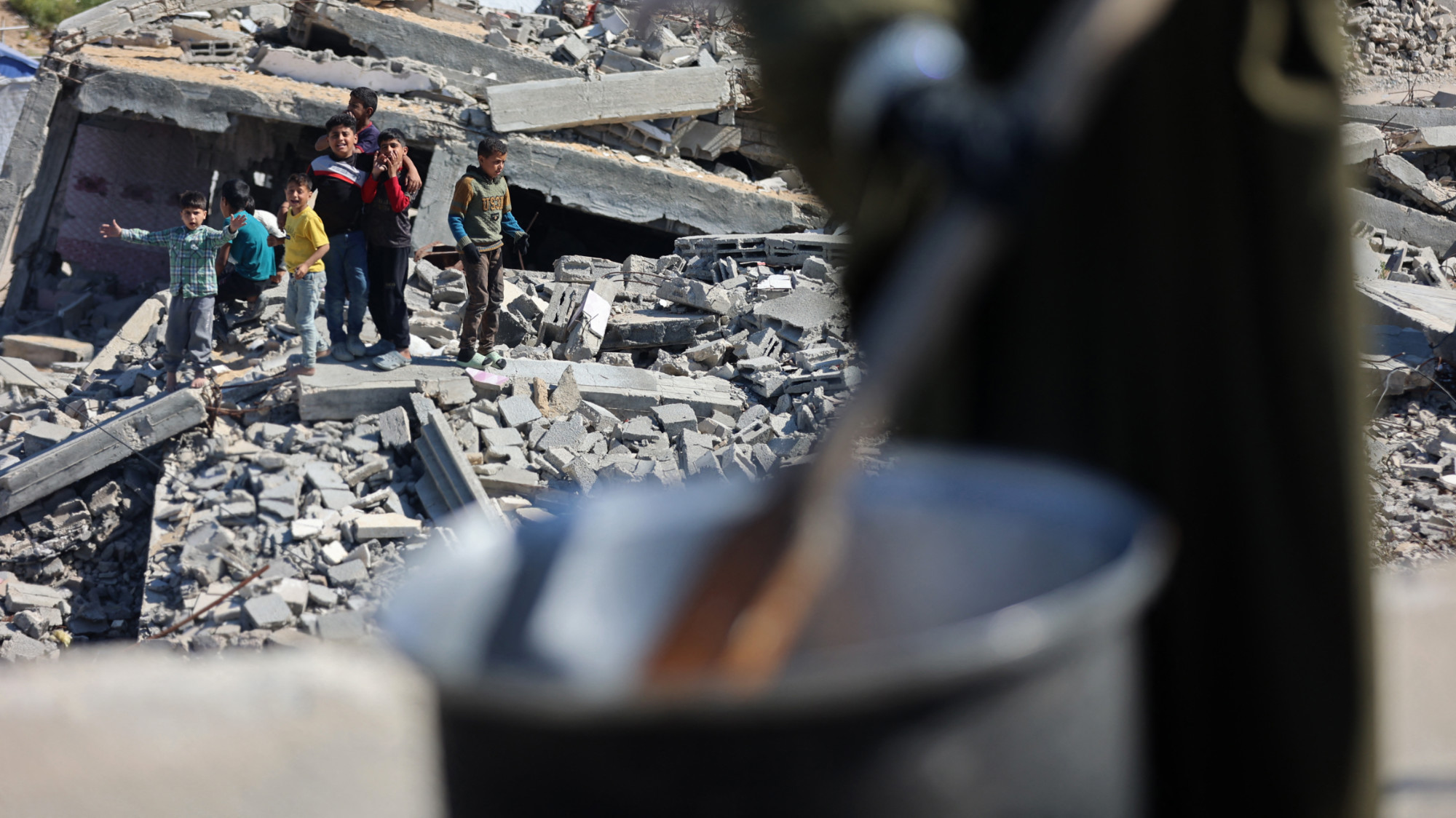
World Central Kitchen halves Gaza meal aid as Iran war drives up costs
The largest hot meal provider in the besieged Palestinian enclave of Gaza, World Central Kitchen (WCK), has been forced to slash its daily hot meal distribution by 50 percent, a decision driven by skyrocketing food and fuel prices that stem from regional spillover effects of the US-Israeli military campaign against Iran launched in February. The non-profit made the announcement this week, with NPR first reporting the development Thursday, and warned that ballooning operational expenses have eliminated any possibility of sustaining the organization’s previous high levels of humanitarian aid.
Prior to the cut, WCK was producing roughly 1 million hot meals daily for hungry Gaza residents. That number has now dropped to 500,000 meals per day. The scaling back of aid comes at a moment when nearly the entire population of Gaza is already dependent on external humanitarian assistance, after more than two years of Israeli military attacks and a crippling air, land and sea blockade that have completely destroyed the enclave’s local food production systems and collapsed its already fragile economy. This is not the first sign of strain for the organization: earlier this month, WCK publicly noted that growing financial pressure was already pushing it to reduce the scope of its operations.
In an official statement, the organization clarified that it would continue to deliver hundreds of thousands of hot meals each day to vulnerable families across Gaza, and maintain one of the largest food relief operations currently active anywhere in the world. But the group emphasized that its 1 million daily meal peak, reached at the height of emergency response efforts, was never a sustainable output for the organization to maintain long term.
“Our core mission is emergency food relief, not solving long-term food insecurity for an entire besieged population,” the statement read. “The long-term responsibility of feeding Gaza cannot rest on the shoulders of one organization alone. The people of Gaza have lost their homes, their livelihoods, and their entire economy. The world must step up – not just issue empty statements about the plight of the Palestinian people. Governments, global institutions, and international partners need to commit the sustained, reliable funding that this catastrophic crisis demands.”
To date, it remains uncertain whether other aid groups operating in the enclave will be able to cover the gap left by WCK’s cuts. The United Nations has already issued repeated warnings that its own agencies working in Gaza are also grappling with severe funding shortfalls and rising operational costs, even as data shows one in every five people in Gaza currently survives on just a single meal per day.
Since Israel launched its large-scale military campaign in October 2023, Gaza has been pushed into a state of extreme food insecurity and full-blown humanitarian catastrophe. A US-brokered ceasefire announced in October 2025 was meant to halt active hostilities, lift the years-long blockade, and allow unimpeded flows of aid, food, and life-saving medicine into the territory. To date, however, Israel has systematically violated the terms of the ceasefire agreement, largely maintained the blockade, and kept critical supplies of fuel, food, and medicine at severely depleted levels. Active military operations including air strikes and artillery shelling have also continued across the enclave: more than 800 Palestinians have been killed since the ceasefire was announced, bringing the total death toll from Israeli operations since October 2023 to more than 72,700, with over 172,000 more people wounded, many of whom lack access to adequate medical care.
-
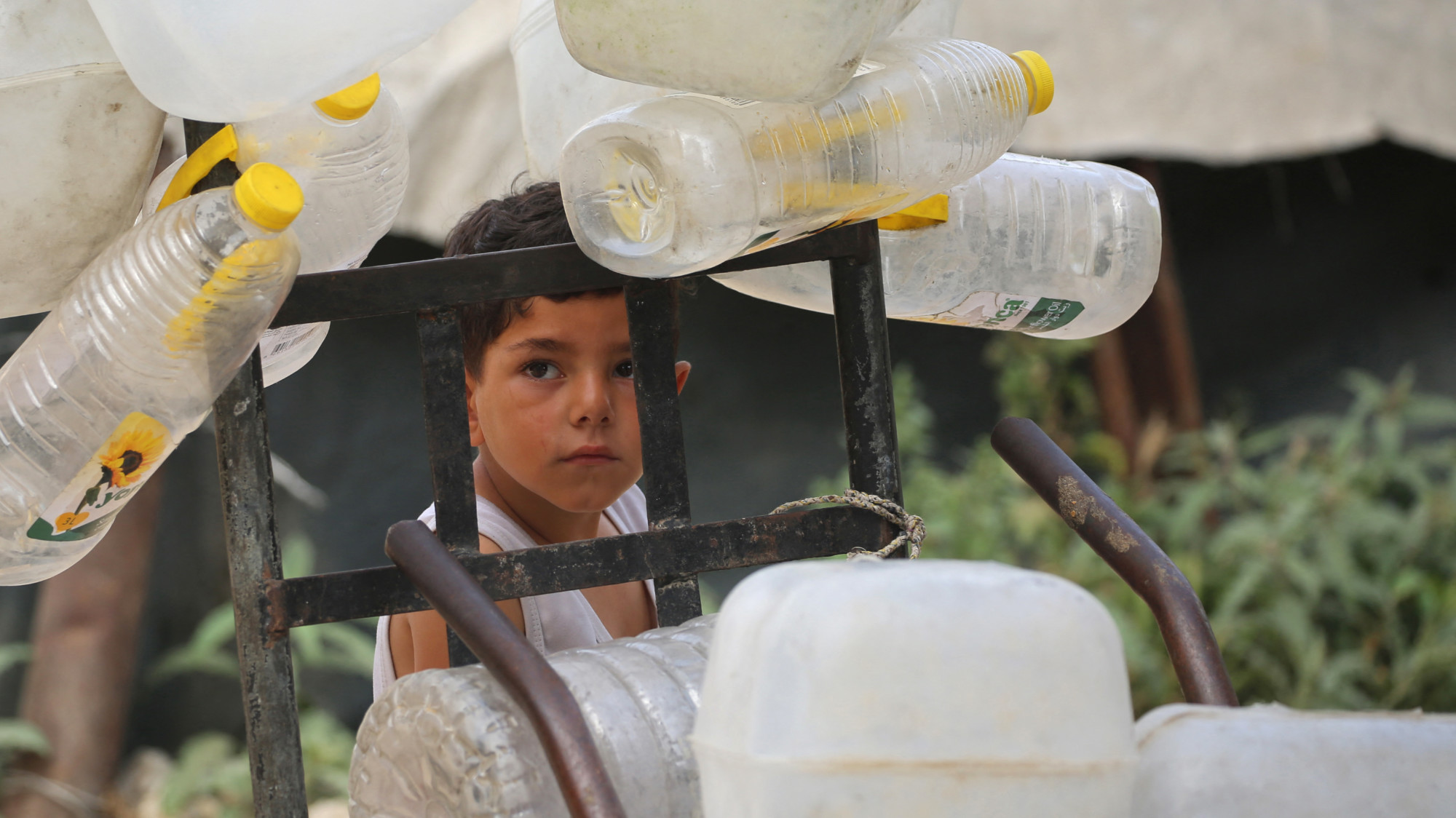
‘No Eid’ in Gaza for third year as livestock crisis erases holiday rituals
For generations, the weeks leading up to Eid al-Adha in Gaza have been defined by the bustle of livestock markets, where breeders showcase healthy herds for families preparing to fulfill one of Islam’s most sacred religious obligations. This year, that familiar rhythm is gone entirely – reduced to a distant memory by the ongoing destruction of Gaza’s agricultural sector under Israeli military operations and a crippling, long-running blockade.
Mazen al-Jerjawi, once one of Gaza City’s most prominent commercial livestock breeders, now operates a small café, scraping by on sales of frozen meat that trickles into the besieged enclave under strict Israeli entry limits. Where he once sold upwards of 200 head of cattle and sheep ahead of each Eid, his pastures and barns now sit empty. “No live animals are being allowed into Gaza at all,” he explained in an interview with Middle East Eye. “Israel treats the people of Gaza as if they are living here temporarily, and what is allowed is merely to ‘keep things going’ at a minimal level.”
Eid al-Adha, one of Islam’s holiest annual celebrations, centers on the ritual sacrifice of an animal for Muslims who can afford the practice, with the meat distributed equally among family members, neighbors, and low-income community members. Before the outbreak of full-scale war in October 2023, Gaza typically imported 40,000 to 60,000 sheep and calves annually in advance of the holiday to meet consumer demand. 2025 marks the third consecutive year that Gazan Palestinians have been barred from observing this central tradition, as Israeli military actions and the ongoing blockade continue to dismantle the enclave’s basic infrastructure and economy.
Official data from Gaza’s Chamber of Commerce and Industry confirms that more than 90 percent of the enclave’s entire livestock sector has been destroyed or rendered inoperable since the war began, a toll that has rippled across every layer of Gazan society. Along with the annihilation of local herds, Israel’s total ban on live animal imports has snapped already fragile supply chains, pushing what remains of the industry to the brink of total collapse.
The impact on pricing has been catastrophic. Before the war, a single sacrificial sheep cost between $500 and $600. Today, the handful of surviving private animals that reach the market can fetch as much as $7,000 – a sum out of reach for nearly all Gazan families grappling with widespread unemployment and runaway inflation. Jerjawi says he has ceased selling livestock entirely, and often advises Palestinians living abroad who reach out to buy a sacrifice for relatives in Gaza to reconsider. “I tell them it’s better to buy 50 kilograms of frozen meat instead of spending all that money on one sheep,” he said. “The 20,000 shekels [$7,000] for a sheep could even help pay for a couple to get married.”
The destruction of herds has come on multiple fronts: many animals were killed directly in Israeli airstrikes, while repeated forced displacement left breeders with no option but to abandon or hastily offload their animals. “Many of my sheep died after a nearby house was bombed,” Jerjawi recalled. “This was the case for most livestock owners; we lost them because of the strikes.” When evacuation orders forced him to flee his home, he was forced to slaughter or sell his remaining flock for a fraction of their value just to afford basic food for his own family. “We did everything we could to keep the animals alive, even feeding them pasta and whatever we could find,” he said. “In the end, how can someone care for livestock while trying to protect your wife and children?”
Figures from the United Nations Food and Agriculture Organization (FAO) underscore the scale of the loss: by November 2024, at least 80 percent of Gaza’s sheep and 70 percent of its goats had been killed during the war. Gaza’s Ministry of Agriculture reports that the total population of sheep and goats in the enclave has plummeted from roughly 60,000 before the war to just 3,000 today, while cattle and calves have almost entirely disappeared. Most of the surviving animals are held by nomadic herders and are not available for commercial sale during the Eid season, according to ministry spokesperson Raafat Assaliya.
The crisis extends far beyond the loss of animals themselves: nearly all of Gaza’s livestock-related infrastructure – from barns and grazing lands to feed warehouses and veterinary clinics – has been damaged or destroyed in repeated airstrikes. Compounding this, the inability to operate water wells has eliminated any realistic path for the sector to recover, even in the short term. “This has prevented thousands of families from carrying out the Eid sacrifice, in an unprecedented situation,” Assaliya said.
For Gazan residents, the loss of the sacrificial tradition has transformed the holiday into a muted, unrecognizable event stripped of its core meaning. Muhammed Aburiyala, a Gaza City schoolteacher who has participated in the annual sacrifice for most of his life, says it has been three years since his community experienced a true Eid celebration. “The ritual itself, and the feeling of sharing it with others, has disappeared. Without sacrifices and the ability to share, there is no Eid,” he said.
The absence of available livestock is just one layer of a far broader food security crisis that has left most of Gaza’s population struggling to access enough food for daily survival. Even frozen meat is out of reach for many: “Many can barely secure daily meals, and some have not eaten frozen meat for more than a year,” Aburiyala said. “What enters Gaza is limited and depends entirely on the status of the crossings, which means prices remain extremely high.”
A 2025 assessment from the UN-backed Integrated Food Security Phase Classification (IPC) estimates that roughly 1.6 million people – 77 percent of Gaza’s total population – are currently facing acute food insecurity. The crisis has been exacerbated by erratic and restrictive Israeli policies on humanitarian aid and commercial imports, even during ceasefire periods, with repeated border closures that leave basic goods regularly disappearing from market shelves.
Aburiyala argues that the blockade on livestock is a deliberate effort to dismantle Gaza’s local economy and prevent the enclave from achieving self-sufficiency. “If livestock were allowed into Gaza, it would sustain many professions – veterinarians, livestock breeders, farmers who rely on manure, butchers and restaurant owners,” he said. “This is not what Israel wants. They want to paralyze society and prevent it from becoming self-sufficient.”
Reporting for this article was published by Middle East Eye, an independent outlet covering the Middle East and North Africa region.
-

‘Nightmare for Israel’: Republican hawks attack Trump’s emerging Iran deal
A wave of rare public criticism from senior U.S. Republican foreign policy leaders has targeted former President Donald Trump over emerging details of a proposed 30 to 60-day initial ceasefire framework with Iran, with critics warning the reported deal includes sweeping U.S. concessions that would boost Tehran’s regional power and jeopardize Israeli security.
The backlash gained momentum Sunday after Trump confirmed that a draft memorandum of understanding to end the U.S.-Israeli conflict with Iran was largely finalized and only waiting for formal approval. In his comments, Trump highlighted that the agreement would reopen the Strait of Hormuz — the critical global energy transit chokepoint that Iran has held effective control over since the war launched in late February — but made no mention of Iran’s nuclear program, a sharp departure from his repeated prior pledges that Tehran would never be permitted to acquire a nuclear weapon.
Iranian foreign ministry spokesperson Esmaeil Baghaei confirmed Saturday that Tehran was putting the final touches on the preliminary framework, which would set a 30 to 60-day temporary agreement. The 14-clause draft covers core sticking points: the Strait of Hormuz status, the ongoing U.S. naval blockade of Iran, and a full ceasefire across all conflict fronts including Lebanon. Unconfirmed reports have also suggested the deal could unlock billions of dollars in previously frozen Iranian assets, but Iranian leaders have repeatedly ruled out including nuclear issues in the current round of negotiations, and senior officials have explicitly denied agreeing to give up Tehran’s existing stockpile of highly enriched uranium.
Negotiations have stretched for weeks since an initial ceasefire took effect April 8, including landmark face-to-face negotiating sessions in Islamabad, but no permanent peace deal has been reached, and the Strait remains closed. The ongoing closure has triggered the most severe global oil supply disruption in modern history, amplifying pressure on all parties to reach a resolution.
But the apparent concessions from the Trump administration have sparked deep alarm among hardline Republican foreign policy hawks, many of whom were early and vocal backers of the war. Senator Lindsey Graham, one of the most prominent Republican voices on national security, issued a stark warning Saturday that any deal that leaves Iran’s military capacity and ruling government intact would become a “nightmare for Israel.”
Writing on social platform X, Graham argued that if a deal is reached that accepts Iran’s ongoing ability to close the Strait of Hormuz and attack critical Gulf oil infrastructure, Tehran will be viewed as the dominant power in the Middle East, fundamentally reshaping the regional balance of power in Iran’s favor.
Graham’s criticism was quickly echoed by other top Senate Republicans, including Senate Intelligence Committee Chair Tom Cotton, who shared Graham’s comments to his own audience to amplify the rebuke. Senate Armed Services Committee Chair Roger Wicker called the reported 60-day ceasefire framework “a disaster,” warning that all gains from Operation Epic Fury — the Trump administration’s official name for the war on Iran — would be lost. Earlier in the week, Wicker accused anonymous White House officials of pushing Trump toward a hollow deal that holds no real value, rather than allowing him to follow through on his original goal of ending the conflict with a complete Iranian surrender.
Senator Ted Cruz also joined the growing chorus of criticism, saying he was “deeply concerned” by leaked details of the emerging agreement. Cruz, who explicitly named Trump in his criticism while also blaming unnamed administration advisers for pushing the deal, argued that if the final outcome leaves the Islamist Iranian government in power, unlocks billions of dollars in assets for Tehran, allows Iran to continue enriching uranium and pursue a nuclear weapon, and leaves Tehran with effective control over the Strait of Hormuz, the result will be a catastrophic mistake for U.S. national security.
Some of the sharpest criticism came from former Trump administration officials: former Secretary of State Mike Pompeo compared the emerging framework to the 2015 Joint Comprehensive Plan of Action, the Obama-era nuclear deal that Republicans universally opposed. Pompeo argued the reported deal follows the exact diplomatic playbook of Obama-era negotiators Wendy Sherman, Robert Malley, and Ben Rhodes, and fails to live up to Trump’s signature “America First” foreign policy. He called for the U.S. to maintain harsh economic and military pressure on Iran instead of pursuing negotiations. Former national security adviser John Bolton went even further, dismissing all talks with Iran as “a waste of oxygen.”
For his part, Trump has sent mixed signals on the negotiations over the past week, alternating between renewed threats of military escalation and optimistic comments about progress on a deal. Over the weekend, he shared an image of Iran covered by an American flag on social media, a clear signal of continued military pressure. In an interview with CBS Saturday, he said the two sides were “getting a lot closer” to a deal, but warned that if no agreement is reached, Iran will face a level of military punishment no country has ever experienced. Speaking to Axios, he put the odds of a deal at a “solid 50-50,” saying “I think one of two things will happen: either I hit them harder than they have ever been hit, or we are going to sign a deal that is good.”
Secretary of State Marco Rubio, who is currently traveling in India, echoed Trump’s optimistic tone Saturday, telling reporters that “some progress” has been made, and that negotiations are ongoing even as he spoke to reporters.
-

China launches Shenzhou 23 spacecraft with 1 of 3 astronauts set for yearlong stay
In a landmark step forward for China’s ambitious space exploration program, the Shenzhou 23 crewed spacecraft lifted off Sunday night from the Jiuquan Satellite Launch Center located in China’s remote northwestern Gobi Desert. The three-member crew is bound for China’s fully operational Tiangong Space Station, carrying a mission that blends groundbreaking scientific research, crew rotation, and major progress toward China’s goal of landing the first Chinese astronauts on the moon by 2030.
Leading the Shenzhou 23 expedition is commander Zhu Yangzhu, joined by crewmates Zhang Zhiyuan and Lai Ka-ying, who is also known by the Mandarin transliteration Li Jiaying. Lai’s presence on the mission marks a historic first for Hong Kong: born and raised in the special administrative region, she holds a doctoral degree in computer forensics, becoming the first Hong Kong native ever selected to fly on a Chinese human spaceflight mission. Her selection underscores the expanding scope of China’s space program, drawing talent from across the entire country.
Once they dock at Tiangong, the Shenzhou 23 crew will complete a standard in-orbit handover with the incumbent Shenzhou 21 team, which has been living and working on the orbiting outpost for more than 200 days. Over the course of their mission, the new crew will carry out dozens of experiments spanning multiple scientific and applied technology fields, according to Chinese state media. One crew member will make global spaceflight history with a planned 12-month stay aboard Tiangong, a duration that ranks among the longest single continuous human stays in low Earth orbit ever attempted. The extended mission is designed specifically to study how the human body adapts to long-term exposure to the space environment, helping researchers map the limits of human performance during deep space expeditions that will be required for future lunar and Martian exploration.
The Shenzhou 23 launch comes amid a period of rapid expansion for China’s independent space program, which accelerated after the country was barred from participating in the International Space Station due to national security objections raised by the United States. Instead of halting progress, the exclusion pushed China to develop its own permanent orbiting outpost, Tiangong — whose name translates to “Heavenly Palace” — which hosted its first resident crew in 2021 and has now supported a continuous human presence in orbit for multiple crew rotations. The program has overcome high-stakes challenges in recent years: in 2024, the Shenzhou program executed a rare emergency rescue mission that successfully returned a crew stranded on Tiangong after their return spacecraft suffered unexpected damage.
Today, China and the United States stand as the world’s two leading competitors in 21st century space exploration. While China targets its first crewed lunar landing by 2030, NASA is currently working toward its own return of astronauts to the lunar surface under the Artemis program, with a current target landing date of 2028. This latest successful launch of Shenzhou 23 demonstrates that China remains firmly on track to meet its aggressive space exploration targets, while opening new opportunities for scientific discovery that benefit the global research community.
-
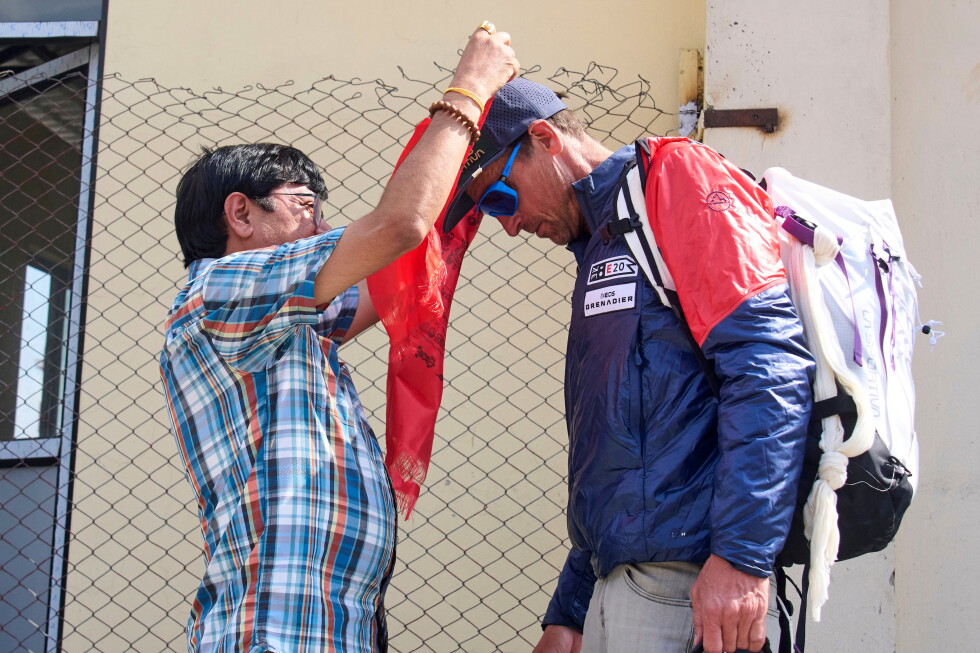
Guide Kenton Cool scales Everest for the 20th time and says not ready to quit yet
Nestled in the Himalayas between Nepal and the Tibetan Autonomous Region of China, the 8,849-meter summit of Mount Everest has long stood as the ultimate pinnacle for mountaineers around the globe. This week, one of the climbing world’s most decorated guides added another chapter to his legendary career on the world’s highest peak.
Kenton Cool, a 52-year-old mountaineer hailing from southwest England, has successfully reached Everest’s summit for the 20th time, breaking his own existing record for the highest number of ascents by a non-Sherpa guide. Contrary to his 2023 announcement that he would retire from major Everest expeditions after one more climb to focus on smaller peaks, the veteran climber now says he has no plans to step away from the mountain any time soon.
After flying back to Nepal’s capital Kathmandu following his successful summit push on Sunday, Cool told reporters he is already planning future ascents. “Maybe another two or three more times,” he said of his expected future trips to the peak.
Cool’s 20th ascent came amid a chaotic 2024 spring climbing season on Nepal’s southern Everest route, marked by unexpected delays and historic crowds. A unstable, dangerously positioned serac along the standard climbing path forced expedition teams to hold their summit pushes for days, leaving only a narrow window of favorable weather for all permitted climbers to attempt the peak. When the window opened, the sector saw unprecedented traffic: on Wednesday alone, 274 climbers successfully summited via the southern route, setting a new single-day record for the Nepali side of the mountain. China closed its northern Everest route for 2024, leaving the southern Nepali path as the only accessible route for climbers this year, amplifying congestion on the mountain.
Despite the reported overcrowding, Cool said his team encountered no major issues during their attempt, which he completed on Friday. “We had no issues. We had no crowds, we had a great summit,” he noted.
This year’s surge in summits has reignited long-running debates over crowd management and regulation on Everest. Fellow record-holding Everest veteran Kami Rita Sherpa, a Nepali Sherpa guide who holds the all-time record for most Everest ascents, has called for official caps on the number of annual climbing permits, warning that overcrowding creates unnecessary safety risks for everyone on the mountain. Nepali authorities issued 494 individual climbing permits for this season, with each permitted climber accompanied by one Sherpa guide resulting in nearly 1,000 people attempting the peak from the southern side.
Cool, however, pushed back on calls for hard permit limits, arguing that the solution lies not in restricting overall numbers but in enforcing higher standards for climber experience. Currently, Nepal’s only core requirement for obtaining an Everest permit is payment of the $15,000 permit fee, with no mandatory check of a climber’s prior high-altitude experience. While Nepali officials have discussed introducing new regulations that would require climbers to demonstrate proven high-altitude mountaineering experience before gaining a permit, those rules have not yet taken effect.
Cool argued that permit caps are unnecessary, and that climbing companies should take more responsibility to vet the experience of the clients they accept, while adjusting summit push timing to spread out traffic more effectively. “It is the various companies being a little more diligent on who they take, so they are making sure there is the experience of the climbers and then just being a little more careful with when they want to climb,” he explained.