标签: Asia

亚洲

  • Zhejiang University researchers pioneer major protein breakthrough

    Zhejiang University researchers pioneer major protein breakthrough

    In a landmark study with profound implications for treating genetic disorders, scientists from Zhejiang University have developed a novel method to engineer artificial proteins capable of rectifying malfunctions in critical cellular receptors. The research, recently published in the prestigious journal Nature, represents a significant departure from conventional drug design paradigms.

    The multidisciplinary team focused on G protein-coupled receptors (GPCRs), a large family of membrane proteins that facilitate cellular communication by transmitting external signals into cells. These receptors are targeted by approximately 30% of all approved pharmaceuticals worldwide, typically through interaction with their primary binding pocket, known as the orthosteric site.

    According to Professor Zhang Yan, Vice-Dean of Zhejiang University’s School of Medicine and a lead researcher on the project, genetic mutations in these receptors can impair their signaling functions, leading to hundreds of clinical conditions including Parkinson’s disease, obesity, and hypercalcemia. Traditional drugs designed to target the receptors’ ‘switches’ generally cannot repair these structural dysfunctions, often leaving patients with long-term chronic burdens.

    The innovative approach developed by the Zhejiang team involves creating artificial transmembrane proteins that function as customizable molecular ‘armor’ or exoskeletons. These modulators attach to malfunctioning receptors, enabling precise regulation of their functions. Professor Zhang likened the technology to ‘installing prosthetic limbs for persons with disabilities, or implanting medical devices supported by brain-computer interface technologies, only at the molecular level.’

    The research team selected the dopamine D1 receptor (D1R) as their prototype model, successfully engineering four modulators that could bind to the receptor and restore activities in various loss-of-function mutants. The complexity of this endeavor was immense—designing a modulator composed of 60 amino acids from 20 available types presents approximately 20^60 possible combinations.

    Critical to overcoming this challenge was the implementation of artificial intelligence. As explained by Professor Zhang Min from the University’s College of Computer Science and Technology, AI-driven protein design, particularly generative models for de novo design, provided tools to create entirely novel proteins with unprecedented speed and accuracy. The team developed an AI-guided probe to thoroughly profile targeted receptor structures and identify potential binding sites, using ‘structural prompts’ analogous to inputs for language models like ChatGPT but specifically for protein structures.

    The resulting technology not only enables precise switching of receptor functions but also offers programmability to a certain degree. More significantly, the team’s findings establish a platform for similar research, potentially revolutionizing treatment approaches for disorders stemming from genetic mutations in cellular receptors.

  • Culinary heritage fuels Shaxian’s prosperity

    Culinary heritage fuels Shaxian’s prosperity

    In the heart of Fujian province’s Shaxian district, a culinary revolution is transforming rural livelihoods through the power of traditional snacks. What began as humble street food carried on shoulder poles has evolved into a global phenomenon generating billions in annual revenue.

    At Yubang village’s Taste of Origins snack street, 60-year-old Zhang Xiuji exemplifies this transformation. After decades operating makeshift eateries across China, she now enjoys stable employment in her hometown, skillfully preparing wontons and noodles that represent Shaxian’s culinary heritage. Her personal journey from debt-ridden migrant to prosperous local mirrors the brand’s extraordinary ascent.

    The Shaxian snack tradition comprises over 200 varieties, with signature dishes including bianrou (springy meat wontons), banmian (peanut sauce noodles), and potstickers. According to Village Party Chief Zhang Changsong, this industry literally built the community: “In the 1980s and 90s, villagers carried this industry on their shoulders.” Of Yubang’s 1,200 residents, nearly 700 now derive their income from snack shops.

    The scale of Shaxian’s success is staggering. From 88,000 outlets in 2020, the network has expanded to 100,000 establishments nationwide, with over 60,000 Shaxian natives operating stores. The industry achieved an extraordinary 55 billion yuan ($7.6 billion) in annual turnover by 2025.

    Global expansion has been equally remarkable, with 241 overseas branches across 81 countries. Crucially, the brand has demonstrated remarkable adaptability, modifying recipes to suit local palates. In Saudi Arabia, pork-filled wontons have been reimagined to respect dietary customs, while Japanese outlets enhance peanut sauce intensity, and French locations add salad oil for local flair.

    This globalization is underpinned by sophisticated supply chains. Where early vendors carried ingredients on poles, modern operators receive standardized ingredients via smartphone orders, eliminating the hardships of earlier generations.

    The culinary success has sparked a homecoming trend, with food tourism drawing crowds to Shaxian’s origin village. As Zhang Xiuji reflects: “The village is thriving. We don’t have to wander anymore” – a sentiment capturing how traditional flavors have built modern prosperity.

  • More than 300 robots warm up for Beijing half-marathon next month

    More than 300 robots warm up for Beijing half-marathon next month

    In an unprecedented fusion of athletics and advanced robotics, Beijing is preparing to host a groundbreaking event where over 300 humanoid robots will compete alongside human participants in a half-marathon next month. The 2026 Beijing E-Town Half Marathon and Humanoid Robot Half Marathon, scheduled for April 19, represents a significant milestone in robotics development and real-world application testing.

    The event has attracted substantial participation from 76 institutions across 13 provincial-level regions, featuring more than 80 corporate teams and over 20 academic groups from universities and training camps. According to Liu Weiliang, spokesperson and deputy director of the Beijing Municipal Bureau of Economy and Information Technology, this gathering will showcase 26 distinct robot brands, highlighting China’s rapidly expanding robotics sector.

    This year’s competition demonstrates remarkable growth compared to previous iterations, with participating teams increasing nearly fivefold and university involvement surging tenfold from just two institutions last year to twenty currently. A particularly significant advancement is that approximately 38% of competing robots will utilize autonomous navigation capabilities, marking substantial progress in real-world mobility applications.

    Beyond the spectacle, the marathon serves as a rigorous testing ground for robotic endurance and reliability. Tang Jian, Chief Technology Officer of the Beijing Innovation Center of Humanoid Robotics, emphasizes that the event evaluates stability and consistency under sustained, complex conditions rather than merely assessing speed capabilities.

    The competition builds on last year’s successful inaugural event, where the winning robot completed the 21-kilometer course in 2 hours, 40 minutes, and 42 seconds. That event garnered massive public attention, with live broadcasts attracting 128 million viewers according to official data.

    Supporting this technological advancement, Beijing has established a substantial government investment fund worth 100 billion yuan ($14.48 billion) specifically targeting future industries including humanoid robotics. The city’s commitment is further demonstrated by the 23 robotics companies that have secured combined financing of 19.24 billion yuan since January 2025, accounting for 41% of national funding in this sector.

    The event signifies a crucial transition from demonstration-based robotics to practical implementation, with humanoid robots increasingly moving beyond staged performances into retail solutions and consumer-oriented applications, gradually integrating into everyday life scenarios.

  • China pushes for using patents as innovation incubators

    China pushes for using patents as innovation incubators

    Chinese authorities are implementing a comprehensive national strategy to transform intellectual property into a powerful engine for economic growth and technological advancement. The China National Intellectual Property Administration has announced the development of a sustainable mechanism designed to dramatically increase the practical application of patented innovations across industries.

    Deputy Commissioner Hu Wenhui revealed that significant progress has already been achieved, with university invention patent commercialization rates reaching 10.1% and research institutions achieving 17.2% by the end of 2025. These figures represent substantial improvements over previous years, demonstrating the effectiveness of recently implemented policies.

    The administration has confronted historical challenges in patent commercialization, including lengthy processes, uncertain outcomes, and high risks that previously discouraged researchers from bringing their innovations to market. To address these barriers, officials have introduced systematic reforms including pre-application patent evaluations, targeted research guidance, and specialized talent development programs focused on commercialization expertise.

    In a coordinated effort with the Ministry of Public Security and the State Administration for Market Regulation, authorities have intensified enforcement against illegal patent agents, handling over 170 cases that resulted in license suspensions or revocations for 61 patent and trademark agencies and 22 individual agents. The crackdown has eliminated more than 100,000 instances of illegal information and advertisements while shutting down over 2,200 user accounts involved in fraudulent patent activities.

    Ministry of Education official Zhou Dawang emphasized that pre-application evaluations ensure quality from inception while aligning patent development with market demands. Meanwhile, Ministry of Industry and Information Technology representative Wei Wei articulated that intellectual property rights must transcend laboratory confinement to achieve practical implementation on production lines, transforming abstract concepts into tangible products.

    The administration, in collaboration with industry partners, has established fast-track review processes for patent applications in critical manufacturing sectors while developing targeted policies to support small and medium-sized enterprises in patent commercialization. Officials describe this multifaceted approach as establishing a characteristically Chinese pathway to realizing full patent value through stable, long-term mechanisms for commercialization and utilization.

  • ‘City of the future’ a reality after 9 years

    ‘City of the future’ a reality after 9 years

    After nine years of development, Xiong’an New Area has emerged as a model of urban planning and high-quality development, realizing its vision as a ‘city of the future.’ The project, initiated under China’s national strategy, has transformed from conceptual designs into a fully functional urban center that prioritizes quality of life alongside economic development.

    The transformation story of Xing Jie and Li Jinghe illustrates the human impact of this massive urban development. Previously operating a small hardware store in rural Hebei province, the couple initially hesitated when learning their village would be incorporated into the Xiong’an New Area blueprint. “We were reluctant to leave because we couldn’t picture what the new area would be like,” Xing recalled.

    Their relocation journey took a positive turn when they utilized compensation funds to establish a wholesale business in Baigou, a neighboring commercial hub. Transitioning from retail to wholesale, they secured a 500-square-meter warehouse that enabled significant business expansion beyond their expectations.

    In 2021, the family achieved another milestone by moving into a modern apartment in Rongdong district. Xing now expresses confidence in the area’s development, noting that “the opportunities, especially for the younger generation, are far greater than what a small village store could ever offer.”

    The physical landscape of Xiong’an has similarly transformed, with the Xiong’an Business Service Center standing as an architectural landmark visible even at dusk. The area now represents successful implementation of integrated planning that balances economic development with residential quality, environmental sustainability, and technological innovation.

    This development exemplifies how national strategic planning can successfully translate into improved living standards and economic opportunities for citizens while creating sustainable urban environments designed for future challenges.

  • Tourism soars as flower-chasing season

    Tourism soars as flower-chasing season

    China’s spring blossom season has triggered an unprecedented tourism boom as domestic and international travelers flock to iconic floral destinations across the nation. The phenomenon represents a significant economic driver, creating a comprehensive consumption chain spanning transportation, accommodation, dining, and experiential tourism.

    Record-breaking visitor numbers have been reported nationwide. Yuantouzhu Scenic Area in Wuxi, Jiangsu Province, entered ‘congestion mode’ in mid-March, welcoming nearly 70,000 visitors in a single day—a record for this year’s cherry blossom season. The surge demonstrates the powerful attraction of China’s spring floral landscapes, with social media amplifying interest in these natural spectacles.

    Major urban centers are experiencing particularly strong demand. Beijing’s magnolia and mountain peach trees have created vibrant spring displays, with Yuyuantan Park’s early cherry blossoms drawing crowds despite weekday visits. Hotel bookings near photogenic locations like Qianmen, Temple of Heaven, and Chaoyang Park have surged correspondingly.

    The trend extends beyond traditional domestic tourism. International visitors are arriving in dramatically increased numbers, with flight bookings using non-Chinese passports rising 21% year-on-year according to Qunar data. Specific destinations have seen extraordinary growth: Nyingchi in Tibet recorded a 630% increase in foreign arrivals for its pink peach blossoms, while Datong in Shanxi Province witnessed a 900% surge for its apricot blossoms.

    Affordable air travel has facilitated this tourism explosion, with fares dropping 30-70% compared to February prices. One-way flights from Beijing to popular destinations like Hangzhou, Wuxi, and Wuhan are available for as little as 300 yuan ($44), creating competitive pricing against high-speed rail alternatives.

    Professor Lü Ning, Dean of Tourism Sciences at Beijing International Studies University, notes the evolution of flower-viewing tours: ‘The 2026 season emphasizes immersive experiences and scenario innovation. We’re observing a transition from superficial viewing to deep participation, creating stronger emotional connections between visitors and natural environments.’

    The phenomenon demonstrates how natural attractions can transform into significant economic assets, generating comprehensive consumption chains that benefit multiple sectors of the tourism industry.

  • China dials back on fuel price hikes to ‘reduce burden’ on drivers

    China dials back on fuel price hikes to ‘reduce burden’ on drivers

    In an unprecedented move to alleviate economic pressure on consumers, China has significantly scaled back planned fuel price increases as global energy markets reel from the ongoing conflict in Iran. The National Development and Reform Commission (NDRC) announced Monday that originally scheduled hikes of 2,205 yuan per tonne for gasoline and 2,120 yuan for diesel would be nearly halved to 1,160 yuan and 1,115 yuan respectively, effective Tuesday.

    The decision comes as Brent crude oil surged past $100 per barrel this week, with petroleum prices experiencing approximately 20% inflation since Iran’s effective closure of the Strait of Hormuz—one of the world’s most critical oil shipping corridors. This strategic waterway disruption has created supply chain chaos throughout Asia, particularly affecting nations like Japan and South Korea that depend heavily on Middle Eastern energy imports.

    China’s intervention reflects both the magnitude of the crisis and Beijing’s strategic positioning. According to commodity analysts, China has methodically built one of the planet’s largest petroleum reserves, estimated at approximately 900 million barrels, leveraging years of favorable pricing and abundant Gulf state supplies. Customs data reveals a 16% year-over-year increase in crude purchases during January-February, with Iran—despite U.S. sanctions—remaining a crucial supplier of discounted oil to Chinese markets.

    The government’s price moderation strategy extends beyond direct intervention. Reports indicate Chinese authorities have instructed domestic refineries to temporarily suspend fuel exports to stabilize local markets, while state media emphasizes the deployment of “temporary regulatory measures to mitigate the impact of abnormal international oil price increases.”

    Across Asia, governments are implementing extraordinary measures to address the energy crisis. The Philippines has transitioned to a four-day workweek for government employees, while Sri Lanka has declared weekly Wednesday holidays for public institutions. Thailand and Vietnam have promoted widespread remote work policies, with Thai civil servants additionally instructed to suspend international travel and adopt energy-conscious workplace behaviors. Transport strikes have erupted in both Sri Lanka and the Philippines as operators demand fare revisions to compensate for soaring operational costs.

    The situation remains particularly dire in Japan, where gasoline prices reached record highs of 191 yen per liter this week, and in South Korea, where President Lee Jae Myung has canceled international engagements to personally oversee emergency economic response measures.

  • ‘Chinese characteristics’ and Xi Jinping’s latest purge of brass

    ‘Chinese characteristics’ and Xi Jinping’s latest purge of brass

    A significant restructuring within China’s military leadership has drawn intense international scrutiny, revealing deeper strategic implications beyond surface-level interpretations. Contrary to Western analyses suggesting internal fragmentation, the removal of two four-star generals represents a calculated consolidation of President Xi Jinping’s authority over the People’s Liberation Army (PLA).

    Generals Zhang Youxia and Liu Zhenli, both high-ranking members of the Central Military Commission (CMC), were dismissed in late January following allegations of ‘grave violations of discipline and law’—standard terminology for corruption charges. Notably, General Zhang maintained a longstanding personal relationship with Xi dating to their childhood as ‘princelings,’ making his removal particularly significant.

    This development marks the culmination of Xi’s decade-long anti-corruption campaign, reducing the CMC to just two members: Xi himself as chairman and General Zhang Shengmin as second vice chairman. The purge stems from fundamental disagreements regarding military preparedness for potential Taiwan operations, specifically the feasibility of achieving combat readiness by the politically crucial 2027 timeline—coinciding with the 21st CCP congress where Xi anticipates securing a fourth term.

    The conflict intensified following the unexpectedly successful US Operation Absolute Resolve in Venezuela on January 3, which demonstrated advanced military capabilities that some PLA officials believe China cannot match by 2027. Generals with actual combat experience, including Zhang Youxia, had expressed skepticism about achieving Xi’s mandated readiness timeline, advocating instead for more realistic assessments of PLA capabilities.

    Central to this power struggle is Xi’s implementation of the ‘Chairman Responsibility System,’ which centralizes decision-making authority under his direct control. This contrasts with the previously decentralized collective responsibility system preferred by some military leaders. The episode underscores the enduring tension between political loyalty and operational competence within China’s unique civil-military framework, where the PLA serves as the armed wing of the Communist Party rather than the state itself.

    The military’s transformation continues under Xi’s vision, with reforms initiated in 2016 replacing seven legacy military regions with five theater commands designed for integrated joint operations. The ongoing restructuring aims to create a world-class military by 2049, though Western analysts question whether prioritizing political reliability over operational effectiveness might ultimately hinder this objective.

  • Israel’s second-largest airline moves its operations to Jordan and Egypt

    Israel’s second-largest airline moves its operations to Jordan and Egypt

    In a significant operational shift prompted by wartime aviation restrictions, Israeli airline Arkia is transferring the majority of its flight operations to neighboring Jordan and Egypt. This decision comes exactly four weeks into the intensified military engagement between the United States, Israel, and Iran.

    The airline’s Chief Executive Officer, Oz Berlowitz, confirmed that effective immediately, Arkia flights will primarily depart from airports in Aqaba, Jordan and Taba, Egypt. This strategic relocation responds to stringent Israeli government restrictions currently capping flight capacity at just 50 passengers per aircraft—a policy Berlowitz described as effectively closing Israel’s commercial airspace.

    Ben Gurion International Airport near Tel Aviv will maintain minimal operations for specific humanitarian purposes. The limited flights still operating from Israel will serve routes to Larenaca, Cyprus and Athens, Greece—critical connections for thousands of Israeli citizens currently stranded abroad and unable to return home amid the conflict.

    This is not the first time Arkia has implemented emergency measures during regional conflicts. During the twelve-day military engagement with Iran the previous year, the airline developed specialized flight schedules to repatriate Israeli citizens from abroad.

    Berlowitz emphasized the airline’s commitment to passenger safety and operational creativity during this challenging period, stating that normal aviation operations have become impossible within Israel’s current regulatory framework. The airline has committed to honoring all previously purchased tickets despite the operational changes.

    The relocation occurs amid potential ownership changes for the carrier. Recent reports from The Jerusalem Post indicate interest from a U.S. investor and cannabis pharmaceutical company owner in acquiring the approximately $50 million valued airline. Any potential acquisition would require Israeli partnership due to the nation’s restrictions on foreign ownership of domestic airlines.

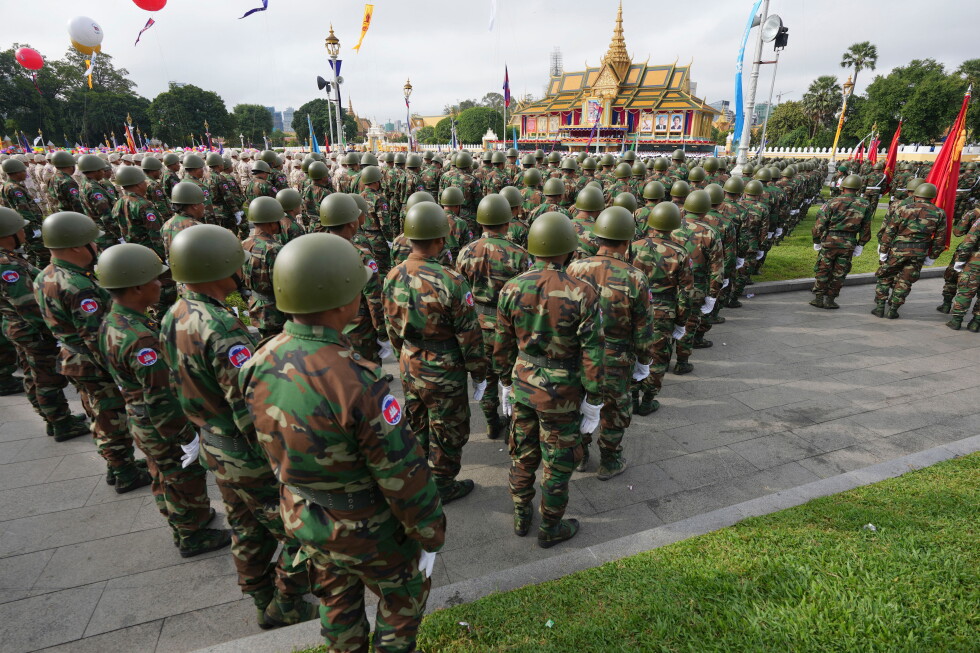
  • A 1,000-year-old temple lies battered after Cambodia-Thailand border clashes

    A 1,000-year-old temple lies battered after Cambodia-Thailand border clashes

    The historic Preah Vihear temple, an 11th-century UNESCO World Heritage site perched on Cambodia’s mountainous border with Thailand, bears severe damage from recent military clashes that threaten its structural integrity. Despite a three-month ceasefire, the ancient Khmer Empire structure shows extensive combat scars including artillery craters, stone debris, and unexploded ordnance that now deter tourists from visiting the once-popular cultural site.

    Cambodian authorities report the temple sustained damage at 562 distinct locations during two major combat episodes in July and December, with five gateway pavilions significantly impaired and three nearly unrecognizable. A previously restored northern staircase suffered direct bombardment hits. Archeologist Hem Sinath, deputy director-general of the National Authority for Preah Vihear, describes the atmosphere as sorrowful, with the temple’s beauty diminished by recent tragedy.

    The site remains closed to visitors due to safety concerns including unstable walls and landmine contamination—a haunting reminder of Cambodia’s civil war history. Conservation staff and military personnel maintain presence amid fragile ceasefire conditions. Cambodian officials warn that upcoming monsoon rains could trigger collapses of critically weakened structures.

    Both nations accuse each other of initiating hostilities and violating international protections for cultural heritage sites. Thailand maintains it targeted only military installations, claiming Cambodia had militarized the temple complex. The border dispute over the temple spans decades, with the International Court of Justice affirming Cambodian sovereignty in 1962 and reaffirming it in 2013. Restoration efforts previously supported by India, China, and the United States remain suspended due to ongoing tensions, leaving the future of this architectural treasure uncertain.