标签: Asia

亚洲

  • US only certain of having destroyed a third of Iran’s missiles

    US only certain of having destroyed a third of Iran’s missiles

    A confidential US intelligence assessment has revealed that American and Israeli forces have successfully destroyed only approximately one-third of Iran’s missile inventory, contradicting President Donald Trump’s public claims of near-total military success. According to five sources with knowledge of the intelligence who spoke with Reuters, the status of an additional third remains uncertain, though these missiles may have been damaged, destroyed, or buried in underground facilities during the ongoing month-long assault. Iran’s drone capabilities have similarly been reduced by about a third.

    The assessment indicates Tehran maintains substantial retaliatory capacity despite the sustained campaign. This evaluation stands in stark contrast to President Trump’s remarks during a Thursday cabinet meeting, where he asserted 99 percent destruction of Iranian missiles while discussing strategic options for the Strait of Hormuz. He justified continued action by stating that even one percent remaining capability posed an unacceptable risk to naval assets.

    US Central Command has declined to provide specific damage assessments, while Israeli military officials disclosed that Iran possessed approximately 2,500 ballistic missiles capable of reaching Israel before hostilities began. A senior Israeli official claimed 335 missile launchers (representing 70% of Iran’s launch capacity) have been neutralized.

    The campaign has come at significant logistical cost. Officials warn that US and Israeli forces are rapidly depleting their missile inventories, with The Washington Post reporting over 850 Tomahawk cruise missiles fired within four weeks—a concerning rate given annual production numbers in the hundreds. Pentagon stockpiles in the Middle East are reportedly ‘alarmingly low.’

    Despite these constraints, Axios reported Thursday that the Department of Defense is drafting plans for a ‘final blow’ involving ground troops and massive bombing campaigns. Potential strategies include invading or blockading Kharg Island (source of 90% of Iran’s oil exports), seizing strategic islands like Larak near Qeshm Island, or occupying disputed territories like Abu Musa and the Tunb islands claimed by the United Arab Emirates. Additional options under consideration involve seizing Iranian oil tankers transiting the Strait of Hormuz.

  • I escaped North Korea with my mum. Now I’m terrified she might be sent back

    I escaped North Korea with my mum. Now I’m terrified she might be sent back

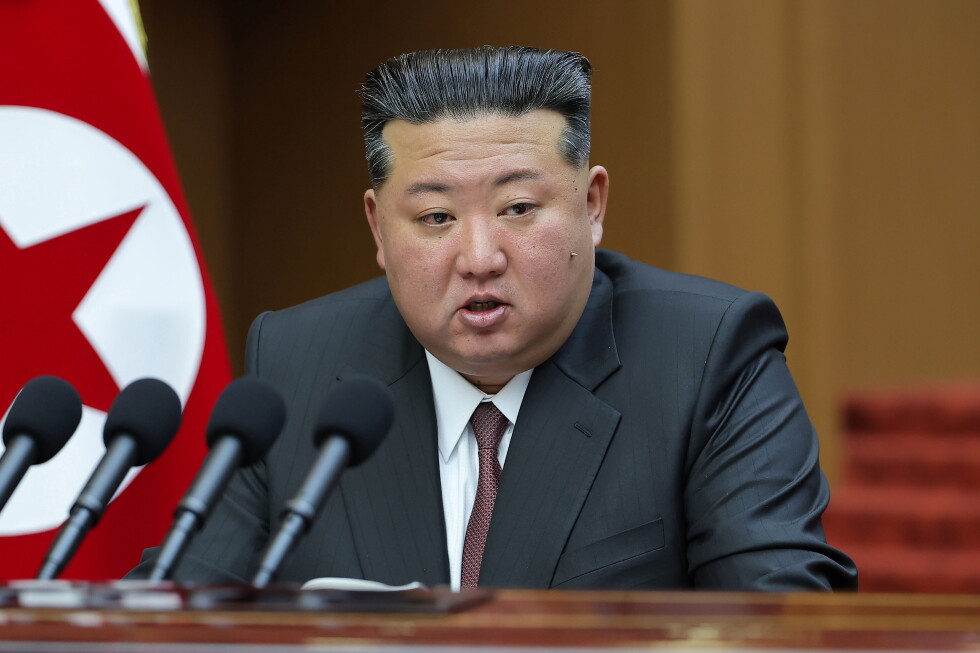
    In a poignant tale of separation and sacrifice, a North Korean refugee now faces his greatest fear: the potential repatriation of his mother from China back to the oppressive regime they risked everything to escape.

    Geumseong’s journey to freedom began in 2019 when he and his mother Eunhee crossed the heavily fortified Yalu River into China. What the teenager didn’t know was that his mother had arranged her own sale as a bride to a Chinese man—a desperate measure to finance her son’s escape to South Korea through an underground network of brokers. This heartbreaking sacrifice enabled Geumseong’s 4,000-kilometer journey through China to Thailand and eventually to Seoul, where he was granted citizenship under South Korea’s constitutional protection of North Korean defectors.

    Their emotional Christmas Eve 2020 video reunion—arranged after Eunhee appeared on a refugee podcast that miraculously reached Geumseong’s friends—provided temporary comfort. But their separation took a devastating turn in January 2025 when Eunhee, attempting to join her son in South Korea, was captured near the Myanmar border and imprisoned in northeastern China.

    Geumseong now races against time, fearing his mother could join the estimated 1,000 North Koreans forcibly repatriated since October 2023—a fate that human rights groups warn often leads to torture, imprisonment, or execution. ‘I just want to ask them to please give her one more chance to live a normal life,’ Geumseong pleads, having already attempted unsuccessfully to visit his mother in prison.

    This personal tragedy unfolds against a broader backdrop of declining North Korean defections. Post-pandemic border reinforcements—including double-layered electrified fences and enhanced surveillance along the 1,420-kilometer Sino-Korean border—have reduced annual arrivals in South Korea from approximately 1,000 before 2020 to just 223 in 2025.

    The phenomenon of North Korean women being sold as brides in China reflects both gender imbalance (with 34 million more men than women) stemming from China’s former one-child policy, and the desperate circumstances driving escapees. While some marriages offer relative stability, many women live in legal limbo—monitored through biometric data collection and entirely dependent on their husbands’ whims.

    Human Rights Watch’s Lina Yoon describes their predicament as a ‘cruel paradox—never legal, never safe.’ For Geumseong, the paradox is personal: his mother’s sacrifice granted him freedom, but now threatens her very existence. His desperate appeal echoes beyond his personal tragedy, highlighting the ongoing humanitarian crisis at the intersection of geopolitics, human rights, and individual courage.

  • Report links tech flaws, oversight failures to deadly Shandong chemical blast

    Report links tech flaws, oversight failures to deadly Shandong chemical blast

    A comprehensive investigative report into the catastrophic chemical explosion at Shandong Youdao Chemical has concluded that a confluence of technological deficiencies and systemic regulatory failures led to the deadly incident. Published on Friday following special supervision by the State Council Work Safety Committee, the findings reveal multiple critical breakdowns in safety protocols.

    The investigation determined that the May 27, 2025 explosion resulted from unauthorized substitution of substandard raw materials combined with fundamentally flawed technological processes. The report specifically cited inappropriate material-transfer equipment and severe deficiencies in both risk management and hazard identification systems. These technical shortcomings were compounded by what investigators characterized as ‘serious failures’ in oversight by local authorities and relevant government departments.

    In response to these findings, the report recommends criminal prosecution for ten individuals, including company general manager Zhang Bensong. Additionally, forty-nine government officials face proposed disciplinary actions including Party, administrative and organizational penalties. The document further mandates administrative penalties against four companies and seven additional individuals, while requiring multiple local authorities to submit formal written self-criticisms.

    The blast occurred at approximately 11:57 am in a company workshop located in Gaomi, Shandong province, marking one of China’s most significant industrial accidents in recent years. The State Council committee had elevated the investigation to special supervision status, emphasizing the urgency of determining both causation and accountability in the wake of the tragedy.

  • Nato to set up new corps in Turkey as Ankara eyes regional deterrence

    Nato to set up new corps in Turkey as Ankara eyes regional deterrence

    Turkey’s Defense Ministry has confirmed ongoing preparations for establishing a NATO multinational corps headquarters on its soil, marking a significant enhancement of the alliance’s southern defensive capabilities. Designated as MNC-TUR, this initiative forms part of NATO’s comprehensive southern regional strategy, with developmental work commencing in 2023 and formal notification delivered to alliance members in 2024.

    The strategic location selected for this headquarters is the 6th Corps Command in Adana, a southern province housing the strategically vital Incirlik airbase currently utilized by U.S. and Spanish military personnel. A Turkish general will assume command of the corps, with national core staff appointments already finalized. According to sources familiar with the timeline, Turkey anticipates completing establishment procedures by 2028.

    Defense officials emphasize that this military enhancement predates recent Middle Eastern tensions and remains unrelated to current regional conflicts. “Coordination with NATO authorities continues regarding the headquarters transformation into a multinational structure,” the ministry stated, noting that “approval processes remain ongoing as NATO procedures have not yet been fully completed.”

    This development represents Turkey’s third major NATO command facility, complementing existing Land Command headquarters in Izmir and the Rapid Deployable Corps in Istanbul. Retired Brigadier General Huseyin Fazla, with extensive NATO experience, clarifies the strategic rationale: “While the Istanbul corps provides rapid deployment capabilities, MNC-TUR will deliver permanent protection for Turkish territory against regional threats, including those emanating from Russia and the Mediterranean.”

    Karol Wasilewski of Poland’s OSW think tank contextualizes the move within NATO’s broader strategic evolution: “This initiative aligns with the alliance’s modular approach adopted at the Vilnius summit, emphasizing land force development while implementing 360-degree threat response capabilities particularly beneficial to Turkish security interests.”

    The Adana location offers practical advantages, leveraging existing infrastructure capable of accommodating international officers and their families. Fazla notes this minimizes financial investment while maximizing operational readiness: “The 6th Corps possesses established experience coordinating with allied forces, and necessary facilities from housing to educational institutions are already operational.”

    Regional analysts suggest the corps will demonstrate NATO’s commitment to collective defense while enhancing Turkey’s strategic positioning, potentially altering regional power dynamics through demonstrated alliance solidarity and enhanced military interoperability.

  • Zhundong-Wannan UHV line surpasses 400 billion kWh mark

    Zhundong-Wannan UHV line surpasses 400 billion kWh mark

    China’s monumental Zhundong-Wannan ±1100 kV ultra-high-voltage direct current (UHVDC) transmission project has achieved a historic energy transmission milestone, delivering over 400 billion kilowatt-hours of electricity since commencing operations in 2019. According to State Grid Xinjiang Electric Power Co., the cumulative transmission volume reached 402.19 billion kWh as of March 27, 2026.

    This engineering marvel originates at the Changji Converter Station in Xinjiang Uygur Autonomous Region and traverses an extraordinary 3,293-kilometer route across six provinces and autonomous regions. The infrastructure project passes through Gansu Province, Ningxia Hui Autonomous Region, Shaanxi Province, and Henan Province before concluding in Anhui Province in eastern China.

    The transmission system currently maintains three world records for UHV projects: highest voltage level, largest transmission capacity, and longest transmission distance. Since 2021, it has consistently achieved the highest annual transmission volume among all national UHV projects, setting a remarkable national record with an average daily transmission of 169 million kWh.

    In 2025 alone, the project transmitted 69.87 billion kWh of electricity, representing nearly 20% of Anhui Province’s total power consumption. This massive energy transfer demonstrates China’s technological leadership in ultra-high-voltage transmission and its commitment to addressing regional energy distribution imbalances by delivering power from energy-rich western regions to high-demand eastern provinces.

  • Beijing approves new drone regulations

    Beijing approves new drone regulations

    Beijing has introduced sweeping new regulations governing unmanned aerial vehicles, establishing a comprehensive framework that will take effect May 1st. The legislation, approved by the Standing Committee of Beijing Municipal People’s Congress, represents a significant step in balancing technological advancement with public security concerns.

    The regulatory framework mandates pre-approval for all outdoor drone operations within the capital while creating designated flight zones specifically for research, educational, and industrial testing purposes. According to Xiong Jinghua, deputy director of the Standing Committee’s legal affairs committee, the legislation establishes clear standards for drone operations, sales, transportation, and storage while preserving opportunities for legitimate research and production activities.

    Educational institutions receive special consideration under the new rules, with schools and universities permitted to purchase, store, and operate drones through approved channels to support academic instruction, scientific experimentation, and technological development.

    Yanqing district has been designated as a primary hub for dedicated flight operations, leveraging its existing low-altitude flight management expertise and smart flight network spanning 168 square kilometers. District Vice Governor Su Lihua emphasized that activities in these zones will commence gradually under rigorous safety protocols.

    The regulations impose strict controls on manufacturing and distribution, prohibiting illegal production, assembly, modification, or tampering with drone systems. The sale or transport of drones and core components within Beijing is banned unless the equipment has completed real-name registration and information verification procedures.

    Authorities characterize these measures as reflecting Beijing’s dual commitment to ensuring low-altitude safety while fostering orderly innovation in drone technology for industrial, research, and educational applications.

  • ‘Policing thought’: French bill to fight antisemitism accused of silencing Israel critics

    ‘Policing thought’: French bill to fight antisemitism accused of silencing Israel critics

    A legislative proposal intended to combat modern forms of antisemitism has ignited intense political and social controversy in France, with critics warning it could criminalize legitimate criticism of the Israeli government. The bill, scheduled for parliamentary debate next month, has drawn opposition from human rights organizations, left-wing parties, and even segments of the French Jewish community.

    Introduced in November 2024 by MP Caroline Yadan, a former member of President Emmanuel Macron’s Renaissance party, the legislation specifically addresses what it terms ‘renewed forms of antisemitism’ that have emerged since the October 7, 2023 attacks. Yadan, who represents French citizens abroad in a constituency including Israel and Palestine, left Macron’s parliamentary group in protest of his recognition of Palestinian statehood.

    The proposed law adopts the International Holocaust Remembrance Alliance’s (IHRA) controversial definition of antisemitism, which includes ‘targeting the state of Israel, conceived as a Jewish collectivity.’ While the French National Assembly adopted this definition as a non-binding resolution in 2019, the new bill seeks to incorporate it into criminal law.

    Legal experts and human rights advocates have raised significant concerns about several provisions. Article 1 expands the scope of ‘incitement to terrorism’ offenses, which have been increasingly used against pro-Palestinian voices. Article 2 creates a new offense punishing ‘incitement to the destruction or denial of a state’ with penalties of up to five years imprisonment and €75,000 fines—potentially criminalizing slogans like ‘Free Palestine.’ Article 4 broadens the definition of Holocaust denial to include comparisons between Israeli policies and historical crimes committed by regimes such as Nazi Germany or apartheid South Africa.

    The French Human Rights League (LDH) president Nathalie Tehio stated, ‘The aim is to criminalize the expression of certain opinions and prosecute anything critical of Israel.’ The National Consultative Commission on Human Rights, an independent governmental body, warned the bill would discourage ‘legitimate and healthy debates in a democratic regime.’

    Notably, the legislation has divided French political circles, receiving support from right-wing and far-right parties while facing opposition from across the left spectrum. Even the Council of State, France’s highest administrative court, recommended amendments to address vague terminology that could lead to arbitrary applications.

    Perhaps most significantly, French Jewish organizations including the French Jewish Union for Peace have condemned the bill, arguing it creates a ‘false equation between Jews, Israel and Zionism’ and could actually increase antisemitism by associating French Jews with Israeli policies. Pierre Stambul, co-president of the organization, warned the bill ‘imposes an assigned identity to French Jews that equates them with supporting the state of Israel and its policies.’

    The government has initiated an expedited procedure for the bill’s adoption, with Prime Minister Sebastien Lecornu recently stating that ‘to call oneself anti-Zionist is to contest Israel’s very right to exist.’ If passed, opponents plan to challenge the legislation before the Constitutional Council, though its political composition—with members appointed by the president—raises questions about its impartiality.

  • Chinese court orders seizure of overseas assets in fake gold loan fraud case

    Chinese court orders seizure of overseas assets in fake gold loan fraud case

    In a landmark ruling against financial fraud, China’s Weinan Intermediate People’s Court has ordered the seizure of overseas assets belonging to perpetrators of a massive counterfeit gold loan scheme. The court’s Friday judgment targets Zhang Qingmin and Zhang Shumin, who masterminded a sophisticated fraud operation that resulted in losses exceeding 2.7 billion yuan ($391 million) across multiple financial institutions.

    According to judicial authorities, the defendants employed an elaborate deception method between 2011 and 2016, creating counterfeit gold bars by filling them with tungsten—a metal with similar density to gold but minimal value. These fake gold assets were then used as collateral to secure substantial loans from four financial institutions primarily in Shaanxi and Henan provinces.

    The court’s ruling mandates the confiscation of 17 properties in Cyprus that were purchased with the illicit funds, along with the freezing of seven bank accounts containing proceeds from the fraudulent activities. All recovered assets will be returned to the defrauded financial entities as restitution for their massive losses.

    This case represents one of China’s most significant financial fraud prosecutions in recent years and demonstrates the judicial system’s commitment to pursuing illicit assets across international jurisdictions. The ruling signals strengthened enforcement against sophisticated financial crimes and the determination to recover stolen assets regardless of where they are hidden globally.

    The court’s statement emphasized that such fraudulent activities severely undermine financial market stability and public trust in banking institutions. The verdict serves as a stern warning to potential financial criminals that illicit gains will be pursued through international legal cooperation channels.

  • US and Israel ‘burning through’ Tomahawk and interceptor missiles in Iran

    US and Israel ‘burning through’ Tomahawk and interceptor missiles in Iran

    Pentagon officials are expressing grave concerns as the United States and Israel rapidly deplete their strategic missile arsenals in the ongoing military engagement with Iran. According to confidential sources cited by the Washington Post, American forces have launched over 850 Tomahawk cruise missiles within just four weeks of combat operations.

    The Tomahawk missile system, capable of striking targets beyond 1,000 miles without risking pilot casualties, represents a cornerstone of American long-range precision warfare. However, current production capabilities fall severely short of wartime consumption rates, with annual manufacturing output numbering only in the hundreds. One defense official characterized remaining Middle East inventories as “alarmingly low.”

    British security analysis group RUSI has quantified the unprecedented scale of munitions expenditure. Their recently published assessment reveals that US-Israeli forces deployed 11,294 munitions during the conflict’s initial sixteen days alone, incurring an estimated $26 billion in operational costs. The think tank specifically warned that long-range interceptors and precision strike weapons are “nearing exhaustion,” projecting a minimum five-year timeline to replenish the expended Tomahawk missiles.

    The logistical strain has prompted Secretary of War Pete Hegseth to personally pressure defense contractors to accelerate weapons delivery schedules. This munitions crisis emerges despite extensive aerial campaigns and targeted eliminations of Iranian leadership figures, including Supreme Leader Ali Khamenei—measures that have thus far failed to achieve strategic objectives against the Islamic Republic.

    Humanitarian organization Iranian Red Crescent reports devastating casualties, with approximately 1,900 fatalities and 20,000 injuries recorded since hostilities commenced in February. Recent diplomatic developments indicate potential de-escalation efforts, with President Donald Trump announcing a temporary suspension of plans to target Iranian energy infrastructure and referencing backchannel negotiations mediated through Pakistan. Iranian authorities, however, continue to publicly deny any diplomatic engagement and have rejected Washington’s proposed 15-point peace framework.

  • Fudan University announces plan for next-generation space infrastructure

    Fudan University announces plan for next-generation space infrastructure

    Shanghai’s prestigious Fudan University has unveiled groundbreaking advancements in next-generation space infrastructure through its development of very low Earth orbit (VLEO) satellite technology. The institution announced on Thursday that it has achieved significant breakthroughs in core technologies that could position China as a leader in the emerging space sector.

    The university revealed that a prototype satellite is nearing completion, with an engineering model expected by late 2026 or early 2027. This development comes at a crucial time when the United States maintains dominance in satellite infrastructure with over 11,000 satellites in orbit, representing more than 70% of global operations. SpaceX’s Starlink constellation alone accounts for over 10,000 satellites, creating substantial first-mover advantages in the space industry.

    VLEO satellites operate at altitudes between 150-300 kilometers, significantly lower than traditional low-earth orbit satellites that function at 350-2,000 kilometers. This proximity to Earth provides exceptional advantages including reduced launch costs (up to 90% savings), minimal radiation exposure, easier deorbiting processes, and substantially less space debris. The technological superiority of VLEO systems includes Earth observation resolution reaching 0.1-0.5 meters—comparable to aerial drone capabilities—and communication speeds more than ten times faster than conventional satellites with signal latency as low as 5 milliseconds, approaching fiber-optic performance levels.

    The primary challenge in VLEO deployment has been atmospheric drag at these lower altitudes, which requires continuous propulsion to maintain orbital stability. Fudan University’s breakthrough solution involves innovative air-breathing plasma propulsion technology that captures nitrogen and oxygen from the thin atmosphere to use as propellant. This system achieves perfect thrust-drag balance, enabling indefinite orbital maintenance with a design life exceeding two years.

    Professor Zhao Qiang, Party Secretary of the Institute of Modern Physics at Fudan University, emphasized the institution’s commitment to “advancing core technologies and promoting the integration of industry, academia and research to establish VLEO as a strategic advantage for China.”

    The university also announced plans for a joint research initiative focusing on civilian applications of VLEO technology in the Lancang-Mekong region. Associate Professor Yang Yang revealed that the project may eventually deploy five additional satellites, forming a six-satellite constellation capable of revisiting the same ground location within one hour, significantly enhancing regional economic development and public welfare applications.

    Concurrently, Fudan University celebrated the successful 18-month operation of its “Fudan No. 1 Lancang-Mekong Future Satellite,” which has produced remarkable scientific achievements including China’s first domestic “front view” image of the sun using Mg II k spectra. This breakthrough enables high-resolution extreme ultraviolet spectral observations better than 0.1 nanometer, contributing significantly to solar activity research and space weather forecasting capabilities. The research has already been integrated into Fudan University’s space weather prediction models, demonstrating promising results in ionospheric space weather forecasting.