标签: Asia

亚洲

  • AI weather model to aid BRI nations

    AI weather model to aid BRI nations

    Against a backdrop of globally rising extreme weather frequency and intensity, nations across the Belt and Road Initiative (BRI) have voiced strong enthusiasm for a new China-initiated meteorological project that leverages artificial intelligence to upgrade weather forecasting capabilities and boost disaster preparedness. The initiative, officially launched in March 2026, is funded by China’s Ministry of Science and Technology and headed by the Center for Earth System Modeling and Prediction under the China Meteorological Administration (CMA).

    The project builds on the foundation of MAZU, China’s existing open-source early warning meteorological platform that has already been rolled out in BRI partner states including Pakistan and Ethiopia, where it currently supports real-time atmospheric monitoring and rapid disaster alert dissemination. For participating nations, the initiative addresses long-standing gaps in climate resilience that have held back sustainable development.

    Kouam Magloire, head of data processing at Cameroon’s national meteorological services, noted that the collaboration represents a transformative opportunity for his country to reinforce early warning infrastructure and improve response outcomes when extreme weather strikes. Mongolia, which regularly faces severe droughts, winter blizzards and other extreme events, also highlighted the urgent need for AI-powered nowcasting — short-term forecasts ranging from minutes to hours ahead that rely on high-resolution satellite and radar data. “Through this partnership, we aim to build a far more advanced long-term forecasting system that can better protect our communities,” said Altansuvd Bold, an engineer with Mongolia’s National Agency for Meteorology and Environmental Monitoring.

    Ethiopia, another BRI partner already hosting the MAZU platform, emphasized China’s leading position in both meteorological innovation and artificial intelligence development. “Ethiopia looks forward to accessing cutting-edge technology through this project, training local technical experts, and closing critical gaps in our national nowcasting and early warning services,” explained Leta Bekele Gudina, a senior expert at the Ethiopian Meteorological Institute.

    Data from the CMA underscores the urgent need for this intervention: between 1980 and 2022, BRI participating nations suffered an average of $214.7 billion in direct annual economic losses from meteorological disasters, accounting for 28.4% of total global losses from such events. Most of these countries face systemic constraints including sparse weather observation networks, limited computing infrastructure, and outdated forecasting technology, all of which hinder effective disaster preparedness and long-term sustainable growth.

    To tackle these overlapping challenges, the project’s core goal is to develop a fully integrated AI-powered forecasting system that delivers accurate predictions across all time scales, from immediate nowcasting out to sub-seasonal outlooks. The new framework combines traditional physical atmospheric models with cutting-edge machine learning approaches, and will be customized to fit the unique geographic and climatic conditions of each partner nation. A flexible, modular intelligent forecasting device will also be designed to adapt to nations with varying levels of existing technical infrastructure, removing barriers to deployment.

    Project leader Han Wei outlined the initiative’s implementation timeline: the platform will operate for a minimum of six months across more than six BRI partner nations, with early warning services expected to reach approximately 10 million vulnerable people once fully deployed. All AI forecasting models developed through the project will eventually be integrated into the existing MAZU platform to create a sustained, stable technological foundation for long-term international meteorological cooperation.

    Leading Chinese climate scientists have praised the initiative for aligning cutting-edge technology with pressing global development needs. Chen Deliang, an academician of the Chinese Academy of Sciences, noted that the project directly answers unmet urgent demands from BRI nations while advancing the practical application of artificial intelligence in the atmospheric sciences. Zhang Xiaoye, an academician of the Chinese Academy of Engineering, added that future work should focus on strengthening regional downscaling techniques to better tailor forecasting outputs to the specific needs of individual partner countries.

  • Pakistani PM says US-Iran ceasefire covers ‘everywhere’ including Lebanon

    Pakistani PM says US-Iran ceasefire covers ‘everywhere’ including Lebanon

    ISLAMABAD – In a surprise diplomatic announcement made Wednesday, Pakistani Prime Minister Shehbaz Sharif has confirmed that Iran, the United States and their respective allied factions have reached a deal for an immediate ceasefire that will be enforced across all affected regions, including Lebanon.

    Sharif shared the details of the breakthrough agreement in an official statement posted to the social media platform X, noting that the truce entered into force the moment the announcement was made.

    “I warmly welcome the sagacious gesture and extend deepest gratitude to the leadership of both the countries,” Sharif said in his statement. The prime minister extended a formal invitation to delegations from both nations to attend talks in the Pakistani capital of Islamabad this Friday, April 10, 2026. The upcoming negotiations are aimed at advancing toward a final, binding agreement that can resolve all outstanding disputes between the two long-adversarial states.

    Sharif praised both Tehran and Washington for demonstrating “remarkable wisdom and understanding” throughout the diplomatic process that led to the ceasefire deal. He added that he holds strong optimism that the newly scheduled “Islamabad Talks” will pave the way for long-term, durable peace in the region after years of escalating tensions.

  • Yangtze River underwater rail project goes full speed ahead

    Yangtze River underwater rail project goes full speed ahead

    A major milestone in China’s expanding high-speed rail network has captured public attention across Chinese social media, as the landmark Shanghai-Chongqing-Chengdu high-speed railway’s Yangtze River underwater tunnel hits a critical construction benchmark.

    Over the weekend following the late-March breakthrough, discussions of the cross-river tunnel project dominated national social platforms, with the topic “China to launch high-speed railway under the Yangtze River” trending on China’s leading microblogging platform Weibo at the end of March. As a core national infrastructure project listed in China’s 15th Five-Year Plan (2026-2030) outline, the full 2,000-kilometer high-speed rail corridor carries a total investment of 500 billion yuan, equal to approximately $72.8 billion.

    On March 29, after 23 consecutive months of safe, steady excavation, the domestically built “Linghang” shield tunneling machine completed a record 11.18-kilometer underwater digging run, successfully passing beneath the Yangtze River’s southern embankment. The tunnel in question, stretching between Chongming district in Shanghai and Taicang city in Jiangsu province, is the longest and largest high-speed rail cross-river tunnel ever built in China, with a total planned length of 14.25 kilometers. It is a central segment of the Shanghai-Chongqing-Chengdu high-speed railway, a key backbone route in China’s national “eight vertical and eight horizontal” high-speed rail network. Project estimates cited by China Central Television suggest the full corridor will generate up to 1.5 trillion yuan in added value across its entire industrial chain, delivering tangible economic benefits to more than 20 small and medium-sized cities along the route.

    The Linghang machine’s single-drive excavation run marks a new global engineering achievement. The project requires a 11.325-kilometer uninterrupted single-drive digging distance, with the machine’s cutter head measuring 15.4 meters in diameter and the tunnel reaching a maximum depth of 89 meters below the riverbed. Designed to accommodate high-speed trains operating at speeds up to 350 kilometers per hour, the tunnel will allow trains to cross the Yangtze River without reducing speed, a feat that demands extraordinary engineering precision.

    “At a speed of 350 km/h, the required construction precision falls within the millimeter range,” explained Wang Yi, deputy equipment manager for the project, in an interview with ThePaper.cn. Wang noted that underwater tunnel construction faces unique challenges from variable river water pressure, natural geological settlement, and other environmental factors. Even a minor alignment deviation can compromise operational safety and passenger comfort, placing extremely strict requirements on structural precision, track smoothness, and resistance to external interference.

    This milestone is far more than a technical breakthrough, Wang emphasized. It cements China’s global leading position in high-speed rail underwater tunnel construction and proves the country has fully mastered core technologies for ultra-high-speed underwater tunnel projects, creating replicable, scalable expertise that can be applied to similar infrastructure projects worldwide in the future.

    Shield tunneling machines, which require highly complex integrated systems and extreme manufacturing precision, are widely recognized as a key benchmark of a country’s advanced manufacturing capacity. A single Linghang-class machine is made up of more than 20,000 individual components, and its development tells a broader story of China’s decades-long progress in heavy manufacturing: from relying entirely on imported machinery 30 years ago to becoming a global industry leader.

    China’s journey to domestic shield machine development began in 2002, when research and development of the technology was added to a national key scientific research program, launching the country’s localization push. Just two years later, in 2004, China’s first domestically built metro shield machine was unveiled in Shanghai and deployed successfully for soft soil excavation. Over the subsequent two decades, Chinese-developed shield tunneling machines have achieved continuous technological breakthroughs, with rising levels of independent innovation and intelligent integration. Today, Chinese-made shield machines are exported to more than 40 countries and regions around the world, holding roughly 70 percent of the global market share.

    Once the full Shanghai-Chongqing-Chengdu high-speed railway is completed, it will drastically cut travel times between the Yangtze River Delta region in eastern China and the Chengdu-Chongqing economic hub in southwestern China, strengthening economic connectivity, facilitating regional integration, and driving balanced growth across the entire Yangtze River Economic Belt.

  • An officer and a hero, both in life and death

    An officer and a hero, both in life and death

    On the evening of October 31, 2025, a routine on-call shift at Yuwang Police Station in Ningxia’s Tongxin County turned into a fatal test of courage for 34-year-old duty officer Yang Guolin. The emergency call that came in that night carried an urgent plea: a tanker driver had collapsed inside the vehicle’s tank while cleaning it, lying unconscious at the bottom with no sign of movement. With the nearest professional rescue team more than 70 kilometers away — a 90-minute drive that the victim could not wait out — Yang and his colleague Ma Chao rushed to the scene immediately.

    When the two officers arrived, panic had already taken hold of the crowd gathered at the site. Climbing onto the top of the tank, Yang shone his flashlight through the narrow hatch, confirming the driver’s motionless form at the bottom. The air inside the sealed tank was thick with toxic fumes, and no professional breathing apparatus was available on site. Refusing to wait for backup, Yang grabbed the only protective gear that could be scavenged from bystanders: an N95 mask and a damp cloth, and lowered himself into the hazardous space.

    Inside the tank, suffocating fumes quickly overwhelmed Yang. After failing to rouse the unconscious driver, he pulled himself back to the hatch to catch his breath and call for a rope. When Ma Chao saw Yang’s lips turning purple — a clear warning sign of toxic poisoning — he begged Yang to pull himself out immediately. Yang’s response was short and unshakable: “If I come up, what happens to the driver?” He turned back into the tank to finish the rescue.

    What would have been a straightforward operation with proper equipment became a brutal battle against Yang’s own failing body. His fingers stiffened from toxic exposure, every movement drained the last of his strength, but he still managed to secure the rope around the driver’s torso and push the man up toward the hatch. When the driver began to slip back, Yang made one final, desperate lift to push him to safety.

    The driver survived. Yang collapsed inside the tank, less than two meters from the hatch he never reached. Though rescuers pulled both men out and rushed them to the hospital, Yang was pronounced dead shortly after arrival.

    Yang’s life was defined by quiet commitment to serving his community long before that fateful night. Born in 1991 to a rural family in Tongxin, Yang became the first university graduate in his family, graduating from Beijing City University in 2016. At a time when most young graduates from small towns chased opportunities in wealthy metropolises, Yang made the deliberate choice to return to his hometown. “We’re from Tongxin,” he often said. “We ought to do something for our hometown.”

    In 2018, he deepened that commitment by volunteering for a teaching post in Artux, Xinjiang Uygur Autonomous Region. Taking over a fifth-grade Chinese class that ranked dead last in its year, he promised to lift their scores within a single semester. He spent long days and late nights preparing targeted lessons and tutoring struggling students, and by the end of the term, the class had climbed from last place to first. The experience reinforced his core belief: with full commitment, no task was impossible.

    Becoming a police officer had been Yang’s lifelong dream, and he pursued it with unwavering persistence for six years. Year after year, he took the national police entrance exam, even when his wife Li Ling gently urged him to give up his stubborn quest. “This is my life’s dream,” he would tell her. “No matter how hard it is, I want to keep trying.” In the summer of 2022, his persistence paid off: he finally put on the uniform he had chased for half a decade, and volunteered for the Yuwang Police Station posting — a remote station 78 kilometers from the county seat, widely known as one of the toughest assignments in the region.

    Starting out handling office paperwork, Yang quickly organized years of disorganized files and brought order to chaotic record-keeping. Unsatisfied with desk work, he requested a transfer to the case handling team, promising to master all core procedures within a month. From then on, he worked shifts in the field by day and studied legal texts and policing protocols line by line at night. It did not take long for him to earn a spot on the team.

    What made Yang beloved by local residents was his refusal to dismiss any problem as “too small” to matter. On a stormy autumn night, when a group of local villagers were owed more than 340,000 yuan in plowing wages and the muddy roads had become impassable to vehicles, Yang trekked more than one kilometer through rain and sludge to reach the site. Soaked to the bone, he mediated the dispute immediately, and did not leave until the employer paid the full owed amount on the spot.

    On another occasion, an elderly shopkeeper was left distraught after a customer underpaid him by 100 yuan — money the elderly man relied on for his livelihood. Yang reviewed the shop’s surveillance footage, tracked down the customer, and drove 40 kilometers that same night to recover the full amount. When the old man later brought homegrown vegetables to thank him, Yang refused the gift, saying the 100 yuan was the old man’s hard-earned money and he was only glad to return what was owed.

    In the summer of 2024, a string of shop burglaries left local merchants on edge. Yang spent days working the case, connecting incident patterns, analyzing clues, and eventually identified and arrested the culprit. After that, local shopkeepers often said: with Officer Yang around, we feel safe.

    Yang drew inspiration from the station’s long tradition of heroic service. Early in his career, after learning the story of Hai Xiaoping, a young officer who died of overwork and was named a second-class national hero model, Yang wrote in his notebook that he hoped to emulate Hai’s courage in the face of hardship and danger. That promise was fulfilled in his final act.

    After Yang collapsed, his colleague Ma Chao jumped into the tank to hold him, continuing to shout for help even after he was pulled out, exhausted and half-conscious, calling Yang’s name until he lost consciousness.

    Yang leaves behind his wife and an infant son. His last text exchange with his wife ended just 30 minutes before the emergency rescue call came. When he was laid to rest, dozens of villagers came spontaneously to pay their respects, including an elderly local man whom Yang had supported quietly for years, listing himself as the man’s emergency contact and visiting regularly with daily supplies. The old man had repeatedly invited Yang to stay for a meal, and Yang always said he was too busy, that he would come next time. There would be no next time.

    Yang served as a full-fledged police officer for just three years. In that short time, he handled more than 100 cases, earned the unwavering trust of both villagers and colleagues, and gave his last breath to save a stranger’s life. While many careers are measured by rank or length of service, Yang Guolin’s legacy will be forever tied to a damp cloth, a rope held by stiffening fingers, and a final choice to never leave someone behind.

  • Iran claims ‘historic victory,’ says US accepted terms ahead of talks

    Iran claims ‘historic victory,’ says US accepted terms ahead of talks

    Diplomatic efforts to de-escalate months of open conflict between the United States and Iran have moved forward this week, with formal negotiations scheduled to open Friday in the Pakistani capital of Islamabad, following a last-minute Pakistani-brokered agreement to pause military operations for two weeks. Both sides have framed the upcoming talks as rooted in a 10-point Iranian proposal, which Iran’s Supreme National Security Council calls a landmark victory that forced Washington to accept its core negotiating framework.

    In an official statement released Wednesday, Iran’s top security body outlined the key demands embedded in its 10-point plan, which include binding guarantees of no foreign aggression against Iran, permanent Iranian sovereignty and control over the Strait of Hormuz, full relief from crippling U.S. economic sanctions, a complete withdrawal of U.S. military forces from the broader Middle East region, and war reparations for damage inflicted during the conflict. The council emphasized that while upcoming talks will focus on ironing out final details of the framework, the preliminary agreement to negotiate does not mark a permanent end to hostilities. Iran will retain the right to resume full military operations if its full demands are not met, the statement added.

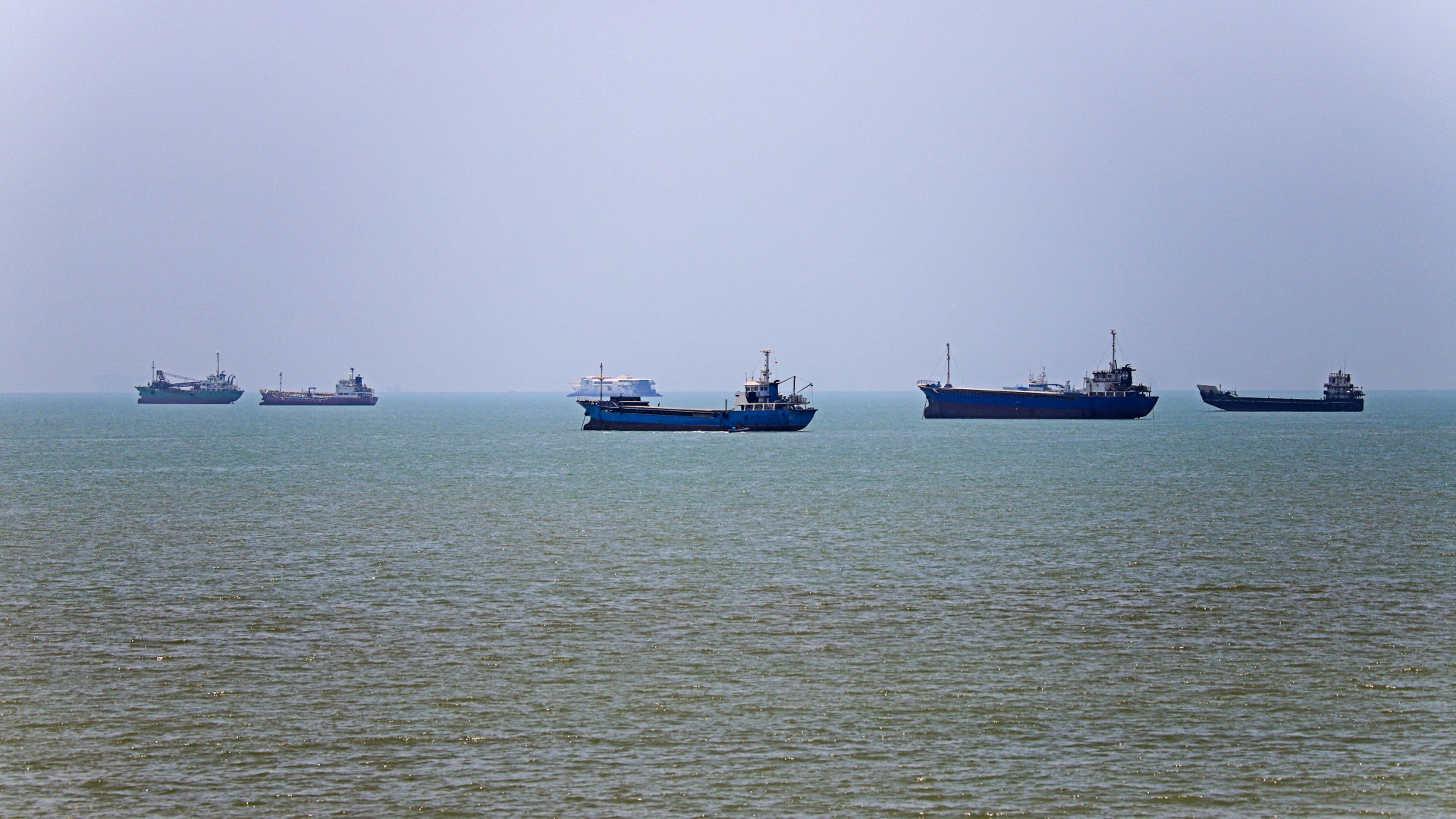
    The diplomatic breakthrough followed a flurry of activity on Tuesday, as Pakistani leaders issued a last-minute appeal to U.S. President Donald Trump to step back from a looming deadline that would have seen expanded U.S. attacks on Iran. Pakistani Prime Minister Shehbaz Sharif publicly called on Trump to extend his 8 p.m. EST deadline for escalating attacks by two weeks, to give diplomacy space to resolve the conflict. Sharif also requested that Iran reopen the Strait of Hormuz, a critical global oil chokepoint that had been closed to traffic during the conflict, to all commercial shipping during the ceasefire period.

    Trump accepted the Pakistani proposal in a post on his Truth Social platform, announcing he would suspend all U.S. bombing and offensive attacks on Iran for 14 days. The U.S. president framed the pause as a bilateral ceasefire conditional on Iran fully reopening the Strait of Hormuz immediately, noting that Iran’s 10-point proposal provides a “workable basis” to move forward with formal talks. Trump added that the U.S. had already exceeded all of its initial military objectives in the conflict, and that negotiations were already advanced toward a long-term peace deal for the Middle East. He also confirmed that almost all core points of contention between the two countries have already been agreed to in preliminary talks.

    Iran’s Supreme National Security Council confirmed Wednesday that Tehran shared its full 10-point proposal with Washington via Pakistani intermediation, and that the U.S. has formally accepted the proposal’s core principles as the foundation for formal negotiations. The council added that talks are scheduled to run up to 15 days, with an option to extend the negotiating window if needed. Any final agreement reached in Islamabad will be formalized through international verification mechanisms, the statement noted.

    The Iranian statement also pushed back against external framing of the ceasefire, claiming that Iranian military forces and their regional allied groups had inflicted severe, widespread losses on adversary forces across the Middle East, forcing the U.S. and its partners to pursue a diplomatic end to the conflict. Iran’s core long-term objective, the council said, is to establish a new regional security architecture rooted in what it describes as Iran’s established military and political supremacy in the region, and Tehran will maintain pressure on adversaries until its negotiated gains are fully consolidated.

    In a call for domestic solidarity, the Iranian security council urged full national unity across the country during the sensitive negotiating period, and warned that any provocative misstep by U.S. or partner forces will be met with an immediate, forceful response. Iran will only agree to a formal, permanent end to the conflict once every term of its original 10-point proposal has been fully agreed and implemented, the council reaffirmed. Key topics on the negotiating table in Islamabad will include rules for maritime transit through the Strait of Hormuz, concrete plans for lifting U.S. sanctions, and the future of U.S. military deployments in the Middle East.

  • Indonesian kids fear losing learning, joy under social media ban

    Indonesian kids fear losing learning, joy under social media ban

    When 11-year-old Kalam from Bekasi, West Java settles into his weekend routine, one of his favorite pastimes is logging into Roblox, the global sandbox gaming platform, to spend 1 to 2 hours exploring adventure maps and competing in car races with his friends. That small joy, however, is set to disappear starting March 29, when a sweeping new Indonesian government regulation kicks in to cut off access for all users under 16 to eight high-profile digital platforms, including Roblox.

    The policy, formally called the Regulation on Child Protection in Digital Space (locally known as PP Tunas), was first passed in 2025 and designates Roblox, YouTube, Facebook, Instagram, Threads, TikTok, X, and Bigo Live as “high-risk” platforms that pose threats to child safety. Under the rule, an estimated 70 million Indonesian minors under the age of 16 will lose access to these services. For Kalam, the loss stretches far beyond entertainment: as a fifth-grade student, he regularly uses YouTube to find supplementary learning materials for his classes. When asked how he would adapt if access is cut off, he shrugged, saying he was unsure how he would access learning resources beyond asking his teachers to share materials via WhatsApp, or forgoing external references entirely for schoolwork. He noted he could likely switch to the alternate sandbox game Minecraft for fun, but the disruption to his study routine remains a major uncertainty.

    For 15-year-old Rasya, also a resident of Bekasi, the ban has sparked far sharper concern. The junior high school student relies on YouTube and Instagram to source math tutorials, practice English and Mandarin language skills, and research scholarship opportunities. Beyond academics, the platforms are his primary space for social connection with classmates: he and his friends regularly gather on Roblox for weekend gaming sessions, where the platform’s age-matched real-time chat policy keeps interactions safe and familiar. “Nowadays, we all use phones and the internet to look for information,” Rasya explained. “If it’s blocked it will be difficult for us to learn online.” If the ban goes into full effect, he added, he will likely feel isolated, cut off from the regular social activity that fills his free time.

    Reactions to the policy among Indonesian parents are divided, even as many acknowledge the need for stronger child online protections. Diska Paramita, Rasya’s 38-year-old mother and a homemaker, is a vocal supporter of the ban. She says unregulated access to online platforms has already had visible negative impacts on her children: after playing Roblox, her kids began using inappropriate language and displayed more aggressive behavior, and she has repeatedly encountered violent and harmful content on the platform that lacks sufficient age-appropriate oversight. Since learning of the upcoming ban last year, she has already enrolled Rasya in a local basketball club to redirect his free time toward offline activity. Still, Paramita argues that restrictions alone are not enough. She called on the government to provide clearer guidance for parents on the risks of digital platforms, and to run educational workshops for both families and children in schools to help them navigate the new rules and make safer choices online.

    Digital policy experts have raised critical red flags about the blanket ban approach taken by the Indonesian government. Firman Kurniawan, a digital communications researcher at the University of Indonesia, warns that cutting off all under-16 access to major mainstream platforms could push minors toward unregulated, higher-risk alternative platforms that lack any safety protections, while also eliminating the proven educational and social benefits that structured platform use can provide. “What is needed is regulation to introduce digital platforms to children at an appropriate age, so their use can be productive for educational purposes,” Kurniawan explained, arguing for a nuanced age-based access framework rather than a full shutdown.

    As the March 29 enforcement deadline arrived, major platform operators have moved quickly to comply with the new regulation. Representatives from Roblox’s Indonesian office said the company would implement additional content and communication controls for players under 16 to align with PP Tunas requirements. A Google spokesperson, speaking for YouTube, said the company is reviewing the regulation to align its policies with the government’s goal of protecting child safety, while also working to preserve access to educational content for millions of young Indonesian learners. Meta, which owns Facebook and Instagram, noted it has already shifted Indonesian teen accounts to its Teen Accounts feature, a default protected mode that sets profiles to private by default, blocks messages from unknown senders, and prohibits Instagram Live access without parental consent. X confirmed it will block all under-16 users once the regulation takes effect, while TikTok said it is taking all required steps to meet regulatory expectations while maintaining a safe environment for teen users.

    Indonesia’s Ministry of Communication and Digital Affairs has not issued new public comment on the ban’s implementation, but Director General of Digital Space Supervision Alexander Sabar noted on March 16 that the list of restricted platforms is not final, and may be updated in the future based on ongoing risk assessments conducted by the ministry.

  • Beijing calls for immediate end to conflict

    Beijing calls for immediate end to conflict

    As the deadly Iranian conflict edges closer to a major escalation ahead of a US-imposed deadline for Tehran, Beijing has stepped up diplomatic calls for an urgent end to hostilities and a return to negotiated talks, amid growing global alarm over inflammatory rhetoric threatening wider regional collapse.

    At a Tuesday press briefing, Chinese Foreign Ministry spokesperson Mao Ning outlined Beijing’s long-held position on the spiraling crisis, emphasizing that the current confrontation could have been avoided entirely. She traced the root of escalating tensions to the unlawful use of military force by the United States and Israel against Iran, a direct violation of core principles of international law. Mao stressed that military power can never deliver lasting peace; the only sustainable path forward is a negotiated political settlement. Her remarks placed immediate priority on halting all ongoing military operations, restarting dialogue between all parties, and working toward a fundamental resolution of longstanding disputes to restore lasting peace and stability across the Gulf region.

    Mao noted that the rapid deterioration of security across the Middle East, with hostilities expanding by the day, has already inflicted collateral damage on the global economy and global energy security, triggering deep concern across the international community. Since the outbreak of the conflict, China has maintained an objective, fair and neutral stance, and has consistently worked to advance a ceasefire and end to fighting. She added that Chinese Foreign Minister Wang Yi has held 26 separate phone calls with leaders and officials from key parties including Iran, Israel, Russia and multiple Gulf nations, while China’s special envoy for Middle East affairs has conducted intensive shuttle diplomacy across the region to facilitate talks. Most recently, China and Pakistan jointly released a five-point peace initiative, which reflects the broad consensus of the global community in calling for an end to the war.

    Iranian Ambassador to Pakistan Reza Amiri Moghadam said Tuesday in a post on X that Pakistan’s “positive and productive efforts” to broker an end to hostilities are now reaching a “critical, sensitive stage”, offering a glimmer of diplomatic progress amid rising violence.

    The United Nations has meanwhile issued an urgent warning over the threatening rhetoric coming from Washington, as the Trump administration’s self-imposed deadline for Iran draws near. UN Secretary-General spokesperson Stephane Dujarric told reporters Monday that the UN is “alarmed by the rhetoric” in a public threat that promised US strikes on Iranian power plants, bridges and civilian infrastructure if Tehran did not accept a US-brokered deal. Dujarric reiterated that the Secretary-General has consistently upheld commitments to international law, and once again urged all parties to abide by their legal obligations governing the conduct of hostilities.

    Citing an anonymous senior Iranian government official, Reuters reported Tuesday that Tehran has laid out clear preconditions for any negotiations on a lasting peace deal with the United States. These demands include an immediate full halt to all US-Israeli strikes, ironclad guarantees that no future attacks will be launched against Iranian territory, and full compensation for the damage already inflicted by the conflict. The official added that Iran rejects any proposal for a temporary ceasefire, pushing for a permanent, sustainable resolution to the confrontation. The official also noted that any final peace deal must recognize Iran’s right to charge transit fees for commercial ships passing through the Strait of Hormuz, with fees adjusted based on ship type, cargo and prevailing transit conditions.

    The diplomatic push follows a two-stage peace proposal put forward by Pakistan on Monday, which centers on an immediate end to attacks and the reopening of the Strait of Hormuz, a critical global chokepoint for 20 percent of the world’s daily oil supplies.

    As the clock ticked down to his self-declared deadline Tuesday morning, US President Donald Trump issued an inflammatory threat warning that “Iran’s whole civilization will die tonight” if Tehran did not accept his terms to reach a deal and reopen the strait. “A whole civilization will die tonight, never to be brought back again. I don’t want that to happen, but it probably will,” Trump wrote in a post on his social media platform Truth Social, marking a sharp escalation of rhetoric that sent jitters across global energy markets.

    In response to Trump’s threat, Iranian President Masoud Pezeshkian wrote Tuesday on X that more than 14 million Iranian citizens have already declared their readiness to sacrifice their lives to defend their homeland.

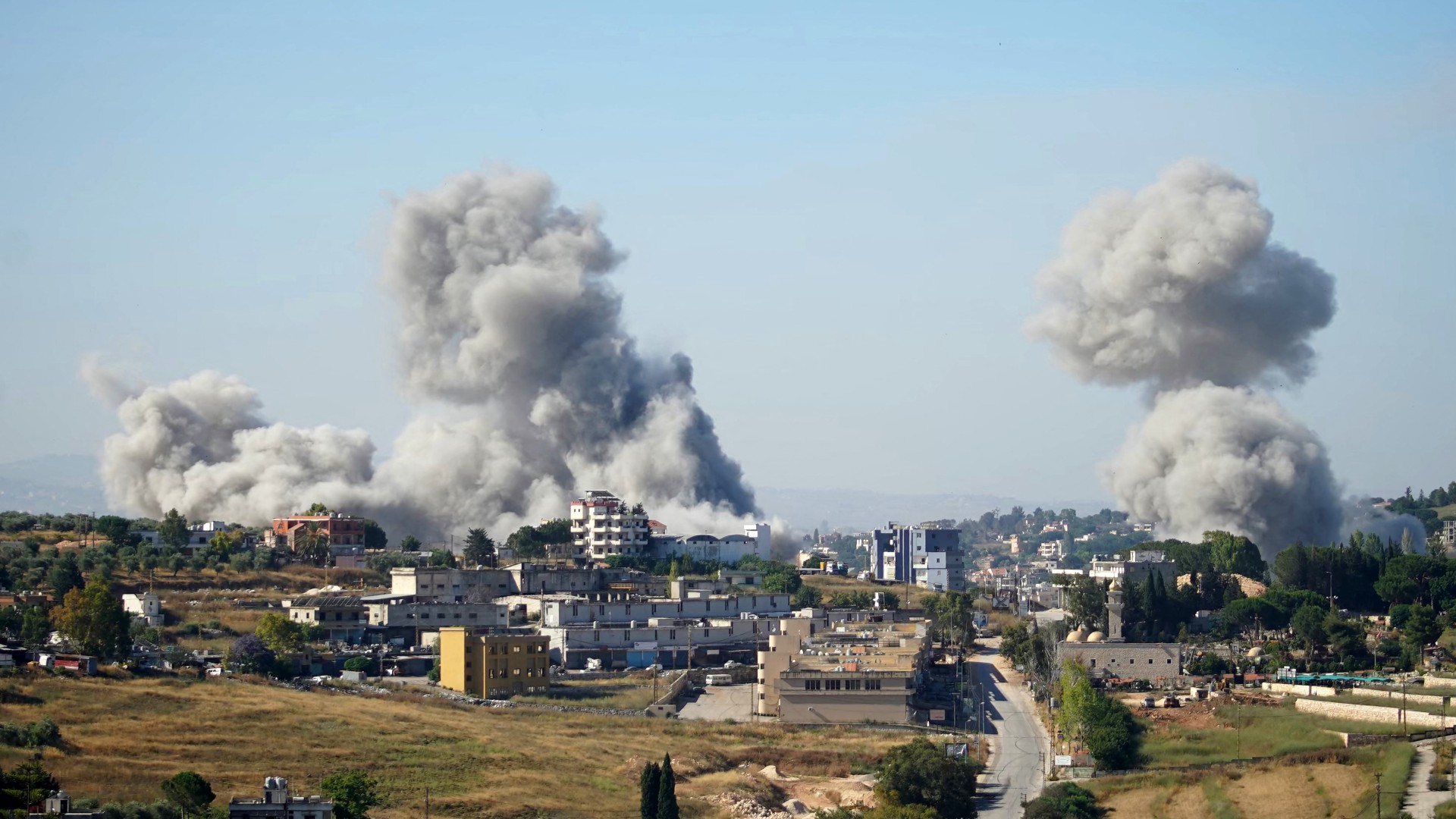
    Citing an unnamed US official, Axios journalist Barak Ravid reported Tuesday that the US has already launched limited strikes against military targets on Kharg Island, a key Iranian oil export terminal located off the country’s western coast. The Iranian Red Crescent released a statement Tuesday on X confirming that US-Israeli strikes have hit 17 civilian areas across the country over the past 24 hours, emphasizing that there is no possible justification for attacks on civilian populations. The organization reiterated that targeting defenseless civilians qualifies as a clear war crime under international law. Iranian state media reported that at least 15 people were killed in overnight strikes across the country.

    Diplomatic efforts to de-escalate the crisis have been consistently overshadowed by relentless, tit-for-tat strike threats and ongoing attacks across the region. On Tuesday, Gulf nations spent the day fending off new attacks on their territory: Saudi Arabia’s Ministry of Defense announced it had intercepted and destroyed at least 18 drones launched toward the kingdom “during the past hours”. The King Fahd Causeway, a critical infrastructure link connecting Saudi Arabia to Bahrain, was briefly closed after Iranian attacks targeted Saudi Arabia’s Eastern Province, but resumed operations several hours later after security checks confirmed the area was safe.

    The escalating conflict has left the international community on high alert, with multiple powers continuing diplomatic outreach to prevent a full-scale regional war that could have catastrophic consequences for the global economy and energy security.

  • Japan’s distortions denounced

    Japan’s distortions denounced

    Diplomatic tensions between South Korea and Japan have reignited after Tokyo approved a new batch of high school textbooks containing disputed territorial claims and whitewashed accounts of Japanese World War II imperial atrocities, drawing sharp condemnation from Seoul. In an official statement released March 24, South Korea’s Ministry of Education voiced deep regret over the decision by Japan’s Ministry of Education, Culture, Sports, Science and Technology to greenlight textbooks that advance what Seoul calls ‘historical distortions’ rooted in Tokyo’s self-serving national narrative, and issued a strong call for immediate rectification.

    South Korean authorities specifically flagged two key categories of problematic content in the approved textbooks. First, the materials reiterate Japan’s long-disputed claim of full territorial sovereignty over the Dokdo islets, a group of small rocky outcrops in the Sea of Japan that have been under South Korean administrative control for decades, and falsely characterize South Korea’s presence as ‘illegal occupation’. Second, the texts systematically downplay or erase documented wartime crimes committed by Imperial Japan, including the systematic forced mobilization of Korean laborers and the institutionalized sexual enslavement of so-called ‘comfort women’ during WWII.

    The condemnation extended beyond the education sector: South Korea’s Ministry of Foreign Affairs quickly summoned Hirotaka Matsuo, deputy chief of mission at the Japanese Embassy in Seoul, to formally register the country’s official protest against the textbook approval.

    The approved textbooks are slated for introduction in Japanese high schools starting in the 2027 academic year, covering core subjects including Japanese history, world history, geography and civics. According to existing reports, the content of the new batch largely mirrors the controversial textbooks approved by Tokyo four years prior, which already included Japan’s territorial claim to Dokdo. For context, a 2021-approved textbook from major Japanese publisher Teikoku Shoin explicitly stated that ‘Takeshima’ — Japan’s name for Dokdo — is Japan’s inherent territory, claiming the islands were legally incorporated into Shimane Prefecture after a 1905 Japanese declaration, and repeated the false claim that South Korea occupies the territory illegally. When publisher Ninomiya Shoten submitted its new textbooks for official screening last year, it retained the same ‘illegal occupation’ language, and the Japanese screening panel raised no objections to the content.

    Japanese domestic media has noted that descriptions aligning with the Japanese government’s official positions on both territorial disputes and modern historical narratives have become fully normalized in approved textbooks, with no need for additional screening adjustments from regulators. This systemic alignment is no accident: Tokyo has embedded its preferred narrative into the national education system through a three-layered content control system that starts with binding national curriculum guidelines — the highest governing principle for textbook content — followed by official commentary on the guidelines and a final centralized screening process.

    Over the past decade, this system has increasingly enabled the erasure of accountability for wartime crimes. Textbook descriptions have gradually removed language acknowledging coercion in wartime labor mobilization and the sexual enslavement of comfort women. In a 2021 parliamentary written response, the Japanese government declared that terms such as ‘taken away’ or ‘forcibly taken away’ to describe the displacement of Korean forced laborers were inappropriate, and mandated the use of the neutral-sounding term ‘mobilized’ instead. Since that policy change, the explicit language acknowledging forced coercion has been entirely removed from approved Japanese high school textbooks.

    In its statement, South Korea’s education ministry reaffirmed the country’s commitment to its long-term goal, as outlined by South Korea’s president in a speech marking the anniversary of the March 1 Independence Movement, of building ‘an amiable new world based on true understanding and empathy between the two countries’. The ministry added that building lasting peace and cooperation in Northeast Asia requires the Japanese government to adopt a responsible stance toward its historical legacy, a standard that Tokyo has yet to meet with the latest textbook approval.

    This report, sourced from South Korea’s *The Korea Herald*, is part of a weekly Asia-focused collaboration from the Asia News Network, a regional grouping of 20 leading Asian media outlets including China Daily.

  • China issues regulations on industrial, supply chain security

    China issues regulations on industrial, supply chain security

    BEIJING, April 8, 2026 (Xinhua) — Chinese Premier Li Qiang has officially signed a State Council decree to promulgate a landmark set of new regulations focused on reinforcing national industrial and supply chain security, a policy framework set to take effect immediately upon its release.

    Comprising 18 distinct articles, the new regulatory regime is crafted to address growing global and domestic risks that threaten the stability of China’s production and distribution networks. Its core objectives are threefold: pre-emptively mitigate systemic security risks across industrial and supply chains, boost the overall resilience and reliability of these critical networks, and protect national economic and social stability as well as core national security interests.

    The regulations lay out clear guiding principles for future work in this sector. Among these guiding tenets is a commitment to supporting the stable, unimpeded operation of global industrial and supply chains, alongside targeted backing for core technology research and development in strategically important key industries.

    To turn these principles into actionable policy, the regulatory text updates and formalizes institutional mechanisms designed to guarantee steady production, unobstructed circulation, and continuous operations for raw materials, core technologies, critical equipment, and finished goods across key industrial sectors.

    A key new provision laid out in the regulations is the establishment of a formal security investigation mechanism for industrial and supply chain issues. Under this framework, relevant Chinese regulatory authorities are authorized to launch official investigations and implement targeted countermeasures against any foreign country, region, international organization, or foreign entity or individual that engages in activities undermining China’s industrial and supply chain security.

    The policy comes amid growing global volatility in cross-border supply chains, driven by geopolitical tensions, trade restrictions, and shifting global production patterns, making strengthened domestic resilience a priority for economic policymakers across major economies.

  • US, Israel and Iran agree to two-week ceasefire

    US, Israel and Iran agree to two-week ceasefire

    Hours after U.S. President Donald Trump drew global condemnation for issuing an unprecedented genocidal threat against Iran, warning that “a whole civilization will die tonight,” the American leader announced a last-minute two-week suspension of military operations, contingent on Iran lifting its blockade of the strategic Strait of Hormuz.

    Citing an anonymous senior White House source, CNN confirmed that Israel — which has partnered with the U.S. in bombing Iranian targets including civilian infrastructure since the war began on February 28 — will also participate in the ceasefire, pausing its aerial campaign while negotiators work toward a long-term deal.

    International diplomatic efforts paved the way for the truce: according to The Associated Press, Iran’s Supreme National Security Council confirmed its acceptance of the ceasefire in an official statement. New York Times correspondent Farnaz Fassihi later reported that the breakthrough followed frantic shuttle diplomacy led by Pakistan, with a final late-stage intervention from China, a long-standing major ally of Tehran.

    In its statement, the Iranian security council stressed the temporary nature of the pause in hostilities, noting: “This does not signify the termination of the war. Our hands remain upon the trigger, and should the slightest error be committed by the enemy, it shall be met with full force.”

    Trump made his ceasefire announcement via his Truth Social platform, as widespread global outrage mounted over his apocalyptic morning comments, including growing demands for his removal from office, and just hours before his self-imposed 8:00 p.m. Eastern Time deadline for Iran to reopen the critical global waterway to all commercial shipping traffic.

    In his official statement, Trump outlined that the ceasefire came at the request of Pakistani Prime Minister Shehbaz Sharif and Pakistan’s top military leader Field Marshal Asim Munir. “Subject to the Islamic Republic of Iran agreeing to the COMPLETE, IMMEDIATE, and SAFE OPENING of the Strait of Hormuz, I agree to suspend the bombing and attack of Iran for a period of two weeks. This will be a double sided CEASEFIRE!” he wrote.

    The U.S. president framed the pause as a reflection of progress toward a lasting peace deal, adding: “The reason for doing so is that we have already met and exceeded all Military objectives, and are very far along with a definitive Agreement concerning Longterm PEACE with Iran, and PEACE in the Middle East. We received a 10 point proposal from Iran, and believe it is a workable basis on which to negotiate. Almost all of the various points of past contention have been agreed to between the United States and Iran, but a two week period will allow the Agreement to be finalized and consummated. On behalf of the United States of America, as President, and also representing the Countries of the Middle East, it is an Honor to have this Longterm problem close to resolution.”

    Despite the breakthrough, analysts warn that Iran’s 10-point peace framework is likely to face fierce pushback from Israel and Gulf Arab monarchies, which have been targeted by Iranian retaliatory strikes amid the ongoing U.S.-Israeli military offensive. U.S. political commentator and lawyer Will Stancil noted on social platform Bluesky that regional stakeholders who have heavily backed Trump are unlikely to accept the terms. “It’s hard to see how anyone else in the region could possibly agree to this,” he said, adding with sharp criticism that it would be ironic if the Gulf states that have poured billions into supporting Trump now face fallout from his last-minute policy shift mid-war to claim a political victory.

    Trump’s extreme threats — including vows to destroy Iran’s civilian bridges and power plants, classified as clear war crimes under international law, and his public threat to erase “whole civilization” of Iran — prompted urgent calls from global human rights advocates and political leaders for the United Nations and national governments to intervene immediately to de-escalate the conflict.

    While the ceasefire has been broadly welcomed as a step away from all-out war, some observers have pointed out that Iran’s existing government, which has faced international criticism for its violent crackdown on domestic anti-government protests that left thousands dead, is well-positioned to emerge from the truce claiming a domestic political victory, a narrative already being pushed by Iranian state media.

    Raed Jarrar, advocacy director at the NGO Democracy for the Arab World Now (DAWN), argued that the ceasefire terms amount to a major strategic defeat for the U.S. and Israel. “A ceasefire is welcome, but if the terms Iran announced tonight are accurate, the United States and Israel are facing a truly humiliating defeat,” Jarrar told Common Dreams. “They launched a catastrophic war of aggression that killed thousands of civilians, wasted tens of billions of dollars, and triggered the worst global energy crisis in half a century. Iran kept its enrichment. Iran took over the Strait [of Hormuz]. The United States agreed to lift sanctions and pay reparations.”

    Skepticism over the ceasefire has also emerged from U.S. political opposition circles. Democratic Senator Chris Murphy of Connecticut told CNN that he questions whether the truce is actually holding, citing ongoing reports of Iranian missile strikes targeting Israel and the United Arab Emirates. “Who knows what’s going on,” Murphy said. “Donald Trump lies every single day.”

    Murphy also highlighted Iran’s public claims that the deal includes U.S. concessions on key sticking points, including recognition of Iran’s right to nuclear enrichment, a full suspension of U.S. sanctions on Tehran, and allowing Iran to retain its ballistic missile, drone, and nuclear programs. “If, at the very least, this agreement gives Iran the right to control the strait that is cataclysmic for the world, and it is just stunning that that’s where we have gotten to that Donald Trump took a military action that has apparently, at least for the time being, given Iran control over a critical waterway that they did not have control over, before the war began,” Murphy added.

    Critics of Trump, including multiple members of the U.S. Congress, have doubled down on calls for the president’s Cabinet to invoke the 25th Amendment to the U.S. Constitution to remove Trump from office over his inflammatory threats and unconstitutional war. They have also reminded U.S. military service members of their legal obligation to refuse any orders that constitute war crimes under international and U.S. law.

    This report was sourced from Common Dreams.