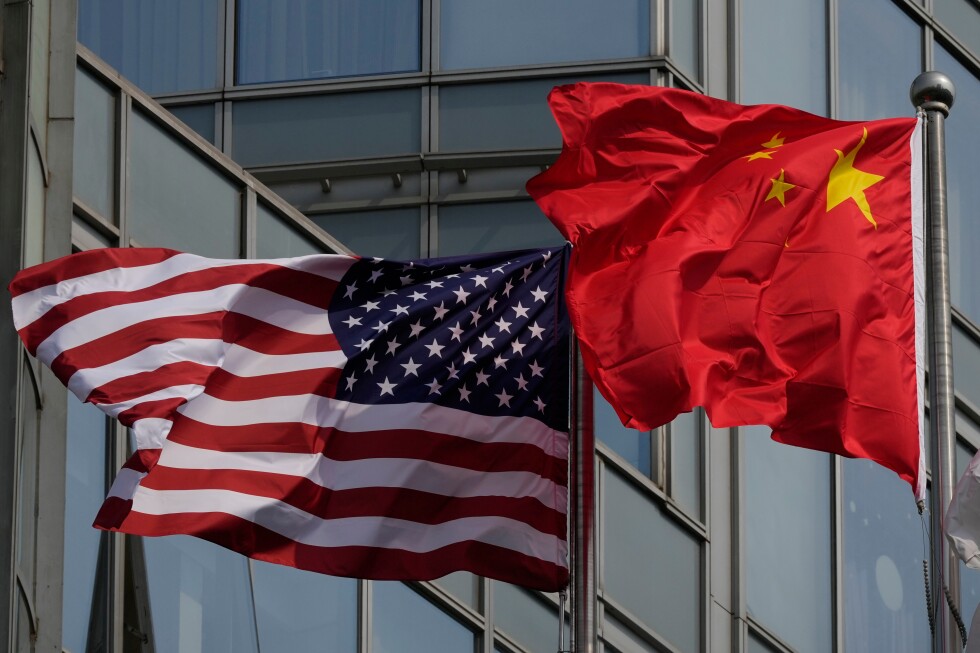
After a year of heightened 2025 trade conflict that laid bare the deep mutual economic vulnerability of the world’s two largest economies, U.S. President Donald Trump and Chinese President Xi Jinping are convening in Beijing for a high-stakes summit aimed at patching over some of the most costly damage from a decade of escalating trade tensions. A 10-year standoff between Washington and Beijing has gutted the once-booming bilateral trade that defined the early 21st century, forcing companies across both nations to restructure global supply chains, seek alternative markets, and adapt to a new era of fractured commercial ties. Many U.S. corporations have relocated manufacturing capacity out of mainland China to lower-wage markets such as Vietnam and India, while Chinese exporters have scrambled to cultivate new consumer bases across Europe and Southeast Asia to offset lost American sales. Yet despite years of decoupling efforts, both sides are increasingly acknowledging that complete economic separation is unfeasible. Former U.S. Commerce Secretary Wilbur Ross, who served in Trump’s first administration, noted: “The idea of somehow China being totally independent of us and us being totally independent of China, I think, is a fiction.”
This week’s leadership summit is focused on stabilizing the bilateral economic relationship, with observers not expecting sweeping, transformative policy announcements. The most widely anticipated outcome is an extension of the temporary trade truce reached between the two powers last October. Additional expected measures include a Chinese pledge to increase purchases of U.S. agricultural goods including soybeans and beef, as well as new orders for American-built Boeing commercial aircraft. U.S. officials have also previewed plans to establish a new bilateral Board of Trade to manage ongoing commercial disputes.
Stakeholders on both sides are watching the talks closely. For American farmers, who were locked out of the Chinese soybean market for most of 2025, and U.S. manufacturers dependent on Chinese rare earth minerals for products ranging from consumer smartphones to military fighter jets, even modest progress would bring significant relief. On the Chinese side, factory owners are hoping the summit will unlock incremental improvements to commercial ties, even if a return to the record trade volumes of 15 years ago remains out of reach. Michael Lu, founder and chief executive of Dongguan-based gift box manufacturer Brothersbox, noted that the U.S. long served as a far more stable market than many emerging alternative outlets, making even partial easing of tensions a welcome shift.
### The Collapse of Once-Thriving Bilateral Trade
Before Trump first imposed sweeping tariffs on Chinese imports in 2018, the average U.S. duty on Chinese goods stood at just 3.1%, according to data from Chad Bown of the Peterson Institute for International Economics. Even after pulling back from the triple-digit peak tariffs hit briefly in 2025, average U.S. tariffs on Chinese goods still remain near 48% today. In 2016, China was the United States’ largest single trading partner, with bilateral trade accounting for more than 13% of total U.S. global commerce. By 2025, that share had been cut in half to just 6.4%, pushing China behind neighboring trade partners Mexico and Canada to drop to third place.
The pre-2018 U.S.-China trade boom was long marked by a massive structural imbalance, with China exporting far more to the U.S. than it imported in return. The U.S. bilateral goods and services trade deficit with China peaked at $377 billion in 2018, but fell to $168 billion last year — the lowest level recorded since 2004. Even as its exports to the U.S. declined, however, China expanded sales to other global markets, particularly Southeast Asia and Europe, allowing the country to post a record annual global trade surplus of $1.2 trillion in 2025.
### Chinese Firms Adapt With Creative Workarounds
Many trade analysts note that official U.S. government data likely overstates the actual decline in Chinese goods reaching the American market. To avoid steep U.S. tariffs, a large number of Chinese manufacturers have shifted final assembly operations to Southeast Asian nations including Vietnam and Thailand, then transship finished products to the U.S. under those countries’ tariff quotas. The Trump administration has pledged to crack down on this practice, which it labels tariff evasion. As Chinese exports to the U.S. dropped in 2025, U.S. imports from Southeast Asia surged: rising 42% from Vietnam, 44% from Thailand, and 24% from Indonesia. Zongyuan Zoe Liu, senior fellow for China studies at the Council on Foreign Relations, argued: “It would be wrong to think that China is no longer relevant for the U.S. market. Chinese goods are still coming into the U.S.”
Velong Enterprises, a Guangdong-founded manufacturer of kitchen gadgets and grilling tools that supplies Walmart and other major U.S. retailers, began diversifying its supply chain shortly after Trump’s first term began, adding new production capacity in Cambodia and India to serve American customers. “Most serious manufacturers did not simply ‘leave China,’” said Velong founder and CEO Jacob Rothman. “Instead, they built multi-country supply chains centered on China.”
### Small U.S. Businesses Bear the Brunt of Erratic Tariff Policy
The prolonged trade war has hit small and medium-sized U.S. businesses particularly hard, due to volatile, unpredictable tariff adjustments that make long-term cost planning nearly impossible. Appu Jacob Varghese, owner of Zion Foodtrucks, a small food truck manufacturer based outside Colorado Springs, relies on imported Chinese equipment for the custom vehicles he builds. “Last year, a lot of my hair turned white,” Varghese said. His business was upended by erratic tariff changes that shifted week to week, at one point spiking to 145% on key Chinese components. Because Zion Foodtrucks signs fixed-price contracts with customers and delivers new vehicles within six weeks, Varghese was unable to pass sudden cost increases on to buyers, forcing him to absorb hundreds of thousands of dollars in unexpected expenses. He has since shifted half of his cooking equipment sourcing to Vietnam and Thailand, and fire-suppression gear to U.S. and Israeli suppliers. While he speaks highly of his former Chinese suppliers, he says he will never return to heavy dependence on them: “Given the testy relations between Washington and Beijing, it’s too risky.”
### A Broad Shift in Sourcing Strategies
Large U.S. multinationals have also joined the push to reduce reliance on Chinese manufacturing. Apple has shifted a portion of its iPhone production to India, while athletic apparel giant Nike has expanded manufacturing capacity across Vietnam. Sarah Tan, a Singapore-based economist covering China for Moody’s Analytics, explained: “Trade tensions can flare up quite quickly, and that makes the U.S. firms hesitant to rely too heavily on Chinese supply.” InStyler, a Los Angeles-based hair appliance manufacturer that once sourced all of its products from China, is moving some high-end production to South Korea and France, with plans to add capacity in Italy, Vietnam and Mexico. While CEO Dan Fugardi said the shift is partially driven by demand for European-made cachet among luxury hotel clients, reducing Chinese dependence “doubles as an insurance plan so that we’re not caught with our pants down” if tensions escalate again.
### Tit-for-Tat Escalation Goes Beyond Traditional Tariffs
The trade standoff has long expanded beyond traditional import taxes, escalating into targeted measures targeting key strategic sectors on both sides. The U.S. has blocked exports of cutting-edge advanced semiconductors to Chinese firms, while China has retaliated by periodically cutting off exports of rare earth minerals critical to electronics manufacturing. Last year, Beijing also restricted exports of tungsten, a high-strength metal used in defense, aerospace, and medical device manufacturing — a sector where China controls roughly 80% of global supply. China also halted all purchases of U.S. soybeans for most of 2025, a deliberate blow to Trump’s political base in rural America. Even after purchases resumed following October trade talks, U.S. soybean exports to China fell 75% for the full year.
The years of escalating conflict have made clear just how much damage each power can inflict on the other. Now, leaders on both sides are hoping the Beijing summit will de-escalate tensions and lay the groundwork for a more stable commercial framework. “We are the No. 1 trading player. They are next in line,” Ross said. “We have to coexist in some way. The question is, what will be the rules of the road, and who will benefit the most from those rules.”