标签: Asia

亚洲

  • Blast targeting train kills at least 20 in Pakistan

    Blast targeting train kills at least 20 in Pakistan

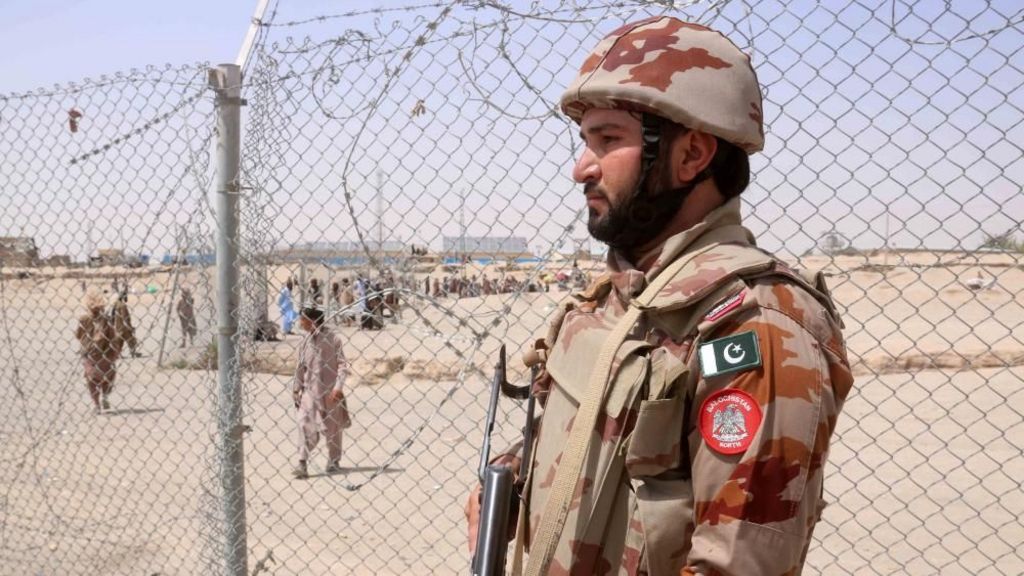
    On a Sunday morning in Quetta, the capital of Pakistan’s restive western province of Balochistan, a powerful explosion targeted a shuttle train carrying military personnel and their families, leaving at least 20 people dead and 70 more injured, according to official and witness accounts. The blast struck as the train passed through Chaman Phatak station, triggering significant structural damage to the rail cars: railway sources confirmed to BBC Urdu that three passenger coaches and the train’s engine derailed, while two additional cars overturned completely.

    Most of the passengers on the service were service members and their relatives traveling home for the Eid holiday, making the attack an even deadlier disruption to long-awaited family gatherings. The Balochistan Liberation Army (BLA), a separatist militant group active in the region, has claimed responsibility for the incident, stating it was carried out as a suicide bombing. Pakistani government officials have not yet verified the militant group’s claim as of the latest updates.

    Graphic photos from the attack site show charred, twisted remains of train carriages, damaged nearby civilian vehicles, and visible structural damage to a neighboring building from the force of the blast. Local resident Naseer Ahmed described the shock of the explosion to the BBC, noting that his entire family was asleep at the time of the Sunday morning blast, and the force was powerful enough to shatter all the glass windows in his home.

    Both a senior Balochistan police officer and a civil administration official confirmed the current death toll of 20 to BBC Urdu, and warned that the number of fatalities could climb as first responders continue to clear debris and assess the extent of casualties. Emergency protocols have been activated at all local hospitals treating victims, to speed up care and mobilize additional medical resources for the injured.

    Additional official details clarify that the shuttle had been traveling from a nearby military encampment toward Quetta’s main railway station, where passengers were set to board a connecting train to Peshawar before heading to their hometowns across the country for the holiday. This attack is not an isolated incident: the BLA has a documented history of targeting rail infrastructure in Balochistan, having carried out multiple attacks on the Jaffar Express, a major intercity train route, over the past two years. Most recently, in March 2025, BLA militants hijacked the same train and held multiple passengers hostage while it traveled toward Peshawar.

    The separatist group has long framed its armed campaign around claims that the Pakistani federal government extracts and exploits Balochistan’s rich natural mineral resources without sharing economic benefits with the local population. Geopolitically, Balochistan is Pakistan’s largest province by area, covering roughly 44% of the country’s total landmass, with a population of just 5% of Pakistan’s 240 million total residents. It shares unstable border regions with both Iran and Afghanistan, and also holds a portion of Pakistan’s Arabian Sea coastline, giving it significant strategic importance for the country.

    Tensions and violent clashes between BLA fighters and Pakistani security forces have surged in recent months: in early February 2026, coordinated attacks across Quetta and other areas of the province left 31 civilians dead. Following Sunday’s attack, Pakistani Prime Minister Shehbaz Sharif issued a strong condemnation of the bombing, saying that “such cowardly acts of terrorism cannot weaken the resolve of the people of Pakistan.” He added that “the entire nation stands in solidarity with the people of Balochistan in this hour of grief.”

  • Spearfisher mauled on Great Barrier Reef in Australia’s second fatal shark attack in a week

    Spearfisher mauled on Great Barrier Reef in Australia’s second fatal shark attack in a week

    Australia’s iconic coastal waters have once again been marked by tragedy, as a second fatal shark attack in just over a week has claimed the life of a local spearfisher at the Great Barrier Reef, bringing the total number of fatal shark encounters in the country to three so far in 2026.

    Queensland Police Inspector Elaine Burns confirmed the details of Sunday’s attack: the 39-year-old victim, a permanent resident of Cairns, was spearfishing alongside three friends who had anchored their boat at Kennedy Shoal, a popular remote recreation spot around 60 kilometers south of Cairns. The shallow coral outcrop, known for its 19th-century Lady Bowen shipwreck that draws divers and recreational anglers year-round, has a documented history of bull shark sightings reported by local fishers prior to the attack.

    The victim sustained critical, fatal injuries to the head during the assault. His companions brought him back by boat to the coastal tourist town of Hull Heads, where emergency paramedics were staged to meet the group by noon. A Queensland Ambulance Service statement later confirmed the man’s injuries were unsurvivable, and he was pronounced dead at the scene.

    This attack follows closely on the heels of another fatal incident just over a week ago off Western Australia’s coast. On May 16, 38-year-old Steve Mattabonni, a Perth resident, was killed by a shark while at a coral reef off Rottnest Island, a popular holiday destination 18 kilometers off the state’s southwest coast. Witnesses brought Mattabonni ashore to the island by boat, but first responders were unable to resuscitate him. Investigators suspect a 5-meter great white shark was responsible for that attack.

    The first fatal shark attack of 2026 occurred in mid-January, when 12-year-old Nico Antic was attacked by a suspected bull shark off a Sydney metropolitan beach. Antic succumbed to his injuries and died in hospital several days after the encounter.

    Wildlife data shows that Australia has long averaged more than three fatal shark attacks per year over recent decades. Experts note that the convergence of increased human recreational activity in coastal waters and natural shark migration patterns contributes to this steady rate of incidents, though fatal encounters remain statistically rare compared to the millions of coastal recreation trips Australians take annually.

  • A powerful bomb has exploded near railway track in southwest Pakistan, killing at least 19 people

    A powerful bomb has exploded near railway track in southwest Pakistan, killing at least 19 people

    On Sunday, a devastating suicide vehicle bombing targeting a passing passenger train near a railway track in Quetta, a southwestern city of Pakistan, has left at least 19 people dead and more than 70 others injured, official sources confirmed to the Associated Press.

    Online footage of the incident shows the extreme force of the detonation flipped two train carriages off the track and ignited a large blaze, with plumes of thick black smoke billowing into the sky over the area. According to witnesses and social media imagery circulating after the attack, the explosion went off in a zone routinely used by Pakistani security forces for deployments. The blast inflicted severe structural damage on multiple nearby buildings and wrecked more than 10 civilian vehicles parked along adjacent roads.

    Local medical facilities confirmed they have received all wounded casualties, with 20 patients currently listed in critical condition. Three anonymous security officials, granted anonymity to speak freely to press, told AP that all remains of the deceased have been transferred to city hospitals for identification and processing.

    The Baloch Liberation Army (BLA), an outlawed separatist militant group fighting to secede from Pakistan’s federal government, released a statement to journalists claiming credit for the attack. The organization stated the train was targeted because it was carrying Pakistani security personnel.

    Quetta is the capital of Pakistan’s restive Balochistan province, a resource-rich region holding large reserves of oil and critical minerals that has dealt with a persistent low-level separatist insurgency for decades. Militant groups operating in the province have repeatedly carried out attacks targeting security personnel, government infrastructure, and civilian populations both within Balochistan and across other parts of Pakistan.

    Provincial and national leaders across Pakistan have issued unanimous condemnations of the attack. “We strongly condemn the targeting of innocent civilians and are deeply saddened by the loss of precious human lives. Terrorist elements deserve no leniency,” said Shahid Rind, spokesperson for the Balochistan provincial government. Rind added that a full medical emergency has been activated across all Quetta hospitals to respond to the mass casualty event, and a formal investigation into the attack is already underway.

    Pakistan’s Prime Minister Shehbaz Sharif labeled the bombing a “cowardly act of terrorism” in a public post on X, extending his official condolences to the families of those killed. Balochistan Chief Minister Sarfraz Bugti also issued a condemnation, noting that the attack killed and injured innocent civilians including women and children, and vowed counter-terrorism forces would hunt down all perpetrators responsible.

    Bugti and Pakistan’s federal government in Islamabad regularly refer to the BLA using the term “Fitna al-Hindustan”, claiming the group receives material backing from the Indian government. India has consistently denied all such allegations. Long-running bilateral tensions have defined relations between Pakistan and India, with the two countries having fought two of their three full wars over the disputed Kashmir region, which both nations claim as sovereign territory in its entirety.

    While Pakistani federal authorities have repeatedly stated they have largely suppressed the separatist insurgency in Balochistan, violent attacks continue to occur on a regular basis. Earlier in 2024, a separate suicide bombing at a Balochistan train station killed 26 people, including 10 active-duty soldiers.

  • On first official India trip, Rubio tries to halt a trust deficit between Washington and Delhi

    On first official India trip, Rubio tries to halt a trust deficit between Washington and Delhi

    NEW DELHI – U.S. Secretary of State Marco Rubio launched high-stakes diplomatic talks with India’s External Affairs Minister Subrahmanyam Jaishankar on Sunday, launching a push to repair a bilateral relationship that has slumped to its weakest point in more than 20 years. The four-day visit, Rubio’s first official trip to India as Secretary of State, comes as mounting frictions over trade, geopolitical alignment and regional strategy have opened a notable trust deficit between the two major Indo-Pacific powers.

    Rubio arrived in the Indian capital Saturday, just two days ahead of a scheduled multilateral meeting with his foreign minister counterparts from Australia, Japan and India – the four member nations of the Quad, the Indo-Pacific strategic partnership focused on countering Beijing’s growing regional influence. In pre-talk remarks to reporters in New Delhi, Rubio framed India as a non-negotiable foundation of U.S. strategy across the Indo-Pacific, emphasizing that the bilateral bond matters as much as cooperation through the Quad alliance.

    His visit itinerary includes stops across multiple Indian cities, as well as a celebratory gala in New Delhi to mark the 250th anniversary of United States independence. But beyond ceremonial events, the core mission of the trip is damage control: bilateral relations have deteriorated sharply over the past 12 months, driven largely by trade tariffs imposed by the Donald Trump administration on a range of key Indian exports, as well as deepening disagreements over India’s energy purchases from Russia and Washington’s growing engagement with Islamabad.

    Ashok Malik, a former policy advisor to India’s Ministry of External Affairs and current head of the India chapter of U.S.-based advisory firm The Asia Group, noted that inflammatory rhetoric from Washington over the past year on India’s core security and trade priorities has eroded mutual trust. “Certain misgivings will remain,” Malik said, adding that the visit would count as a success if it merely stabilizes the relationship and halts further downward momentum.

    Analysts point to deep structural frictions that predate the current downturn, rooted in the clash between U.S. global strategic ambitions and India’s independent priorities as a rising middle power. India has long maintained close diplomatic and military ties with Russia, and even as it has deepened partnerships with the U.S. in recent decades, lingering strategic distrust – shaped by cultural differences and Cold War-era geopolitical instincts – has persisted.

    Despite these long-standing tensions, U.S.-India ties expanded steadily over 20 years to build a broad, robust strategic partnership, anchored in growing shared concern over China’s increasing assertiveness across the Indo-Pacific. That shared concern has become the central driver of diplomatic cooperation through the Quad forum, which has repeatedly called out China’s large-scale military buildup and aggressive territorial claims in the South China Sea. Beijing has in turn framed the Quad as a coordinated attempt to contain China’s economic growth and regional influence, rejecting accusations of aggressive expansion as unfounded.

    This visit marks Rubio’s first formal multilateral diplomatic engagement since U.S. President Donald Trump’s second inauguration in January 2025, where he is set to meet with fellow Quad foreign ministers both jointly and in one-on-one sessions. But a cascade of diplomatic and economic disagreements over the past year has dragged bilateral ties to their lowest level in two decades.

    One major flashpoint came after a brief military clash between India and Pakistan in 2025, triggered by a April massacre of predominantly Hindu tourists in Indian-administered Kashmir. While India and the U.S. are often framed as ideological allies, Indian Prime Minister Narendra Modi downplayed Trump’s role in brokering the subsequent ceasefire – even as Pakistan openly courted the U.S. president and nominated him for the Nobel Peace Prize for his mediation efforts. That diplomatic snub set the stage for further tensions.

    Economic frictions intensified after the Trump administration imposed new tariffs on Indian goods in retaliation for India’s continued purchase of discounted crude oil from Russia, a move that further stretched bilateral trust. When a new conflict between the U.S. and Iran broke out in February 2025, Washington deepened its diplomatic engagement with Pakistan, which positioned itself as a neutral mediator between Washington and Tehran – a shift that stoked significant unease in New Delhi. Trump’s high-profile diplomatic visit to China earlier this year only added to Indian discomfort with the current trajectory of U.S. foreign policy.

    Praveen Donthi, senior analyst with the International Crisis Group, explained that long-running structural tensions have long shaped U.S.-India relations, and the Trump administration has simply brought these underlying divides out into the open. “New Delhi’s foreign policy, increasingly colored by its domestic politics, has become more black-and-white in the last decade, as evidenced by its deep discomfort with the U.S.’s ties with Pakistan and its moves toward detente with China,” Donthi noted.

    Today, experts frame U.S.-India relations as a study in complexity: the two sides retain core shared strategic interests, particularly around countering Chinese influence, but competing national priorities and a rapidly shifting global geopolitical landscape have created new rifts. For New Delhi, Donthi said, the current approach is likely to be one of strategic patience: India is expected to wait out the remainder of Trump’s term, betting that the long-standing bipartisan U.S. consensus on supporting strong ties with India will outlast his presidency, allowing for a reset once he leaves office.

  • Rescuers race to find survivors after a deadly Chinese coal mine blast kills at least 82

    Rescuers race to find survivors after a deadly Chinese coal mine blast kills at least 82

    QINYUAN, China — A devastating gas explosion at a northern Chinese coal mine, the country’s deadliest mining disaster in recent years, has left at least 82 people dead, with search operations for remaining missing survivors continuing on Sunday. The accident occurred at the Liushenyu coal mine in Qinyuan County, Changzhi City, in Shanxi Province—China’s largest coal-producing region—on Friday evening.

    An Associated Press reporter on site observed heavy security presence cordoning off the mine entrance, with multiple emergency response vehicles stationed at the facility. State media reports confirm that hundreds of rescuers and medical staff have been deployed to support search and recovery efforts. Local authorities announced Saturday evening at an official press conference that two people remain unaccounted for, and dozens of injured miners are receiving hospital treatment. Officials confirmed the death toll has been revised downward from an initial count of 90, attributing the error to chaotic post-blast conditions and inaccurate preliminary information provided by the mine’s operating team.

    According to state media accounts, several hospitalized survivors recalled seeing thick smoke fill the mine tunnels immediately after the explosion before losing consciousness. Local officials have confirmed that the Liushenyu mine committed serious regulatory violations, though they have not yet released specific details of the infractions. China Central Television previously reported that official blueprints submitted by the mine did not match its actual underground layout, a discrepancy that slowed rescue teams’ progress as they navigated the site. All personnel from the mine’s operating company found responsible for the disaster have already been placed under official control, China’s official Xinhua News Agency confirmed.

    Chinese President Xi Jinping has ordered a full, transparent investigation into the explosion and pledged to hold all parties accountable for safety lapses that led to the tragedy. In response to the disaster, Shanxi’s local government has announced a sweeping, industry-wide safety inspection covering all coal mining operations across the province. Inspectors will examine key safety infrastructure including gas drainage systems, ventilation networks, real-time safety monitoring tools, and will verify that actual underground layouts match official documentation, per local authorities.

    Shanxi, an inland province of roughly 34 million people located southwest of Beijing, is the backbone of China’s coal industry, with hundreds of thousands of workers employed in its mines. The province produces approximately 1.3 billion tons of coal annually, accounting for nearly one-third of China’s total national coal output. The planned blanket safety inspections are expected to temporarily impact production volumes across the province as facilities are audited for compliance.

    Despite China’s aggressive push to expand renewable energy capacity as part of its carbon neutrality goals, coal remains the country’s dominant energy source, favored for its abundant domestic reserves and low cost. While major mining accidents were once far more common across China’s coal sector, authorities have introduced widespread safety reforms over the past two decades that have sharply reduced annual fatalities. This disaster, however, underscores ongoing challenges in enforcing safety standards, particularly at smaller or non-compliant operations.

  • A 9-story building under construction in Philippines collapses, possibly trapping dozens of workers

    A 9-story building under construction in Philippines collapses, possibly trapping dozens of workers

    In the pre-dawn hours of Sunday, a violent thunderstorm triggered the collapse of a nine-story building under construction in Angeles City, Pampanga — a bustling commercial hub just 80 kilometers north of the Philippine capital, Manila. Philippine law enforcement officials confirmed that while 22 construction workers successfully evacuated the unstable structure before it crumbled, dozens more remain unaccounted for, with fears that many are trapped beneath piles of concrete and steel rubble.

    More than 100 rescue personnel, including police officers and other government emergency responders, have been deployed to the disaster site to launch a urgent search-and-rescue operation, according to police Brigadier General Jess Mendez, who is overseeing the response on the ground. Mendez noted that no fatalities have been confirmed in the incident as of initial updates, but several of the 22 evacuated workers have been treated for injuries sustained during their escape.

    Authorities have not yet been able to confirm an exact number of trapped workers. However, Angeles City Information Office chief Jay Peladio shared that based on accounts from an on-site construction foreman who escaped the collapse, at least 30 workers may still be buried in the rubble.

    Located in northern Luzon, Angeles City holds unique historical context: it was once home to one of the largest United States Air Force bases outside the U.S. mainland before the facility closed in the early 1990s. The base’s departure reshaped the region’s economy, transforming Angeles City and surrounding communities into major entertainment and commercial centers for northern Luzon. Today, the former base grounds operate as the Clark Freeport Zone, a key economic development area for the Philippines.

  • In Japan, divorce splits parents from children. Could a law change end sole custody?

    In Japan, divorce splits parents from children. Could a law change end sole custody?

    On a quiet weekday afternoon in a Tokyo residential neighborhood, John Deng (a pseudonym to protect his privacy) lingers near a local playground, straining to catch the sound of laughter that might belong to his 8-year-old son and 10-year-old daughter. For nearly three years, the Hong Kong-born long-term Japanese resident has been locked out of the daily rhythms of his children’s lives, after his marriage ended and his ex-partner took the children without advance notice. Today, he only gets a handful of supervised hours with them each month, with no unsupervised contact in between. His story is far from unique in Japan — until this year, decades of family law forced hundreds of thousands of children to grow up without regular access to one parent after divorce.

    That landscape shifted dramatically on April 1, 2026, when a landmark revision to Japan’s Civil Code came into force, formally legalizing joint child custody for divorced couples. Before the amendment was approved by Japan’s parliament in 2024, Japan stood alone among G7 nations as the only country that did not recognize the legal concept of shared parental custody after separation. Under the previous sole custody regime, only one parent held full legal rights over children after a split, and the non-custodial parent could be completely cut off from their children’s lives unless the custodial parent voluntarily granted access. In practice, custody was most often awarded to whichever parent removed the children from the shared home first, creating a race for custody that left many non-custodial parents disconnected from their kids.

    Seiya Saito, a family lawyer at Tokyo’s Setagaya International Law Office, notes that the shift to joint custody aligns Japan with a global consensus centered on prioritizing children’s best interests. “It always shocked me that every time I speak to lawyers in the US and the UK, they say that it’s not about win or lose, it’s just focusing on the best interest of children,” Saito explained. The new legal framework codifies the principle that children typically benefit from maintaining healthy relationships with both parents, while also spreading parental responsibility more evenly between separated couples.

    Latest official data from Japan’s Ministry of Health, Labor and Welfare shows that roughly 38.5% of Japanese marriages ended in divorce in 2024 — equal to one out of every three unions. That same year, women retained sole custody in more than 86% of all divorce cases, and joint custody arrangements made up only a tiny fraction of finalized custody agreements. Overall, more than 164,000 children under 18 were affected by sole custody arrangements after parental divorce in 2024. The legal reform comes amid broader national pressure to support families, as Japan grapples with plummeting birth rates and a rapidly aging population that has pushed policymakers to re-examine systems that place disproportionate burden on single parents.

    For parents like Deng, who have spent years fighting for even limited access to their children, the new law offers a rare glimmer of hope. Deng, who maintains two residences — one in Tokyo and a second just an hour from his children’s home — says he clings to the possibility that the reform will let him rejoin the ordinary moments he misses: waking his kids up in the morning, taking them to the park, and attending school recitals and holidays like Father’s Day. “They mean the world to me,” he said. “It’s something that no parent should face.” He notes that the current arrangement robs children of their right to connect with both parents whenever they want: “I just feel so empty.”

    Yet the landmark change has sparked fierce debate, with critics and domestic violence advocates warning that the new framework puts survivors of abuse at serious risk. Chisato Kitanaka, co-head of the All Japan Women’s Shelter Network, warns that joint custody could force survivors of domestic violence and child abuse to remain in contact with abusive former partners, trapping them in cycles of harm. “There is a risk that those suffering from domestic violence or child abuse may be unable to escape,” Kitanaka said.

    Those fears are echoed by survivors like Ryo Suzuki (also a pseudonym), who endured years of severe physical abuse at the hands of her ex-husband, including being choked against a wall and dragged by her hair. After winning sole custody of her two children, Ryo thought she had escaped the abuse — but the new law leaves her facing constant anxiety that her ex-husband could petition for joint custody of her 15-year-old daughter, forcing her back into contact with her abuser. “When I got sole custody, I used to think, ‘It’ll be okay from here on out,’ but now there’s the possibility that we might be tied together,” Ryo said. “I’ll have to live with that anxiety until my daughter becomes an adult.” Her 18-year-old son Taro, who witnessed years of his mother’s abuse, says he believes the new law should never have been passed: “I really think this is a law that shouldn’t exist.”

    Lawmakers and supporters of the reform have included explicit legal protections for vulnerable families: Japanese courts are required to award sole custody if they confirm a history of domestic violence that puts children or survivors at risk. Even so, survivors and advocates worry that Japan’s court system will demand hard physical evidence of abuse, which many survivors do not have — abusers often intentionally avoid leaving visible marks, as Ryo says was the case for her. Many survivors remain skeptical that courts will consistently rule to protect their safety.

    Today, the new law occupies a delicate middle ground, balancing the goal of preserving children’s access to both fit parents against the urgent need to protect survivors of domestic abuse. For hopeful parents like Deng, it represents a long-overdue step forward for family law in Japan that could finally restore the relationships he has spent years missing. For survivors like Ryo, it introduces a new source of constant uncertainty that undermines the safety they fought so hard to win.

  • US, Iran and Pakistan say talks progressing towards agreement

    US, Iran and Pakistan say talks progressing towards agreement

    Fresh diplomatic momentum emerged Saturday as senior officials from the United States, Iran, and mediator Pakistan all reported encouraging steps toward a negotiated end to ongoing regional conflict, with a preliminary 30 to 60-day framework agreement reportedly close to finalization. Pakistan’s military, which has served as a critical go-between for Washington and Tehran amid heightened tensions, confirmed that Army Chief Field Marshal Syed Asim Munir held high-stakes talks with top Iranian leaders in Tehran over the past day. In an official statement, the military noted that negotiations centered on accelerating ongoing diplomatic consultations to bolster regional peace and stability, adding that the 24 hours of talks had yielded measurable, encouraging progress toward a final understanding.

    U.S. Secretary of State Marco Rubio, speaking to reporters during an official visit to New Delhi, India, confirmed that a finalized agreement could come within days, as early as Saturday itself, though he declined to share further granular details. “There might be some news a little later today. There may not be. I hope there will be,” Rubio told reporters, adding that even as he spoke, diplomatic teams continued to work through remaining sticking points. “There is a chance that, whether it’s later today, tomorrow, in a couple days, we may have something to say,” he said.

    U.S. President Donald Trump told Axios Saturday that he would convene a meeting with his lead negotiating team later that day to review Iran’s latest formal proposal, with a final decision expected by Sunday: either sign off on what he called a “good” deal, or escalate ongoing U.S. military action against Iran. Trump framed the choice starkly, telling Axios he would opt between securing a negotiated agreement or “blowing them to kingdom come.”

    In Tehran, Iranian Foreign Ministry Spokesperson Esmaeil Baghaei confirmed to state television that Iranian negotiators are in the final stages of drafting a memorandum of understanding, which will act as the initial, temporary framework agreement spanning 30 to 60 days. The 14-clause draft, Baghaei explained, covers core sticking points including access through the Strait of Hormuz, the U.S. naval blockade on Iran, and a ceasefire ending hostilities across all regional fronts, including Lebanon.

    Baghaei acknowledged that diplomatic talks have moved the two long-standing adversaries toward a rapprochement, but cautioned that a final breakthrough on all core issues remains far from guaranteed. He added that Iran’s nuclear program will be excluded from the initial temporary framework, with negotiations on that dossier pushed to separate discussions at a later stage. Throughout the 30 to 60-day initial window, both sides will continue working toward a permanent, long-term agreement, he clarified.

    Separately, the Financial Times reported Saturday that diplomatic mediators are close to finalizing a deal to extend an existing ceasefire for 60 days, matching the timeline laid out by Iranian officials. Under the terms of the proposal seen by the outlet, the agreement would include the gradual reopening of the Strait of Hormuz—one of the world’s most critical global energy chokepoints—and talks on diluting or transferring Iran’s stockpile of highly enriched uranium. In exchange, the U.S. would ease restrictions on Iranian ports, roll back some sanctions, and begin the phased release of billions of dollars in Iranian assets frozen in foreign accounts.

    “The deal seems to be going in the right direction. It’s with the Americans now for review,” a senior anonymous diplomat told the Financial Times. The diplomat added that Iran is willing to make broader concessions on its nuclear program, but will not do so while active hostilities continue, making the current preliminary framework a critical step to bridge gaps between the two sides.

  • France bans Ben Gvir after flotilla activists abuse video

    France bans Ben Gvir after flotilla activists abuse video

    A diplomatic storm has erupted across Europe after a widely circulated video exposed Israeli National Security Minister Itamar Ben Gvir overseeing the mistreatment of detained activists from a Gaza-bound humanitarian flotilla, prompting France to issue an entry ban on the senior official and throw its support behind EU-level sanctions.\n\nFrench Foreign Minister Jean-Noel Barrot announced the measure Saturday in a post on X, framing the entry ban as a direct response to Ben Gvir’s “unacceptable conduct towards French and European citizens” during last week’s Israeli raid on the aid flotilla, which took place in international waters. Barrot clarified that while Paris does not endorse the activists’ mission to deliver humanitarian aid to blockaded Gaza, the harsh treatment the detainees received crosses a fundamental line. “We cannot tolerate French nationals being threatened, intimidated or subjected to violence in this way, especially by a public official,” he wrote. He added that Ben Gvir’s actions during the raid are only the latest in “a long series of shocking statements and actions, as well as incitement to hatred and violence against Palestinians.” Barrot also confirmed France backs an Italian call for the European Union to impose formal sanctions on the minister.\n\nThe incident that triggered the international backlash stems from last week’s Israeli naval intercept of the flotilla, which was carrying hundreds of activists attempting to deliver much-needed humanitarian aid to Gaza. Ben Gvir personally released a video of his presence during the detention of the activists, a move that made the incident unavoidable on the global diplomatic stage. The footage shows Ben Gvir waving an Israeli flag and taunting the detainees while Israeli security forces force hundreds of handcuffed activists to kneel with their faces to the ground.\n\nThe video has sparked widespread global condemnation, with multiple European governments summoning Israeli ambassadors to protest the treatment of their citizens. British Foreign Secretary Yvette Cooper called the captured scenes “totally disgraceful,” while Turkish officials accused Israel of demonstrating a “violent and barbaric mindset.”\n\nIn the aftermath of the raid, Israeli authorities detained more than 430 activists before deporting nearly all of them by Thursday, with only one Israeli citizen held. Multiple released activists have since come forward with detailed allegations of severe abuse, including torture and sexual assault, while in Israeli custody.\n\nItalian journalist Alessandro Mantovani, one of the deported activists, described his experience to reporters at Rome’s Fiumicino Airport: “We were taken to Ben Gurion airport in handcuffs and with chains on our feet and put on a flight to Athens.” He added that Israeli soldiers “beat us up… They kicked us and punched us and shouted ‘Welcome to Israel’.”\n\nMiriam Azem, a representative of the Israeli human rights organization Adalah, reported that one detainee “was forced to strip naked and run while guards were laughing.” Another female activist described being bound so tightly with handcuffs that she lost feeling in her hands, and recalled that Israeli soldiers “laughed all the time. Super sadistic. They took off my shirt, took pictures. Mistreated us all night long.”\n\nDr. Margaret Connolly, sister of Irish President Catherine Connolly and one of the detained activists, drew a sharp parallel while speaking to Ireland’s RTE Radio, saying the experience gave activists “a feeling of what the Jews felt like during the Second World War,” and that Israel was “now acting like a Nazi state.”

  • ‘I feel like I lost my life’: Gaza amputees fight for mobility amid shortages

    ‘I feel like I lost my life’: Gaza amputees fight for mobility amid shortages

    It was just after 10 p.m. on November 19, 2023, when 24-year-old Rozan Kheira was jolted awake from sleep by the roar of explosions, frantic screams, and widespread panic that tore through her family’s Gaza City home. An Israeli air strike had reduced the building around her to rubble before she could even register what was happening.

    When Kheira tried to scramble out of bed, her legs gave out immediately. She pushed herself up a second time, only to collapse again. Glancing down, she discovered a pool of blood spreading across the floor beneath her; her foot had been severed in the blast, held to her leg only by a thin strip of skin.

    “I had just woken up and couldn’t comprehend what was happening,” Kheira recalled in an interview with Middle East Eye. “At that moment, I forgot we were even at war.” Stuck frozen in shock, she waited helpless until her brother carried her out of the destroyed home. That single night would forever alter the trajectory of her life.

    In the wake of Israel’s military campaign that has destroyed Gaza’s hospitals, killed thousands of medical workers, and enforced a total blockade on fuel and life-saving medicine entering the enclave, injuries that would be easily treatable in any other context have become permanent, life-altering disabilities — and in thousands of cases, fatal. Kheira was rushed to Gaza’s Indonesian Hospital, where after hours of uncontrolled bleeding, surgeons were forced to fully amputate her leg.

    In the two years since the strike, Kheira has lived her life confined to a wheelchair, repeatedly displaced by advancing ground operations and unable to access even the most basic medical care. “I was in excruciating pain, and painkillers were unavailable in northern Gaza because of the Israeli siege,” she said. Even after the October ceasefire, which the international community heralded as a step toward easing humanitarian conditions for Gaza’s 2.2 million residents, little has changed for injured civilians like Kheira.

    Desperate to regain even a measure of independence, Kheira began a months-long search for a properly fitted prosthetic limb. When her family was forced to flee to Khan Younis in southern Gaza last June, she received her first prosthetic — but the device quickly proved unusable. “The prosthetic leg was extremely heavy, weighing five kilograms. It didn’t match my body and made my suffering worse instead of easing it,” she explained. After the ceasefire allowed her to return to Gaza City, the Artificial Limbs and Polio Centre fitted her with a second device, which was also far too heavy for her to use.

    Undeterred, Kheira set out on foot to Hamad Hospital for Rehabilitation and Prosthetics in northern Gaza’s Sudaniya district, a journey of more than six kilometers she completed on a single leg because no transport was available to her. After multiple medical assessments, she finally received a third prosthetic. Still, her struggles are far from over: the device only meets 30 percent of her medical needs, but it is the only option available to her amid Gaza’s catastrophic shortage of medical equipment. Doctors have warned her against walking on the ill-fitted limb, but Kheira has no other choice.

    Even the ongoing rehabilitation and maintenance she requires to use the prosthetic adds to her daily hardship. “I need weekly maintenance at Hamad Hospital, which means long walks on one leg just to get there,” she said. “There are no vehicles, not even donkey carts. Transport is scarce and extremely expensive.” This mobility crisis is not unique to Kheira: ongoing Israeli restrictions on fuel entering Gaza — a direct violation of the ceasefire agreement — combined with the destruction of 70 percent of Gaza’s civilian transport infrastructure, have left the entire enclave unable to move freely, cutting injured civilians off from life-saving care.

    The U.S.-backed October ceasefire was intended to end Israel’s military campaign and blockade, and allow unimpeded access for aid, medicine, and rehabilitation supplies to enter Gaza. But in practice, Israel has largely maintained its total blockade, permitting only a tiny fraction of the required aid into the territory, leaving fuel, food, and medical supplies at critically low levels. Air strikes and artillery shelling have also continued across the enclave, killing more than 800 people since the ceasefire was announced. In total, Israeli forces have killed more than 72,700 Palestinians in Gaza since October 2023, and wounded more than 172,000 others.

    According to data from the World Health Organization, roughly 43,000 Palestinians have sustained permanent, life-altering injuries during the current conflict, including around 10,000 children. While a small fraction of these injured people, like Kheira, have managed to secure basic, ill-fitted prosthetics, thousands more with upper-limb injuries have been left with no access to any assistive device at all.

    One of those people is 32-year-old Abdelsalam al-Bardawil, who lost his left hand in an Israeli strike that destroyed his Gaza City home, killing his mother and brother and injuring the rest of his family. “My hand could have been saved, but because hospitals were out of service, it was amputated,” al-Bardawil told Middle East Eye. “I didn’t receive physical therapy, and painkillers weren’t available. I remember jumping from the intense pain.”

    After being displaced to Deir al-Balah in southern Gaza, al-Bardawil traveled to the Jordanian Field Hospital in Khan Younis, where he was fitted with a prosthetic hand. But he was forced to remove it shortly after, because the device was heavy, rigid, and purely cosmetic, completely unable to assist him with daily tasks. He later reached out to the Red Crescent in Deir al-Balah and other humanitarian organizations, but received the same answer every time: no upper-limb prosthetics are available in Gaza.

    Unable to work or provide for himself, al-Bardawil now relies entirely on humanitarian aid to survive. “What saddens me most is my inability to work,” he said. “It forces me to depend on assistance.” He also struggles to access mental health care and pain treatment, with transport shortages making even routine clinic visits nearly impossible. “The problem isn’t just therapy,” he said. “I can’t reach clinics for medication or depression treatment.” The loss of his mother, who he turned to for help without shame, has left even small daily tasks a source of embarrassment and struggle. “The only person I could ask for help without shame was my mother,” he said. “Now I feel embarrassed asking my sister or relatives.”

    Al-Bardawil has received an official referral for life-saving treatment outside of Gaza, but like thousands of other injured Palestinians, he remains trapped on a waiting list, blocked by frequent closures and strict Israeli restrictions at Gaza’s border crossings. According to the Palestinian Ministry of Health, more than 20,000 patients are currently waiting for approval to leave Gaza for treatment abroad, with access repeatedly delayed or blocked entirely by Israeli officials.

    While Gaza’s local hospitals and rehabilitation centers have attempted to ramp up domestic production of prosthetics to meet the growing need, officials say they are completely overwhelmed by the unprecedented scale of casualties. Hosni Muhanna, media officer at the Gaza Municipality’s Artificial Limbs and Polio Centre, told Middle East Eye that registered amputations have reached roughly 6,000 since the start of the war, per joint data from the Palestinian Ministry of Health and the International Committee of the Red Cross.

    “This unprecedented figure reflects the massive scale of the humanitarian and health catastrophe,” Muhanna said. The centre relies on a small local workshop to produce prosthetics in-house, but a total ban on essential raw materials entering Gaza has crippled production capacity, particularly for upper-limb devices. “The ban on essential supplies since the start of the war has crippled production, particularly for upper-limb prosthetics, as raw materials have not been allowed in,” he explained.

    The blockade has created acute shortages of every type of prosthetic component and assistive device, leaving long waiting lists that grow longer every day as new amputations are recorded amid ongoing attacks. “Fitting a limb requires medical assessment, physiotherapy to prepare the muscles, and a full rehabilitation programme to train patients and restore independence,” Muhanna said. But many patients cannot complete these critical steps due to repeated displacement, transport shortages, and the total destruction of Gaza’s health infrastructure.

    Back at his displacement camp in Deir al-Balah, al-Bardawil continues to wait for a call that will allow him to leave Gaza for the treatment he needs to rebuild his life. “I feel like my life is completely on hold,” he said. “I didn’t just lose my hand. I feel like I lost my life.”