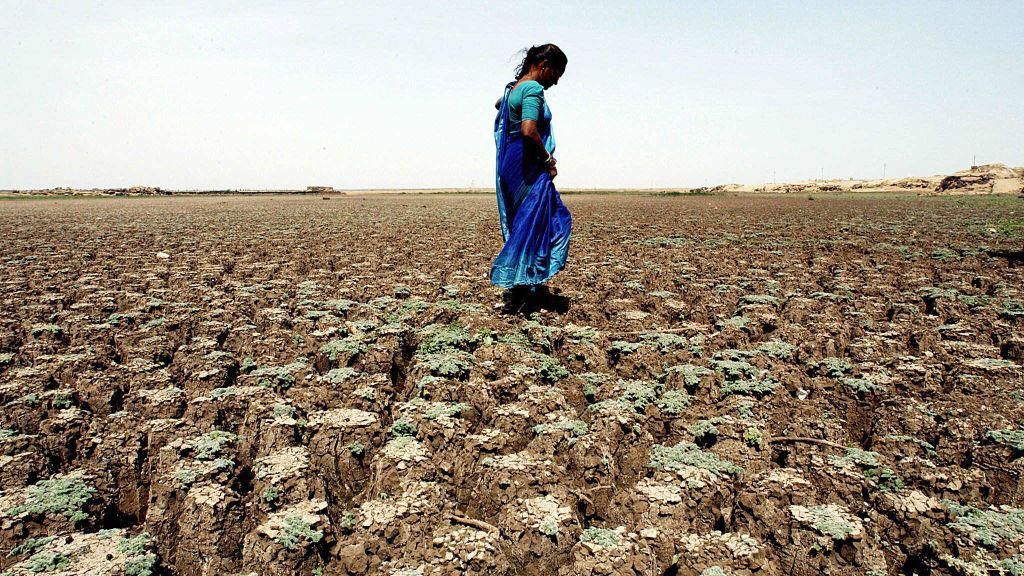
India’s agricultural sector is grappling with growing uncertainty after the country recorded its driest June in 12 years, according to official data from the India Meteorological Department (IMD). Marking the fifth-driest June since consistent national rainfall tracking began in 1901, the unprecedented dry spell has cast a shadow over the 2026 summer cropping season, with early government data showing a steep drop in planted acreage across key crops.
The southwest monsoon, which delivers roughly 70% of India’s annual total rainfall, is the backbone of the country’s agricultural economy. More than half of India’s net farmed land lacks reliable irrigation infrastructure, leaving hundreds of millions of smallholder farmers entirely dependent on the timing and volume of monsoon rains to plant and nourish their main summer crops, including rice, pulses, oilseeds, cotton, and sugarcane.
This year, the monsoon got off to a troubled start: its arrival in the southern state of Kerala, the traditional first point of contact for the seasonal rains, was delayed by three days. Its northward progression across western India slowed dramatically for nearly two weeks, pushing back field preparation and sowing schedules across major agricultural regions. By the end of June, federal agriculture ministry data showed total summer crop planted area had fallen to 18.27 million hectares, a nearly 23% drop from the 23.65 million hectares recorded in the same period last year. The decline has been particularly sharp for rice, India’s staple food grain, where sown area has dropped by 25% year-on-year from 3.44 million hectares to just 2.58 million hectares.
IMD Director General Mrutyunjay Mohapatra confirmed the severity of the June dry spell in comments to the BBC, noting that total rainfall last month was 39.8% lower than the long-period average – far off the department’s initial forecast of 92% of the average. Only four years since 1901 (1905, 1926, 2009, and 2014) have recorded drier June conditions.
Compounding concerns, the IMD has also forecast below-average rainfall for July, which is typically the wettest month of the four-month monsoon season, contributing around one-third of total annual monsoon rainfall and aligning with the peak sowing window for most summer crops. Beyond domestic crop output, industry experts warn that weak monsoon rains will likely cut domestic oilseed production, forcing India to increase its already heavy reliance on imported edible oils, a move that could put upward pressure on national food inflation.
For now, the full impact on end-of-season harvests remains uncertain. The monsoon season runs through September, leaving a window of opportunity for rainfall to rebound and allow farmers to catch up on delayed planting. India also enters the season with a robust buffer of government-held rice stocks: as of July 1, official stocks stood at 39.7 million tonnes, nearly three times the required 13.5 million tonne buffer. An additional 29.8 million tonnes of rice is expected to enter stockpiles once already procured paddy is processed, creating a strong safety net for short-term supply disruptions.
Indian authorities have moved proactively to prepare for the risk of a prolonged weak monsoon and potential El Niño conditions, the climate pattern marked by abnormal warming of eastern tropical Pacific waters that is often linked to reduced monsoon rainfall in South Asia. Agriculture Minister Shivraj Singh Chouhan announced last week that officials have identified 315 districts at high risk of below-normal rainfall and developed detailed contingency plans. These plans include promoting short-duration crop varieties that require less water, expanding water conservation infrastructure, and providing guidance to farmers to adapt to dry conditions.
Addressing public concern, Chouhan emphasized that the government is acting proactively rather than waiting for a crisis to unfold. “There is no need to panic,” he stated, reassuring the public that existing buffer stocks of rice and wheat remain sufficient to protect national food security despite the rocky start to the monsoon.