标签: Asia

亚洲

  • Strait of Hormuz closure chokes trade and aid for Afghanistan

    Strait of Hormuz closure chokes trade and aid for Afghanistan

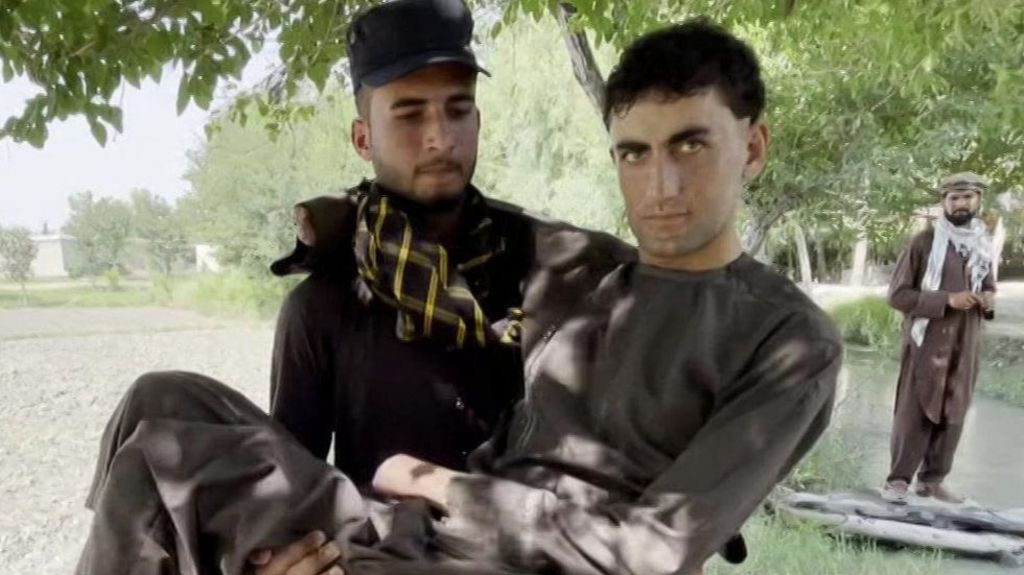
    Landlocked Afghanistan, a country already grappling with decades of instability and widespread food insecurity, now faces a cascading logistical catastrophe after two of its primary trade routes were simultaneously knocked offline by overlapping regional conflicts. What began as a border dispute with neighboring Pakistan that closed key crossing points late last year quickly pushed Afghan traders and aid organizations to shift their supply chains to a second alternative: routing goods through Iran’s major Indian Ocean port of Bandar Abbas, located on the strategic Strait of Hormuz. That workaround, however, became unsustainable almost immediately after the outbreak of war in the region left hundreds of commercial vessels stranded in the strait and thousands of crew members trapped aboard, cutting off this critical alternate corridor even as thousands of Afghanistan-bound containers remained stuck at Pakistan’s Karachi shipping hub. For already vulnerable Afghans and strained local businesses, the loss of both major trade arteries has been nothing short of devastating.

    The United Nations World Food Programme (WFP), which runs life-saving nutrition interventions across Afghanistan serving acutely malnourished women and children, has borne the brunt of the disrupted supply chains. Most of the organization’s critical nutritional supplements and fortified high-energy biscuits for school-aged children were sourced from Pakistan, but after the Pakistan border closure in October, WFP was forced to reroute incoming supplies via sea through Dubai and Iran. Today, that second route is effectively inaccessible amid heightened tensions: Tehran controls access to the Strait of Hormuz, while U.S. blockades have shut down operations at Iranian ports. By mid-April, WFP’s stockpiles of life-sustaining nutritional supplements had been completely exhausted, leaving health clinics with no aid to distribute to at-risk patients.

    “At a time when malnutrition is already at near-record levels, weakened and desperate mothers and children are being turned away from health clinics, as we have no food to give them,” stated John Aylieff, WFP’s country director for Afghanistan. The crisis comes on top of a pre-existing funding shortfall that has stretched the organization’s operations thin: WFP has only received 8% of its required annual funding for its Afghanistan operations this year. “On top of a funding crisis, conflict in the Middle East and the closure of the border with Pakistan are choking WFP’s operations — blocking supply routes, driving up costs and straining markets at the worst possible time,” Aylieff added in emailed comments.

    With both southern and southwestern trade routes closed, WFP has been forced to redirect all incoming shipments overland through Central Asia, a far longer and more costly route that lies thousands of kilometers from major ocean ports. Aylieff confirmed that overall transportation costs have tripled, while the per-unit cost of nutritional supplements for vulnerable mothers and children has jumped by 35%. One ongoing shipment of fortified high-energy biscuits, originally bound for Afghanistan from the United Arab Emirates, illustrates the scale of the logistical nightmare: what was supposed to be a short journey through Dubai, Iran and into Afghanistan has turned into a three-month-long circuitous trip across Saudi Arabia, Jordan, Syria, Turkey, Georgia, Azerbaijan, across the Caspian Sea, and finally into Afghanistan via Turkmenistan. The shipment is still in transit after three months.

    Private Afghan businesses are facing similarly catastrophic pressures, with many small and medium enterprises on the brink of collapse. Lutfullah Akbari, who operates a small construction equipment import company in Kabul, said his incoming shipment of Chinese-manufactured equipment is stuck on a stranded vessel unable to transit the Strait of Hormuz, while logistics costs have surged past what his business can absorb. “I have nothing else to use to continue my business here,” Akbari said, noting that he is considering abandoning his cargo entirely if the strait does not reopen soon. “The Iran-U.S. war has had a huge impact on my business. Other traders have rerouted shipments through Central Asia, but it is longer and more expensive. The logistics company now wants more than the value of our goods and the capital we had invested in them. We can’t afford it. Even if I bring them here, I’ll have to sell them all at a loss. I can’t afford to lose twice.”

    Logistics industry leaders confirm that cost increases have upended nearly every segment of Afghanistan’s import and export market. Gul Meer Amini, logistics director at Kabul-based freight firm Etifaq Bamyan International Transport and Trade Forwarding, which handles both commercial and humanitarian cargo, said container rental rates have more than doubled since the outbreak of war in the Strait of Hormuz. Pre-conflict rates hovered between $3,000 and $3,600 per container; today, rates top $7,000, with some shipments reaching over $11,000. “The impact is reaching all traders,” Amini said.

    For smaller retail traders, the price hikes are even more staggering. Mohammad Murtaza Ishaqzai, a Kabul-based electronics retailer, said pre-war delivery costs for Chinese goods shipped through Iran ran between $1,100 and $1,500 per shipment. Today, that same shipment costs more than $15,000 — a tenfold increase. “We can’t export and we can’t import,” Ishaqzai said, appealing to the Taliban-led Afghan government to resolve its ongoing border dispute with Pakistan to reopen the original southern trade route. “If the situation continues, our business will be finished.”

    Afghan government officials have sought to downplay broader inflationary impacts, noting that the country has shifted the majority of its trade volume to alternate routes through Central Asia to mitigate damage. Abdul Salam Jawad, spokesperson for Afghanistan’s Commerce and Trade Ministry, said overall national price increases have been held to roughly 3% thanks to continued imports from Central Asia, Russia and China. “The problem we faced was the restrictions on our imported goods and containers coming from other countries via Iran,” Jawad explained. “We are waiting for a solution to be found in the Strait of Hormuz so that we can export normally.”

    Khan Jan Alokozai, senior adviser to Afghanistan’s Chamber of Commerce and Investment, confirmed that more than 60% of the country’s total trade now flows through Central Asia, softening the overall blow of the two closed routes. Key supplies including food and petroleum products are currently arriving via Central Asia and Russia, while a growing share of trade is routed through Turkey before moving by rail through either Iran or Azerbaijan into Afghanistan, Alokozai said. Even with these adjustments, however, the humanitarian and economic damage from the collapsed southern routes continues to mount for the country’s most vulnerable populations and struggling small businesses.

    (Reporting by Becatoros in Athens, Greece)

  • Moment of gas explosion at China coal mine

    Moment of gas explosion at China coal mine

    A devastating gas explosion has torn through a coal mine in northern China, leaving a devastating toll of human life, according to official statements released following the Sunday incident.

    Local authorities confirmed Monday that at least 82 people have been confirmed dead in the blast, with search and rescue operations still underway to locate two remaining miners who are currently unaccounted for. The incident, which occurred during a standard operational shift at the mine, has sparked urgent calls for enhanced workplace safety inspections across China’s vast mining sector, an industry that has long grappled with safety challenges amid high global demand for energy.

    Emergency response teams were dispatched to the site immediately after the explosion was reported, working around the clock to clear debris and reach trapped workers. While investigation teams have not yet released a preliminary cause for the blast, industry analysts note that gas buildup is a persistent hazard in underground coal mining, requiring rigorous monitoring and ventilation protocols to prevent catastrophic accidents.

    The Chinese government has announced that it will launch a full investigation into the incident, with officials indicating that any parties found responsible for safety lapses will face strict legal consequences. This tragedy has also renewed public discussion about balancing the country’s energy security needs with the protection of workers’ lives, as the nation continues to transition toward cleaner energy sources while still relying heavily on coal for a large share of its power generation.

  • Tennis Australia hires NRL CEO Andrew Abdo to replace Craig Tiley

    Tennis Australia hires NRL CEO Andrew Abdo to replace Craig Tiley

    In a widely anticipated leadership shakeup for Australian tennis, Andrew Abdo, a long-time executive with Australia’s National Rugby League (NRL), has been tapped to take over as chief executive officer of Tennis Australia, filling the vacancy left by outgoing chief Craig Tiley. Both the NRL and Tennis Australia formally confirmed the senior leadership appointment in official media statements released on Monday.

    Tiley, a South African-born sports administrator, first announced his planned departure back in February. After nearly two decades at the helm of Australian tennis, he will step down from his dual roles as Tennis Australia CEO and Australian Open Tournament Director to take up a senior position with the United States Tennis Association, the governing body that oversees the annual U.S. Open Grand Slam.

    Tiley’s tenure with Tennis Australia stands as one of the most transformative periods in the organization’s history. He first took on the Australian Open tournament director role back in 2006, and over his 18 years in charge, he oversaw the event’s dramatic expansion, most notably extending it from a 14-day to a 15-day competition. Under his leadership, the tournament repeatedly smashed both attendance and revenue records, cementing its status as one of the most prestigious and commercially successful stops on the global tennis tour. He added the title of Tennis Australia CEO to his portfolio in 2013.

    Like Tiley, Abdo is also a South African-born leader, and brings nearly 11 years of senior executive experience in Australia’s professional sports industry to his new role. He joined the NRL in 2013, starting out as the league’s chief commercial officer before being promoted to CEO in 2020. Throughout his time at the NRL, Abdo earned widespread praise for his steady leadership, particularly during the unprecedented disruption of the COVID-19 pandemic, when he guided the league through complex public health restrictions to keep competition running. He also played a central role in driving the NRL’s expansion and long-term commercial growth during his tenure as CEO.

    In his first public comment following the appointment, Abdo emphasized the unique standing of tennis and the Australian Open in the global sports landscape. “Tennis Australia has a unique role in Australian sport. The Australian Open is already one of the leading sporting events in the world,” Abdo said. “The opportunity is to keep evolving it – as a global event, as a fan experience, and as a platform that brings more people into the sport.”

    Tennis Australia’s board conducted a global recruitment search for the new CEO role, which drew more than 150 expressions of interest from candidates across the world. The organization highlighted that Abdo’s proven track record of leading a high-profile, large-scale national sports league made him the clear standout candidate for the role.

    In a farewell statement, Tiley offered an optimistic assessment of Australian tennis’s current position and future trajectory. “Tennis is one of the nation’s most popular sports, and participation is growing,” Tiley said. “We have a great group of players performing at the highest level and a world-class team developing the next generation of talented players and coaches.”

    As the first of the four Grand Slam tournaments on the annual global tennis calendar, the Australian Open holds a unique place in the sport, opening the season each year before the tour moves on to the French Open, Wimbledon, and the U.S. Open. The leadership transition comes as the tournament continues to solidify its status as a cornerstone of the international tennis circuit.

  • Anger grows after China’s deadliest coal mining disaster in years

    Anger grows after China’s deadliest coal mining disaster in years

    A massive explosion at the Liushenyu coal mine in northern China’s Shanxi Province, the core of the country’s massive coal mining sector, has left at least 82 people dead and more than 120 injured, marking the deadliest mining disaster China has seen since 2009. What makes this tragedy particularly jarring for the Chinese public is that it harks back to the deadly epidemic of mining disasters that plagued China’s coal sector in the 2000s — a dark chapter that many believed had been permanently closed through years of regulatory reform.

  • First Hong Kong astronaut launches into space onboard Chinese mission

    First Hong Kong astronaut launches into space onboard Chinese mission

    In a landmark moment for both Hong Kong and China’s expanding space program, history was made Sunday night when 43-year-old Li Jiaying, a Hong Kong police officer and mother of three, lifted off for orbit as the city’s first astronaut to reach space. Li joined two other crew members — 39-year-old space engineer Zhu Yangzhu and 39-year-old former air force pilot Zhang Zhiyuan — aboard China’s Shenzhou-23 spacecraft, which launched atop a Long March 2-F rocket from the Gobi Desert in northwest China at 23:08 local time (15:08 GMT). Thousands of spectators gathered at the launch site, waving Chinese flags to mark the historic departure, and the spacecraft successfully docked with China’s Tiangong space station just a few hours after liftoff.

    Li will serve as the mission’s payload specialist, leading a suite of planned experiments. One of the core research objectives for the Shenzhou-23 mission is studying how extended exposure to microgravity impacts the human body, research that is critical for preparing future long-duration deep space missions. A key milestone planned for the mission will see one crew member remain in orbit for a full 12 months, a duration that will rank among the longest continuous space stays in human history. Mission officials have not yet announced which crew member will take on the year-long stay, and a final decision will be made at a later date. The 12-month mission will fall just short of the all-time record of 14 months set by Russian cosmonaut Valery Polyakov in 1995.

    The mission marks a key step forward in China’s ambitious timeline to land the first Chinese astronauts on the moon by 2030, pushing forward the country’s progress in long-duration human spaceflight as it competes in a renewed global space race with the United States, which targets its own crewed lunar landing by 2028. In comments carried by China’s state-run Xinhua News Agency, Li said her journey into space was inspired by Yang Liwei, China’s first astronaut to reach orbit, and that she seized the rare opportunity to push her own limits. “This is a rare chance. Why not try?” she said.

    Hong Kong Chief Executive John Lee called Li’s participation in the mission a “historic” milestone for the special administrative region. For China’s human spaceflight program, Shenzhou-23 represents a major advance beyond the standard six-month stays that have become routine for crews visiting the Tiangong space station since regular crew rotations began in 2021. Astrophysicist Richard de Grijs, a professor at Australia’s Macquarie University, explained that extending mission duration to a full year pushes both spacecraft hardware and human endurance into a new operational frontier that previous shorter Shenzhou missions never tested. “This shows how China is building its expertise in long stays in space as well as deep space exploration,” de Grijs told Agence France-Presse.

    The mission comes on the heels of another major Chinese space success in 2024, when the Chang’e-6 probe became the first spacecraft ever to collect and return rock samples from the far side of the moon to Earth. Later this year, China plans to conduct an uncrewed orbital test flight of the Mengzhou spacecraft, the next-generation vehicle designed to carry astronauts to the lunar surface as part of the country’s 2030 crewed landing goal.

  • 3 dead, 17 mostly workers still missing in collapse of unfinished hotel in Philippines

    3 dead, 17 mostly workers still missing in collapse of unfinished hotel in Philippines

    A devastating building collapse at a nine-story hotel under construction in Angeles City, Pampanga province, has left three people dead and 17 more missing after rescuers pulled two trapped workers from a massive concrete and steel rubble pile early Monday, Philippine officials have confirmed. \n\nHundreds of emergency responders led by local fire departments and police spent hours working to extract the two construction workers, who were trapped alive beneath fallen concrete slabs and twisted rebar when the structure fell early Sunday. A small group of journalists, including Associated Press reporters, witnessed the harrowing scene: one worker was pulled from the rubble deceased, while emergency crews attempted to resuscitate the second inside an ambulance parked at the edge of the debris field, which is made up of crumpled concrete, mangled iron and buckled aluminum scaffolding. After prolonged resuscitation efforts, crews ultimately declared the second worker dead and departed the site. \n\nRegional Philippine Police Chief Brigadier General Jess Mendez told the AP that in a final attempt to keep one trapped worker alive through the sweltering summer heat, rescuers were able to administer water and intravenous medication before the man succumbed to his entrapment. \”He never made it despite all the efforts,\” Mendez said.\n\nThe third fatality was identified as a Malaysian tourist staying at a neighboring small budget inn, which was partially crushed by falling debris from the collapsed hotel. Another guest at the inn escaped with minor injuries and fled the site immediately after the collapse, officials confirmed.\n\nThe unfinished structure collapsed with a loud crash shortly after a severe thunderstorm hit the area before dawn on Sunday. Twenty-six construction workers, who were sleeping on plywood sheets on the building’s ground floor, either escaped on their own or were pulled out alive in the immediate aftermath of the incident. As of Monday, 17 workers remain unaccounted for, with one already located by rescuers but not yet extracted from the rubble, officials said.\n\nA full day after the disaster, Angeles City Mayor Carmelo Lazatin announced that search and rescue operations would continue, with no transition to body recovery planned for the time being. \”My best hope is that we can rescue more people alive,\” Lazatin told the AP. \”We don’t want to give the families of the trapped workers any bad news.\” \n\nBut the prolonged wait has deepened anxiety and fear among family members gathered in temporary shelters near the collapse site. Lea Mendoza Casilao, a 47-year-old sardine factory worker whose mason boyfriend is among the missing, said she has lost faith in a timely rescue. \”I’m losing hope because of what I see— slow rescue work,\” she said. Casilao had brought a week’s supply of rice and sardines to the site for her boyfriend, after the pair planned to meet over the weekend, a meeting that never happened after the building crumbled where he was sleeping.\n\nLazatin defended the pace of the operation, noting that massive concrete slabs are still held in unstable positions by tangled aluminum scaffolding, and any rushed movement could trigger secondary collapses that would put rescue crews at fatal risk.\n\nPhilippine National Police Chief General Jose Melencio Nartatez Jr. confirmed that law enforcement will launch a full investigation into the collapse to identify its root cause and any potential violations of national building codes and construction safety regulations.\n\nAngeles City, located roughly 80 kilometers north of the Philippine capital Manila, has a unique modern history: it was once home to one of the largest U.S. Air Force bases outside the U.S. mainland, Clark Air Base, which closed in the early 1990s. The former base has since been redeveloped into the Clark Freeport Zone, a busy industrial and tourism hub that has turned Angeles City and surrounding Luzon communities into major commercial and leisure centers. The collapsed hotel was located in an area dotted by budget inns, leisure businesses and other commercial developments that grew up around the former base.

  • Rubio’s visit to India focuses on US trade tensions, the Quad alliance and sightseeing

    Rubio’s visit to India focuses on US trade tensions, the Quad alliance and sightseeing

    On his first official visit to India as U.S. Secretary of State, Marco Rubio has arrived in New Delhi with a clear mission: to repair frayed bilateral relations and reinforce long-standing strategic and economic partnerships between Washington and New Delhi, even as lingering trade disputes create friction between the two major Indo-Pacific powers.

    During Sunday’s high-level talks, which included meetings with Indian Prime Minister Narendra Modi and Foreign Minister Subrahmanyam Jaishankar, Rubio outlined shared priorities for deepened collaboration across four key areas: trade, energy, defense, and maritime security. He reaffirmed that the two nations remain strategically aligned, and voiced public optimism that negotiators will be able to hash out a long-stalled comprehensive bilateral trade agreement in the near future. As a key diplomatic gesture, Rubio also delivered a formal invitation from U.S. President Donald Trump for Modi to make an official state visit to Washington later this year.

    The roots of recent bilateral tension stretch back to new tariffs imposed by the Trump administration on a wide range of Indian exports, a move driven in large part by U.S. disapproval of India’s continued purchases of discounted Russian crude oil following the outbreak of the Ukraine war. The steep tariffs sparked outrage among Indian officials and eroded trust in Washington’s commitment to the relationship, raising questions about U.S. reliability as a long-term partner for New Delhi. While the two sides eventually reached an interim trade deal that rolled back some of the most punitive tariffs and expanded India’s purchases of American energy and other goods, negotiations on a broader, full-scale trade agreement have yet to reach a successful conclusion.

    Despite these frictions, the United States has continued to view India as a critical geopolitical ally and a key counterweight to growing Chinese influence across the Indo-Pacific, leading to steady expansion of defense and technology cooperation in recent years. That regional focus will take center stage later in Rubio’s four-day trip, when he is set to join talks with foreign ministers from the other three Quadrilateral Security Dialogue member nations: Australia, India, and Japan. The Quad, an Indo-Pacific strategic alliance, has emerged as a central coordination platform for member states to advance cooperation on maritime security, resilient global supply chains, and aligned regional strategy, as China expands both its military footprint and economic clout across the region.

    The alliance has repeatedly pushed back against Chinese activities in the South China Sea, accusing Beijing of aggressive militarization of disputed island territories. For its part, China has long framed the Quad as a deliberate effort to obstruct its peaceful rise and contain its growing regional influence. Recent trade tensions between the U.S. and India, paired with Trump’s high-profile recent visit to China, have sparked new scrutiny of the alliance’s future role and cohesion.

    Praveen Donthi, a senior analyst with the International Crisis Group, noted that India’s growing global strategic weight is closely tied to its utility as a counterbalance to Chinese regional power. Any major shift in U.S. policy toward Beijing, he argued, would directly reshape New Delhi’s strategic value to Washington. “If the U.S. changes its approach towards China, it will diminish India’s importance,” Donthi explained.

    Beyond geopolitics and trade, the ongoing conflict in Iran has added new layers of pressure to bilateral negotiations, particularly on energy security. The war has disrupted critical shipping lanes through the Strait of Hormuz, the main transit route for more than a third of India’s crude oil imports, stoking fears of prolonged supply disruptions and driving up global fuel prices. Rising energy costs have in turn placed new strain on India’s already fragile economy, making energy diversification a top policy priority for New Delhi.

    Speaking after Sunday’s talks, Jaishankar affirmed that India will continue expanding its energy imports, including from the United States, while pursuing a deliberate strategy of diversifying supplier nations to keep domestic markets stable and fuel prices affordable for Indian consumers. He added that New Delhi supports open, unconstrained global energy markets as a core requirement for sustained global economic growth. During his meetings, Rubio echoed that push, emphasizing Washington’s desire to deepen energy cooperation and encouraging India to continue ramping up purchases of American oil and natural gas.

    Alongside his packed schedule of official diplomatic engagements, Rubio has incorporated cultural and ceremonial stops into his four-day itinerary. He opened the trip in the eastern Indian city of Kolkata, where he visited the global headquarters of the Missionaries of Charity, the charitable organization founded by Mother Teresa. He also took part in a gala reception in New Delhi celebrating the 250th anniversary of U.S. independence. Before concluding his visit, Rubio is scheduled to travel to two of India’s most iconic tourist destinations: Agra, home to the Taj Mahal, and Jaipur, the capital of Rajasthan known for its historic forts, royal palaces, and vibrant cultural heritage.

  • Toshifumi Suzuki, the Japanese behind the ‘conbini’ empire, has died. He was 93.

    Toshifumi Suzuki, the Japanese behind the ‘conbini’ empire, has died. He was 93.

    TOKYO – Toshifumi Suzuki, the iconic Japanese business leader who transformed a small licensed franchise into the world’s largest convenience store network, 7-Eleven, passed away at his Tokyo residence on May 18 at the age of 93. The cause of death was heart failure, according to an official announcement Monday from Seven & i Holdings, where Suzuki served as honorary adviser.

    Born in 1932 in Japan’s northern Nagano Prefecture, Suzuki graduated from Tokyo’s prestigious Chuo University before launching his retail career at Ito-Yokado, a major Japanese department store chain now also held under the Seven & i Holdings umbrella. It was from this foundation that he would go on to revolutionize modern convenience retail.

    In 1973, Suzuki secured a franchise licensing agreement with the U.S.-based original 7-Eleven brand, opening Japan’s first 7-Eleven location in 1974. What began as a single licensed outlet rapidly grew into a nationwide phenomenon, redefining daily life for Japanese consumers under Suzuki’s leadership. Today, 7-Eleven’s ubiquitous “conbini” outlets are woven into the fabric of Japanese society, offering far more than quick snacks and drinks. Shoppers can access ATMs, pay utility bills, print documents, and grab freshly prepared on-the-go meals, turning the small neighborhood stores into one-stop hubs for daily needs. The chain now counts more than 80,000 locations across the globe, retaining its position as Japan’s largest convenience store operator.

    When the original 7-Eleven parent company, U.S.-based The Southland Corp., fell into severe financial trouble in the 1990s, Suzuki steered the Japanese subsidiary to acquire a controlling majority stake in the global brand. He completed the full acquisition in 2005, bringing the entire 7-Eleven network under full Japanese ownership and turning a local license into a global retail powerhouse.

    Beyond building the 7-Eleven empire, Suzuki led Seven & i Holdings on a series of strategic expansions that diversified the group’s footprint. He oversaw the acquisition of Barney’s Japan in 2015, added full banking services to the group’s offerings, and integrated iconic Japanese department store chains Sogo and Seibu into the holding group. His core business philosophy centered on delivering a fully integrated lifestyle shopping experience tailored to evolving customer needs. He also spearheaded early adoption of cutting-edge retail technologies, cementing 7-Eleven’s reputation as an industry innovator that reshaped how Japanese consumers shop. Suzuki stepped into the chief executive role at 7-Eleven Japan in 1978, and remained a guiding force for the brand for decades.

    In recent years, Seven & i Holdings drew global attention when Canadian retail giant Alimentation Couche-Tard, operator of the global Circle K convenience store chain, launched a takeover bid for the group. However, the company abandoned the acquisition attempt in 2024, citing a lack of productive negotiation progress from Seven & i’s side.

    Per the company’s announcement, private funeral services have already been held for Suzuki with only immediate family in attendance. The family has politely declined condolence messages, floral arrangements, and other sympathy gifts. A public memorial service will be announced at a later date. Suzuki is survived by his wife and two children.

  • Truck overturns in central Bangladesh, killing at least 15 people

    Truck overturns in central Bangladesh, killing at least 15 people

    A devastating early-morning road accident in central Bangladesh has claimed the lives of at least 15 people and left 10 more injured, local law enforcement confirmed, striking as families across the country prepared for the major Islamic festival Eid al-Adha. The crash unfolded around 5 a.m. Monday in the Soratoil area of Tangail district, a region located roughly 52 miles northwest of Bangladesh’s capital city Dhaka, according to Fuad Hossain, chief of local police. The truck, which was transporting iron rods along the country’s major highway, was traveling from Dhaka to the nation’s northern region when its driver lost control, causing the vehicle to flip. Tragically, the truck was carrying far more people than it was legally permitted to hold, with dozens of extra hitchhiking passengers seeking travel to their hometowns for the holiday. Hossain confirmed that 15 passengers died instantly at the scene of the crash. Most of those killed were day laborers, who were making the journey to reunite with their family members for the four-day festival, a time marked by feasting, prayer and community gatherings in Muslim-majority Bangladesh. Immediately after the crash, local residents who heard the sound of the accident rushed to the site to begin rescue efforts, pulling trapped survivors out of the wreckage before emergency services arrived. Injured victims were quickly transported to nearby medical facilities for treatment. This latest fatal crash highlights a long-running and deadly public safety crisis in Bangladesh, a densely populated nation of more than 170 million people. Thousands of people die in road accidents across the country each year, a crisis fueled by systemic issues including lax enforcement of traffic safety regulations, poorly maintained highway infrastructure, and large numbers of unqualified or under-trained drivers operating heavy commercial vehicles. As the country enters one of its busiest travel seasons of the year, safety advocates have repeatedly called for urgent government action to address these gaps and prevent preventable deaths on Bangladesh’s roads.

  • GOP hawks alarmed as Trump mulls deal to end his Iran war

    GOP hawks alarmed as Trump mulls deal to end his Iran war

    Over the recent weekend, former U.S. President Donald Trump made public that he is actively considering a negotiated agreement to bring an end to the ongoing U.S. war with Iran, a development that has sparked urgent pushback from hardline, pro-conflict factions within the Republican Party.

    Per a Sunday report from The New York Times, critical details of the prospective peace deal remain deeply unclear, most notably the future of Iran’s enriched uranium program, whose status is still unresolved. Compounding the uncertainty, official statements from both U.S. and Iranian representatives have offered conflicting accounts of what the agreement would entail, confirming that extensive negotiations still lie ahead before any final pact can be reached.

    Even before a full draft of the deal has emerged, three of the Senate’s most prominent Republican Iran hawks moved on Saturday to outline sharp objections to the emerging framework. The lawmakers warned that any agreement that leaves Iran strategically stronger than it was before Trump launched military operations in late February would be unacceptable for U.S. national security.

    Senator Lindsey Graham of South Carolina, who repeatedly pressured Trump to launch military strikes on Iran in the lead-up to the war, argued that a deal that allows the Iranian government to retain power and grow its influence over time would only exacerbate existing instability across the Middle East. “If it is perceived in the region that a deal with Iran allows the regime to survive and become more powerful over time, we will have poured gasoline on the conflicts in Lebanon and Iraq,” Graham wrote. He added that an agreement that lets Iran maintain future control over the Strait of Hormuz would supercharge the capabilities of Hezbollah in Lebanon and Iranian-aligned Shia militias operating in Iraq.

    Senator Ted Cruz of Texas, another longstanding advocate of hardline policy toward Iran, said he is “deeply concerned” by early details of the proposed deal, singling out the risk of sanction relief for Iran while it retains the capacity to close off the Strait of Hormuz, a critical global oil chokepoint. “If the result of all that is to be an Iranian regime – still run by Islamists who chant ‘death to America’ – now receiving billions of dollars, being able to enrich uranium and develop nuclear weapons, and having effective control over the Strait of Hormuz, then that outcome would be a disastrous mistake,” Cruz said.

    Senator Roger Wicker of Mississippi went even further in his rejection of the reported agreement, calling the rumored 60-day ceasefire that would precede final negotiations a fundamental mistake. “The rumored 60-day ceasefire – with the belief that Iran will ever engage in good faith – would be a disaster,” Wicker wrote. “Everything accomplished by Operation Epic Fury would be for naught.”

    That claim drew immediate pushback from foreign policy critics of the war, starting with Ben Rhodes, a former deputy national security adviser to President Barack Obama. Rhodes flatly rejected Wicker’s assertion that the U.S. military campaign had achieved any meaningful gains. “Nothing was accomplished by Operation Epic Fury,” Rhodes wrote, “except putting the Islamic Revolutionary Guard Corps in charge of Iran and the Strait of Hormuz.”

    Rhodes’ critique was echoed by Stephen Wertheim, a senior fellow at the Carnegie Endowment for International Peace, who wrote that “everything accomplished by Operation Epic Fury is already for naught.”

    Ali Vaez, director of the Iran Project at the International Crisis Group, pushed back against the hawks’ core argument that continued military pressure would force Iran to surrender. Vaez noted that hardline policymakers have already secured two wars, sweeping international sanctions, and a naval blockade that has disrupted global energy markets, yet still demand further escalation to achieve their goals. “DC’s Iran hawks got two wars, nearly every conceivable sanction designation, a blockade, threw a wrench in global economy,” Vaez wrote, “and will still claim that just a little more pressure and a touch more bombing will magically yield the concessions they still won’t be satisfied with.”