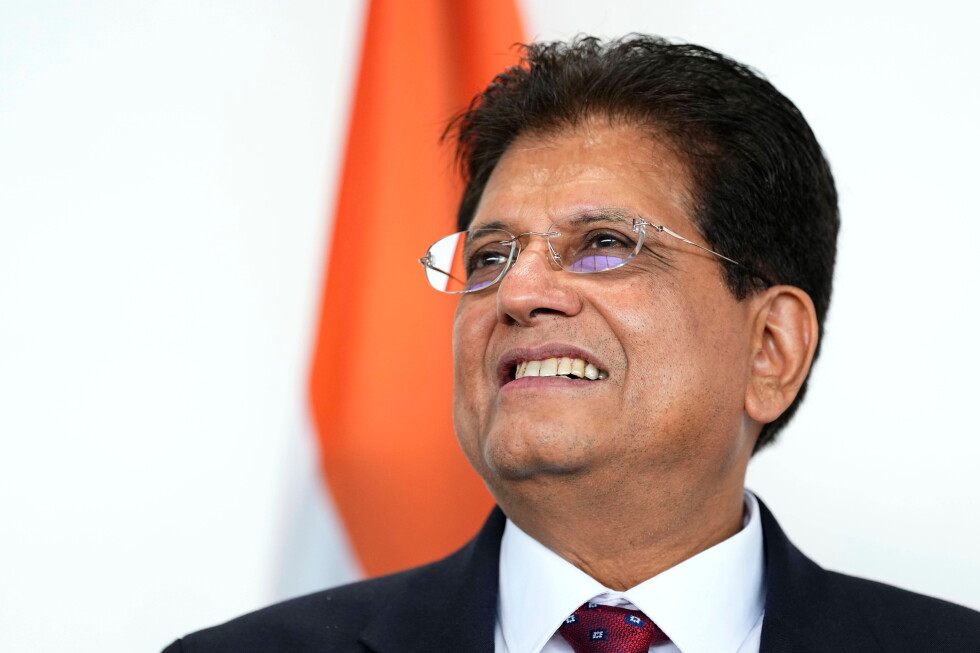
OTTAWA, Ontario — After years of heightened tensions sparked by a high-profile diplomatic dispute, India and Canada are moving rapidly to reset their bilateral relationship, with top trade officials laying out ambitious goals for expanded economic cooperation and a long-stalled free trade agreement. India’s Commerce and Industry Minister Piyush Goyal, currently on an official visit to Canada, confirmed that Prime Minister Mark Carney’s late February trip to New Delhi — the first visit by a sitting Canadian prime minister to India in eight years — created a transformative opening for reworking ties between the two nations.
Relations between Canada and India reached a crisis point in 2023 under Carney’s predecessor Justin Trudeau, after Canadian officials publicly alleged Indian government involvement in the shooting death of Sikh activist Hardeep Singh Nijjar near Vancouver. New Delhi forcefully rejected the accusations, and countered that Trudeau’s administration was offering safe haven to extremists aligned with the Khalistan movement, which seeks to create an independent Sikh homeland and is labeled a banned extremist organization by the Indian government. Bilateral trade talks, which had been ongoing since 2010, were suspended by Ottawa that same year.
Speaking during his visit alongside Canadian International Trade Minister Maninder Sidhu, Goyal said Carney’s diplomatic outreach has already reshaped the two countries’ approach to one another. “It has set in motion the pathway to a complete overhaul of this relationship, setting new agendas, new goals,” Goyal stated, adding that the reset is progressing “very, very rapidly.”
Goyal’s visit is accompanied by the largest Indian business delegation ever sent to Canada, consisting of more than 100 senior industry leaders representing India’s key sectors including mining, renewable and conventional energy, automotive manufacturing, and aerospace. During his trip, Goyal has already held meetings with Carney and Canadian Foreign Affairs Minister Anita Anand, with additional scheduled talks with chief executives of major Canadian firms, startup founders, and representatives of Canadian pension funds.
The minister confirmed that both sides are prioritizing reaching a final free trade agreement by the end of 2024, marking a critical milestone in the renewed engagement. A Canadian trade delegation traveled to New Delhi for preliminary talks earlier this month, and a follow-up Indian delegation is set to convene further negotiations in Canada later this year. Beyond the FTA, Goyal announced a shared target to triple bilateral trade volume to $50 billion USD by 2030.
During Carney’s trip to India, the two sides signed a raft of bilateral agreements, highlighted by a 2.6 billion Canadian dollar ($1.9 billion USD) deal to supply roughly 22 million pounds of uranium to India for its civilian nuclear energy program. The deal represents one of the first concrete economic gains from the diplomatic reset.
Vina Nadjibulla, vice president of research and strategy at the Asia Pacific Foundation of Canada, noted that the renewed cooperation aligns with broader strategic shifts for both nations. Both countries are increasingly seeking to diversify their economic partnerships and reduce overreliance on the United States, which a growing number of global partners view as an increasingly unstable trade and political actor. India, in particular, has ramped up trade diplomacy in recent years, finalizing new trade deals with the European Union, the United Kingdom, and New Zealand before turning to deeper engagement with other Western economies.
“India is now pivoting to Europe as well as to other Western economies like Australia and Canada to be able to meet its needs for capital, technology and innovation,” Nadjibulla explained, framing the Canada-India reset as part of a long-term strategic realignment for New Delhi in the global economy.