标签: Asia

亚洲

  • Afghan migrants in Poland fear forced deportations as asylum applications remain suspended

    Afghan migrants in Poland fear forced deportations as asylum applications remain suspended

    On the eastern edge of the European Union and NATO, a growing humanitarian controversy is unfolding in Poland, where sweeping temporary restrictions on asylum access have left hundreds of Afghan migrants facing deportation to a Taliban-led regime that rights groups and survivors say threatens their lives. The policy, first rolled out in March 2025 as a 60-day emergency measure targeting irregular border crossings from Belarus, has been repeatedly extended by Polish authorities, creating a de facto suspension of asylum rights that has now stretched well over a year. Human rights organizations say officials are stretching the scope of the original law far beyond its stated parameters, applying it to any migrant who first entered Poland across the Belarus border regardless of where they are apprehended within the country.

  • Kids with ADHD struggle to find understanding

    Kids with ADHD struggle to find understanding

    Across China, millions of children living with Attention Deficit Hyperactivity Disorder (ADHD) and their families face a daily battle against widespread misunderstanding, systemic under-preparedness, and frequent misdiagnosis that leaves many struggling to access the support they need to thrive. Personal stories from families, special educators, and medical professionals illuminate the gaps in current care and education systems, while highlighting emerging community-led solutions that center neurodivergent children’s well-being over rigid conformity.

  • South Korea jails 90-year-old woman for laundering son’s drug money

    South Korea jails 90-year-old woman for laundering son’s drug money

    In a landmark ruling that underscores South Korea’s crackdown on transnational drug-related financial crime, a 90-year-old South Korean woman has received a one-year prison sentence for facilitating money laundering for her son, a convicted international drug trafficker. The Incheon District Court handed down the decision this week after concluding the elderly woman had full knowledge she was moving illicit proceeds from her son’s illegal narcotics operations.

    Court documents detail that between April 2020 and February 2022, the woman, whose identity has not been released to the public per local reporting standards, received a total of 386 million South Korean won (equivalent to approximately $260,800 USD or £192,800 GBP) across nine separate transactions. Following explicit instructions from her son, identified only as Song in public reports, she transferred all of these funds into pre-designated bank accounts as part of the money laundering network.

    Song, a man in his 60s, has already been incarcerated in Cambodia since 2020, after local Cambodian courts convicted him of smuggling large quantities of methamphetamine into the Southeast Asian country. According to court arguments presented by prosecutors, the elderly woman made five separate trips to Cambodia to visit her son in 2019, and was fully aware of his detention and conviction on drug charges. This confirmed she knew the funds she was handling were tied to criminal activity, prosecutors argued.

    In her official ruling statement, Judge Wi Eun-suk of the Incheon District Court emphasized the severity of the offense. “The defendant’s actions intentionally obscured the origin of illicit profits, making it far more difficult for law enforcement to trace and seize criminal proceeds, and directly enabled the continued expansion of the global narcotics trade,” the judge explained.

    In shaping the sentence, the court did account for two mitigating factors: the defendant’s advanced age of 90, and the fact that she had no prior criminal convictions, particularly no previous history of drug-related offenses. This prevented the court from imposing a longer custodial sentence that would otherwise have been applied for such a large-scale money laundering offense.

    The case has also revealed broader links to other family members, according to reporting from Seoul-based newspaper Kyunghyang. Song has allegedly implicated his own daughter, the 90-year-old woman’s granddaughter, in the money laundering scheme. She stood trial on charges of accepting more than 600 million won in illicit funds and transferring 274 million won of that sum to other accounts. However, the court ultimately acquitted her of all money laundering charges, ruling that prosecutors failed to present sufficient evidence to prove she knew the money came from drug trafficking.

    South Korean law enforcement officials have confirmed they are currently proceeding with formal extradition requests to bring Song back to South Korea to face additional domestic charges for his role in the drug trafficking and money laundering network. The ruling comes as South Korea ramps up efforts to disrupt transnational drug criminal networks operating out of Southeast Asia, with a growing focus on targeting money laundering infrastructure that enables illegal narcotics operations.

  • US Hormuz blockade, tariffs jolt China

    US Hormuz blockade, tariffs jolt China

    Tensions in the Middle East have reached a new boiling point after the United States launched a naval operation to enforce a blockade of the strategic Strait of Hormuz on Monday, paired with an unprecedented tariff threat targeting third-party countries that supply weapons to Iran. The escalation has drawn a firm response from China, which has called for both Washington and Tehran to return to diplomatic negotiations to de-escalate the crisis.

    The tariff threat expanded to China in mid-April, when then-U.S. President Donald Trump warned of a 50% punitive tariff on Chinese goods over unconfirmed reports that Beijing planned to deliver air defense systems to Tehran. The move represents a clear escalation of Washington’s strategy to cut off external support for Iran and extend pressure to other major trading partners that maintain normal economic ties with the Islamic Republic.

    Chinese analysts widely view the dual campaign of military blockade and tariff threats as a deliberate act of extreme pressure aimed at forcing Beijing to align its policy with U.S. demands and push Iran into concessions on key negotiating issues. They note that after failing to secure breakthroughs either through military confrontation or diplomatic talks, the U.S. has increasingly turned to unilateral trade measures and coercive tariff threats to gain strategic leverage.

    “Trump has shifted tactics. The White House wants to combine military pressure alongside Israel and use tariffs to cut off Iran’s external lifelines,” said Da Bao, a Henan-based political commentator, referring to Iran’s critical crude oil export revenue that flows through trade with China. He added that the U.S. warning against Chinese arms shipments is less about enforcing international norms and more about setting a precedent to weaponize tariffs amid regional conflicts. “What counts as military equipment today? Drone components? Semiconductors? Maintenance services? Today it’s weapons, tomorrow it could be technology, then financing. This is just an expansion of political coercion,” Da Bao explained. He also argued that deploying tariffs as a strategic tool in an active conflict reflects the U.S.’s declining ability to mobilize allied consensus and growing difficulty resolving disputes through targeted, traditional measures.

    Ming Yue, a Hebei-based analyst, pushed back on the U.S.’s unsubstantiated claims of Chinese weapons supplies to Iran. She pointed out that China is Iran’s second-largest import source, with bilateral trade hitting $9.96 billion last year, and that Chinese exports to Iran consist primarily of industrial machinery, electrical goods, auto parts, textiles and metal products – not tanks, missiles or ammunition. She added that U.S. media and officials have deliberately mislabeled legitimate, routine economic cooperation between Beijing and Tehran as military support to frame China as a destabilizing actor, a move aligned with U.S. domestic political and electoral priorities.

    On the economic impact of additional tariffs, Ming Yue noted that China has already diversified its export markets to the European Union and ASEAN, meaning new U.S. tariffs would have only limited economic impact. Instead, she argued, most tariff costs would ultimately be passed to American consumers and businesses, while U.S. firms with deep supply chain exposure to China, such as Apple and Tesla, would face disrupted production and lost revenue. She also observed that the public has grown accustomed to the pattern observers have dubbed “TACO” – short for “Trump Always Chickens Out” – where threats are dramatically escalated then partially rolled back later.

    The current crisis follows a turbulent sequence of diplomatic and military moves in early April. After Trump threatened massive military strikes that would push Iran back to the “Stone Age” if it did not reopen the Strait of Hormuz, a 14-day provisional ceasefire between the U.S., Iran and Israel was reached in the final 90 minutes before Trump’s April 7 deadline, raising tentative hopes of de-escalation that was set to expire on April 21. But just one day after the ceasefire took effect, Israel launched large-scale airstrikes across Beirut, the Bekaa Valley and southern Lebanon, targeting Hezbollah Secretary-General Naim Qassem. The strike killed Qassem’s nephew and personal secretary, Ali Yusuf Harshi, failing to eliminate the Hezbollah leader but escalating tensions on the Lebanese front.

    On April 11, U.S. Vice President JD Vance held 21 hours of negotiations with Iranian Foreign Minister Abbas Araghchi in Islamabad, Pakistan, aimed at forging a long-term ceasefire. The talks collapsed without agreement: Washington demanded that Tehran abandon its stockpile of highly enriched uranium and halt all nuclear weapons-related development, as well as accept a U.S.-Iran joint management framework for the Strait of Hormuz. Iranian negotiators rejected both proposals, and insisted any ceasefire deal must cover Lebanon amid ongoing Israeli strikes on Hezbollah – a condition Washington failed to enforce on its ally.

    Chinese analysts argue the provisional ceasefire was a deliberate trap set by the U.S. and Israel to reset pressure on Iran while preserving military leverage, noting Tehran would never have accepted the pause if it had known Israel would immediately launch strikes on Lebanon. Lao Ge, a Guangdong-based commentator, drew parallels to ancient Chinese military wisdom from *The Commentary of Zuo*, which notes that a fighting force loses momentum if it pauses before securing its goals: the first push is strong, the second weaker, the third exhausted. He outlined three core strategic risks Iran faces from the ceasefire trap: first, it loses mobilization momentum, as wartime urgency shifts to public relief that erodes deterrence and national resolve; second, it puts key ally Hezbollah in an impossible position – if Iran intervenes to support the group, it is blamed for breaking the ceasefire, but if it holds back, Hezbollah is gradually weakened by ongoing Israeli strikes; third, reopening the Strait of Hormuz surrenders Iran’s strongest bargaining chip, stabilizes global oil markets, and gives the U.S. time to reinforce its military presence in the region. “Tehran would have been better off maintaining pressure despite U.S. threats and even limited infrastructure damage than losing its core ally in Lebanon,” Lao Ge argued.

    Qin Tian, deputy director of the Institute of Middle East Studies at the China Institutes of Contemporary International Relations (CICIR), confirmed the Strait of Hormuz is the decisive stake in the current standoff. “For Iran, the Strait is one of the most effective tools in its confrontation with the U.S. and Israel, and a core national security asset,” Qin said. “Tehran should use this leverage to secure meaningful concessions from the U.S. side.” He added that competition between Washington and Tehran for control over the waterway will only intensify in the coming weeks.

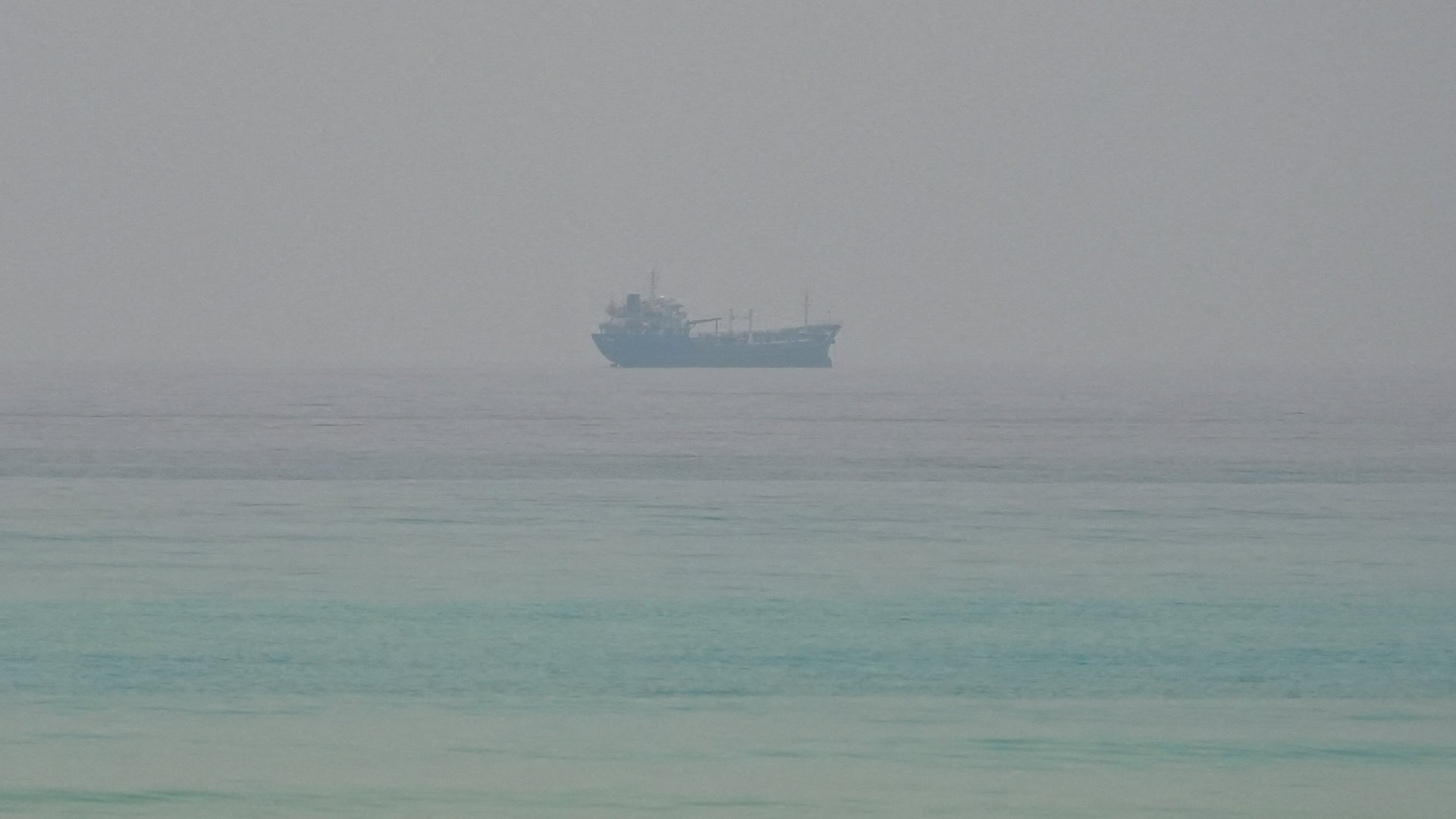
    As of Monday, the U.S. has expanded its blockade operation into the Gulf of Oman, targeting vessels linked to Iranian trade while claiming to allow neutral shipping to pass unimpeded. U.S. Central Command has issued warnings that any vessels entering the restricted zone risk interception, underscoring the large scale of the operation. U.S. officials also confirmed they have begun mine-clearing operations in and around the Strait after reports of Iranian naval mine deployments that disrupted a large share of global oil flows, noting that reopening full shipping lanes will be slow and carry operational risks. The operation has already pushed global oil prices above $100 per barrel, drawing public criticism from NATO allies who oppose the blockade’s disruptive impact on global energy markets.

    China has issued a formal response to the escalating crisis. Guo Jiakun, a spokesperson for China’s Foreign Ministry, emphasized that the Strait of Hormuz is a critical global trade and energy route, and maintaining its safety, stability and open access serves the shared interests of the entire international community. “The root cause of the current disruption is the ongoing military conflict. To resolve the issue, hostilities must end as soon as possible, and all parties must maintain calm and exercise maximum restraint,” Guo said, adding that China will continue to play a constructive role in advancing diplomatic talks.

    Chinese Defense Minister Admiral Dong Jun issued a firmer warning to Washington, cautioning against the Strait of Hormuz blockade and rejecting any U.S. interference in normal bilateral relations between Beijing and Tehran. “China has legitimate trade and energy agreements with Iran, and we expect other parties not to interfere in our sovereign affairs,” Dong said, noting that the Strait of Hormuz remains open to Chinese commercial shipping in line with international law.

  • China Evergrande founder Hui Ka Yan pleads guilty to a set of charges including fraud and bribery

    China Evergrande founder Hui Ka Yan pleads guilty to a set of charges including fraud and bribery

    One of the most high-profile figures at the center of China’s years-long property market crisis has reached a landmark legal milestone, as Hui Ka Yan, the founder of embattled real estate giant China Evergrande, has pleaded guilty to a sweeping array of criminal charges, a mainland Chinese court confirmed in an official statement this week.

    The charges against Hui, who is also known as Xu Jiayin, include illegal absorption of public deposits, fraud, corporate bribery, illegal lending, improper misuse of corporate funds, and rule-breaking disclosure of material market information. Hui was first taken into custody by Chinese authorities in September 2023 while investigations into Evergrande’s collapse were ongoing. His trial was held over two days, Monday and Tuesday, at the Shenzhen Intermediate People’s Court, which released details of the proceedings via a public post on its official WeChat account. During the hearing, the court noted that Hui formally expressed remorse for his actions. A final judgment on sentencing will be issued at a future, unspecified date.

    In addition to the charges against Hui personally, China Evergrande Group itself faces multiple criminal allegations including illegal public deposit absorption, fundraising fraud, corporate bribery, and illegal lending. The firm’s core mainland China property subsidiary, Evergrande Real Estate Group, has additionally been accused of fraudulent securities issuance. Observers from multiple stakeholder groups were in attendance for the trial, including representatives of investors who participated in the firm’s past fundraising campaigns, as well as delegates from China’s National People’s Congress, the country’s top legislative body.

    The conviction of Hui marks the latest chapter in a years-long downfall that reshaped China’s $60 trillion property sector and sent ripples through global financial markets. Founded by Hui in the mid-1990s, Evergrande grew to become China’s second-largest property developer, amassing a sprawling business empire that extended far beyond residential construction into everything from electric vehicles to theme parks. By the time the firm hit its breaking point in 2021, it held total liabilities of more than $300 billion, making it the most heavily indebted real estate developer in the world.

    Evergrande’s collapse was triggered by a 2020 regulatory move by Chinese authorities to crack down on excessive borrowing among private property developers, a policy designed to rein in skyrocketing debt levels and cool overheating housing prices. The crackdown left dozens of overleveraged developers, Evergrande included, unable to access new financing to cover their existing obligations. What followed was a wave of cross-sector defaults that tipped the entire Chinese property industry into a deep systemic crisis. The meltdown dragged on growth in the world’s second-largest economy and shook confidence in financial markets both within China and across the globe.

    In the years after the default, Evergrande underwent a lengthy insolvency process. A Hong Kong court issued a formal liquidation order for the firm in 2024, and court records confirmed that more than 90% of Evergrande’s assets were located on the Chinese mainland. By 2025, Evergrande’s shares were officially delisted from the Hong Kong Stock Exchange, closing out the public trading chapter of the firm’s 30-year history.

  • Afghanistan’s capital is in the grip of a water crisis

    Afghanistan’s capital is in the grip of a water crisis

    On a muddy, sloped lane in one of Kabul’s poorest neighborhoods, 52-year-old Marofa stands visibly frustrated, pulling back her headscarf to show her thick graying hair. Like thousands of other residents in the Afghan capital, she is forced to haul heavy water containers long distances every day just to access drinkable water for her household.

    “My back has no strength left, my legs can barely carry me,” she says. “Even with my white hair, I still have to do this work.”

    Down the hill, a local mosque operates a free well, but its water is too yellow and brackish to drink, meaning residents still have to haul it for other uses. Potable water is only available via small three-wheeled water trucks that sell it at a price out of reach for many low-income families. “We can barely afford bread to eat,” said 90-year-old Wali Mohammad, another angry Deh Mazang neighborhood resident. “How are we supposed to pay for water?”

    Both long-term residents say that just months after the Taliban retook control of Afghanistan in 2021, Taliban authorities cut illegal pipes that some households had laid to siphon water from a shared communal well directly to their homes. Mohammad says officials gave no explanation for the cut-off: “They hold all the power, and they did not even tell us why they cut our water.” But 32-year-old local resident Najibullah Rahimi says the unregulated piping drained the well’s water level so drastically that households further up the hill were left completely dry, forcing the government to intervene.

    This tense neighborhood conflict is just one visible symptom of a far deeper, rapidly accelerating crisis unfolding across Kabul: the capital is running out of groundwater at an alarming rate, threatening an unprecedented humanitarian disaster in the coming years, aid experts warn.

    Nestled in a high-altitude valley of the Hindu Kush mountains, Kabul’s population of 6 million relies almost entirely on groundwater pumped from underground aquifers for daily use. A 2025 report from international aid organization Mercy Corps found that aquifer levels across the city have plummeted by 25 to 30 meters (80 to 100 feet) over the past decade. Today, some new wells must be drilled as deep as 150 meters (nearly 500 feet) just to reach usable water.

    Aquifers are underground storage zones that collect water slowly over decades, as rain and melted snow seep through natural soil to replenish supplies. Depletion occurs when water is pumped out faster than it can be refilled, a process driven by two major forces: climate change and unregulated population growth.

    Climate change, fueled by global fossil fuel emissions, has brought repeated multi-year droughts to Afghanistan, cutting the snowpack that normally melts gradually through spring and summer to replenish Kabul’s aquifers. Instead, the region now sees more frequent sudden, intense downpours that cause destructive flash flooding rather than slow recharge of groundwater. A recent 10-day period of heavy rain and landslides already killed 77 people across the country, underscoring the new climate reality facing the nation.

    But water expert Najibullah Sadid, a Germany-based member of the Afghanistan Water and Environment Professionals Network, says the crisis would have arrived even without climate change. Kabul’s population has exploded more than twofold over the past 20 years: from 2.5 million in 2001, when the Taliban first fell from power and many Afghan refugees returned from neighboring countries, to an estimated 6 million today. A second wave of refugee returns began in 2023, when Pakistan and Iran launched large-scale expulsions of undocumented Afghans, putting even more strain on the capital’s infrastructure.

    Rapid unplanned urbanization has compounded the problem: most new development has covered open natural ground with concrete and asphalt, eliminating the porous soil needed to absorb rainwater into aquifers. “Even if it rained every single day, it would not raise groundwater levels anymore,” Sadid explained. “There is simply no unpaved ground left for water to seep through.” Longstanding mismanagement has made the crisis worse, he added, pointing to unregulated groundwater extraction by large commercial beverage companies and commercial greenhouses that draw down massive amounts of water for profit.

    Taliban authorities acknowledge the gravity of the situation. “The water situation in Kabul city is in a critical state,” said Qari Matiullah Abid, spokesman for the Afghan Ministry of Water and Energy. “The main causes are a dramatic population increase, reduced rainfall, and sharply higher consumption across the city.”

    Abid says the Taliban administration has already implemented a series of corrective measures: it has restricted commercial groundwater extraction by beverage producers, large-scale farmers and other businesses, installed water meters and imposed usage quotas on high-consumption operations like car washes and large commercial buildings, with eviction from the city as a penalty for exceeding limits. To boost groundwater recharge, the government has built small check dams across seasonal waterways in all 14 of Kabul’s districts, and dug thousands of absorption wells to capture stormwater for recharge. It also completed the Shah wa Arous Dam, inaugurated in 2024 with a 10 million cubic meter storage capacity, and removed millions of tons of sediment from the existing Qargha Dam to expand its usable storage.

    Even with these steps, experts say the measures are not enough to reverse the depletion trend. Two large-scale infrastructure projects that could deliver a long-term sustainable solution for roughly 4 million Kabul residents have been bogged down by delays and funding gaps.

    The first is a 200-kilometer pipeline that would carry fresh water from the Panjshir River north of Kabul to the capital, and the second is the planned Shah Toot Dam, a reservoir project located 30 kilometers southwest of the city. Together, the two projects would deliver a sustainable long-term water supply for the capital, Sadid says. While the dam would require six to seven years of construction, the pipeline could be completed relatively quickly if funding and approvals move forward.

    Shafiullah Zahid, Kabul Zone Director for Afghanistan’s state-run Urban Water Supply and Sewage Corporation, says the Panjshir pipeline’s $130 million budget has been approved, but the original survey completed under the former Afghan government has required full revision, and an additional review is still pending. Once the review is complete, construction can begin, he said. The Shah Toot Dam, first planned as a joint Afghan-Indian project months before the 2021 Taliban takeover, has also been held up by funding delays, and would take six to seven years to complete if construction launches.

    Sadid says the persistent delays stem from a long-running pattern, across both the current and former Afghan governments, of prioritizing flashy, visible infrastructure over life-sustaining water projects. “They spend billions on new roads and flyovers that catch the public eye,” he said. “But water projects that are fundamental to public health and people’s basic human rights get no priority. Water is essential to life — it is more important than any road.”

  • Founder of China’s Evergrande pleads guilty to fraud

    Founder of China’s Evergrande pleads guilty to fraud

    One of the most high-profile cases stemming from China’s years-long property sector turmoil took a dramatic turn this week, when Hui Ka Yan, the founder of collapsed real estate giant China Evergrande Group, entered guilty pleas to multiple criminal charges including embezzlement of corporate assets and corporate bribery, a Chinese court has confirmed.

    The public trial unfolded over two days, April 13 and 14, in the southern Chinese city of Shenzhen. According to official Chinese state media reports, Hui openly expressed remorse for his actions during the court proceedings. Judges have not yet issued a formal verdict in the case, with a sentencing announcement scheduled for a later date.

    Hui’s guilty plea marks a defining turning point in the messy aftermath of Evergrande’s 2021 collapse, a collapse that sent shockwaves across China’s $60 trillion real estate sector and left billions of dollars in losses for both domestic financial institutions and individual stakeholders across the country.

    Once China’s largest property developer by sales volume and market reach, Evergrande commanded a public stock market valuation of more than $50 billion at its peak. Built on a foundation of aggressive borrowing that pushed its total outstanding debt to roughly $300 billion, the firm grew into the world’s most indebted property developer before its debt-fueled business model unraveled in 2021.

    During the trial, the court detailed systemic misuse of funds that contributed to widespread unfinished housing projects across the country. The firm collected billions of dollars in pre-sales deposits from home buyers, money earmarked explicitly for construction of their future homes. Instead of honoring that commitment, Hui’s leadership diverted these funds to fund reckless expansion into new, unrelated projects. This misallocation of capital left hundreds of thousands of home buyers waiting for properties that would never be completed, leaving many stuck paying mortgages on homes they could not move into.

    Hui, who is also known by his Chinese name Xu Jiayin, built his empire from extremely humble origins. Born into a poor rural family in central China, he was raised primarily by his grandmother before entering the business world and founding Evergrande in Guangzhou in 1996. Riding the wave of China’s multi-decade housing boom, he grew the company exponentially, expanding beyond real estate into new sectors including electric vehicle manufacturing, food and beverage production, and professional sports. At its height, Evergrande held a controlling stake in Guangzhou FC, one of the most successful soccer clubs in Chinese Super League history, and in 2017, Forbes named Hui the wealthiest person in Asia, with an estimated net worth of $42.5 billion.

    The roots of Evergrande’s collapse stretch back to 2020, when Chinese regulatory authorities introduced strict new debt caps for property developers, nicknamed the “three red lines,” designed to cool speculative overborrowing in the sector. The new rules immediately cut off Evergrande’s access to cheap new borrowing, forcing the firm to sell off assets and slash property prices at steep discounts to generate emergency cash flow.

    By 2021, the company had defaulted on its debt obligations, sending the entire sector into a downward spiral that continues to weigh on China’s national economic growth. Analysts widely point to Evergrande’s collapse as the key trigger for the ongoing property market slump that has shaken consumer confidence and weakened national GDP growth. At the time of its default, Evergrande had roughly 1,300 active development projects across 280 Chinese cities.

    This criminal case is not the first penalty Hui has faced for his role in the company’s misconduct. In March 2024, Chinese securities regulators fined Hui $6.5 million and banned him for life from participating in the country’s capital markets after an investigation found Evergrande inflated its annual revenue by a total of $78 billion across multiple reporting years to mask its growing financial instability. By August 2025, Evergrande’s shares had lost 99% of their peak value, and the company was delisted from the Hong Kong Stock Exchange after more than 15 years of public trading.

    The outcome of Hui’s criminal trial is widely seen as a signal of Beijing’s commitment to cleaning up misconduct in the property sector, as authorities continue to work through the fallout from years of unregulated borrowing and speculative development that has left the sector facing billions in unresolved debt.

  • Xi and Sánchez say China and Spain should help safeguard multilateralism

    Xi and Sánchez say China and Spain should help safeguard multilateralism

    BEIJING – In a high-profile bilateral meeting held in the Chinese capital Tuesday, the top leaders of China and Spain have formally committed to expanding collaborative partnerships and upholding multilateral governance, against a backdrop of rising global instability marked by ongoing regional conflicts including the recent hostilities in Iran. Chinese President Xi Jinping made the remarks during an official reception for visiting Spanish Prime Minister Pedro Sánchez at Beijing’s Great Hall of the People.

    During the address, Xi emphasized the urgency for the two nations to ramp up high-level communication, solidify cross-border mutual strategic trust, and advance close practical cooperation. He also underscores the need to push back against a growing global shift toward the law of the jungle, where power alone dictates outcomes, and work collectively to protect what he described as genuine, inclusive multilateralism.

    Sánchez, for his part, aligned fully with Xi’s position, noting that both nations are well-placed to drive progress in solving the world’s most pressing challenges. From persistent trade frictions to tangled geopolitical complexities, from active armed conflicts to escalating environmental and social inequities, the prime minister noted that China and Spain can play a pivotal role in forging collaborative, forward-looking solutions.

    This visit marks Sánchez’s fourth trip to China in a little more than three years, a frequency of high-level engagement that underscores Spain’s strategic interest in deepening ties with the world’s second-largest economy. Spain is currently seeking to expand both political dialogue and commercial exchange with Beijing. The trip also comes amid growing diplomatic friction between Madrid and Washington, rooted in Sánchez’s public opposition to the recent war in Iran.

  • US and Iran keep talking as Trump’s blockade takes effect

    US and Iran keep talking as Trump’s blockade takes effect

    As a new U.S. naval blockade of Iran entered into force Monday and a fragile two-week ceasefire between the two sides remained largely intact, former U.S. President Donald Trump claimed Tehran is urgently pushing to reach a negotiated agreement with his administration.

    Speaking to reporters outside the Oval Office while receiving a McDonald’s delivery via DoorDash, Trump asserted that Iranian officials had reached out through backchannels to signal their desire for a deal. “I can tell you that we’ve been called by the other side. They’d like to make a deal. Very badly, very badly,” he told the press corps.

    High-stakes indirect negotiations between U.S. and Iranian delegations hosted in Islamabad, Pakistan, wrapped up over the weekend without a final agreement. But multiple current and former U.S. and Arab officials confirmed to Middle East Eye that both parties remain committed to the negotiating process. Reuters further reported Monday that diplomatic backchannels are still active, with Pakistan continuing to serve as an intermediary for communications between Tehran and Washington.

    According to sources familiar with the talks, discussions were at times tense, and the two sides came close to agreeing to a broad framework for a final deal. Three core sticking points scuttled a breakthrough: disagreements over Tehran’s nuclear program, competing claims to control over the Strait of Hormuz, and disputes over the amount of frozen Iranian assets that would be unlocked under any agreement.

    Pakistani Prime Minister Shehbaz Sharif confirmed Monday that diplomatic efforts are continuing, saying, “I want to tell you that a full effort is still on to resolve the issues.” Despite the lack of progress in Islamabad, the 14-day ceasefire that went into effect ahead of talks has held, with no major armed clashes reported as of Monday.

    When pressed by reporters on what would happen if no deal is reached before the ceasefire expires, Trump issued a blunt warning: “It won’t be pleasant for them.” This is not the first time the former president has issued sharp threats against Iran; he previously drew widespread international criticism for threatening to destroy Iranian civilization before walking back the comment.

    Monday marked the official launch of the U.S. naval operation aimed at breaking what the Trump administration frames as Iran’s restrictive control over the Strait of Hormuz, a critical global energy chokepoint. The Wall Street Journal reported that at least 15 U.S. warships are participating in the blockade. Speaking to reporters, Trump laid out the current state of play: “Right now there’s no fighting…We have a blockade. Right now, Iran is doing absolutely no business.”

    Iran’s control of the strait has emerged as the most intractable strategic conflict between the two sides, and a core sticking point in the ongoing negotiations. Tehran currently allows its own vessels to transit the waterway, alongside select ships from Russia, China, India and Pakistan, while blocking most vessels registered to Western countries. One of Iran’s key demands in talks is the establishment of a formal transit toll system for the strait, with payments potentially denominated in Chinese yuan or cryptocurrency. Maritime experts consulted by Middle East Eye note that Iran has a logistically feasible path to implementing such a system at the global energy chokepoint.

    Trump has framed the blockade as an economic pressure tactic designed to force concessions from Iran by cutting off the country’s oil export revenue. But independent energy and security experts warn the move could backfire on the U.S., triggering a sharp spike in global energy prices and escalating the risk of open armed conflict between the two countries.

    In response to the U.S. blockade, Iranian military officials have pushed back hard. An Iranian military spokesperson called any restrictions on Iranian shipping equivalent to “piracy,” and warned that if Iranian ports come under threat, Tehran would retaliate by targeting Arab Gulf ports. The Islamic Revolutionary Guard Corps further stated that any foreign military vessels entering restricted waters near the strait would be considered a violation of the ongoing ceasefire.

    U.S. military deployments signal the Biden administration (continuing Trump’s policy) is moving cautiously to avoid escalation. U.S. Naval Institute News reports that the U.S. aircraft carrier USS George H.W. Bush is rerouting its journey to the Middle East around Africa and the Cape of Good Hope, rather than taking the shorter route through the Mediterranean Sea and Red Sea. This detour avoids the Bab el-Mandeb Strait and keeps the carrier out of missile range of Yemen’s Houthi movement, which is aligned with Iran and has previously disrupted shipping in the strategic waterway.

    While Trump has repeatedly bragged about “obliterating” Iran’s navy and air defense systems in past confrontations, he acknowledged Monday that Iran’s fleet of small fast-attack craft could pose a meaningful threat to U.S. surface vessels operating in the northern Indian Ocean. He doubled down on his warning to Iran in a post on social media, writing: “Warning: If any of these ships come anywhere close to our BLOCKADE, they will be immediately ELIMINATED, using the same system of kill that we use against the drug dealers on boats at Sea. It is quick and brutal.”

  • Trump needs A-10s to go after Iranian speedboats and patrol ships

    Trump needs A-10s to go after Iranian speedboats and patrol ships

    On a Monday morning at 10 a.m. U.S. Eastern time, the Trump administration enacted a sweeping military blockade across all of Iran’s ports and coastal waters, a major escalation of ongoing hostilities between the two nations that has already sent shockwaves through global energy markets and drawn sharp criticism from U.S. NATO allies. Under the current terms of the blockade, commercial vessels may continue transiting the Strait of Hormuz, the world’s most critical chokepoint for global oil trade, so long as their journeys do not involve travel to or from Iranian ports.

    The success of the blockade hinges entirely on the U.S. military’s ability to counter Iranian attempts to disrupt international shipping through the strait. So far, Tehran has effectively deterred commercial tanker traffic through the region more through psychological pressure than direct attacks, but the new blockade sets the stage for open military confrontation at sea. Iran retains a large fleet of missile-armed small attack craft, split between the regular Iranian Navy and the Islamic Revolutionary Guard Corps Navy, that can be deployed to harass or attack passing vessels. Estimates place the total number of these small speedboats alone between 3,000 and 4,000, with an additional 133 larger patrol and combat vessels also in Iran’s inventory. When the U.S. launched earlier large-scale military operations against Iranian military assets, President Trump noted that American forces focused their strikes on Iran’s larger surface combatants and submarines — leaving the bulk of the small attack craft fleet intact. There remains ongoing uncertainty about the location of Iran’s Kilo-class submarines supplied by Russia. Now, U.S. forces are tasked with locating and eliminating every one of these small vessels, a mission that military analysts warn will require significant time, firepower, and operational resources to complete.

    Military analysts point to the A-10 Thunderbolt II, the U.S. Air Force’s iconic close-air support aircraft, as the most effective and low-risk platform for this mission. The A-10’s 30mm Gatling gun, which fires armor-piercing depleted uranium ammunition, can easily destroy even small, fast-moving vessels, and the jet can deploy low-cost laser-guided rockets for precision strikes. Unlike faster fighter jets, the A-10 is purpose-built for low-altitude, long-duration patrols over maritime environments, making it far more cost-effective for countering small boat threats. However, only around 30 A-10s are currently deployed to the Middle East, drawn from two Air National Guard squadrons: the 107th Fighter Squadron out of Michigan’s Selfridge Air National Guard Base and the 190th Fighter Squadron based at Idaho’s Gowen Field. Each squadron retains just 6 to 9 additional A-10s back in the U.S. that could be deployed, creating a critical gap in firepower for the mission.

    The solution to this shortfall is already available, analysts argue: dozens of fully operational A-10s recently retired by the Air Force are stored in the aircraft “boneyard” at Davis-Monthan Air Force Base in Arizona. In the 2025 fiscal year alone, the Air Force retired between 56 and 59 airworthy A-10s, all retaining their full operational equipment and ready to be reactivated. While recalled pilots would require a short transition period to return to flying the aircraft, this process could be completed rapidly if the Trump administration prioritizes the move. Reactivating all stored A-10s would triple the size of the A-10 fleet in the Gulf region, expanding it from 30 to more than 90 aircraft, dramatically increasing U.S. capability to neutralize Iran’s small boat force.

    Yet there is a major barrier to this plan: the U.S. Air Force has spent years pushing to retire the entire A-10 fleet to reallocate funding to newer fifth-generation fighter jets, and analysts expect service leaders to mount aggressive resistance to reactivating stored aircraft. This creates a major test for the Pentagon and the Trump administration, which has traditionally deferred to military leadership on equipment and deployment decisions. Analysts warn that allowing the Air Force to block A-10 reactivation would severely undermine U.S. efforts to enforce the blockade and secure control of the Strait of Hormuz.

    The strategic goal of the blockade is clear: to cripple Iran’s economy to the point that the regime either accepts U.S. negotiating terms or collapses under domestic pressure. Leading economic warfare analyst Miad Maleki, a Senior Fellow at the Foundation for Defense of Democracies, calculates that the blockade will cost Iran approximately $276 million per day in lost export revenue and disrupt an additional $159 million in daily imports, for a total economic hit of around $435 million per day, or $13 billion per month. More than 90% of Iran’s total annual trade, valued at $109.7 billion, transits the Persian Gulf, and oil and gas exports account for 80% of the Iranian government’s export earnings and 23.7% of the country’s total GDP. Iran’s primary oil export terminal at Kharg Island alone generates roughly $53 billion annually in export revenue.

    Maleki projects that the blockade will trigger a total collapse of Iran’s currency, the rial, pushing the country into irreversible hyperinflation. Even before the blockade, the rial has already crashed from 42,000 rials per U.S. dollar to 1.5 million rials per dollar. Iranian banks currently limit civilian cash withdrawals to between $18 and $30 per day, and national inflation already sits at 47.5%. Eliminating all of Iran’s foreign currency earnings from exports, Maleki argues, will push the rial into terminal collapse. The ultimate outcome of the Trump administration’s strategy is binary: either the Iranian regime will be forced to capitulate to U.S. demands for a new nuclear and security deal, or widespread economic hardship will spark a social revolution that the current government cannot suppress.

    As global oil prices have already surged past $100 per barrel in response to the blockade, NATO allies have openly criticized Trump’s decision, warning that the escalation poses severe risks to global energy security and economic stability. The speed and success of the U.S. mission to secure the Strait of Hormuz, analysts emphasize, will hinge on the administration’s willingness to overcome Air Force resistance and rapidly reactivate the stored A-10 fleet needed to neutralize Iran’s small boat threat.