标签: Asia

亚洲

  • Trump needs A-10s to go after Iranian speedboats and patrol ships

    Trump needs A-10s to go after Iranian speedboats and patrol ships

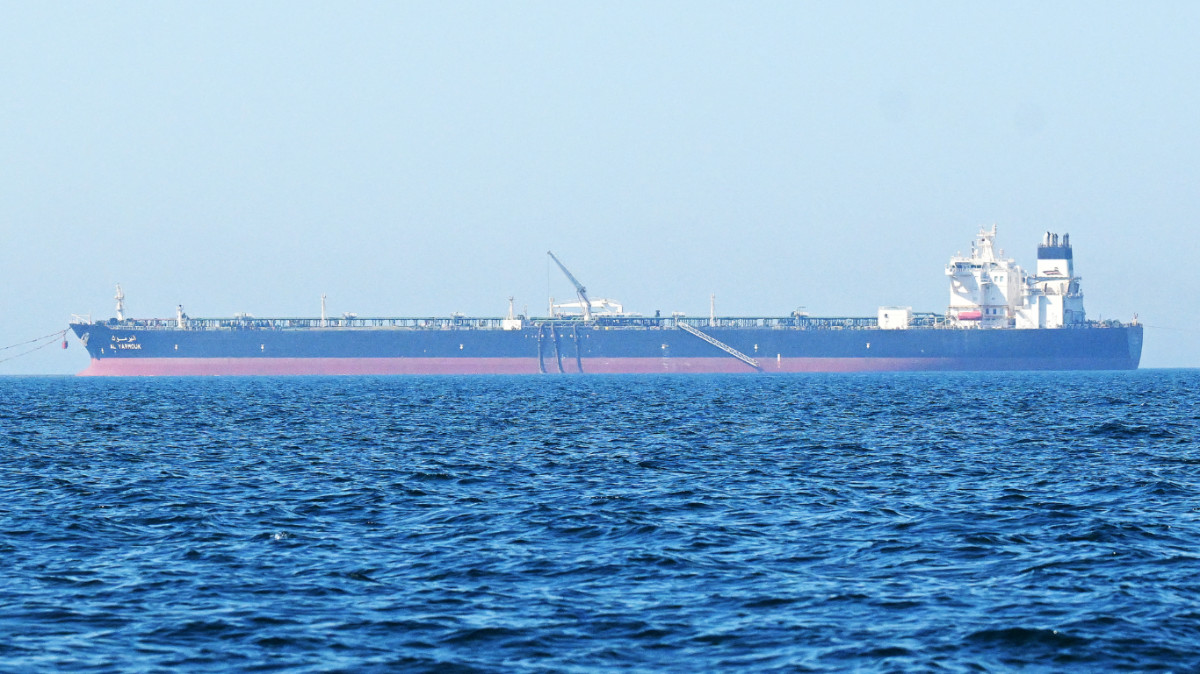
    On a Monday morning at 10 a.m. U.S. Eastern time, the Trump administration enacted a sweeping military blockade across all of Iran’s ports and coastal waters, a major escalation of ongoing hostilities between the two nations that has already sent shockwaves through global energy markets and drawn sharp criticism from U.S. NATO allies. Under the current terms of the blockade, commercial vessels may continue transiting the Strait of Hormuz, the world’s most critical chokepoint for global oil trade, so long as their journeys do not involve travel to or from Iranian ports.

    The success of the blockade hinges entirely on the U.S. military’s ability to counter Iranian attempts to disrupt international shipping through the strait. So far, Tehran has effectively deterred commercial tanker traffic through the region more through psychological pressure than direct attacks, but the new blockade sets the stage for open military confrontation at sea. Iran retains a large fleet of missile-armed small attack craft, split between the regular Iranian Navy and the Islamic Revolutionary Guard Corps Navy, that can be deployed to harass or attack passing vessels. Estimates place the total number of these small speedboats alone between 3,000 and 4,000, with an additional 133 larger patrol and combat vessels also in Iran’s inventory. When the U.S. launched earlier large-scale military operations against Iranian military assets, President Trump noted that American forces focused their strikes on Iran’s larger surface combatants and submarines — leaving the bulk of the small attack craft fleet intact. There remains ongoing uncertainty about the location of Iran’s Kilo-class submarines supplied by Russia. Now, U.S. forces are tasked with locating and eliminating every one of these small vessels, a mission that military analysts warn will require significant time, firepower, and operational resources to complete.

    Military analysts point to the A-10 Thunderbolt II, the U.S. Air Force’s iconic close-air support aircraft, as the most effective and low-risk platform for this mission. The A-10’s 30mm Gatling gun, which fires armor-piercing depleted uranium ammunition, can easily destroy even small, fast-moving vessels, and the jet can deploy low-cost laser-guided rockets for precision strikes. Unlike faster fighter jets, the A-10 is purpose-built for low-altitude, long-duration patrols over maritime environments, making it far more cost-effective for countering small boat threats. However, only around 30 A-10s are currently deployed to the Middle East, drawn from two Air National Guard squadrons: the 107th Fighter Squadron out of Michigan’s Selfridge Air National Guard Base and the 190th Fighter Squadron based at Idaho’s Gowen Field. Each squadron retains just 6 to 9 additional A-10s back in the U.S. that could be deployed, creating a critical gap in firepower for the mission.

    The solution to this shortfall is already available, analysts argue: dozens of fully operational A-10s recently retired by the Air Force are stored in the aircraft “boneyard” at Davis-Monthan Air Force Base in Arizona. In the 2025 fiscal year alone, the Air Force retired between 56 and 59 airworthy A-10s, all retaining their full operational equipment and ready to be reactivated. While recalled pilots would require a short transition period to return to flying the aircraft, this process could be completed rapidly if the Trump administration prioritizes the move. Reactivating all stored A-10s would triple the size of the A-10 fleet in the Gulf region, expanding it from 30 to more than 90 aircraft, dramatically increasing U.S. capability to neutralize Iran’s small boat force.

    Yet there is a major barrier to this plan: the U.S. Air Force has spent years pushing to retire the entire A-10 fleet to reallocate funding to newer fifth-generation fighter jets, and analysts expect service leaders to mount aggressive resistance to reactivating stored aircraft. This creates a major test for the Pentagon and the Trump administration, which has traditionally deferred to military leadership on equipment and deployment decisions. Analysts warn that allowing the Air Force to block A-10 reactivation would severely undermine U.S. efforts to enforce the blockade and secure control of the Strait of Hormuz.

    The strategic goal of the blockade is clear: to cripple Iran’s economy to the point that the regime either accepts U.S. negotiating terms or collapses under domestic pressure. Leading economic warfare analyst Miad Maleki, a Senior Fellow at the Foundation for Defense of Democracies, calculates that the blockade will cost Iran approximately $276 million per day in lost export revenue and disrupt an additional $159 million in daily imports, for a total economic hit of around $435 million per day, or $13 billion per month. More than 90% of Iran’s total annual trade, valued at $109.7 billion, transits the Persian Gulf, and oil and gas exports account for 80% of the Iranian government’s export earnings and 23.7% of the country’s total GDP. Iran’s primary oil export terminal at Kharg Island alone generates roughly $53 billion annually in export revenue.

    Maleki projects that the blockade will trigger a total collapse of Iran’s currency, the rial, pushing the country into irreversible hyperinflation. Even before the blockade, the rial has already crashed from 42,000 rials per U.S. dollar to 1.5 million rials per dollar. Iranian banks currently limit civilian cash withdrawals to between $18 and $30 per day, and national inflation already sits at 47.5%. Eliminating all of Iran’s foreign currency earnings from exports, Maleki argues, will push the rial into terminal collapse. The ultimate outcome of the Trump administration’s strategy is binary: either the Iranian regime will be forced to capitulate to U.S. demands for a new nuclear and security deal, or widespread economic hardship will spark a social revolution that the current government cannot suppress.

    As global oil prices have already surged past $100 per barrel in response to the blockade, NATO allies have openly criticized Trump’s decision, warning that the escalation poses severe risks to global energy security and economic stability. The speed and success of the U.S. mission to secure the Strait of Hormuz, analysts emphasize, will hinge on the administration’s willingness to overcome Air Force resistance and rapidly reactivate the stored A-10 fleet needed to neutralize Iran’s small boat threat.

  • China’s exports grew 2.5% in March in a sharp slowdown as Iran war raises uncertainty

    China’s exports grew 2.5% in March in a sharp slowdown as Iran war raises uncertainty

    HONG KONG – Newly released trade data from China’s General Administration of Customs reveals a marked deceleration in the country’s export growth for March 2026, a shift that economists largely attribute to growing geopolitical instability stemming from the ongoing Iran conflict and its cascading effects on global energy prices and cross-border demand.

    Last month, Chinese exports expanded by just 2.5% year-on-year, a sharp slowdown from the 21.8% aggregate growth recorded across January and February, and a figure that fell short of consensus forecasts from financial analysts. In a striking contrast, import growth jumped to 27.8% year-on-year in March, up from the 19.8% growth seen in the first two months of the year.

    The strong export performance that China recorded in early 2026 was largely fueled by technology-related shipments, with semiconductor exports surging in particular amid the global boom in artificial intelligence development. But economists warn that the protracted Iran conflict could dampen overall global appetite for Chinese goods through the rest of the year.

    “China’s exports have decelerated as the Iran war starts to affect global demand and supply chains,” explained Gary Ng, senior economist for Asia Pacific at Natixis, the French investment bank.

    Economists at Bank of America, led by chief economist Helen Qiao, echoed that assessment in a recent research note. They noted that even after the robust rebound in export growth through the first two months of 2026, the energy price shock triggered by the Iran conflict is likely to pull overall demand downward. If the conflict extends longer than current market projections, the Bank of America team added, the greatest risk will come from a sustained broad-based slowdown in global demand.

    Long-standing trade frictions have also added pressure on Chinese export performance in recent months. U.S. President Donald Trump’s elevated tariffs on Chinese goods have continued to weigh on China’s shipments to the United States, pushing Chinese exporters to reorient their trade flows toward other markets. Over the past quarter, the country has ramped up exports to Europe, Southeast Asia, and Latin America to offset lost U.S. sales.

    Beyond trade flows, geopolitical observers are closely tracking upcoming diplomatic engagement between the two largest global economies. Trump’s planned visit to Beijing for a meeting with Chinese President Xi Jinping, originally scheduled for earlier this spring, was delayed due to the outbreak of the Iran war, and a new timeline for the high-stakes summit is still pending.

    Looking at China’s broader economic outlook for 2026, Beijing has set an annual growth target of 4.5% to 5% — the lowest official target the country has announced since 1991. China hit its 2025 target of “around 5% growth” last year, powered in large part by strong export performance that delivered a record $1.2 trillion annual trade surplus. Analysts broadly agree that exports will remain a critical engine for maintaining China’s economic expansion this year, as a years-long slump in the country’s property sector continues to drag on domestic consumption and private investment.

  • Bongbong Marcos fights ill-health rumours with star jumps

    Bongbong Marcos fights ill-health rumours with star jumps

    Speculation around Philippine President Ferdinand “Bongbong” Marcos Jr.’s physical fitness has been making the rounds on public and social media in recent weeks, fueling unconfirmed whispers that the country’s leader was struggling with undisclosed health issues. Rather than dismissing the claims through a formal written statement or allowing the rumors to spread unchecked, Marcos took an unorthodox, direct approach to put the speculation to rest: he showcased his physical stamina by performing star jumps in a gym setting, and extended an open invitation to any critic who doubts his health to join him for a workout. The bold, confrontational move marks a rare moment of personal engagement from a sitting head of state responding to public gossip, turning a question about personal health into a public display of readiness for the demands of his office. Political analysts note that the stunt not only addresses immediate health concerns but also projects an image of vigor and confidence to voters and political opponents alike, at a time when public perception of leadership stability carries significant weight in Philippine politics.

  • Prince Harry and Meghan arrive in Australia for a low-key, privately funded visit

    Prince Harry and Meghan arrive in Australia for a low-key, privately funded visit

    MELBOURNE, Australia — More than six years after their headline-grabbing 2018 official royal tour as newlyweds, the Duke and Duchess of Sussex, Prince Harry and Meghan, have returned to Australian soil for their first visit since stepping down as working senior members of the British royal family. The four-day, intentionally low-profile trip, which will take the couple from Melbourne to Canberra and finally Sydney, comes four years after their 2020 announcement that they would step away from senior royal duties, relocate to California, and pursue full financial independence.

    Unlike their 16-day 2018 tour that included massive public gatherings across Australia, New Zealand, Fiji and Tonga — where thousands of well-wishers turned out to greet the newlyweds — this visit will not feature large-scale public events. A core point of contention that led to this scaled-back schedule is the ongoing debate over who should cover the couple’s additional security costs for Australian law enforcement agencies. The couple have emphasized that the entire trip is privately funded, and they traveled on a commercial Qantas Airways flight from Los Angeles in business class, but public pushback over unplanned taxpayer security expenses has shaped the visit’s low-key format. Their two young children, 6-year-old Prince Archie and 4-year-old Princess Lilibet, did not accompany them on the trip; notably, Meghan announced Archie’s pregnancy during the couple’s 2018 stop in Sydney.

    Criticism has mounted from multiple corners over the purpose of the visit. Local outlet the *Herald Sun* framed the trip as a “faux royal tour” designed to boost the couple’s personal “Brand Sussex”, while other commentators have pushed back against their schedule of paid ticketed public events. The Sussexes’ team has rejected claims that this is a publicity-driven promotional tour. In an official statement, their office noted the itinerary centers on long-standing work the couple has prioritized, with a core goal of amplifying charitable organizations that deliver proven community impact. The visit, the statement added, is focused on listening, learning, and supporting local communities rather than self-promotion, while also confirming it includes a small number of private engagements to support both charitable and commercial goals.

    Opinions among royal observers are split on the controversy surrounding the trip. Afua Hagan, a media commentator who specializes in coverage of the British royal family, noted that mainstream media has long framed Harry and Meghan as public “villains”, leaving the couple in a no-win situation. “This is a privately funded trip. To pay for that, they’re going to have to have some commercial interest,” Hagan told Australian Broadcasting Corp. “If they didn’t have commercial interest, the problem would be: ‘Oh my goodness, these people are leeching off the Royal Family and the taxpayers whether or not they’re making their own money. How dare they make their own money.’ They can’t do right for doing wrong.”

    On the other side of the debate, Giselle Bastin, a British royal studies expert at Australia’s Flinders University, argued that the couple’s choice to leverage their royal titles to advance private commercial interests creates a clear conflict of interest for many observers. “It’s well known that the Sussexes are in dire need of income and so a staging of a quasi-royal tour to Australia is being regarded as a rather desperate attempt to monetise their status as royalty,” Bastin explained.

    The couple marked their first public engagement of the trip at Melbourne’s Royal Children’s Hospital, a venue with personal ties to Harry: his parents, then-Prince Charles and Princess Diana, visited the same facility back in 1985. As the pair entered the hospital foyer, they shook hands with dozens of waiting well-wishers, while hundreds of onlookers captured the moment on personal mobile devices. When a reporter asked what Harry was most looking forward to during his time in Australia, he simply replied: “Everything,” adding, “It’s good to be back.”

    The remainder of the itinerary aligns with causes Harry and Meghan have long championed. In Melbourne, Meghan is scheduled to visit a local women’s shelter, while Harry will tour a veterans’ art museum. From there, the couple will travel to Canberra, where Harry will visit the iconic Australian War Memorial, before wrapping up the trip in Sydney with a sailing event hosted by Invictus Australia. The Invictus Games, the international sporting competition for ill and injured military personnel and veterans, was founded by Harry in 2014, and the couple hosted the opening of the 2018 Invictus Games during their last visit to Sydney.

  • Swift backlash from loyalists and adversaries after Trump depicts himself as Christ

    Swift backlash from loyalists and adversaries after Trump depicts himself as Christ

    A politically charged firestorm erupted this week after former and current U.S. President Donald Trump shared an AI-generated image depicting him as a messianic, Jesus-like healing figure — a post that quickly drew widespread backlash across religious and political lines, forcing Trump to remove it within 24 hours. The controversial post came on the heels of a bitter public feud between Trump and Pope Leo XIV, the first American pope in history, who has openly condemned Trump’s policy positions, including U.S. support for ongoing military conflicts in the Middle East and hardline immigration crackdowns.

    After deleting the image, Trump offered a confusing explanation to reporters at the White House, claiming he believed the graphic depicted him as a doctor affiliated with the Red Cross. “It’s supposed to be me as a doctor making people better. And I do make people better. I make people a lot better,” he told reporters. However, the widely circulated image leaves no room for ambiguity: it shows Trump draped in a flowing robe, with glowing hands hovering over the forehead of a man lying unconscious in a hospital bed. Across both Christian and Islamic religious traditions, Jesus Christ is revered as a figure with the divine power to heal the sick, making the depiction explicitly messianic.

    Criticism poured in immediately from across the political and religious spectrum, starting with leading Democratic lawmakers. Vermont Senator Bernie Sanders took to social media platform X to condemn the incident, tying it to Trump’s ongoing conflict with the pope. “Trump is now attacking the Pope for speaking out against war while posting images of himself as a messianic figure,” Sanders wrote. “This is not only offensive. It is deranged, egomaniacal behavior. When will Republicans in Congress stop blindly following this dangerous and unhinged man?” Massachusetts Representative Jim McGovern, the top Democrat on the House Rules Committee and a practicing Catholic, called the image “outrageous, offensive, and profane,” adding “clearly he is not well. As an American, a Catholic, a human – I am disgusted.” The Democratic National Committee’s official account tagged top Catholic and evangelical Republican leaders including Senate Republican JD Vance and House Speaker Mike Johnson, asking for public comment.

    Notably, most sitting congressional Republicans remained silent through the first 36 hours of the controversy, even as high-profile former GOP members and religious conservative groups broke with Trump. Marjorie Taylor Greene, the former Georgia congresswoman who has fallen out of Trump’s favor after facing primary pressure from his allies, issued a blunt condemnation on X: “I completely denounce this and I’m praying against it!!!” Former Illinois Representative Adam Kinzinger, another ex-Republican lawmaker who clashed with Trump, called on Christians of all denominations to speak out. “Jesus Christ is not a meme. His image is not a political tool. His name is not a brand,” Kinzinger wrote. Carrie Prejean Boller, a former Trump supporter and anti-abortion Catholic who was ousted from Trump’s Religious Liberty Commission, went further, saying “Trump is not only a blasphemer but he is a liar. No Christian can support Trump or his administration. Speak now or be complicit in evil.” Even a traditionally pro-Trump Catholic group, Knights Templar International, which backed Trump in both the 2016 and 2024 elections, issued a full-throated rebuke, calling the image deeply offensive and demanding a public apology to upset Christian communities. Former Fox News host Megyn Kelly also joined critics, reposting a comment dismissing Trump’s Red Cross doctor explanation that read “He thinks you’re so stupid.”

    A small handful of pro-Trump commentators defended the post, however. Hardline right-wing commentator Laura Loomer argued that the U.S. does not recognize blasphemy as a legal offense, and told offended critics to “move to a Muslim country” if they opposed the depiction. International actors also waded into the controversy. Iran’s embassy in South Africa, which has regularly mocked Trump’s policies since the outbreak of the U.S.-Israeli war on Iran, made a sarcastic reference to the late convicted sex offender Jeffrey Epstein in its comment, asking “Is it Epstein being cared for in the Healing Ministry of Trump?” Iranian President Masoud Pezeshkian issued a formal condemnation, saying “the desecration of Jesus (peace be upon him), the Prophet of peace and brotherhood, is unacceptable to any free person.”

    The AI image controversy was preceded by a harsh public attack from Trump against Pope Leo XIV, who has become one of the most prominent global critics of Trump’s foreign and domestic policy. Shortly before sharing the image Sunday, Trump posted a tirade against the pope on his social media platform, criticizing Leo’s stances on crime and foreign policy, and attempting to drive a wedge between the pope and his brother, a supporter of Trump’s MAGA movement. “Pope Leo is WEAK on Crime, and terrible for Foreign Policy. He talks about ‘fear’ of the Trump Administration, but doesn’t mention the FEAR that the Catholic Church, and all other Christian Organizations, had during COVID when they were arresting priests, ministers, and everybody else, for holding Church Services, even when going outside, and being ten and even twenty feet apart. I like his brother Louis much better than I like him, because Louis is all MAGA,” Trump wrote. He added bluntly: “I don’t want a Pope who criticizes the President of the United States.”

    Pope Leo has previously spoken out against multiple Trump administration policies, including the U.S.-Israeli war on Iran, the Israeli military campaign in Lebanon, and Trump’s harsh crackdown on undocumented immigrants within the U.S. Just days before the feud erupted, the Archbishop of Washington DC Cardinal Robert McElroy delivered a fiery anti-war sermon at a peace mass, calling on Christians to move beyond prayer and actively advocate for an end to conflicts. “As citizens and believers in this democracy that we cherish so deeply, we must advocate for peace with our representatives and leaders. It is not enough to say we have prayed. We must also act… our president will move to reenter this immoral war,” McElroy said. “No. Not in our name. Not at this moment. Not with our country.” Multiple cardinals also confirmed their opposition to Trump’s war policies in an interview with CBS’s 60 Minutes Sunday. Last week, a Catholic publication revealed that the Vatican’s ambassador to the U.S. had been summoned to the Pentagon earlier this year and reprimanded by a senior U.S. official, who told the envoy the U.S. government would act with no constraint on the global stage.

    Speaking to reporters Monday, Pope Leo pushed back against Trump’s attacks, reaffirming his commitment to spreading the Gospel message of peace. “I have no fear of the Trump administration or speaking out loudly of the message of the Gospel, which is what I believe I am here to do, what the Church is here to do,” the pope said. “We are not politicians. We don’t deal with foreign policy with the same perspective he might understand it, but I do believe in the message of the Gospel, as a peacemaker.”

    The incident has already had electoral ripple effects ahead of the November 2026 U.S. midterm elections. The Iraqi Christian Foundation issued a public call for U.S. Catholics to vote against Trump’s Republican Party, writing on X “We call on all Chaldean Catholics & other Catholics in the USA to vote against the Republicans or abstain from voting in the 2026 elections. We stand with Pope Leo XIV!” Support for the pope extended globally across religious lines, with prominent Muslim leaders and organizations also backing Leo. Iranian Parliament Speaker Mohammed Ghalibaf wrote “Honoring Pope Leo’s fearless stand! He condemns the war crimes of Israel and the US… thank you for this light!” The Council on American-Islamic Relations, the largest Muslim civil rights organization in the U.S., issued a statement saying it stands in solidarity with the pope, noting that “Between denigrating the pope, portraying himself as Jesus (peace be upon him), and sarcastically praising Allah, the president’s mockery of religion is both deranged and insulting.” Controversial Muslim-American influencer Sneako, who has more than one million followers on X, added: “We stand with the Pope and the beautiful religion of Catholicism. Trump is committing the greatest act of blasphemy. If you love America, condemn this evil immediately.”

  • J Street says Israel should pay out-of-pocket if it wants US weapons

    J Street says Israel should pay out-of-pocket if it wants US weapons

    A prominent pro-Israel advocacy organization has upended longstanding U.S. policy orthodoxy around American military support for Israel, with J Street announcing in a new policy document released Monday that it is calling for an immediate end to direct, U.S. taxpayer-funded military assistance to the Jewish state.

    For years, J Street positioned itself as a moderate pro-Israel voice that backed unrestricted U.S. provision of free defensive military systems to Israel, including ongoing replenishments for the country’s Iron Dome air defense network. The group’s new framework marks a sharp break from that prior stance: under the updated policy, J Street now argues the U.S. should continue to sell Israel short-range air defense and ballistic missile defense capabilities — but Israel must cover the full cost of these acquisitions with its own public funds.

    In justifying the historic policy shift, J Street pointed to Israel’s robust economic and financial standing. “Israel faces real security challenges that require a significant defense investment. With a per capita GDP comparable to leading U.S. allies such as the United Kingdom, France and Japan, as well as an annual defense budget of over $45 billion, it has the financial means to address these challenges,” the group wrote. “It does not require almost $4 billion per year in U.S. financial subsidies to purchase weapons.”

    J Street added that continuing the current model of unrestricted direct aid is both fiscally unnecessary and politically damaging, fueling avoidable tensions in U.S. domestic politics and straining bilateral ties between Washington and Jerusalem. Under the existing structure of U.S. military assistance, American taxpayer dollars are allocated to Israel, which is then required to spend those funds on defense equipment manufactured by U.S. weapons contractors.

    J Street defines its core mission as organizing pro-Israel, pro-peace, pro-democracy American voters to advance U.S. policies aligned with shared Jewish and democratic values, with the goal of securing Israel’s future as a democratic Jewish homeland. The group’s support base is heavily concentrated within the Democratic Party, whose broader base has seen a rapid shift in attitudes toward Israel amid the ongoing Israel-Hamas war in Gaza.

    The policy change comes amid a dramatic reevaluation of U.S. support for Israel across the American political landscape, driven by shifting public opinion following more than 10 months of war in Gaza that has killed more than 72,000 Palestinians, according to local health officials. For J Street specifically, the shift closely tracks the changing trajectory of the Democratic Party, where progressive voters and elected officials have increasingly pushed for cuts to military aid over humanitarian and human rights concerns.

    Earlier this month, high-profile progressive Congresswoman Alexandria Ocasio-Cortez of New York — who is widely speculated to be preparing a run for higher national office — announced she would no longer vote for any U.S. military support for Israel, reversing her prior position of backing defensive weapons transfers in a move that aligned with growing demands from her progressive base. Notably, Ocasio-Cortez’s announcement followed a surprise revelation from Israeli Prime Minister Benjamin Netanyahu earlier this year, when he declared that Israel would not seek to renew its current military aid package with the U.S. when it expires in 2028. “I want to taper off the military aid within the next 10 years,” Netanyahu told *The Economist* in January, “all the way down to zero.”

    J Street’s new policy mirrors a key provision of Ocasio-Cortez’s stance, requiring that all future arms sales to Israel — which the country pays for with its own funds — must be “fully consistent with American law.” U.S. statute prohibits security assistance to any country whose government engages in a consistent pattern of gross human rights violations, or that blocks or restricts the delivery of U.S.-funded humanitarian aid to civilian populations.

    “U.S. arms sales to Israel should be further conditioned to incentivize alignment with American interests and laws — as has been the case with other allies and partners — when their behavior is inconsistent with U.S. interests,” J Street wrote. The group stopped short of cutting all security ties with Israel, however, emphasizing that the U.S.-Israel alliance delivers tangible benefits to American national security.

    J Street noted that Washington and Jerusalem broadly share core strategic interests, writing: “The U.S. also benefits meaningfully from the relationship. Intelligence sharing has been critical in campaigns such as the fight against ISIS, while joint operations such as Israel’s 2006 strike on Syria’s secret nuclear facility have advanced shared security goals.” With roughly 500,000 American citizens residing in Israel, the group added that continued, conditional arms sales to Israel remain a legitimate U.S. national security priority.

  • LPG shortage from Iran war fuels labour exodus from major Indian cities

    LPG shortage from Iran war fuels labour exodus from major Indian cities

    The widening geopolitical fallout from the US-Israeli war on Iran has sent shockwaves through India’s energy supply chain, triggering the most severe cooking gas shortage in 10 years and pushing hundreds of thousands of low-income internal migrant workers to abandon urban livelihoods and return to their rural hometowns. The crisis traces its roots to Iran’s recent decision to close the Strait of Hormuz, the strategic maritime chokepoint that carries roughly 20% of the world’s daily crude oil shipments. As one of the world’s largest LPG importers, India relies heavily on Middle Eastern energy exports: approximately 60% of the country’s total LPG comes from Qatar, the United Arab Emirates and Saudi Arabia, and 90% of those shipments pass through the Strait of Hormuz. This dependence has left India uniquely exposed to the disruptions sparked by ongoing regional conflict.

    For millions of Indian households, LPG – a blend of propane and butane – is the primary cooking fuel, making consistent access a non-negotiable requirement for daily life. For low-wage migrant workers, who make up the backbone of India’s urban industrial and service sectors, the supply crunch and subsequent price spike has proven catastrophic. Thirty-year-old Raj Kumar, a daily-wage laborer who spent 15 years working at a New Delhi bathware factory earning less than $7 a day, is one of hundreds of thousands of workers forced to leave the capital. For weeks, Kumar attempted to secure LPG to cook for his wife and two children, but skyrocketing prices and persistent shortages made staying impossible. The factory where he worked, one of thousands of small businesses affected by fuel shortages, shut down entirely, leaving Kumar and all 40 of his co-workers unemployed. Left with no other options, Kumar loaded his family’s belongings and traveled 650 kilometers back to his hometown in Mahua, Uttar Pradesh. “It is hard to stay here anymore. We were struggling to eat properly. Seeing my children and wife suffering for the past few days was painful,” Kumar told reporters.

    Stories like Kumar’s are not isolated. Across major Indian industrial hubs including New Delhi, Mumbai and Gujarat, thousands of small and medium enterprises – from textile and ceramic manufacturing units to food processing facilities, local eateries and street food vendors – have scaled back operations or shut down completely as fuel supplies dried up. Migrant workers, who move from rural areas to cities in search of scarce, low-paying work, have borne the brunt of the crisis, a pattern that mirrors the widespread displacement seen during India’s 2020 COVID-19 lockdown.

    Twenty-two-year-old Chandan, who works at a motorcycle spare parts factory in Bhiwandi, Rajasthan, spent all of his wedding savings trying to refill his small 5-kilogram LPG cylinder before being forced to head home to Balia village, also in Uttar Pradesh. After exhausting his savings, Chandan switched to eating at roadside eateries, but found that tripled commercial gas prices had pushed food prices up threefold as well. “Before the unforeseen gas crisis, I would buy a plate of rice for 50 rupees (around half a dollar), but all the eateries have tripled the price for the same plate, claiming an equal rise in commercial gas in the grey markets. I earn around 500 rupees a day ($6), and I cannot purchase a kilo of gas for 400 rupees ($4),” Chandan explained. With no government relief in sight, he joined the wave of reverse migration back to rural Uttar Pradesh.

    Government data and official statements have painted a conflicting picture of the crisis. India’s federal energy ministry has claimed that it maintains uninterrupted domestic LPG supplies and that no large-scale worker outmigration from major cities is occurring, despite long queues of workers seeking tickets home at railway stations across the country. However, during a March 12 parliamentary address, junior petroleum and natural gas minister Suresh Gopi admitted that India holds only five days of strategic crude oil reserves, and just 20 days of LPG reserves to cover unexpected supply disruptions.

    Compounding the crisis for migrant workers are long-standing regulatory barriers that limit their ability to purchase LPG in urban areas. Under current government rules, each household is only eligible for one subsidized LPG connection, which is almost always registered to the worker’s home village. In cities, migrants are only permitted to purchase small 5-kilogram cylinders, a process hampered by heavy bureaucratic restrictions. As a result, most migrants are forced to buy LPG on the unregulated black market, where prices are often multiple times the subsidized rate. In response to growing public pressure, the government announced on April 7 that it would ease these restrictions and double the national allocation of 5-kilogram cylinders, a move analysts say is too little too late.

    The reverse migration trend has experts warning of long-term social and economic damage that mirrors and exceeds the fallout from past crises. Sunil Kumar Aledia, executive director of the Centre for Holistic Development and a prominent social activist, argues that the Indian government has failed to take proactive steps to mitigate the crisis, leaving vulnerable migrant communities to fend for themselves. “They are facing the burden of the LPG crisis. Although it seems the impact is gradual, the government has not offered any help,” Aledia said, warning that the government’s slow response could allow the crisis to escalate into a larger humanitarian catastrophe in the coming months.

    Professor S Irudaya Rajan, chairman of the International Institute of Migration and Development in Kerala, compared the current crisis to the displacement seen during the 2020 COVID-19 pandemic and the 2008 global recession, noting that the long-term damage is likely to be far more severe this time around. Rajan added that the crisis will be compounded by an additional wave of reverse migration from Gulf nations, where thousands of Indian expat workers are employed. “Not only India, but people from several other countries in Southeast Asia earn a significant percentage of remittances from the Gulf nations that outweigh the earnings from domestic labour engagement. As the people start migrating from the war-hit countries, the impact of internal migration would be aggravated by this international reverse migration,” Rajan explained.

    Dr Adfer Shah, a New Delhi-based sociologist and South Asia analyst, described reverse migration as an existential threat to India’s most economically and socially marginalized communities. “Reverse migration places enormous pressure on village economies and rural livelihoods that are structurally not equipped to reabsorb the returning workforce. Such a shock affects their whole life, even their children’s education. It curtails all freedoms and opportunities that urban proximity offers them,” Shah said, noting that the influx of returning workers will push down rural wages, increase joblessness, and destabilize already fragile village economies.

    At major railway hubs across New Delhi, thousands of workers are scrambling to secure tickets home, often paying double or triple the official fare because of overwhelming demand. Twenty-one-year-old Sintu Kumar Bhagat, who has been out of work for more than a month, waited at New Delhi Railway Station to board a train to his home village in Purnia, Bihar, after scraping together enough money to buy overpriced tickets for himself and his brother. “I got the tickets for double the price with difficulty. Booking has to be done a day or two in advance as everyone is leaving for home,” Bhagat said.

    Twenty-seven-year-old Ashok Kumar Chaudhary, who traveled 1,000 kilometers from his Jharkhand village to work in Delhi’s iron manufacturing industry to support a family of five, echoed the despair shared by many returning workers. “I had travelled 1,000 kms from my village in Jharkhand to Delhi to support my family of five, now going back home empty-handed feels like a curse,” Chaudhary said as he waited to board his train at Anand Vihar Railway Station.

    For workers like Raj Kumar, who waited with his wife and newborn child for a train back to Uttar Pradesh, the only hope is that the crisis will end quickly, allowing them to return to the urban jobs that offer their children a better future. “At home, we have firewood to cook and feed ourselves. I will work on farms until the end of the crisis, and I hope the situation here improves soon. We don’t have any option but to return so that we earn better and make a good future for our kids,” Kumar said. With India’s domestic energy reserves stretched thin and geopolitical tensions in the Middle East showing no sign of easing, that future remains increasingly uncertain for hundreds of thousands of the country’s most vulnerable workers.

  • NATO allies bash Trump’s Hormuz blockade as oil passes $100 a bbl

    NATO allies bash Trump’s Hormuz blockade as oil passes $100 a bbl

    Following the collapse of weekend ceasefire negotiations with Iran, U.S. President Donald Trump’s announcement of a full blockade on the strategic Strait of Hormuz has sparked widespread pushback from key NATO allies, while triggering sharp volatility in global energy markets that threatens broader economic fallout. The strait, one of the world’s most critical maritime chokepoints for global energy trade, has become a central flashpoint in the escalating conflict between the U.S.-Israel coalition and Iran.

    Within hours of Trump’s claim that other nations would join the blockade effort, top officials from major NATO member states made their opposition explicit on Monday, just ahead of the proposed implementation of the measure. British Prime Minister Keir Starmer told the BBC that the United Kingdom would not lend any support to the blockade, emphasizing that London’s top priority remains securing the full, unobstructed reopening of the waterway for global shipping.

    “[The closure] is deeply damaging,” Starmer said, adding that the UK and France would host a diplomatic summit this week to develop a coordinated multinational plan to protect commercial navigation through the strait once the broader conflict cools.

    Other European and NATO-aligned nations echoed this sharp rejection. Spanish Defense Minister Margarita Robles described Trump’s order to block all vessels entering or departing Iranian ports and coastal areas in the strait as fundamentally unreasonable, framing the move as the latest escalation in a dangerous downward spiral of conflict. Spain has already consistently condemned the U.S.-Israeli declaration of war on Iran and refused to deploy any Spanish military assets to the conflict zone.

    Turkish Foreign Minister Hakan Fidan also added his voice to calls for a diplomatic resolution to reopen the strait, rejecting any unilateral military escalation that would harm global trade.

    In an apparent partial retreat from Trump’s initial aggressive announcement, U.S. Central Command clarified Monday that American forces would not block the passage of commercial vessels traveling to and from non-Iranian ports through the strait, softening the original pledge of a “complete blockade” that Trump had reiterated as recently as Monday during an interview on Fox News.

    The breakdown of the ceasefire talks followed sharp mutual recriminations between the U.S. and Iranian negotiating teams. Iranian officials have accused U.S. Vice President JD Vance of acting in bad faith during the high-stakes negotiations, while Vance has claimed Iran refused to comply with American demands related to Tehran’s nuclear development program. The collapse comes just one week after the two sides announced a temporary two-week ceasefire, a deal that had been struck hours before a sweeping Trump-imposed deadline that saw the president threaten to “obliterate Iran’s whole civilization” if no agreement was reached.

    The ceasefire had already delivered an immediate calming effect on global energy markets, pushing Brent crude prices below $100 per barrel, but Trump’s blockade announcement reversed those gains almost overnight. By Monday trading, Brent crude had jumped 7.7% to settle at $102.52 per barrel, while U.S. domestic crude rose nearly 8% to hit $104.02 per barrel. The UK’s May wholesale natural gas contract surged by an even steeper 11.7%, underscoring the broad impact of the strait closure on global energy supplies.

    Before the war began and Iran effectively closed the strait, roughly 20% of the world’s total daily oil and liquefied natural gas supplies, plus large volumes of global fertilizer shipments, passed through the narrow waterway connecting the Persian Gulf to the Arabian Sea.

    Market analysts warn that the risk of prolonged disruption to Hormuz shipping carries severe structural consequences for the global economy, already grappling with persistent inflationary pressures. “The market reaction to Trump’s threat underscores a simple but powerful reality: Hormuz risk is not theoretical; it is structural, and it is real,” explained Priyanka Sachdeva, a senior market analyst at brokerage firm Phillip Nova, in comments to The Guardian. “In today’s environment, every barrel of risk added to oil markets carries an inflation price tag for the global economy,” she added.

    Trump’s blockade order would target any vessel that has paid a transit toll to Iran since Tehran closed the strait, with the president accusing Iran of running an extortion racket on commercial shipping. But analysts note that the order would inevitably disrupt energy flows to many U.S. allies, even those that depend entirely on Hormuz shipments for their energy security.

    Writing for Responsible Statecraft over the weekend, analyst Kelley Beaucar Vlahos noted that the U.S. blockade plan would directly impact major treaty allies such as the Philippines, which gets 98% of its total energy supplies via the Strait of Hormuz. The blockade would also impact commercial vessels from other major U.S. partners including Japan, which has had LNG carriers transit the strait in recent weeks.

    Geopolitical analysts warn that the blockade marks a dangerous escalation of the conflict that erodes the norms of international maritime law. Sarang Shidore, director of the Global South program at the Quincy Institute for Responsible Statecraft, described the U.S. move as a further step toward a “might-makes-right” global order. “Illegalities are being heaped on top of illegalities. The attack on Iran that started this war was compounded by Tehran’s seizure of the Strait of Hormuz. Washington’s blockade of the strait has further upped the ante,” Shidore said.

    Iranian officials have already signaled they will take aggressive countermeasures to respond to the blockade. An advisor to Iranian Supreme Leader Ali Khamenei said Tehran retains significant unused leverage to retaliate, while Iranian Parliament Speaker Mohammad Bagher Ghalibaf warned that American consumers will soon face skyrocketing fuel prices, saying U.S. drivers will “be nostalgic for $4-$5 gas.”

    International legal experts echo the widespread concern that the blockade will kill the last remnants of the fragile ceasefire and plunge the region back into full-scale hostilities. Donald Rothwell, an international law professor at Australian National University, wrote in an analysis for The Conversation that a U.S. blockade would almost certainly end the temporary truce and resume full open hostilities. “In purely legal terms, if the US imposes a blockade then the ceasefire is over and hostilities have resumed,” Rothwell wrote.

  • US begins naval blockade of Strait of Hormuz

    US begins naval blockade of Strait of Hormuz

    On April 13, 2026, the United States launched a planned naval blockade of all maritime traffic entering and exiting Iranian ports, a dramatic escalation that came just days after high-stakes peace negotiations between Washington and Tehran in Islamabad, Pakistan, ended without any breakthrough agreement. The order to implement the blockade came directly from US President Donald Trump, who announced the move via a post on his Truth Social platform over the weekend.

    Trump’s announcement confirmed the blockade would officially enter into force at 10:00 a.m. Eastern Time on April 13, targeting all vessels bound for or departing from Iranian coastal facilities across both the Persian Gulf and Gulf of Oman. In an official statement released shortly after the president’s social media post, US Central Command (CENTCOM) confirmed it had begun executing the blockade per presidential direction. The command clarified that its operations would not interfere with commercial shipping transiting the Strait of Hormuz en route to or from non-Iranian ports, and noted that additional navigational guidance would be distributed to commercial mariners via official maritime alerts ahead of full enforcement. CENTCOM also urged all vessels operating in the Gulf of Oman and approaches to the Strait of Hormuz to monitor regular Notice to Mariners broadcasts and maintain contact with US naval forces via bridge-to-bridge radio Channel 16.

    Tehran swiftly rejected the US move as a violation of international law, with the Iranian armed forces’ unified command issuing a forceful counterstatement carried by Iranian state broadcaster IRIB and reported by Al Jazeera. The Iranian statement framed the Strait of Hormuz, one of the world’s most critical global oil chokepoints, as a waterway that must remain open to all vessels or closed to none. It specified that what it labeled “enemy-affiliated vessels” would be blocked from passage, while other ships would be permitted to transit only under Iranian regulatory oversight. The statement labeled Washington’s imposition of maritime restrictions in international waters an unlawful act that equates to state-sponsored piracy.

    Even as he announced the blockade, Trump offered conflicting framing of the current state of tensions, claiming that a two-week ceasefire between the US and Iran, set to remain in effect through April 22, “is holding well.” He added that he does “not care” whether Iran agrees to return to the negotiating table, a comment that analysts have interpreted as a contradictory negotiating tactic.

    Regional policy experts have broken down the strategic logic behind the US’ limited blockade, which explicitly exempts shipping connected to non-Iranian ports. Rasha Al Joundy, a senior researcher at the Dubai Public Policy Research Centre, noted the restricted scope of the measure reveals two core US objectives. First, the blockade is designed to exert tactical diplomatic pressure on Tehran after negotiations stalled following 21 hours of talks in Pakistan. Second, it positions US naval forces to deter potential Iranian strikes against member states of the Gulf Cooperation Council.

    Other analysts have flagged a fundamental contradiction in the US’ simultaneous announcements: confirming a full naval blockade while insisting the existing ceasefire remains intact. Abdolreza Alami, a senior lecturer in communication and media studies at Universiti Teknologi Mara in Malaysia, told China Daily that the dual messaging undermines US credibility on the global stage. Under the United Nations Convention on the Law of the Sea (UNCLOS), a naval blockade is defined as an act of military coercion that is fundamentally incompatible with an active ceasefire, Alami explained. He added that Trump’s claim he does not care if Iran returns to negotiations is a clear tell that the White House is desperate for a renewed diplomatic process, a signal Tehran has already recognized as a negotiating tactic rather than fixed policy. “Iran’s strategic patience has outlasted far greater pressures. Time, in this configuration, favors Tehran,” Alami said.

    Iranian Foreign Minister Seyed Abbas Araghchi emphasized that his country had entered negotiations with Washington in good faith, marking the highest level of diplomatic engagement between the two nations in 47 years, with the goal of ending ongoing hostilities. In a post on X, Araghchi wrote that the talks had been on the cusp of securing a preliminary memorandum of understanding in Islamabad before the US backed away with excessive demands, shifted negotiating positions, and moved forward with the blockade. “Zero lessons earned,” he wrote, adding that “goodwill begets goodwill while enmity begets enmity.”

    The Association of Southeast Asian Nations (ASEAN), which held a second special foreign ministers’ meeting on the Middle East crisis on April 10, issued an official statement on April 13 calling for de-escalation. The bloc reaffirmed its earlier welcome of the two-week US-Iran ceasefire and urged both parties to resume negotiations to reach a permanent end to hostilities that can deliver lasting stability to the region. ASEAN commended Pakistan’s mediation efforts and the work of all parties working toward a diplomatic solution. In its statement, the grouping called for the full restoration of “safe, unimpeded, and continuous transit passage” for all vessels and aircraft through the Strait of Hormuz, in line with the 1982 UNCLOS, and urged all parties to uphold the safety of seafarers and commercial shipping as required by the International Convention for the Safety of Life at Sea (SOLAS).

  • North Korean leader supervises missile tests from his naval destroyer

    North Korean leader supervises missile tests from his naval destroyer

    In a fresh demonstration of Pyongyang’s accelerating military modernization push, North Korean leader Kim Jong Un supervised a new series of missile launches from the country’s newly commissioned 5,000-ton-class destroyer Choe Hyon over the weekend, state media confirmed Tuesday. The test activity marks the third round of weapons trials from the recently unveiled warship, as Kim doubles down on his pledge to turn the North Korean navy into a nuclear-capable force capable of projecting power across regional waters.

    According to North Korea’s official Rodong Sinmun newspaper, Sunday’s test involved the launch of two strategic cruise missiles and three anti-ship missiles from the Choe Hyon, a vessel first publicly unveiled in April 2025. The outlet reported that the strategic cruise missiles flew for more than two hours along pre-planned flight paths over North Korea’s western sea, while the anti-ship missiles completed a 30-plus-minute flight before both types of weapons hit their designated targets with pinpoint accuracy. The Korean Central News Agency (KCNA), another state-run media outlet, published visual footage of the test, showing Kim and senior military officials observing from a nearby pier as a missile trailed smoke while arcing away from the destroyer’s deck.

    This latest test comes just one month after Kim oversaw two prior rounds of missile launches from the Choe Hyon, when he first announced plans to accelerate the nuclear arming of North Korea’s naval forces. Following Sunday’s successful trials, Kim reaffirmed that his administration remains committed to the “limitless expansion” of the country’s nuclear deterrent forces. He also issued new, unspecified directives to enhance Pyongyang’s nuclear strike capacity and rapid response readiness, and reviewed development blueprints for two additional 5,000-ton-class destroyers currently under construction, Rodong Sinmun reported.

    Kim has repeatedly framed the development of the Choe Hyon-class destroyers as a transformative milestone for North Korea’s military, saying the vessels will drastically extend the operational range and preemptive strike capabilities of his armed forces. State media outlines that the warship is engineered to carry a full suite of combat systems, including surface-to-air defense weapons, anti-ship armaments, and both nuclear-capable ballistic and cruise missiles. While South Korean government officials and independent defense analysts suspect the destroyer program benefited from technical assistance from Russia amid deepening military cooperation between Moscow and Pyongyang, many experts have raised questions about whether the Choe Hyon is already fully combat-ready.

    The troubled history of North Korea’s second Choe Hyon-class vessel, the Kang Kon, has added to these outside doubts. The ship was first unveiled in May 2024, but it sustained serious damage during a botched launch ceremony at the Chongjin port in the country’s northeast, triggering a public rebuke from an angered Kim Jong Un. While Pyongyang announced the Kang Kon was successfully relaunched in June 2024 following repairs, independent defense analysts have not confirmed the vessel is fully operational today.

    Per North Korean state media, construction of the third Choe Hyon-class destroyer is ongoing at the Nampo shipyard on the country’s western coast, with completion targeted for October to coincide with the founding anniversary of the ruling Workers’ Party of Korea.

    Sunday’s test adds to an unprecedented surge in North Korean weapons testing activity this year, as Pyongyang pushes to expand its arsenal of nuclear-capable systems targeting South Korea against a backdrop of steadily deteriorating inter-Korean relations and a years-long stalemate in diplomatic talks over denuclearization. Just last week, North Korea conducted a separate slate of tests that state media confirmed included trials of new ballistic missiles fitted with cluster-bomb warheads, while senior Pyongyang officials issued harsh public remarks mocking South Korea’s recent overtures for improved cross-border ties.

    Diplomatic dialogue between North Korea, the United States and South Korea has been frozen since 2019, when talks between Kim Jong Un and then-U.S. President Donald Trump collapsed with no agreement on denuclearization. Kim has since adopted an uncompromising hard-line stance toward Seoul, redefining South Korea as Pyongyang’s “most hostile” adversary, and rejected offers from the second Trump administration to resume dialogue, demanding that Washington drop its insistence on denuclearization as a precondition for any new negotiations.

    In recent years, Kim has prioritized deepening strategic ties with major global powers aligned against the U.S.-led international order. North Korea has supplied thousands of troops and large volumes of conventional weapons to support Russia’s full-scale invasion of Ukraine, while Pyongyang has also strengthened its longstanding alliance with China, North Korea’s primary economic lifeline. Last week, Kim held talks with Chinese Foreign Minister Wang Yi and publicly voiced full backing for Beijing’s stated goal of building a “multipolar world.”