标签: Asia

亚洲

  • El Nino likely to form in coming months, raise global heat risk: China climate center

    El Nino likely to form in coming months, raise global heat risk: China climate center

    A new El Niño event, defined by anomalously warm sea surface temperatures across the central and eastern equatorial Pacific, has a high likelihood of developing in the coming months, potentially intensifying to moderate or stronger levels by the end of 2026, according to China’s National Climate Center. This development will amplify the risk of elevated global temperatures and an increase in extreme weather events across the planet.

    Recent ongoing monitoring from the center confirms that sea surface temperatures in the key equatorial Pacific region have continued a steady upward trend, a defining early indicator that El Niño is already in the early stages of formation. Projections from the center indicate the Pacific will transition into official El Niño conditions around May 2026, with a moderate or stronger event expected to take shape between summer and autumn, persisting at minimum through the end of the calendar year.

    The forecast comes amid widespread viral online speculation claiming the world could face the most intense El Niño event in 140 years, paired with predictions of unprecedented record-breaking global heat this year that has drawn broad public concern. However, Chen Lijuan, chief forecaster at the National Climate Center, emphasized that it is far too early to confirm that 2026 will see all-time high global temperatures.

    “Taking into account the well-documented lagging effect of El Niño, it remains premature to conclude that the planet will hit a new extreme heat record this year. That said, the associated risks are clearly increasing,” Chen explained.

    El Niño forms when sea surface temperatures across large swathes of the tropical Pacific rise far above long-term average levels. This ocean warming releases massive quantities of heat stored deep in the ocean into the atmosphere, driving a measurable rise in global average temperatures. When this additional warming overlays the long-term, human-caused trend of global warming, it makes heat waves more frequent, more intense, and longer-lasting, the center noted.

    The full warming impact of an El Niño event typically emerges with a delay, with peak influence most often felt in the calendar year following the event’s formation. “For this reason, we cannot yet confirm whether 2026 will see record-breaking heat,” Chen added.

    Wang Yaqi, a senior engineer at the National Climate Center, pointed out that stronger El Niño events carry far-reaching negative impacts across global economies, energy infrastructure, and public health, as they are closely linked to more frequent extreme heat, severe droughts, and intense heavy rainfall events. For example, extreme flooding triggered by intense El Niño-driven rainfall can force hydropower facilities to reduce generation or shut down entirely, while prolonged drought conditions can also cut electricity output sharply across multiple generation types.

    In the public health sector, shifts in rainfall and temperature patterns tied to El Niño can increase the transmission rate of a range of infectious diseases. Additionally, drought and sustained extreme heat raise the risk of destructive wildfires in vulnerable regions, Wang explained.

    Crucially, the risks associated with El Niño do not stem from the climate pattern alone. Instead, harmful impacts typically emerge from the interaction of multiple overlapping climate factors, with El Niño acting as a triggering event within a broader climate system already altered by long-term global warming.

    Climate science confirms that for every 1 degree Celsius increase in global average atmospheric temperature, the maximum moisture capacity of the air rises by roughly 7 percent. This basic physical effect means higher temperatures accelerate evaporation, worsening drought conditions in dry regions, while also increasing the probability of extreme rainfall and destructive flooding when precipitation does occur.

    Looking ahead, the combination of long-term background global warming and additional warming driven by El Niño will raise the likelihood of compound extreme weather events, including more intense heat waves and abrupt, destructive shifts between prolonged drought and sudden heavy rainfall, Wang concluded.

  • China to curb ‘one-size-fits-all’ law enforcement on factory ventilation

    China to curb ‘one-size-fits-all’ law enforcement on factory ventilation

    BEIJING – In a targeted move to address widespread complaints from manufacturing enterprises over inflexible regulatory practices, three top Chinese government agencies have jointly released new policy guidelines aimed at eliminating rigid, uniform law enforcement surrounding factory ventilation requirements.

    The new framework, issued by the Ministry of Justice, the Ministry of Ecology and Environment, and the Ministry of Emergency Management, was developed in direct response to repeated reports from businesses across the country that local enforcement officials often imposed contradictory, one-size-fits-all rules forcing factories to either keep all production windows permanently open or fully closed, regardless of individual operational circumstances.

    Under the newly published guidelines, uniform blanket requirements are set to be replaced with context-appropriate regulation tailored to different factory setups. For production facilities that release airborne pollutants but cannot fully enclose or seal their work areas, law enforcement officers are no longer permitted to issue simple mandatory orders to keep all windows closed. Instead, regulators are required to allow alternative mitigation strategies, including switching to lower-emission raw materials and implementing targeted local exhaust gas management systems to control pollution.

    For factories that operate in fully enclosed or sealed workspaces, the guidelines also ban rigid mandatory orders requiring windows to be kept open at all times. If hazardous airborne substances in these enclosed environments exceed official safety thresholds, facilities are directed to install professional ventilation solutions such as interlocked fan systems that meet regulatory requirements, rather than relying on arbitrary window-opening rules that do little to improve worker safety or reduce pollution.

    Beyond revising ventilation-specific rules, the policy calls on local regulatory authorities across China to refine their understanding of enforcement standards by accounting for the unique operational characteristics of enterprises in different industrial sectors. It also mandates expanded professional training for frontline law enforcement personnel to reduce the incidence of rigid, noncontextual enforcement that unnecessarily disrupts legitimate production activities.

  • China launches national reading week

    China launches national reading week

    China has officially launched its annual national reading week, kicking off the 2026 initiative during the fifth National Conference on Reading held Monday in Nanchang, the capital city of East China’s Jiangxi province.

    Li Shulei, a member of the Political Bureau of the Communist Party of China Central Committee and head of the CPC Central Committee’s Publicity Department, was in attendance at the opening event and delivered a keynote address to assembled participants.

    Event attendees united in a call for amplified action to popularize reading among all segments of the Chinese public and cultivate a pervasive, society-wide culture of regular reading. Stressing that reading forms the most foundational pillar of cultural advancement, participants emphasized that nationwide reading programs must be fully leveraged to support China’s broader national strategy to build itself into a leading global culture power.

    In addition to promoting public engagement with reading, attendees called for strengthened investment, development and regulatory oversight of public reading infrastructure, including libraries, community reading spaces and other public resources that make accessible reading materials available to all citizens.

    Running this week from Monday through Sunday, the 2026 National Reading Week will feature a diverse lineup of community and national events designed to reignite public passion for reading, spanning book fairs, author talks, reading clubs and youth engagement programs that reach across urban and rural communities to encourage people of all ages to pick up books and build regular reading habits.

  • China’s reading rate rises amid digital reading boom: survey

    China’s reading rate rises amid digital reading boom: survey

    As digital reading continues to gain widespread traction across China, new national survey data reveals a steady uptick in overall reading rates among Chinese adult citizens, marking further progress in the country’s push to build a nation of avid readers.

    The 2025 survey, conducted by the Chinese Academy of Press and Publication, was publicly announced at the fifth National Reading Conference hosted in Nanchang, the capital of east China’s Jiangxi province, on Monday. Data shows the comprehensive reading rate for Chinese adults reached 82.3 percent last year, a 0.2 percentage point increase from 2024. This marginal but consistent growth reflects the tangible outcomes of China’s long-running initiatives to promote reading across all segments of society.

    Beyond rising overall reading rates, the survey offers a detailed snapshot of evolving reading habits among the Chinese public. In 2025, the combined per capita reading volume for both print paper books and electronic books hit 8.39 copies per person, while the total number of digital reading works available to Chinese readers surpassed 70 million distinct titles. Around 80.8 percent of adult respondents reported that they regularly engage in digital reading, confirming the format’s dominant position in the modern reading landscape.

    The survey also highlights growing interest in supplementary reading formats: the share of adults who consume audiobooks rose 0.2 percentage points year-on-year to 38.7 percent in 2025, while the proportion of adults who watch video book reviews jumped 0.6 percentage points to 6.3 percent.

    Surging consumer demand for digital reading content has driven rapid expansion of the domestic market. Over the past five years, China’s mass market for digital reading nearly doubled in size, swelling from 30.25 billion yuan (approximately 4.4 billion U.S. dollars) in 2020 to 59.48 billion yuan in 2025.

    Despite the digital boom, print books have retained significant loyal support among Chinese readers. The survey found that 45.9 percent of adults still prefer physical books over all digital formats, with literary works ranking as the most popular reading category overall.

    This dual preference reveals that while Chinese readers embrace the convenience of on-the-go digital access, their demand for immersive deep thinking, structured systematic learning, and meaningful spiritual nourishment through reading has not faded in the digital era.

    Wu Shulin, chairman of the Publishers Association of China, noted that even amid widespread digital adoption, deep focused reading remains the core foundation for individual personal growth, long-term career achievement, and ethical cultivation. He called for enhanced public guidance to improve the quality of digital reading and broader efforts to nurture a culture of deep reading, encouraging readers to move beyond superficial fragmented browsing and engage with more in-depth content.

  • The train expert you don’t know you need

    The train expert you don’t know you need

    For many modern travelers, navigating China’s extensive rail network can come with small, unexpected frustrations — from confusing transfer routes to uncertainty about what to expect on different types of train services. But one working rail professional is turning her on-the-job expertise into accessible, helpful content for millions of ordinary people, one short video at a time.

    At 32 years old, Li Xin holds the position of head conductor on the high-speed rail route connecting Jilin City in northeast China and Shanghai, one of the country’s busiest economic hubs. Outside of her full-time responsibilities on the train, Li has built a growing following on the Chinese short-video platform Douyin under the screen name “Tie Xinran”, where she shares insider knowledge about all things rail travel.

    One of Li’s most popular pieces of content, a video exploring China’s classic “green skin” conventional trains — a nostalgic and still widely used service that predates the high-speed rail era — has racked up more than 100,000 likes from viewers across the platform. Li fits video editing and content creation into her schedule during work breaks, treating the project as a fun, rewarding hobby that lets her connect with passengers beyond her daily shifts.

    What started as a side project has already made a tangible difference for many travelers. Li often gets recognized by passengers during her work, who tell her that her practical transfer guide videos helped them plan smoother, less stressful trips. For Li, the project is far more than a personal pastime: she plans to keep growing her channel as an “online conductor”, committed to adding both practical convenience and a little extra joy to people’s travel journeys through her unique, insider perspective.

  • Israel restores West Bank settlement, as minister demands occupation of Gaza

    Israel restores West Bank settlement, as minister demands occupation of Gaza

    Two decades after Israel’s 2005 unilateral withdrawal from the Gaza Strip that dismantled a handful of settlements in both Gaza and the West Bank, the Israeli government has formally re-established a Jewish settlement at the site of Sanur, a Palestinian village located southwest of Jenin in the occupied West Bank. The move is the most high-profile step in a dramatic acceleration of Israeli settlement construction that has unfolded since the start of the 2023 Israel-Hamas war in Gaza, a trend that has put the international legal order governing occupied territories under unprecedented strain.

    The inauguration ceremony held Sunday drew senior members of Israel’s ruling coalition, including Defense Minister Israel Katz and far-right Finance Minister Bezalel Smotrich, a prominent advocate for annexation who resides in an Israeli settlement in the West Bank himself. In remarks at the event, Smotrich framed the re-establishment of Sanur as a momentous turning point for Israel, calling it a “national holiday” and a “historic correction” of what he termed the “sinful expulsion” carried out during the 2000 withdrawal. He went further, declaring that the step “abolishes the disgrace of expulsion, kills the idea of a Palestinian state, and returns to the settlement of Sa-Nur.” Smotrich also used the occasion to call for the re-establishment of Israeli settlements inside the Gaza Strip to create what he described as a “security belt for Israel.”
    Alongside the Sanur project, the Israeli government has already committed to rebuilding three additional West Bank settlements that were dismantled as part of the 2005 withdrawal. All Israeli settlements constructed on land seized by Israel during the 1967 Six-Day War, including those across the occupied West Bank and East Jerusalem, are explicitly deemed illegal under international law, a standing position held by the United Nations and most of the global community.

    Palestinian groups have immediately decried the move as a deliberate escalation targeting Palestinian claims to statehood and territorial sovereignty. Mahmoud Mardawi, a senior official with Hamas, described the re-establishment of Sanur as a “dangerous escalation” aimed at erasing Palestinian presence in the West Bank. In an official statement, Hamas emphasized that the step opens an “unprecedented stage of settlement expansion, which falls within the so-called annexation plan and the complete control of the West Bank and Palestinian land.”

    Today, an estimated 700,000 Israeli settlers currently reside in roughly 300 illegal settlements spread across the occupied West Bank and East Jerusalem. Data from Israeli and peace monitoring groups confirms that settlement expansion has surged to unprecedented levels under the current Israeli government, which took office in 2022.

    Earlier in April, Israeli news outlet i24NEWS reported that the Israeli cabinet secretly approved a record-breaking batch of new settlement units during a period aligned with escalating U.S.-Israeli tensions with Iran. In a single decision, the government authorized 34 new settlements — a figure equal to more than half of all settlements approved in 2025, which itself was a record-setting year for expansion. Since 2022, the current government has greenlit a total of 68 new formal settlements, while nearly 200 unauthorised settler outposts have been established across the West Bank in the same period.

    Israeli peace advocacy group Peace Now’s annual data underscores the scale of the expansion: in 2025, the government approved 54 new settlements, shattering the previous record of nine approvals set in 2023. Twenty-six of these were unauthorised outposts that the government retroactively legalised. The group also recorded a 40 percent jump in new unauthorised outposts last year, with 86 new outposts established — an average of one to two new outposts per week.

    The re-opening of the Sanur settlement coincides with a dramatic spike in settler violence targeting Palestinian communities in the West Bank. Over recent weeks, dozens of Israeli settlers have carried out coordinated attacks against Palestinian civilians and property, including torching and vandalising Palestinian infrastructure, shooting at residents, and destroying agricultural and residential property.

    A United Nations report released on March 17 documented the devastating human impact of this surge in violence: between November 2024 and October 2025, more than 36,000 Palestinians were displaced from their homes in the West Bank amid rising settler attacks. The UN recorded 1,732 incidents of settler violence resulting in casualties or property damage during that 12-month period, a 25 percent increase from the previous year. A tally compiled by Agence France-Presse based on data from the Palestinian Ministry of Health found that more than 1,151 Palestinians have been killed in the West Bank by Israeli forces or settlers since the start of the Gaza war in October 2023.

  • Shanghai university launches new AI plus polymers platform

    Shanghai university launches new AI plus polymers platform

    A decades-long effort to reimagine polymer material development through artificial intelligence reached a major milestone this month, as researchers at Shanghai’s East China University of Science and Technology (ECUST) launched the third iteration of their groundbreaking AI plus Polymers platform. The new release marks a critical step forward in China’s transition from traditional, trial-and-error based materials R&D to a modern, intelligent and precision-driven design ecosystem.

    Unlike early versions of the tool, the v3.0 platform delivers comprehensive upgrades across every core layer of its infrastructure, built specifically to address the wide-ranging research and development needs of academic and industrial teams working with polymer materials. It now hosts a massive curated database of 7.6 million specialized polymer-related entries, integrates more than 80 tailored AI models, and features over 10 purpose-built algorithms designed exclusively for polymer science applications. According to the ECUST research team, these improvements enable far more efficient intelligent design of high-performance resins, organic optoelectronic materials, and advanced composite materials, supported by an enhanced human-computer interaction framework that streamlines workflows for both researchers and industry practitioners.

    ECUST’s journey in AI-accelerated polymer research stretches back more than a decade, to 2013, when the team pioneered the country’s first AI-powered polymer research program. Over the years, they have built an entirely new research paradigm dubbed “AI for polymers”, which is fully protected by independent, indigenous intellectual property rights held by the university team.

    Since the platform’s first public launch in March 2023, it has seen rapid adoption across China’s advanced manufacturing and materials sectors. To date, more than 10 national aerospace research institutes and over 60 domestic new chemical material enterprises have integrated the platform into their regular R&D operations. Real-world applications of materials developed through the “AI for polymers” paradigm are already delivering impact: high-performance resins and advanced conductive adhesives created with the platform’s support have already entered full-scale industrial use. Most notably, a novel resin with unique properties—high-temperature resistance, superior toughness, and easy processability—has already been deployed in key components of China’s aerospace and advanced precision equipment, the team confirmed.

    Looking ahead, the ECUST team has set ambitious expansion goals for the paradigm-shifting technology. “Our team’s vision is to expand the new AI paradigm to broader fields, including polymer structural materials, functional materials, and biomedical materials,” said Lin Jiaping, lead scientist of the research program. “Also, we aim to comprehensively empower the design and development of polymer materials and promote the digital transformation of the entire industry through artificial intelligence.”

  • Strong winds, cold air bring sandstorms to northern China

    Strong winds, cold air bring sandstorms to northern China

    China’s National Meteorological Center issued a renewed blue-level sandstorm alert on Monday, warning that a combination of powerful winds and an invading cold air mass would bring widespread dust and sand intrusion to large parts of the country’s northern region. The blue alert marks the lowest level in China’s four-tier national weather warning system, activated when meteorological conditions meet moderate-risk thresholds for hazardous weather.

    According to the center’s official forecast, the combined influence of the moving cold front and sustained strong winds will bring blowing sand and scattered dust events to multiple northern provincial-level regions between Monday and Tuesday. More severe full-scale sandstorms are projected to hit portions of the Inner Mongolia Autonomous Region and the Xinjiang Uygur Autonomous Region.

    Meteorological officials have outlined multiple risks stemming from this weather event: the poor air quality and reduced visibility will create disruptions for agricultural operations and ground transportation, elevate public health risks for residents with respiratory conditions, and increase the likelihood of wildfires in northern forest and grassland areas.

    In Beijing, the city’s emergency warning management agency announced it had lifted its local blue dust alert early Monday morning, after significant improvements in atmospheric visibility cleared the capital’s air of excessive particulate matter.

    The active cold air mass driving the sand event is also triggering sharp temperature drops across a wide swathe of China. On Monday alone, regions in Northeast China and areas along the Yellow and Yangtze river basins will see temperatures fall between 6 and 10 degrees Celsius, with some local areas recording temperature plunges of more than 10 degrees Celsius.

    From Monday through Thursday, the collision of cold and warm air masses will bring widespread rain and snow precipitation to central and eastern China. Portions of Inner Mongolia and Heilongjiang Province are forecast to see light to moderate snow or sleet, with isolated areas expected to experience heavy snowfall or full blizzard conditions.

  • PLA Air Force sends Y-20B aircraft to repatriate remains of CPV martyrs from ROK

    PLA Air Force sends Y-20B aircraft to repatriate remains of CPV martyrs from ROK

    In a solemn ceremony of national remembrance, the People’s Liberation Army Air Force has deployed a Y-20B large transport aircraft to undertake the mission of bringing home the 13th batch of remains of Chinese People’s Volunteers (CPV) martyrs from the Republic of Korea (ROK). This updated announcement was first published by China Daily on its official website, with the latest revision timestamped 14:30, April 20, 2026.

    The repatriation of CPV martyrs’ remains is an ongoing coordinated effort between China and the ROK that honors the sacrifice of service members who fought in the Korean War. For over a decade, successive batches of martyrs’ remains have been returned to their home country, allowing these fallen heroes who gave their lives defending national security and regional peace decades ago to finally be laid to rest on Chinese soil.

    The use of the domestically developed Y-20B, China’s indigenously built large military transport aircraft, for this mission carries profound symbolic meaning. It reflects the nation’s deep respect for its fallen heroes and underscores China’s commitment to honoring the legacy of those who sacrificed for the country. This mission also continues the long-standing tradition of respect for military sacrifice that unites the Chinese public in collective remembrance.

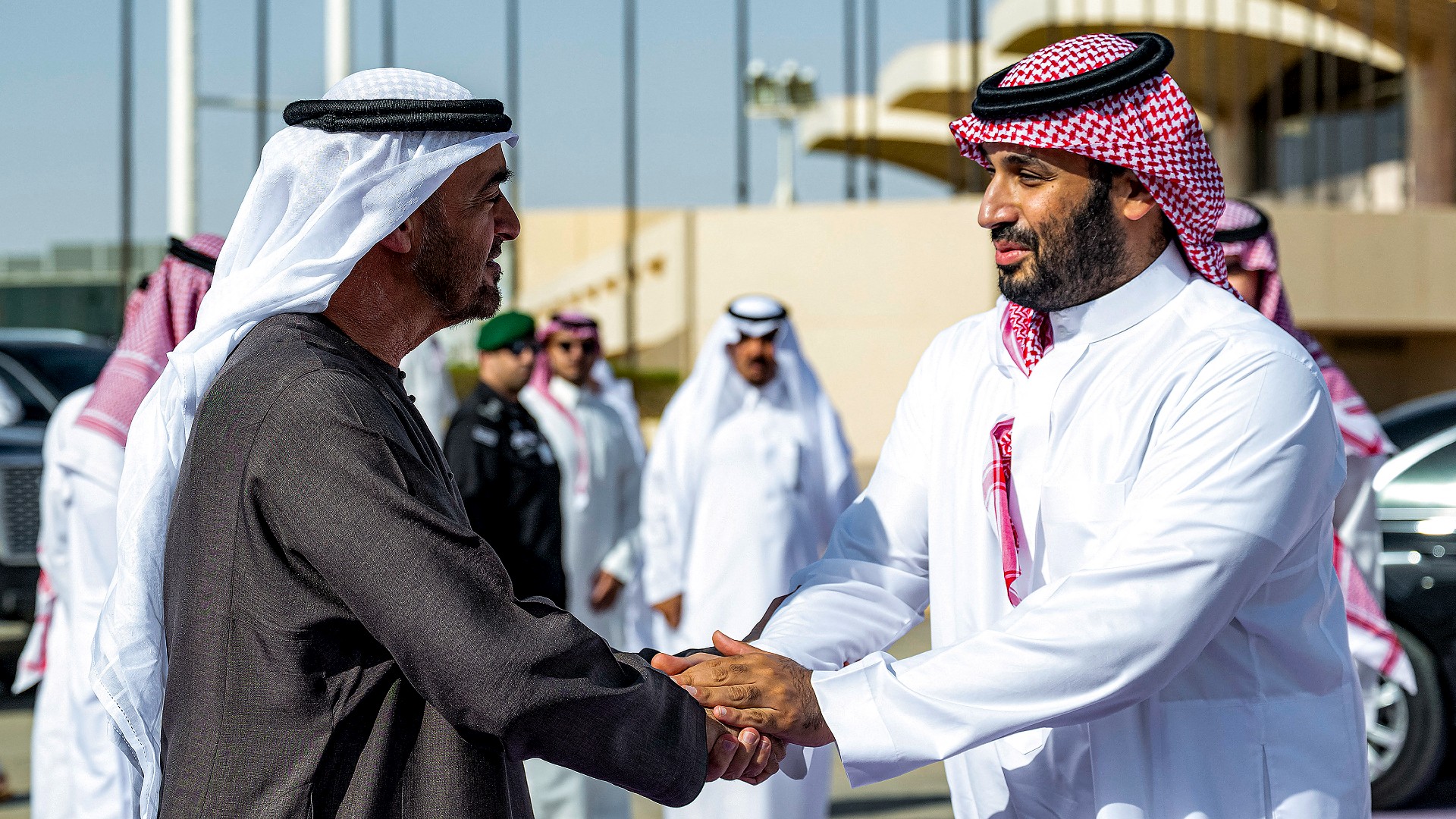
  • Gulf poised to move closer to China after the war

    Gulf poised to move closer to China after the war

    Nearly two months of open conflict stemming from the Iran war have sent deep, systemic shocks across the Gulf region, upending two core assumptions that have anchored regional stability for close to a century. For decades, the Gulf’s economic model flourished under a framework built on perceived geopolitical stability, reinforced by competitive policy incentives including zero-tax regimes, flexible regulatory frameworks, and a rapidly growing, diversified startup ecosystem. Parallel to this economic structure, the region’s security order rested on the decades-old oil-for-security pact with the United States, backed by a dense network of U.S. military installations and advanced defense hardware across the region.

    Today, both foundational pillars have suffered tangible erosion after weeks of cross-region missile and drone strikes that have hit all Gulf states. This new reality has forced Gulf capitals into a painful period of strategic re-evaluation, particularly over Washington’s reliability as a long-term security guarantor. As a result, the region is turning its gaze eastward with a new urgency that did not exist before the outbreak of war.

    In this post-conflict landscape, economic diversification is no longer just an ambitious long-term goal—it is a growing necessity for long-term survival. Among potential partners, China stands out as the most logical option for deepening cooperation, given its already massive and expanding economic footprint across the Gulf built on decades of growing trade, cross-border investment, and large-scale infrastructure partnerships.

    While the Sino-Gulf relationship is not without its inherent constraints, the sheer scale of Chinese economic engagement in the region has created a gravitational pull that can no longer be ignored. The bilateral partnership evolved into a formal comprehensive strategic alignment after Chinese President Xi Jinping’s landmark 2022 visit to Riyadh for the Gulf Cooperation Council (GCC) Summit. By 2025, annual multilateral trade between China and the GCC hit approximately $300 billion, cementing China’s position as the GCC’s largest single trading partner. Where Chinese investment was historically concentrated almost exclusively in the energy sector and large-scale port developments, the post-war shift is pushing both sides to explore far deeper economic integration across new sectors.

    The future of this expanding partnership is set to be shaped by three key sectors where China’s industrial leadership and Gulf capital create natural synergies. The first is green energy transition, a field where China already holds undisputed global dominance, controlling more than 80% of the world’s total solar panel manufacturing capacity. Chinese exports of wind turbine generators grew by roughly 50% in 2025, and the country accounts for 70% of global electric vehicle (EV) production—an alignment that perfectly matches Gulf nations’ long-term goals to diversify their economies away from overreliance on hydrocarbon exports. For Gulf states, partnering with Chinese firms is a pathway to access the cutting-edge technology needed to transform their domestic power grids and transportation sectors, with major Chinese brands including BYD, Geely, and Changan already positioned to lead this transition.

    The second area of growing cooperation is being enabled by the expansion of the BRICS+ framework, which provides a formal platform for cross-regional financial integration that can act as a hedge against overreliance on the Western-dominated global financial system. While a full shift to a yuan-denominated oil trade system remains distant due to the entrenched dominance of the petrodollar, both sides have already begun testing new alternative mechanisms. For example, the mBridge project, a joint initiative between the central banks of China and the United Arab Emirates, is currently piloting a central bank digital currency (CBDC) platform that allows cross-border trade settlements to bypass Western intermediary banks entirely. These trials allow Gulf states to diversify their financial risk exposure while preserving their long-standing traditional economic and political ties with Western powers.

    The third key area of collaboration centers on China’s flagship Belt and Road connectivity project, the China-Pakistan Economic Corridor (CPEC). With a total cumulative investment of roughly $62 billion, CPEC offers a strategic solution to China’s long-standing “Malacca Dilemma” — the geopolitical vulnerability that sees roughly 80% of China’s total oil imports pass through the narrow Strait of Malacca, a chokepoint vulnerable to external disruption. By expanding investment in CPEC and the deep-water Gwadar Port, Gulf nations can integrate their existing maritime trade routes with overland corridors leading directly into Central Asia. This positioning allows Gulf states to reemerge as central nodes in a new multipolar global trade map, a particularly valuable strategic shift given that 42% of China’s total 2025 crude oil imports came from the Middle East, with Saudi Arabia accounting for 14% and the UAE contributing 7% of that total.

    That said, it is critical to acknowledge clear boundaries to the growing Sino-Gulf closeness, most notably the vast structural gap in military commitments between China and the U.S. in the region. While the post-war security shock has acted as a major wake-up call for Gulf leadership, it should not be misinterpreted as a desire to fully replace the United States with China as the region’s primary security partner.

    Gulf leadership has long been deeply pragmatic, with no interest in exchanging one form of single-partner dependency for another. The security domain remains the single most significant barrier to a full strategic shift away from the U.S. Currently, the U.S. maintains a formidable military presence of between 40,000 and 50,000 personnel across roughly 10 regional countries, with Qatar’s Al Udeid Air Base alone hosting more than 10,000 U.S. troops. In stark contrast, China’s only military footprint in the broader region is a single logistical support base in Djibouti, consistent with Beijing’s long-standing foreign policy principle of non-interference in other nations’ internal affairs. Even in defense procurement, the gap between the two powers remains substantial and cannot be closed quickly. While China has grown into a more prominent global arms exporter, it still lags far behind the U.S. in regional market share.

    Data from the Stockholm International Peace Research Institute (SIPRI) underscores this gap: between 2021 and 2025, the U.S. accounted for 54% of all arms imports to the Middle East, with Saudi Arabia — the largest global recipient of U.S. arms exports — importing 12% of total U.S. defense exports over that period. By comparison, Chinese arms exports to the entire Middle East between 2016 and 2025 totaled just 732 million in Trend-Indicator Value (TIV), SIPRI’s standardized metric for tracking defense trade trends. That is a tiny fraction of the $19.5 billion TIV in U.S. arms exports to the region over the same 10-year period. While Chinese unarmed drones have grown in popularity for their lack of attached political conditions, they cannot yet match the fully integrated air and missile defense systems that the U.S. military provides to regional allies.

    In the end, the post-war regional shift is not a radical, binary pivot from Washington to Beijing. Instead, it is a deliberate push by Gulf middle powers to gain greater strategic autonomy. Gulf states do not see China as a replacement for the U.S., but rather as a necessary strategic hedge. By diversifying both their security and economic partnerships, they are building a multipolar “insurance policy” that carries far less long-term risk than continuing to rely entirely on a single, increasingly fraying security umbrella.

    This logic of seeking alternatives to Western-dominated frameworks is not about replacement; it is about building a more resilient multipolar foundation for the region that delivers lower long-term costs and greater economic benefits for Gulf states’ long-term survival. This shift eastward is a calculated, pragmatic response to a changing global order where the old certainties of the decades-old oil-for-security pact no longer hold.