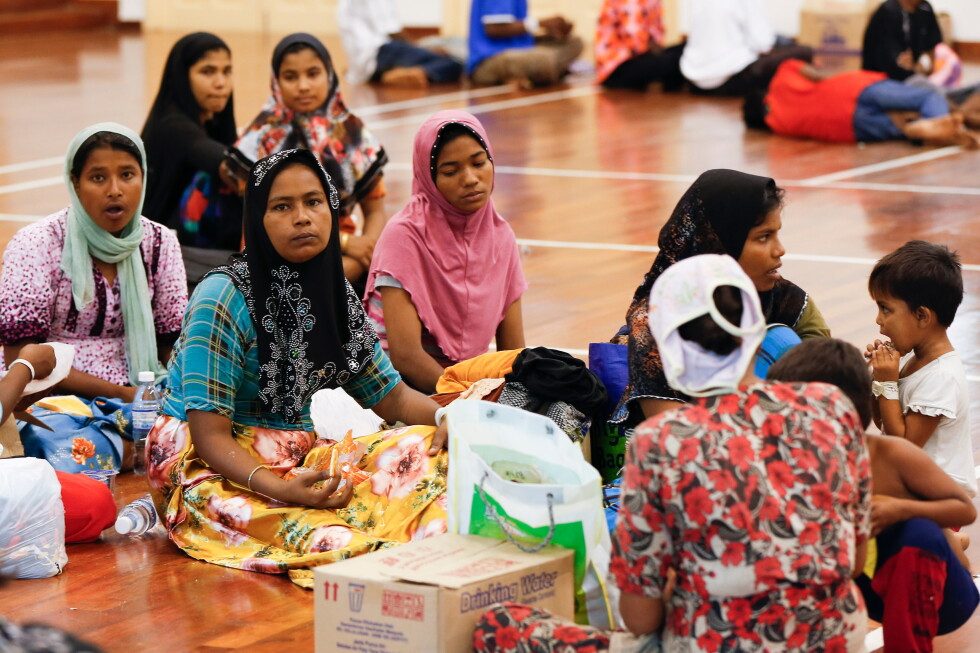
KUALA LUMPUR, Malaysia – Malaysia has kicked off a joint repatriation program with Myanmar, starting documentation and security screening for thousands of Myanmar nationals detained across the country, Malaysia’s Home Minister Saifuddin Nasution announced Thursday. Under the terms of the bilateral agreement, Myanmar has pledged to accept up to 5,000 of its citizens currently residing in Malaysia, in addition to an unconfirmed number of Myanmar nationals based at the Cox’s Bazar refugee camp in southeastern Bangladesh. To date, Malaysian authorities have identified roughly 4,000 eligible individuals held across the country’s 19 detention facilities. These detainees will be relocated to a centralized location to complete mandatory security checks and official identity paperwork, Saifuddin told reporters. “We will certainly hit the 5,000-person target once this verification process is finalized,” he noted, adding that Malaysia’s foreign ministry will lead all subsequent coordination with Myanmar on moving the process forward. A day prior, on Wednesday, Malaysian Prime Minister Anwar Ibrahim publicly confirmed that the repatriation cohort would consist of Rohingya refugees. “People ask why we don’t just send them back immediately. Send them to where? Myanmar refused to take them back before,” Anwar stated in comments reported by the *New Straits Times*. “Now, thanks to our improved bilateral relations with Myanmar, they have agreed to accept 5,000 from Malaysia.” Unlike the prime minister, Saifuddin did not explicitly name the Rohingya as the group being repatriated, only confirming that the program applies to Myanmar nationals holding official refugee status. Repeated attempts to reach Malaysian foreign ministry officials for additional clarification Thursday went unanswered. In Cox’s Bazar, Mohammed Mizanur Rahman, a commissioner for refugee, relief and repatriation for Bangladesh, told the Associated Press he had no knowledge of any upcoming repatriation of Rohingya from the camp, which hosts hundreds of thousands of displaced Rohingya who fled violence and persecution in Myanmar. Myanmar officials based in the national capital of Naypyitaw have pushed back against claims that the program includes Rohingya, clarifying that the effort is limited exclusively to verified Myanmar citizens held in Malaysian detention. Han Win Aung, director-general of the ASEAN department at Myanmar’s Ministry of Foreign Affairs, told AP the country does not recognize the Rohingya as an official ethnic group, a longstanding policy that has been widely criticized by the international community. Myanmar officially refers to the Rohingya as “Bengalis,” framing the group as illegal migrants from Bangladesh, despite many Rohingya families having lived in Myanmar for generations. “This is not a program to bring back Bengalis. There are Myanmar nationals being held in Malaysian detention centers for a range of different reasons,” Han Win Aung explained. “Both sides are still in the coordination phase, and only individuals whose identity as legitimate Myanmar citizens has been fully verified will be repatriated.” Han Win Aung added that the current initiative builds on small-scale repatriation operations carried out in 2021 and 2022, when Myanmar accepted more than 1,100 of its citizens who were stranded in Malaysia. Final details, including the full timeline for transfers and the confirmed final number of repatriates, are still under active discussion between the two governments, he noted. Currently, Malaysia hosts approximately 215,600 refugees and asylum seekers registered with the United Nations High Commissioner for Refugees. Around 126,000 of that total are Rohingya, making Malaysia home to one of the largest Rohingya refugee communities in Southeast Asia. Critically, Malaysia is not a signatory to the UN Refugee Convention, and the country classifies all refugees as undocumented migrants, leaving the population vulnerable to detention and deportation. This article includes reporting contributions from journalists Julhas Alam in Bangladesh and Grant Peck in Bangkok.
标签: Asia
亚洲
-
England hires New Zealander Fleming to coach test team and reappoints Root captain
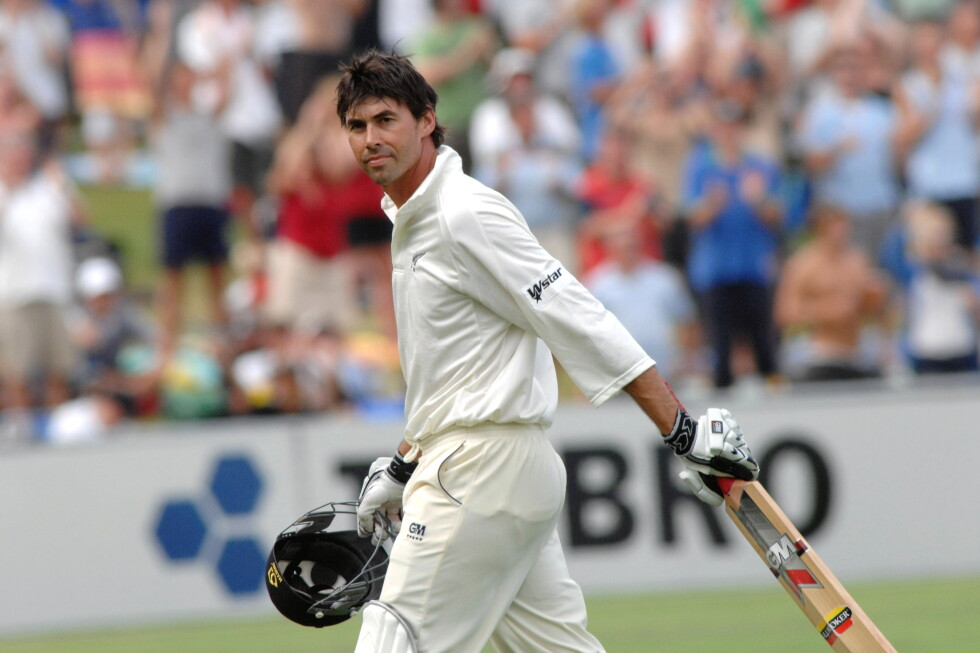
A major restructuring of England’s men’s senior cricket setup has landed, with the England and Wales Cricket Board (ECB) announcing two key leadership appointments Thursday: former New Zealand captain Stephen Fleming will take the reins as the men’s Test team’s new head coach, and star batter Joe Root will return to the role of Test captain.
The changes come on the heels of underwhelming on-field results that led to the dismissal of Fleming’s former New Zealand national teammate Brendon McCullum, who had held the Test head coaching position. McCullum was let go after England suffered a 4-1 Ashes series defeat in Australia late last year, followed by a 2-1 home Test loss to New Zealand in June 2024. The shake-up leaves England’s senior men’s coaching structure with an all-New Zealand leadership: McCullum will retain his posts leading the country’s 50-over One Day International and 20-over Twenty20 International squads.
Fleming will not officially step into his new role immediately. Interim head coaching duties for the upcoming three-Test home series against Pakistan, which kicks off August 19 in Leeds, will be filled by former England batter Marcus Trescothick. Fleming stepped down only this month from his long-standing role as head coach of the Indian Premier League’s Chennai Super Kings, and the ECB has granted him temporary leave to return to his home country to attend to family matters before he joins England’s setup. After concluding his leave, Fleming will prepare the England Test squad for their three-Test tour of South Africa, scheduled for December 2024 through January 2025.
Fleming brings a wealth of captaincy and coaching experience to the role. As a player, he remains New Zealand’s longest-serving Test captain, leading the side in 80 Test matches and notching 28 wins — a record for the country at the time of his retirement. He also spent years playing county cricket in England, representing three different clubs and claiming a domestic league title with Nottinghamshire back in 2005. His coaching resume includes an unprecedented five IPL title wins with Chennai Super Kings, a record no other head coach in the league’s history has matched.
“English cricket gave that to me and it is a privilege to have this chance to give something back,” Fleming said in an official statement announcing his appointment.
On the captaincy side, Root’s return to the top leadership role fills the vacancy left by Ben Stokes, who retired from international cricket following England’s June Test series against New Zealand. Root previously served as England’s permanent Test captain from 2017 to 2022, and he holds two national records for the role: he has captained England in more Test matches (65) and notched more Test wins as captain (27) than any other player in the country’s history. Stokes, before stepping down, publicly endorsed vice-captain Harry Brook to succeed him, though the ECB ultimately opted to return Root to the position.
-
US sanctions 10 Chinese shipping companies
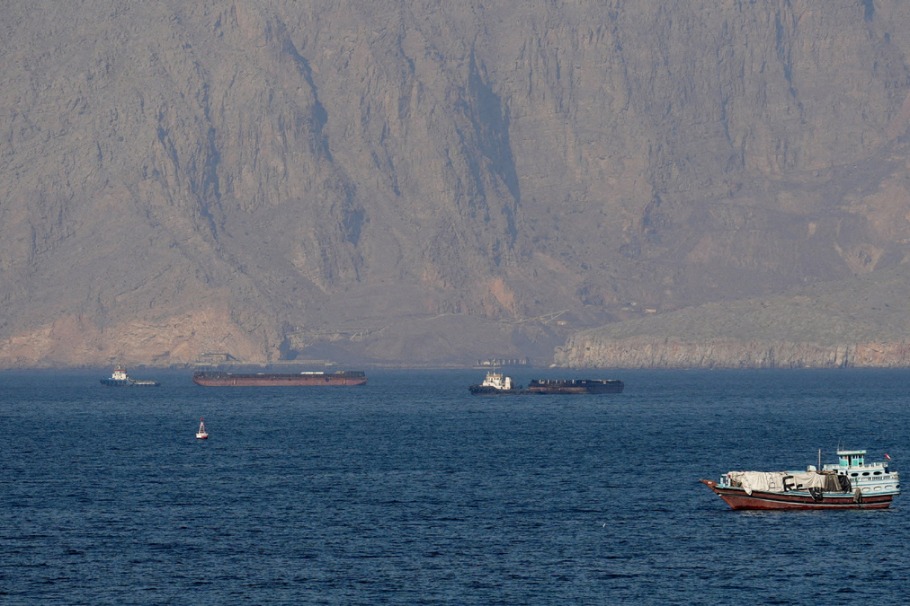
On Wednesday, July 30, 2026, the United States announced a new round of sanctions targeting 10 Chinese shipping companies, alleging that the firms, with operations spanning mainland China and Hong Kong, along with eight registered tankers, have violated Washington’s existing restrictions on Iranian crude oil exports.
Under the terms of the new punitive measures, any assets held by the 10 companies within jurisdictions under U.S. control are frozen, and all U.S.-based companies and individual entities are legally barred from entering into any commercial transactions with the blacklisted firms. Two Iranian maritime insurance entities — Persian Gulf Marine Insurance Company and Hormuz Safe Marine Services Authority — were also added to the U.S. sanctions list. Washington accuses the two insurers of coercing commercial ships to buy their maritime insurance coverage as a requirement for secure transit through the Strait of Hormuz, a critical global chokepoint for energy trade.
China has repeatedly and consistently pushed back against such unauthorized unilateral sanctions and extraterritorial long-arm jurisdiction, practices that Beijing says have no grounding in international law. The Chinese Foreign Ministry has once again urged the United States to immediately end these unlawful, unjust practices.
Anthony Moretti, an associate professor specializing in communication and organizational leadership at Pennsylvania’s Robert Morris University, shared his assessment of the U.S. approach in an interview with China Daily. Moretti noted that Washington has fallen into a repetitive pattern of announcing new bans and blockades in quick succession, all part of a persistent push to wield unilateral punitive measures. He pointed out that while the frequent use of these tools may create a domestic political image of toughness for the current U.S. administration, this perception is not shared by the international community. “The more the White House repeats this same narrative of punitive action, the less global attention and buy-in it receives,” Moretti said. He added that there is no evidence of a coherent, long-term strategy guiding these actions to resolve underlying regional tensions.
This latest round of sanctions marks a continuation of a years-long pressure campaign by successive U.S. administrations targeting what Washington claims are violations of its Iran oil blockade. Prior to the escalation of direct hostilities between the U.S. and Iran that began on February 28 this year, roughly 20% of global oil trade transited through the Strait of Hormuz. Today, that flow has slowed to a small fraction of its previous volume. To date, the Trump administration has blacklisted more than 100 tankers over allegations that they are attempting to circumvent the U.S. naval blockade of Iranian ports, a tactic explicitly designed to cripple Iran’s national economy.
The escalation of U.S. unilateral sanctions comes amid growing global pushback against long-arm jurisdiction and extraterritorial punitive measures, with many world governments arguing that such actions violate core principles of sovereign trade and international law.
-
North Sea oil fields set to be reopened by Burnham would profit blacklisted Israeli company
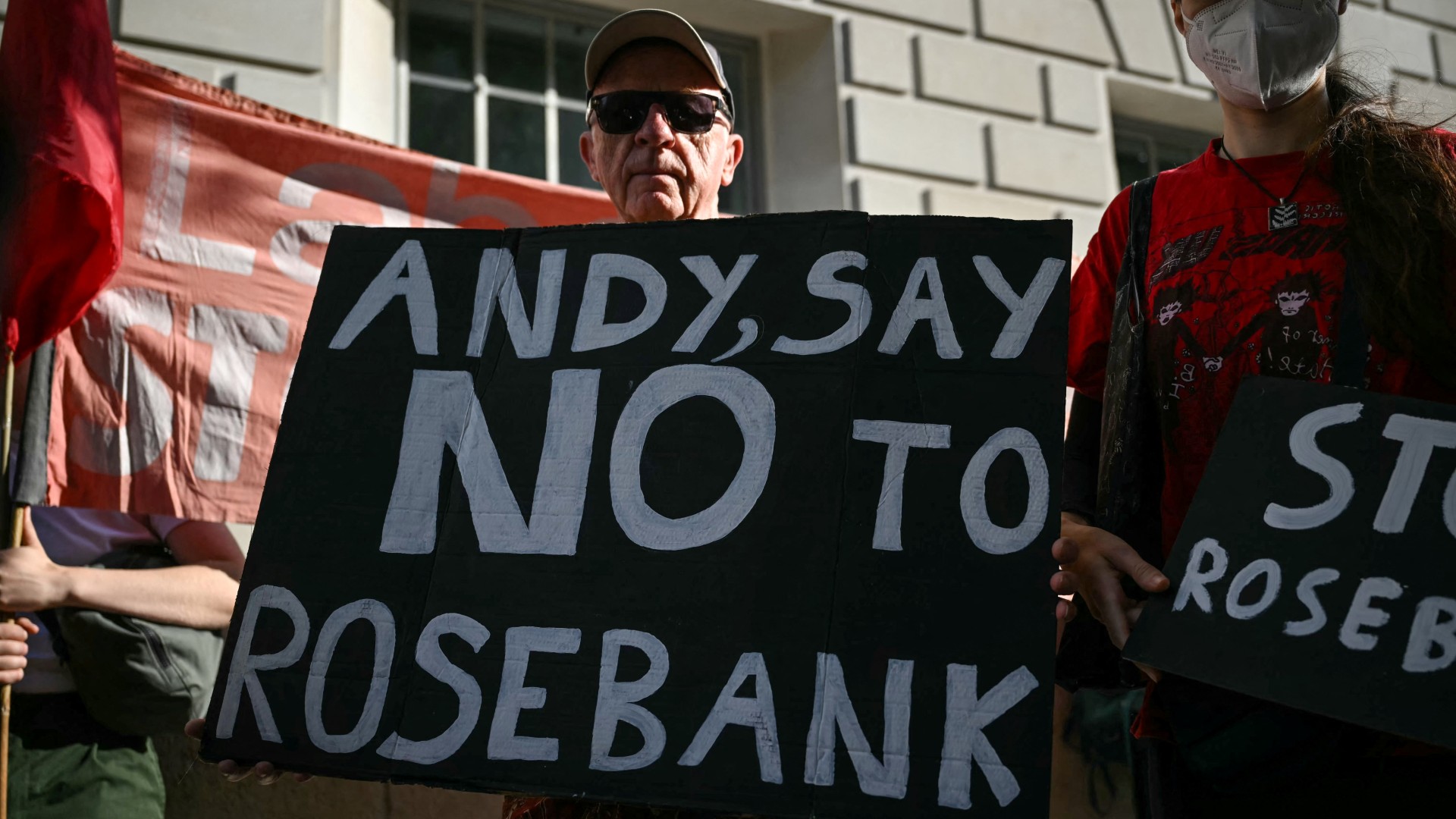
Weeks after taking office as UK Prime Minister, Andy Burnham is facing growing international and domestic backlash over plans to rapidly approve the reopening of two stalled North Sea oil and gas projects, with campaigners warning the move would violate the United Kingdom’s binding international legal obligations due to key links between a major stakeholder and illegal Israeli settlements in the occupied West Bank.
The two projects at the center of the debate are the Rosebank field, located off the Shetland Islands in the North Atlantic, and the Jackdaw field off Scotland’s North Sea coast. Both developments were originally approved by the former Conservative government between 2022 and 2023, but court challenges overturned those approvals in 2025, leaving the final decision to Burnham’s new Labour administration.
Ithaca Energy, which holds a 20% stake in the Rosebank project, is majority-owned by Israeli energy conglomerate Delek Group. The Office of the UN High Commissioner for Human Rights includes Delek Group on its official database of companies identified as having links to illegal West Bank settlements, activities that raise “particular human rights concerns.” Further, Delek holds a hundreds-of-millions-of-pounds contract to supply fuel to the Israeli military during its ongoing military campaign in Gaza that has been widely labeled as genocide by human rights groups.
Investigative reporting by UK outlet The Ferret has found that since 2020, Delek Group has extracted more than $1 billion in dividends from its Ithaca Energy stake across six of the UK’s 10 largest oil and gas fields. If Rosebank is approved, Delek stands to gain an additional £200 million in future profits from the project.
Karla McLaren, government and political relations manager at Amnesty International UK, told Middle East Eye that approving the project would directly contradict the UK’s long-stated commitments to upholding international law. “It would totally fly in the face of the UK’s international legal responsibilities for the UK to be granting concessions or contracting with any company that has enabled, facilitated or profited from the construction of Israel’s settlements, which are war crimes,” McLaren said.
The planned approval also comes at a time of unprecedented climate pressure, as Europe grapples with record-breaking heatwaves. It also follows the suppression of a 2025 joint UK intelligence assessment that warned the climate crisis poses a severe, immediate threat to UK national security.
The push to reopen the North Sea fields has already drawn enthusiastic support from US President Donald Trump, who celebrated the expected move in a post on his Truth Social platform, claiming Burnham’s decision would transform the UK “from a Poverty Stricken Disaster, to one of the Richest Countries anywhere in the World!” Trump had previously criticized Keir Starmer, Burnham’s predecessor as Labour Prime Minister, for refusing to advance the projects, telling The Telegraph in an April interview that “all Starmer wants is costly windmills that are driving your energy prices through the roof” and repeating his signature rallying cry of “drill baby drill.”
The projects had been blocked by former UK Energy Secretary Ed Miliband, but mounting political pressure led to Miliband’s reassignment to the role of Foreign Secretary in Burnham’s recent cabinet reshuffle, clearing the way for a potential approval. The White House has already expressed deep concern over Miliband’s appointment, with Trump having previously attacked Miliband as a “net zero zealot.”
From his first days in office, Burnham has moved to align his administration closely with Trump’s foreign policy priorities. On July 20, the day he took office, Burnham called Trump to confirm that securing shipping lanes in the Strait of Hormuz was “at the top of his agenda.” Just two days later, his administration approved the continued use of UK military bases for US airstrikes targeting Iran.
Rudy Schulkind, a political campaigner for Greenpeace UK, told MEE that the upcoming decision will stand as one of the most defining tests of Burnham’s premiership. “Caving to demands from Donald Trump and the fossil fuel lobby by backing Rosebank would signal that powerful corporate interests still hold more sway than the public interest – it would also undermine the UK’s climate commitments and contradict Burnham’s own pledge to uphold international law in Palestine, given Rosebank’s links to Israeli energy company Delek,” Schulkind said.
The controversy comes shortly after Burnham issued a public apology for the Labour Party’s “initial response” to the crisis in Gaza, acknowledging that the party “need to do better.” His predecessor, Keir Starmer, faced widespread international condemnation in October 2023 after stating that Israel had the right to cut off water and electricity to Gaza, a form of collective punishment explicitly banned under international law. When Starmer avoided calling for an immediate ceasefire during Israel’s military offensive that began after October 7, 2023, Burnham – then serving as Mayor of Manchester – broke with party leadership alongside London Mayor Sadiq Khan to publicly demand a ceasefire.
While Burnham has acknowledged the “unbearable suffering” in Gaza as “a scar on our collective conscience,” he has stopped short of labeling the military campaign a genocide, saying the determination must be left to international courts. Political analysts note his recent apology was crafted to address voter anger over Labour’s Gaza policy, after a study found that more than half of former Labour voters who switched to smaller center or left-wing parties cited the party’s Gaza stance as a key factor in their decision.
Patrick Galey, head of investigations at climate and human rights charity Global Witness, told MEE that Burnham appears to believe voter anger over Labour’s previous policies can be resolved with public relations adjustments, but “actions speak louder than words.” Galey explained that approving the North Sea projects is widely understood within political circles as a concession to the fossil fuel industry, a tactic the Labour Party has used in an attempt to appease powerful corporate interests.
Data from 2024 investigative work by outlet DeSmog supports this framing: major oil and gas firms are represented by lobbyists who have donated more than £300,000 to the Labour Party, while the opposition Conservative Party received 40% of all its donations during the 2024 election campaign’s first week from fossil fuel interests. “A lot of our political class are bought by the oil and gas lobby,” Galey said, adding that this proximity to fossil fuel interests shapes how political leaders understand climate change – a dynamic he says is on clear display as Burnham prioritizes economic growth even as neighboring France and Spain face catastrophic wildfires driven by rising global temperatures.
Stella Swain, youth and student officer for the Palestine Solidarity Campaign, told MEE that approving the projects would make a “mockery” of Burnham’s recent apology for Labour’s previous Gaza stance. Mothin Ali, deputy leader of the UK Green Party, echoed that criticism, telling MEE: “Burnham’s half-baked apology for Labour’s complicity in the genocide in Gaza is meaningless if he refuses to back it up with concrete actions.”
While Burnham’s government has framed the move as a solution to the UK’s ongoing cost of living crisis and a way to strengthen national energy security amid global market instability caused by tensions with Iran, Galey argues that only foreign corporations and their wealthy shareholders will actually benefit from the decision. Because all oil and gas produced from the North Sea fields is sold on the global open market, prices are set by international geopolitical forces – including conflicts stoked by Trump’s policy in the Middle East, which the UK is supporting through its hosting of US airstrikes from British bases.
Galey added that since Brexit, the UK has grown far more dependent on the United States for energy imports, in contrast to countries like Spain that have invested heavily in domestic renewable energy. That investment has given Spain “political freedom,” Galey explained, allowing Prime Minister Pedro Sanchez to push back against Trump’s demands on Palestine and Iran, because energy independence means “you don’t need to pander to the whims of the mob boss in the White House.”
Galey pointed out that fossil fuel companies often frame regional conflicts and energy crises as unforeseen events that require expanded oil and gas exploration, but these crises are not accidental side effects of a fossil fuel-based energy system – they are inherent features of it. Lauren MacDonald, lead campaigner for the activist group Stop Rosebank, emphasized that approving the project would be a morally indefensible choice. “Greenlighting the oil field would be a morally reprehensible decision that turns a blind eye to the fact that the project could bolster Delek’s activities in the Occupied Palestinian Territories – which the UN flagged for human rights violations,” MacDonald said. “The UK government is well aware of these risks, and has even been warned that it could breach its own obligations under international law if it allows the field to go ahead.”
The UK’s Department for Energy Security and Net Zero declined to comment on the specific projects, saying it cannot prejudice future decision-making. Both Delek Group and Ithaca Energy also did not respond to requests for comment from Middle East Eye.
-
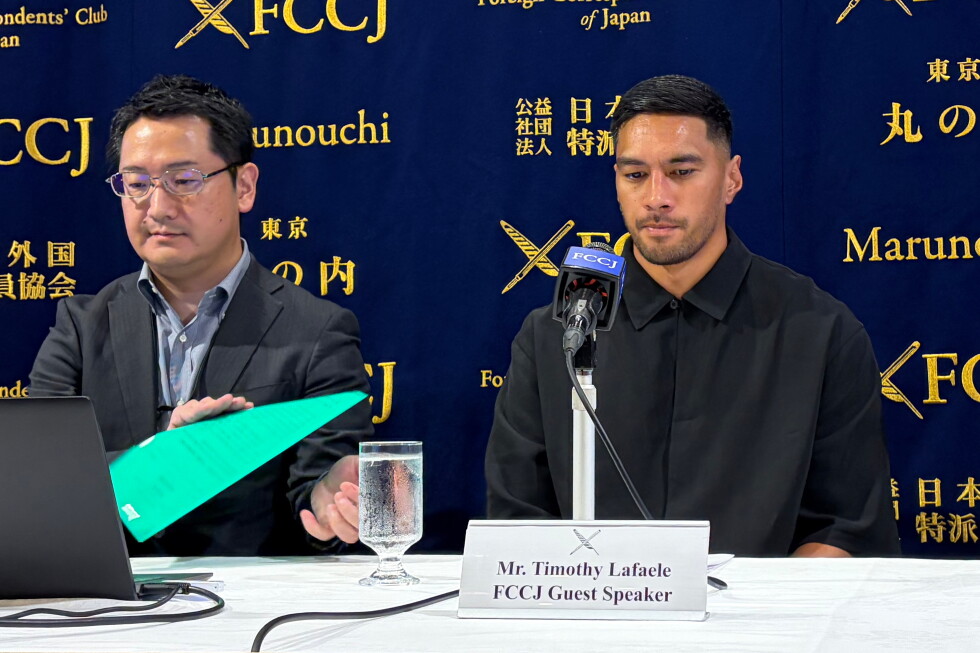
Timothy Lafaele was a star for Japan at the 2019 Rugby World Cup. Now he’s not sure he belongs
Japan, a nation that has embraced foreign-born athletes to grow its rugby profile over the past decades, is now facing a bitter controversy over sweeping new eligibility rules that have upended the careers of dozens of naturalized players. Among those at the center of the dispute is Timothy Lafaele, a Samoan-born rugby star who moved to Japan at 18, built his entire professional life in the country, earned Japanese citizenship, and earned 28 caps for Japan’s men’s national rugby team. Lafaele was a key part of Japan’s legendary 2019 Rugby World Cup upset over Ireland, a victory that remains one of the most iconic moments in Japanese sports history, when the host nation’s unexpected run shocked global rugby audiences.
But when Japan’s top-tier domestic competition, Japan Rugby League One, kicks off its new season in December 2024, Lafaele and dozens of other foreign-born, Japanese-citizen players will be reclassified as foreign athletes under new eligibility regulations proposed by Japan’s rugby governing body. The new rules mandate that to count as a domestic player eligible for unrestricted game time, athletes must have completed at least six years of primary and lower secondary education in Japan over a nine-year period. For players who moved to Japan as young adults, even those who have lived, worked, and raised families in the country for decades, this requirement automatically bars them from domestic classification.
As a result, domestic squads will now be required to prioritize Japan-born players for roster spots, severely limiting available opportunities for athletes like Lafaele, casting deep uncertainty over their continued careers in the Japanese league they helped build. Currently, 24 affected players have filed a pending lawsuit against the rugby governing body in multiple Japanese courts, represented by Tokyo-based lawyer Seiji Makino. At a press conference held Thursday at the Foreign Correspondents Club of Japan in Tokyo, both Makino and Lafaele publicly outlined their case, calling on officials to reverse the rule change before the season opener, either through court action or negotiated settlement.
“This is a very simple story,” Makino told reporters. “It is about players who built their lives and careers in Japan under one set of rules and are now having the ground moved from under their feet.”
For Lafaele, the rule change was entirely unexpected. “It came out of the blue,” he said. The star player declined to comment on any potential connection to Japan’s shifting national political debate around immigration, nor would he discuss details of how the change has impacted his current playing contract. But he did not hold back on describing the emotional impact of the new classification.
“It quite saddens us. To come to Japan, having given so much to the rugby here and the community and being treated this way. It just saddens us,” Lafaele said. “Insulted is a strong word as well, but to me, when this first rule came I did feel insulted.”
Of the 24 plaintiffs in the case, only five have agreed to be publicly named, as most fear professional retaliation for speaking out against the governing body. When asked whether he believed racial bias was a core factor driving the new regulations, Makino said he did not view the dispute as rooted in racism.
The controversy comes against a backdrop of shifting national immigration policy in Japan, where Prime Minister Sanae Takaichi has pushed for stricter controls on foreign immigration amid growing public anxiety about the country’s demographic shift. As Japan’s population rapidly shrinks, policymakers have been under pressure to expand foreign labor to fill critical workforce gaps, but many ordinary Japanese citizens, grappling with stagnant wages and soaring living costs, have voiced growing opposition to increased immigration.
The past few months have been an extremely stressful period for the affected players, Lafaele explained. “Some players are forced into retirement. Some players are just waiting at home at the moment for this decision to change so they can have the opportunity to provide for their families and get playing contracts. It’s been a tough time for most of the players.”
Japanese rugby officials have defended the new rules, arguing that the pool of homegrown Japan-born players is shrinking, and limiting foreign-born players’ roster access will help grow the domestic talent pipeline. Lafaele says he understands the goal of nurturing homegrown talent, but he is skeptical that restricting eligibility for naturalized players will deliver that outcome.
“I don’t think kids will look at this competition and say ‘there are too many foreigners, I’ll stop playing,’” Lafaele noted. “I see both sides of it. I see where the Japanese boys are coming from. They see it as more opportunities for them to play.”
Global sports governing bodies have a long history of adjusting eligibility rules, often to gain a competitive advantage or meet commercial needs, but rule changes that reclassify already established players almost always face significant pushback from affected athletes.
-

Raid on a Pakistani police post leaves 11 officers and 15 attackers dead
In the early hours of Thursday, Pakistani law enforcement and government officials confirmed that the death toll from a devastating overnight militant attack on a frontier police outpost in northwestern Pakistan has climbed to 11.
The assault targeted the Khazina police post located in Hangu district of Khyber Pakhtunkhwa province, a region that shares a porous border with Afghanistan. According to local police official Irfan Khan, Pakistani security forces responded rapidly to the incursion, triggering an intense hour-long gun battle that left all 15 participating militants dead.
A formal statement from provincial police confirmed that the casualties on the security side include a high-ranking officer, Diyar Khan, who was killed while leading a reinforcement contingent to the besieged outpost. More than 24 other officers sustained injuries in the coordinated assault. Initial investigative briefings note that the attackers used heavy weaponry to breach the post’s defenses, and the reinforcement convoy sent to retake the position was ambushed before arriving at the scene. The ambush damaged an armored personnel carrier before security forces were able to regain the upper hand in the fighting.
As of Thursday morning, no militant organization has issued a formal claim of responsibility for the attack. Counterterrorism analysts say suspicion will almost certainly fall on Tehrik-e-Taliban Pakistan (TTP), commonly referred to as the Pakistani Taliban, which has ramped up its campaign of attacks against Pakistani security personnel across this border region over the past several months.
The attack is part of a broader nationwide upswing in militant violence that Pakistan has grappled with in recent years. Pakistani authorities have repeatedly pinned most of this escalating unrest on the TTP, an organization that is operationally separate from but maintains close ideological and tactical ties to the Afghan Taliban, the group that seized control of Afghanistan following the U.S. military withdrawal in 2021.
For years, the Pakistani government has publicly accused the Afghan Taliban administration of allowing TTP militants to establish safe havens on Afghan territory, from which they plan cross-border attacks. The Taliban government in Kabul has consistently rejected these allegations, stating it does not allow any armed groups to launch cross-border assaults from its soil.
-

Australian watchdog files legal action against Telegram, saying it failed to remove violent content
Australia’s national online safety regulator has launched landmark civil legal proceedings against global messaging platform Telegram, accusing the service of failing to eliminate violent extremist and pro-terrorism content that includes graphic footage of two of the deadliest white supremacist mass shootings of recent years and Islamic State beheading videos.
In a public announcement Thursday, eSafety Commissioner Julie Inman Grant laid out the charges against the UAE-headquartered platform, which claims more than 1 billion monthly active users across the globe. If Australia’s Federal Court rules against Telegram, the company faces a maximum fine of 54.6 million Australian dollars, equivalent to roughly 38 million U.S. dollars, for its alleged persistent failure to identify and remove material that promotes terrorist violence.
This court proceeding marks a high-stakes test of Australia’s 2021 Online Safety Act, which mandates that large digital platforms implement rigorous systems to exclude illegal and terrorism-linked content from their services. The case specifically centers on the availability of content tied to the 2019 Christchurch mosque attack, which left 51 Muslim worshippers dead at the hands of an Australian white supremacist who livestreamed his violence, and the 2022 Buffalo supermarket shooting that killed 10 Black people, carried out by a white supremacist who cited the Christchurch attacker as inspiration. It also covers the presence of Islamic State propaganda videos depicting executions.
Regulators have long struggled with the persistence of these extremist digital artifacts years after the original attacks, as the graphic footage and accompanying manifestos continue to be shared by radicalized users to recruit new sympathizers and inspire copycat violence. Inman Grant emphasized that the content in question remained accessible on Telegram long after the platform was formally notified of its existence, noting that the platform’s unique structure — which supports public channels with unlimited audience reach and large group chats — creates an outsized responsibility to proactively remove harmful material. Channels linked to these attacks have been repeatedly used to host copies of the attack footage and praise the perpetrators.
Telegram has issued a firm denial of all allegations, stating in a written statement shared via the platform that it “reject these allegations and will contest them in court.” The company argues that its ongoing anti-terrorism work is a matter of public record, pointing to published data showing it has blocked more than 150,000 terrorist-linked communities on its platform so far in 2024. The company also framed its approach to content moderation as a defense of fundamental digital rights, noting that it has supported pro-democracy movements across the world, from Russia and Iran to Myanmar and Hong Kong, by protecting user privacy and preserving freedom of speech and assembly.
Inman Grant countered that the regulator first pressed Telegram to remove the problematic content and align with Australian rules in March 2024, but received no response for months. She added that the platform’s stance only shifted after French authorities arrested Telegram founder and CEO Pavel Durov in August 2024. Durov, a Russian billionaire, was held for four days of questioning over allegations that Telegram was used to facilitate a range of illegal activity, including drug trafficking and the spread of child sexual abuse material, before being released on 5 million euro bail. According to Inman Grant, Telegram became temporarily more cooperative with Australian and global regulators following Durov’s arrest, but still maintains what she called a “permissive hosting environment for terrorist content.”
The legal action comes amid mounting global pressure on Durov and Telegram: just days before the Australian claim was filed, Russia’s Federal Security Service added Durov to its international wanted list, accusing him of aiding terrorist activity, marking the latest in a string of legal challenges for the executive that have also included previous cases in Russia and France.
-
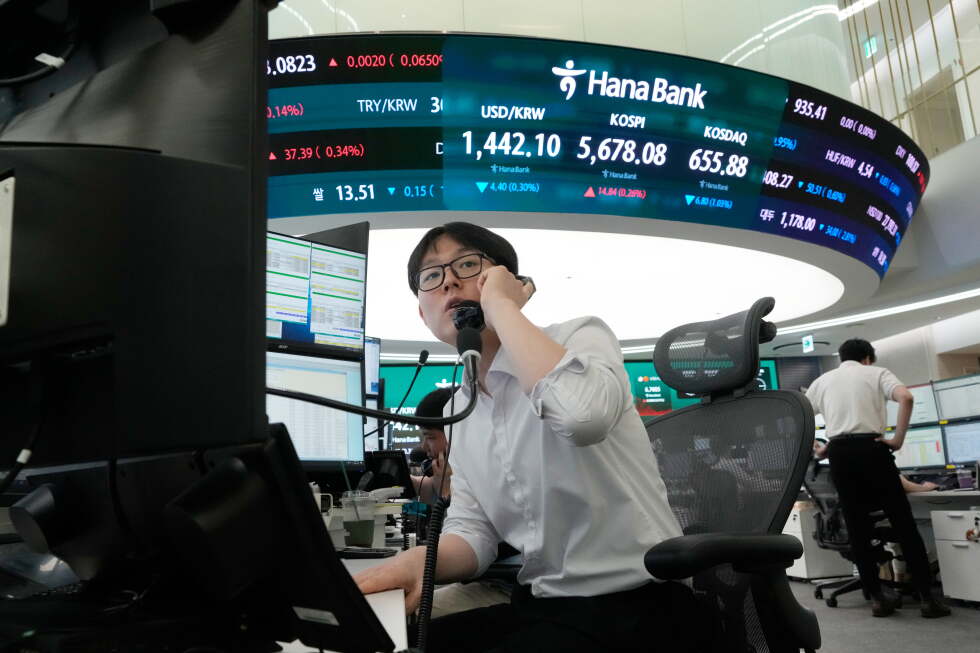
Oil prices slip and Asian shares are mostly lower as investors sell chipmaker stocks
Global financial markets faced mixed yet broadly downward momentum this week, driven by a toxic mix of escalating geopolitical tensions in the Middle East, growing investor skepticism over overinflated artificial intelligence (AI) sector investments, and fresh uncertainty around U.S. monetary policy.
The most dramatic movement has unfolded in South Korea, where the benchmark Kospi index has plunged into a steep correction after months of double-digit gains fueled by the global AI boom. By Thursday morning trading, the index dropped 1.3% to 5,587.82, extending steep losses from the prior two sessions that saw it fall 10.8% on Tuesday and nearly 6% on Wednesday. From its all-time high above 9,000 hit in June, the Kospi has corrected more than 35%, though it still holds a roughly 30% gain for the year to date. The sharp pullback has been widely interpreted by market analysts as a reflection of broadening doubts over the massive capacity expansion investments being poured into AI by the world’s largest technology firms.
Individual South Korean tech stocks delivered mixed results despite strong earnings reports. Samsung Electronics climbed 2.4% after posting a record quarterly operating profit that matched consensus analyst estimates. However, top memory chipmaker SK Hynix dropped 4% on Thursday, after plummeting more than 9% a day earlier. Even though SK Hynix reported a sixfold jump in quarterly operating profit to a new record, the results fell short of market expectations, triggering a wave of profit-taking from disappointed investors.
Elsewhere across Asian markets, performance was uneven. Japan’s Nikkei 225 bucked the downward trend to gain 0.6% to 61,778.02, even as SoftBank Group — a major investor in OpenAI — fell 2.7%. Chip sector stocks led gains in Tokyo: chip equipment manufacturer Tokyo Electron rose 4.4%, while memory chip producer Kioxia Holdings added 7.5%. Taiwan’s Taiex index, another market that has surged on the back of the AI boom, also advanced 0.8%, with leading contract chipmaker Taiwan Semiconductor Manufacturing Company (TSMC) climbing 1.8% in intraday trading.
Major East Asian indexes mostly closed lower. Hong Kong’s Hang Seng Index slipped less than 0.1% to 25,779.70, while mainland China’s Shanghai Composite Index dropped 1.2% to 3,784.55. Australia’s S&P/ASX 200 fell 0.9% to 8,959.90, and India’s Sensex posted a marginal gain of less than 0.1%.
Oil prices retreated on Thursday despite renewed hostilities between the U.S. and Iran that have threatened global energy supply chains. The pullback came after the U.S. launched a “heavy wave” of airstrikes on Iranian targets this week, in response to an earlier Iranian attack on a U.S. military base in Jordan that killed three American service members. Maritime traffic through the Strait of Hormuz — a critical chokepoint that carries roughly a fifth of global daily oil consumption — remains constrained, which has put ongoing upward pressure on supply. Brent crude, the global benchmark for oil prices, fell 1% to $87.18 per barrel on Thursday, after spiking sharply in the prior session. U.S. benchmark West Texas Intermediate crude declined 0.9% to $83.74 per barrel. For context, both benchmarks traded around $72 per barrel in late February before the latest escalation of regional conflict.
On Wednesday, U.S. equities extended the global pullback, with all three major indexes closing in negative territory. The broad S&P 500 dropped 1.5% to 7,316.15, the Dow Jones Industrial Average fell 2.2% to 51,594.14, and the technology-heavy Nasdaq Composite declined 1.7% to 24,442.94. Top AI and chip stocks led the losses: Nvidia shed 3.6%, Advanced Micro Devices (AMD) fell 5.5%, and Broadcom dropped 2.8%. U.S. futures ticked higher in early Thursday trading following Wednesday’s sell-off.
The sell-off on Wall Street came shortly after the Federal Reserve announced it would hold interest rates steady at its latest monetary policy meeting, though the decision carried unexpected hawkish undertones. Several voting members of the Federal Open Market Committee pushed for a rate hike at the meeting, a shift that surprised investors who had widely anticipated rate cuts would begin in the first half of 2025. Fed Chair Kevin Warsh reaffirmed the central bank’s commitment to bringing annual inflation back down to its 2% target, after years of above-target price increases. He also confirmed the Fed would continue its current approach of providing less forward guidance to markets about upcoming rate moves, a policy that has increased uncertainty for investors. “Did the Fed take an explicit change in its policy rate today? No, but I think that’s the beginning of the story,” Warsh told reporters during a post-meeting news conference.
In the U.S. bond market, the yield on 10-year Treasury notes rose to 4.70% on Wednesday, up from 4.61% the prior session, reflecting shifting rate expectations. In currency markets early Thursday, the U.S. dollar edged higher against the Japanese yen, rising to 163.49 yen from 163.41 yen. The euro slipped slightly to $1.1454, down from $1.1467 against the greenback.
-
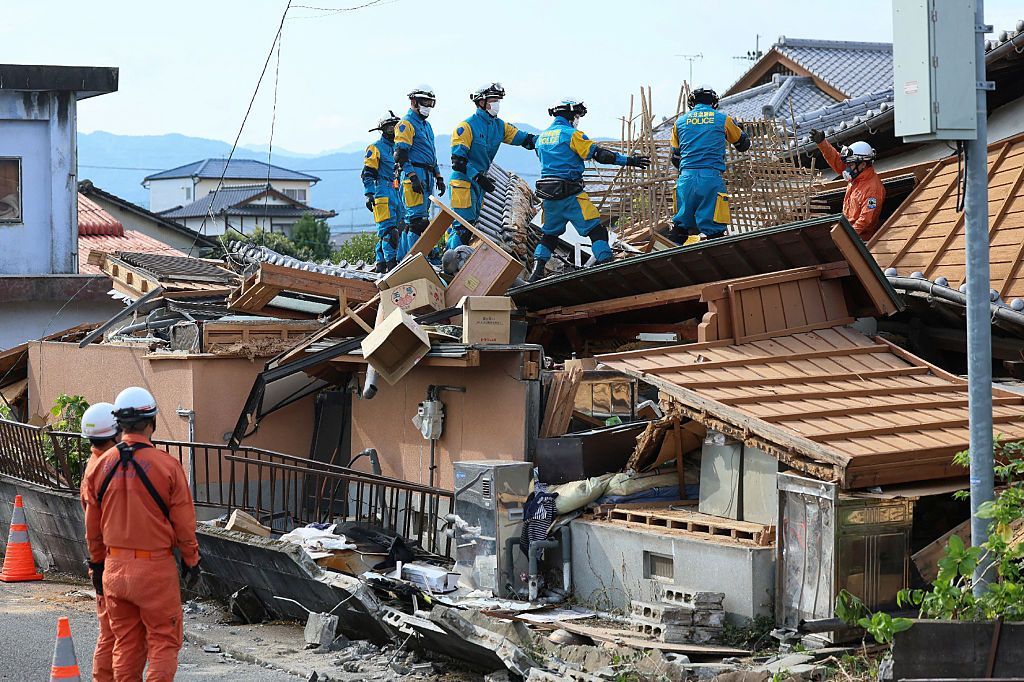
Japan earthquake death toll rises to 28 as evacuees battle sweltering heat
Just two days after a magnitude 6.8 shallow earthquake rocked Japan’s southwestern Kumamoto prefecture on Kyushu Island, local authorities confirmed Thursday that the death toll from the disaster has climbed to 28. The 10-kilometer-deep tremor left a trail of widespread destruction across the region, leveling residential structures, severing critical power infrastructure, and displacing thousands of local residents.
Among the hardest-hit sites is the Aeon shopping mall in Kashima, where a partial second-floor collapse killed multiple people. Roughly an hour after the initial quake, a sudden explosion ripped through the already damaged building complex, compounding casualties and damage. Aeon’s top leadership has stated that a gas leak is the most probable cause of the secondary blast, though official investigations into the incident are still ongoing. In a small bright spot amid the devastation, all 25 cats housed at a cat cafe inside the mall—left stranded when the structure failed—were pulled out alive by rescuers this week. In a tragic coincidence, the mall had only just reopened last month after a complete renovation, following severe damage it sustained in the deadly 2016 Kumamoto earthquake sequence that claimed 278 lives across the region.
Another major site of tragedy is a Nippon Paper manufacturing facility in Yatsushiro city, where a partial collapse killed at least five workers. The company confirmed Wednesday that 11 employees were trapped when the building caved in, and seven of those trapped people have been successfully pulled from the rubble as of Thursday.
As of Wednesday, official data puts the number of displaced residents staying in government-run evacuation centers at roughly 9,000, while more than 30,000 households across the prefecture remain without access to electricity. Compounding the challenges facing survivors and first responders, the region is currently in the grip of an extreme heatwave, with forecasts predicting temperatures could climb as high as 39 degrees Celsius in the coming days. Heatstroke has already emerged as a major secondary risk, with public officials repeatedly urging both survivors and rescue workers to take frequent breaks and stay hydrated. To address the cooling crisis at evacuation sites, Japanese Defense Minister Shinjiro Koizumi announced Wednesday that 300 portable air conditioning units would be shipped to the prefecture immediately, half of which will go directly to emergency shelters.
More than 100 aftershocks have rattled the region since the main tremor, leaving many survivors too nervous to return to damaged or structurally compromised buildings. Many locals have even opted to sleep in their vehicles parked in open areas rather than risk being inside during a new tremor.
Thousands of emergency personnel have been deployed across Kumamoto to lead search-and-rescue operations, digging through collapsed rubble in a race to find any remaining survivors trapped after the quake. For 75-year-old Yatsushiro restaurant owner Hiroko Ogata, the power of the tremor was unlike anything she had experienced in her decades living in the region. “I hid under my restaurant table when the quake hit, and I was swaying violently back and forth along with it,” she told reporters. “I’ve lived here 75 years, and I’ve never felt an earthquake this big. I really thought I was going to die.”
-
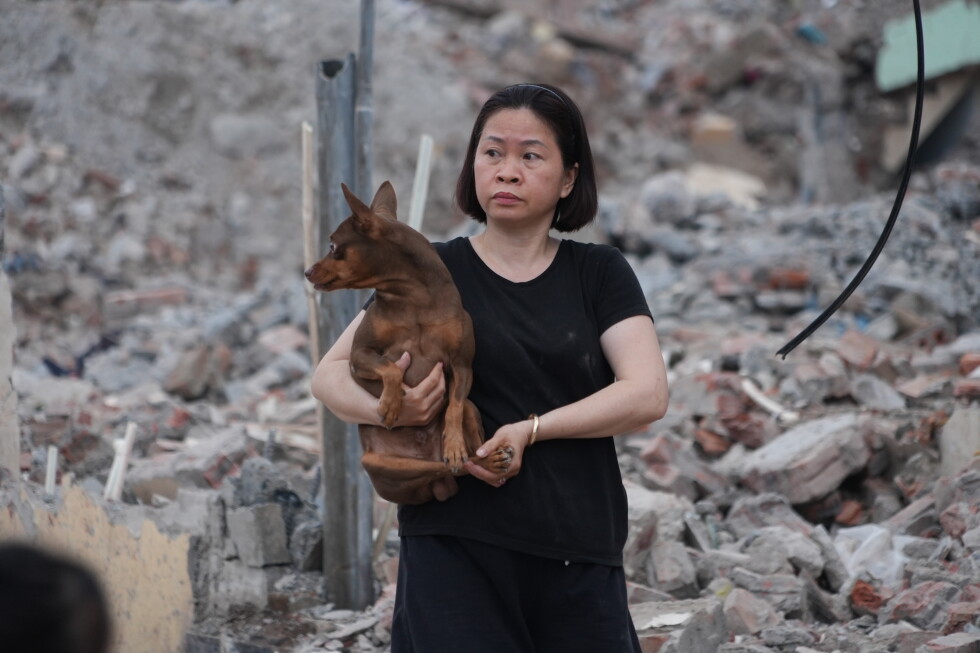
Small changes in Hanoi’s streets can mean big disruptions for those who depend on them
The constant roar of urban renewal echoes across Hanoi today: the sharp crack of hydraulic breakers splitting asphalt, the low groan of excavators shifting rubble, and the crunch of aging brick and concrete being torn from the ground. As Vietnam pursues an aggressive target of double-digit economic expansion, its capital city is racing to remake itself into a ultramodern global hub aligned with a 100-year urban vision.
In just the first six months of 2026, Hanoi has allocated $2.4 billion to clear land for nearly 1,500 separate infrastructure and development projects, a transformation that is rapidly reshaping one of the world’s oldest continuously inhabited capital cities. City officials frame the large-scale redevelopment as a critical adaptation to the growing threats of climate change: the plans integrate new flood control systems and air pollution reduction measures, addressing long-standing vulnerabilities for Vietnam, which ranks among the countries most at risk from climate-driven extreme weather, including increasingly frequent and intense typhoons, devastating seasonal floods, and record-breaking heatwaves. Hanoi itself has long struggled with severe seasonal smog, regularly ranking among the world’s most polluted capital cities.
But the promise of modern progress comes at a steep cost for thousands of residents, who have lost homes, family businesses, and generations-old community ties. Fine demolition dust drifts through working-class neighborhoods, coating rooftops, tree canopies, and the few remaining standing structures. For Nguyen Thi Nhan, a former street fruit vendor who lost her 300-square-meter street-front home to make way for a new arterial road, the upheaval has upended her family’s stability. She has yet to receive promised compensation for her lost property, and now pays rent to house her extended family, including her elderly parents. “We just have to wait. I don’t know where they will relocate us,” she said.
Large billboards dot cleared construction zones, painting a glossy vision of Hanoi’s future: gleaming steel-and-glass skyscrapers in new business and industrial districts, wide tree-lined boulevards, expansive public parks, and scenic waterfront promenades. To make room for this new skyline, the city plans to demolish hundreds of heritage colonial villas, traditional narrow shophouses, and densely packed low-rise residential blocks. The blueprint calls for dozens of new roads, bridges, and mass transit links connecting the city center to Noi Bai International Airport and fast-growing neighboring provinces.
The centerpiece of the transformation is a $28 billion redevelopment project stretching along both banks of the silty Red River that cuts through the heart of Hanoi. Spanning 11,400 hectares — an area larger than central Paris — the project will deliver new residential districts, commercial hubs, public green space, and most critically, expanded drainage and flood control infrastructure to address the city’s chronic riverine flooding. Another major landmark included in the plan is a $35.2 billion Olympic-level sports complex backed by Vingroup, Vietnam’s largest private conglomerate, anchored by a 135,000-seat drum-shaped soccer stadium, one of the largest in the world.
City officials also note that a complete transport overhaul is designed to rebalance Hanoi’s growth pattern, easing overcrowding and pressure on the crowded historic core by developing new distributed transport hubs across the metropolitan area.
While experts acknowledge that modern infrastructure is critical to Vietnam’s push to attract foreign direct investment and expand economic opportunity for both residents and domestic businesses, they warn that the breakneck construction boom carries significant systemic risks. “There are huge economic opportunities arising from those projects, but at the same time, there are risks that need to be considered,” said Nguyen Khac Giang, a visiting fellow at the ISEAS–Yusof Ishak Institute in Singapore. Giang cautioned that massive public and private investment in large-scale construction risks diverting much-needed capital from the high-tech manufacturing and digital industries that Vietnam has prioritized for long-term growth. The boom has also driven a sharp spike in residential and commercial property prices, leaving many ordinary buyers priced out of the market, while leaving domestic banks heavily exposed to a potential market correction. A 2025 S&P Global report found that Vietnamese real estate developers carry far higher debt levels than their peers in regional economies such as Indonesia and the Philippines, and the real estate sector, while accounting for just 3.5% of national GDP, makes up roughly a quarter of all outstanding bank lending in Vietnam.
Beyond economic risks, the rapid transformation has sparked growing anxiety over what Hanoi will lose as it remakes its urban fabric. For small business owners and long-time residents, even minor adjustments to street life have created major disruptions. Since November, city authorities have waged a citywide crackdown to clear sidewalks of illegal parking, unlicensed street vendors, and commercial encroachment, with police vans patrolling the iconic Old Quarter in the evenings, using loudspeakers to order vendors to remove outdoor seating that spills onto public walkways. For Thuy, a local beef noodle soup vendor who only shared her first name over concerns of official pushback, the crackdown has cut her income dramatically: she used to be able to serve four additional customers per hour using four outdoor stools and a small table, but now is forced to turn customers away, leaving her barely breaking even. “My profits are already small to begin with,” she said.
In a rare act of public dissent, hundreds of residents from the Bac Cau community along the Red River have hung public banners imploring city officials to scrap plans that would displace thousands of families to make way for new riverfront development. Villagers say the planned arterial roads will erase their generations-old community entirely. “We want to continue to live here, we’ve been here for generations,” said Van, a local resident who also only shared her first name over fears of official repercussions for speaking out.
While Hanoi has formal rules in place outlining compensation and resettlement support for residents displaced by land acquisition, including payments for damaged structures, relocation allowances, and support for families moving ancestral graves, dozens of displaced residents report they have yet to receive owed compensation, and remain uncertain about their long-term housing and livelihoods.
Giang argues that the core challenge is not modernization itself, but the breakneck pace of redevelopment and the consistent lack of meaningful consultation with affected residents and urban planning experts. He points to precedent across the region: in the 1960s, Beijing demolished nearly all of its centuries-old imperial city walls to make way for its first subway line and a major inner-city ring road, a loss that urban planners have lamented ever since. Large-scale redevelopment drives in other major Asian cities have repeatedly sparked public disputes, as displaced residents are often relocated to far-flung suburban areas lacking basic services and employment opportunities, tearing apart tightly woven communities that have existed for centuries. “Once we depart from the city’s history, it’s very hard to revert or to turn back,” Giang said.
Linh Nguyen, lead analyst at global risk consultancy Control Risks, notes that Hanoi’s current transformation marks a fundamental shift from the urban growth of the past two decades, which focused on expanding outward by building new greenfield development on the city’s periphery. Today’s reconstruction targets the existing built-up urban core, requiring the redevelopment of established neighborhoods and the relocation of long-time residents — a far more complex process that raises thorny questions of property rights, fair compensation, and inter-agency coordination. The outcome will also test whether Vietnam’s increasingly centralized state can deliver on decades-old planned infrastructure projects that have never been implemented. “The last 20 years were about building a bigger Hanoi. The next 20 years will be rebuilding the Hanoi that already exists. That’s a fundamentally different challenge,” she said.