
As geopolitical fault lines across the Middle East deepen, Yemen’s Houthi movement is developing a plan to levy new fees on commercial maritime traffic transiting the strategic Bab el-Mandeb Strait, multiple regional sources have confirmed to Reuters. This emerging policy shift comes against a backdrop of already heightened tensions across the Red Sea and Persian Gulf, reshaping global energy transit routes and challenging Western military presence in the region.
标签: Asia
亚洲
-

Nirmal Purja among 10 climbers feared missing after avalanche
In a developing breaking emergency unfolding on one of the world’s most formidable high-altitude peaks, a 10-person international mountaineering expedition led by legendary Nepal-born climber and former British Royal Marine Nirmal Purja has been unaccounted for following a sudden avalanche on Pakistan’s Broad Peak.
The destructive snow slide hit the climbing team around midday local time Thursday on the 8,047-meter mountain, located in Pakistan’s remote Karakoram mountain range, according to local Pakistani mountaineering authorities. In the hours since the avalanche struck, no contact has been reestablished with any member of the group, leaving rescue teams and the global mountaineering community deeply concerned.
The expedition includes climbers of four nationalities: one American, one Chinese, one Omani, and five Nepali expedition members, alongside team leader Purja. Purja, one of the most high-profile high-altitude climbers of his generation, rose to international fame in 2019 for completing a historic feat: summiting all 14 of the planet’s peaks that exceed 8,000 meters in elevation in just over six months, a breakthrough achievement that redefined what was considered possible in elite alpinism.
A former service member with the British Armed Forces, Purja’s path to becoming a world-famous climber began in 2003 when he enlisted in the British Army, earning a place in the Royal Marines in 2009. His professional climbing career launched unexpectedly in 2012, when he trekked to Everest Base Camp and made the spontaneous decision to continue upward to summit the world’s highest peak, launching his legendary career.
Broad Peak, the 12th highest mountain on Earth, is widely recognized as one of the most technically challenging peaks for high-altitude expeditions, even in the best climbing conditions. Right now, rescue teams are preparing to launch a large-scale search operation, with aerial helicopter search efforts planned as soon as weather conditions in the region are stable enough to permit flight.
The Alpine Club of Pakistan, the national governing body for mountaineering in the country, confirmed in an official statement Thursday that it has maintained constant coordination with Pakistani government agencies to launch an immediate search and rescue response. “Every possible effort is being made to secure helicopter support, and all available resources have been mobilized at the earliest opportunity,” the organization said. The statement concluded: “The Club prays for the safety and successful rescue of all the climbers and stands in solidarity with their families and the international mountaineering community during this difficult time.”
This is an ongoing breaking news story, with new details expected to emerge as search operations progress. Readers can access the latest updates through the BBC News mobile app, or by following BBC Breaking on the social platform X.
-
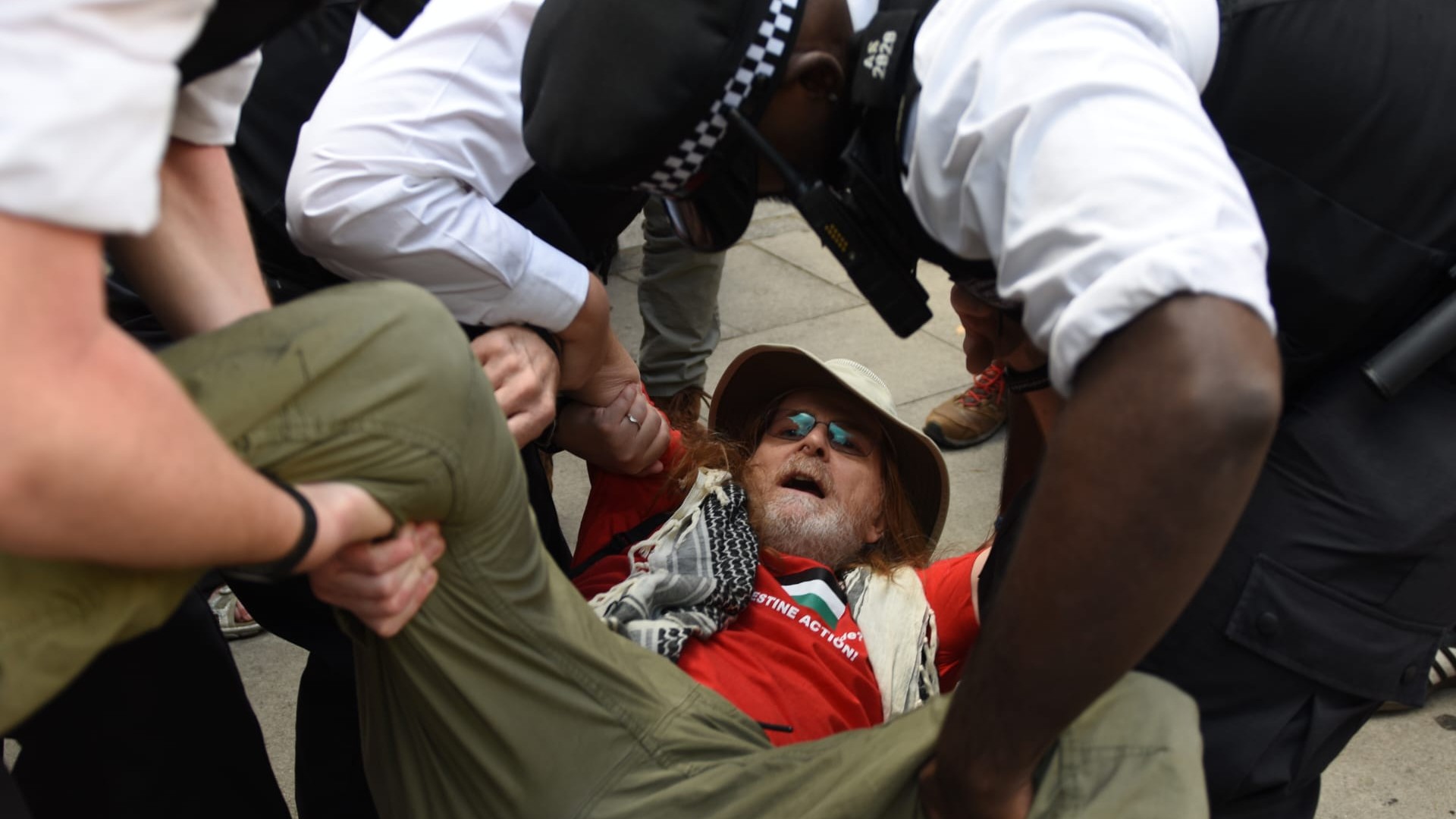
Chaos at London court as over 1,500 Palestine Action cases listed in one day
A logistical and procedural crisis descended on London’s Westminster Crown Court Thursday, as more than 1,500 defendants facing terrorism-connected charges related to pro-Palestine protests were summoned for hearings amid conflicting guidance, widespread confusion, and widespread criticism of the UK government’s ban on the direct action group Palestine Action.
The chaos unfolded after hundreds of defendants had already received formal notifications that their trials, originally scheduled for July 30, would be adjourned until October. Yet despite the adjournment notices, court records published Wednesday listed all 1,579 cases for hearing on July 30 at Westminster Crown Court, leaving defendants with contradictory instructions about whether they were required to attend. One letter obtained by independent news outlet Middle East Eye simultaneously ordered a recipient to “must attend” the July 30 hearing, then immediately instructed them “Please do not attend court” on that same date.
Defend Our Juries (DOJ), a campaign group supporting the defendants, argues that this systemic confusion is a direct symptom of the disorder created by the government’s 2025 proscription of Palestine Action, which has pushed the UK’s criminal justice system into a state of “complete meltdown”. In a parallel development Thursday, the UK Supreme Court ruled that Palestine Action could legally challenge the ban, which was first implemented by former Prime Minister Keir Starmer’s administration in July 2025. Since the proscription took effect, thousands of people have been arrested over the past year, most simply for holding placards or wearing clothing expressing solidarity with the group.
Court records obtained by Middle East Eye show a printed list of roughly 2,000 cases spanning 82 pages pulled from the CourtServe listings service, with multiple defendants listed multiple times under different spelling variations of their names. When dozens of defendants traveled to London to attend their scheduled hearings Thursday, they wandered the court grounds with their conflicting notices, receiving inconsistent explanations from court staff. One defendant reported her hearing was assigned to a courtroom that does not exist at the Westminster complex. Upon arrival, attendees were generic “To Whomever It May Concern” leaflets stating all cases had been adjourned to October 26 for an administrative directions hearing, and that no attendance was required.
“That is crazy. That’s not how the court system is meant to work,” said Tim Crosland, a former government lawyer representing the defendants. “What a court normally does is send a clear letter to every person with a hearing, telling them exactly when and where to appear. That’s basic court communication, not generic flyers handed out to random people at the door. If you’re facing a terrorism charge, you have a right to be present for your case — you don’t want prosecutors discussing the future of your case without you there. It looks like the court is trying to avoid the logistical problem of hundreds of people arriving at once by turning the entire process into a mass-produced sausage machine, with no respect for individual cases.”
Middle East Eye reached out to the Crown Prosecution Service for comment ahead of publication, but received no response. Late Wednesday, London’s Metropolitan Police issued a public statement dismissing a planned protest outside the court as “nonsensical”, claiming no Palestine Action-related hearings would take place Thursday. In response, DOJ sent a formal letter to the Met demanding clarity on the source of the police’s information, arguing that “if court hearings have been postponed, that fact should be communicated by the court to the parties directly, not via a police statement the evening before the hearing.”
Multiple defendants who spoke to Middle East Eye, many of whom requested anonymity for legal reasons, described the deep disruption the charges and procedural chaos have caused to their daily lives. Steve, who traveled from Norwich for an 11 a.m. hearing, only to be told he did not need to attend, said: “That’s very polite of them, but I can’t imagine any other circumstance where they charge you with a crime — especially terrorism — and just tell you not to bother showing up.” Another defendant, Tony, said he had received multiple overlapping notices that said “the defendant need not come to court but they may do so if desired.” He added: “If you’re going to call me a terrorist, at least treat me like one and let me attend my own hearing.” Tony explained that the pending terrorism charge already bars him from traveling to the U.S. to visit family, and has damaged his ability to secure new contracts as a self-employed contractor.
Bernie and Heather traveled eight hours from mid-Wales to attend their hearings, after booking accommodation and receiving an initial adjournment notice, only to see their names reappear on the final court listing Wednesday. Marji, a 69-year-old DOJ spokesperson who traveled two hours from Chichester, told reporters she was listed for three separate hearings under two different spellings of her name, and held a court letter that simultaneously required her attendance on July 30 and forbade it. “I am legally entitled to attend every one of my hearings,” she said. “They say there is a hearing listed, they say I have a right to speak at every hearing, but they won’t let us in. Is this a secret court?” Miriam, a self-represented defendant from east London, faces five separate charges under the Terrorism Act, only received adjournment notices for three, and saw four of her five cases listed for Thursday. “I came because it’s all unclear, but also because I strongly object to the adjournment,” she said. “I don’t have a lawyer, I’m representing myself, so I need to be here in person to follow what’s happening.”
Clive Dolphin, a DOJ spokesperson, called the court’s mass handling of the cases unlawful. “There has been no clear individual communication to defendants. The court seems to be treating this as a single block booking, but that is not how justice works. All these cases are different, they involve different people in different circumstances. Under Section 13 of the Terrorism Act, an offense is only committed if the display of support arouses reasonable suspicion of membership — the circumstances of one person holding a sign are not the same as another. You cannot round up hundreds of people, treat them all as a single group, and arbitrarily move their hearings en masse. That is not how the justice system is supposed to operate.”
Outside the court, police arrested 77 people after around 200 protesters staged a sit-in, where they planned to read statements supporting Palestine Action, a act that can carry charges under Section 12 of the Terrorism Act — a more severe offense than the Section 13 charges most defendants face, that carries a maximum 14-year custodial sentence for inviting support for a proscribed organization. The Metropolitan Police confirmed most arrests were for expressing support for a proscribed organization, with four additional arrests for encouraging criminal offending. DOJ reported that two people were arrested a day early simply for setting up a podium for speakers, and that police were arresting people based solely on proximity to the protest, even if they had not expressed support for Palestine Action.
Among those arrested was Sir Jonathan Porritt, former director of Friends of the Earth and former Green Party co-chair. In footage shared on social media platform X, Porritt can be heard saying as he is escorted away by officers: “I am a supporter of Palestine Action. Trying to save lives is not terrorism. Exposing this government’s complicity in genocide is not terrorism.”
Human rights organizations have sharply condemned the use of counterterrorism legislation against peaceful protesters. Thomas Bell, acting UK director at Human Rights Watch, said: “Using terrorism legislation to arrest people, many of them older, just for peacefully supporting a direct-action protest group, is making a mockery of justice. Using counterterror powers to suppress dissent goes against core democratic values, and harms freedom of expression and assembly in this country. Prime Minister Andy Burnham must order a full reset. The government needs to end the misuse of terrorism powers and re-examine the pile of hardline anti-protest laws passed in recent years.”
-

India wants to join the strawberry superpowers
Nestled in the mountainous terrain of western India, Mahabaleshwar stands as the beating heart of India’s strawberry cultivation. More than 85% of the country’s total strawberry output grows across its slopes, where an elevation exceeding 1,000 meters creates the ideal cool growing window from November to March, and light, well-drained soil offers the perfect foundation for the delicate fruit. But for the thousands of smallholder farmers who call this region home, strawberry farming is far from a straightforward livelihood.
The industry is inherently labor-intensive, and its profitability hangs on the whims of unpredictable weather. “If sudden heavy rains arrive when your field is full of fruit, the entire crop is destroyed, and we face catastrophic losses,” explains Sheetal Danavle, who alongside her husband devotes half of their 3-acre family farm to strawberries. Unlike many staple crops, strawberry plants must be replaced entirely every growing season, and they are not propagated from seed. This means farmers must purchase new young starter plants from licensed suppliers each year, a major upfront expenditure that costs Danavle roughly $2,500 annually. While a strong, dry season can deliver returns double the initial investment, erratic climate patterns turn the entire enterprise into what Danavle describes as “a huge gamble.”
Despite these challenges, strawberries have emerged as one of western India’s most profitable horticultural crops, supporting tens of thousands of livelihoods across the region. Yet a critical gap remains in the domestic supply chain: India’s entire industry relies exclusively on patented strawberry varieties bred in the United States, Italy, Spain, and other foreign nations, with no commercially competitive indigenous cultivar available to local farmers. It takes 10 to 15 years for international breeders to develop high-yield, high-quality varieties suited for commercial production, and these cultivars are strictly protected by intellectual property patents.
Nelson Sequeira, founder and director of Tara Farms Fresh, one of India’s licensed strawberry propagators, explains that the domestic supply chain starts with imported certified mother plants from foreign breeders. After clearing mandatory government quarantine, the imported mother plants are grown in specialized nurseries, where they produce runners that develop into daughter plants sold directly to farmers. “One imported mother plant is like an engine,” Sequeira notes. On average, a single mother plant produces 20 daughter plants, with experienced operations able to coax 30 to 40 plants per mother. His nursery uses advanced precision agriculture techniques to grow new stock: plants are suspended in half-cut industrial pipe troughs filled with coconut husk-derived coco-peat substrate, rather than planted in open ground, with a carefully calibrated drip irrigation and fogging system to maintain ideal growing conditions.
For now, dependency on foreign mother plants remains the industry standard, but a collaborative research project led by two leading Indian institutions could soon upend this status quo. Mahatma Phule Krishi Vidyapeeth (MPKV), an agricultural university based in Maharashtra, has partnered with the Bhabha Atomic Research Centre (BARC) to develop India’s first homegrown strawberry variety. Researchers are using controlled low-dose gamma irradiation on plant tissues to induce stable genetic mutations, a technique designed to cut down the decades-long breeding timeline.
Dr. Darshan Shashank Kadam, assistant professor of horticulture at MPKV, explains the project’s core goal: to create an indigenous cultivar that matches the large fruit size and firm texture of popular imported varieties, while being naturally resilient to India’s increasingly frequent heatwaves. Kadam acknowledges that full development of a commercially viable variety could still take 10 to 15 years, but the university is already supporting local farmers in the near term by creating region-specific growing guidelines, including standardized planting schedules, customized fertilizer recommendations, and tailored growth regulator protocols adapted to Mahabaleshwar’s unique climate.
Larger commercial operations with greater access to capital are already adopting innovative growing technologies to mitigate the risks of open-field farming. Ketan Yashwant Sodha, founder and CEO of Berry Fresh Agrotech, started out growing strawberries in traditional open fields, but grew frustrated after repeated crop losses to unseasonal rain during the peak growing season. “For the past decade, rain has consistently arrived during our peak harvest months of November, December, and early January. One heavy storm at peak growth can wipe out an entire season’s work,” he says.
In 2022, Sodha pivoted to experiment with hydroponic covered cultivation, a soil-free system that allows full control over water, nutrient, light, and temperature conditions. The transition was far from smooth. “I failed over and over, and suffered massive early losses,” he recalls. “Soil is forgiving of small mistakes, but hydroponics is not. A single error today leads to complete crop failure tomorrow, and recovery takes twice as long as it does in soil.”
After years of trial and error, Sodha’s operation is now seeing tangible rewards. His team has tested 19 different strawberry varieties, including rare Japanese cultivars, and is the first Indian farm testing a specialized cultivar from the Netherlands this growing season. By strictly limiting each plant to 750 milliliters of water per day, they produce berries with richer, more concentrated sugar content and deeper aroma than the waterlogged, bland fruit often produced by open-field farming. Regular nutrient testing of plant leaves and petioles allows the team to adjust nutrient mixes precisely to each plant’s needs, and a semi-open polyhouse structure enables year-round strawberry production, turning a seasonal crop into a year-round revenue stream. Now, after finalizing trial protocols and standard operating procedures, Sodha is seeking investor funding to scale his operation to a 5-acre facility capable of supporting 200,000 plants.
Even smallholder farmers are embracing new technologies to improve outcomes, often in creative ways. Krishan Bhilare, a third-generation strawberry farmer from Mahabaleshwar, remembers the arrival of the first American varieties in 1992, when he was stunned by the large size of the imported fruit. Today, Bhilare is part of a regional Farmer Producer Organisation (FPO) that has installed AI-powered weather monitoring towers at key points across member farmland. The system analyzes real-time weather data to predict incoming rain events, alerting farmers to delay pesticide and fertilizer spraying so costly inputs are not washed away by storms. The FPO is also testing vertical growing towers that stack five layers of strawberry plants in coco-peat substrate, boosting production density from 25,000 plants per acre to 125,000 plants per acre — a fivefold increase in output on the same plot of land.
Still, these high-tech upgrades remain out of reach for many small operations, or carry too much risk for low-margin farms. Danavle and her husband tested hydroponic farming back in 2017, and saw promising early results: their hydroponic strawberries were fully organic, cut labor costs by reducing the need for constant bending and pruning, and lowered spending on fertilizers and pesticides. But a powerful cyclone hit Mahabaleshwar that same year, destroying the entire hydroponic setup. “We didn’t have the capital or the courage to rebuild it,” Danavle says. Instead, she returned to traditional open-field farming — with a modern twist. Leveraging social media, Danavle now posts videos about strawberry cultivation, promotes farm visits for tourists, and allows visitors to pick and purchase berries directly from her farm, cutting out middlemen and boosting her profit margins. “Now I’m both a farmer and a social media entrepreneur,” she says.
As India’s strawberry industry continues to grow, the balance between traditional smallholder farming and cutting-edge innovation remains in flux, with ongoing research poised to reshape the sector’s dependency on foreign varieties in the coming decades.
-
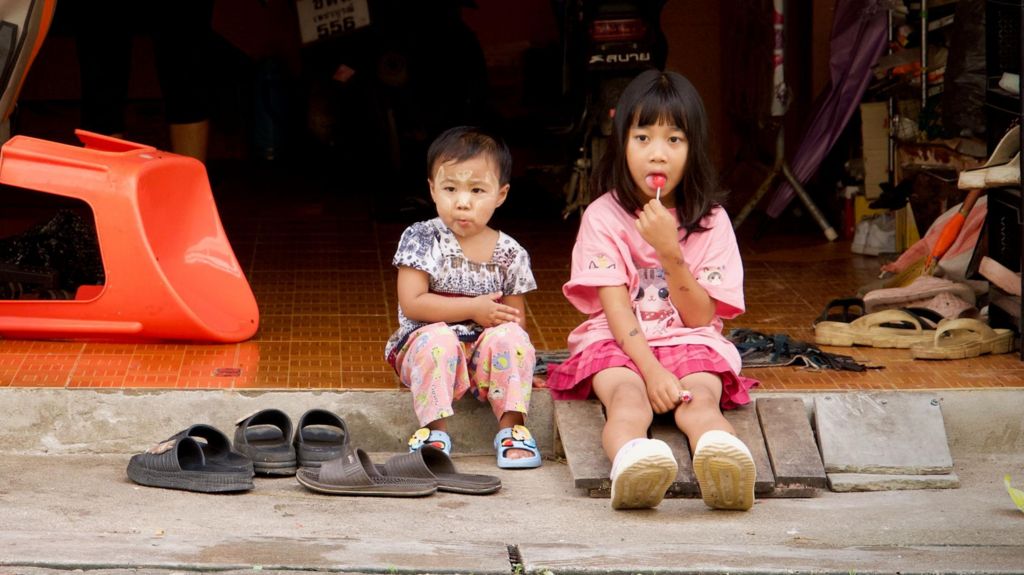
Millions opposed military rule in Myanmar. Is their dream of a revolution over?
Five years after Myanmar’s 2021 military coup plunged the country into brutal civil war, the Thai border town of Mae Sot has emerged as a fragile, overcrowded sanctuary for tens of thousands of people who fled their homeland to oppose junta rule. For many of these exiles, what was once hope of a swift democratic revolution has curdled into exhaustion, disillusionment, and a future shrouded in uncertainty.
One 22-year-old former urban guerrilla, who asked to remain anonymous to protect his family still living under junta surveillance in Yangon, embodies this shifting tide of sentiment. At 17, he joined nationwide mass protests against the coup that ousted democratically elected leader Aung San Suu Kyi. When security forces crushed the nonviolent demonstrations, he fled to ethnic insurgent-controlled territory for military training, before returning to Yangon to carry out bombings as part of an underground resistance cell. “I thought then that non-violent protests were not the right way to get back our freedom,” he recalled.
His armed resistance ended abruptly when he was captured and sentenced to seven years in Insein Prison, a facility infamously known for routine abuse and torture of political inmates. Released last year, he fled across the Moei River – the narrow waterway that marks the Myanmar-Thailand border – to Mae Sot, where he now lives in one of dozens of hidden safe houses run by local charities. It was during his imprisonment that his views on the struggle changed forever. He witnessed deep infighting among insurgent groups, saw countless unnecessary civilian and combatant casualties, and as the eldest child in his family, felt a growing obligation to prioritize his family’s safety over armed struggle. Today, he has rejected violence entirely. “I want to help our people as much as I can. But I choose another way. A non-violent way,” he said. Now, he spends his days teaching children in the safe house and supporting friends who remain imprisoned in Myanmar, clinging to a faint hope that freedom will eventually come.
The 22-year-old is far from alone. Since the 2021 coup, Mae Sot – a major trade gateway between Myanmar and Thailand that has long hosted a shifting Burmese population – has seen its community of exiled Myanmar residents swell exponentially. Nearly all cross the border unofficially, leaving them undocumented and without legal status in Thailand. They live in constant fear of arrest by Thai police and deportation back to Myanmar, where reprisals from the junta await them and their families. Many dare not leave their cramped safe house rooms for weeks at a time; one defected former army officer told the BBC she only ventures outside twice a month.
These safe houses, tucked down quiet back streets and offering only six months of maximum stay per resident, are warrens of tiny, basic rooms with shared communal facilities. Behind every door lies a harrowing story of survival. Among them is Yin Yin Aung, a 20-year-old mother who traveled 1,000 miles from her resistance-stronghold village in Sagaing Region to reach Mae Sot with her husband and toddler son. Two years ago, junta troops occupied her village, Htomar, after sweeping through the region to crush dissent. The family fled into the surrounding forest, where they survived for six months on river water and scarce rations, falling ill and seeing several members of their group die before they could begin their journey to the border. When troops finally withdrew, they left the village looted and laced with landmines, making return impossible.
Yin Yin Aung gave birth to her son in the forest, but he was born with an abdominal hernia that requires urgent surgery. In Mae Sot, the couple has no legal status, so they cannot access Thailand’s public healthcare system. A private hospital has demanded a 38,000 baht ($1,140) deposit for the procedure – a sum nearly out of reach for the destitute family. Like many others, they have already hit their six-month limit at one safe house and are now staying in a second, with another move looming when their time runs out. “So long as Min Aung Hlaing is in charge, I cannot go back home,” Yin Yin Aung said. “He is the one who caused all of this.”
The growing despair among Mae Sot’s exiles comes as Myanmar’s junta leader, General Min Aung Hlaing, has consolidated his grip on power over the past 12 months, backed by significant diplomatic and military support from China and Russia. Last month, Min Aung Hlaing received a formal red-carpet welcome from Chinese President Xi Jinping, marking a key milestone in his effort to rebrand himself from a coup-leading pariah to a legitimate head of state accepted by neighboring countries. Earlier this year, the junta held a tightly controlled, opposition-boycotted election that allowed Min Aung Hlaing to formally take the office of civilian president, while over the past year junta forces have recaptured large swathes of territory that resistance groups seized in the early years of the war.
Chinese pressure has also cut off critical weapons and technology supplies to many resistance groups, leaving them fragmented, outgunned, and on the defensive. The United Nations Office of the High Commissioner for Human Rights recently reported that at least 702 civilians – most of them women and children – were killed by junta air strikes between the announcement of the election last August and its conclusion in January, with violence against civilians continuing unabated even as Min Aung Hlaing solidifies his international standing.
Not all exiles in Mae Sot have abandoned hope of a revolutionary victory. In another safe house, a former Yangon bartender who serves with the Cobra Column – one of the opposition’s most effective fighting units, affiliated with the long-running Karen National Union insurgency – traveled to Mae Sot only to welcome his newborn child, and says he is eager to return to the front lines. “The military is fighting a war against the entire country, against the very citizens they are supposed to protect,” he said. “There is no way they can win.” Morale remains high among well-established ethnic armed groups like the Karen National Union, but newer people’s defense forces have struggled to maintain momentum amid supply shortages and junta advances.
For many older exiles like Louis, a 40-something Yangon entrepreneur who joined the Karen insurgency after the coup and was later imprisoned, the dragging war has forced a reevaluation of priorities. After his release, he chose to settle in Mae Sot to provide for his children, who need education and stability that a life on the run cannot offer. “For the first two or three years, we had high morale and were very motivated,” he said. “But since the war is dragging on for so long, a lot of people have other responsibilities that do not stop. We have changed under that pressure.”
One local Mae Sot activist, who runs a program to rescue child soldiers as young as 13 from insurgent groups and help them adjust to civilian life, says the war has torn apart communities that once lived in peace, with neighbors turning on each other for supporting opposing sides. She argues that the resistance must shift its strategy to meet the growing humanitarian crisis. “We have to prepare for a long fight for this revolution, not only with weapons, but also thinking about education and healthcare,” she said. “There are so many displaced people now. What are we going to do for them?”
Today, hundreds of thousands of Myanmar refugees across Thailand’s border regions remain trapped in devastating limbo. Diplomatic outreach from regional governments has failed to secure any meaningful concessions from the junta, while undocumented exiles like Yin Yin Aung face repeated moves, scarce support, and no clear path home – or to a better future elsewhere. In the cramped, dimly lit safe houses of Mae Sot, each resident carries the weight of trauma, and a future that grows more uncertain by the day.
-
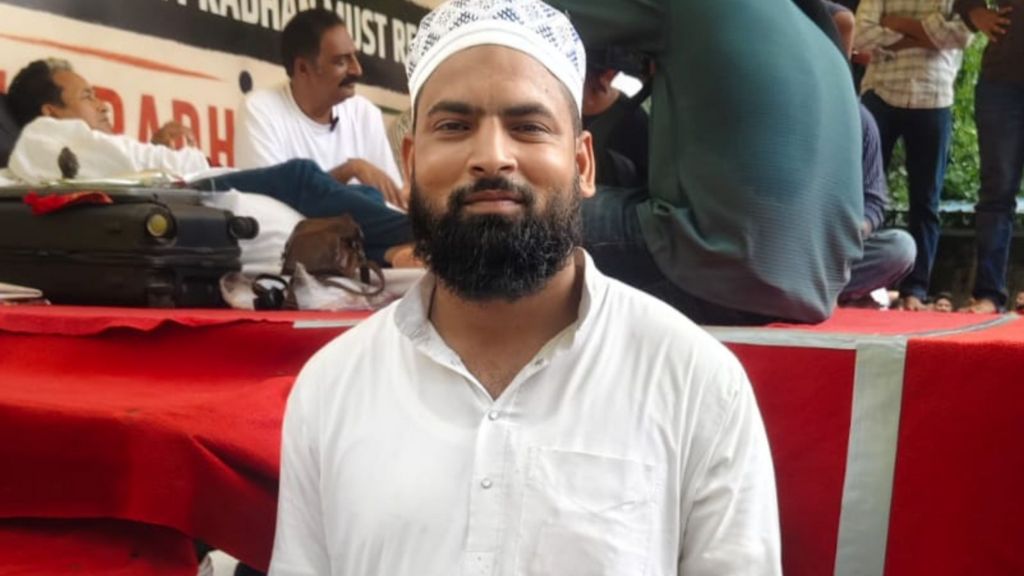
‘I won’t stop fighting,’ says ‘cockroach’ protester after alleged detention
Raised by illiterate farmworking parents in northern India who revered knowledge above all else, 24-year-old law student Mohammad Junaid grew up ingrained with one core belief: education is the only irreversible gift that can rewrite a person’s destiny. What he never anticipated, however, was that this same belief would lead him to the center of one of India’s largest recent student-led protests, and ultimately to the steps of the Supreme Court to challenge alleged police mistreatment.
When the Cockroach Janta Party (CJP) issued a call in June for students to gather at Delhi’s iconic Jantar Mantar to demand accountability for widespread irregularities in a critical national medical entrance examination, Junaid packed only a small bag, planning to attend for just 24 hours. He ended up staying six weeks, evolving from a casual participant to one of the protest movement’s most visible and indispensable volunteers. Drawing on organizational experience he gained during the 2020 Indian farmers’ protests, Junaid stepped in to bring structure to the grassroots campaign when the first wave of demonstrators decided to camp indefinitely at the protest site with almost no basic supplies.
From sourcing drinking water and arranging meals to securing blankets and shelter for exhausted participants, Junaid became the go-to coordinator for all incoming donations and logistics. As local communities stepped up to support the movement—farmers bringing fresh vegetables, local gurdwaras supplying daily cooked meals, and ordinary citizens dropping off medicine, water and fruit—volunteers and organizers alike automatically directed all resources to him. The work was grueling, with Junaid averaging only a few hours of sleep a night, but it was the stories of affected families that cemented his commitment. He met parents who had taken crippling loans to pay for exam coaching, and one couple who distributed food to protesters on what would have been their daughter’s birthday; she had died by suicide after the exam paper was leaked, a tragedy that left Junaid certain the fight was bigger than any individual. The experience transformed his life trajectory: where he once never imagined himself as an activist, he now says he will spend his life fighting for equitable, transparent education.
Tensions escalated on 20 July, when thousands of protesters defied a police ban to march toward India’s parliament. Security forces responded with tear gas, baton charges, and mass detentions. Junaid spent hours tending to injured demonstrators, locating missing students, and helping frightened participants return to the protest camp. The violence of that day, he says, broke something inside him, and confirmed he could not step away from the movement. Five days later, after India’s education minister stepped down, CJP leaders declared victory and called off the protest, with most volunteers preparing to return home. Junaid’s path took a different turn.
Alleging that he was unlawfully detained by police just hours before the protest officially wrapped up, Junaid has filed a petition with India’s Supreme Court. In his claim, Junaid says he was taken into custody after leaving a hospital where he had sought treatment for a stray dog bite. He was held overnight for extensive questioning about his protest role, and alleges he was blindfolded while being transported to the police station. The petition further claims authorities targeted his family: his father was picked up for questioning from the family’s small Ghaziabad farm on 23 July, and police searched the family home the following day, damaging furniture and demanding identification and bank details for all extended family members. Ghaziabad Police have only confirmed that they questioned Junaid’s father, and have denied any misconduct. Delhi Police has not responded to requests for comment on Junaid’s allegations.
Junaid’s case has drawn sharp condemnation from opposition politicians and civil liberties organizations, with CJP leaders accusing authorities of a targeted crackdown on protest volunteers. His petition is one of multiple claims of unlawful detention amid broader allegations of a widespread police crackdown on demonstrators across Delhi and other Indian states. The Supreme Court has already ordered authorities to refrain from taking coercive action against protesters with no prior criminal record while the main case is heard, and CJP has threatened to resume mass protests if all pending cases against demonstrators are not withdrawn. Junaid’s petition has not yet been scheduled for a hearing.
In the aftermath of his detention, a video of Junaid breaking down during an interview went viral on Indian social media, alongside clips of supporters celebrating the protest’s initial victory. Junaid says the experience has left him questioning whether his Muslim identity played a role in his targeting—something he has no concrete evidence to prove, but that has lingered in his mind. Throughout the protest, he says, religious identity was never a topic of conversation: participants saw each other only as students and activists fighting for a shared cause. The question of religious profiling comes amid longstanding criticism from rights groups and opposition parties that Prime Minister Narendra Modi’s government has overseen growing marginalization of India’s Muslim community, the country’s largest religious minority. Modi’s administration has repeatedly rejected these accusations.
When Junaid returned home after his release, his parents—who spent decades working their small plot of land to give their son an education—urged him to step away from the movement, afraid that his activism would bring more trouble. But for Junaid, the confrontation with authorities has only strengthened his resolve. He describes the experience as a small sacrifice for the larger fight for fair education and accountability, and says if protesters return to the streets, he will be right there with them.
-
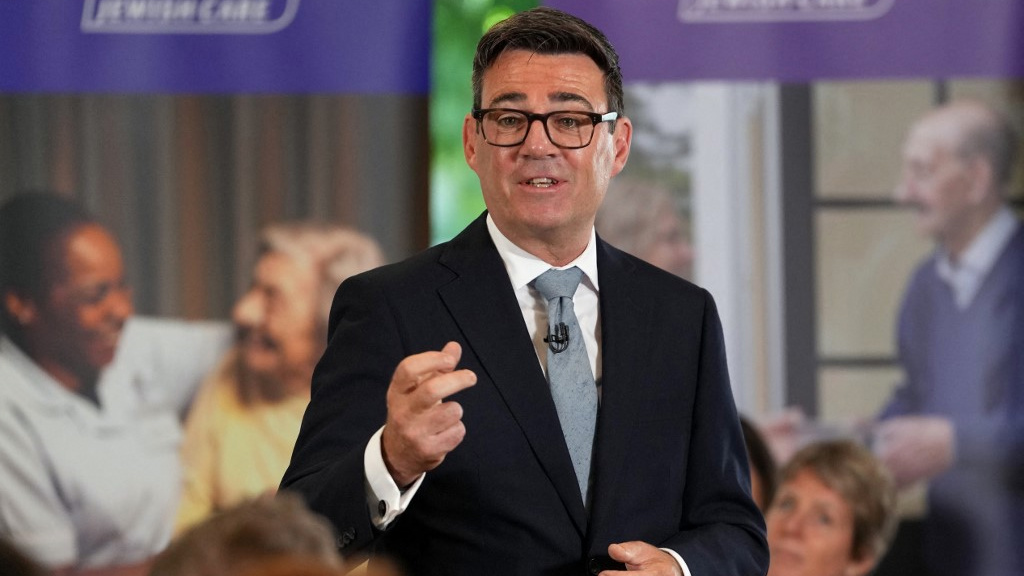
Muslim Council of Britain asks government to explain non-engagement policy
A major political dispute has erupted between the UK’s largest umbrella body for Muslim communities and the Andy Burnham-led government, after a senior cabinet minister repeated longstanding but unproven allegations to justify the administration’s refusal to work with the group.
The Muslim Council of Britain (MCB), which counts more than 500 affiliated Muslim organizations across the country, has publicly condemned Security Minister Dan Jarvis for parroting an old, unevidenced claim that the group has violated British fundamental values without offering concrete specifics. The controversy was sparked earlier this month, when Conservative MP David Simmonds submitted a parliamentary question asking the government to explain its refusal to engage with four Muslim organizations, including the MCB. In a written response published Tuesday, Jarvis reaffirmed the government’s position, stating that the administration has chosen to cut ties with groups that have adopted stances contradicting core UK values and have not formally withdrawn those positions.
Within days, the MCB hit back with an open letter to Jarvis, obtained by Middle East Eye (MEE), pointing out that the same vague allegation was first made by former Prime Minister Rishi Sunak in February 2024. The organization is demanding that Jarvis outline exactly which values the MCB has supposedly contradicted, arguing that a government cannot maintain a policy of non-engagement based on abstract, unspecified claims. The letter also notes a glaring contradiction in the current government’s stance: multiple senior figures in the current administration, including Prime Minister Andy Burnham himself, Defence Secretary, and Equalities Minister, have held formal and informal engagement with the MCB over the course of their political careers.
Burnham, who held engagement with the MCB when he served in the shadow cabinet in 2015, has a long public record of open dialogue with Muslim communities across the UK, a track record the MCB says it hopes he will maintain now that he holds office in Downing Street. “Prime Minister Burnham has a strong record of engaging honestly with communities across this country, and we hope that record continues now that he is in Downing Street,” the organization stated.
The MCB’s challenge comes on the heels of a revealing MEE investigation published earlier this week, which found that no official written records of a formal non-engagement policy with the MCB actually exist. Multiple government departments, including the communities ministry, Home Office, and Cabinet Office, all refused to release any documentation related to the policy in response to Freedom of Information Act requests. When MEE followed up for clarification on the scope and justification of the non-engagement rule, a spokesperson for the Office for Equality and Opportunity only confirmed the policy remains in place but offered no further details.
Mustafa al-Dabbagh, assistant secretary general of the MCB, told MEE that the so-called non-engagement policy is nothing more than an outdated smear that was resolved more than a decade ago. The roots of the boycott stretch back to 2009, when Gordon Brown’s Labour government briefly cut ties with the MCB after its deputy secretary general Daud Abdullah signed the Istanbul Declaration. The government claimed the document called for attacks on Royal Navy vessels enforcing an arms blockade off Gaza, a claim Abdullah repeatedly denied. The MCB quickly clarified that Abdullah had signed the declaration in a strictly personal capacity, after which Abdullah resigned and the 2010 Labour government restored formal engagement. Subsequent coalition and Conservative governments maintained ministerial contact until 2015, and civil servants continued meetings with the MCB until 2020.
It was in 2020 that the MCB published a high-profile dossier documenting hundreds of alleged cases of Islamophobia within the Conservative Party, including among sitting MPs, councillors, and Downing Street advisers. Shortly after that release, civil service engagement was halted, and the Conservative government implemented a full boycott. When Starmer’s Labour Party took power in 2024, the new administration retained the boycott, a decision the MCB says is unjustified given the issue that sparked the original boycott was resolved in 2010.
al-Dabbagh accused Jarvis of misleading Parliament by repeating the discredited smear. “This so-called policy of non-engagement is a relic of the past, built on a smear that has since been proven false, and the Labour government of the day accepted as much in 2010, restoring engagement,” he said. “Our door remains open to all who work for the good of Britain.”
In its formal letter to Jarvis, the MCB accuses the security minister of misrepresenting both the historical record and the MCB’s current positions. The group is demanding full transparency, asking: “What specific evidential basis and assessments underscore a decision that justifies treating a matter resolved by your predecessors in government as still valid 16 years later?” It added that British Muslims deserve clear accountability, noting that the MCB is the democratically selected representative body for more than 500 community groups across the UK.
MEE has confirmed that Jarvis intends to respond to the MCB’s letter, but the government has indicated it currently has no plans to reverse its policy of non-engagement with the organization.
-
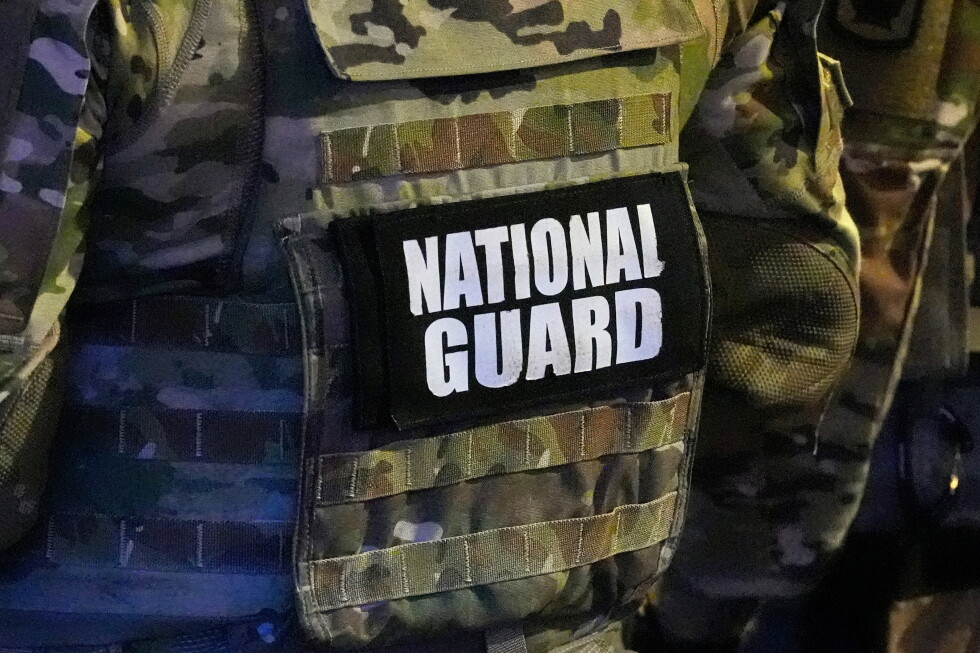
National Guard officer forged records and stole public money to facilitate secret second marriage
A high-ranking U.S. National Guard officer has admitted to orchestrating an elaborate multi-year fraud and bigamy scheme that exploited government resources and forged official records to maintain a secret double life, federal prosecutors have confirmed. Forty-year-old Major Collin Welch entered a guilty plea this Tuesday to two key criminal charges: the theft of roughly $54,000 in public funds, and the illegal inducement of a Mongolian woman and her daughter to remain in the United States beyond the terms of their legal visas. He is currently awaiting a sentencing hearing at the U.S. District Court in Washington, D.C., with no date for the proceeding publicly announced as of yet.
The deceptive scheme traces back to 2019, when Welch was deployed with the Alaska National Guard to a posting at the U.S. Embassy in Ulaanbaatar, Mongolia. It was during this assignment that he met the woman who would become his second wife, and their romantic relationship continued even after he completed his posting and returned to Alaska in 2021. He relocated to Arkansas the following year, and the pair held their first marriage ceremony in Mongolia in 2022. To secure this marriage, Welch created a forged divorce decree that falsely claimed his first marriage to his original spouse had been legally dissolved, court documents show.
By 2023, Welch had moved to Washington, D.C., alongside his first family, having accepted a new position with the District of Columbia National Guard that required frequent international travel. To keep his double life hidden, he repeatedly misused his official government travel card to rent local hotel rooms in the Washington area, where he would take video calls with his second wife. This subterfuge prevented her from discovering he was actually living full-time with his first family in the district. He also submitted fraudulent reimbursement claims to the federal government and lied to his chain of command to get unauthorized approval for international trips to visit his second spouse, according to the official statement of facts filed alongside his plea agreement.
Earlier this year, Welch used government funds to cover plane tickets for the Mongolian woman and her daughter to relocate to the United States. After their arrival, he held a second marriage ceremony in Virginia, once again lying about his marital status by claiming he had never been married before. He covered all their living expenses for an apartment in Northern Virginia, but the arrangement collapsed late last year when he attempted to pay rent using forged checks, resulting in the pair being evicted from the unit.
Throughout the time the two were living in the U.S., Welch was fully aware that their tourist visas had long expired. To maintain the lie that their residency was legal, he forged a wide array of fake official records, including forged correspondence from U.S. Citizenship and Immigration Services, fake Social Security cards, and a falsified Department of Defense letter that falsely claimed the pair were enrolled in the U.S. military’s health insurance program.
In a statement provided to the court, Welch’s defense attorney Gregory Rosen acknowledged that repeated long-distance deployments — including overseas assignments to Afghanistan and Djibouti, and years spent separated from his first family — created significant personal strain that contributed to Welch’s choices. Even so, Rosen emphasized that his client accepts full accountability for every illegal action he took, noting that this willingness to take responsibility reveals more about Welch’s character than the list of offensive acts alone can convey.
-
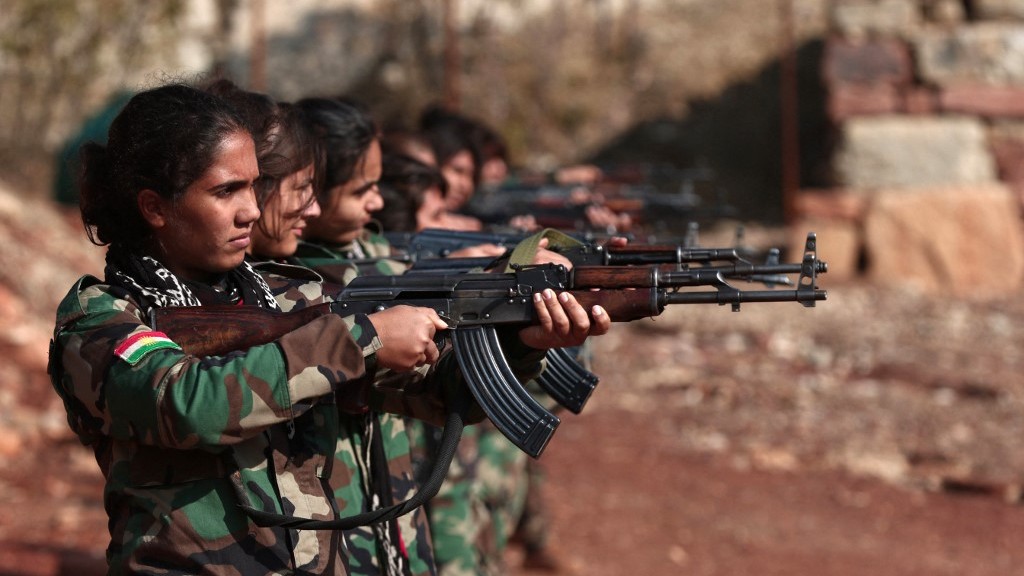
Why are Kurdish groups in Iraq being attacked amid the US-Iran flare-up?
Amid the ongoing military confrontation between the United States and Iran, the Islamic Republic has expanded its retaliatory operations across the Gulf region, targeting U.S. strategic assets while turning its attention to Iranian Kurdish opposition groups based in northern Iraq. The cross-border strikes have deepened regional instability and sparked new debate over the nature of the threat Tehran perceives from these exiled Kurdish factions.
Keywan Faramarzi, international relations representative for the Komala Party of Iranian Kurdistan, confirmed to Middle East Eye that recent weeks of attacks on Komala bases and operational hubs in Iraqi Kurdistan have left 10 fighters dead. While no group has formally taken responsibility for the strikes, Faramarzi explicitly pinned the blame on the Iranian government, framing the violence as part of a long-standing state policy to eliminate Iranian Kurdish opposition organizations operating beyond Iran’s official borders.
Komala is not alone in facing this escalation. Multiple other Iranian Kurdish opposition groups have reported similar attacks both in northern Iraq and inside Kurdish-populated regions of Iran itself.
The latest surge in Iranian strikes follows unconfirmed reports from Israeli media claiming Turkey pressured the U.S. to scrap a planned operation that would have deployed Iranian Kurdish fighters across the border to overthrow Tehran’s government. Since the U.S.-Israeli military campaign against Iran launched in February, rumors of a Kurdish incursion into Iran have circulated repeatedly, but this most recent proposal was said to carry greater strategic ambitions – and the Iranian leadership has treated the threat with clear seriousness.
In a public statement released July 19, Iranian Foreign Minister Abbas Araghchi accused the U.S. and Israel of plotting to fragment Iran using Kurdish opposition groups as proxies. “I made clear that if any threat emerges against us from Iraqi Kurdistan, we will respond without question,” he said.
Despite Tehran’s claims, all major Iraqi-based Iranian Kurdish parties have flatly denied any involvement in internal Iranian armed conflict, and reject assertions that former U.S. President Donald Trump ever proposed a cross-border ground operation to them. “We have no knowledge of any such plan, and no verifiable evidence exists to support these allegations,” Faramarzi said. “These reports read as nothing more than media speculation that does not align with on-the-ground realities.”
Hana Yazdanpanah, a representative for the Kurdistan Freedom Party (PAK), echoed that denial. “We hold no such intention,” she told Middle East Eye. Yazdanpanah acknowledged that PAK supported and defended Kurdish communities in Iranian Kurdistan during the January anti-government protests, but dismissed all claims of involvement in a regime-change operation as baseless. “Neither the Kurdistan Region of Iraq, our party PAK, nor any other Iranian Kurdish party have taken part in any such operation, nor have we received any weapons or military supplies from foreign actors,” she added.
Even with these consistent denials, Iran’s unbroken campaign of strikes confirms that Tehran still views the exiled Kurdish factions as a meaningful threat. Middle East Eye reached out to the Iranian Foreign Ministry for additional comment, but received no response prior to publication.
As demographic data cited by Minority Rights Group International shows, Kurds make up roughly 10 percent of Iran’s total population, concentrated primarily in the country’s western provinces of Kurdistan, Kermanshah, West Azerbaijan, and Ilam. For decades, several Iranian Kurdish opposition movements – which Tehran designates as terrorist organizations – have maintained operational bases in the semi-autonomous Kurdistan Region of northern Iraq. These groups include Komala, PAK, the Kurdistan Democratic Party-Iran (PKDI), Khabat, and the Kurdistan Free Life Party (PJAK), the latter of which holds ties to the Turkey-based Kurdistan Workers Party (PKK).
While the groups hold a range of distinct ideological positions, most are united around two core goals: the self-defense of Kurdish communities inside Iran, and the eventual achievement of self-determination for Iranian Kurdistan. In late February of this year, the major factions announced a new formal coalition, with an explicit stated mission of coordinating efforts “to overthrow the Islamic Republic of Iran.”
In April, former U.S. President Donald Trump claimed his administration had supplied large quantities of firearms to anti-government protesters in Iran, and that Kurdish groups had taken possession of the weapons – a claim the Kurdish parties have repeatedly denied.
“We have formed this alliance to strengthen and escalate our struggle in East Kurdistan [Iranian Kurdistan] and across Iran against the Islamic Republic,” Yazdanpanah said. “In this struggle, we utilize every available method of resistance.” Even so, she emphasized that the coalition has “openly maintained and declared its neutrality” in the ongoing U.S.-Iran conflict.
Estimates of the coalition’s collective military strength put it far below the capacity of Iran’s state security forces. PAK reported roughly 1,000 members in 2019, while PDKI, Komala, and Khabat are believed to have similar troop counts. PJAK officials have claimed as many as 3,000 active fighters. Combined, the entire coalition’s fighting force pales in comparison to Iran’s hundreds of thousands of Islamic Revolutionary Guard Corps (IRGC) personnel, plus an additional hundreds of thousands of volunteers in the Basij militia network.
This military imbalance has led most independent analysts to conclude the Kurdish coalition lacks the raw power to overthrow Iran’s government on its own. The repeated claims of foreign-backed regime change have also sparked growing frustration among the Kurdish parties themselves.
Winthrop Rodgers, an associate fellow at the London-based Chatham House think tank, noted that the Kurdish parties have approached the ongoing U.S.-Iran war with significant caution, a choice that reflects their own clear assessment of their limited capabilities and the current strategic context. “This caution likely disappointed the expectations of some reckless U.S. and Israeli planners, who failed to grasp the complex dynamics at play on the ground,” Rodgers explained.
Even so, Iran’s continued targeting of Kurdish positions in northern Iraq makes clear that the opposition groups remain a persistent concern for Tehran, even if they do not pose an immediate existential threat. Faramarzi argued that Komala’s core work focuses on building political power, not large-scale conventional military invasion. “Our main role is organizing, supporting, and strengthening civil society and protest movements across Iran – and that is what the government fears,” he said. “Through these attacks, the Islamic Republic is trying to erode our political and organizational capacity, while also sending a warning to all opposition forces across the country.”
-
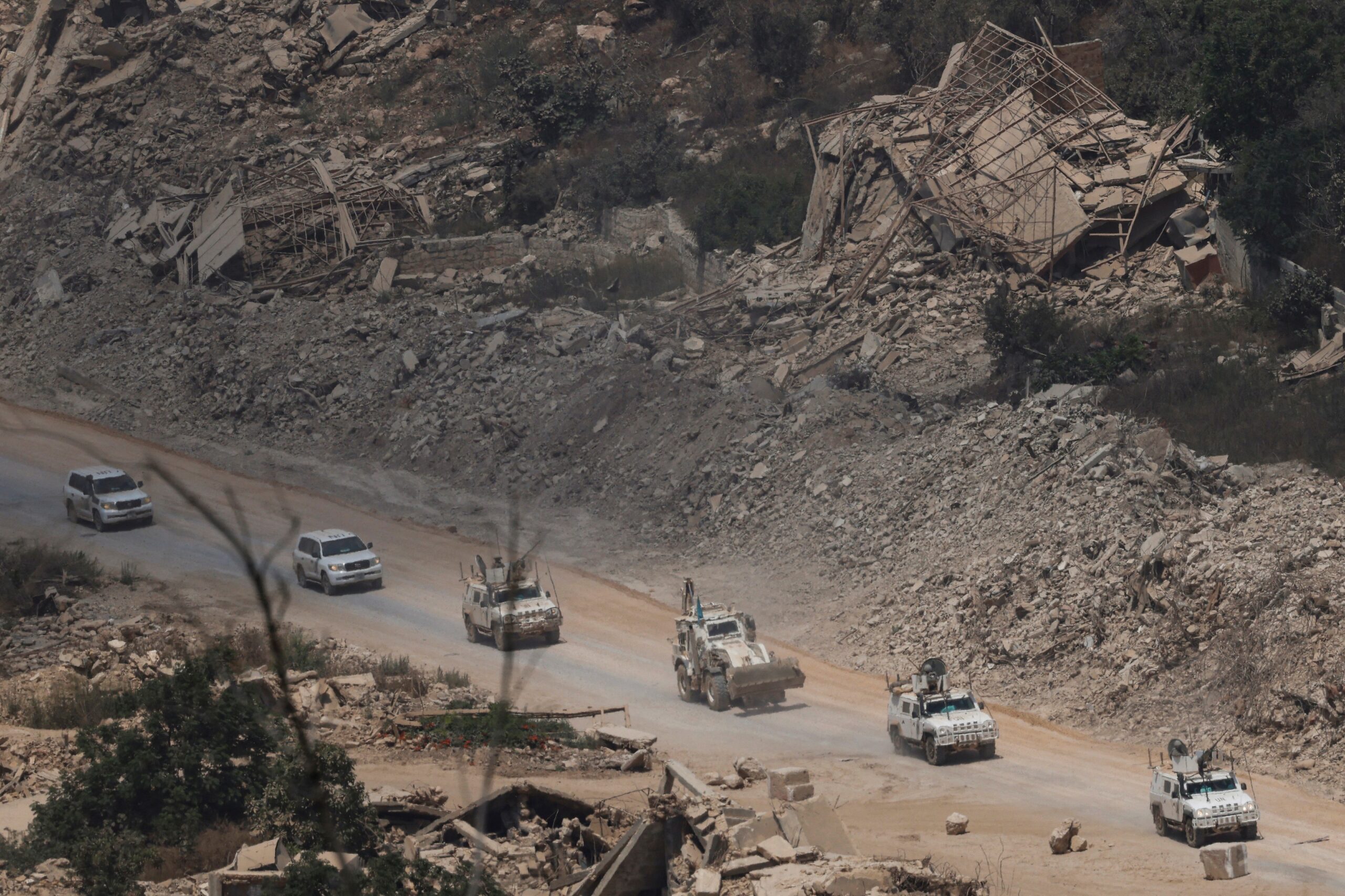
Aoun’s Ankara visit seeks clarity in Lebanon-Turkey relationship
On Thursday, Lebanese President Joseph Aoun will travel to Ankara for a high-stakes one-day meeting with Turkish President Recep Tayyip Erdogan, a diplomatic mission focused on bringing long-overdue clarity to a relationship that has remained formally intact but strategically undefined amid sweeping shifts in Middle Eastern geopolitics. Unlike traditional state visits packed with cabinet delegations and formal treaty signings, Aoun will be accompanied only by a small group of senior presidential advisors, with no binding bilateral agreements scheduled to be finalized during the talks.
Multiple Lebanese and Turkish sources confirmed to Middle East Eye that the discussions will center on mapping out the broader strategic contours of the relationship between Beirut and Ankara. Key topics on the agenda include Turkey’s long-held concerns about Lebanon’s regional alignment, as well as new opportunities to expand bilateral military and diplomatic cooperation. A senior Lebanese insider described the meeting as a critical starting point for a more transparent bilateral dialogue, noting that Lebanon’s fragile domestic politics and exposed geographic position require it to balance relationships across competing regional blocs without alienating any major power.
While diplomatic ties between the two countries have never been severed, both sides have acknowledged a persistent gap in clear communication around their respective core political priorities. The senior Lebanese source emphasized that this lack of regular open dialogue has not risen to the level of public Turkish discontent with Lebanon’s policy direction, but the upcoming meeting is designed to address that gap head-on. “This will be a full, open and honest exchange between the two heads of state,” the source added.
Far from a reconciliation effort to repair broken relations, the visit is an attempt to add explicit political definition to a partnership that has already operated through quiet diplomatic, economic and security channels, but has never been anchored by a shared strategic framework. For Lebanon, the meeting comes as the country walks a careful diplomatic tightrope, managing relationships with Turkey, Gulf Cooperation Council states, the United States, Europe and other regional actors while avoiding any permanent, exclusive alignment with a single bloc.
For Turkey, the summit offers a rare opportunity to lay out its clear expectations for Lebanon’s positioning in a region increasingly defined by cutthroat competition over energy transit routes, maritime boundary claims, defense pacts and relationships with Israel. Ahead of his departure, Aoun told Turkey’s state-owned Anadolu Agency that Lebanon welcomes a meaningful Turkish role in any future international governance arrangement for southern Lebanon, particularly as global powers negotiate the future mandate of the United Nations Interim Force in Lebanon (UNIFIL). Turkey has a long history of contributing to UNIFIL’s maritime task force and has maintained steady military and security cooperation with the Lebanese state for decades, and Aoun’s remarks were crafted to signal that Beirut views Ankara as a contributor to Lebanese stability, not just an outside power pursuing its own regional interests.
Aoun is also expected to use the meeting to update Turkey on efforts to implement existing agreements governing southern Lebanon, including calls for a full Israeli withdrawal from contested territory and continued international backing for the Lebanese Armed Forces (LAF). However, Turkish officials plan to use the summit to press Aoun for clear answers on the future direction of Lebanese foreign policy, sparked by Beirut’s 2023 unilateral maritime border agreement with Cyprus.
A senior Turkish official told Middle East Eye that Ankara was caught off guard by Lebanon’s decision to move forward with the deal without any prior consultation with Turkey. The concern extends far beyond Ankara’s exclusion from negotiations: Turkish policymakers argue the agreement carries sweeping regional implications because of Cyprus’s close strategic and energy ties to Greece and Israel. The eastern Mediterranean has emerged as one of the most contested regions in the Middle East, with two competing blocs vying for control of energy and trade infrastructure. One bloc, linking Israel, Cyprus and Greece, is developing cross-border gas infrastructure, electricity interconnectors and shipping routes designed to connect the eastern Mediterranean directly to European markets. Turkey, by contrast, has championed alternative energy and trade corridors that position it as the central hub connecting Asia, the Middle East and European markets.
While Lebanon’s agreement with Cyprus does not formally bring Beirut into an alliance with Israel, Ankara fears the deal could gradually draw Lebanon into the regional framework built around Cyprus, Greece and Israel – a shift that would directly undermine Turkey’s own core strategic ambitions in the region. A senior diplomatic source confirmed that Erdogan will raise the maritime agreement directly with Aoun during their talks, making clear that Turkey cannot accept Lebanon aligning with Israel, a path that some figures close to the Lebanese presidency are rumored to favor. “At a minimum, Ankara expects Lebanon to maintain strict neutrality in regional geopolitical conflicts,” the source stated.
Turkey’s concerns do not stem from a belief that Lebanon has already joined an Israeli-led bloc, but rather from deep uncertainty about how Beirut will position itself as new maritime, energy and security arrangements take shape across the eastern Mediterranean. The summit will give Aoun a platform to reassure Erdogan that Lebanon’s expanding engagement with Cyprus and other regional actors is not intended to counter or isolate Turkey. Aoun will also explain that Lebanon’s negotiations with Israel are focused on securing an Israeli withdrawal from contested territory, strengthening Lebanese state sovereignty and ending cross-border hostilities, not forging a strategic alliance with Israel.
In exchange for greater clarity on Lebanon’s regional posture, Ankara is prepared to expand its security and military support to the Lebanese state, with a particular focus on bolstering the Lebanese Armed Forces. The senior diplomatic source revealed that Ankara plans to invite the LAF commander to tour Turkish defense manufacturing and industry facilities, and Ankara is ready to provide significant military hardware to the LAF if Lebanon formally outlines its equipment requirements and expresses interest in a partnership. Turkey’s domestic defense industry produces a wide range of military technology, including combat drones, armored vehicles, communications systems, and naval platforms, and Ankara has increasingly used defense cooperation as a key tool of regional diplomacy in recent years.
The source also pushed back against any interpretation of Turkey’s engagement with Lebanon through the lens of the Ottoman Empire’s historical rule over the territory, noting “Turkey is a NATO member and approaches Lebanon from a modern strategic perspective, rather than through any Ottoman historical framework.” For Lebanon, additional Turkish military assistance would offer a much-needed supplementary source of support for the LAF, which has taken on expanded security responsibilities across the country and along its volatile borders. But Beirut will need to manage any expanded cooperation carefully to avoid creating the perception that it is moving away from its longstanding military partnerships with the United States, France and other Western powers.
The true significance of Aoun’s visit lies not in the prospect of immediate, headline-grabbing agreements, but in the effort to finally map out the clear political boundaries of the Lebanon-Turkey relationship. The two countries already maintain active diplomatic ties, steady commercial trade and ongoing security cooperation, and Turkey holds meaningful political, cultural and humanitarian influence in multiple parts of Lebanon. But the relationship has remained strategically ambiguous for years, as neither side has fully articulated its expectations of the other amid rapid regional change.
Aoun’s one-day trip is not expected to resolve all outstanding questions in a single meeting. But it is likely to establish a new, direct communication channel between the two presidents, reducing the risk that future Lebanese policy decisions will be misinterpreted in Ankara without prior consultation. As the senior Lebanese source put it: the visit will not mark the start of a new relationship between the two countries, but rather the start of a far more candid conversation about where that relationship is headed in an increasingly divided region.