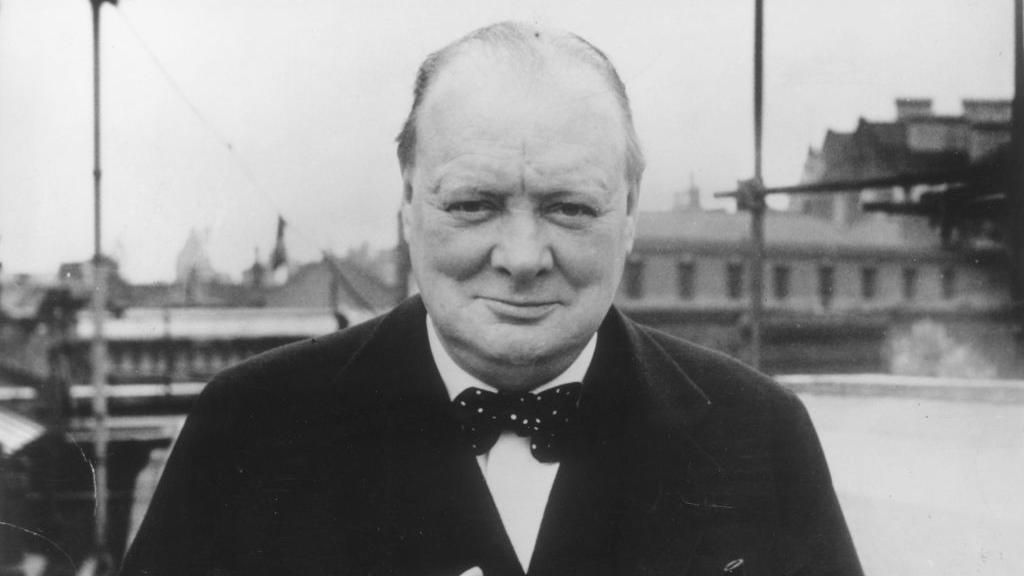
A heated debate over former British Prime Minister Winston Churchill’s connection to the 1943 Bengal famine has led to the removal of a controversial video installation from London’s National Portrait Gallery, sparking new conversations about artistic freedom, historical interpretation, and institutional accountability.
Created by Turner Prize-winning artist Helen Cammock, the 40-minute work titled *Persistence* was developed in partnership with the gallery beginning in 2023. Part of the temporary exhibition “Artists First: Contemporary Perspectives on Portraiture”, the piece had been on public display for 10 months and was scheduled to run through August. In her self-narrated installation, Cammock drew a parallel between Oliver Cromwell’s 17th-century mass starvation tactics during military campaigns in Ireland and what she described as “the wilful starvation of the Indian population by Winston Churchill” during the devastating 1943 famine.
The artist’s framing quickly drew fierce pushback from prominent historical figures and politicians. Churchill biographer Lord Roberts of Belgravia organized an open letter to the gallery leadership, which gathered signatures from more than 50 members of the House of Lords — including Churchill’s own grandson, Sir Nicholas Soames. The letter argued that Cammock’s characterization of Churchill was factually incorrect, dismissing the claim as an “ideologically motivated rant”. Lord Roberts contended that the famine was primarily triggered by a devastating typhoon, and that Churchill had directed his war cabinet to deploy all available resources to support affected regions, even requesting emergency grain shipments from global allies. While this perspective is shared by some historians, other academics have long argued that wartime policy decisions made by Churchill’s government exacerbated the crisis. An estimated 3 million people died in the famine that struck eastern India, and Churchill’s exact role remains one of the most hotly contested topics in modern colonial history.
Beyond the open letter, the gallery also received direct complaints from members of the public. Initially, the institution defended the work as a legitimate expression of the artist’s personal perspective, but the controversy gained sustained national media attention last week, ultimately leading to the work’s removal on Monday.
In an official statement provided to BBC News, the National Portrait Gallery confirmed that Cammock had made the independent decision to withdraw her piece. “We respect her decision, just as we acknowledge the opinions of those who were offended by what was said in the film,” the gallery said. It emphasized that the exhibition framework was designed to center artists’ personal creative responses to the gallery’s permanent collection, noting “the work was presented as an artistic piece, not a documentary, and the views expressed in the film do not necessarily reflect those of the NPG.” The institution added that it remains committed to balancing respect for the historical legacies of figures in its collection with support for free artistic expression.
Cammock, however, has pushed back against what she describes as overwhelming external pressure to censor challenging historical narratives. In her own statement released Monday, she said: “There is an incredible pressure on artists and arts institutions to bend to external pressure; to be benign at best and silent at worst. I do not accept this pressure. To question, challenge and explore ideas and histories is vital to a healthy society and art is intrinsic to this.”
The artist added that her work was rooted in existing academic research on the famine, and that its core goal was to interrogate how society chooses to honor and memorialize historical figures. “It asks us to think about who is honoured and valorised and who is not; whose stories are told and whose are not,” she said. Echoing activist and artist Nina Simone, Cammock noted: “An artist’s duty, as far as I’m concerned, is to reflect the times, and sometimes this means revisiting, enquiry and challenge.”