标签: Asia

亚洲

  • US downplays Iran’s seizure of European vessels, Hormuz brinkmanship continues

    US downplays Iran’s seizure of European vessels, Hormuz brinkmanship continues

    ### Escalating Maritime Standoff in the Strategic Strait of Hormuz
    Two months into open conflict, a tense stalemate over competing naval blockades has reignited friction between the United States and Iran in one of the world’s most critical energy chokepoints, with negotiations to end hostilities remaining deadlocked and neither side showing willingness to back down.

    On Wednesday, Iranian fast-attack craft intercepted three commercial vessels transiting the Strait of Hormuz, before escorting two of the detained ships into Iranian territorial waters. The two seized vessels are identified as the *Epaminondas*, a Greek-owned cargo ship flying a Liberian flag, and the *Francesca*, a container vessel operated by Mediterranean Shipping Company, a major shipping firm headquartered in Geneva, Switzerland.

    Iran’s operation delivered a clear message: despite repeated U.S. claims that Iran’s naval capabilities in the region have been crippled, Tehran’s small attack craft retain full operational ability to regulate and disrupt maritime traffic through the strait, a route that carries roughly 20% of the world’s daily oil trade.

    The latest seizures are a direct response to a U.S. action earlier this week, when American forces detained an Iranian crude oil tanker in the Indian Ocean that was sanctioned for allegedly smuggling Iranian oil exports. The current round of blockades dates back to February, when the Trump administration imposed a full naval blockade on Iran after Tehran seized control of key sections of the Strait of Hormuz following an attack on its assets.

    U.S. Central Command announced Wednesday that its blockade has so far blocked 29 vessels from violating the restrictions. Top Republican Senator Lindsey Graham has also hinted that the U.S. boycott of Iranian ports and commercial vessels may soon expand into a global campaign. But the Trump administration’s claims of a fully effective blockade have been called into question by maritime industry outlet Lloyd’s List, which confirmed that more than 24 commercial vessels — including multiple tankers linked to Iran — have successfully evaded U.S. warships patrolling the Gulf of Oman in recent weeks.

    In an attempt to de-escalate rhetoric and protect the fragile existing ceasefire, White House Press Secretary Karoline Leavitt downplayed the significance of Wednesday’s vessel seizures. She emphasized that the detained ships are not American or Israeli-flagged vessels, but rather two international commercial ships, so the action does not qualify as a breach of the ceasefire agreement. “The naval blockade that the U.S. has imposed continues to be incredibly effective,” Leavitt told reporters Wednesday.

    Iran has pushed back sharply on this framing, arguing that the U.S. blockade itself is a clear violation of the ceasefire. Tehran has reiterated that it will continue detaining international vessels transiting out of the Strait of Hormuz until the U.S. blockade is fully lifted. “A complete ceasefire only has meaning if it is not violated through a naval blockade,” stated Mohammad Bagher Ghalibaf, Speaker of the Iranian Parliament. “Reopening the Strait of Hormuz is not possible amid a blatant violation of the ceasefire.”

    The White House’s softening of rhetoric is explicitly aimed at preserving the fragile ceasefire that was set to expire this week. On Tuesday, U.S. President Donald Trump announced an indefinite extension of the truce, saying the move came at the request of Pakistan, which has served as a neutral mediator between Washington and Tehran. Trump explained the extension was necessary to give Iran additional time to review and respond to U.S. negotiation proposals. But Tehran has rejected this narrative, saying the U.S. has put forward unreasonable demands that are not open to compromise.

    Leavitt pushed back on media reports suggesting the White House had set a hard deadline for Iran to respond, telling journalists Wednesday: “The president has not set a firm deadline to receive an Iranian proposal, unlike some of the reporting I’ve seen today. Ultimately, the timeline will be dictated by the commander-in-chief.”

    While large-scale open fighting has halted under the ceasefire, the escalating standoff over control of the Strait of Hormuz has sparked widespread anxiety among neighboring Gulf states. Kuwait, Bahrain, Qatar and the United Arab Emirates all depend on the strait for the vast majority of their oil and gas export volumes, leaving their economies highly exposed to any prolonged disruption to maritime traffic.

    In response to reports that the UAE has requested a currency swap arrangement to shore up its dollar liquidity, Trump confirmed Tuesday that the White House is considering providing targeted financial support to the Emirati central bank. Currency swap lines allow foreign central banks to exchange their domestic currency for U.S. dollars during periods of market liquidity stress.

    On Wednesday, U.S. Treasury Secretary Scott Bessent confirmed to congressional lawmakers that the administration is weighing emergency dollar liquidity support for “many” Gulf states, including the UAE. Bessent explained that the arrangement, which functions as a short-term dollar loan, would benefit the U.S. as well by preventing disorderly sell-offs of U.S. dollar-denominated assets held by Gulf central banks. The UAE holds hundreds of billions of dollars in U.S. assets, including Treasury securities and U.S.-listed equities.

    “Swap lines, whether it’s from the Federal Reserve or the Treasury, are to maintain order in the dollar funding markets and to prevent the sale of the U.S. assets in a disorderly way,” Bessent said. “So, the swap line would benefit both the UAE and the U.S., and as I said, numerous other countries, including some of our Asian allies, have also requested them.”

  • Asian stocks retreat and oil tops $100 despite fresh records on Wall St

    Asian stocks retreat and oil tops $100 despite fresh records on Wall St

    Asian financial markets pulled back into negative territory on Thursday, erasing early session gains that had pushed Japan’s benchmark Nikkei 225 across the historic 60,000 threshold for the first time in trading history. The retreat came as growing uncertainty over the future of peace negotiations to end the ongoing Iran war drove up global crude oil prices, creating a cautious mood across international trading floors.

    The downturn in Asian markets followed a record-setting rally on Wall Street a day earlier, where strong quarterly corporate earnings lifted all three major U.S. indexes to new all-time highs. Early momentum across Northeast Asian markets had been fueled by broad buying activity in technology stocks, which pushed both Japanese and South Korean benchmarks to fleeting record peaks before selling pressure pulled them lower.

    Tokyo’s Nikkei 225 climbed as high as 60,013.90 in early trading to claim its first ever close above the 60,000 psychological mark, but ended the session down 1.5% at 58,707.60. In South Korea, the Kospi index also gave up early gains that had pushed it briefly above 6,500, closing 0.1% lower at 6,414.57. The South Korean government released upbeat first-quarter gross domestic product data Thursday morning, reporting a 1.7% year-over-year growth rate that outperformed analyst expectations, powered by strong exports driven largely by demand for semiconductors for the global artificial intelligence boom.

    Other major regional indexes also closed in negative territory: Hong Kong’s Hang Seng Index dropped 1.1% to 25,865.88, while mainland China’s Shanghai Composite fell 0.8% to 4,073.71. Australia’s S&P/ASX 200 declined 0.8% to 8,770.70, Taiwan’s Taiex sank 1.6%, and India’s benchmark Sensex lost 0.6%. U.S. stock futures also moved lower in early Thursday trading, following the previous day’s record close on Wall Street.

    The fading prospects for a peaceful resolution to the eight-week-long Iran war have emerged as a key headwind for global investor sentiment, even after former U.S. President Donald Trump extended a temporary ceasefire. There remains no clear timeline for a new round of peace talks between parties to the conflict, and recent escalations in the Strait of Hormuz have further darkened outlooks.

    On Wednesday, Iran fired on three commercial vessels transiting the Strait of Hormuz, one week after the U.S. implemented a sea blockade of Iranian ports. Iran’s Revolutionary Guard went on to seize two of the three attacked vessels, dimming already low hopes that critical global energy shipping lanes through the strait could reopen soon. Before the war began, roughly 20% of the world’s daily oil supply passed through the key chokepoint, but traffic has remained largely frozen since the conflict escalated.

    The ongoing supply disruption from the Iran war has sent global energy prices soaring, and crude benchmarks added further gains on Thursday. Brent crude, the global benchmark for oil prices, rose 1.5% to $103.39 per barrel, up from roughly $70 per barrel before the war began in late February. U.S. benchmark West Texas Intermediate crude climbed 1.8% to $94.66 per barrel.

    “As hopes for a resolution between the U.S. and Iran fade and peace talks stall, the oil market is having to reprice expectations,” ING Bank strategists Warren Patterson and Ewa Manthey wrote in a client research note Thursday. “As hopes fade, the reality of the supply disruption will set in, leaving further upside for prices. If no progress is made, the market will become increasingly numb to the noise and headlines that have dictated price action recently.”

    The prior day on Wall Street, strong corporate earnings results and temporary optimism over the extended Iran ceasefire pushed major indexes to new records. The broad S&P 500 jumped 1% to 7,137.90, beating its previous all-time high set the prior Friday. The Dow Jones Industrial Average climbed 0.7% to 49,490.03, while the tech-heavy Nasdaq composite gained 1.6% to 24,657.57, also notching a new record high.

    Several major U.S. companies posted outsized gains after releasing better-than-expected quarterly results. Shares of energy equipment manufacturer GE Vernova jumped 13.7% after the firm reported stronger-than-forecast profits, noting that it is also benefiting from the global AI boom via robust order growth for equipment destined for new data centers. Boeing added 5.5% and tobacco giant Philip Morris International rose 7% following their own positive earnings reports.

    In other commodity trading early Thursday, precious metals prices moved lower: spot gold fell 0.6% to $4,722.70 per ounce, while silver dropped 2.3% to $76.17 per ounce. In currency markets, the U.S. dollar edged slightly higher to 159.53 Japanese yen, up from 159.48 yen late Wednesday. The euro dipped slightly to $1.1696, down from $1.1705 in the prior session.

    AP Business Writer Stan Choe contributed reporting to this article.

  • Tom Latham wins toss as New Zealand sends Bangladesh in for series-deciding ODI

    Tom Latham wins toss as New Zealand sends Bangladesh in for series-deciding ODI

    CHATTOGRAM, Bangladesh – The third and final One-Day International (ODI) between Bangladesh and New Zealand, which will decide the winner of the three-match series, got underway Thursday with New Zealand captain Tom Latham winning the pre-match coin toss and electing to send the Bangladesh side into bat first. The closely contested series has been split through the first two matches, setting the stage for a high-stakes final showdown in Chattogram. The host Bangladesh side suffered a narrow 26-run defeat in the opening fixture of the series, but bounced back dramatically in the second match to secure a six-wicket win that leveled the overall series 1-1. Fast bowler Nahid Rana was the standout performer of Bangladesh’s comeback victory, claiming a five-wicket haul that derailed New Zealand’s batting innings and paved the way for the hosts’ win. Ahead of the decider, Bangladesh’s team management made two key adjustments to their starting lineup. Pace specialist Mustafizur Rahman and left-arm spin bowler Tanvir Islam earned starting spots, replacing Taskin Ahmed and Rishad Hossain respectively. The updated full starting lineup for Bangladesh is: Saif Hassan, Tanzid Hasan Tamim, Soumya Sarkar, Najmul Hossain Shanto, Towhid Hridoy, Liton Das, Mehidy Hasan Miraz, Tanvir Islam, Shoriful Islam, Mustafizur Rahman, and Nahid Rana. For New Zealand, who are targeting a second consecutive series win on Bangladeshi soil, the coaching staff also made one starting lineup change. Left-arm pace bowler Ben Lister was recalled to the team, taking the place of paceman Blair Tickner in the starting eleven. New Zealand’s full starting lineup for the series-deciding ODI is: Henry Nicholls, Nick Kelly, Will Young, Tom Latham (captain), Muhammad Abbas, Dean Foxcroft, Josh Clarkson, Nathan Smith, Jayden Lennox, William O’Rourke, and Ben Lister. More updates on international cricket can be found via AP News’ dedicated cricket hub at the link: https://apnews.com/hub/cricket.

  • Is Trump heading to a Pyrrhic victory in Iran?

    Is Trump heading to a Pyrrhic victory in Iran?

    U.S. President Donald Trump has prematurely declared victory in the ongoing conflict with Iran, even as hostilities remain unresolved. While Tehran has suffered major losses—including the death of its supreme leader Ali Khamenei and severe degradation of its conventional military capabilities—many analysts argue that the Islamic Republic has actually emerged stronger by virtue of surviving the full force of the American assault.

    As the U.S. pours increasing amounts of military equipment and diplomatic credibility into what it has named Operation Epic Fury, the term “Pyrrhic victory” has come up repeatedly in discussions of the campaign. This phrase has also featured heavily in post-conflict retrospectives of the 2003 Iraq War, postmortems of 2011 U.S. intervention in Libya, and nearly all critical analyses of two decades of Western military intervention across the Middle East. But what does the term actually mean, and does it accurately describe the trajectory of America’s current war in Iran?

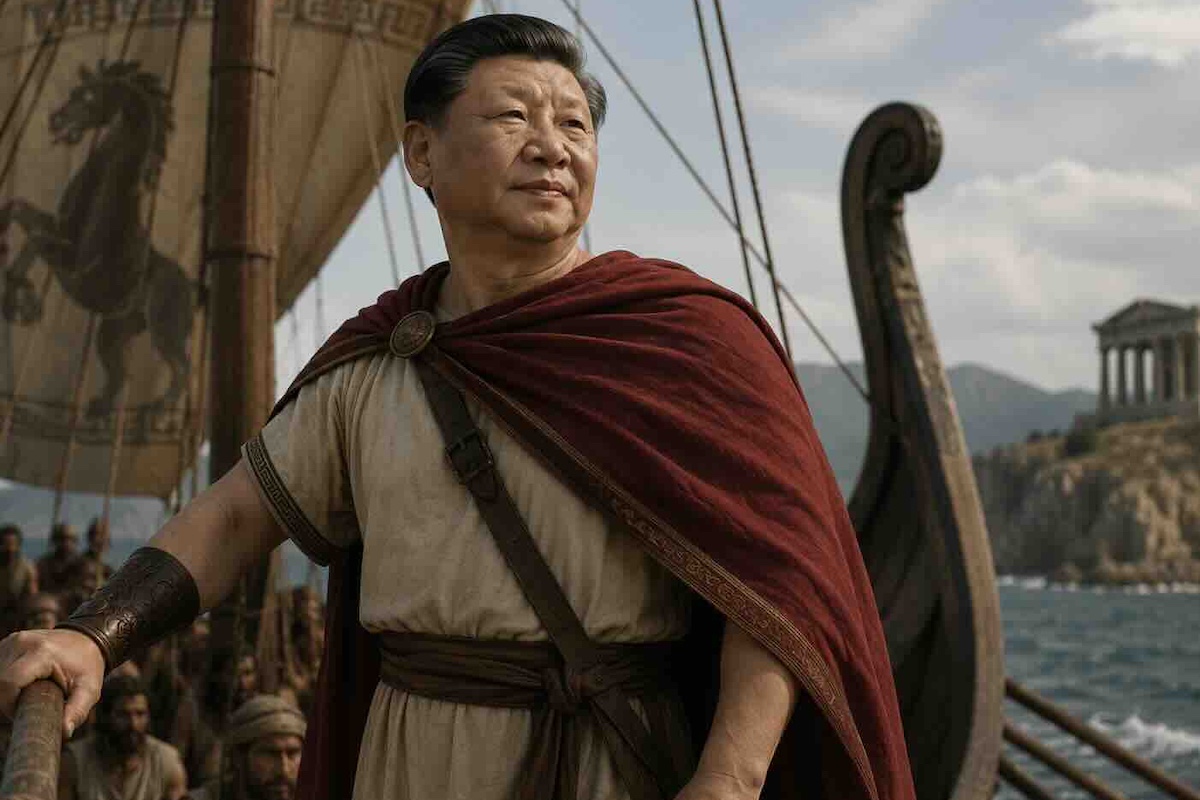
    To understand the concept fully, we must trace it back to its ancient origins. Most casual users define a Pyrrhic victory as a win that costs far more than the prize is worth. While that is a close approximation, it omits the core strategic insight that makes the term enduring. In 280 BCE, Pyrrhus, king of the ancient Greek kingdom of Epirus, led his army across the Adriatic into what is now southern Italy to challenge the expanding Roman Republic. He won decisive battlefield victories at Heraclea in 280 BCE, followed by another hard-fought win at Asculum a year later.

    But each victory gutted Pyrrhus’s most elite fighting forces. His best troops were raised from his small, distant kingdom, and he could not replace his losses at the same scale that Rome could replenish its ranks. Following the bloodbath at Asculum, Pyrrhus is famously reported to have remarked, “If we are victorious in one more battle with the Romans, we shall be utterly ruined.” The historian Plutarch preserved this line for future generations, and it has outlasted nearly all other documentation of Pyrrhus’s Italian campaign.

    The key distinction of a Pyrrhic victory is not simply that it comes at a high cost. A victory remains a meaningful victory if the winner emerges with a stronger overall position relative to their opponent than they held before the fighting began. A victory becomes Pyrrhic when the side that claims the win actually leaves the conflict strategically weaker than it started.

    This dynamic has played out repeatedly in 21st-century American military campaigns across the Middle East, starting with the 2003 invasion of Iraq. U.S. and coalition forces dismantled Saddam Hussein’s authoritarian regime in just three weeks, achieving an immediate battlefield success. But the invasion collapsed the entire Iraqi state in the process: the national army was disbanded, state institutions were hollowed out, and domestic security forces vanished entirely. What followed was a years-long insurgency, brutal sectarian civil war, and eventually the rise of the transnational terrorist group the Islamic State.

    Beyond the chaos within Iraq’s borders, removing Saddam also eliminated the primary regional counterweight to Iranian power in the Persian Gulf. Though Saddam’s Iraq and revolutionary Iran were bitter rivals, that rivalry effectively contained Tehran’s ability to project influence across the region. Eliminating the Hussein regime cleared the way for Iran to expand its regional footprint to a degree not seen since the 1979 Islamic Revolution. That shift in regional power dynamics created the very context that makes the current U.S. war in Iran possible: the U.S. invaded Iraq to eliminate a perceived threat, and ended up strengthening the very rival it now targets.

    The 2011 NATO-led U.S. intervention in Libya initially appeared to be a more clear-cut success. The air campaign was short, and Moammar Gadhafi, the Libyan dictator who had bedeviled U.S. administrations for decades, was killed by opposition fighters within eight months. NATO achieved its stated goals of protecting civilian populations and removing Gadhafi’s regime. But the alliance had no coherent plan for governing post-Gadhafi Libya. After the regime fell, the country fractured into competing militias and rival governments, and loose stockpiles of Gadhafi’s weapons flooded south into the Sahel, fueling ongoing insurgencies and conflicts that continue to destabilize the region today. The intervention also sent a stark message to authoritarian regimes worldwide: complying with international demands to dismantle weapons of mass destruction programs, as Gadhafi had done, does not guarantee security—it may actually make you more vulnerable to regime change. That lesson has only strengthened the resolve of regimes like North Korea and Iran to pursue robust deterrent programs.

    In both Iraq and Libya, what the U.S. framed as clear battlefield victories ended up leaving America in a far worse strategic position than before the intervention began, making both textbook examples of Pyrrhic victories. That history raises urgent questions about whether the current conflict with Iran will follow the same pattern.

    It is still too early to deliver a definitive final verdict on the outcome of the Iran war, but the early warning signs are already visible. On one hand, Iran has suffered major losses: Khamenei is dead, and the country’s conventional missile and naval forces have sustained severe damage. Washington has declared victory, and by its own narrow metrics, that claim holds some water.

    But on the other side of the balance sheet, Iran still maintains effective control over the Strait of Hormuz, the world’s most critical oil chokepoint—and now holds more leverage over global energy markets than it did before the war. The conflict has already driven global oil prices to nearly $100 per barrel, sending shockwaves through the already fragile global economy. Meanwhile, Russia has reaped major economic and strategic benefits from the conflict without firing a single shot, as higher energy prices boost Russian export revenues.

    Most notably, the status of Iran’s nuclear program—one of the core stated justifications for the U.S. campaign—now appears less likely to be resolved than before the war began. A regime that has already absorbed the full force of a U.S. military assault has even stronger incentives to pursue a nuclear deterrent to prevent future attacks, not weaker ones.

    To understand whether this is a Pyrrhic victory, we have to return to the core definition of the term: a Pyrrhic victory is not just a costly victory, it is a victory that leaves you strategically weaker than you were before the conflict began. Too often, once the fighting stops, analysts and politicians skip past the critical question: what tangible strategic change did this victory actually deliver?

    Pyrrhus answered that question after Asculum, and his answer was not a flattering one for his own “victory.” Looking at the current state of play—continued Iranian control of the Strait of Hormuz, volatile global oil markets, a stronger Iranian motivation to pursue nuclear deterrence, and Russia’s unearned gains—it seems increasingly likely that President Trump will soon face the same uncomfortable conclusion that Pyrrhus reached more than 2,300 years ago. This analysis was written by Andrew Latham, a professor of political science at Macalester College, republished with permission from The Conversation under a Creative Commons license.

  • Voting begins in India’s West Bengal state after a national voter list purge

    Voting begins in India’s West Bengal state after a national voter list purge

    Polling for one of India’s highest-stakes regional elections opened on Thursday in West Bengal, launching a vote that carries nationwide political consequences after a national electoral roll revision stripped millions of people of their voting eligibility, stoking widespread fears of disenfranchisement. West Bengal stands out as one of the largest Indian states still not controlled by Prime Minister Narendra Modi’s ruling Bharatiya Janata Party (BJP), making the election a critical battleground for national power dynamics.

    This contest is far more than a regional race: it is a major test of the BJP’s ability to expand its footprint into long-held opposition strongholds across the country. For the BJP, a win would cement the party’s growing dominance across Indian states, while a victory for incumbent Chief Minister Mamata Banerjee, leader of the regional opposition Trinamool Congress, would reinforce her standing as one of Modi’s most formidable national challengers. Voting is also underway simultaneously in the southern state of Tamil Nadu, with a second phase of polling scheduled for next week in West Bengal. Final results from this round of state elections, alongside earlier voting in Kerala, Assam, and the union territory of Puducherry, will be announced on May 4.

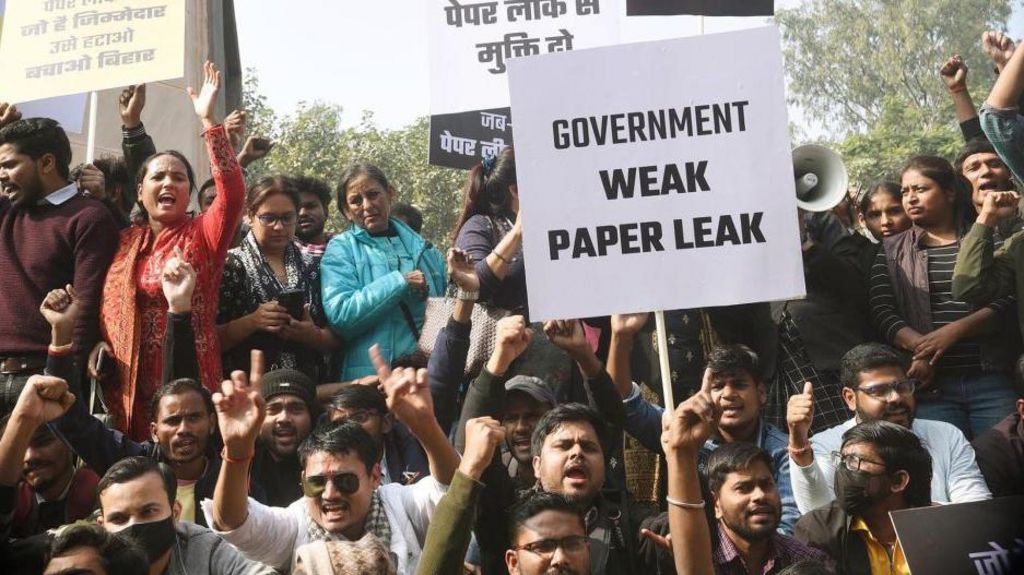
    The controversy at the heart of this election centers on a sweeping voter roll update carried out by India’s Election Commission, billed as a measure to remove duplicate entries, names of deceased voters, and ineligible registrations. In total, roughly 9 million names — equal to 12% of West Bengal’s entire electorate — were struck from the rolls. Officials confirm 6.3 million of those deletions were for voters listed as deceased or permanently absent, while 2.7 million more were marked “doubtful” and left pending verification. But hundreds of thousands of affected voters report they participated in previous elections, hold all required valid government identification, and were removed from the rolls without any formal explanation.

    Take Sheikh Najrul Islam, a 53-year-old paramilitary officer who was deployed to West Bengal to oversee election security. He voted as recently as 2021 and holds all valid citizenship documents, yet his name vanished entirely from the updated voter list. “The Election Commission has deputed me to ensure free and fair polls. Yet, it does not consider me a citizen of this country,” Islam told reporters. Similarly, 62-year-old retired school administrator Taibunessa Begum, who holds a valid Indian passport, official pension records, and a decades-long history of voter registration, said she was stunned to find her name deleted. “It felt like being told I don’t exist,” she said.

    Opposition leaders have levied serious allegations that the deletions disproportionately target Muslim residents and other marginalized communities in the state, a charge national election officials and the ruling party have outright denied. The Election Commission maintains the revision was a straightforward administrative effort to clean up outdated rolls, while BJP officials frame the process as a routine, nationwide exercise that affected Hindu voters as well. The party argues any perceived disproportionate impact in West Bengal stems from a large population of undocumented migrants in the state.

    Critics, however, tie the voter roll changes to polarizing political rhetoric from Modi and senior BJP leaders, who have repeatedly framed the revision as a crackdown on illegal immigration from neighboring Bangladesh. Opposition figures say this rhetoric has amplified deep-seated fears among minority communities that the roll update is being weaponized for political gain to exclude them from the democratic process. Derek O’Brien, a senior Trinamool Congress spokesperson, called the process “invisible rigging,” adding “The motive is to disenfranchise voters.”

    Political analysts warn the controversy could have far-reaching consequences beyond this single election, eroding trust in democratic institutions among marginalized groups. “Losing one’s place in the electoral roll can be deeply unsettling. It is not only about voting rights; it is about dignity, recognition, and the assurance that one counts as a citizen,” said political analyst Iman Kalyan Lahiri. For affected voters like Begum, the stakes are intensely personal, extending far beyond partisan politics. “This is not just about politics,” she said. “It is about identity, about whether we belong to this country.”

  • ‘Boss princess’: Trump counterterrorism official investigated for seeking ‘sugar daddies’

    ‘Boss princess’: Trump counterterrorism official investigated for seeking ‘sugar daddies’

    A high-ranking former counterterrorism official from the Trump administration is at the center of a growing controversy following explosive allegations that she sought wealthy benefactors through a niche dating platform to fund an upscale personal lifestyle, British tabloid *The Daily Mail* first reported on Wednesday.

    The accusations stem from a formal complaint submitted to the Department of Homeland Security (DHS) Office of Inspector General by a 65-year-old divorced executive identified only as Robert B. The complainant alleges that 29-year-old Julia Varvaro, who served as Deputy Assistant Secretary for Counterterrorism at DHS, engaged in a three-month romantic arrangement starting on the mainstream dating app Hinge that ultimately cost him more than $40,000 in gifts, travel, and living expenses.

    According to the complaint, Varvaro maintained an active profile on the dating platform Seeking.com under the alias “Alessia”, marketing herself to potential matches as “seductive sophistication,” with profile details matching both her public Instagram photos and a personal description labeling her “flirty, fun, and fond of sultry spaces.” Robert B claims that Varvaro openly admitted her entire college tuition was covered by previous wealthy benefactors, and that the expensive Cartier jewelry and designer handbags she wore were all “trophies” from prior arrangements with sugar daddies.

    The complainant further alleges that Varvaro requested he cover half of her monthly rent, as well as fund luxury getaways to destinations including Aruba, the Swiss Alps, and Italy. During their relationship, the pair also smoked marijuana together, with Varvaro reportedly claiming she was “above” mandatory drug testing required for DHS employees and referring to herself as a “boss princess.” Under DHS employment rules, recent marijuana use can disqualify candidates for security clearances and official positions, a detail that amplifies concerns raised in the complaint.

    Most critically, Robert B argues that Varvaro’s documented pattern of pursuing large financial gifts from multiple wealthy private individuals creates a significant national security vulnerability for the United States. Financial vulnerability has long been flagged as a key risk factor for foreign espionage and coercion, making the claim particularly serious for a senior counterterrorism official with access to classified government information.

    In response to *The Daily Mail*’s request for comment, Varvaro issued a full denial of all allegations. She refuted having any profile on Seeking.com, claimed she had engaged in no misconduct, and asserted the entire story was fabricated by a disgruntled former boyfriend as an act of retaliation.

    DHS has confirmed that the Office of Inspector General is currently conducting an active investigation into the claims, with no preliminary findings released to the public as of the report.

    The controversy surrounding Varvaro coincides with broader ongoing scrutiny of business activities linked to the Trump family in international markets. Just recently, *The Wall Street Journal* published new reporting on a luxury skyscraper development project in Tbilisi, Georgia, led by the Trump Organization, which is currently managed by former President Trump’s adult children.

    For its part, Seeking.com has publicly updated its community policies in recent years, stating that traditional sugar dating, explicit financial arrangements, and mutually beneficial transactional relationships are explicitly banned from the platform. The company says it now markets itself exclusively to users seeking genuine, traditional romantic partnerships, with the official motto “Date people who make your life better.” Despite this public policy shift, the platform’s homepage still features a promotional video pairing an older gray-haired man with a much younger woman, showing the pair traveling in luxury vehicles, dining at high-end restaurants, and vacationing at exclusive beach resorts, a visual that aligns closely with the platform’s historic reputation for facilitating transactional dating arrangements.

  • High-stakes West Bengal election begins in India amid voter roll row

    High-stakes West Bengal election begins in India amid voter roll row

    India has entered a critical phase of state-level general elections on Thursday, with two of the most closely watched contests unfolding in the eastern state of West Bengal and the southern state of Tamil Nadu. These multi-phase elections are widely viewed as a critical early barometer of public support for Prime Minister Narendra Modi’s national Bharatiya Janata Party (BJP) ahead of upcoming national elections, testing the ruling party’s ability to expand its footprint into regions it has long struggled to penetrate, while also gauging whether fragmented opposition blocs can mount a credible challenge to Modi’s national dominance.

    In West Bengal, the most hotly contested of this round of elections, Thursday’s voting marks the first phase of balloting across 152 of the state’s 294 assembly seats, spread across 16 districts. A total of 1,478 candidates are vying for voter support in this opening phase, with a second round of polling for the remaining 142 seats scheduled for April 29. Incumbent Chief Minister Mamata Banerjee is leading her Trinamool Congress (TMC) party in a bid to secure an unprecedented fourth consecutive term in office, marking the first time the BJP has mounted a full-scale challenge to unseat Banerjee in a state the national party has never controlled.

    The entire electoral process in West Bengal has been overshadowed by a bitter controversy surrounding a sweeping Special Intensive Revision (SIR) of the state’s electoral rolls, a process designed to remove outdated entries of deceased or absentee voters from registration lists. The exercise has resulted in the removal of roughly nine million voters – approximately 12% of the state’s entire electorate – while the registration status of another 2.7 million eligible voters remains pending review. Although India’s Election Commission (EC) maintains the revision is a routine effort to clean up inaccurate voter rolls, the policy has spawned widespread legal challenges and deepened political tensions across the state.

    Political friction has been further inflamed by rhetoric around the revision. Prime Minister Modi has framed the clean-up as a targeting of so-called “illegal Bangladeshi infiltrators”, a framing the TMC argues is a dog whistle targeting West Bengal’s large Muslim community. Independent observers and local officials have noted, however, that excluded voters include large numbers of Hindu residents as well, with many eligible voters reporting their names were struck from rolls despite holding valid identity documentation. Disputes over voter eligibility are still working their way through adjudication tribunals even as voting gets under way, leaving millions of residents uncertain whether they will be able to cast a ballot in this election.

    Notably, the first phase of polling covers constituencies in West Bengal’s less developed northern, central, and southwestern regions, which include the state’s three Muslim-majority districts: Murshidabad, Uttar Dinajpur, and Malda. This same geographic area also holds a disproportionate share of the 2.7 million voters whose eligibility remains in limbo, raising concerns about disenfranchisement among minority and marginalized communities. The second and final phase, by contrast, will cover seats in and around Kolkata, the state capital, and the lower Gangetic plains of south Bengal – a region that has been a TMC stronghold for the past three consecutive election cycles.

    In a nod to West Bengal’s long history of election-related violence and political intimidation, security officials have deployed a record 240,000 federal personnel across the state, backed by armored bulletproof vehicles patrolling all poll-bound districts. The EC has also implemented strict security restrictions ahead of the first phase, including a ban on daytime bike rallies, pillion passenger riding, and non-essential two-wheeler travel after dark across all 152 first-phase constituencies. Authorities have also implemented an extended 96-hour ban on liquor sales, double the standard 48-hour restriction implemented in most Indian elections. West Bengal’s Chief Electoral Officer Manoj Kumar Agarwal confirmed the extended ban came in response to a dramatic 30% to 240% spike in liquor purchases from state-run retail outlets, noting that officials are investigating where the stockpiled alcohol is being stored to prevent its use as an inducement for voters.

    Beyond West Bengal, all eyes are on Tamil Nadu, where the entire 234-seat state assembly will be contested in a single phase of voting on Thursday, with more than 57 million eligible voters registered to cast ballots. Tamil Nadu’s politics have long been dominated by two regional Dravidian parties: the incumbent Dravida Munnetra Kazhagam (DMK) led by Chief Minister MK Stalin, who is seeking a second consecutive term, and the opposition All India Anna Dravida Munnetra Kazhagam (AIADMK), which has formed an electoral alliance with the national BJP.

    This election cycle has shaken up the state’s traditional two-party dynamic, however, with the entry of popular Tamil actor-turned-politician Vijay and his newly formed Tamilaga Vettri Kazhagam (TVK) party, creating the prospect of a competitive three-way race that could reshape the state’s political landscape. The BJP has historically struggled to gain traction in Tamil Nadu, where regional identity, linguistic pride, and welfare-focused policy have long dominated electoral politics. For the national party, even modest gains in Tamil Nadu would mark a significant breakthrough in its efforts to expand its influence across southern India, a region that has long resisted the BJP’s Hindu nationalist agenda. Ongoing debates over delimitation – the redrawing of electoral constituencies to reflect population shifts – have also amplified regional concerns about fair political representation in the state, adding an extra layer of tension to the contest.

    These two state elections are the final phase of a broader round of regional contests that have already seen polling held in Kerala, Assam, and the union territory of Puducherry. The overall results of these elections will provide critical insight into the political mood of India ahead of the next national general election, shaping expectations for Modi’s third term bid and the future of national opposition politics.

  • Two Pakistanis selected for China’s space mission training

    Two Pakistanis selected for China’s space mission training

    In a historic milestone for both Sino-Pakistani relations and global space cooperation, the China Manned Space Agency announced on Wednesday that two Pakistani nationals have become the first foreign astronaut candidates selected to participate in China’s crewed space mission training program.

    The two selected candidates, Muhammad Zeeshan Ali and Khurram Daud, will travel to China in the near future to serve as reserve astronauts, according to an official statement from the agency. After they complete all mandatory training modules and passing rigorous comprehensive evaluations, one candidate is expected to be assigned to a future crewed mission as a payload specialist. If selected for the mission, this Pakistani astronaut will become the first international visitor to board China’s Tiangong Space Station, and also mark the first time any Pakistani national has reached Earth’s orbit, a first for the South Asian nation.

    The CMSA framed the joint training initiative as a landmark achievement in international aerospace collaboration, and a tangible demonstration of the China-Pakistan all-weather strategic cooperative partnership extending into the cutting-edge space sector. “This fully showcases the Chinese government’s open commitment to sharing the achievements of its space program with the entire global community,” the agency noted.

    China’s core guiding principle for its space exploration endeavors has long centered on the peaceful use of outer space for the collective benefit of all humanity, the statement added. The Chinese manned space program will maintain its open door policy, the agency confirmed, welcoming all nations across the globe to join in collaborative projects covering scientific experiments, technological trials conducted onboard the Tiangong Space Station, as well as joint astronaut selection and training. “Together, we will broaden humanity’s understanding of the cosmos, and join hands to contribute wisdom and strength to building a global community of shared future for humankind,” the statement read.

    The groundwork for this collaborative program was laid in February 2025, when the Chinese space agency and Pakistan’s Space and Upper Atmosphere Research Commission signed a bilateral cooperation agreement in Islamabad, formalizing the framework for joint selection and training of Pakistani astronaut candidates.

    Prior to this, the highest altitude reached by any Pakistani national was 87.4 kilometers above sea level, achieved by polar explorer and artist Namira Salim in October 2023 during a 55-minute suborbital flight operated by U.S. commercial space firm Virgin Galactic. By global convention, the Karman Line, located 100 kilometers above sea level, is recognized as the official boundary of outer space, the threshold for orbital spaceflight.

    Wang Yanan, editor-in-chief of *Aerospace Knowledge* magazine, explained that the two Pakistani candidates will need to master a wide range of spaceflight-related knowledge and core skills, including Chinese language proficiency, foundational space science, spacecraft structure and functionality, space physics, and emergency response protocols. “Given that both candidates already have outstanding physical fitness and strong academic backgrounds, I am confident they will be able to master all the required knowledge and skills without major difficulty,” Wang said.

    He added that for the Pakistani public, seeing one of their compatriots travel to space will be an unprecedented historic moment that fills the nation with pride. It is also expected to ignite greater interest in cutting-edge scientific research and space exploration among young Pakistanis, encouraging more of the next generation to pursue careers in aerospace.

    Currently orbiting Earth, the Tiangong Space Station stands as one of the largest and most advanced space infrastructure ever deployed in low Earth orbit, and is the only active space station independently developed and operated by a single country.

  • How a pivot to hair accessories led to business success

    How a pivot to hair accessories led to business success

    Against the backdrop of post-pandemic small business turbulence and shifting consumer fashion trends, San Francisco-based artist and entrepreneur Jenny Lennick has built a thriving retail brand around one surprisingly specific niche: food-themed hair accessories. What began as a pivot away from a struggling brick-and-mortar clothing business has evolved into Jenny Lemons, a profitable accessories label that posted $2 million in revenue in 2025 and earned a cult customer following across the United States and beyond.

  • Trump extends ceasefire but continues blockade of Iran

    Trump extends ceasefire but continues blockade of Iran

    In a Tuesday announcement posted to his Truth Social platform, former U.S. President Donald Trump has extended an existing two-week ceasefire in the U.S.-Israeli military campaign against Iran, though he has ordered U.S. military forces to maintain a strict naval blockade of the country and remain on high alert for potential renewed hostilities.

    The ceasefire extension comes just two weeks after Trump threatened to destroy Iran’s “whole civilization” hours before the initial truce took effect. In his post, Trump framed the extension as a response to two key factors: the deep internal political fragmentation within Iran’s government, and a formal request from Pakistan’s top military leader Field Marshal Asim Munir and Prime Minister Shehbaz Sharif to delay new attacks to allow Iranian officials time to draft a unified negotiating proposal.

    “I have therefore directed our Military to continue the Blockade and, in all other respects, remain ready and able, and will therefore extend the Ceasefire until such time as their proposal is submitted, and discussions are concluded, one way or the other,” Trump wrote in the statement, offering no fixed end date for the extended truce.

    The U.S. naval blockade was implemented after Iran closed the Strait of Hormuz, a critical global chokepoint for international fossil fuel trade connecting the Persian Gulf to the Gulf of Oman. Over the weekend, Trump confirmed that U.S. forces had seized the Touska, a 900-foot Iranian-flagged cargo vessel, as part of the blockade operation.

    Regional and policy analysts have painted a grim picture of the current stalemate, warning that the lack of trust between Washington and Tehran leaves the door open for sudden conflict resumption. Trita Parsi, co-founder and executive vice president of the Quincy Institute for Responsible Statecraft, assessed that the current arrangement aligns with the most likely outcome: a frozen conflict with no major breakthroughs. “No deal, no sanctions relief, no nuclear compromise, no return to war, while Iran continues to control the strait,” Parsi said, noting that Trump achieves his core goal of exiting full-scale war while Iran fails to secure its top demand of sanctions lifting, leaving the region in an unstable limbo.

    While the United Nations has welcomed the ceasefire extension – with a spokesperson for Secretary-General António Guterres calling it “an important step toward de-escalation and creating critical space for diplomacy and confidence-building between Iran and the United States” – Iranian officials have rejected the status quo and pushed back against the continued blockade.

    Drop Site News co-founder Jeremy Scahill reported Tuesday that an anonymous Iranian official confirmed Iran’s core position remains unchanged: full lifting of the U.S. naval blockade is a non-negotiable precondition for any further negotiations. An advisor to Iranian Parliament Speaker Mohammad Bagher Ghalibaf went further, telling Reuters chief national security reporter Phil Stewart that the ceasefire extension is meaningless, and may even be a U.S. tactic to buy time for a surprise offensive. The advisor added that maintaining the blockade is equivalent to military bombardment, and must be met with a military response from Iran.

    Sina Toossi, a senior fellow at the Center for International Policy, warned that after two surprise attacks on Iranian soil, hardline factions in Tehran are now pushing for pre-emptive military action against U.S. military and commercial vessels operating near the Strait of Hormuz. “Trust between the sides remains at zero and renewed war could break out at any time,” Toossi stressed. He also dismissed Trump’s framing of the extension as a response to Pakistan’s request, noting “Pakistan isn’t deciding whether the U.S. goes to war with Iran. They’re a conduit, not a driver. More a convenient excuse and diplomatic cover than having any sort of actual influence over Trump on Iran.”

    In a pre-extension op-ed for The Guardian, Toossi argued that Iranian officials have little incentive to offer major concessions after holding their ground through the initial U.S.-Israeli offensive. “Having fought what they see as an existential war with the US and Israel and held their ground, Iranian officials see little reason to rush into major concessions. The priority is not a sweeping deal, but reducing the risk of war while preserving core sources of power, from Hormuz to its nuclear program,” he wrote. Toossi added that the most likely long-term outcome is not a full peace deal, but a fragile interim arrangement that manages rather than resolves the conflict, with Iran betting that global economic pressure from energy market disruptions will eventually force the U.S. to back down.

    The human and economic costs of the two-month conflict continue to mount. Climate advocacy group 350.org estimates that global consumers and businesses have paid an extra $158.6 billion to $166.9 billion in fuel costs over the first 50 days of the war alone, driven by supply disruptions and price volatility. Since the U.S. and Israel launched their initial offensive in February, thousands of people have been killed across Iran and the broader region, and tens of thousands of Iranian civilian infrastructure sites have suffered significant damage.