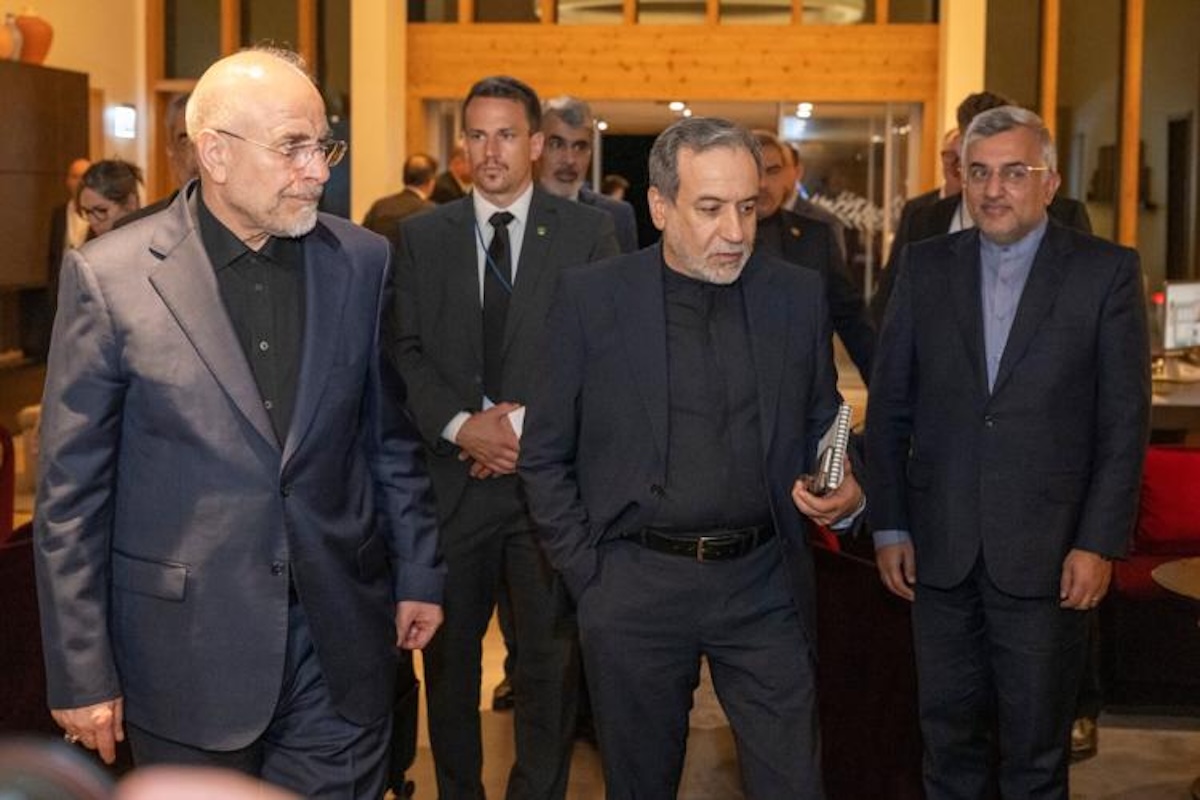
High-stakes peace negotiations hosted in Switzerland have achieved “major progress” toward regional de-escalation, Iran’s top diplomat announced late Sunday, even as belligerent threats from former U.S. President Donald Trump and ongoing Israeli military assaults in Lebanon have created severe risks of derailing the talks.
Iranian Foreign Minister Abbas Araghchi highlighted that tireless mediation efforts from Pakistan and Qatar have delivered key breakthroughs aligned with the recently signed memorandum of understanding (MOU), including binding commitments to launch a specialized deconfliction cell tasked with overseeing the full termination of Israeli military operations across Lebanon.
Beyond the Lebanese ceasefire framework, Araghchi confirmed that negotiators have reached consensus on three additional critical points: an end to the long-running U.S. economic blockade on Iran, the unfreezing of a portion of Iran’s overseas sovereign assets, and the adoption of a major national reconstruction and development plan tailored for Iran.
The Iranian delegation departed the Swiss negotiating venue shortly after Trump issued extreme threats that included vows to assassinate Iranian diplomatic personnel and forcibly “take over” the sovereign state of Iran. These threats directly violate core terms of the existing MOU, which mandates all participating parties to refrain from any threat or use of military force against one another.
In a joint official statement released Sunday evening, the governments of Pakistan and Qatar, the two lead mediating nations, confirmed that negotiators have finalized a 60-day roadmap to reach a binding final peace agreement. The framework clears the way for immediate technical talks to begin, laying the groundwork for sustained progress.
“In addition, a direct communication line between the relevant parties has been established to prevent unintended incidents and miscommunication, with the core goal of guaranteeing safe passage for commercial shipping through the Strait of Hormuz,” the joint statement added. “The mediating parties will continue to exert every possible effort to maintain a constructive negotiating environment and advance toward a comprehensive final agreement.”
The optimistic outlook from Araghchi and the mediator governments comes after the first round of formal talks got off to a rocky start. The Iranian delegation initially delayed its arrival to Switzerland in response to a deadly wave of Israeli airstrikes that targeted southern Lebanon late last week.
Notably, Israeli leadership is not a participating party to the Swiss negotiations, and it has repeatedly refused to end its military occupation of southern Lebanon — a key sticking block that remains a major obstacle to a final deal ending the broader conflict that the U.S. and Israel launched against Iran in late February. Iran has repeatedly stated that the Trump administration must pressure Israeli authorities to end their offensive in Lebanon as a core condition for any final agreement.
Over the weekend, as talks unfolded in Switzerland, Israeli Defense Minister Israel Katz reaffirmed his government’s hardline stance in a social media post. “Israel has no intention of withdrawing from the Beaufort, which is an integral part of the security zone in Lebanon and essential for the defense of the Galilee settlements and IDF forces,” Katz wrote. He added that Prime Minister Benjamin Netanyahu and he have repeatedly made clear that Israel will not withdraw from its occupied security zone in Lebanon, leaving a key unresolved hurdle for the ongoing negotiation process.