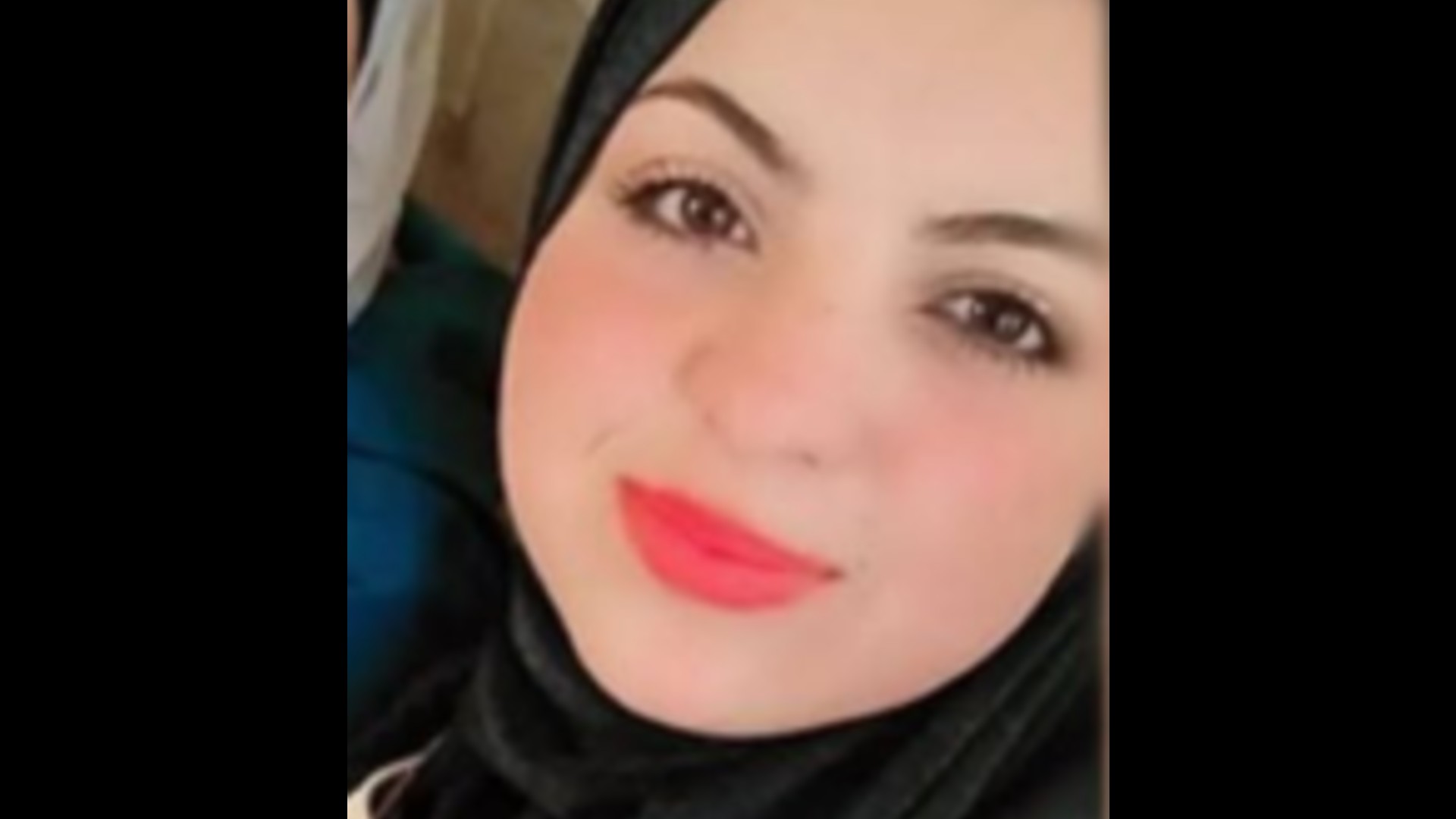
In the heart of Gaza City, a 17-year-old Palestinian teenager with a single, unshakable dream – to complete her secondary education and secure a future through learning – would never reach the classroom that awaited her. Just days before her final exam preparatory classes were set to kick off, Raghad Ashour had already turned down a marriage proposal, choosing books over a walk down the aisle in a conflict zone where normal childhoods have long been erased by violence.
On a quiet Monday morning, Raghad stepped out of her family’s makeshift tent in a central Gaza displacement camp and set off toward a private learning center just a short walk away. She never crossed the center’s threshold. Mere meters from her destination, an Israeli drone strike in the Rimal neighborhood took her life instantly. The double-tap attack left at least five additional people wounded, their fates added to a growing toll of civilian casualties in the renewed hostilities.
Raghad’s story is far from an isolated tragedy in Gaza’s collapsing education system. For three consecutive years, more than 658,000 school-aged children across the enclave have been locked out of in-person learning. Israeli attacks have damaged or destroyed more than 97% of Gaza’s school infrastructure, and the few buildings left standing have been repurposed as emergency shelters for the tens of thousands of families displaced by bombing campaigns that began in October 2023.
To address the ongoing crisis, the Palestinian Ministry of Education rolled out limited remote learning options, prioritizing senior secondary students gearing up for critical exams. Lessons, study guides, and academic support are distributed via digital platforms, messaging apps, and pre-recorded or live online sessions where connectivity allows. But for the vast majority of Gaza’s student population, accessing these resources remains an insurmountable challenge. Widespread destruction of electricity and telecommunications networks has left most displacement camps and residential areas with little to no power or stable internet access.
To overcome these barriers, many desperate students travel to public spaces like cafes powered by solar panels or scarce fuel generators to download study materials, charge their devices, and sit for online exams. Others, like Raghad, turn to small private learning centers that offer in-person supplementary support to bridge gaps left by interrupted remote learning.
Speaking to Middle East Eye as he received mourners at Raghad’s funeral, her great-uncle Jamil Ashour recalled the teenager’s relentless determination to pursue her education against all odds. “Despite everything she had been through, she was determined to attend her classes,” he said. “She found a centre near the camp and went there every morning. She studied hard and would arrive early to secure a desk and make sure everything was ready before lessons began. But she never made it to the centre.”
Raghad faced constant setbacks: frequent blackouts that left her unable to charge her phone back at the tent, broken devices, and the constant uncertainty of life under bombardment. But nothing could sway her from her goal. Orphaned as a toddler when her father was killed in an Israeli attack when she was just three years old, Raghad saw education as her only path to stability and independence. “She grew up a single orphan and came to realise that nothing could support her like an education that would secure her a good job,” Jamil Ashour explained.
As the only daughter in a family of five children, Raghad was the heart of her displaced family’s tent. Her mother, who raised Raghad and her four brothers alone after her husband’s death, called the teenager not just a daughter, but a friend and companion through the darkest days of displacement and grief. “Just yesterday, I visited them in their tent and drank tea she had made with her own hands,” Ashour recalled. “She told me stories, and we laughed together. She was the flower of the house. Her brothers adored her.”
When a marriage proposal came for Raghad just days before her death, her mother was overjoyed – after decades of hardship, she had never imagined she would live to see her daughter reach marriageable age. But Raghad was unwavering in her refusal. She called her great-uncle to mediate, insisting she would first finish secondary school and go on to university. “But Raghad completely refused the idea. She didn’t want to get married, so she called me to come over and convince her mother. She wanted to finish her education and go to university,” Ashour said.
The shock of Raghad’s death was too much for her mother to bear; she fainted immediately after news of the strike reached the camp and was admitted to hospital, where she remained as of Tuesday. “Her heart simply couldn’t bear it; she fainted despite everyone trying to comfort her,” Ashour added.
Raghad is one of more than 1,011 Palestinians killed in Israeli military operations in Gaza since a ceasefire agreement ended a previous round of hostilities in October 2025. More than 3,000 additional people have been wounded in the renewed violence, a toll that continues to climb daily. Like many civilian casualties, Raghad was not a target of the strike – Jamil Ashour points to the common Israeli justification that strikes are aimed at specific militants, a claim that rings hollow for the families of innocent children caught in the crossfire.
“This is just a child. What does she have to do with all of this?” Ashour asked. “She insisted on continuing her education, despite being deprived of her father, her home, and any chance to live a normal childhood.”
Originally from Beit Hanoun in northern Gaza, Raghad and her family had been displaced multiple times after the 7 October 2023 outbreak of hostilities, their home reduced to rubble by an Israeli airstrike before they settled in the central Gaza camp. For the family, what little consolation exists comes from the knowledge that Raghad died chasing the future she fought so hard to build. “Our only consolation is that she was killed on her way to pursuing her dream,” Ashour said.
Official data from the Palestinian Ministry of Education underscores the scale of the catastrophe facing Gaza’s student population. Since October 2023, at least 19,100 Palestinian K-12 students and 1,379 university students have been killed in Israeli attacks, with another 28,419 K-12 students and 3,017 university students wounded. For the surviving students, the dream of education remains out of reach for most, trapped between collapsing infrastructure and ongoing violence that shows no sign of abating.