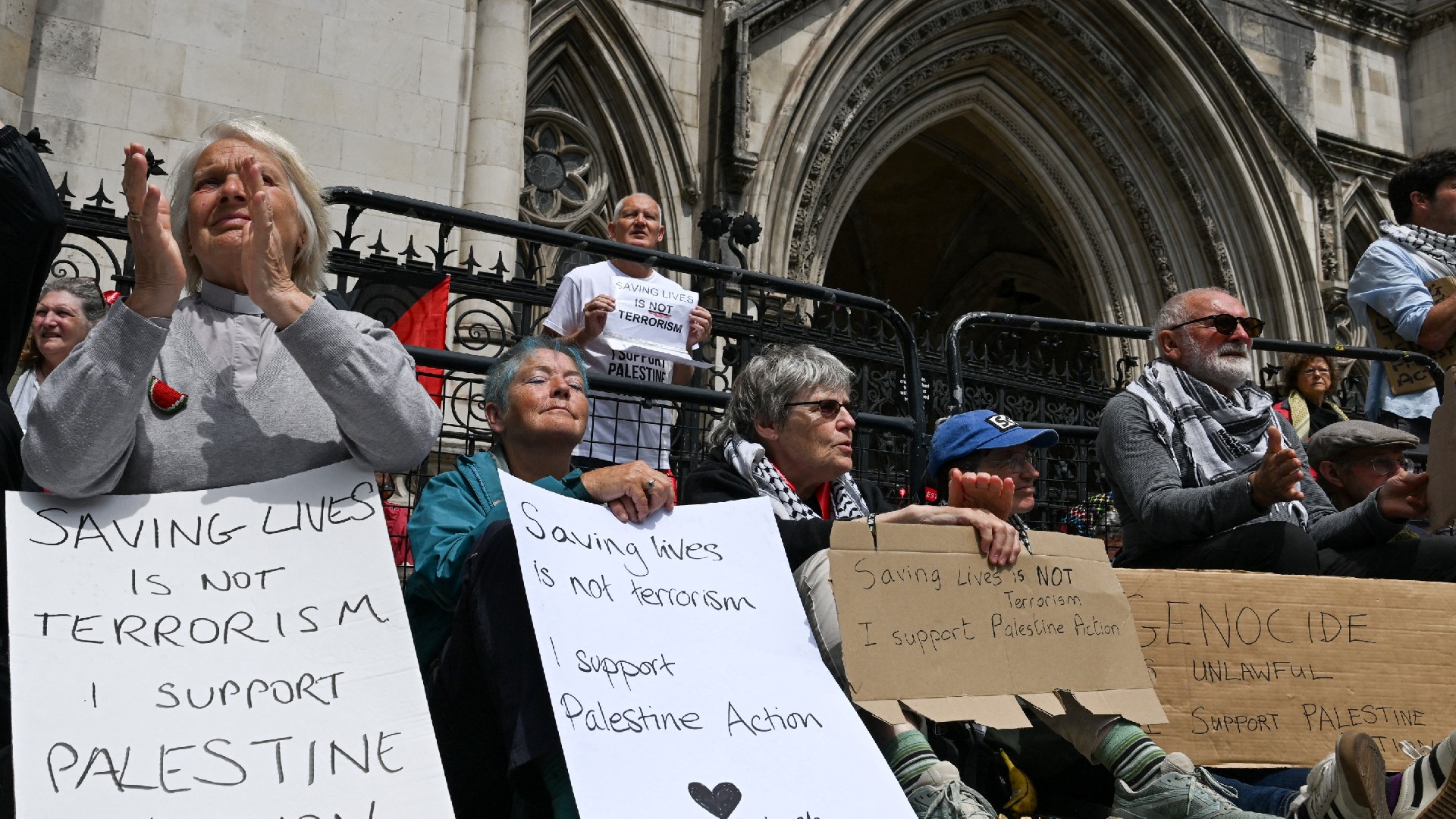
One of the United Kingdom’s most prominent human rights barristers is once again facing formal contempt of court proceedings, after the presiding judge in a high-profile Palestine Action trial chose to advance disciplinary action against him for a second time, in a move that legal observers describe as without historical precedent in English law.
Rajiv Menon KC, a 30-year veteran of the bar who represented defendant Charlotte Head in both trials of six Palestine Action activists, stands accused of violating pre-trial directions issued by Justice Johnson, the judge overseeing the case at Woolwich Crown Court. The six activists were charged with aggravated burglary and criminal damage for damaging equipment at an Israeli-owned arms factory operated by Elbit Systems outside Bristol. After the first trial ended with all defendants cleared of aggravated burglary charges, a retrial in May resulted in four convictions on the criminal damage counts.
The controversy stems from Menon’s January 2024 closing speech to the jury. Johnson had explicitly barred defense legal teams from referencing the long-held legal principle of “jury equity” — the right of juries to acquit defendants based on conscience, a right first established by the landmark 1670 Bushell’s Case. Johnson also ruled that the defendants could not argue the “lawful excuse” defense, which would have allowed them to claim the damage was justified to prevent greater harms from Israeli military operations in Gaza. He further ordered that all arguments about the broader context of the Gaza war be excluded from jury consideration.
In his closing remarks, Menon read the inscription from a plaque at London’s Old Bailey that commemorates Bushell’s Case, and told jurors the judge could not order them to issue a conviction. He also noted that the defense had been blocked from presenting evidence about Elbit Systems’ role in Israel’s military campaign in Gaza, arguing it would be unreasonable to expect jurors to ignore this wider context when weighing the defendants’ motives. Menon has repeatedly denied violating the court’s directions, noting he never explicitly used the phrase “jury equity” or directly urged the jury to acquit on conscience, and repeatedly reminded jurors to follow the judge’s guidance.
A prior attempt by Johnson to initiate contempt proceedings was thrown out by the Court of Appeal in May, when a three-judge panel ruled Johnson had acted unlawfully by referring the matter directly to the High Court. The panel instructed Johnson that he could either handle the allegation himself, refer the matter to the UK attorney general, send it to the Bar Standards Board for professional disciplinary action, or drop the case entirely.
However, following a directions hearing at the Royal Courts of Justice on Friday, Johnson rejected all three of the Court of Appeal’s suggested options. In a ruling issued Monday, he confirmed he would instead refer the case to a separate High Court judge sitting at the Crown Court to hear the contempt proceedings. Johnson stated that he had concluded “there is a case to answer in contempt” and that advancing formal proceedings is “in the public interest to institute”, rejecting defense arguments that the case is too old to proceed. Johnson emphasized he has not yet reached a final finding of contempt, a decision that will rest with the new presiding judge.
Adrian Waterman KC, representing Menon, told the court that Menon never “knowingly” breached the court’s orders, and that the barrister was “astonished” when the allegations were first raised. Quoting Menon directly, Waterman told the court: “I absolutely didn’t cross any line, any line whatsoever.” Waterman added that Menon repeatedly instructed the jury to follow the judge’s directions, and that the court could not find Menon in contempt unless it ruled his account of events was intentionally dishonest — a finding Waterman argued is impossible to support on the evidence.
In contrast, prosecutor Tom Little KC argued that Menon’s closing speech amounted to a “clear, deliberate and sustained breach” of the court’s orders that meets the legal definition of contempt.
Waterman has warned that the case carries far-reaching implications for the UK’s criminal justice system. He argued that defense barristers must be afforded wide latitude to advocate vigorously for their clients, and noted that Menon spent hours consulting with other senior defense lawyers to craft his closing remarks in line with the judge’s directions. Pursuing contempt charges, Waterman argued, will create a profound “chilling effect” across the legal profession, and could violate Menon’s right to freedom of expression protected under the European Convention on Human Rights.
The case has already taken a severe personal toll on Menon. The court heard that Menon has suffered “deep anxiety” throughout the process, and that he was unable to be with his father when his father died recently, due to the ongoing proceedings against him.
Garden Court Chambers, where Menon practices as a senior barrister, released a statement calling the unprecedented proceedings damaging to the UK’s justice system. “The administration of justice depends upon an independent bar willing and able to act in the best interests of their clients, fearlessly and with integrity,” the statement read. “The unprecedented [proceedings against Menon] undermine and diminish our system of criminal justice.”