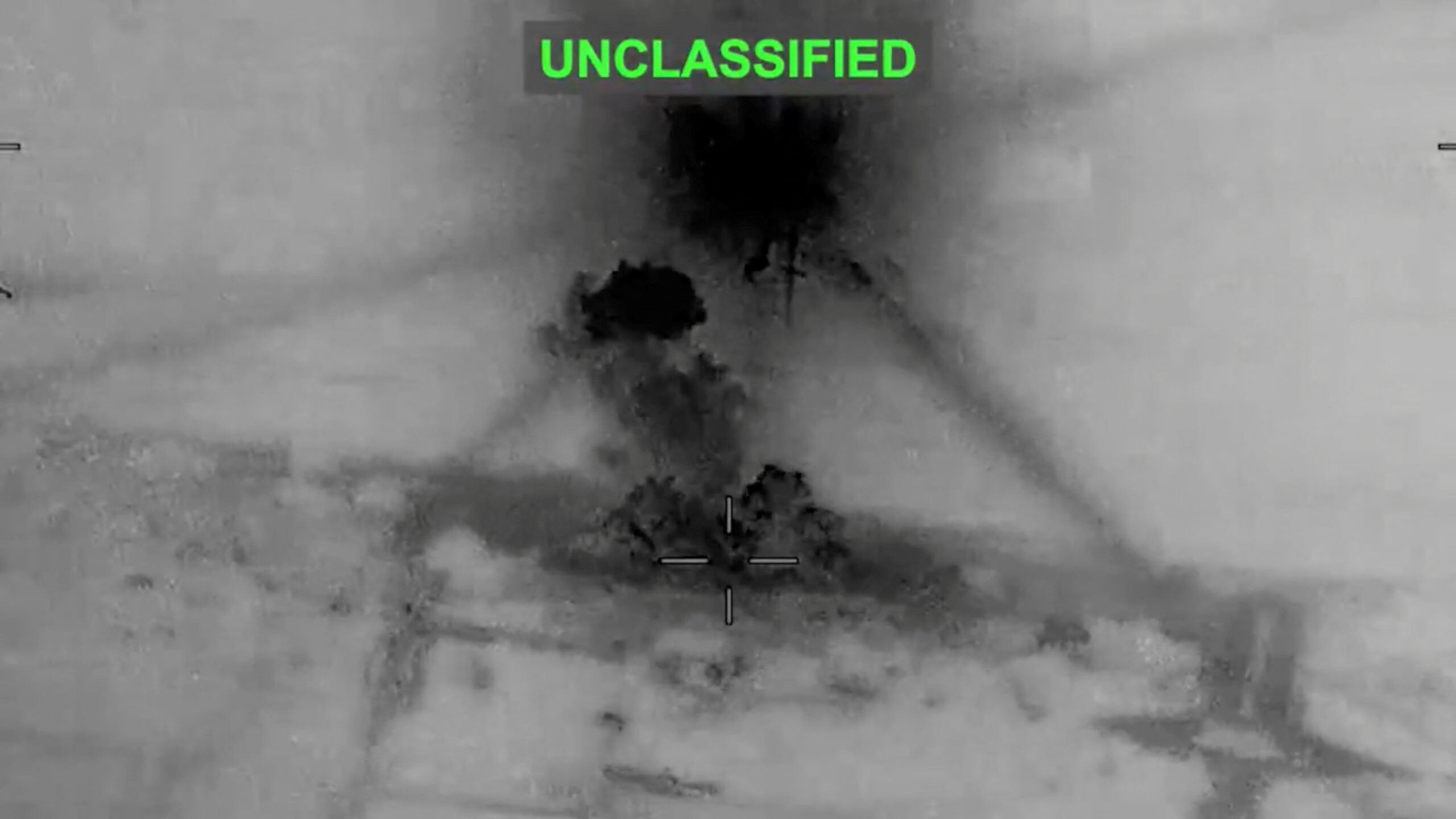
Tensions between Iran and the United States have surged to their most dangerous level since the two parties signed an interim peace deal to end a four-month conflict, after a pair of consecutive days of reciprocal strikes that have threatened stability across a critical global waterway.
The spiral of violence was triggered by an attack on a cargo vessel on Thursday, after which both sides traded accusations that the other had broken the terms of the ceasefire agreement. Washington immediately pinned responsibility for the assault on Tehran.
Just two days later, the United Kingdom’s leading maritime security watchdog, UK Maritime Trade Operations (UKMTO), confirmed another incident: a commercial tanker was hit by an unguided projectile while transiting the Strait of Hormuz. The strike caused significant damage to the vessel’s bridge, but official updates confirmed that all crew members escaped unharmed, and no leakage of fuel or cargo has resulted in environmental damage to the strait’s waters.
In response to the string of recent hostile incidents, the Joint Maritime Information Center — a multinational naval coalition tasked with safeguarding commercial shipping in the region — has announced an upward adjustment to its regional security threat level, stepping up defensive patrols and alerting commercial operators to increased risks.
On Saturday, Iranian officials confirmed that they had launched what they described as “defensive” strikes against military targets with links to the United States. The operation was framed as a direct response to US airstrikes that hit Iranian facilities on the country’s southern coast the previous day. Tehran condemned the US attack as a “barbaric air strike” that targeted coastal surveillance outposts, arguing that the action violated core principles of the United Nations Charter.
While Iran’s foreign ministry declined to disclose the exact locations of its retaliatory strikes, Bahrain — which hosts the US Navy’s Fifth Fleet — issued a formal condemnation of what it called an Iranian drone strike on Bahraini territory.
For its part, the US military defended its own pre-emptive strikes, saying they were carried out in direct response to an Iranian drone attack on the cargo vessel in the Strait of Hormuz.
The Strait of Hormuz, one of the world’s most vital chokepoints for global energy supplies, has seen a resumption of regular commercial traffic over the past two weeks after months of disruptive tensions. In that period, Iran has moved aggressively to assert its sovereign authority over shipping transiting the waterway, requiring vessels to obtain Iranian approval to use designated transit channels. While Tehran has not issued an official comment on specific reports of attacks on commercial ships, Iranian state television reported that the Islamic Revolutionary Guard Corps had fired warning shots at vessels that attempted to use unapproved channels. The incident has pushed a growing number of commercial shipping operators to apply for Iranian transit permits before entering the strait.
US Vice President JD Vance issued a public statement reaffirming that Washington had fully abided by the terms of the ceasefire agreement, and placed sole blame for the renewed escalation on Iran. “Iran signed a ceasefire agreement. We have honored it. If they have disagreements about how the MOU is being applied, they can pick up the phone. But violence will be met with violence,” Vance wrote in a post on the social platform X.