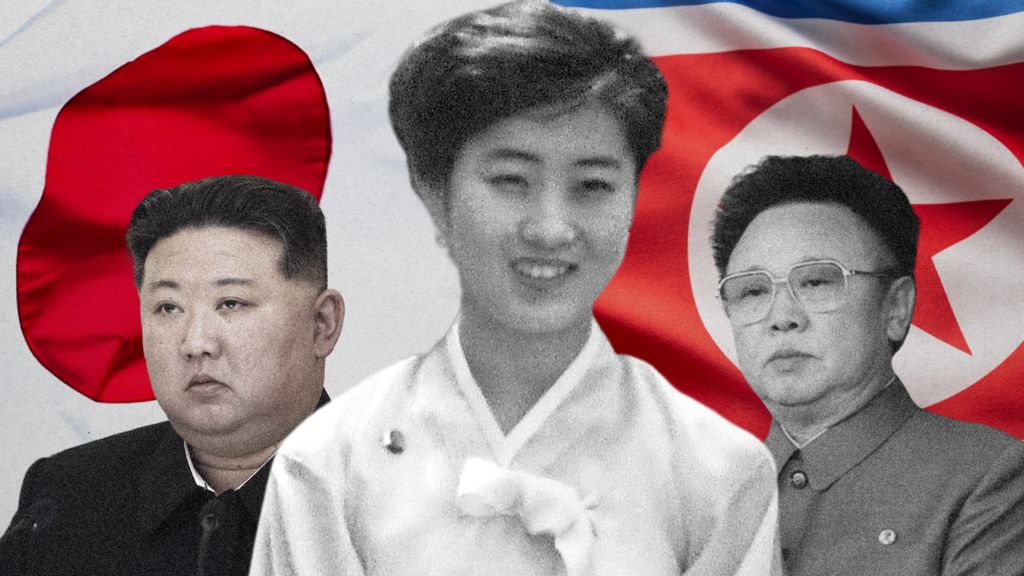
For 15 years of leadership under Kim Jong Un, one secret has remained among the most tightly guarded in the isolated authoritarian state: the public identity of his mother. Within North Korea’s ruling ideology, the legitimacy of the Kim family’s dynastic rule hinges entirely on the mythologized “Mount Paektu bloodline”—a lineage tied to Dangun, the legendary founder of the Korean people, and cultivated for decades to frame the Kims as inherently entitled to power. But the truth of Kim Jong Un’s maternal heritage directly undermines this foundational narrative, making his mother’s identity not just a state secret, but a potential existential threat to the regime.
Mount Paektu, the volcanic peak straddling the China-North Korea border, has long been central to the Kim dynasty’s legitimacy-building. Myth holds it is the birthplace of Dangun, founder of Korea’s first ancient kingdom. Centuries later, North Korea’s founding leader Kim Il Sung framed the mountain as his guerrilla hideout during Japan’s colonial occupation of the Korean Peninsula, while his son and successor Kim Jong Il was officially proclaimed to have been born on the mountain’s sacred slopes—despite widespread evidence of his actual birth in the Soviet Union. As former exiled North Korean diplomat Ryu Hyun-woo noted in his book *Kim Jong Un’s Secret Vault*, Kim Jong Un’s rise to power as an untested man in his 20s was enabled solely by this carefully constructed Paektu bloodline narrative.
The reality of Kim’s maternal origins tells a far different story. Historians and biographers have documented that Kim Jong Un’s mother, Ko Yong Hui, was born in 1952 in Osaka, Japan, to ethnic Korean parents originally from Jeju Island, off the southern coast of modern-day South Korea. Ko’s family were Zainichi Koreans—ethnic Koreans who resided in Japan during its 1910–1945 colonial rule of Korea. When Ko was around 10 years old, her family joined an estimated 93,000 Zainichi Koreans who resettled in North Korea between 1959 and 1984, lured by state promises of free healthcare, education, and stable employment.
While early Zainichi migrants were initially envied for the cash, clothing, and appliances they brought from Japan, they were quickly labeled “jjaepo”—a derogatory term for people deemed contaminated by foreign capitalist ideologies. Under North Korea’s strict hierarchical social classification system called songbun, jjaepo fall into the “wavering class,” positioned between the regime’s trusted core class and the marginalized hostile class. They face constant state surveillance and are routinely barred from elite universities and high-level government positions. This stands in stark contradiction to the regime’s narrative of pure, sacred Paektu bloodline. “The [regime’s] Paektu bloodline is seen as sacred,” explains Kim Hyung-su of the Northern Research Association. “So the idea of the leader being a jjaepo’s son is unimaginable.”
Unlike most Zainichi Korean migrants, Ko avoided the lower-caste fate of her community after catching the attention of Kim Jong Il, who was already being groomed as Kim Il Sung’s successor. At the time, Kim Jong Il was already in an arranged political marriage to Kim Young Sook, daughter of a high-ranking military official, and had two other known mistresses. But Ko, a performer with the elite Mansudae Art Troupe, won Kim Jong Il’s attention through her natural beauty and dancing skill, according to Japanese journalist Yoji Gomi, who published a book on Ko in 2025. The pair went on to have three children together, though their relationship was never officially recognized by the North Korean regime.
Because children born outside of official wedlock carry severe social stigma in North Korea, Ko and her children were sequestered in the coastal town of Wonsan, 130 miles outside of Pyongyang, where Kim Jong Il’s official wife resided. Even so, Gomi notes Ko lived what he describes as a “Cinderella-like life” of elite privilege hidden from public view. Still, she was never publicly recognized as Kim Il Sung’s daughter-in-law, and the founding leader never appeared in public with Ko’s children. Dr. Cheong Seong-chang of the Sejong Institute notes that if Ko had won Kim Il Sung’s approval, photos of him with his grandchildren would have been widely distributed to the public.
After Kim Il Sung’s death in 1994, Kim Jong Il took power, and Ko became the de facto first lady of North Korea. She accompanied Kim on military inspections, built close ties to his inner circle, and even was consulted on policy decisions before they were finalized, according to Kenji Fujimoto, Kim Jong Il’s former personal chef. A 2011 state documentary included footage of Ko joining Kim on local tours, but it never named her or disclosed her social background. The film was only screened for senior party officials in 2012 before it was leaked, spreading to ordinary citizens via smuggled USB drives. “As it spread… people’s curiosity about Ko Yong Hui skyrocketed, so the regime quickly recalled [the documentary],” Dr. Cheong explains, adding that her background could directly call the regime’s legitimacy into question. Ko died of breast cancer at a Paris hospital in 2004, and her death was never acknowledged or reported by North Korean state media.
The question of how Kim Jong Un, the second son of an unacknowledged mistress, ultimately inherited power begins with the elimination of other potential heirs. Kim Jong Il’s official wife only had daughters, who were barred from succession under the dynasty’s patriarchal norms. His first son with another mistress, Kim Jong Nam, was long considered a potential candidate until he fell out of favor: Gomi, who corresponded with Kim Jong Nam for years, notes that he openly questioned North Korea’s hereditary system and advocated for political reform, and gained a reputation for a jet-setting, party-focused lifestyle that included frequent trips to foreign casinos. After years in exile in Macau, Kim Jong Nam was assassinated with a lethal nerve agent at a Malaysian airport in 2017. Kim Jong Un’s older brother Kim Jong Chul was also ruled out, with former diplomat Ryu reporting that he was disqualified due to a severe opium addiction.
Ko, aware that her family would face peril if her son did not take power, actively pushed to position Kim Jong Un as the next heir on the advice of her own sister, according to journalist Anna Fifield in her book *The Great Successor: The Secret Rise and Rule of Kim Jong Un*. Kim Jong Un quickly became his father’s favorite, with analysts citing his strong leadership demeanor and competitive nature. Though he briefly studied in Switzerland as a teenager, he remained far more isolated from foreign influence than his older half-brother Kim Jong Nam. When Kim Jong Il died in 2011, 27-year-old Kim Jong Un secured his position as the third supreme leader of North Korea, and has since elevated his sister Kim Yo Jong to a senior role leading the country’s powerful propaganda department, according to South Korea’s Unification Ministry.
Even after more than a decade in power, the secret of his mother’s origins continues to shape the North Korean leader’s public behavior. Analysts point to the fact that Kim Jong Un’s birthday has never been declared a national holiday, unlike the birthdays of his grandfather and father—drawing attention to his birth would inevitably raise uncomfortable questions about his mother and his childhood sequestration outside Pyongyang. Experts also argue that his decision to publicly introduce his wife Ri Sol Ju early in his rule was shaped by this secrecy: unlike Ko, Ri comes from an upper-middle class Pyongyang family with a solid songbun status, a former singer with an elite performance troupe who studied classical music in China, per South Korean intelligence.
“The sense of illegitimacy and resentment Kim Jong Un experienced because of his mother’s background paradoxically became a powerful motivation for him to publicly reveal his wife Ri Sol Ju and daughter Ju Ae at an early stage,” Gomi says, adding these public displays stem from a “perceived ‘deficiency’” surrounding Ko’s origins. For the North Korean regime, the risk of this secret coming to light is catastrophic. Ryu argues that if Ko’s Japanese-born Zainichi Korean origins became widely known to the North Korean public, “it would not only shake his legitimacy but also destabilise the hereditary system at its roots. It would have the impact of a nuclear bomb on North Korean society.”