标签: Asia

亚洲

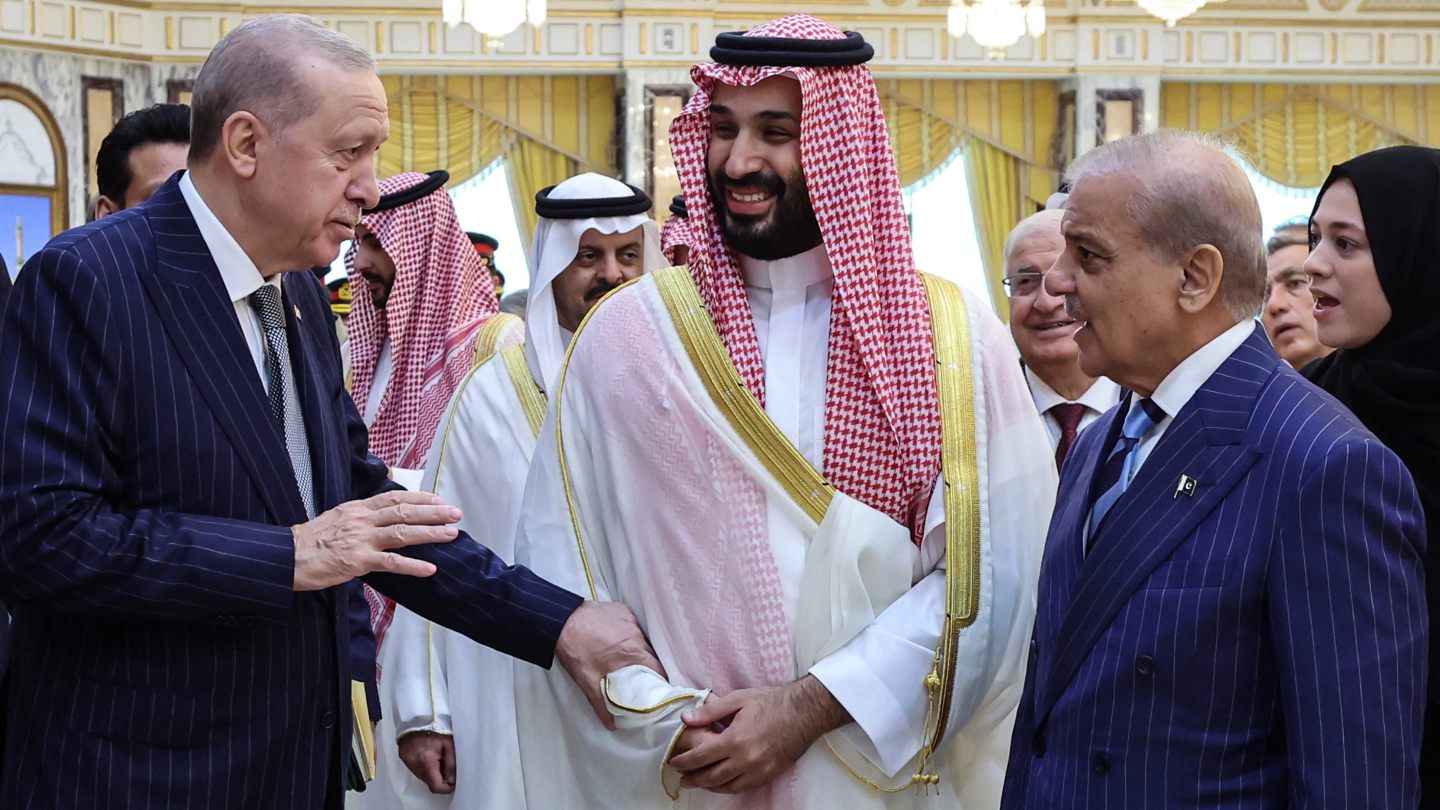
  • Businesses report blocked payments from Saudi Arabia to the UAE, raising fears of worsening ties

    Businesses report blocked payments from Saudi Arabia to the UAE, raising fears of worsening ties

    Rumors of delayed or frozen cross-border money transfers from Saudi Arabia to United Arab Emirates-based accounts have sparked growing alarm that long-simmering political tensions between the two wealthy Gulf neighbors are finally spilling over into their critical bilateral commercial relationship. Multiple anonymous sources speaking to the *Financial Times* confirmed that starting in May, payments routed through Saudi banks to UAE accounts held by Dubai-based companies and individual clients have been repeatedly held up or returned, in most cases with no formal explanation provided for the hold. One Western executive working for a Dubai-headquartered healthcare firm told the outlet that since mid-May, Saudi financial institutions have blocked and reversed multiple payments coming from a long-standing Saudi customer of the company.

    In an official response to inquiries from the *Financial Times*, Saudi Arabia’s central bank issued a denial, stating it had not put in place any “direct restrictions on specific countries” as part of its routine financial oversight.

    The reported disruptions have hit one of the most economically significant bilateral partnerships in the Gulf region. Though the two nations have long been framed as formal allies, their relationship has been fraying for years over a growing list of regional policy disagreements. Most notably, the UAE has built a close strategic alliance with Israel, a step Riyadh has refused to take, as the Saudi government still does not formally recognize Israeli statehood. Saudi policymakers also have publicly opposed the UAE’s support for separatist political movements active in both Somalia and Yemen.

    As the two largest economies in the Arab world, their commercial ties carry massive regional weight: Saudi Arabia boasts a gross domestic product of roughly $1.2 trillion, while the UAE’s economy totals around $550 billion, and annual bilateral trade between the two already tops $20 billion. For decades, international and regional companies have used Dubai’s business-friendly ecosystem as a regional hub to access the Saudi market, but in recent years Riyadh has pushed aggressively to encourage firms to relocate their regional operations to the kingdom as part of its Vision 2030 economic diversification plan, which aims to retain more domestic business, job opportunities and foreign investment within Saudi borders.

    Kristian Coates Ulrichsen, a Middle East fellow at Rice University’s Baker Institute, noted that strategic and economic competition between the two powers is nothing new, and past periods of tension have not resulted in a permanent breakdown of ties. “There has always been economic competition between the two sides and this is not the first time that such measures have reportedly been deployed to raise the stakes, and the relationship survived previous bouts of tension in the late 2000s and in 2021 as well,” Ulrichsen told *Middle East Eye*. The most severe recent escalation of tensions dates back to last December, when Riyadh accused Abu Dhabi of backing a secessionist Yemeni faction that launched an offensive against military forces aligned with Saudi Arabia. The confrontation eventually forced the UAE to withdraw its own military personnel from Yemen, after Saudi forces launched targeted attacks on UAE-backed Yemeni groups. At the time, Saudi Arabia stated that the UAE, once its core partner in the Saudi-led coalition that entered Yemen’s civil war in 2015 to fight the Houthi movement, had threatened Saudi national security by supporting the secessionist offensive. The years-long Yemeni conflict has failed to defeat the Houthis and has already claimed the lives of hundreds of thousands of Yemeni civilians and combatants.

    That December dispute triggered the worst diplomatic rupture between the two Gulf states in decades, and brought long-simmering rivalries over trade strategy, oil policy and regional influence out into the open. Tensions were temporarily sidelined after the United States and Israel launched their campaign against Iran, as Gulf states moved to present a unified front following Iranian strikes on regional targets in retaliation. Ulrichsen explained that the underlying disagreements never truly resolved themselves, only faded from immediate focus. “It’s likely that the tensions never really went away but the immediacy and urgency of the Iranian attacks on the Gulf meant that they faded into the background during the war,” he said.

    Early this year, the UAE surprised neighboring Gulf states with its announcement that it would withdraw from OPEC, the oil exporting cartel that is effectively led by Saudi Arabia. While Abu Dhabi framed the decision as a reflection of its independent “economic vision and evolving energy profile,” the move was widely interpreted as a major strategic snub to Riyadh. Despite mounting diplomatic friction, Saudi officials have repeatedly maintained that political tensions with the UAE will not damage bilateral trade and economic ties.

  • Five crew remain missing after plane wreckage found in Pakistan

    Five crew remain missing after plane wreckage found in Pakistan

    A multiagency air and sea search operation has located the wreckage of a missing private cargo plane off Pakistan’s Arabian Sea coast, 12 hours after the Boeing 737 lost contact with air traffic controllers mid-flight, national aviation officials confirmed. All five crew members on board the aircraft, which was operated by Pakistani carrier K2 Airways, remain missing as rescue efforts enter a new phase.

    The cargo jet departed Karachi, Pakistan’s southern coastal commercial hub, on Tuesday bound for Sharjah, United Arab Emirates. According to official statements from the Pakistan Airports Authority, the plane suffered a sudden, rapid descent and cut off communication with ground control at 21:21 local time (16:21 GMT). Only minutes before the unexpected descent, the flight crew had reported a critical failure in the aircraft’s navigation systems, authorities added.

    Search teams pulled the wreckage from waters 53 nautical miles south of Ormara, a small port town situated roughly 223 miles west of Karachi, the plane’s departure point. The 12-hour search operation deployed both maritime and aerial assets to scan the remote stretch of Arabian Sea before debris was located.

    The incident marks the first major aviation accident in Pakistani airspace in nearly six years. The last major tragedy occurred in 2020, when a Pakistan International Airlines domestic passenger flight crashed on approach to Karachi’s main airport. Out of the 99 people on board that flight, only two survived the crash.

    Authorities have not yet released details on potential causes of the 2024 incident, nor an updated timeline for the ongoing search for the missing five crew members. Rescue teams are continuing to comb the crash site in hopes of recovering additional debris and locating the crew.

  • From the 2010 Olympics to the World Cup, Vancouver has pioneered Indigenous inclusion

    From the 2010 Olympics to the World Cup, Vancouver has pioneered Indigenous inclusion

    As soccer fans pack Vancouver’s 2026 FIFA World Cup fan festival, filling the air with cheers broadcast on giant screens and the aroma of local Canadian specialties like poutine, one element sets this fan zone apart from those of many past major international tournaments: curated exhibits highlighting the three Indigenous nations that have lived on this land since time immemorial — the Squamish, Musqueam, and Tsleil-Waututh peoples. This inclusion is no afterthought: the three First Nations hold formal partnership status with the local World Cup organizing committee, building on a groundbreaking precedent set at the 2010 Vancouver Winter Olympics.

    This model of centering Indigenous voices in mega-sporting events has become an increasingly common industry standard, spreading from the 2023 Women’s World Cup co-hosted by Australia and New Zealand to the upcoming 2028 Summer Olympic Games in Los Angeles. For Vancouver organizers, the core goal was to move beyond performative recognition, seat Indigenous leaders at the planning table from day one, and create a sustainable platform that elevates public awareness of local Indigenous communities while leaving long-term, tangible benefits for future generations.

    “What we learned from the 2010 Games, and what we carry forward today, is that a key message of this partnership is to share the incredible cultural diversity that shapes this region,” explained Tewanee Joseph, who leads major events strategy for the Squamish Nation and previously served as CEO of the Four Host First Nations for the 2010 Vancouver Winter Olympics. “We are not a people who only exist in history books. We are still here, we are living, and our cultures are thriving today.”

    The 2010 Winter Games marked a historic turning point for Indigenous inclusion in global sports: it was the first time the International Olympic Committee formally granted Indigenous groups status as official co-host partners for the event, which was held on the traditional territories of the Squamish, Tsleil-Waututh, Musqueam, and Lil’Wat nations.

    Vancouver is not the only 2026 World Cup host city to embed Indigenous leadership in its planning. In Seattle, the Puyallup Tribe holds the title of official Presenting Legacy Sponsor for the city’s 2026 World Cup host organization, SeattleFWC26. Toronto opened its 2026 World Cup welcoming ceremonies with performances by Indigenous dancers and Grammy-nominated Peguis First Nation musician William Prince, while the city’s fan festival hosts the Tkaronto Market, which showcases handcrafted goods and art from local Indigenous creators. South of the border in Mexico, FIFA has partnered with the National Fund for the Promotion of Handicrafts to elevate Indigenous artisans, who create unique soccer-themed folk art for the tournament.

    FIFA has formalized this commitment for the 2026 tournament, naming Indigenous engagement as a central pillar of its global sustainability and human rights strategy, with a mandate to build respectful collaborative relationships with Indigenous communities across all three 2026 host nations: Canada, the United States, and Mexico. This policy builds on work the governing body launched in 2023, when it partnered with the Office of the United Nations High Commissioner for Human Rights to run the Unite for Indigenous Peoples campaign.

    The 2023 Women’s World Cup in Australia and New Zealand served as a test case for this new inclusive framework. Led by an advisory panel of six Indigenous women, FIFA fully integrated First Nations culture in Australia and Māori culture in New Zealand into every level of tournament operations. Indigenous place names and terminology were added to all official signage, Indigenous flags were flown full-time at match stadiums, New Zealand featured the traditional Māori karanga welcome call before every match, and Australia included formal Welcome to Country ceremonies led by Aboriginal or Torres Strait Islander elders at all pre-match events.

    The push for deeper Indigenous inclusion extends far beyond FIFA’s World Cup events. Organizers for the 2028 Los Angeles Olympics drew on the Indigenous origins of lacrosse to reinstate the sport as an official Olympic medal event for the first time in more than a century, since the 1908 London Games. The Haudenosaunee Confederacy, which is widely recognized as the original creator of lacrosse, has lobbied for years to compete as an independent delegation at the Olympics, though that bid has not yet been successful.

    For British Columbia’s Indigenous tourism sector, the World Cup partnership is more than a symbolic win — it delivers meaningful economic opportunity. Data from Destination British Columbia shows Indigenous tourism generates CAD 1.1 billion in annual economic activity for the province, with 31% of international travelers actively seeking out authentic Indigenous cultural experiences during their visits.

    Indigenous Tourism BC’s Paula Amos notes that the fan festival exposure is designed to create long-term demand, not just short-term buzz during the tournament. “We’re telling visitors that once the final whistle blows on the World Cup, the experience doesn’t end here,” Amos explained. “We want to inspire people to come back with their families, to explore authentic Indigenous tourism experiences across the province. Vancouver is the perfect gateway to British Columbia, so we’re using this platform to highlight destinations and experiences across every region of the province to encourage longer, deeper visits.”

    As formal planning partners, each of Vancouver’s three host First Nations will receive CAD 6 million to fund community legacy projects. The Squamish Nation has already announced plans to use its allocation to build a public youth soccer field in West Vancouver. But community leaders say the most important impact of the partnership cannot be measured in dollars or infrastructure.

    For Joseph, the most meaningful outcome is seeing Indigenous community members participate openly and proudly in the global tournament. “My favorite part of this whole experience is seeing our nation’s members walking the streets of Vancouver, joining in the fan festival, gathering at our community watch parties, and carrying themselves with such pride,” he said. “Visitors ask questions about our culture, they want to learn about our role on this land, and that recognition means everything. To see our people front and center, standing tall and proud of who they are — those are the memories that will last. This is all about people, and the connection between different cultures that comes from this work.”

  • Israel kills Gaza elder tasked with broadcasting Egypt-Argentina game

    Israel kills Gaza elder tasked with broadcasting Egypt-Argentina game

    A deadly Israeli airstrike in central Gaza City has killed a senior Egyptian aid official and two other civilians, including a child, drawing sharp diplomatic pushback from Cairo amid ongoing ceasefire negotiations hosted by the Egyptian capital. The Tuesday attack targeted a civilian vehicle traveling through the al-Sabra neighborhood of Gaza City, claiming the life of Mohamed Fawaz al-Wahidi, who held dual leadership roles as public relations director for the Egyptian Relief Committee (ERC) and head of the committee’s Office of Mukhtars and Community Elders at its Gaza City headquarters, according to multiple regional news outlets including the Palestinian Information Center and Arabi Post. Two additional passengers in the vehicle — one a minor — also died in the strike, and several bystanders sustained injuries. Wounds
    The timing of the attack carried unusual resonance: it unfolded mere hours before the ERC was set to host a free public screening of the World Cup match between Egypt and Argentina, a popular community event the aid organization had organized across multiple Gaza locations. Prior to the strike, Wahidi had just wrapped up work at a local neighborhood reconciliation meeting, a role he was widely recognized for across the Gaza Strip. ERC spokespeople described Wahidi as a deeply respected community figure who dedicated his career to mediating local disputes and supporting Palestinian families in need. The al-Sabra strike pushed the total death toll from Israeli strikes across all of Gaza on that Tuesday to at least seven people, with an additional 20 people injured, according to casualty tallies from local medical sources. Additional drone strikes were confirmed Tuesday in the southern city of Khan Younis and across northern Gaza, local sources told Israeli outlet Haaretz and medical teams at Nasser Hospital in southern Gaza. Founded under the direction of Egyptian President Abdel Fattah el-Sisi, the ERC is a key humanitarian actor in blockaded Gaza, coordinating a broad range of critical aid operations that include food distribution, rubble clearance after airstrikes, and management of displacement camps for Palestinians displaced by repeated rounds of conflict. The attack comes at a sensitive diplomatic moment: Cairo is currently hosting high-level talks aimed at securing a second phase of a regional ceasefire between Israel and Hamas. Following the strike, Egyptian authorities delivered a strongly worded formal protest to Israel, demanding a full explanation for the killing of the Egyptian-affiliated aid worker, Haaretz reported. This strike is far from an isolated incident: Israel has sustained a regular campaign of airstrikes and ground operations in Gaza even after a US-brokered ceasefire agreement between Israel and Hamas took effect last October. In the eight months following the ceasefire’s implementation, at least 1,072 Palestinians have been killed and more than 3,460 injured in Israeli actions across the Gaza Strip, according to aggregated casualty data. This report draws on verified on-the-ground sourcing from multiple independent regional and international news outlets covering the ongoing conflict in Gaza.

  • Eight killed after landslide hits girls’ school in Bangladesh

    Eight killed after landslide hits girls’ school in Bangladesh

    A devastating landslide has claimed the lives of eight people, among them seven student girls, after it struck a girls’ Islamic study school at the world’s largest Rohingya refugee settlement in Bangladesh’s Cox’s Bazar, compounding a growing humanitarian crisis fueled by relentless seasonal monsoon rains.

    The disaster unfolded on Wednesday afternoon, when a cascade of mud and debris buried the makeshift school hut, triggering immediate, frantic search and rescue operations led by local relief authorities. As of the latest official updates, rescue teams have managed to extract 13 people trapped beneath the mudslide, eight of whom could not be revived after being pulled from the debris. Among the fatalities are seven students between the ages of 7 and 12 and one female teacher, while five other injured children have been transported to local medical facilities for urgent care. The total number of people who were inside the school at the time of the landslide remains unconfirmed, local officials confirmed.

    This landslide is just the latest in a string of rain-triggered disasters that have shaken the Cox’s Bazar region since Sunday, when this year’s monsoon season intensified to bring record levels of rainfall to the coastal district. Prior to the school disaster, official data already recorded at least eight additional Rohingya refugee deaths from separate landslides across the settlement, five of which were children.

    Cox’s Bazar is currently home to more than 1 million Rohingya refugees, the vast majority of whom fled a brutal military crackdown in their native Myanmar in 2017 that left thousands of Rohingya dead and forced more than 700,000 to cross the border into Bangladesh. As a stateless ethnic Muslim minority in majority-Buddhist Myanmar, Rohingya people have long been denied full citizenship and basic rights in their home country, leaving them dependent on humanitarian aid in the overcrowded Bangladesh camps. Most refugees live in flimsy, makeshift homes constructed from tarpaulin and bamboo, many of which are built on precarious steep hillsides that are extremely vulnerable to mudslides during heavy monsoon rains.

    Local disaster management authorities have warned that the risk of further catastrophe remains high, with additional heavy rainfall forecast across the region in the coming days. Officials have already issued urgent warnings for impending landslides and flash floods, and have begun moving high-risk families out of vulnerable slope-side settlements to safer emergency shelters.

  • At least 5 children die in monsoon landslide at a Rohingya camp in Bangladesh

    At least 5 children die in monsoon landslide at a Rohingya camp in Bangladesh

    A devastating monsoon-driven landslide has claimed the lives of at least five children after crashing into an Islamic school within a sprawling Rohingya refugee camp in southeastern Bangladesh’s Cox’s Bazar district, a senior fire service official has confirmed. The Cox’s Bazar camp complex hosts more than 1 million displaced Rohingya refugees who fled persecution in neighboring Myanmar, making it one of the largest refugee settlements in the world.

    Dollar Tripura, local head of Bangladesh’s Fire Service and Civil Defense, stated that the disaster struck mid-lesson, when children were gathered in their classes for the school day. Rescuers managed to pull five injured children out of the debris alive, but the official warned that the death toll is likely to rise, as teams suspect additional people remain trapped and buried under the mud and rubble.

    As of Wednesday evening, search and rescue efforts were still ongoing, with crews working through the night to locate possible survivors. This latest tragedy comes just three days after separate rain-induced landslides in the same camp region killed at least eight other people, amplifying concerns about the safety of refugees living in at-risk hilly terrain.

    Bangladesh’s national weather office, based in the capital Dhaka, has issued warnings for additional heavy rainfall across the region over the coming days, raising fears of more landslides. In response to the ongoing risks, local authorities have launched an urgent relocation effort to move refugees out of high-risk hilly areas that are prone to mudslides during monsoon season. More than 1,000 refugees have already been moved to safer locations, though officials report that many displaced families remain reluctant to leave their makeshift huts and small plots of land, even after repeated official warnings of the dangers.

    For years, Bangladesh has hosted the bulk of the Rohingya refugee population, who fled a 2017 military crackdown in Myanmar’s Rakhine State that the United Nations has labeled ethnic cleansing. The Bangladeshi government has repeatedly called on the international community to support a safe repatriation process for refugees to return to their homeland in Myanmar, but years of negotiations have failed to move the process forward, leaving the repatriation initiative effectively stalled.

  • Snow’s legacy seen as bridge for understanding in divided world

    Snow’s legacy seen as bridge for understanding in divided world

    Ninety years after American journalist Edgar Snow completed his groundbreaking journey to China’s northern Shaanxi revolutionary base area, scholars, family representatives, and legacy stewards from around the globe gathered at Peking University this Tuesday to reaffirm the enduring global relevance of his work: a commitment to truthful reporting that builds bridges of understanding across deeply divided societies.

    Hosted under the theme *Legacy of Edgar Snow: International Symposium on Contemporary Value and Inspiration to the World*, the event drew a diverse cohort of attendees, including members of Snow’s direct family, leadership from the U.S.-based Edgar Snow Memorial Foundation, and Chinese and international researchers who have spent decades studying Snow’s life and impact. Experts from a range of academic and policy fields also joined the conversation to contextualize his work for 21st-century geopolitics.

    In 1936, Snow made history as the first Western journalist to secure on-the-ground access to China’s revolutionary base areas, at a time when most of the world had almost no accurate information about the Chinese Communist Party, the Red Army, and the unfolding Chinese revolution. His resulting book, *Red Star Over China*, became the first widely circulated, authoritative account of China’s revolutionary movement for global audiences, shaping how generations of people outside China understood the country’s trajectory.

    A personal statement from Snow’s daughter, delivered to symposium attendees by his great-grandnephew Samuel Colin Maclean, outlined the core journalistic principles that guided Snow’s work throughout his career. Snow, she wrote, held firm to the belief that a journalist’s core duty is to witness events firsthand and report what they see freely, independently, and without bias. “When he saw progress, he reported it. When he saw problems, he reported those too,” the statement read, adding that Snow wished to be remembered as two things above all: a loyal friend of the Chinese people, and a truth-seeking reporter dedicated to fostering deeper mutual understanding and peaceful relations between people of all nations.

    Sidne Ward, president of the Edgar Snow Memorial Foundation in the United States, framed the symposium as more than a commemorative event—it was an opportunity to reflect on how Snow’s values speak directly to the challenges of today’s interconnected yet fractured world. Ward noted that Snow built his work on four core commitments: curiosity, open dialogue, intentional understanding, and the courage to step into unfamiliar contexts to listen to perspectives that differ from one’s own. Through his unflinching, on-the-ground reporting, she said, Snow helped people on opposite sides of geopolitical divides see each other more clearly.

    Ward emphasized that few bilateral relationships carry as much global weight today as the relationship between China and the United States, and that Snow’s legacy is more relevant now than ever. Unlike many historical legacies that are tied to a single institution or nation, she added, Snow’s work is now sustained by a dynamic, global network of researchers and advocates committed to his values.

    Rigorous, fact-based reporting, rigorous academic scholarship, and sincere person-to-person connection remain the most effective tools to cut through misunderstanding and build mutual respect, Ward argued. Snow’s greatest contribution to the world, she said, is not just the landmark stories he wrote, but the cross-cultural bridges of understanding he helped build between peoples and communities separated by ideological and geographic divides.

    He Guangcai, secretary of the Communist Party of China Peking University Committee, echoed that framing, noting that when Snow traveled to northern Shaanxi in 1936, the outside world operated with profound misinformation and limited knowledge of the Chinese Communist Party. Snow broke through information blockades to get to the ground and report what he actually saw, He said.

    Through his firsthand writing and original photojournalism, Snow accurately recorded the realities of the Chinese revolution and opened a critical window for the global community to understand the Chinese Communist Party, as well as the core ideals and mission of Chinese communists, He added. Looking back at Snow’s full life and career, his legacy offers clear, urgent lessons for today’s world: a non-negotiable commitment to truth, facts, and firsthand observation, paired with a deep humanistic commitment to global peace and equality.

    Along with panel discussions and keynote addresses, the symposium also marked two key new initiatives to expand global research into Snow’s legacy: attendees oversaw the release of a new think tank report exploring the contemporary value and global significance of Snow’s work, and formally launched a new global academic research program dedicated to studying Snow’s life and lasting impact.

  • Why Trump covets Greenland

    Why Trump covets Greenland

    For decades, the world’s largest island sat largely on the geopolitical sidelines, its 56,000 mostly Inuit residents disconnected from the great power rivalries reshaping the 21st century. But today, Greenland’s position straddling key Arctic and North Atlantic shipping and defense routes has catapulted it into the center of a growing international debate over security, resources and territorial sovereignty, driven by shifting climate patterns, rising great power tensions and a scramble for critical raw materials. At the heart of this debate sits former U.S. President Donald Trump, who has repeatedly pushed for American control of the mineral-rich island, even threatening military force to achieve the goal – a move that has shaken the NATO alliance and sown deep discomfort among long-time U.S. European allies.

    Greenland has been an autonomous self-governing territory within the Kingdom of Denmark, a U.S. ally that has flatly rejected all of Trump’s overtures to acquire the island. Greenland’s own elected government has also pushed back firmly against American designs, issuing a clear statement that the future of the island will be determined exclusively by its own people.

    During his time in office, and amid discussions of potential territorial expansion that have also included Canada and Venezuela, Trump has returned to Greenland again and again, framing a U.S. takeover as critical to American national security. Speaking at a NATO summit, Trump argued, “Greenland is very important to the United States, but it’s not important to Denmark. We need it for protection of the world, not just the United States.” Early in his first term, Trump declined to rule out using military force to seize the island to secure what he called U.S. “right, title and ownership,” though he later claimed to have taken military options off the table. Trump has justified his demands by claiming the U.S. needs Greenland to counter growing Russian and Chinese influence in the region, repeatedly making unsubstantiated claims that Russian and Chinese military forces are operating near the island’s coast.

    Geography lies at the root of Greenland’s outsized strategic importance. More than two-thirds of its land mass sits north of the Arctic Circle, and it lies off Canada’s northeastern coast, a position that has made it critical to North American defense since World War II, when U.S. forces occupied the island to prevent Nazi Germany from seizing control and securing key North Atlantic supply routes. For decades after the Cold War ended, the Arctic was largely defined by international cooperation. But climate change has rapidly melted the region’s permanent sea ice, opening the possibility of year-round commercial shipping through the Northwest Passage and unlocking access to vast untapped mineral reserves, triggering a new era of great power competition for influence and resources in the region.

    In 2018, China labeled itself a “near-Arctic state” as part of a push to expand its regional influence, and unveiled plans to develop a “Polar Silk Road” as an extension of its global Belt and Road Initiative, which has already built extensive economic ties with nations across the world. Then-U.S. Secretary of State Mike Pompeo openly pushed back against China’s move, asking: “Do we want the Arctic Ocean to transform into a new South China Sea, fraught with militarization and competing territorial claims?”

    Russia has also moved aggressively to expand its influence across large swathes of the Arctic, pitting it against the U.S., Canada, Denmark and Norway in competing claims. Moscow has significantly boosted its military presence in the polar region, which hosts its strategic Northern Fleet and a former Soviet nuclear test site that Russian military officials have said is ready to resume testing if needed. Since 2014, the Russian military has restored dozens of abandoned Soviet-era military infrastructure sites, opened multiple new bases and reconstructed Arctic airfields to project greater power in the region.

    European concerns over Russian ambitions in the Arctic have grown sharply since Moscow launched its full-scale invasion of Ukraine in February 2022. Last year, Russian President Vladimir Putin acknowledged that Moscow views expanding NATO activity in the Arctic as a major threat and has committed to strengthening Russian military capabilities in the region to counter it, though he added that Russia remains open to expanded international cooperation in the Arctic.

    Contrary to Trump’s claims that U.S. control of Greenland is needed to advance American security, defense analysts note that the U.S. already enjoys unprecedented security access to the island. The U.S. Department of Defense already operates Pituffik Space Base in northwestern Greenland, established under a 1951 bilateral defense treaty with Denmark, that supports critical missile warning, missile defense and space surveillance operations for both the U.S. and NATO. Greenland also forms one end of the GIUK Gap – the strategic maritime corridor stretching from Greenland to Iceland to the United Kingdom that NATO relies on to monitor Russian naval activity in the North Atlantic.

    Thomas Crosbie, associate professor of military operations at the Royal Danish Defense College, told the Associated Press that a full American takeover of Greenland would bring no meaningful new security benefits to the U.S. “The United States will gain no advantage if its flag is flying in Nuuk (Greenland’s capital) versus the Greenlandic flag,” Crosbie explained. “There’s no benefits to them because they already enjoy all of the advantages they want. If there’s any specific security access that they want to improve American security, they’ll be given it as a matter of course, as a trusted ally. So this has nothing to do with improving national security for the United States.”

    In recent years, Denmark has already expanded U.S. military access across its territory. Last year, Denmark’s parliament passed legislation formally allowing additional U.S. military bases on Danish soil, expanding a 2023 agreement with the Biden administration that granted U.S. troops broad access to Danish air bases. Danish Foreign Minister Lars Løkke Rasmussen confirmed last summer that Denmark would immediately terminate all military cooperation agreements with the U.S. if Washington moves to annex any part of Greenland.

    Beyond its strategic value, Greenland also holds massive economic appeal for Western powers: it is home to some of the world’s largest untapped reserves of rare earth minerals, critical components for smartphones, laptops, electric vehicle batteries and a wide range of other high-tech products that are expected to drive global economic growth for decades. Western governments have increasingly sought to develop new rare earth supply chains outside of China, which currently dominates global production of the critical minerals. That said, developing Greenland’s mineral resources remains a major challenge: the island’s harsh Arctic climate creates significant logistical barriers, and strict environmental regulations have added further hurdles for potential investors.

  • Rescuers search for 5 missing people after a deadly landslide in India’s Kerala state

    Rescuers search for 5 missing people after a deadly landslide in India’s Kerala state

    Rescue operations are underway in the scenic hill district of Wayanad in India’s southern Kerala state, where a catastrophic landslide triggered by intense monsoon downpours has left three people dead and five others unaccounted for. The disaster struck at a tunnel construction site Wednesday, when a massive wall of mud broke loose during heavy rain, tearing through the work area. Seven workers caught in the slide were pulled out with injuries and are currently receiving care at a local hospital.

    Footage of the incident captured the full force of the disaster: a large earthen embankment collapsing under relentless rainfall, uprooting mature trees and sweeping away the temporary metal and fabric barriers that ringed the construction zone. Local law enforcement has segmented the search area into multiple operational zones to coordinate the effort, which includes specialized disaster response teams and sniffer dogs brought in to locate the missing. According to local police official Devamanohar, who spoke to reporters on the ground, ongoing heavy rainfall has significantly slowed progress and complicated search efforts.

    In a surprising turn, Kerala’s Home Minister T. Siddique has publicly labeled the disaster not a natural event, but a man-made tragedy caused by negligent construction practices. Speaking to India’s official Press Trust of India news agency, Siddique alleged that the landslide occurred because construction crews dumped excavated earth in an unscientific manner, and failed to remove construction debris despite prior official warnings about the hazard. The construction company at the center of the allegations has rejected all claims of responsibility, telling the news agency that the landslide originated on elevated terrain far from the actual construction site, making the project blameless for the disaster.

    State authorities have launched a formal investigation to determine the root cause of the incident and assign accountability for the casualties. This landslide is part of a growing pattern of deadly monsoon-related disasters across South Asia. Last year alone, extreme rainfall events including cloudbursts, widespread flooding, and multiple landslides across India caused devastating losses of life and widespread destruction of property.

    Climate researchers have repeatedly warned that human-induced climate change is altering the behavior of South Asia’s iconic monsoon seasons, which typically bring two periods of rainfall between June and December. Once a predictable, life-sustaining weather pattern, monsoons now produce erratic, extreme downpours that dump massive volumes of water over short time frames, punctuated by extended dry periods that create drought conditions. This shift not only increases the risk of catastrophic landslides in hilly, deforested or development-heavy regions like Wayanad, but also threatens food and water security across the entire subcontinent.

  • Cargo plane wreckage found off Pakistan’s coast as search continues for 5 missing crew

    Cargo plane wreckage found off Pakistan’s coast as search continues for 5 missing crew

    KARACHI, Pakistan – Rescue teams comprising Pakistani navy personnel and civilian search units have located and pulled out debris from a private cargo plane that vanished mid-approach to Karachi’s major southern port, officials confirmed Wednesday, with operations ongoing to locate five missing crew members who were on board the aircraft.

    The aircraft, operated by Pakistan-based private aviation firm K2 Airways, had begun its journey from Sharjah, United Arab Emirates, before flight crews alerted ground control to a critical navigational system malfunction. Contact with air traffic control was lost late Tuesday, shortly after the distress report was filed.

    According to an official update posted to the social platform X by Pakistan’s Airports Authority, combined search teams deployed on ships and patrol aircraft spent roughly 12 hours combing the northern Arabian Sea before successfully pinpointing the plane’s wreckage. Even with debris recovered, the hunt for the five missing crew members remains ongoing.

    Three senior officials briefed on the details of the search operation, speaking on condition of anonymity due to the incident’s sensitive status, shared that rescuers face steep barriers to completing their mission. The wide, unmarked search zone in the Arabian Sea combined with rough monsoon-driven sea conditions have slowed search efforts considerably, they noted.

    Pakistan’s Prime Minister Shehbaz Sharif has formally extended his condolences to the families of the missing crew, a statement from his office confirmed, and issued orders to relevant government agencies to commit every available resource to the search-and-rescue operation.

    K2 Airways later released a formal statement naming the five missing crew members: Captain Muhammad Rizwan Idris, First Officer Faisal Jatoi, flight engineers Muhammad Hamid and Muhammad Arif Siddiqui, and aircraft loader Muhammad Taufiq Khan. “We continue to pray earnestly for the safety of our colleagues,” the statement read.

    Early data from Pakistani aviation authorities offers preliminary clues to the plane’s final moments. Pakistan’s Airports Authority said earlier this week that radar tracking showed the jet made an abrupt, unexplained course change and entered a rapid descent before all contact was lost at approximately 9:21 p.m. Tuesday. At the time of disappearance, the plane was roughly 155 nautical miles (178 miles, 287 kilometers) west of Karachi’s port.

    Aviation specialist Imran Aslam told local Pakistani broadcaster ARY News late Tuesday that the root cause of the incident remains undetermined as of yet. Aslam noted that even in the event of a total engine failure, commercial cargo aircraft are designed to glide for extended periods rather than suffer a sudden, uncontrolled plunge. A full determination of the crash’s cause, he added, will only be possible after investigators retrieve additional evidence, including the plane’s black box flight recorders.

    The crash marks the latest serious aviation incident near Karachi’s major airport. In May 2020, a passenger jet operated by state-owned Pakistan International Airlines carrying 98 people crashed into a densely populated residential neighborhood just outside the airport while on final approach. Ninety-seven of the 99 people on board died, along with multiple people on the ground, leaving just one survivor. A subsequent official government investigation concluded that the crash stemmed from preventable human error by both the flight crew and on-the-ground air traffic controllers.