
In an extraordinary turn of events that has upended expectations for China’s summer movie season, a micro-budget animated feature has climbed from total box office obscurity to become one of the most talked-about hits of the year, all fueled by viral internet chatter over its notoriously poor quality.\n\nTitled *Niu Lai*, which translates roughly to “Ox Coming,” the 80-minute animated film centers on a surreal dream sequence following a cow. When it first launched in theaters earlier this month, the unpublicized, low-key production made barely a ripple: over its first 10 days on screens, it grossed just 7,705 yuan, equal to roughly $1,140, according to Chinese movie tracking platform Mao Yan.\n\nBut everything shifted when clips and commentary about the film’s confusing narrative and low-quality hand-drawn animation began spreading wildly across Chinese social platforms. Audiences latched onto the movie’s “so bad it’s good” charm, turning it into a must-see cultural event. As of mid-August, its total box office has surged past 11.4 million yuan, enough to hold its own against major Hollywood blockbusters currently screening in Chinese cinemas including *The Odyssey* and *Spider Man: Brand New Day*.\n\nThe viral frenzy around *Niu Lai* has spawned countless creative takes on why the film has resonated so deeply with audiences. A widely shared social media post summed up the collective urge to watch it, saying: “You may regret for 80 minutes if you watch it, but if you don’t, you’ll regret it for life.”\n\nFor many viewers, the film’s janky handcrafted animation has become a selling point at a moment when generic AI-generated content dominates social media feeds. Many netizens have celebrated *Niu Lai* as a refreshing antidote to what they call “AI slop,” pointing to its unpolished visuals as proof that no artificial intelligence was used in its creation. “That’s some serious craftsmanship,” one Weibo user joked, while another labeled it “pure handmade” and the summer season’s biggest dark horse.\n\nOther fans have latched onto the film’s name for good luck tied to Chinese stock markets, where “bullish” growth is described using the character for ox (niu). Many social media users have promised to see the film to cheer on a coming market rally, with one writing: “If the index reaches 4,000 tomorrow I will go to the cinema to support this movie.” Another comment summed up this perspective: “It is a terrible movie but has a great name.”\n\nSpurred by skyrocketing audience demand, cinemas across China have responded by adding dozens of extra screenings of the low-budget title. A film industry Weibo account noted that *Niu Lai*’s rags-to-riches box office trajectory is “unprecedented and will likely remain so.”\n\nNot all observers have welcomed the film’s unexpected success, however. Over the weekend, a commentary published by the state-owned *Beijing News* warned that adding widespread screenings of a poorly made film like *Niu Lai* risks eroding audience trust in cinemas if operators continue to lower their quality standards. The commentary argued that *Niu Lai*, which joins a string of past films widely mocked for low quality, “has once again lowered the bar for audiences’ expectations of poorly made films.” It called on cinema operators to act as quality gatekeepers for audiences, “clearly reject films that are obviously not up to standard instead of letting films like Niu Lai run rampant.”
标签: Asia
亚洲
-

Suthar takes 2-17 as Sri Lanka slumps to 99-5 at lunch on Day 3 of 1st cricket test against India
GALLE, SRI LANKA – The opening Test match between India and Sri Lanka took a lopsided turn on the third morning Monday, as India’s spin-focused bowling attack ripped through Sri Lanka’s top order, leaving the home side teetering at 99 for five wickets in its first innings by the lunch break. Left-arm spinning rookie Manav Suthar emerged as the early standout, claiming two key wickets for just 17 runs to put India in full control of the opening fixture of the series.
The day got off to a quick start for India’s batting, which had resumed the morning at 460 for nine wickets. It took just four deliveries to wrap up the innings: pace bowler Prasidh Krishna fell caught out, leaving India with a solid first-innings total of 462. The visitors’ massive total was built on a breakthrough century from 20-something batsman Devdutt Padikkal, who notched his maiden Test hundred with a 167-run knock across the first two days of play. Padikkal’s standout performance was supported by useful contributions from Lokesh Rahul, who hit 82, and wicket-keeper Dhruv Jurel, who added an unbeaten 51 to pad India’s lead.
India’s bowlers picked up right where their batsmen left off, applying unrelenting pressure from the first over of Sri Lanka’s innings. Pace spearhead Mohammed Siraj got the hosts off to a disastrous start, removing opening batsman Nishan Fernando for a two-ball duck after a sharp catch at slip. Suthar, making an immediate impact in his first bowling spell, claimed a wicket with his very first delivery in the innings: former Sri Lankan captain Dinesh Chandimal edged a catch behind the wicket for just four runs, leaving Sri Lanka reeling at 13 for two inside four overs.
A 26-run third-wicket partnership between Kamindu Mendis and Lahiru Udara briefly steadied the Sri Lankan innings, but the resistance was broken by Suthar once again. An extra bouncer from the spinner found Udara caught at point for 27, ending the stand. Just three overs later, Kuldeep Yadav, India’s other leading left-arm spinner, added another wicket to the tally, after a spectacular one-handed diving catch from Shubman Gill at cover sent Mendis packing for 14. The wicket left Sri Lanka stuck at 59 for four after just 16.1 overs, with the entire top order back in the pavilion without a single batsman passing the 30-run mark.
Sri Lankan skipper Dhananjaya de Silva put together a 31-run fifth-wicket stand with batsman Sonal Dinusha to slow India’s momentum, but the partnership was broken just before the lunch interval when Ravindra Jadeja claimed de Silva’s wicket for 21 off 41 balls. By the break, Dinusha remained unbeaten on 14, with wicket-keeper Niroshan Dickwella yet to score past eight, leaving the home side 363 runs behind India’s first innings total with five wickets already down. Kuldeep Yadav finished the session with one wicket for 25 runs, while Jadeja claimed one wicket for just six runs as India’s spin trio dominated the entire morning session.
-

Myanmar’s Min Aung Hlaing heads to Russia to deepen strategic ties with Moscow
BANGKOK – The leader of Myanmar’s military-installed government has launched an official visit to the Russian Federation, with a scheduled meeting with President Vladimir Putin focused on expanding bilateral connections and strategic collaboration between the two nations, Myanmar state media has confirmed.
Min Aung Hlaing, who was inaugurated as Myanmar’s president in April, left the country’s capital Naypyitaw on Monday morning alongside a delegation of cabinet members. According to the state-run Myanmar Radio and Television (MRTV), the delegation will hold discussions with Putin and other senior Russian leadership across a wide range of areas, including diplomatic relations, economic cooperation, security collaboration, and social policy coordination.
Moscow, alongside Beijing, stands as one of the most prominent international backers and primary arms suppliers to Myanmar’s junta. Media and conflict monitors have documented that Russian-manufactured fighter jets have been deployed in strikes against territory controlled by Myanmar’s ethnic minority armed groups, many of which align with pro-democracy resistance movements fighting the military government.
This trip is not the first meeting between the two leaders: Min Aung Hlaing previously held discussions with Putin on the sidelines of Moscow’s World Atomic Week Forum last September. To date, Putin has not conducted an official visit to Myanmar.
The Russian trip marks the seventh visit Min Aung Hlaing has made to Russia since the military, which he commanded at the time, seized control of the country from the democratically elected government of Aung San Suu Kyi in February 2021. It is also the latest stop in a string of foreign visits that have already taken him to regional neighbors including China, India, Laos, and Thailand. These trips are part of a broader push by the junta leader to secure greater international recognition and rebuild Myanmar’s diplomatic standing after the 2021 coup.
Despite this outreach, Min Aung Hlaing’s government remains widely sidelined in the global community. Western nations have imposed sweeping economic and political sanctions on the military leadership in response to the coup and its violent crackdown on opposition, which has killed thousands of civilians and sparked an ongoing nationwide civil conflict.
In addition to his high-level diplomatic talks, MRTV confirmed that Min Aung Hlaing will also take part in a bilateral Myanmar-Russia Business Forum during his visit, a move intended to boost cross-border commercial ties between the two countries.
The two nations have already built out a range of collaborative agreements beyond arms sales. They have conducted joint military exercises, signed a deal to develop nuclear energy infrastructure in Myanmar, and established cooperation on human spaceflight initiatives, including plans to select and train Myanmar’s first ever cosmonaut. On the global stage, Russia has repeatedly defended Myanmar’s military government in multilateral international forums, while the junta has consistently aligned itself with Moscow’s foreign policy priorities.
-

A temple stampede and a hotel fire in eastern India kill 14 and injure several
Two separate fatal accidents at religious destinations in northern India on Monday have claimed a total of 14 lives, leaving dozens injured and renewing concerns over systemic public safety failures during large-scale religious gatherings in the country.
The first tragedy unfolded just before dawn in the temple town of Tarapith, located in West Bengal’s Birbhum district. According to local media reports from Press Trust of India, a fire ignited around 4:30 a.m. on the ground floor of a four-story hotel that primarily hosted pilgrims visiting the town’s famous Shiva-focused temple complex. Most guests were asleep when the blaze broke out, leaving little time for organized evacuation.
Preliminary inquiries from hotel management point to an electrical fault near the hotel’s reception area as the likely origin of the fire. Fire response teams managed to bring the blaze under control quickly, but the casualty toll reached at least seven dead, with multiple others admitted to local hospitals for critical care. Injuries ranged from severe burns to smoke inhalation and asphyxiation, per local reporting. Authorities have launched a full investigation to confirm the exact cause of the fire.
Only two hours later, a second deadly disaster struck more than 400 kilometers west in Lakhisarai district, Bihar. Thousands of Hindu devotees had gathered near Ashok Dham Temple to mark the third Monday of Shravan, the holiest month in the Hindu religious calendar. Dedicated to the worship of Lord Shiva, the Shravan month — which falls between July and August each year — draws millions of pilgrims to sacred sites across India for prayer, fasting and seasonal religious celebrations.
Local civil administrator Shailendra Kumar reported that the death toll from the incident stands at seven, with more than a dozen others injured, all of whom have been transferred to a local government-run hospital for treatment. While official investigations into the exact root cause are still ongoing, preliminary findings point to a snapped overhead electric wire outside the temple compound as the trigger for the disaster. The broken wire sparked widespread panic among worshippers, who feared electrocution and began a chaotic rush to escape the area.
The sudden surge of the crowd overwhelmed temporary crowd-control barricades, causing a section of the barriers to collapse. People stumbled over one another in the chaos, resulting in the fatal crush, Kumar told Press Trust of India.
Tragic crowd crushes and fire-related deaths at large religious gatherings are not new in India. Every year, millions of worshippers converge on confined temple and religious site locations, with event organizers and local authorities often failing to implement adequate safety protocols, crowd management infrastructure, or emergency evacuation plans.
Deadly examples of this pattern dot recent history. In January 2023, at least 30 people lost their lives in a crush during the Maha Kumbh festival, the world’s largest religious gathering, when tens of thousands of pilgrims rushed toward the banks of a sacred river for a ritual bathing. A decade earlier, in 2013, a false rumor that a pedestrian bridge was collapsing sparked a panic at a Hindu festival in central India’s Madhya Pradesh state, leaving 115 people dead either from crushing or drowning in the river below the bridge.
-
Landslide in South Korea kills one as record rain lashes south
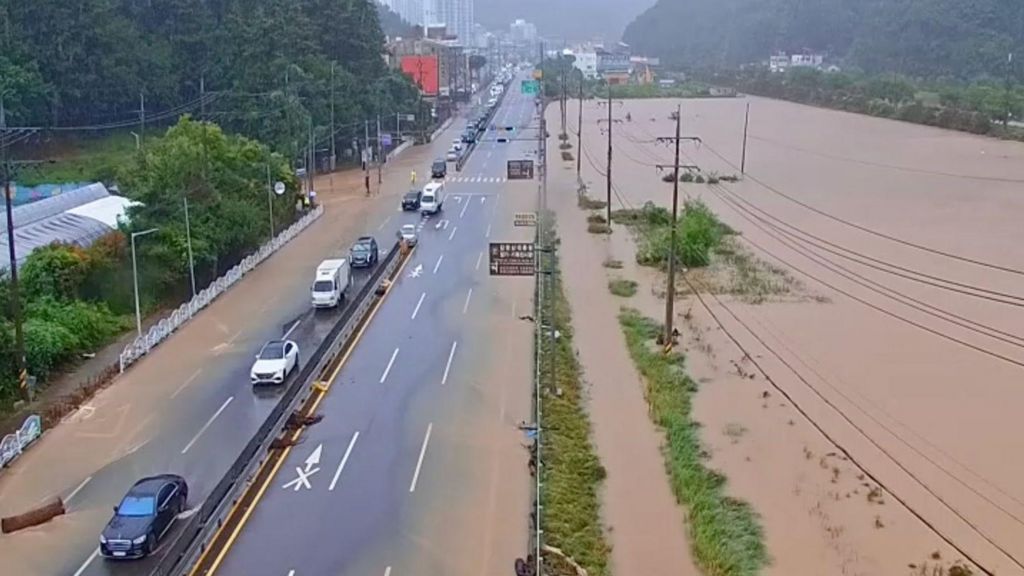
A catastrophic wave of extreme rainfall has unleashed deadly destruction across South Korea’s southeastern Gyeongsang province, leaving one person dead and two injured after a landslide crashed into a residential building in the coastal city of Geoje. The disaster unfolded early Monday morning, when the mudslide fully engulfed the ground floor of a local apartment complex. Emergency response teams rushed to the site to extract three trapped residents, though medics later confirmed one victim had succumbed to injuries, according to local South Korean media reports.
The deadly event came amid a historic downpour that shattered decades of weather records in Geoje. Official data from South Korea’s national meteorological agency shows the city recorded 124.5 millimeters of rainfall in just a single hour overnight between Sunday and Monday — the highest hourly precipitation total ever recorded in the city since systematic weather tracking began there in 1972. Cumulatively, Geoje received more than 400 millimeters of rain across the overnight period, overwhelming drainage systems and triggering widespread infrastructure failure.
Witness videos shared across social media platforms paint a grim picture of the flooding: powerful, murky currents rush through downtown city streets, submerging passenger vehicles up to their windshields and sweeping loose debris across roadways. In response to the unfolding crisis, Geoje city authorities has implemented widespread service suspensions and safety measures: all popular tourist attractions in the city were closed to visitors on Monday, public bus routes have been taken offline due to flooded or damaged roads, and regular municipal household waste collection has been paused until conditions improve. As early as Sunday, local officials had already issued urgent public advisories urging residents to avoid non-essential travel, steer clear of high-risk areas including riverbanks and steep hillsides, and evacuate immediately to designated safe shelters if instructed by emergency personnel.
This disaster in South Korea is part of a broader pattern of extreme weather sweeping across East and Southeast Asia this month, where successive storm systems have brought record flooding and landslides to populated areas of China, Japan, and the Philippines. Climate forecasters warn the 2024 typhoon season is on track to be far more intense than the historical average, a shift directly linked to a strong El Niño climate pattern that developed in June. El Niño drives elevated ocean and global atmospheric temperatures, which in turn boost the moisture content and destructive power of tropical typhoons and storm systems moving through the region.
Just days before the Geoje landslide, Japan faced its own extreme weather catastrophe when “unprecedented” rainfall battered Chiba Prefecture, located just outside of Tokyo. That deluge claimed 10 lives and left thousands of air travelers stranded at Narita International Airport when floodwaters disrupted airport operations. More than 20,000 households across the prefecture lost power during the storm, and the 10th confirmed fatality was identified Sunday as a man in his 30s who died from carbon monoxide poisoning after running a portable generator inside his home to cope with the extended power outage, Japan’s national public broadcaster NHK reported.
-
Thousands in Indonesia await aid after quake kills 54, overshadowing Independence Day
As Indonesia marked its 79th Independence Day on Monday, thousands of survivors on the island of Flores remained stranded without critical assistance, just three days after a powerful seismic event devastated the region, claiming at least 54 lives, wounding scores of people and destroying or damaging hundreds of structures across the area.
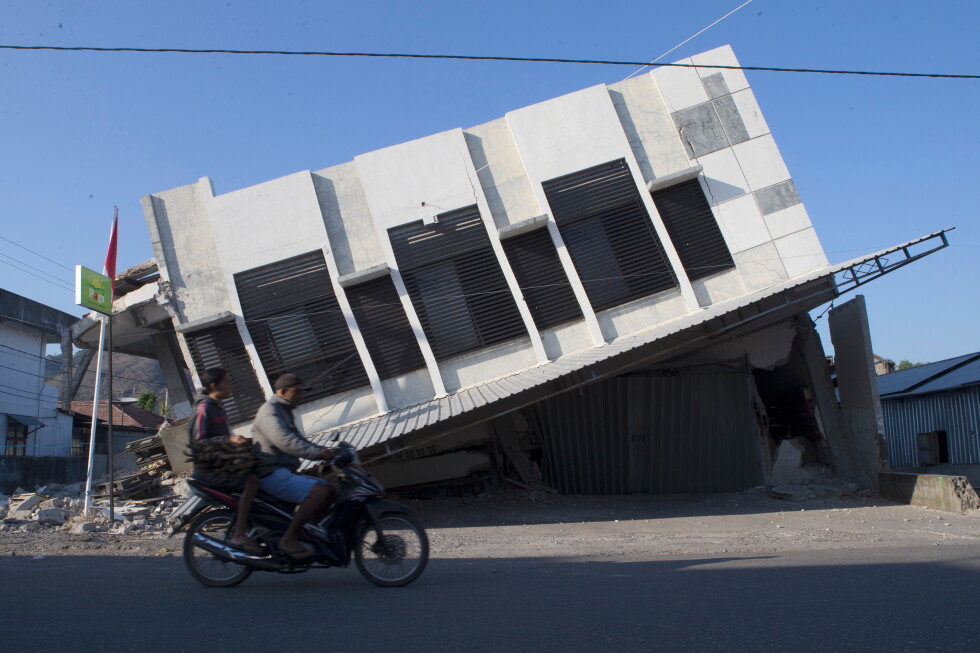
The weekend disaster upended life for communities across East Nusa Tenggara province, leaving residents to spend their national holiday mourning lost loved ones, searching for missing family members and enduring long waits for life-saving aid to reach cut-off villages that remain inaccessible after the quake. Official data from Indonesia’s National Disaster Management Agency confirms that more than 1,300 residential buildings suffered damage across the province, with nearly 250 homes completely reduced to rubble on Flores alone. The disaster forced roughly 5,000 people to flee their homes and seek refuge in temporary emergency shelters, while the total number of injured residents climbed to 135. On Sunday, the province’s governor officially declared a 14-day state of emergency to coordinate response efforts.
According to measurements from the U.S. Geological Survey, the quake struck at a depth of 10 kilometers (6 miles) just before 6 a.m. local time on Saturday. Immediately after the initial tremor, authorities issued a tsunami warning that sparked panic among local residents who fled to higher ground, before the alert was ultimately lifted hours later. In the days since the main quake, geological teams have recorded more than 995 aftershocks, though only 46 have been strong enough to be felt by local communities. The persistent risk of additional strong aftershocks has forced thousands of Flores residents to camp outside damaged or destroyed homes under makeshift tarpaulin shelters overnight, too afraid to return to unstable structures.
An on-the-ground assessment by an Associated Press photojournalist revealed widespread destruction across the hardest-hit parts of the island. Fallen tree debris blocks critical access roads, while large boulders dislodged by earthquake-triggered landslides litter slopes and pathways. Entire neighborhoods have been reduced to rubble, with many homes completely shattered or left structurally unsound. Parked vehicles were crushed when adjacent multi-story buildings collapsed during the initial tremor.
For many long-time residents of Flores, the scale of destruction has brought back traumatic memories of a devastating 1992 earthquake and tsunami that struck the same island, killing an estimated 2,500 people. Rasyid Jafar, a clothing trader based in Reo – the epicenter of the latest disaster in Manggarai regency – shared that his entire home had been reduced to rubble in the quake. “We need food, medicine and clean water urgently,” Jafar said.
Mariana Tewu, another Reo villager, echoed that frustration, noting that even as small amounts of aid have begun to trickle into the area, survivors still lack basic infrastructure to prepare meals. “We have nothing left … Why isn’t there a public kitchen?” Tewu said.
In response to the disaster, Indonesian authorities have deployed more than 3,500 military and police personnel to the affected zone, and approximately 275 tons of relief supplies have been allocated to the region. However, significant logistical challenges, including damaged roads and blocked access routes, have slowed delivery of aid to many of the hardest-hit remote communities.
Indonesia, an archipelago nation made up of more than 17,000 islands, is no stranger to seismic activity. Its location along the Pacific “Ring of Fire” – a horseshoe-shaped band of active seismic faults and volcanoes that circles the Pacific Ocean – leaves the country consistently at risk of major earthquakes and volcanic eruptions. The region has seen some of the deadliest seismic disasters in modern history: a 7.5 magnitude quake in 2018 triggered a tsunami on the island of Sulawesi that killed more than 4,400 people, and the 2004 9.1 magnitude quake off the coast of Sumatra unleashed a massive Indian Ocean tsunami that killed approximately 230,000 people across 12 countries, with nearly 170,000 of those deaths occurring in Indonesia’s Aceh province alone.
-

Japan’s economy manages 1.1% growth rate despite headwinds
New government data released Monday shows Japan’s economy recorded slower-than-expected growth in the April-June 2026 quarter, as persistent domestic consumer weakness and geopolitical energy market disruptions offset export gains driven by global automotive and AI-linked semiconductor demand.
Cabinet Office figures indicate that real gross domestic product (GDP), the total adjusted value of all goods and services produced across the nation, expanded 0.3% in the second quarter compared to the first three months of the year. When annualized — a metric that projects what growth would look like if the second quarter’s pace held for 12 full months — the expansion hit 1.1%, a marked pullback from the 2.1% annualized growth recorded in the January-March period.
Domestic demand remained a major drag on overall growth: private consumption, which accounts for a large share of Japan’s economic activity, fell 1.2% quarter-over-quarter. This pullback comes amid persistent cost-of-living pressures that have hit household budgets particularly hard. A sharply weakened yen has raised the cost of imported raw materials and energy, pushing up domestic prices while wage growth has stayed far too stagnant to offset these increases for most consumers.
On the export side, growth slowed to just 0.5% in the quarter, but the sector still delivered critical support to overall GDP. That modest expansion was fueled by sustained global demand for two of Japan’s most prominent exports: passenger vehicles from industry leaders including Toyota Motor Corp. and Honda Motor Co., and semiconductors, where global appetite has surged amid the rapid expansion of artificial intelligence development that requires high-powered chip capacity. The weaker yen has also worked in favor of large Japanese exporters, as it inflates the value of their overseas earnings once converted back to yen. Government consumption bucked the domestic trend, rising 1.6% quarter-over-quarter.
The biggest headwind facing Japan’s economy this year stems from the ongoing war in Iran, which has disrupted critical oil shipping lanes through the Strait of Hormuz. As a resource-poor nation that imports nearly all of its crude oil, Japan is disproportionately vulnerable to spikes in global energy prices. The partial blockage of the key Persian Gulf shipping route, which carries the majority of Middle Eastern oil exports to Asian markets, has pushed up crude prices substantially: Brent crude currently trades around $88 per barrel, up from roughly $65 per barrel a year ago, though prices have pulled back from earlier this year when they surged above $110 per barrel. In response to the market crunch, Japanese authorities have released strategic oil reserves and are working to secure alternative supply routes.
Monday’s growth figures fell short of analyst forecasts, deepening concerns over the trajectory of Japan’s economy this year. On currency markets, the U.S. dollar traded near the 160 yen mark shortly after the data release, hovering just off 159 yen — a level well above the 145 yen exchange rate recorded one year earlier. While the weak yen benefits exporters, it erodes household purchasing power by raising import costs, creating a persistent policy dilemma for Japanese officials.
Political pressure is also mounting for Prime Minister Sanae Takaichi, who has made restarting sustained economic growth a central policy pledge. While Takaichi’s approval ratings remain higher than those of many recent predecessors, they have trended steadily downward in recent months as public frustration over rising prices grows.
Despite the weaker-than-expected second quarter reading, the Bank of Japan recently adjusted its full fiscal year growth outlook upward, raising its projection to 0.6% for the 12-month period ending March 2027, up from an earlier forecast of 0.5%.
-
Singapore police investigate assault on elderly man who patted girl’s head
A public assault incident at a Singaporean food court has ignited fierce online debate across the city-state, after security camera footage of the confrontation spread widely across local social media over the weekend.
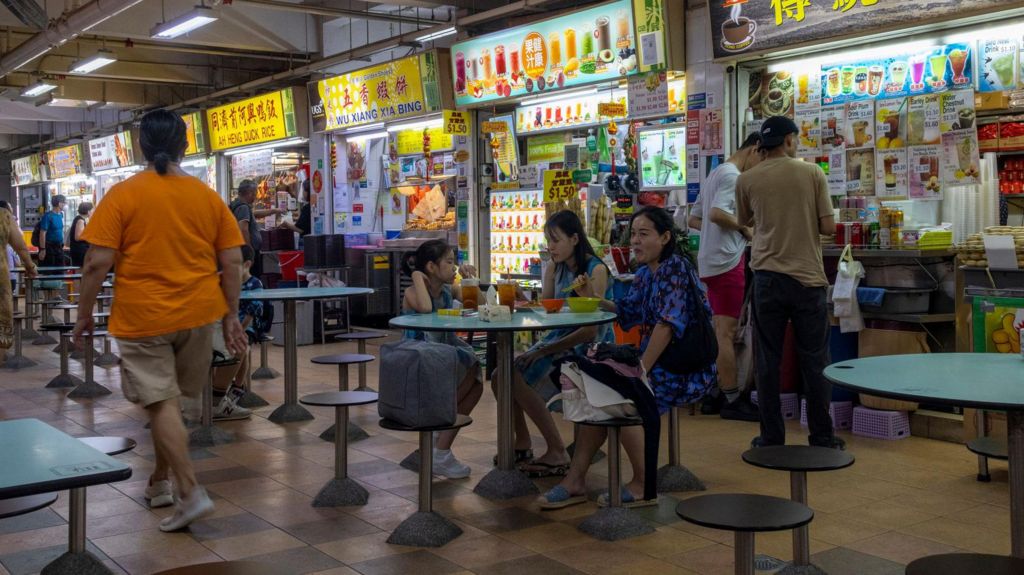
The incident, which took place on a Saturday at a shopping mall food court, began when a 73-year-old elderly man patted a young girl on the head as he walked past the table where the child was seated with her parents. What started as an apparently innocent, casual gesture quickly escalated into violence: the girl’s father, visibly enraged by the unsolicited contact, launched a physical attack that ended with the elderly man thrown forcefully onto the hard food court floor.
Surveillance footage from the food court, originally published to the social media pages of local stall Bei-Ing Wanton Noodle by the elderly man’s son, quickly went viral after being shared. In the original post, the victim’s son wrote to request public help identifying the attacker, noting that his 73-year-old father already has pre-existing chronic injuries to his legs and hip. Even though the 40-year-old attacker reportedly approached the elderly man after the incident, offered an apology and bought him a drink to make amends, the victim has since developed severe new back pain from the fall. The post emphasized that a simple apology and a complimentary drink cannot erase the physical harm and discomfort the elderly man now endures. In a subsequent update, the victim’s son expressed gratitude to Singaporean police for their rapid response to the case, adding that the family sincerely hopes official investigation will deliver a just outcome.
Public reaction to the viral clip has been overwhelmingly critical of the attacker’s actions. While a small contingent of online commentators has noted that the elderly man should have asked the girl’s parents for permission before touching the child, the vast majority of observers agree that the physical assault was a drastic overreaction to a gentle head pat.
By Sunday night, Singaporean police announced they had successfully identified the 40-year-old man connected to the assault. In an official statement, law enforcement urged the public to avoid spreading unconfirmed speculation about the incident or its surrounding context, asking residents to allow investigators to complete their work and establish an official, accurate account of what occurred.
-

India built the world’s biggest digital payments miracle. Now comes the bill
For more than a decade, instant, no-fee digital payments via India’s Unified Payments Interface (UPI) have become a seamless part of daily life for hundreds of millions of people across the country. From street-side vegetable vendors in Kolkata to horseback riding operators on coastal beaches, businesses large and small display simple printed QR codes that let customers complete transactions in seconds, no cash, card machines, or visible charges required. But that long-standing no-fee model may be poised for change, as New Delhi paves the way for banks and payment processing firms to impose a small merchant discount rate (MDR) on certain UPI transactions, kicking off a high-stakes debate over the future of the world’s most active real-time payment network.
The government has emphasized that consumers and person-to-person UPI transfers will remain completely free of charge. Under current proposals, fees would only apply to transactions above a set threshold at larger businesses, with the proposed MDR ranging between 0.3% and 0.5% — a small cut that merchants pay to the banks and fintech companies that process UPI payments. Officials are still finalizing the exact rate and scope of the new policy, but early frameworks are crafted to limit disruption to everyday small-value transactions.
The stakes of this policy shift are hard to overstate. Since its launch in 2016, UPI has grown from a niche digital payments experiment to a global powerhouse, fundamentally reshaping how India does business. Official data shows that in July alone, the network processed 23.6 billion transactions worth a total of 29.87 trillion rupees, equal to roughly $313.5 billion. In the 2025-2026 financial year, total annual transactions hit nearly 241.6 billion — almost 12,000 times the volume recorded in UPI’s first full year of operation. Today, more than 550 million Indians use the system regularly, and UPI has expanded beyond India’s borders to enable digital payments in 11 other countries.
Unlike many closed, privately owned payment networks, UPI’s unique open design has been central to its success. India built a shared, public digital infrastructure operated by the non-profit National Payments Corporation of India, allowing competing fintech providers such as Google Pay and PhonePe to battle for customers while still enabling cross-platform transactions. But what many observers overlook is the critical role that merchant incentives, specifically the zero-MDR policy, played in driving the network’s explosive growth.
New research from economists Abhinav Motheram and Sharon Buteau confirms that widespread merchant acceptance was not just a side effect of UPI’s popularity — it was one of the core drivers of adoption. Districts with denser merchant networks consistently saw faster, higher uptake of UPI among consumers. For small, informal traders such as vegetable sellers and street food vendors, accepting UPI requires no expensive card terminal, only a cheap printed QR code. With no processing fees to absorb, there was virtually no financial barrier for these small businesses to join the network, creating a self-reinforcing cycle of adoption: more merchants attracted more users, which in turn attracted more merchants.
The current proposal is intentionally designed to minimize disruption to this dynamic. One leading option under discussion would apply fees only to transactions above 2,000 rupees at large businesses, leaving small traders and low-value everyday purchases completely untouched. According to analysis from global brokerage firm Jefferies, transactions above this threshold make up just 4% of total UPI merchant transaction volumes, but account for roughly 67% of the total value of those transactions. This structure would allow banks and payment firms to collect up to an estimated $1 billion in new annual revenue, while leaving payments to neighborhood grocers and local vendors unchanged.
The push for fees also addresses a growing, unignorable financial reality: while UPI feels free to users, it is not free to operate. Servers must be maintained, transactions settled in real time, fraud detected, and the entire system defended against constant cyber threats. For a decade, the Indian government has compensated banks and payment providers for these costs, framing UPI as a public infrastructure project to expand digital inclusion. But as Reserve Bank of India Governor Sanjay Malhotra recently noted, “Someone will have to pay the cost” of maintaining the network long-term.
Still, economists warn that the impact of even a small fee depends heavily on which merchants it affects. Small informal traders operate on extremely thin profit margins, so even a nominal MDR could change their incentives to accept UPI — particularly in less developed districts where merchant networks are still growing and adoption has not yet matured. Motheram warns that if fees eventually expand to cover small and informal traders, they could slow the expansion of the merchant network that has been the backbone of UPI’s success. “Even a small fee could matter if it changes the incentives of small merchants operating on thin margins,” he explained.
India now faces a delicate balancing act: it needs to make UPI financially sustainable for providers, without eroding the open, low-barrier conditions that turned the network into a national utility. The challenge is not unprecedented: Brazil’s successful instant payment system Pix also offers free transactions for individual users, while allowing low-cost processing fees for businesses, and it has become the world’s fastest-growing real-time payment network with more than 140 million users and 4 billion monthly transactions.
Economist Renuka Sane argues that a well-designed fee structure could bring “commercial sanity” to India’s digital payment ecosystem, allowing providers to price risk properly, invest in infrastructure upgrades, and build a more resilient network long-term. Most experts agree that the powerful network effects of UPI make a mass exodus of users unlikely even after fees are introduced, especially with fees limited to large high-value transactions. But there are still notable risks: a 2024 survey from Indian polling firm LocalCircles found that 75% of UPI users said they would stop using the service if transaction fees were imposed, with just 22% willing to pay.
The larger risk is more subtle: if merchant fees reduce small businesses’ enthusiasm for accepting UPI, or discourage new small traders from joining the network, UPI could lose the frictionless, universally accepted quality that made it a household name. After a first decade spent building the network and onboarding hundreds of millions of users and millions of merchants, India is now entering its third era of UPI: figuring out how to fund the system without undermining the success that made it a global model for digital public infrastructure.
-
Thailand has a gun problem – 10 million of them
Just three days after a 14-year-old gunman killed eight people at a provincial school before taking his own life, a second fatal shooting in the same Thai province laid bare the kingdom’s long-running and deeply troubling relationship with civilian gun ownership.
The incident involved 71-year-old Chalong Riewrang, a former local politician, who entered a regional administration building to confront the office chief Thongchai Yenprasert – a man Chalong describes as a personal friend – over an unpaid large sum of money Chalong claims he was owed. What began as a scheduled discussion quickly devolved into violence: Chalong drew a handgun and fired four shots through the window of Thongchai’s parked car, striking both Thongchai and his driver. Thongchai later succumbed to his injuries.
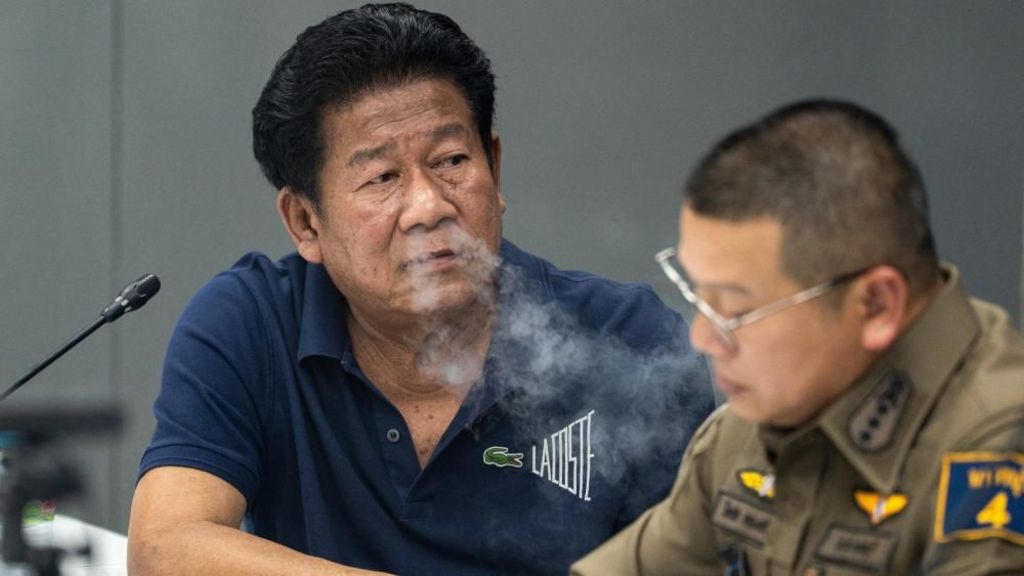
After fleeing the scene, Chalong contacted a journalist he knew mid-way through her live YouTube broadcast to confess to the shooting. Police intercepted him shortly after and took him into custody, where he spoke to reporters while casually smoking a cigarette, showing no visible distress over the killing. Chalong told reporters he “did not intend to shoot his friend”, claiming he opened fire only after the driver drew a weapon. Investigators did recover two guns from Thongchai’s car, but confirmed neither was in a condition to be fired.
This double tragedy was far from an isolated event on that same day. In Prachinburi, a province east of Bangkok, a police sergeant shot his wife in the head during an argument while she was driving the pair to pick up their young son. After the car crashed, the sergeant turned the gun on himself, and his wife later died in hospital treatment. Local analysts estimate many more unreported gun deaths occur across the country each day.
While Thai authorities do not track an official annual count of gun-related fatalities, independent estimates place the yearly death toll between 2,000 and 3,000. To put this in perspective, the United Kingdom – which has a roughly similar population to Thailand – records fewer than 50 gun deaths annually.
Gun use in hired robberies and contract killings is not unheard of in Thailand, where hitmen can be hired for relatively low fees. But most gun fatalities stem from ordinary conflicts: domestic arguments, financial disputes, and alcohol-fueled bar fights. With more than 10 million civilian-held guns circulating nationwide – 4 million of which are unregistered – even minor disagreements can quickly escalate into deadly violence.
“It’s very unfortunate that Thailand has a very high tolerance for violence,” explained Boonwara Sumano, a researcher at the Thailand Development Research Institute. “Guns are seen as a status symbol, and there are so many ways that civilians can get them. Also, showing strength, wielding power, is seen as the right thing to do in Thai society. So, when you have a norm that promotes the possession of weapons to show your strength, and access to those weapons, this is the result.”
On paper, Thailand’s gun laws appear relatively strict. Prospective buyers must first obtain a purchase permit, then apply for a separate possession permit after buying a firearm, and a third permit to carry the weapon outside the home. Imported firearms, which make up most of the country’s supply, carry steep price tags. But major loopholes undermine these rules: possession permits are valid for life, no mandatory mental health screening is required for gun owners, and there are no rules mandating safe gun storage. This is how the 14-year-old school shooter gained access to his grandfather’s legally owned gun and ammunition to carry out his attack.
A long-running government program also amplifies the illegal gun market: the scheme allows police officers and public officials to purchase firearms at heavily discounted prices. Since launching in 200, an estimated 200,000 firearms, mostly sourced from the United States, have been imported through the program. Permit holders are allowed to resell the guns after five years, turning the program into a lucrative black market trade that has faced repeated corruption investigations. Combined with unregistered locally manufactured guns from informal artisans, the program is a major source of illegal firearms across the country.
In response to the latest string of attacks, Thai Prime Minister Anutin Charnvirakul has ordered immediate emergency measures to strengthen gun control: the discounted government purchase scheme has been suspended, and all new purchase permit approvals have been halted. Anutin has also proposed limiting the validity of possession permits, offering an amnesty to encourage unlicensed gun owners to surrender their weapons, ordered parliament to draft new gun legislation, and promised harsher penalties for gun law violations.
However, this pattern of response is nothing new for Thailand. After a 2022 mass shooting that killed 36 people at a rural nursery, carried out by a former police officer, and a 2023 mass shooting at Bangkok’s busiest shopping mall by another 14-year-old gunman, Anutin – who was serving as interior minister at the time – ordered identical crackdown measures. The discounted purchase scheme was suspended, then quickly reinstated. A ban on civilian gun carrying was also imposed after a school shooting in February 2024, but enforcement has been lax.
Experts say the problem extends far beyond inadequate regulation. The massive existing stockpile of firearms, widespread systemic corruption, lax enforcement of all national laws, cultural glorification of gun ownership, and decades of military influence in Thai society all combine to create the current crisis. Even among sitting government ministers, gun ownership is common: public asset declarations show more than a dozen current ministers own guns, with the justice minister holding 10, the environment minister owning 12, and one female member of parliament declaring 48 registered firearms.
Sumano points to the deep cultural roots of gun acceptance in Thailand, shaped by decades of military rule that continues to influence society even under elected civilian government. “If you notice every Children’s Day in Thailand, instead of taking children to a museum or park, many families take their children to an army or air force base to see the weapons, take photos holding guns, this kind of thing,” she explained. “It’s in the culture. You see big men in the military looking so powerful, they kind of make you want to become one of them.”
Thailand stands out as an outlier among Southeast Asian nations. With a population four times larger than Thailand’s, Indonesia only has 82,000 registered civilian guns, while Malaysia counts just 107,000, and both nations see extremely rare gun homicides. Only the Philippines shares Thailand’s pervasive gun culture and high rates of gun violence.
Some Thai gun rights advocates argue that new restrictions on legal ownership will not solve the crisis, and will only penalize responsible gun collectors. Yod, a 53-year-old Bangkok businessman who owns a collection of more than 70 guns that he describes as luxury collectibles, most of which he has never fired, says “Most of the gun crimes in this country are carried out by illegal weapons. New measures to control legally owned guns are not the right solution. There are blank guns and spare parts which can be assembled as real guns being imported legally into the country. Why hasn’t that been chased up?”
Another gun shop owner with a collection of more than 40 guns, Sathit, says widespread crime and weak law enforcement are why ordinary people choose to arm themselves. “Look around this country nowadays. There are crimes every day. It is not safe. Drugs are rampant. People need to protect themselves because there are not enough police officers. People should have access to guns to survive, for their own safety.”
As Chalong waits in custody to be charged with the murder of his friend, the former politician, who once held permits for nine guns and had reduced his collection to just one, expressed shock at how quickly a routine financial dispute turned deadly. “I can’t believe I’m in this position, sitting here. Throughout my life, I have never had to come to a police station,” he told reporters. For Chalong, and for Thailand as a whole, one easily accessible gun was enough to end a life and upend decades of normality.