标签: Africa

非洲

  • Nearly 118 million people were displaced by conflict and persecution last year, UN says

    Nearly 118 million people were displaced by conflict and persecution last year, UN says

    In its 2025 annual Global Trends Report released Thursday, the United Nations High Commissioner for Refugees (UNHCR) has delivered a mixed update on the global forced displacement crisis: for the first time in 10 years, the total number of people displaced by conflict, violence and persecution has declined — yet the overall figure remains at a devastatingly high level that demands urgent global action.

    By the end of 2025, the global count of forcibly displaced people stood at 117.8 million, encompassing refugees, asylum seekers, internally displaced persons (IDPs) and other groups requiring international protection. Tarek Abou Chabake, UNHCR’s chief statistician, outlined two key drivers behind the historic drop: a rise in the number of people returning to their regions of origin, and growing numbers of refugees gaining citizenship in their host countries. Even with this milestone decline, UNHCR leadership stressed that the scale of displacement is far too high to ignore, with ongoing conflicts continuing to uproot millions of vulnerable people globally.

    Breaking down the report’s key demographic and geographic data, children made up 39% of the world’s 41.6 million total refugee population in 2025. While Colombia, Germany and Turkey each hosted more than 2 million refugees, the vast majority of the global refugee population resides in low- and middle-income nations. Even with a 3% drop from 2024 levels, 5.4 million people crossed international borders in 2025 to seek safety from persecution and violence.

    A deeply concerning long-term trend highlighted in the report is the persistence of protracted displacement: seven out of every 10 refugees worldwide have lived in exile for five years or more, many trapped in overcrowded, under-resourced camps in low-income countries. “Humanitarian assistance has saved lives,” said UNHCR High Commissioner Barham Salih. “But it was never intended to sustain generations of people indefinitely.” To address this systemic issue, UNHCR has set a target to cut by half the number of refugees in protracted displacement who rely on humanitarian aid by 2035.

    IDPs make up the largest single segment of the displaced population, totaling 68.7 million globally in 2025. The ongoing conflict in Sudan drove the world’s largest single new wave of displacement, pushing 9.1 million people to flee their homes within the country. Colombia, Syria, Yemen and Afghanistan follow Sudan with some of the world’s largest IDP populations.

    Looking ahead to 2026, projections offer little reason for optimism. Following the outbreak of conflict in Iran in February 2026, 3.2 million Iranians had been internally displaced by March, and an additional 1 million people were displaced within Lebanon by mid-May. “This is truly unacceptable and we must make sure this doesn’t become a new normal,” Salih emphasized.

    The report also tracked returns of displaced people in 2025: 4.4 million refugees returned to their home countries, the second-highest annual number since UNHCR began record-keeping six decades ago. Ninety percent of these returns were concentrated in just three nations: Syria, Afghanistan and Sudan. An additional 10.3 million IDPs also returned to their regions of origin last year. But Salih issued a stark warning that many returns were not voluntary, with returnees facing a lack of basic infrastructure and livable conditions to rebuild their lives. “Voluntary returns to post-conflict Syria and returns under pressure to Afghanistan are not the same thing,” he noted.

    Statelessness remains another unresolved crisis, with 4.5 million people around the world currently lacking citizenship of any nation. Myanmar’s Rohingya community make up the largest single stateless group, with most stateless people residing in Bangladesh, Ivory Coast, Thailand and Myanmar. Just 46,000 stateless people gained citizenship in 2025, a tiny fraction of the total population in need of this legal status.

    Finally, the report highlighted steep cuts to global refugee resettlement: only 82,000 refugees were resettled to new host countries in 2025, down sharply from 188,000 in 2024. Salih noted that this number represents only a tiny fraction of the millions of refugees in need of resettlement, and urged national governments to expand legal pathways for refugee relocation. “Every dangerous sea crossing and every death in the desert represents a failure of the international community,” Salih said. “The human cost of the failure is measured not with statistics but with lives.”

  • Foreign workers say they were paid less than $2 an hour to build a new US Consulate in Milan

    Foreign workers say they were paid less than $2 an hour to build a new US Consulate in Milan

    MILAN – A high-profile $350 million American consulate construction project in Milan has become the center of a major labor exploitation investigation that has already led to the arrest of two senior managers, casting a shadow over U.S. diplomatic contracting practices in Europe.

    Based on interviews with five former foreign construction workers, combined with reviews of employment correspondence and payroll records, the Associated Press has confirmed that workers on the site were paid less than $2 an hour, a fraction of the fair wages promised to them when they were hired. The contractor at the heart of the scandal, Caddell Construction, an Alabama-based firm that is one of the largest U.S. diplomatic mission builders globally, is the formal target of the probe led by Italian public prosecutor Paolo Storari, an official who has previously led high-profile investigations into illegal sweatshop operations that supply luxury fashion brands.

    Authorities launched the investigation roughly six months ago, with the probe covering approximately 70 workers, the vast majority of whom migrated from India and Kenya to work on the project. Two Caddell site managers were taken into custody earlier this month. Prosecutors confirmed that one manager was arrested while attempting to board an outbound flight to leave Italy, while the second was taken into custody just before his planned escape from the country. To date, only Caddell Construction has been named as an official target of the investigation, with no subcontractors facing formal action at this stage.

    Prosecutors detailed multiple alleged violations: the firm illegally deducted excessive housing and meal costs from worker wages, forced staff to work 60-hour weeks spread over six days, and left some workers with monthly take-home pay of less than 580 USD after deductions – a rate that works out to under $2 an hour, far below Italian minimum wage standards.

    The AP conducted interviews with the five former workers at a Milan trade union center, where they are receiving support including legal aid and emergency housing. All workers requested anonymity out of fear of retaliation and to avoid disrupting the ongoing investigation. Four of the workers interviewed are from Kenya, and one is from India; all five stated they were hired by Caddell after previously working on a major expansion project for the U.S. Embassy in Nairobi, Kenya.

    Multiple workers provided formal employment letters on Caddell company letterhead, signed by a company representative, that promised annual salaries of nearly $29,000, equal to more than 2,400 euros a month. In practice, none of the workers received anything close to that agreed-upon rate, and multiple workers reported being threatened by site human resources staff after they questioned the missing pay.

    “When you go to the office to ask any question, you are being told, ‘Either you work or you will be returned to your country. That’s the amount you are supposed to be paid,’’’ one Kenyan electrician told the AP. He added that he was promised 2,300 euros a month, but only took home 800 euros after deductions. A second Kenyan electrician said he was threatened with defamation charges after sharing an AI-generated summary of Italian minimum wage laws with management. He was told the 25,000 euro annual salary listed on his employment contract was “for visa purposes,” not an actual binding pay promise.

    The Indian worker, a veteran electrician with more than 10 years of experience on major construction projects across the Persian Gulf, reported a similar experience: he was promised 2,500 euros a month, but his pay stub shows he took home just 500 euros a month, equal to an hourly rate of 1.80 USD. All five former workers, aged between their late 20s and early 50s, said they were fired without any formal cause earlier this year. One worker said he returned to Milan from a family visit to Kenya only to find he had lost both his job and his company-provided housing. Two of the former workers are currently homeless and sleeping in Milan parks, while another is staying temporarily with a friend. One worker turned down a new job offer from Caddell at a site in another country after his experience in Milan.

    Both the U.S. State Department and Caddell Construction have stated they are investigating the allegations and are fully cooperating with Italian law enforcement. “The U.S. government does not tolerate labor exploitation,” the State Department said in an official statement. Caddell released its own statement saying it is conducting an internal inquiry to confirm that all subcontractors and consulting partners comply with local labor laws and legal standards. “Caddell is committed to treating and paying workers fairly. We will continue to work with authorities in good faith to ensure the welfare of those who work on this important project,” the company said.

    This is not the first controversy to hit the firm: more than 10 years ago, Caddell paid millions of dollars in a settlement with the U.S. government to resolve allegations that it submitted false claims to access government contracting incentives. The firm did not respond to requests for comment on this prior case.

    The Milan consulate project is a major part of a 20-year construction boom that has reshaped Milan’s skyline and boosted the international profile of Italy’s capital of fashion and finance. Caddell grew to become the leading contractor for U.S. diplomatic facilities after the State Department launched a massive global security upgrade program following the 1998 al-Qaeda bombings of U.S. embassies in East Africa that killed more than 250 people. On its website, the firm noted that very few contractors can meet the strict security requirements to bid on diplomatic facility projects, and as of 2023, the firm had completed 39 embassy and consulate projects valued at a total of $7.4 billion, with four additional projects added since that time.

    The new Milan consulate campus is being built on 10 acres of land that was once a public shooting range. The project includes restoration of a historic 100-year-old building, a new five-story main consulate building, restored public gardens, a reflecting pool, and a large outdoor community gathering space. The State Department initially projected the project would employ roughly 500 local workers, though the majority of the workers named in the probe are foreign migrant workers.

    Construction work on the site is continuing, but it is now under court supervision. Following the launch of the investigation, the illegal wage deductions have been ended, workers are limited to a 45-hour work week, and they are guaranteed two full days off per week.

    Pay stubs provided by the workers confirm the alleged excessive deductions, with monthly charges of roughly 590 USD for housing and more than 350 USD for food, even these large deductions do not account for the full gap between the promised wages and the actual pay workers received. Laura Malguzzi, a labor representative for the Fillea Cgil construction union federation that is supporting the workers, said the union is seeking full damages to recover all unpaid wages owed to the workers. She added that investigators were struck by how the pay stubs openly documented the alleged exploitation, with no attempt to hide the violations, suggesting the firm believed it would face no consequences. “They probably had in their minds the absolute certainty that they were untouchable,” Malguzzi said.

    Many of the workers had accepted low pay in their home country of Kenya, where widespread unemployment leaves workers with few other options, but they said they expected far better treatment from a major American contractor working in Western Europe. “They can just hire you, and you just go running,” one worker said. “Because you are poor you have nothing. And you have nothing you can do.” Despite their hardships, the former workers are calling on current employees at the site to speak out about any abuses they have faced. “I believe in justice,” one worker said. “Also the workers there should not be afraid. They should come and speak up.”

  • Motorcycle taxi drivers in Congo rally for Ebola awareness as attacks hinder response

    Motorcycle taxi drivers in Congo rally for Ebola awareness as attacks hinder response

    In the heart of the latest Ebola outbreak in the Democratic Republic of the Congo, dozens of local motorcycle taxi drivers have launched a community-focused public awareness caravan to combat dangerous misinformation that has fueled violent attacks on frontline health workers. The initiative, held Tuesday, unfolded in Bunia and Rwampara, two urban centers in Ituri province — the epicenter of the current outbreak which accounts for over 90% of all confirmed cases nationwide.

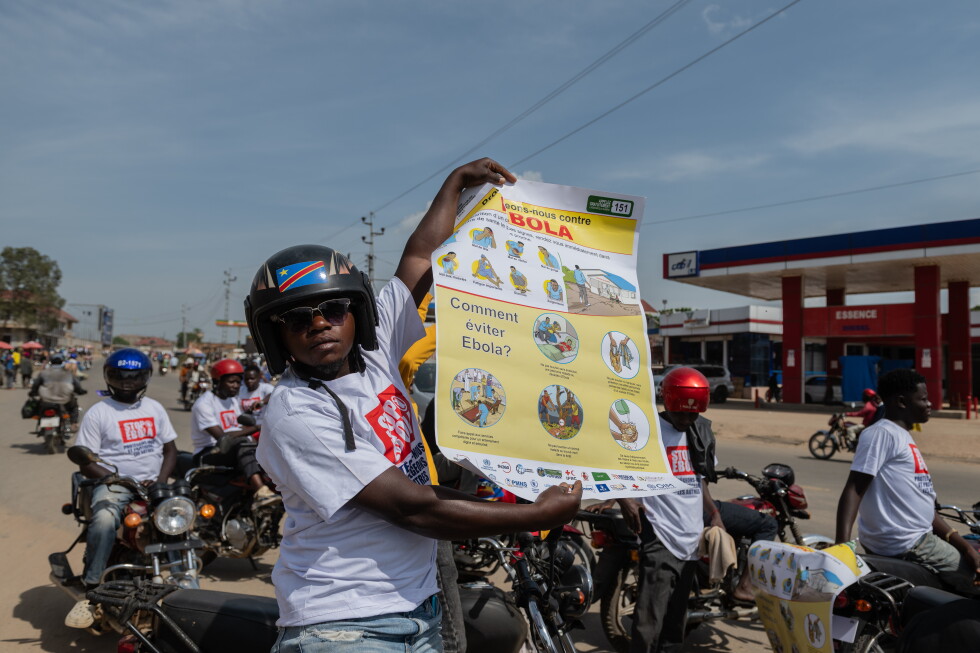
    Clad in crisp white T-shirts emblazoned with the slogan “Stop Ebola”, the drivers paraded through city streets, displaying illustrated public health guides that outline key preventive measures for the viral disease. As of late Tuesday, Congolese health authorities had confirmed at least 598 cases of Ebola across affected regions, with 115 recorded deaths. Cases have also been documented in neighboring North Kivu and South Kivu provinces, and a small number of infections have been detected across the international border in Uganda.

    What makes this outbreak particularly challenging for global and local health authorities is the deep-seated skepticism and rampant misinformation that has taken root in many local communities. Many residents reject the existence of the outbreak entirely, while others fiercely oppose the strict burial protocols health workers implement to limit viral spread after an Ebola death. This resistance has erupted into open violence: Marie Roseline Darnycka Belizaire, the World Health Organization’s emergency director for Africa, confirms that more than 520 separate incidents have disrupted health worker operations, including at least three targeted attacks on health centers in Ituri alone, sparked by resident demands for the return of deceased patients’ bodies.

    Organizers of the awareness caravan say that engaging local motorcycle taxi drivers is a strategic response to this violence. These drivers are embedded in daily community life, regularly transporting both sick and healthy residents across towns and rural areas, making them trusted messengers for accurate public health information. “Response teams have been attacked in some areas, and that is one reason why we chose to involve motorcycle taxi drivers,” explained Jacques Maliro, WHO’s Risk Communication and Community Engagement Officer and a lead organizer of the campaign. “They are an important group because they transport both sick and healthy people, so they too need to be informed and engaged.”

    Misinformation has discouraged residents from following life-saving public health guidelines and seeking early medical care, officials say. At the start of the outbreak, some local churches even told congregations that Ebola is a hoax, and that divine faith eliminates the need for professional medical care. For Josue Mbabona, one of the motorcycle drivers participating in the caravan, the outbreak is a devastating personal reality: he has already lost three family members to the virus. “Those who do not believe in it need to understand that it is real,” Mbabona said.

    The outbreak response has been hampered by multiple overlapping crises beyond community resistance. Decades of ongoing conflict involving dozens of separate rebel and militant groups — some linked to neighboring Rwanda and the extremist Islamic State — have left many rural communities completely cut off from outside aid, leaving frontline health workers unable to access at-risk populations. Frontline workers also face grueling conditions, laboring for long hours with little pay and almost no rest. Critical supply shortages further complicate response efforts: this week, local residents and officials in Bunia reported widespread shortages of clean water for the frequent handwashing public health officials recommend to slow viral transmission.

    Complicating matters further, the current outbreak is caused by the rare Bundibugyo Ebola strain, which lacks any approved vaccine or targeted treatment — a key difference from the more common Zaire strain that has caused most of the 16 previous Ebola outbreaks recorded in Congo. Currently, three vaccine candidates are in active development, and Africa’s top public health agency announced last month that it aims to roll out approved vaccines and treatments for Bundibugyo virus by the end of 2024. For residents in affected areas, the urgent need for a vaccine is clear: “The vaccine needs to be available so that we can protect ourselves, move forward, and return to normal life,” said David Kasimwa, a student who joined the awareness caravan. “This disease has disrupted many activities: We are no longer able to travel freely because we are afraid,” he added.

    The outbreak has already triggered international policy shifts: multiple countries have implemented new travel restrictions and enhanced entry screening for travelers arriving from affected regions, though the World Health Organization has repeatedly declined to recommend broad, region-wide travel bans. On Tuesday, U.S. Secretary of State Marco Rubio called on European nations to tighten their own entry restrictions for travelers from affected African countries, warning that failure to act could result in stricter U.S. entry requirements for all travelers arriving from Europe — even during the upcoming FIFA World Cup. There are very few direct daily flights between Africa and the United States, but more than 300 direct flights connect Europe and the U.S. on a daily basis.

  • Brother’s memory inspires Williams for World Cup opener

    Brother’s memory inspires Williams for World Cup opener

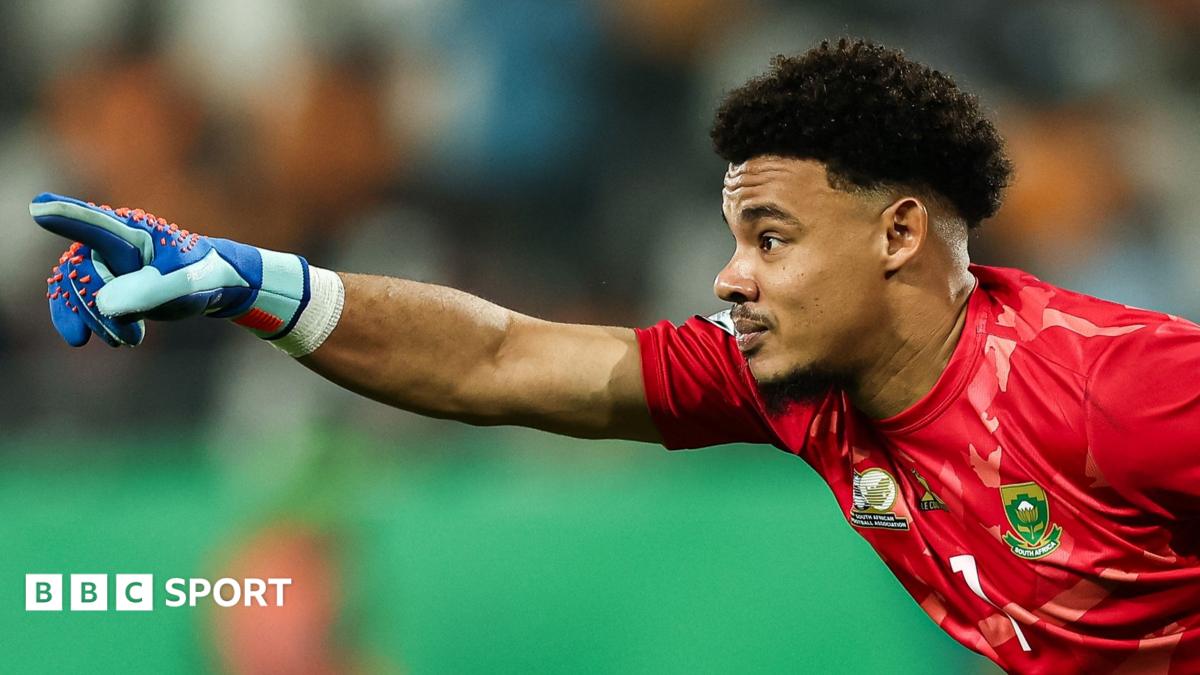
    Football has long served up moments of poetic, unexpected coincidence, and for South Africa national team captain Ronwen Williams, the 2026 FIFA World Cup will deliver one of the most remarkable such occasions. When Bafana Bafana steps onto the pitch for the tournament’s opening match against co-hosts Mexico in Mexico City’s iconic Estadio Azteca, it will mirror the opening fixture of the 2010 World Cup – the tournament that marked South Africa’s historic first time hosting football’s biggest global event.

    For Williams, this opening match carries far more personal weight than just a poetic callback to 2010. Just two months before the 2010 World Cup kicked off on home soil, the 18-year-old emerging goalkeeper lost his older brother Marvin in a devastating car crash. Grief-stricken, Williams briefly considered walking away from the sport he loved entirely. Now, 16 years later, that choice to stay in the game has led him to this unprecedented moment: leading his country out as captain in the opening match of the world’s most-watched sporting tournament.

    In an interview with BBC World Service’s Newsday, Williams opened up about the overwhelming emotion of the opportunity. “He had so much high hopes for me,” Williams said of his brother. “To know I’ll be leading out my team in the opening game, I can’t put it into words. It gives me chills. Sometimes I find myself just laying at night thinking about it. I always say the two most important games at the World Cup are the opening and the final, and Bafana Bafana is going to be part of one.”

    While the loss of his brother left a permanent gap, Williams has been surrounded by unwavering family support throughout his rise. He recalled the intimate family celebration after Belgian head coach Hugo Broos named him captain shortly after taking the role in 2021, saying the joy and pride his family felt then has only multiplied exponentially ahead of the 2026 tournament. Broos, a 74-year-old veteran manager who won the 2017 Africa Cup of Nations with Cameroon, inherited a South African side in the doldrums when he took over. His first major decision was naming Williams skipper, and the pair have since orchestrated a remarkable turnaround for Bafana Bafana: a third-place finish at the 2023 Africa Cup of Nations, and a top spot in their 2026 World Cup qualifying group that booked South Africa’s fourth ever appearance at the tournament.

    Williams credits Broos with rebuilding not just the team, but the nation’s belief in Bafana Bafana. “Broos has united the country after bringing belief and love back to the team and South Africa itself,” Williams explained. “Two, three years ago we were crying for supporters to come out and support us. And he mentioned that it goes hand in hand with performance, with results. When we started picking up the results, that’s when the belief came back. Now people can’t wait for Bafana Bafana to play. Buying our merch, sending us the well wishes. He’s been amazing, exceptional.”

    Despite the momentum behind the team, Williams remains grounded as South Africa prepares for Group A play against Mexico, Czech Republic and South Korea. The team have never advanced past the group stage in their three previous World Cup appearances, even picking up four points in both the 2002 and 2010 tournaments. For the expanded 48-team 2026 tournament co-hosted by Canada, Mexico and the United States, just making it to the knockout round (the last 32) would mark a historic milestone for South African football. Williams says his team’s priority is clear: “I think we need to be realistic about our chances. The most important thing is to get out of the group. The mentality that we need to have is: can we compete? Can we show up? Can we perform?”

    Williams, who also captains South African club side Mamelodi Sundowns to a recent CAF Champions League title, has built his reputation as a formidable penalty saving specialist – a skill that could prove critical if South Africa advances to a knockout round. At the 2023 Afcon, he delivered two legendary shootout performances: saving four out of five penalties against Cape Verde in the quarterfinals, then two more against DR Congo in the third-place playoff, cementing his team’s best continental finish since 2000. Those performances earned him the 2024 African Goalkeeper of the Year award and a surreal nomination for the prestigious Yashin Award at the Ballon d’Or ceremony.

    Far from shying away from the pressure of penalty shootouts, Williams embraces the moment. “I enjoy it. There’s no pressure on the goalkeeper,” he said. “You analyse, you watch. When it comes to penalty shootouts, I try and pick up a lot of trends. Sometimes it goes with just the feeling that you have on the field. Penalties present a moment to shine.”

    He cites 2022 World Cup champion Emiliano Martinez as a major influence, calling the Argentine goalkeeper a hero for his decisive shootout performance in the 2022 final. While Martinez’s gamesmanship drew criticism, Williams notes that goalkeepers have always had a different mindset than outfield players. “You have to be [a bit different],” he explained. “Diving at someone’s feet, saving a ball that’s coming, I don’t know at what speed, it’s not normal. You need to be a bit crazy. Most goalkeepers are the jokesters in the team.”

    Williams also pushes back on the common football cliche that goalkeepers make poor captains, arguing that modern rules allow keepers to assign an on-field player to handle quick discussions with referees, eliminating the inefficiency critics point to. For Williams, captaincy is a role he was born for: he describes his leadership style as bringing “stability” to the squad, calling himself the “glue” that holds the team together – a role he has filled since he started playing in local leagues as a young boy. “I think that I was made for it. I cherish the captaincy, the responsibility that comes with it,” he said.

    When Williams walks out onto the Estadio Azteca pitch in front of 73,000 fans for the 2026 World Cup opener, all eyes will be on the South African captain. It will be the culmination of 16 years of perseverance through grief, doubt, and hard work – and a chance to finally write the new chapter of South African football that Williams has spent his entire career working toward.

  • What to know about the World Cup referee from Somalia who was denied entry to the US

    What to know about the World Cup referee from Somalia who was denied entry to the US

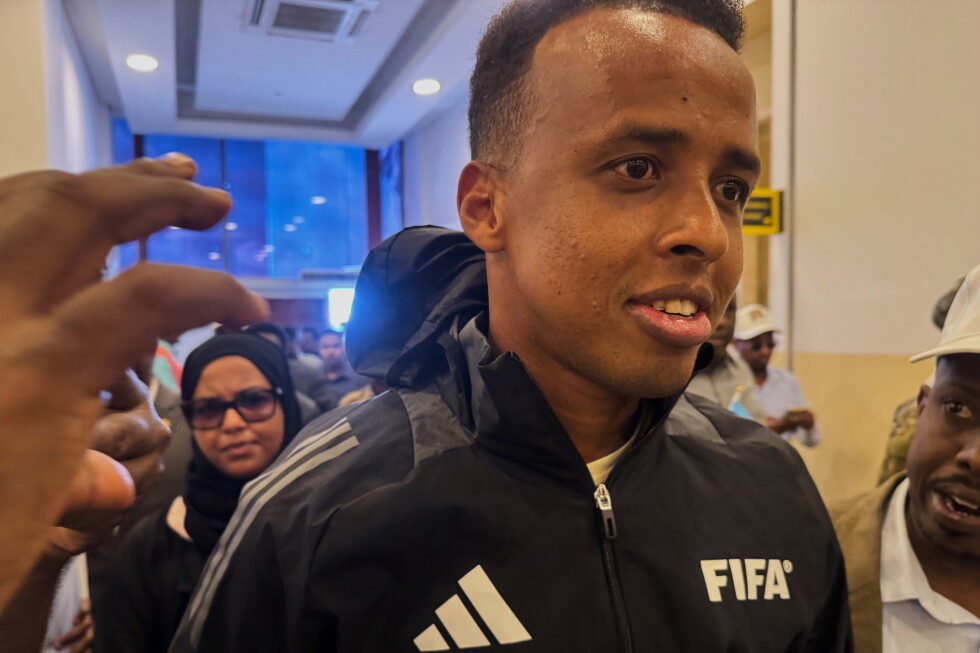
    For a nation emerging from decades of crippling civil conflict, Omar Artan’s historic selection as the first Somali referee to earn a spot on the 2026 FIFA World Cup officiating roster looked set to be a watershed moment for Somalia — a testament to the country’s slow recovery and the resilience of its grassroots soccer culture. But what should have been a crowning achievement for the 34-year-old official turned into an unprecedented diplomatic and sporting controversy, when U.S. border authorities denied him entry ahead of World Cup referee preparation camp in Miami, forcing his removal from the tournament’s final officiating list.

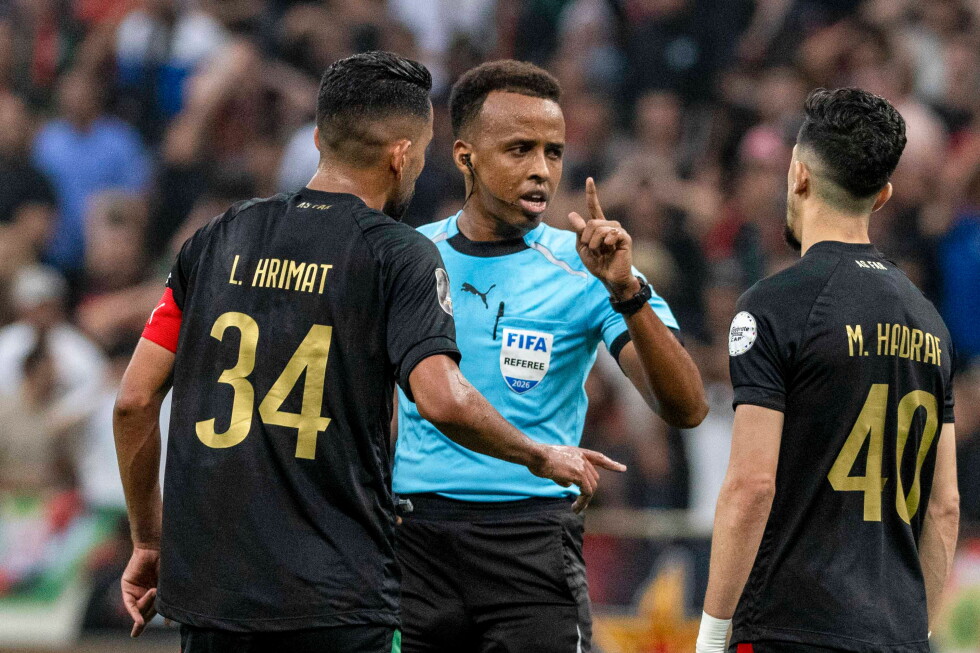
    Artan, widely recognized as Africa’s top male referee for 2025, has spent nearly a decade climbing the ranks of international soccer officiating to reach the sport’s biggest stage. He earned his FIFA referee credentials in 2018, and made history again in January 2024 when he became the first Somali to officiate a match at the men’s African Cup of Nations, taking charge of the group-stage fixture between Tunisia and Namibia. Just months later, he was selected to referee the decisive second leg of the 2025 African Champions League final in Morocco, the most high-profile club soccer match on the continent. He also served as an official at the 2024 men’s Under-20 World Cup in Chile, adding critical elite-level experience to his resume ahead of World Cup selection.

    FIFA’s path to World Cup officiating is a rigorous, multi-year process that requires candidates to prove their consistency across domestic, continental and global competitions. National associations first nominate eligible officials to join the FIFA international referee list, after which candidates must officiate continental tournaments, FIFA-organized qualifiers and youth or Olympic competitions to demonstrate their skill. Top performers are invited to preparation camps in the year leading up to the tournament, with the final officiating roster announced in April 2025 — where Artan’s name appeared, making him the first Somali to ever earn the honor.

    For 19 million Somalis, the announcement was more than a sporting milestone. For decades, civil war and political instability shattered institutions and infrastructure across the country, but soccer remained a unifying force, holding communities together even at the height of conflict. Today, despite limited resources, the Somali Football Federation organizes 22 annual competitions ranging from youth regional leagues to the 12-club Somali Premier League. The 2020s restoration of Mogadishu’s 65,000-seat national stadium, once occupied by armed groups as a military base, has become a defining symbol of the country’s slow progress toward stability. Artan’s success, many Somalis hoped, would shine a global spotlight on that recovery.

    That progress hit an unexpected barrier when Artan arrived in the U.S. to join the pre-tournament referee camp. U.S. Customs and Border Protection confirmed the referee was ruled inadmissible over unspecified vetting concerns, with an anonymous U.S. official later claiming the denial stemmed from “association with suspected members of terror organizations.” Somali government officials have pushed back on that claim, suggesting the rejection stems from longstanding entry restrictions first implemented by the Trump administration, which added Somalia to a list of nearly 40 countries targeted by broad immigration bans. The restrictions have remained in place in subsequent years, and Trump made repeated public statements targeting Somali immigrants, even calling for those already residing in the U.S. to leave the country.

    The decision to bar a FIFA-vetted referee from entering a World Cup host nation is unprecedented in modern soccer history. The 2026 tournament is co-hosted by the U.S., Mexico and Canada, making U.S. border authorities responsible for granting entry to participating teams and officials. FIFA has sought to distance itself from the controversy, noting that host nations retain final authority over visa and entry decisions for event-related personnel in line with longstanding event protocols.

    Still, the ruling has sparked widespread outrage among global soccer fans on social media, who have criticized the U.S. government’s decision and raised questions about the country’s ability to successfully host a global, inclusive sporting event. Fans have also noted that Artan’s case is not an isolated one, with similar entry denials having already disrupted pre-tournament preparations for visiting teams.

    Despite the disappointment of missing out on his historic World Cup appointment, Artan received a jubilant hero’s welcome when he returned to Mogadishu on Wednesday. Addressing young Somali athletes and fans, he urged the next generation of Somali sportspeople to remain proud of their identity and their country, framing his own experience as a test of resilience rather than a defeat. For many Somalis, that resilience has long been embodied by their country’s soccer culture — and Artan’s standing as a national hero remains undimmed, even after the lost World Cup opportunity.

  • Malian authorities arrest 2 prominent journalists in latest crackdown on freedom of expression

    Malian authorities arrest 2 prominent journalists in latest crackdown on freedom of expression

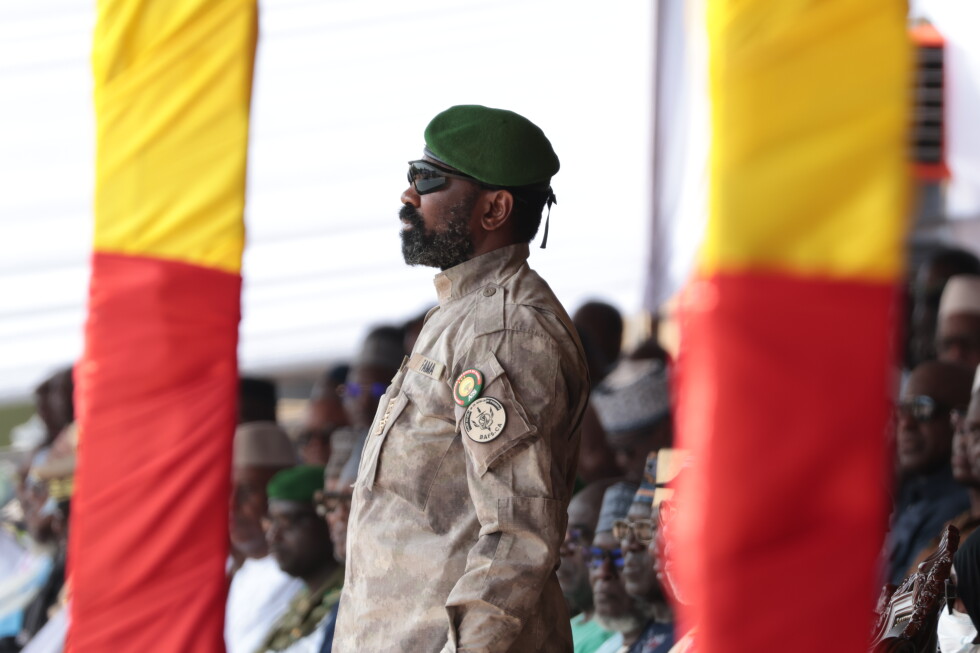
    In the Sahel region of West Africa, Mali’s military-led government has launched another sweeping crackdown on dissenting speech, detaining two high-profile journalists within a 48-hour window amid a rapidly deteriorating extremist insurgency across the country. The West African nation’s leading national press body, Maison de La Presse, confirmed the arrests in a statement released Tuesday, outlining the controversial charges leveled against both media workers.

    The first journalist taken into custody Monday was Chahana Takiou, a veteran television anchor and editor-in-chief of the *22 Septembre* national newspaper. Takiou had recently publicly pushed back against the junta’s implementation of a new cybercrime law, arguing that the legislation was being intentionally used as a tool to stifle independent reporting and erode press freedom. Authorities have charged him with undermining state credibility through exploitation of the national judicial system, according to the press association.

    Just one day after Takiou’s arrest, security forces detained Abderhmane Keita, a popular broadcast journalist known for his high-viewership television program *Grand Jury*. Keita’s arrest stems from on-air comments he made confirming that JNIM—the al Qaeda-affiliated extremist group that has waged an insurgency across the Sahel for years—currently exercises full control over the strategic northern Malian town of Kidal. Kidal fell to JNIM and separatist rebel forces during large, coordinated offensives launched by the groups back in April. Under the current military regime, public claims that government forces are ceding territory to jihadist insurgents are frequently met with criminal prosecution, a pattern that has become well-established since the junta seized power.

    Keita faces two formal charges: undermining national unity and state credibility, and spreading what authorities describe as false and misleading information.

    This latest crackdown on independent media is part of a broader trend across the three Sahel nations that have fallen under military rule in recent years: Mali, Niger, and Burkina Faso. All three countries have seen coups d’état remove democratically elected governments since 2020, with new military junta leaders taking power on promises to eliminate extremist violence that had overwhelmed previous civilian administrations. After seizing control, the juntas cut long-standing security and political ties with France and other Western powers, formed a new regional security alliance called the Alliance of Sahel States, and turned to Russia for military training and support in their campaign against insurgent groups.

    Despite the juntas’ pledges to restore security, independent analysts warn that the security landscape across the three countries has grown dramatically worse in recent months, with extremist groups carrying out a record number of deadly attacks against civilian and military targets. Government forces, meanwhile, have faced repeated accusations of extrajudicial killings of civilian civilians suspected of collaborating with insurgent groups.

    Alongside failing to curb extremist violence, the military regimes have systematically targeted political opposition and independent media to consolidate their hold on power. In Mali alone, authorities have already implemented a growing list of press restrictions: in January 2025, the government banned distribution of the prominent Pan-African news outlet *Jeune Afrique*, and multiple major French media organizations including France24, TV5 Monde, and Radio France International have been barred from operating inside the country for months. Dozens of opposition political leaders have also been imprisoned on charges related to their criticism of the military government.

  • Ref Artan receives hero’s welcome after World Cup exclusion

    Ref Artan receives hero’s welcome after World Cup exclusion

    In a moment that blended national pride with unfulfilled dream, Somali referee Omar Artan has returned home to a rapturous, hero’s welcome in Mogadishu, just days after a sudden U.S. entry denial blocked his path to becoming the first Somali official to officiate at a FIFA World Cup finals. The 34-year-old, who earned the title of Africa’s Referee of the Year in 2025, was en route to the 2026 World Cup when he was turned away at Miami International Airport on Monday — a shocking outcome given he held both a valid diplomatic passport and an approved single-entry U.S. visa.

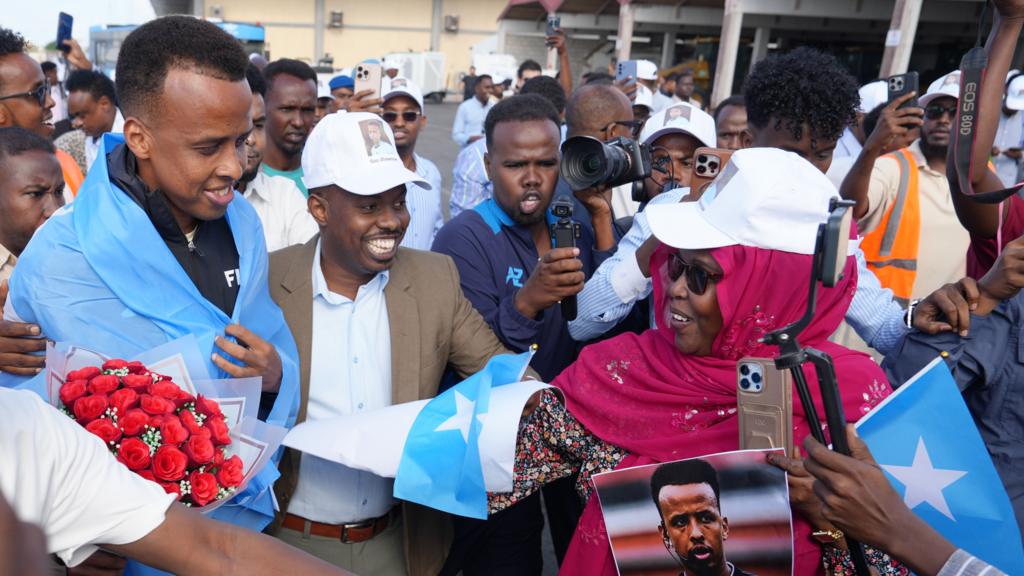
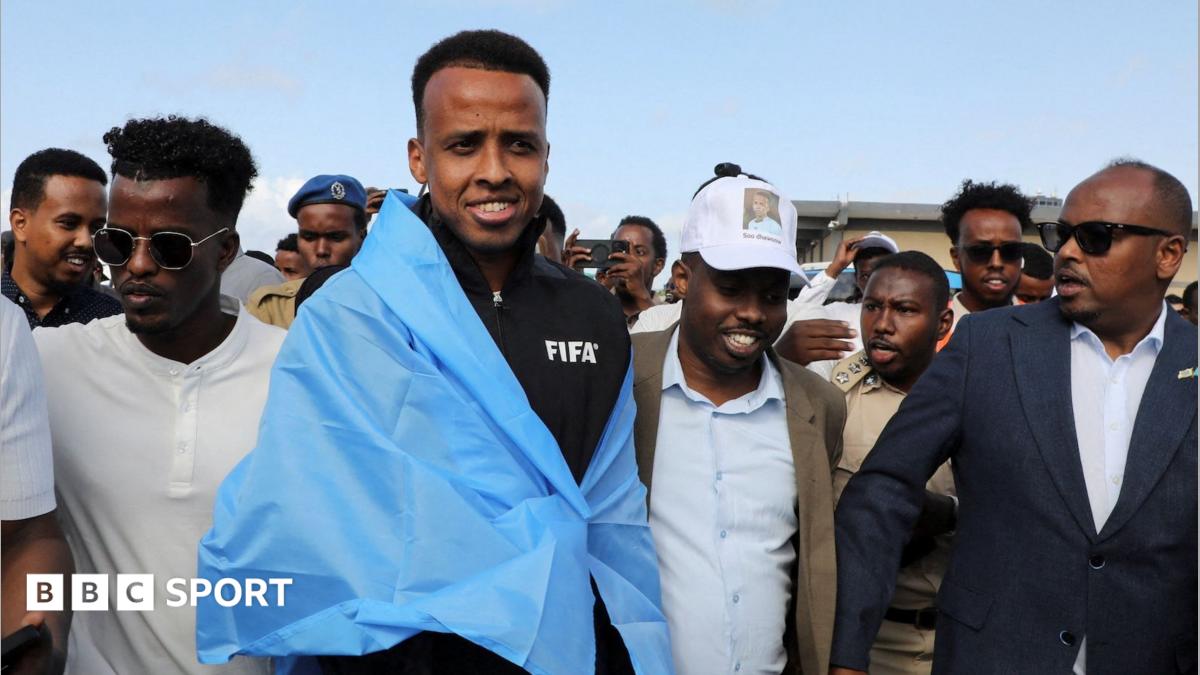
    Upon his arrival at Aden Adde International Airport in the Somali capital Wednesday, Artan was met by a cheering crowd that included senior Somali government officials, leadership from the Somali Football Federation, fellow regional referees, and hundreds of local residents eager to honor his trailblazing achievement even in the wake of disappointment. Addressing the gathered crowd, Artan expressed profound gratitude to his compatriots and his homeland, saying “I want to thank my people and my country from the bottom of my heart for this incredible show of support.”

    Despite the crushing setback of his World Cup exclusion, Artan has not stepped back from his career ambitions. The referee has publicly reaffirmed his commitment to reaching the global tournament, vowing that he will achieve his long-held goal of officiating at the 2030 FIFA World Cup, turning this unexpected disappointment into fuel for future progress for himself and for Somali football on the global stage.

  • Banned referee Artan arrives home in Somalia

    Banned referee Artan arrives home in Somalia

    Somalia’s star football referee Omar Artan has returned to a jubilant, nationwide welcome in Mogadishu after being denied entry to the United States ahead of the 2026 FIFA World Cup, reaffirming his promise to reach the global tournament’s pitch at the 2030 edition.

    The 34-year-old, who was named the Confederation of African Football’s Men’s Referee of the Year for 2025, made history as the first Somali referee ever selected for a World Cup finals. He was one of just 52 on-pitch officials chosen for the 2026 co-hosted tournament, which splits matches across the U.S., Canada and Mexico. All match officials are required to be based in Florida for pre-tournament training, preparation and security protocols, making entry to the U.S. non-negotiable for Artan to take up his place.

    Despite holding a valid diplomatic passport and approved single-entry U.S. visa, Artan was detained for hours and subjected to an 11-hour immigration interview upon arrival at Miami International Airport on Monday. He was ultimately denied entry and repatriated, with U.S. authorities offering no public explanation for the decision. The move falls in line with a sweeping travel ban implemented by U.S. President Donald Trump in June 2025, which imposes a full entry ban on all visa holders from 12 countries, including Somalia.

    The incident comes on the heels of inflammatory comments Trump made about Somalia just two months before the tournament, ahead of an immigration enforcement operation in Minnesota’s large Somali-American community. Trump dismissed Somalia as “barely a country” claiming “they just run around killing each other. There’s no structure,” and added that Somali immigrants should “go back to where they came from,” warning the U.S. would “go the wrong way if we keep taking in garbage to our country.”

    Andrew Giuliani, head of the White House Task Force on the World Cup, defended U.S. Customs and Border Protection’s decision in an interview with BBC World Service, saying “While I can’t go into the derog [derogatory information] on that I can tell you it was the right decision by customs and border patrol and I support that decision.”

    Artan arrived back at Mogadishu’s Aden Adde International Airport on Wednesday, where hundreds of supporters, senior government officials, Somali Football Federation representatives, fellow referees and ordinary residents gathered to greet him. Crowds carried pro-Artan banners, wore custom hats printed with his image, and social media creators streamed the welcome live to their online audiences. Hundreds more were expected to join a public reception at Mogadishu Stadium later the same day, where Artan planned to attend a domestic league match between Heegan and Dekadaha.

    Speaking to reporters after his arrival, Artan expressed gratitude for the outpouring of support from his homeland. “Everything is pre-destined. Fifa supported me well and were in touch with me until I reached Mogadishu,” he said. “I promise you that I’ll be officiating you in the next World Cup. Somalia, everywhere, I’m letting you know.”

    In a message to young Somalis, Artan urged the next generation not to lose hope or be demoralized by his treatment. “Let’s all defend Somalia’s honour. We all belong to Somalia whether it’s bad or good. That flag is ours and so is the passport – let’s defend it,” he said. “Despite this happening to me, I’ll still stand for my nation. I want to continue my journey from here and urge the youth to do the same.”

    Artan, who has held FIFA referee credentials since 2018, has become a national icon in Somalia after his landmark selection to the 2026 World Cup squad. Supporters across the country have framed his rejection as an insult to Somali national dignity, even as the referee himself says he remains committed to pursuing his World Cup dream. The incident has also sparked broader questions about FIFA’s ability to manage logistics and protect its appointed officials ahead of the 2026 tournament, with critics asking how the governing body could allow a referee’s historic qualification to be derailed by U.S. immigration policy.

  • When will an African side win the World Cup?

    When will an African side win the World Cup?

    For decades, football fans across Africa have shared one enduring dream: to see a nation from the world’s second-largest continent lift the sport’s most prestigious prize, the FIFA World Cup. That dream remains unfulfilled decades after it was first predicted, but after historic breakthroughs and systematic investment across the continent, many believe the moment is closer than ever before.

    Sunday Oliseh, a 51-year-old former player who helped Nigeria claim Africa’s first Olympic men’s football gold medal at Atlanta 1996, sums up the widespread continental longing. “If there’s something I want to see before God takes me to heaven or hell it would be great to see an African nation win [the World Cup], because this is a tournament that we all love passionately in Africa,” he says.

    Since the first World Cup kicked off in 1930, 49 national teams from 13 African countries have taken part in 22 editions of the tournament. For decades, their progress was limited by systemic barriers rooted in colonialism, restricted allocation of tournament slots, and missed narrow opportunities. Before 2022, Africa had only ever produced three World Cup quarter-finalists: Cameroon’s Indomitable Lions in 1990, Senegal in 2002, and Ghana’s Black Stars in 2010. It was not until the 2022 Qatar World Cup that the continent made history, when Morocco’s Atlas Lions fought past heavyweights Belgium, Spain, and Portugal to become Africa’s first ever World Cup semi-finalists.

    This landmark achievement came as no accident: it was built on more than a decade of targeted, long-term investment backed by King Mohammed VI of Morocco. The King Mohammed VI Football Academy opened in 2009, followed by a $65 million state-of-the-art training complex in 2019, creating a development pipeline that turned Morocco into Africa’s highest-ranked men’s national side.

    William Troost-Ekong, a former Nigeria captain, says Morocco’s success created a replicable roadmap for other African nations. “Morocco has created a blueprint of how it can be done, which is years and years of investing in grassroots football and academies,” he told BBC Sport Africa. “It starts with structure, with planning. Investment [is] very, very important. It has to be something that comes from federations being supported from a governmental level. Morocco have invested not just money but also time and effort, with a clear idea of how they can progress. The facilities they have, the consistency throughout their age groups, I think that’s the only blueprint you can follow.”

    Confederation of African Football (Caf) has also taken steps to strengthen the game across the continent, boosting prize money for the Africa Cup of Nations and top continental club competitions to increase federation and club revenue, while also investing in national schools championships. Caf president Patrice Motsepe reaffirmed the governing body’s commitment to developing the sport, predicting that “An African country will be champions of the world. That is what we are working towards, that’s what we are investing in and we are confident it will happen.”

    Veteran manager Claude Le Roy, who led Cameroon at the 1998 World Cup and coached five other African national sides, echoes the focus on youth development as the foundation for long-term success. “If you want to permanently have high-level national teams in Africa, you need to work with youth categories,” the 78-year-old said. “That’s the base of everything.”

    Structural changes to the World Cup itself have also opened new doors for African nations. For most of the tournament’s history, Africa was severely underrepresented: between 1930 and 1962, Egypt was the only African entrant in the first eight editions, and the continent boycotted the 1966 World Cup after FIFA refused to allocate it a direct qualifying spot. Through successive tournament expansions, the number of African slots grew from 1 in the 1970s to five from 1998 onward, and the 2026 expanded 48-team tournament hosted by Canada, Mexico and the United States will mark a new milestone: nine African teams qualify automatically, with DR Congo claiming an additional spot via inter-confederation play-offs to bring the total contingent to 10, the largest in African history.

    South Africa captain Ronwen Williams, who will lead his nation in the tournament’s opening match in Mexico City, says the growth of African participation reflects broader progress across the continental game. “We’ve been on the rise – the leagues, Caf, the [African] Champions League, Afcon,” he told the BBC. “Everything has improved immensely. For so many countries to go out and compete at the highest level, it’s amazing.”

    Williams and Troost-Ekong both argue that greater participation will directly improve performance, particularly under the new format that allows two-thirds of participating teams to advance past the group stage. “Making it more accessible is going to be the key factor in the long term for teams to be more competitive,” Troost-Ekong said. “You need that exposure for improvement. The more experience they get, the more capable they will be with handling pressure. Experience is invaluable.”

    Another growing advantage for African nations is the ability to tap into talent from global African diasporas, reversing decades of talent drain that saw top players choose to represent European nations. Many diaspora players develop their skills in elite European club academies, and a growing number of African federations are now actively recruiting eligible players to represent their ancestral nations. Morocco was an early pioneer of this approach, convincing Canada-born goalkeeper Yassine Bounou and Spain-born stars Achraf Hakimi and Brahim Diaz to represent the Atlas Lions. More recently, 2026 debutants Cape Verde and DR Congo, returning to the finals for the first time since 1974, both relied heavily on diaspora talent: 18 of DR Congo’s 26-man squad were born in Europe, including defenders Aaron Wan-Bissaka and Axel Tuanzebe, who switched allegiance from England’s youth setup. Tuanzebe even scored the decisive qualification goal that sent DR Congo to the 2026 finals.

    Gabriel Zakuani, a former DR Congo captain now working as a technical consultant identifying and recruiting eligible diaspora players, says outreach and persuasion are key to unlocking this talent pool. “Recruitment is massive,” he told the More Than The Score podcast. “You have to get players to believe in your vision. Potentially they can’t play for England, Belgium or France, but they can still get to the World Cup. The biggest example is Axel Tuanzebe. He’s gone through the system with England and then he scores the goal to gets us to the World Cup. That is the fairytale ending, and probably the story I’ll use for the next player I try and get into the country.”

    Morocco’s 2022 semi-final run has also shifted the continental mindset, proving to a new generation of African players that a deep tournament run is achievable. “What Morocco did, that was the start for us as Africans to believe that we can [go far],” South Africa’s Ronwen Williams said. “It starts with that belief, and you need to go out and perform.”

    Senegal forward Iliman Ndiaye says that belief has already translated to a winning mindset across the continent. “I wouldn’t even bother packing my suitcase and travelling to the World Cup if it’s not to win it,” he told BBC World Service’s Newsday. “I don’t play these tournaments to just be a tourist. What Morocco did at the last World Cup should give all African teams inspiration.”

    Even with all this progress, African sides have faced heartbreaking near-misses in the past, and a title win will still require a measure of good fortune. Senegal were knocked out of the 2002 quarter-finals by a golden goal against Turkey, a rule that has since been scrapped. In 2010, Ghana’s Asamoah Gyan hit the crossbar with a last-minute extra-time penalty against Uruguay in the quarter-finals, and Ghana went on to lose the subsequent penalty shootout that would have sent them through to the semi-finals.

    For 2026, the expanded format adds an extra knockout round, meaning managing injuries and suspensions will be even more critical than before. Former Ghana midfielder Michael Essien says luck is the missing ingredient for a title run. “There’s been a lot of progress,” he told BBC Sport Africa. “The only thing that’s missing is luck. We just have to keep believing and hopefully one day it will happen.”

    Morocco (ranked 8th globally) and Senegal (ranked 14th) enter the 2026 tournament as Africa’s strongest contenders to break the title drought, though both face challenging group stage draws. Even if the continent falls short in 2026, Morocco will have home-field advantage in 2030, when it co-hosts the tournament alongside Spain and Portugal, with plans to host the final.

    Today, the gap between African sides and the European and South American powerhouses that have dominated World Cup history is undeniably narrower. For millions across the continent and the global African diaspora, the moment when an African nation lifts the World Cup – and creates pan-African sporting legends – is steadily edging closer.
  • Somali World Cup referee denied entry to US arrives home to hero’s welcome

    Somali World Cup referee denied entry to US arrives home to hero’s welcome

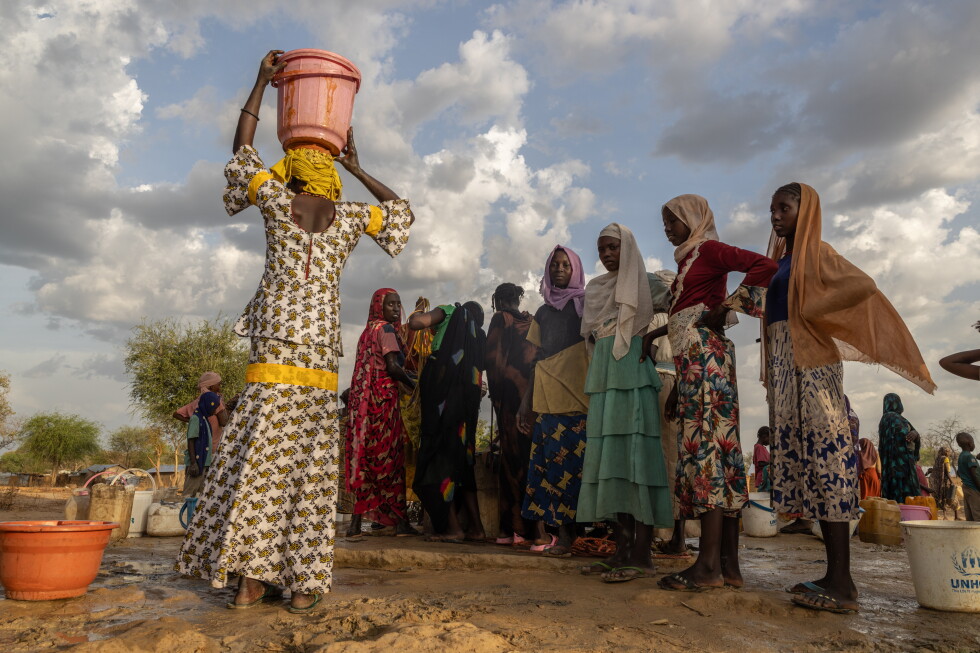
    MOGADISHU, Somalia — Hundreds of flag-waving Somali supporters and senior government officials packed Mogadishu’s international airport on Wednesday to greet top referee Omar Artan, who returned home after being barred entry to the United States and removed from the 2026 FIFA World Cup officiating roster. Artan, a trailblazer who was set to become the first Somali referee ever to officiate at a men’s World Cup, was turned away at Miami International Airport Saturday over undisclosed “vetting concerns,” per an official statement from U.S. Customs and Border Protection.