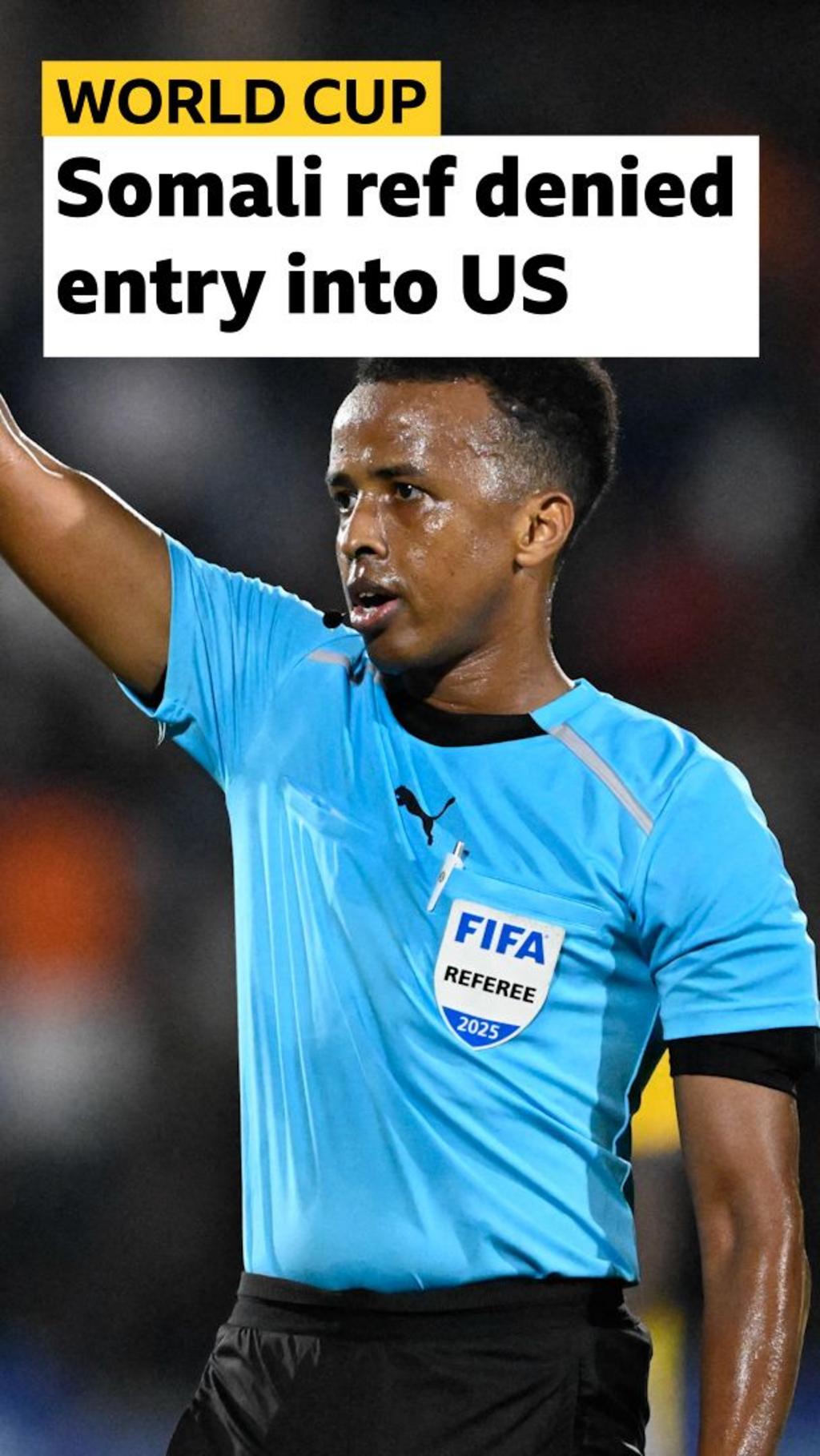
A historic milestone in global soccer officiating has fallen through at the last minute, after Omar Artan — the Somali referee set to make history as the first official from his country to work at a men’s World Cup finals — was removed from the tournament’s official roster of match officials. The sudden shakeup comes directly after U.S. border authorities denied Artan entry into the country, derailing his preparations for the high-profile global competition. The development was first reported 59 minutes ago under Africa Sport coverage, leaving the international soccer community surprised by the unforeseen barrier that blocked Artan’s once-in-a-lifetime opportunity. No further details on the specific reason for the entry denial or whether a replacement referee has been named have been released as of the latest update.
标签: Africa
非洲
-
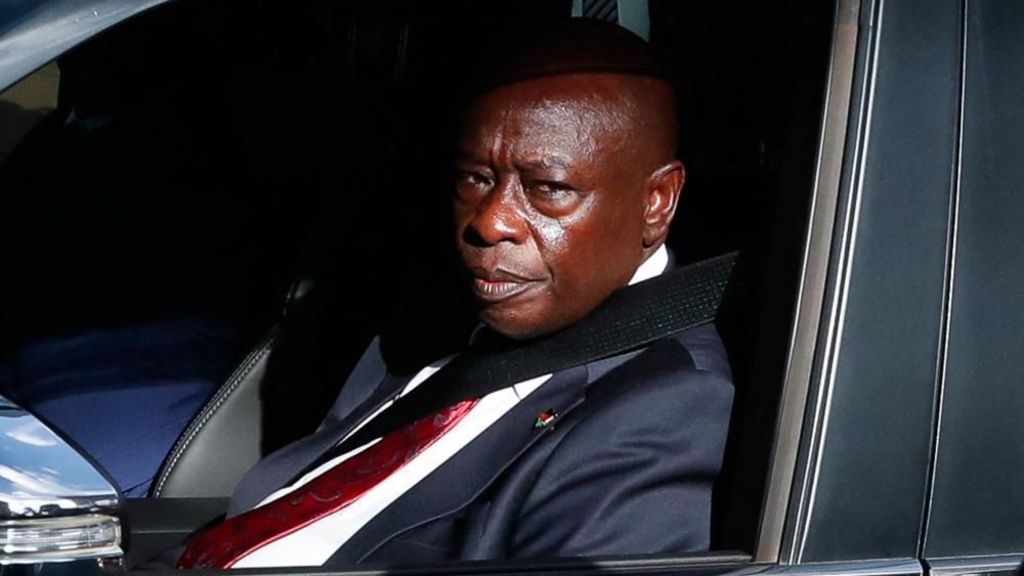
Blow for Kenya’s ex-deputy president as court upholds his impeachment
In a landmark ruling that reshapes Kenya’s political landscape months ahead of a general election, the country’s High Court has formally upheld the 2024 impeachment of former Deputy President Rigathi Gachagua, permanently barring him from holding any public office. The decision comes after months of legal wrangling following Gachagua’s dramatic ouster, which capped a bitter public falling out with his former political ally, President William Ruto.
Three presiding High Court judges rejected all of Gachagua’s legal challenges to his impeachment, including his core claim that the entire removal process was driven by political bias and manufactured to sideline him. While the court did acknowledge a procedural violation—finding Kenya’s Senate had infringed on Gachagua’s right to due process when it refused to adjourn impeachment proceedings after he fell ill mid-hearing—judges ruled this error did not rise to the level of invalidating the final removal result. As partial redress for the rights violation, the court awarded Gachagua 50 million Kenyan shillings, equivalent to roughly $386,000, in damages.
Gachagua, who once ran alongside Ruto on a winning joint election ticket in 2022, had been expected to attend the 350-page ruling’s public release but was absent from court. His legal team has already announced plans to appeal the decision, framing the outcome as a politically motivated miscarriage of justice.
The impeachment of Gachagua followed a rapid and public collapse of his political partnership with Ruto, just two years after the pair won the presidency by leveraging Gachagua’s deep popularity in Mount Kenya, the traditional political heartland of the Kikuyu ethnic community, Kenya’s largest voting bloc. After splitting from Ruto, Gachagua reemerged as one of the president’s fiercest public critics, building a large and loyal grassroots following in his home region and repeatedly rallying opposition to Ruto’s administration. Kenya’s Senate voted by an overwhelming majority to remove Gachagua from office last year, advancing charges of corruption, incitement of ethnic conflict, and sabotage of government operations. Gachagua has repeatedly denied all accusations, calling them baseless, politically motivated attempts to end his career.
Alongside upholding Gachagua’s removal, the court’s ruling on Monday formally confirmed the appointment of Kithure Kindiki, Gachagua’s replacement as deputy president, cementing the executive branch’s new leadership structure ahead of 2027 general elections. For Gachagua, the ruling delivers a major blow to his long-rumored ambition to run for president in next year’s election, as the lifetime ban on holding public office rules out a presidential candidacy.
Ahead of the verdict, Gachagua publicly urged his supporters to avoid unrest, saying he was prepared for any outcome and hoped the court would deliver justice both for him and his millions of supporters across the country. He also signaled his intent to continue challenging Ruto through the electoral process, telling followers to prepare to “express their anger at the ballot box” when Kenya heads to the polls next year.
Gachagua’s impeachment last year took place against a backdrop of growing public unrest across Kenya. Months before his ouster, widespread anti-government protests rocked the country, triggered by unpopular new tax hikes that the Ruto administration ultimately was forced to roll back. Protesters breached parliamentary security and set part of the building on fire during the demonstrations, and a subsequent crackdown by security forces left dozens of protesters dead. Public discontent with the administration has persisted in the months since, with new large-scale demonstrations held just last month to protest skyrocketing fuel prices.
-
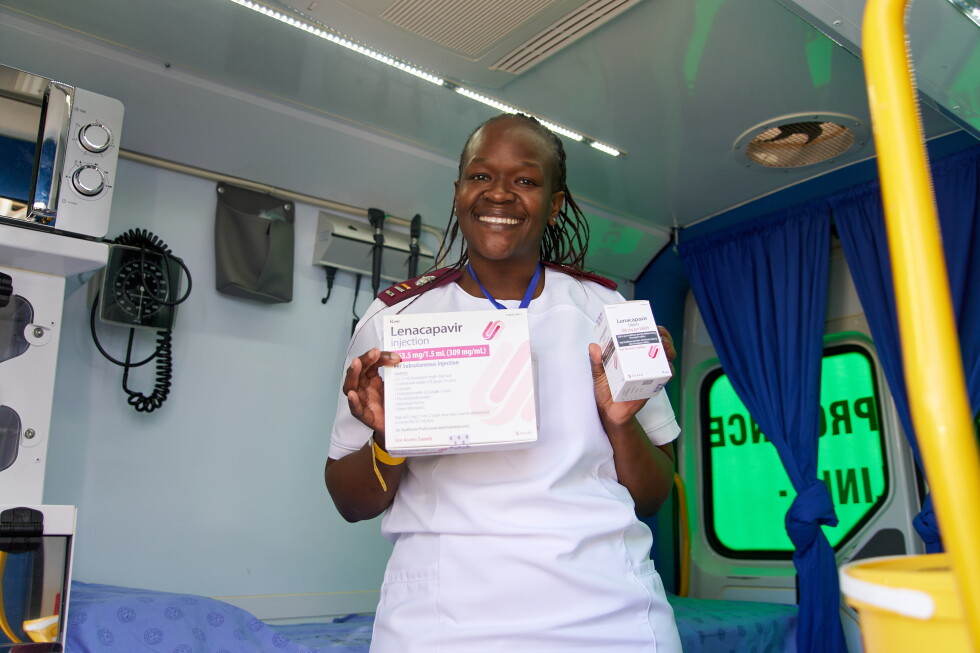
Highly effective prevention drug arrives in South Africa, which has world’s highest HIV burden
In the South African township of Secunda, 19-year-old Olwam Plaatjie carries a personal motivation for embracing a revolutionary new tool in the global fight against HIV. Growing up surrounded by the havoc the virus wreaked on her family and neighbors—watching loved ones lose weight, battle repeated illness, and rely on daily antiretroviral pills to survive—she made the decision to start on pre-exposure prophylaxis three years ago, eager to avoid the same fate.
Today, Plaatjie is among the thousands of South Africans who participated in clinical trials for lenacapavir, a twice-yearly injectable HIV prevention medication that solves one of the biggest drawbacks of standard daily oral prevention pills: consistent adherence. Even after experiencing mild side effects including night sweats, she has continued her participation, and this month, her country made global health history as one of the first nations in the world to roll out the new drug broadly.
South Africa bears the world’s heaviest HIV burden, with more than 8 million people currently living with the virus and between 140,000 and 170,000 new infections recorded every year. At the official launch of the national rollout, President Cyril Ramaphosa told a stadium crowd that lenacapavir marks a long-awaited turning point for the country’s decades-long HIV public health response.
Developed by U.S. pharmaceutical firm Gilead Sciences, lenacapavir’s efficacy was validated through large-scale clinical trials conducted across South Africa and Uganda. A landmark study based in Johannesburg found that the six-monthly injection delivers 100% protection against HIV, a result senior clinician Dr. Nkosi Ndlovu of the Wits RHI research institute called “groundbreaking.”
Right now, the South African government has secured enough doses to treat 456,000 people for one full year, supported by a $29 million grant from the Global Fund. After this initial phase, Health Minister Aaron Motsoaledi confirmed the country plans to transition to independent domestic funding for the program, with continued backing from international donors. Ramaphosa has set an ambitious target to reach 3 million at-risk South Africans with the drug over the next three years, though he has not released detailed funding or implementation plans to meet that goal.
Despite the historic milestone, public health advocates and civil society organizations argue the current rollout is far too small to move the needle on national infection rates. Groups estimate South Africa needs at least 2 million doses annually to generate a meaningful reduction in new HIV cases. Advocates also point out that South Africa’s central role in developing the drug—from hosting trials to enrolling thousands of community participants and generating the critical efficacy data—should guarantee the country broader, faster access than it has received so far.
“Our communities participated in the research, our clinics hosted the trials and our scientists helped produce the data,” explained Tian Johnson, health strategist for Johannesburg-based advocacy group African Alliance. “Yet we are still waiting for Gilead to determine how much of the product we receive, when it arrives and how quickly access can expand.”
On the manufacturing front, progress is underway to expand access and lower costs for low- and middle-income nations. Gilead has already committed to granting a voluntary manufacturing license to a South African drugmaker, following six similar licenses issued to firms in other countries last year. Once a national committee selects the local manufacturer, lenacapavir will be produced domestically as a low-cost generic, priced at just $40 per person annually—a dramatic drop from the original list price of $28,000 per year.
For the initial rollout phase, South Africa is prioritizing distribution to six provinces with the country’s highest HIV prevalence, with the first batch of 37,920 doses already sent to 360 local health facilities. Doses are being directed first to the groups at highest risk of infection: people who inject drugs, sex workers, transgender people, adolescent women aged 15 to 24, and pregnant or nursing people.
Reaching these vulnerable key populations presents unique challenges, however. Years ago, sweeping cuts to U.S. global health aid under the Trump administration forced the closure of 12 specialized clinics that were the primary safe, confidential care sites for many at-risk groups. These groups often avoid standard public clinics due to stigma, long wait times, and negative interactions with staff, leaving many at risk of being left out of the new program.
“Key populations, sex workers, people who use drugs, they don’t normally use public clinics,” noted Bellinda Thibela, international policy and advocacy coordinator for the Health Global Access Project. “So it means that we’re going to lose them unless the government acts fast and ensures that they put the resources to reach those people.”
Minister Motsoaledi confirmed that patients from the closed U.S.-supported clinics have been transferred to existing public health facilities, and the government is currently working to train staff and create private, stigma-free spaces for vulnerable patients. Even so, he acknowledged that the unique safe environment the specialized clinics provided has not yet been fully replaced.
“What we have lost is that confidentiality, where they were going to these clinics that are very special to them, where they feel very safe,” Motsoaledi said. “So we are trying to train our doctors to take over.”
Leila Mansoor, a senior scientist at the University of KwaZulu-Natal’s Center for the AIDS Program of Research in South Africa, said equitable large-scale access to lenacapavir could reshape the country’s HIV epidemic. “If South Africa can deliver it equitably and at scale, it could make a meaningful contribution to reducing new HIV infections,” she said.
-
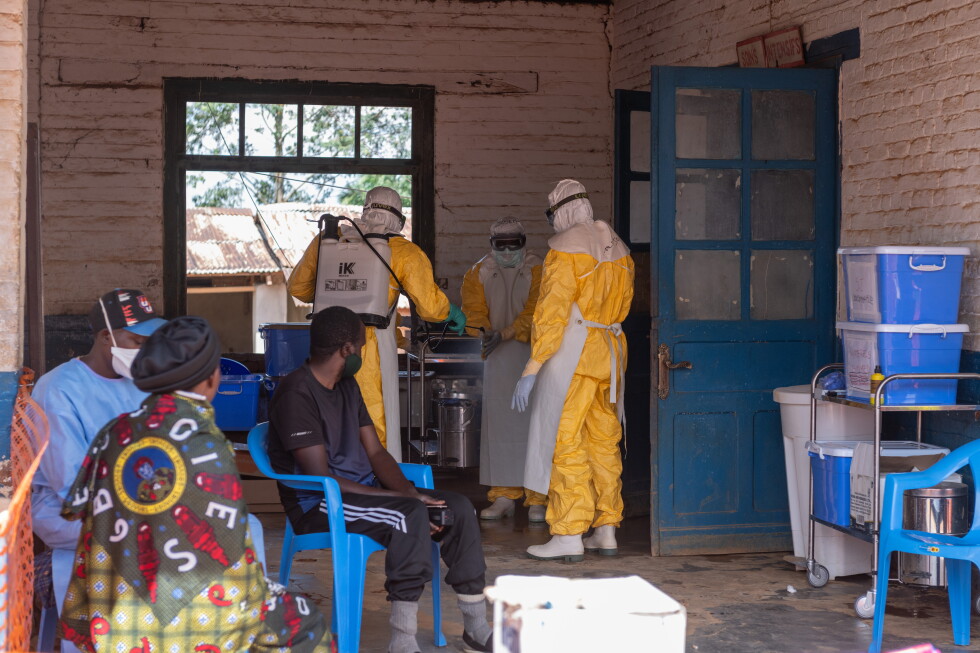
Congo’s Ebola outbreak rises to 100 deaths out of 550 cases after a month
BUNIA, Democratic Republic of Congo – A devastating Ebola outbreak, declared less than a month ago in the eastern region of the country, has already claimed at least 100 lives, local health authorities confirmed. The crisis is being compounded by a series of interconnected obstacles that continue to hamper efforts to curb transmission and save lives. As of Monday evening, the latest official situation report documents 550 confirmed cases of the virus, with 101 recorded fatalities and only 19 people who have recovered so far. Public health officials warn that the true scope of the outbreak is likely far higher than documented, because the spread of the virus went undetected for weeks before the outbreak was formally declared. Complicating response efforts even further, the outbreak is being driven by the Bundibugyo strain of Ebola – an uncommon variant that, unlike the Zaire strain which caused most of Congo’s previous 16 Ebola outbreaks, has no currently approved vaccine or targeted treatment available. Local unrest has also become a major barrier: armed conflict is raging in key transmission hotspots, and angry resident attacks on frontline health workers have disrupted critical vaccination, testing and contact tracing operations. Widespread skepticism about the disease among local communities has further slowed public health interventions, creating additional gaps in efforts to contain the spread of the deadly virus.
-
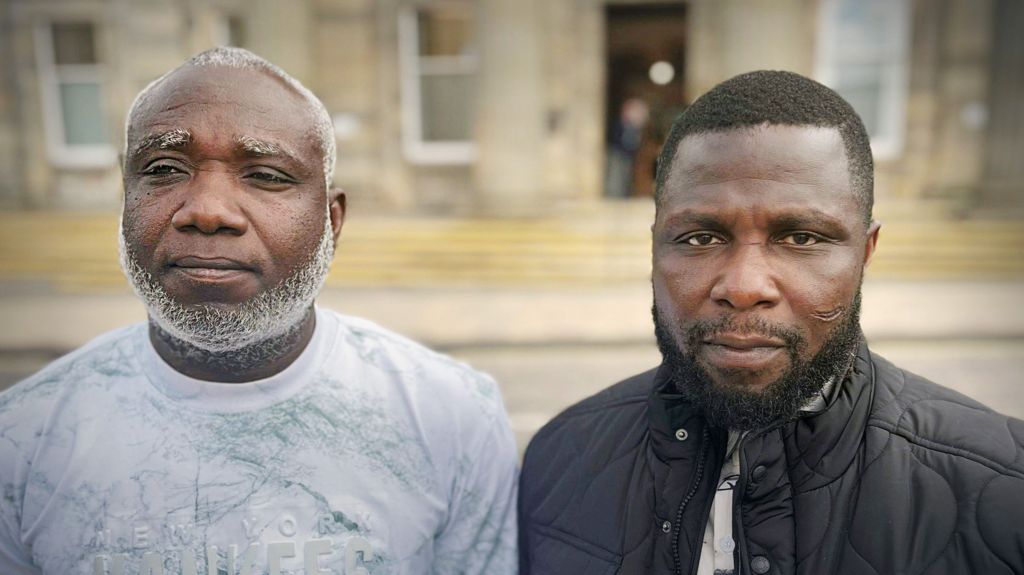
He told us we were slaves – The fight for justice on a Scottish fishing trawler
After nine years of relentless campaigning for accountability, a landmark Scottish modern slavery case has finally drawn to a pivotal guilty plea, exposing horrific abuse of migrant fishermen at the hands of a local trawler operation. For Ghanaian fisherman Joshua Amissah, the moment the court confirmed the admission of wrongdoing was overwhelming: he stepped away from the witness stand, retreated to a quiet corner of the silent courtroom, and crouched to compose himself, overwhelmed by the weight of nearly a decade of unaddressed trauma.
Amissah was one of five Ghanaian fishermen recruited to work on the *Sea Lady*, a scallop trawler owned and operated by Annan-based TN Trawlers, headed by Thomas Nicholson Sr. The vessel’s skipper was Nicholson’s son, Tom Nicholson Jr., who Amissah says openly viewed his Black crew as disposable labor. “He told us we were slaves,” Amissah told the jury at Hamilton Sheriff Court. “He said that his father had told him that any black person he worked with, he must treat that person as a slave.”
What the fishermen endured on the *Sea Lady* in 2017 matches the legal definition of modern slavery, the court has confirmed. Work demanded was non-stop, with no scheduled rest periods. Amissah and his crewmates were forced to create an underground, secret rotating schedule just to steal minutes of sleep between shifts. Food rations were so inadequate that crew members resorted to scavenging raw fish and octopus caught by the vessel’s dredges to avoid starvation. There was no formal onboarding, no safety training, and no opportunity to push back against the exploitative conditions. “As soon as we got there, he said we should just get to work,” Amissah recalled. “[Tom Jr] said there was no time and that we needed to go hunt for scallops. There was no rest during the trip.”
The ordeal only came to light after a life-threatening accident forced the vessel into port. In rough December 2017 weather in the English Channel, 55-year-old crew member Augustus Mensah fell and struck his head open on the hard deck. The only first aid supply on board was a single bandage. When the *Sea Lady* docked in Portsmouth for emergency medical care, police were alerted, launching what would become a years-long battle for justice.
After three days of witness testimony, the case took a sudden turn when Nicholson Jr. changed his plea to guilty on amended charges, admitting he failed to provide adequate food, rest, and mandatory safety training to his Ghanaian crew during their months-long 2017 voyage. The unexpected plea meant three other accusers—Kow Mensah, Gershon Norvivor, and Kojo Attah—never got the chance to deliver their testimony in court. Augustus Mensah, who waited nine years to share his account, said he was still relieved that justice finally moved forward. “It wasn’t easy for me, but I am very happy that at long last we got our justice,” he told reporters outside court.
The convictions are not the first for the Nicholson family or TN Trawlers. In 2022, Thomas Nicholson Sr. pled guilty to failing to provide adequate care for a Filipino crew member in a separate case stemming from a 2012 probe that identified 18 Filipino crew as modern slavery victims. He was fined £13,500 and ordered to pay £3,000 compensation to the injured worker.
This week, the elder Nicholson pled guilty to breaching a landmark Trafficking and Exploitation Risk Order (TERO), a court order designed to restrict the movement of vessels operated by those under trafficking investigation. He is the first person in Scottish legal history to breach one of these orders, which required him to disclose details of all non-European crew before moving any of his vessels. Nicholson moved his trawler *Olivia Jean* from the Netherlands to Scotland without submitting the required documentation to the Maritime and Coastguard Agency; his defense claimed the breach was a “genuine mistake” with no foreign crew on board, but the court still fined him £2,700. He remains under active investigation for human trafficking.
The case, which originated from a three-year undercover investigation by BBC journalists, has sparked widespread criticism over systemic failures in the UK fishing industry and government oversight of public funding for abusive operators. Charity Open Seas director Phil Taylor revealed that TN Trawlers received more than £250,000 in public funding while human trafficking investigations were already ongoing, calling the fine against Nicholson Sr. “paltry.” “This is a really concerning case, and it’s hard to understand how this firm was provided with public funding,” Taylor said. “It shouldn’t be possible for ministers to hand out tens of thousands of pounds to a business under investigation for human trafficking. This case shows how important it is for government to scrutinise the work of firms it is supporting with public money, and to publish details of historical convictions and ongoing investigations on the UK fishing vessel register, to ensure those who break the rules are held accountable.”
Detective Chief Inspector Paul McNamara of Police Scotland said the case was the result of a years-long joint operation between multiple agencies, noting that TEROs play a critical role in stopping exploitation before more harm occurs. “They allow police to step in at an early stage to prevent harm and disrupt organisations while we investigate. Partnership working is essential as we share knowledge and skills to target those who make money by exploiting others. We want to make Scotland a hostile environment for organisations involved in slavery and exploitation, to protect potential victims and keep our communities safe,” McNamara said.
Industry advocates say the TN Trawlers case is not an isolated incident, but evidence of deep, systemic exploitation of migrant workers in the UK fishing sector. Chris Williams, fisheries section co-ordinator at the International Transport Workers Federation, called for sweeping regulatory reform to guarantee basic labor protections for migrant crew. “What we need is a solution that enables workers from the Philippines, Ghana, Sri Lanka and India to come into the UK fishing industry with employment rights, minimum wage protections, and their hours of work and rest being recorded,” Williams said. “We should not allow a ‘race to the bottom’ where workers can be exploited and abused. If we’re so desperate to have them to keep this food-producing sector working, we should be paying people fairly and treating them fairly.”
To date, the UK Home Office has recognized 35 former TN Trawlers workers as official victims of modern slavery, following investigative reporting by the BBC that first exposed the widespread abuse in 2024’s *Slavery At Sea* documentary. In October 2024, a separate group of Ghanaian fishermen rescued from another TN Trawlers vessel, the *Olivia Jean*, each received £20,000 in government compensation for their abuse. TN Trawlers has repeatedly denied all allegations of modern slavery and human trafficking, maintaining that all its workers have always been well-treated and fairly paid. Tom Nicholson Jr. will return to Hamilton Sheriff Court next month for sentencing.
-
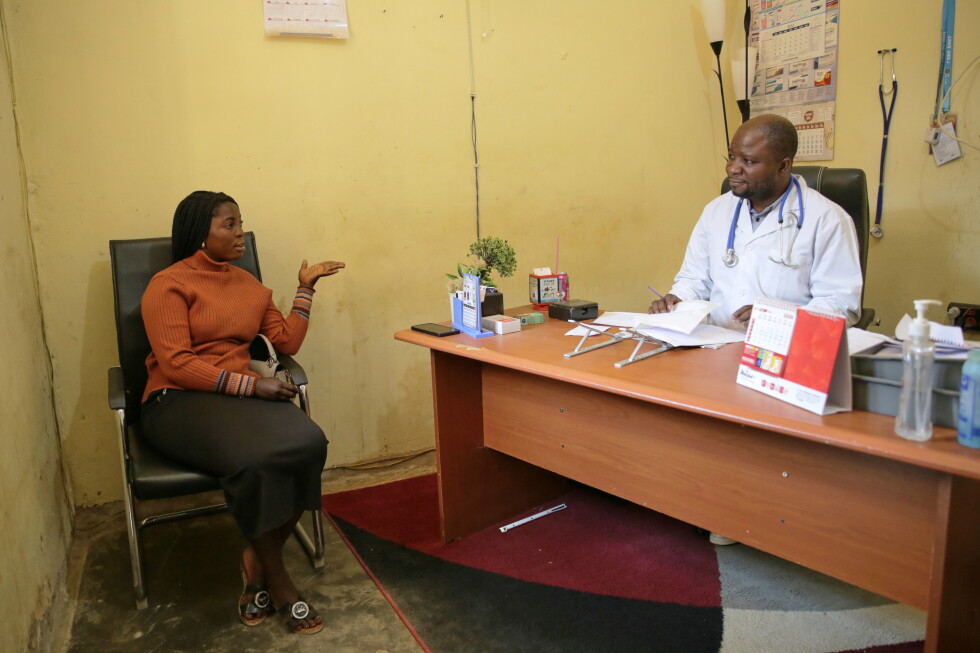
Survivors share experiences and lessons from Congo’s 2018 Ebola outbreak
In the bustling eastern Congolese border city of Beni, where trade routes connect the Democratic Republic of Congo to Uganda and Rwanda, the word “Ebola” still triggers sharp, traumatic memories for local survivors like Vianney Kambale Kombi. Kombi lived through the 2018–2020 Ebola epidemic, the second-largest in recorded history that infected more than 3,400 people and claimed over 2,200 lives. While that outbreak was ultimately contained through the rollout of experimental vaccines, Kombi says community denial, deep-rooted skepticism, and violence against frontline health workers accelerated the virus’s deadly spread. Back then, many residents in his community blamed the outbreak on supernatural forces, he recalls.
“We thought it was witchcraft,” Kombi explained. “The community had not accepted that this disease existed and it had not accepted that we could recover from it.”
Now, as Beni faces a new, emerging Ebola outbreak caused by the rare Bundibugyo strain, local residents and health workers fear the same damaging patterns of misinformation and distrust that fueled past tragedy could derail the response once again. Compounding these concerns is the absence of a widely approved, targeted vaccine for this specific strain of the virus. As of the latest update, 515 confirmed infections have been reported, with 91 people dead and only 12 confirmed recoveries.
Kombi, who survived the 2018 outbreak after contracting the virus, says misinformation took many forms during that crisis beyond the belief in witchcraft. Many residents dismissed Ebola as a Western conspiracy invented to draw international aid funding, while others framed it as a political tool amid national election campaigns. This widespread denial made life hard for survivors even after they recovered from the virus. “The community had not accepted that we could recover from this disease, that’s why reintegrating into the community at first was a bit difficult,” Kombi said.
Bienfait Wanzire, another 2018 Ebola survivor, echoed this account of community confusion. “When a pandemic hits here in Congo, we initially think it’s a political issue,” he said. “At first, we thought it was a spiritual illness. Then because there were election campaigns, we believed it was political.”
For frontline health workers, the legacy of that mistrust remains personal. Dr. Babah Mutuza Lusungu, a physician at Beni’s “Dieu Est Grand” Medical Center, lost his uncle and two colleagues to the 2018 outbreak, even as he worked tirelessly to convince local residents the virus was a real, treatable threat. “There was very strong resistance,” Lusungu recalled. “And so there was a climate of mistrust that took place between the population, the authorities, the partners too, right, and the health workers.”
Looking back at the failures of the 2018 response, Lusungu argues that local leaders made a critical mistake by excluding young people from public outreach and response efforts. He is now urging officials to partner directly with youth community leaders to spread accurate information about the new outbreak before the virus can gain further traction. “If we wait until they have so many declared cases to start making an effective response, we will have totally missed the target,” he warned.
Esperance Masinda, who worked for the United Nations children’s agency UNICEF in Beni during the 2018 outbreak, knows firsthand the dual toll of the virus and community stigma. She contracted Ebola while caring for her husband, a medical doctor who also caught the virus. Both survived, thanks in part to early access to experimental Ebola vaccines, but the treatment that saved their lives left them isolated from their own community.
“When we were in the community, we were told that you’re not going to make it even five years, you’re going to die with that medication that you took there,” Masinda recalled. Years later, however, that stigma has slowly faded. “And today, when they see us, these people no longer stigmatize us,” she said. “We are all humans, even though we have been victims of Ebola, all of us are humans.”
For Beni’s residents and public health experts, that hard-won lesson—of recognizing Ebola as a treatable, human disease rather than a curse or a plot—could make all the difference in containing the new outbreak before it repeats the scale of the 2018 crisis.
-
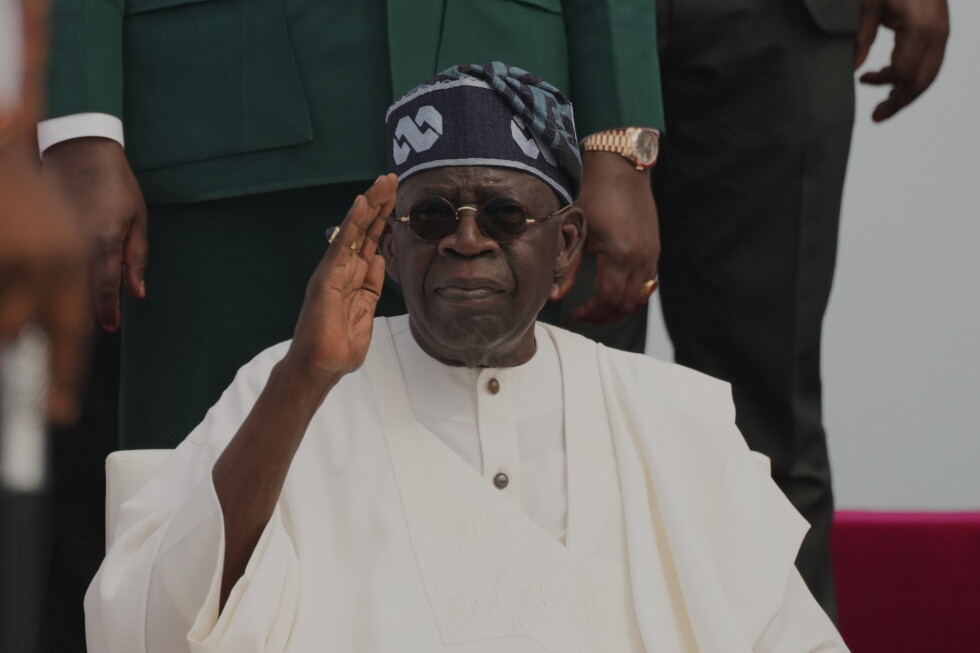
Armed group kidnaps 39 people during negotiations in northwestern Nigeria
ABUJA, Nigeria — A brazen act of violence has deepened fears over Nigeria’s spiraling security crisis, after armed bandits abducted 39 people during a community-led peace negotiation meeting in the restive northwestern state of Zamfara, regional police confirmed in a public statement released Monday.
The attack unfolded Sunday in the Magamin Diddi community of Maradun Local Government Area, when a gathering of 47 local residents had assembled to discuss reconciliation and peace negotiations with family members of a notorious regional bandit kingpin linked to widespread abductions in the area. According to police spokesperson Yazid Abubakar, the suspected bandit leader himself unexpectedly arrived at the venue alongside a contingent of armed fighters, who seized 39 attendees before departing. The remaining eight people at the meeting managed to escape unharmed.
For communities across northwestern Nigeria, such unofficial peace talks have become a grim necessity. Many local residents say the Nigerian military has failed to provide consistent protection against near-constant raids, kidnappings for ransom, and cattle rustling carried out by criminal bandit networks, pushing communities to pursue independent negotiations with armed groups in hopes of securing a fragile local truce.
The high-profile abduction comes amid a sprawling, long-running security emergency that has engulfed large swathes of northern Nigeria. For more than a decade, the country has grappled with an Islamic insurgency centered in the northeast that has spread beyond its original borders, alongside a surge in violent criminal activity by bandit groups in the northwest and central regions. Per United Nations estimates, the insurgency alone has killed thousands of civilians and displaced millions more from their homes, while criminal gang attacks have become increasingly frequent across virtually all of northern Nigeria.
The latest incident also comes just one day after the Nigerian military announced a major counter-insurgency win: a raid that freed 360 captives held by the Boko Haram militant group in the Mandara Mountains of southern Borno State, a traditional stronghold for the insurgent faction. Boko Haram and its offshoot, the Islamic State West Africa Province (ISWAP), remain the two most powerful militant groups operating in Nigeria’s northeast. Just one month prior, Nigerian authorities announced that a joint military operation with U.S. forces had killed 175 ISWAP fighters, marking one of the largest single-counterterrorism strikes in recent years.
Despite these high-profile military victories, security analysts warn that the Nigerian government has failed to implement the systemic changes needed to curb widespread violence, even as President Bola Tinubu has repeatedly made public promises to resolve the country’s security crisis since taking office. The abduction of peace negotiators underscores the persistent vulnerability of civilian communities caught between armed groups and an overstretched, underperforming state security apparatus.
-
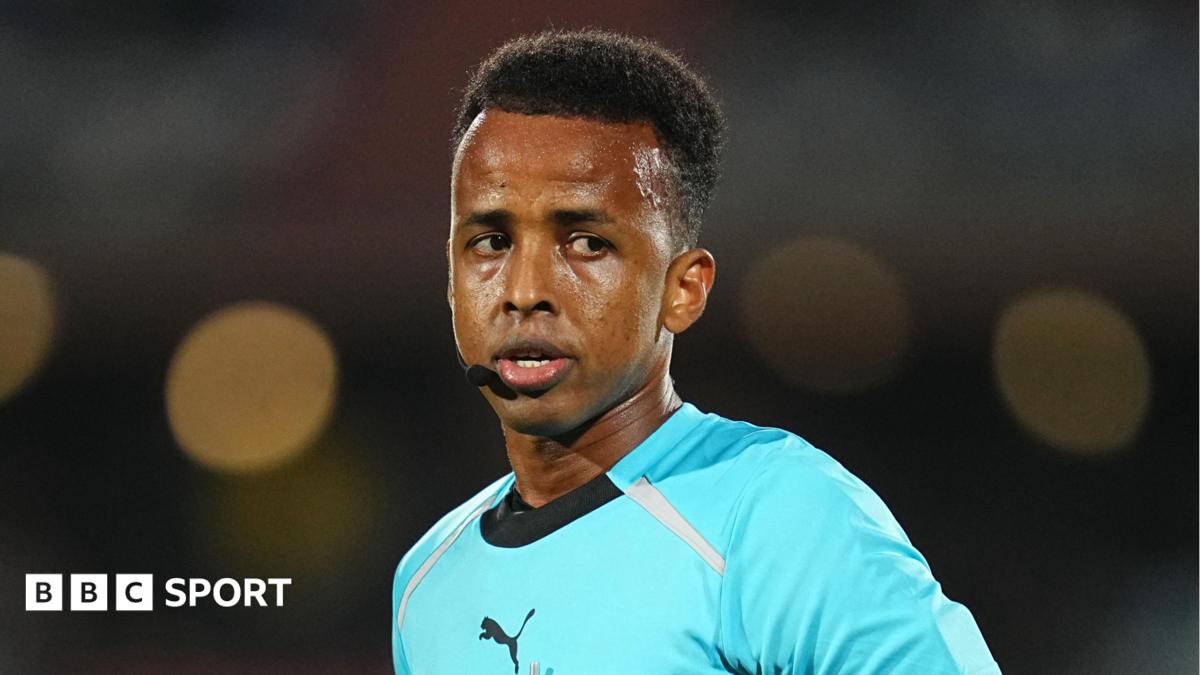
Somali referee Artan barred from entering USA
A historic milestone for Somali football has hit an unexpected hurdle, as Omar Artan, the first referee from the East African nation ever selected to officiate at a FIFA World Cup finals, has been denied entry into the United States ahead of the 2026 tri-nation tournament. Artan, who was named the 2025 Confederation of African Football Men’s Referee of the Year, was turned away by border officials upon arrival at Miami International Airport and has since traveled to Turkey, where he remains in temporary residence as of this reporting. As of the latest update, U.S. immigration authorities have not released any official explanation for the decision to bar Artan’s entry. However, the East African country has been included on the U.S. travel ban list first introduced during former President Donald Trump’s administration, a policy that has remained in place in subsequent years and restricted entry for citizens of several Muslim-majority nations. Artan was one of 52 match officials selected by FIFA last year to officiate across the 2026 World Cup, which is being co-hosted by the United States, Canada and Mexico from June 12 to July 19 this year. A long-time senior official with the Somali national football league championships, Artan worked his way up the global officiating ranks after earning his FIFA referee badge in 2018, and has already gained high-profile experience officiating matches at the 2023 African Cup of Nations, earning praise for his consistent performance on the continental stage. The incident has renewed long-simmering criticism of U.S. travel restrictions and visa requirements tied to the 2026 World Cup, with many football fans across affected nations already voicing frustration that widespread barriers are putting the tournament out of reach for supporters and officials from the Global South, contradicting FIFA’s public framing of the 2026 event as a truly inclusive, global competition.
-
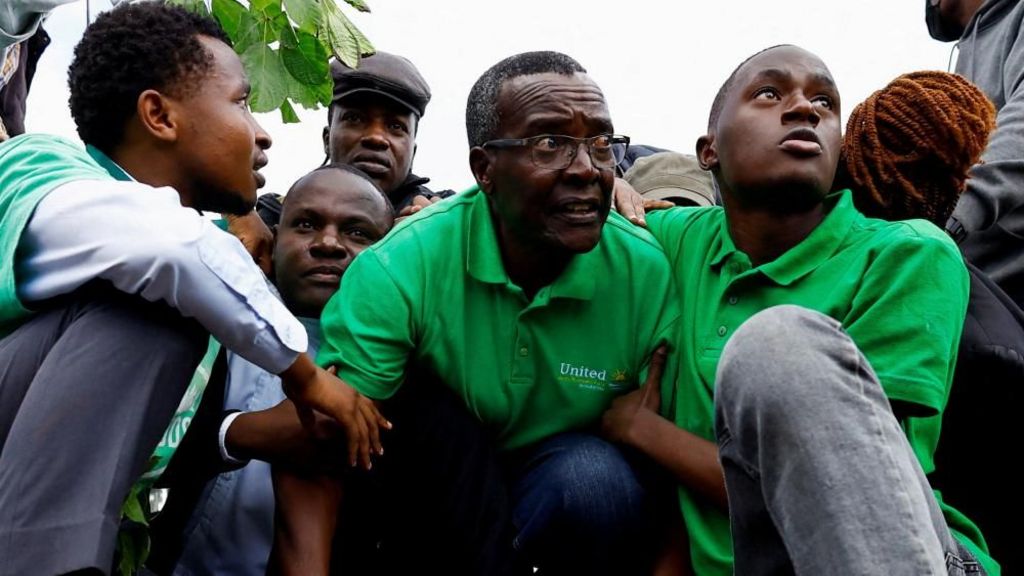
Kenya’s ex-chief justice arrested at protest against building on national park
A high-profile protest against proposed development inside one of Africa’s most iconic urban wildlife reserves has landed Kenya’s former Chief Justice David Maraga in police custody, igniting widespread condemnation from human rights and environmental organizations over the treatment of peaceful activists. On Monday, Maraga — who leads the opposition United Green Movement and is a widely speculated 2027 Kenyan presidential candidate — joined nine fellow demonstrators for a march along a highway bordering Nairobi National Park, a 117-square-kilometer protected conservation area and major tourist attraction located directly within Kenya’s capital. The demonstration was organized to oppose plans that activists claim would turn a portion of the park’s protected land into a 1,300-vehicle public car park, part of a broader development deal tied to a neighboring convention center.
The Kenya Wildlife Service (KWS), the government agency that manages the park, has publicly pushed back against the activists’ allegations, defending its approved projects within the reserve. While KWS has not directly addressed the car park claims, it confirmed plans to construct a new, expanded animal orphanage on an 89-acre plot — just 0.31% of the park’s total area, according to a KWS official quoted by local outlet *The Star*. KWS argues the relocated orphanage will deliver meaningful benefits: enhanced care for rescued wildlife, improved veterinary training opportunities for local conservationists, and a more accessible, engaging experience for the millions of visitors who visit the park each year. The agency also notes that public consultation was held for the orphanage project prior to approval.
Footage shared on social media captured the chaotic end to Monday’s demonstration, showing Kenyan police moving in to disperse the crowd of protesters, who had staged a sit-in on the two-lane highway. Video clips show the 72-year-old former top judge, wearing his party’s signature green attire, being assisted into the back of a police transport truck as surrounding demonstrators chanted “Long live the park” in protest. Maraga and the nine other detained activists were taken into police custody following the dispersal. Though Maraga was granted release shortly after his arrest, he refused to exit the police station until all other detained protesters were freed, a demonstration of solidarity with his fellow activists.
Following his detention, Maraga took to social media platform X to outline the motivations for the protest, writing that he and the other detainees were “fellow patriotic Kenyans” demanding that the country’s “national heritage and environment must be safeguarded from greed and unnecessary destruction without public participation.” So far, Kenyan police have not issued any official public statement regarding the circumstances of the arrests or the reasons for detention.
The arrests have drawn sharp criticism from a coalition of leading global and local rights and environmental groups. In a joint statement, Amnesty International, Greenpeace Africa, Friends of Nairobi National Park, and The Green Belt Movement strongly condemned what they called a violent dispersal of peaceful demonstrators. The groups emphasized that the use of force against Kenyan citizens exercising their constitutionally protected rights to peaceful assembly, free expression, and public participation in environmental decision-making is completely unacceptable. The incident has reignited national debate in Kenya over the balance between infrastructure development and the protection of critical natural heritage, particularly as political actors gear up for the 2027 general election.
-
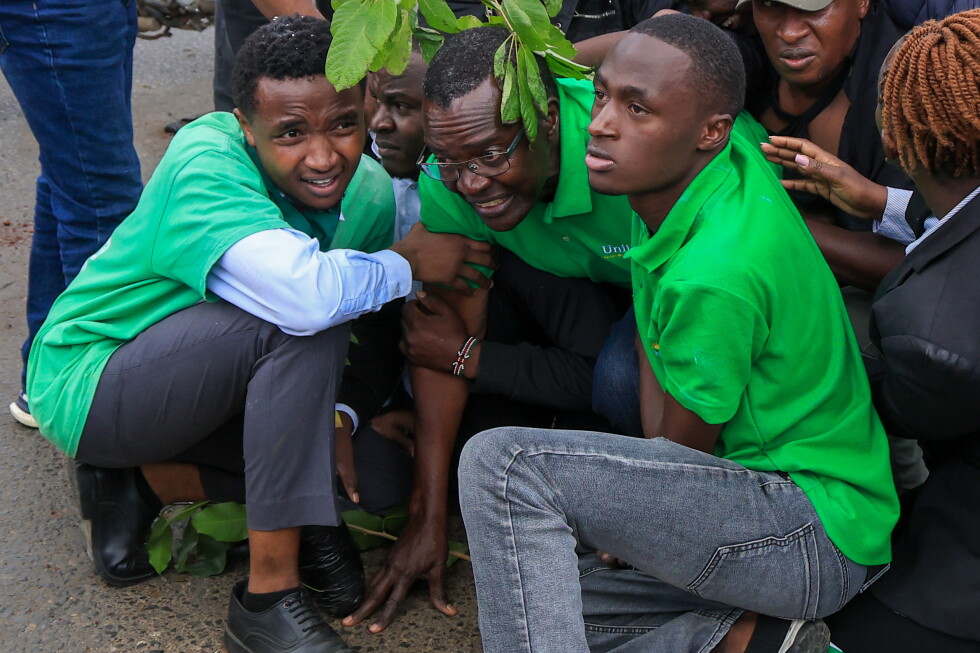
Kenya’s former chief justice David Maraga arrested during park construction protest
NAIROBI, Kenya — A high-stakes environmental demonstration in Kenya’s capital has drawn international attention after former Chief Justice David Maraga was taken into custody on Monday during a protest against controversial planned construction inside Nairobi National Park. Maraga, who joined dozens of fellow activists in a peaceful sit-in demonstration along a busy arterial road just outside the park’s main entrance, was detained temporarily before being released shortly afterward. On the day of his arrest, he posted a statement on social media platform X confirming he was detained while en route to submit a formal petition to the Kenya Wildlife Service (KWS), the government agency charged with managing the country’s protected natural areas.
Dressed in a green protest t-shirt matching those worn by other demonstrators, Maraga emphasized in his post-protest remarks that Kenya’s irreplaceable national heritage and wild ecosystems demand robust protection from unaccountable development motivated by private greed. He condemned the proposed project for moving forward without meaningful public input, a common grievance among activists challenging land use changes in protected spaces across the country.
Hundreds of activists converged on the protest site to oppose two linked initiatives: the planned construction within the boundaries of Nairobi National Park and the proposed relocation of an on-site orphanage. Protesters argue the entire initiative is a covert effort to seize public land for private gain, a longstanding contentious issue in Kenya that has repeatedly sparked pushback from environmental and community advocates. For decades, environmental organizers have spoken out against incremental encroachment on national parks, urban green spaces, and other protected public lands, warning that unsustainable development erodes both Kenya’s natural heritage and public access to critical green infrastructure.
Amnesty International’s Kenya branch quickly issued a statement of solidarity with the demonstrators, backing their demands for transparent public participation in all decisions that impact the country’s environmental heritage. The human rights organization stressed that Nairobi National Park, one of Kenya’s most iconic urban protected areas, is not a commodity to be developed for private profit. “Our public spaces, our environment, and our rights cannot be traded away behind closed doors,” the group’s statement read.
In a preemptive response released one day before the protest, the KWS pushed back against allegations of land grabbing, framing the proposed construction as a beneficial public project. The agency explained the work is part of an official plan to expand the existing orphanage within the park and upgrade visitor facilities to improve the overall experience for tourists and local visitors. As of Tuesday, law enforcement authorities have not issued any public statement explaining the rationale for Maraga’s arrest, leaving lingering questions about the treatment of peaceful environmental activists in the country.