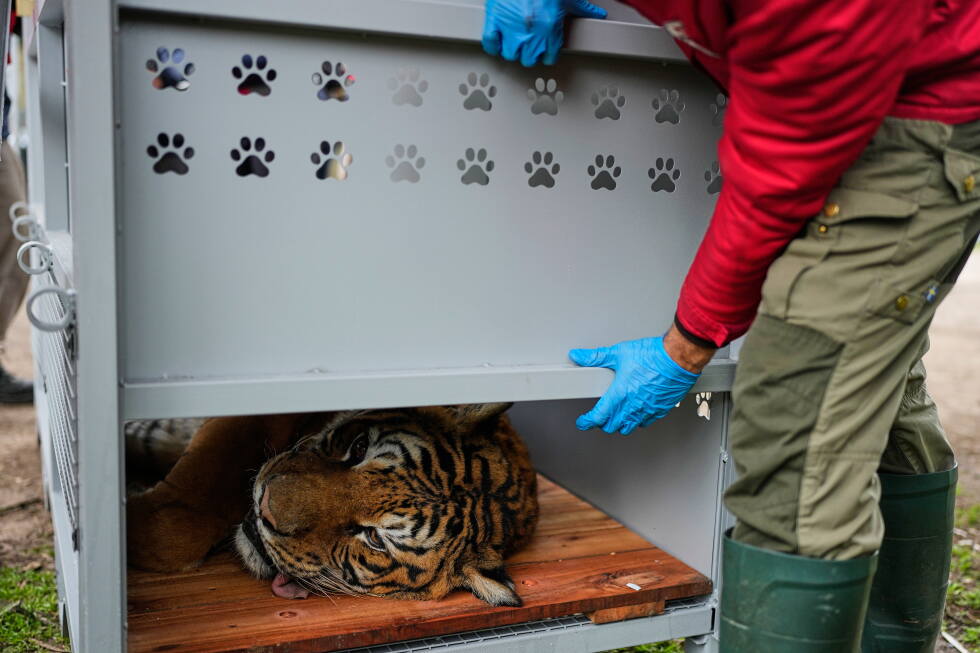
A landmark large-scale animal rescue mission launched Friday in Luján, Argentina, as teams of animal welfare specialists began moving 30 malnourished, neglected lions and tigers out of the abandoned Luján Zoo, where they had spent years confined in cramped, unsanitary concrete enclosures. The big cats will travel thousands of miles to purpose-built wildlife sanctuaries in South Africa and the United States, marking one of the largest coordinated captive big cat relocations in global history.\n\nThe shuttered zoo sits roughly 43 miles northwest of Argentina’s capital Buenos Aires, and the big cats’ fates have hung in uncertainty since the facility was forced to close in 2020. Argentine regulators shuttered the attraction after repeated safety violations and widespread animal abuse reports, as the zoo was once notorious for allowing visitors to directly handle big cats and pose for photos with them. At the time of closure, nearly 200 big cats were held at the site. When international animal welfare organization Four Paws, which is leading the current rescue, first arrived to coordinate a long-term solution in 2023, only 112 animals remained, and that number dropped to 62 by 2025 when the group gained full control of the property.\n\nDecades of improper care have left many of the surviving big cats with severe chronic health conditions. Many struggle to walk due to obesity, extreme muscle atrophy, and years of unbalanced, inadequate nutrition. Others live with untreated dental disease, chronic kidney illness, lifelong complications from invasive declawing procedures, and old injuries that never received proper medical care. “That alone shows the level of overcrowding and the conditions in which these animals have endured,” noted Luciana D’Abramo, Four Paws’ program director for the operation. “We are putting everything into making this go as smoothly as possible so we can celebrate that 30 lives have improved because of this effort.”\n\nIn preparation for the transfer, Four Paws staff worked for months to train most of the big cats to enter the reinforced jumbo transport crates voluntarily to reduce stress during the move. For animals that could not be acclimated, veterinarians administered gentle sedation to keep them calm. On the first day of operations, two sedated tigers were carefully lifted in padded canvas slings and carried by hand to their crates to prepare for departure.\n\nOnce loaded, the big cats will be separated into two groups for their long-distance journeys. Fifteen cats – nine tigers and six lions – will be flown to Lionsrock, Four Paws’ purpose-built big cat sanctuary in South Africa. The site spans 148 acres of natural, open enclosure and is already home to more than 80 rescued big cats from across the globe. The remaining 15 animals, eight tigers and seven lions, will travel to The Wild Animal Sanctuary, a vast grassland refuge located northeast of Denver, Colorado, where hundreds of rescued exotic animals roam free in large, natural habitats.\n\nThe intercontinental journey presents significant logistical challenges. The group bound for Colorado will route through Chile before continuing to the United States, while the South Africa-bound cats will fly to Johannesburg via either Frankfurt or Amsterdam, followed by a four-hour overland drive to the Lionsrock sanctuary.\n\nBefore this first wave of transfers, Four Paws already began improving conditions for the big cats remaining at the former zoo: the organization retrained the site’s former staff in modern, humane animal welfare practices, upgraded the cats’ diets to meet their nutritional needs, and implemented consistent, high-quality veterinary care for sick and injured animals. More than 30 big cats will remain at the Luján site temporarily as the organization continues to arrange permanent sanctuary placement for every remaining animal.