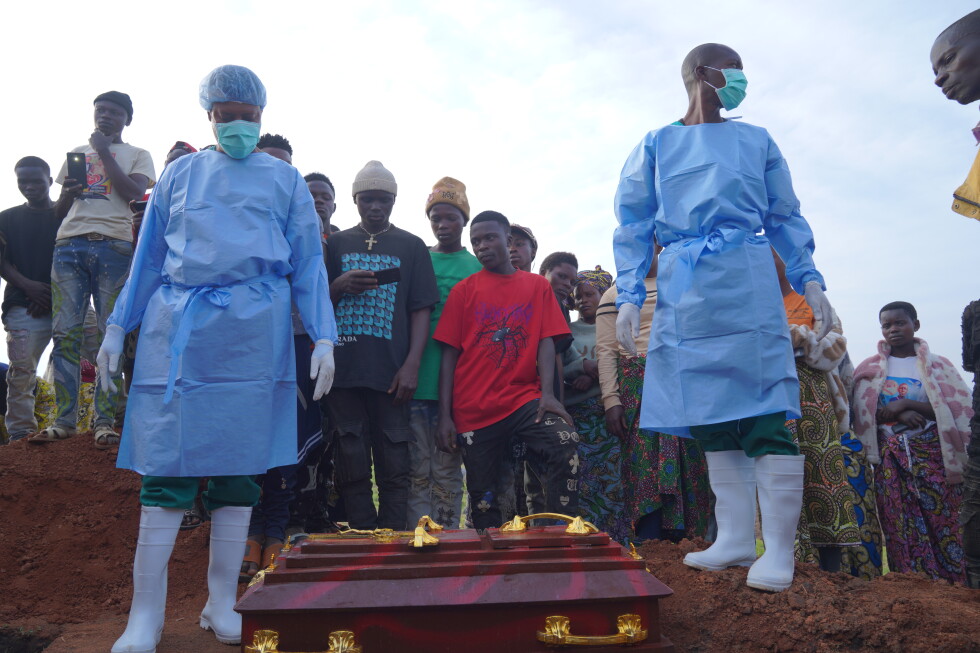
BUNIA, Democratic Republic of Congo – New government health data released this Wednesday has marked a grim milestone in the country’s ongoing Ebola crisis: total confirmed and suspected cases have surpassed the 5,000 threshold, with response teams warning the virus is spreading at an unmatched rate that is outrunning containment efforts in one of Central Africa’s most isolated, volatile regions. As of Sunday, the Ministry of Health’s official tally stood at 5,021 total cases, including 2,378 fatalities, with the outbreak intensifying amid a perfect storm of unfavorable conditions: widespread insecurity, mass population displacement, and constant cross-community movement that has made tracking and isolating cases extremely difficult. This outbreak has already outpaced every previous Ebola event in both the speed of transmission and the scale of infection and death. Since the first case was detected, it has spread roughly three times faster than the 2014-2016 West African Ebola epidemic, which held the previous record as the deadliest outbreak on record, claiming more than 11,000 lives across the region. During a special coordination meeting convened by the World Health Organization this Tuesday, WHO Director-General Tedros Adhanom Ghebreyesus issued a stark warning about the trajectory of the crisis. “The outbreak has spread rapidly and the risk of further national and international spread remains high,” Tedros stated. “We must be frank: the epidemic is far from being under control.” Ongoing safety risks have severely constrained containment operations, as frontline health workers have repeatedly become targets of violence, particularly in Ituri province – the region currently bearing the brunt of the outbreak. Just this week, new details emerged of an attack on a public health team that underscored the dangers responders face. On Monday, local residents attacked a health deployment in Aru territory after authorities announced a suspected Ebola case in the area. A rioting mob set fire to an ambulance and caused significant damage to two additional vehicles, according to Michael Wani, president of the Union of Cultural Associations for the Development of Ituri. The attack is the latest in a series of incidents that have hampered response work, alongside additional complicating factors including the presence of mobile gold mining populations across eastern Congo that are hard to reach and monitor. Exhausted response teams have already reported struggling to keep up with contact tracing demands, as new infections emerge faster than workers can identify and quarantine potential exposures, pushing the crisis further beyond the capacity of existing public health efforts.
Congo’s Ebola outbreak reaches 5,000 cases as it outpaces response efforts at unprecedented speed