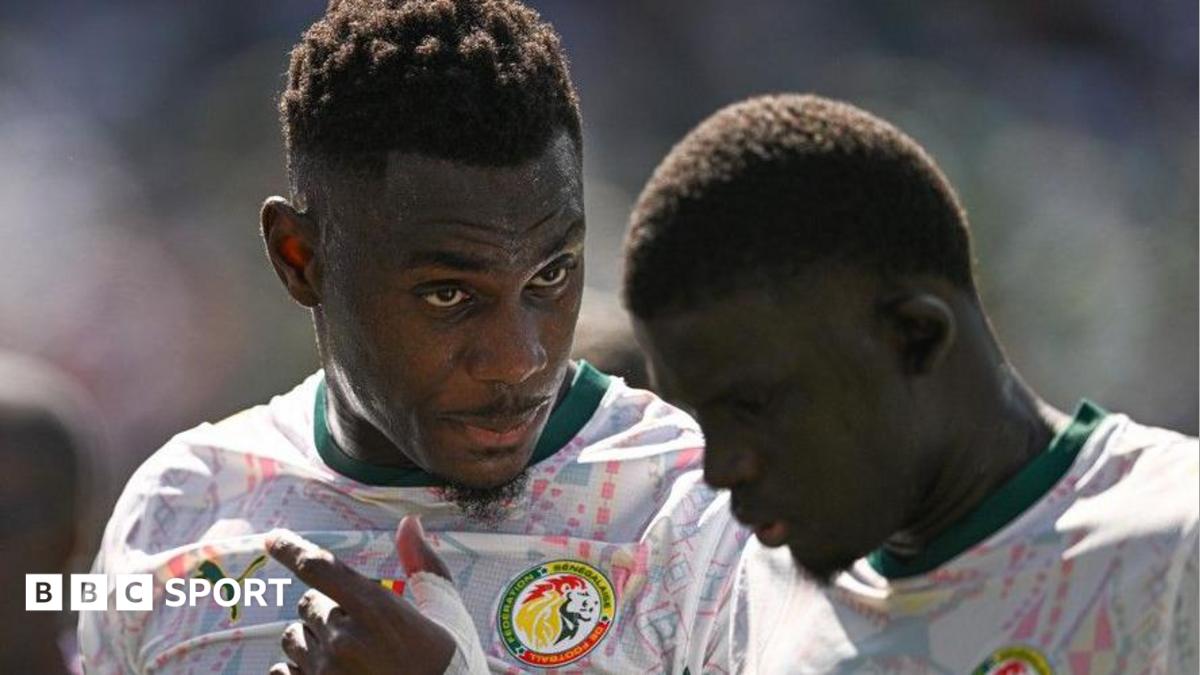
Four appearances at the FIFA World Cup now under their belt, Senegal entered the 2026 edition with high hopes: the West African nation aimed to surpass its iconic 2002 quarter-final run, the highlight of its World Cup debut, and carry forward the momentum of its run to the 2025 Africa Cup of Nations final. Instead, two back-to-back defeats have left the Teranga Lions pointless after two group-stage matches, on the brink of an early first-round exit. Only a win against Iraq on Friday can keep their knockout stage hopes alive.
Rumors of disarray within the national team camp have overshadowed Senegal’s on-pitch struggles, with multiple off-field controversies leaking into public view in the lead-up to the tournament’s opening matches. Reports of bonus disputes, sudden staff changes, catering conflicts and a drawn-out contract row with head coach Pape Thiaw have fueled speculation that internal friction is to blame for the team’s underwhelming start. To separate fact from speculation, a closer look at the issues roiling the Senegal camp reveals a more nuanced picture.
One of the most widely reported issues surrounded the quality of team catering at the squad’s New Jersey base, where the team is staying at a four-star Hyatt Regency close to their training ground at Rutgers University – a step down from the five-star venue they used at the 2025 Afcon in Morocco, but not a source of complaint from the playing core. The team originally traveled with their long-time personal chef, who had planned menus for the camp months in advance, but he departed for private family reasons after the team’s final pre-tournament warm-up friendlies against the United States and Saudi Arabia. When a replacement was brought in, core players have not raised issues with the new catering arrangements. Instead, dissatisfaction with the lack of traditional Senegalese cuisine has come from non-playing delegation members staying at the team hotel, some of whom have ordered external meals in response to their disappointment.
Other minor disruptions have stemmed from accompanying travel parties: some Senegalese Football Federation (FSF) officials brought family members to the United States at their own cost, who have stayed near the team hotel and at times drawn criticism for overly close proximity to the squad. Players’ families are housed separately at a nearby hotel, with all accommodation and breakfast costs covered by the federation.
Claims of unpaid performance bonuses, another widely circulated controversy, have already been resolved: the unpaid funds were disbursed by the Senegalese government just days before Senegal’s third group match. Long-running tension over Thiaw’s contract, however, created the most significant deadlock for the side ahead of the tournament. The 2002 World Cup veteran, who took the reins of the national team in 2024 on an annual salary of roughly £210,000, saw his original contract expire immediately after the 2025 Afcon, where he guided Senegal to a controversial final that later stripped the side of their title, with an appeal pending to regain the crown.
Buoyed by his strong tournament run, Thiaw entered contract extension talks from a strengthened position, but negotiations stalled for months. Under Senegalese sports governance, while the head coach negotiates directly with the federation, all contract signings and salary payments require final approval from the state through the ministries of sport and finance. Prolonged political upheaval in Senegal, triggered by the dismissal of the previous government and removal of the prime minister, created cascading delays across public sectors, leaving Thiaw without a signed new contract as the team departed for the United States.
As pressure mounted through local media, with hints that Thiaw might refuse to travel for the tournament, Senegalese President Bassirou Diomaye Faye intervened personally, contacting the coach to guarantee a swift resolution. After newly appointed Sports Minister Djireye Clotilde Coly traveled to the U.S. to meet with the squad ahead of the opening match against France and reaffirm the administration’s commitments, negotiations moved forward, and a deal was finally reached: Thiaw’s new contract carries an annual salary of £480,000 plus an additional £80,000 annual performance bonus.
“It’s true it took too long, but it was never a money issue. It was more a principles and respect issue, but it’s been resolved,” Thiaw told reporters on Sunday. “As Senegalese people, patriotism is more important than anything else and the questions around the contract are in the past now. It’s been signed. It is true there have been a couple of creases that need to be ironed out.”
Ranked 17th in the world, Senegal entered this World Cup as one of Africa’s top contenders, but dropped their opening two matches: a 3-1 loss to defending champions France followed by a dramatic 3-2 defeat to Norway that sealed their early point drought. Despite the off-field noise, both Thiaw and senior players have emphasized that the squad remains fully focused on Friday’s must-win match.
“All these are problems that are resolved internally. I don’t think you need to be across what we say internally. We have a group of players who are professional,” goalkeeper Mory Diaw explained at Sunday’s press conference. “We’re here to represent our country. There’ll be nothing that will make us lose our heads when it comes to our common objective.” Before the tournament, Thiaw had made his commitment clear: “If I lose even a second of my belief that I can win the World Cup with Senegal, I will step down.”
Long-time Senegalese football journalist Babacar Diarra, who has covered the national team for more than a decade, told BBC Sport that internal friction behind the scenes is not entirely unprecedented for the side. “Senegal hasn’t been in this type of situation for a while. You might have had some bonus issues in the past, but it wasn’t out in the press. I don’t think this will impact the players or the team. They will stay focused on the tournament. I’m not totally surprised by this. Even if they got to the final at Afcon and everything looked fine, it was a bit messy there too.”
Off the pitch, tensions have also emerged over fan access to the tournament. Traditionally, the Senegalese state covers all travel, accommodation and ticket costs for official main supporter groups to attend major international tournaments, but travel restrictions for this World Cup have blocked those groups from making the trip. That left the North American Senegalese diaspora hoping to pick up the slack, but only 400 tickets were allocated to the local community, a number many see as far too small. Many diaspora members have also complained about a lack of transparency in ticket distribution, with a group of Senegalese national association representatives gathering outside the team hotel on Sunday to formally voice their grievances. The BBC has reached out to the FSF for additional comment on the camp issues.
For now, all focus rests on Friday’s match: Senegal’s only path to extending their 2026 World Cup run runs through a decisive win against Iraq, with the side desperate to turn their turbulent campaign around before it is cut short.