Decades of simmering cross-border tension between the Democratic Republic of Congo and Rwanda have escalated into a new formal legal confrontation, as Kinshasa has lodged a fresh case against its neighbor at the United Nations’ highest court for state disputes, the International Court of Justice (ICJ).
In an official statement released following the filing, the Congolese government laid out a sweeping set of accusations, claiming Rwanda has systematically deployed its own military forces and provided material support to armed rebel groups operating within Congolese territory for decades, a pattern of interference that began in the aftermath of the 1994 Rwandan genocide. Congolese Justice Minister Guillaume Andali confirmed on Friday that Kinshasa is pursuing full accountability for alleged violations of four landmark international conventions: the Convention on the Prevention and Punishment of the Crime of Genocide, the International Convention on the Elimination of All Forms of Racial Discrimination, the Convention on the Elimination of All Forms of Discrimination Against Women, and the Convention Against Torture and Other Cruel, Inhuman or Degrading Treatment or Punishment.
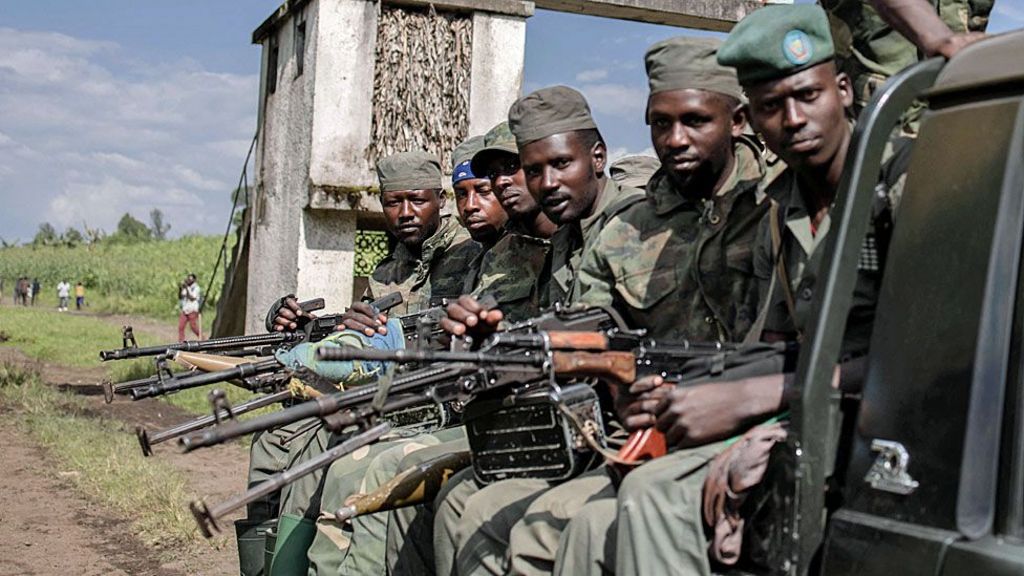
Kigali has not yet issued an official response to this latest legal filing, but it has consistently rejected all previous claims that it provides backing to rebel factions operating in eastern DR Congo. This rejection runs counter to findings from United Nations independent experts and multiple Western governments, which have repeatedly confirmed that Rwanda does support the M23 rebel movement – the most prominent armed group active in DR Congo’s volatile eastern region. Since M23 renewed its large-scale offensive in January 2024, the group has seized thousands of square kilometers of territory, including Goma, the regional capital of North Kivu province, leaving hundreds of thousands of civilians displaced.
DR Congo’s legal filing asks the Hague-based ICJ to order Rwanda to immediately end all alleged unlawful activities on Congolese territory, and to award full financial reparations to both the Congolese government and thousands of civilian victims of the decades-long conflict. The ICJ has confirmed it will now initiate formal review of the claims to determine next steps in the proceedings.
This new case marks the third time DR Congo has turned to the ICJ to resolve its disputes with Rwanda. The first case was voluntarily withdrawn by Congolese authorities in 2001, while the second was dismissed by the court in 2006 on the grounds that it lacked jurisdiction, as Rwanda had not formally recognized the ICJ’s authority to hear the dispute at that time.
The current crisis in eastern DR Congo has deep roots in the regional upheaval following the 1994 Rwandan genocide, when ethnic Hutu extremists killed an estimated 800,000 people, mostly from the Tutsi ethnic group. In the wake of the genocide, around one million Hutu civilians and former extremist fighters fled across the border into eastern DR Congo to escape reprisals, creating a tinderbox of ethnic tension in the already fractured region. Among the local populations, the marginalized Tutsi Banyamulenge community, which has deep historical ties to Rwanda, faced growing hostility from other ethnic groups, leaving many feeling increasingly vulnerable.
Rwanda’s government launched two full-scale military invasions of DR Congo in the 1990s and early 2000s, framing the operations as necessary to hunt down remaining genocide perpetrators hiding among the refugee population. During these interventions, Kigali built alliances with local armed groups, including factions that would eventually evolve into the M23 movement.
One of the remaining Hutu armed groups, the Democratic Forces for the Liberation of Rwanda (FDLR), which includes a core of former genocide perpetrators, still maintains a presence in remote areas of eastern DR Congo. Rwanda has long labeled the FDLR a genocidal militia and argues that its continued presence on Congolese territory poses a direct security threat to Rwanda. Kigali also repeatedly accuses the Congolese government of covertly collaborating with the FDLR to destabilize Rwanda – a claim Kinshasa has consistently denied.
Despite a US-brokered peace deal signed by both nations in December 2023 that was meant to de-escalate tensions and force M23 to withdraw from seized territory, heavy fighting has continued across eastern DR Congo through 2024, with M23 making steady territorial gains that have put hundreds of thousands of civilians at risk of violence and displacement.