标签: Africa

非洲

  • Days after a disputed election, Uganda’s army is on the hunt for opposition leader Bobi Wine

    Days after a disputed election, Uganda’s army is on the hunt for opposition leader Bobi Wine

    KAMPALA, Uganda — A dramatic political cat-and-mouse game unfolds in Uganda as opposition leader Bobi Wine continues to evade military capture for over a week, exposing deepening tensions within the nation’s political landscape. The 43-year-old musician-turned-politician, whose real name is Kyagulanyi Ssentamu, has been hiding since the disputed January 15 presidential election that returned President Yoweri Museveni to a seventh term.

    In a recently circulated video recorded from an undisclosed location, Wine appeared in his family graveyard in central Uganda, openly mocking Army Chief Gen. Muhoozi Kainerugaba—the president’s son and presumed successor—for failing to locate him. ‘The whole army is looking for one person. It’s now coming to 10 days but they have failed to find me,’ Wine declared in the footage shared on social media platform X. ‘That means they are not as strong as they tell you.’

    The election itself was marred by technical failures and government restrictions, including an internet shutdown and malfunctioning biometric voter identification systems intended to prevent ballot manipulation. Official results gave Museveni 71.6% of the vote, a outcome Wine has vehemently rejected.

    The confrontation escalated dramatically when Ugandan soldiers raided Wine’s residence the day after the election, only to find the opposition leader had already gone underground. The situation intensified further on January 23 when soldiers conducted another raid on Wine’s home on the outskirts of Kampala, resulting in his wife Barbara Kyagulanyi being hospitalized with anxiety and bruises. She described to journalists how masked soldiers broke doors and windows, physically assaulting her while demanding information about her husband’s whereabouts.

    Gen. Kainerugaba, who has developed a reputation for posting inflammatory tweets that he frequently later deletes, has taken responsibility for the raid but denies any mistreatment of Wine’s wife. The army chief has publicly labeled Wine a coward, ‘baboon,’ and ‘terrorist,’ claiming the opposition leader is wanted for criminal offenses—though government spokespersons simultaneously assert Wine is not actually wanted and may return home freely.

    The very public feud between Wine and the president’s son has raised concerns among Ugandans about potential unrest. Wine commands substantial support among urban youth frustrated with government corruption, limited economic opportunities, and four decades of uninterrupted rule under Museveni. The 81-year-old leader, a long-time U.S. ally, has accused the opposition of attempting to incite violence during the electoral process.

    As the standoff continues, Wine urges his followers to ‘do whatever is possible without breaking the law’ to demonstrate government vulnerabilities, highlighting what he characterizes as ‘family rule’ where ‘the ruling family is always above the law.’ The situation remains fluid, with many fearing that any escalation could trigger broader civil unrest in a nation that has historically been a haven for refugees fleeing violence elsewhere in the region.

  • Kipyegon announces plans for maternity ward in hometown

    Kipyegon announces plans for maternity ward in hometown

    World-renowned Kenyan middle-distance runner Faith Kipyegon, a three-time Olympic gold medalist and five-time world champion, is channeling her athletic success into addressing critical healthcare disparities in her rural hometown. The 32-year-old athlete has initiated construction of a maternity facility in Keringet, where expectant mothers currently face dangerous 35-kilometer journeys to access hospital care.

    The Dare to Dream Maternity Ward, funded by Kipyegon’s shoe partner Nike as a legacy project, aims to eliminate the alarming rate of maternal and infant mortality in the region. Kipyegon, who became a mother herself in 2018, described witnessing heartbreaking scenarios where women in labor “come back empty-handed” despite beginning their journey “full of hope, carrying life, carrying dreams.”

    “Many give birth without proper facilities, without enough medical support, without dignity or safety,” Kipyegon stated during Sunday’s groundbreaking ceremony, which incorporated a children’s Cross Country event. The athlete emphasized that the consequences of inadequate healthcare extend beyond individual families, ultimately impacting “our future” as a community.

    Tanya Hvizdak, Global Head of Running for Nike, characterized the project as “a commitment to mothers, to local families, and to the next generation,” noting that “when women have safe, dignified care in childbirth, entire communities rise up around them.” The facility represents a transformative investment in rural healthcare infrastructure that will serve generations to come.

  • UAE’s cold snap ends? Temperatures to increase this week, NCM says

    UAE’s cold snap ends? Temperatures to increase this week, NCM says

    Meteorological authorities indicate United Arab Emirates residents will experience a transient period of milder conditions this week following an extended spell of uncharacteristically cold weather. The National Centre of Meteorology (NCM) forecasts a modest temperature increase of 2-4°C during midweek before another decline arrives by Friday.

    Dr. Mohammed Al Abri, Director of the NCM’s Meteorology Department, clarified the recent cold conditions resulted from northwestern weather systems. “The UAE was influenced by the lower segment of a low-pressure trough extending from the northwest,” he explained, noting subsequent cold air associated with the Siberian high pressure system created the notably chilly atmosphere.

    The current weather pattern shows the low-pressure system has now passed, placing the country under high-pressure influence. This transition brings light to moderate winds with possible low cloud formation in certain regions. Maximum temperatures nationwide are expected to remain at or below 26°C throughout the period.

    Coastal and inland communities should anticipate morning mist or fog conditions during the next 48 hours. While no significant rainfall is predicted immediately, meteorological models suggest possible light precipitation returning by Thursday, particularly across northern regions including Sharjah and extending into Friday in northern and eastern areas such as Fujairah.

    Maritime conditions may deteriorate later in the week as winds potentially intensify to 40 km/h, generating higher waves in the Arabian Gulf. Despite the temporary warming trend, officials emphasize that typical winter weather patterns remain expected for this season, including normal precipitation probabilities.

  • ‘It’s a dream’ – champions of Africa facing Arsenal

    ‘It’s a dream’ – champions of Africa facing Arsenal

    In an unprecedented clash of football cultures, Moroccan military-backed club AS FAR will face English giants Arsenal in the Women’s Champions Cup semi-final on Wednesday at Brentford’s Gtech Community Stadium. This historic encounter marks the first competitive fixture between African and European women’s clubs, with the winners advancing to Sunday’s final at Emirates Stadium where a record $2.3 million prize awaits.

    Founded in 1958 by the late King Hassan II and establishing women’s professional football in Morocco in 2001, Association Sportive des Forces Armees Royales (The Soldiers) has revolutionized African women’s football through unique institutional support. Unburdened by financial constraints typical of private clubs, AS FAR has dominated domestic competition, winning all but one league title since 2013, and claimed two continental championships since the African Women’s Champions League inception in 2021.

    The team features numerous Moroccan internationals from the historic 2023 World Cup squad that reached knockout stages, including Annisa Lahmari (whose goal eliminated Germany), Sanaa Mssoudy (recently crowned African interclub player of the year), and dynamic winger Fatima Tagnaout.

    Their progression to this global stage follows a dramatic extra-time comeback victory against Chinese club Wuhan Jiangda in the second round, demonstrating the resilience that makes them dangerous underdogs against the WSL powerhouse.

    This milestone reflects Morocco’s remarkable decade-long transformation from women’s football obscurity to continental dominance. The government’s groundbreaking 2020 decision to fund all top-two division teams—providing baseline salaries for players, coaches, and medical staff—instantly professionalized the league system. The Royal Moroccan Football Federation supplements these wages, enabling top players to earn over $2,000 monthly.

    National infrastructure investments include the $65 million King Mohammed VI Training Complex, described by Leicester City’s Rosella Ayane as “St George’s Park with palm trees,” featuring eight full-size pitches, Olympic pools, and five-star accommodations.

    Morocco’s rise mirrors broader African progress, with South Africa and Nigeria also reaching the 2023 World Cup knockouts. The creation of the African Women’s Champions League has elevated continental club competition, with AS FAR and Mamelodi Sundowns each claiming two titles.

    As former player and league president Khadija Illa reflects: “Twenty years ago, you could’ve asked: ‘Is anyone playing in Morocco?’ Now we’re the champions of Africa going to play Arsenal.” This semi-final represents both a culmination of institutional investment and a new frontier for global women’s football.

  • Goma in eastern Congo is hanging by a thread a year after the city fell to Rwanda-backed rebels

    Goma in eastern Congo is hanging by a thread a year after the city fell to Rwanda-backed rebels

    GOMA, Congo — Marking one year since M23 militants seized control of Goma, the strategic eastern Congolese city remains firmly under rebel authority with deteriorating economic conditions. The Rwanda-backed insurgent group, considered the most dominant among over 100 armed factions operating in mineral-rich eastern Congo, has established an unyielding grip on the region despite ongoing humanitarian concerns.

    The visual scars from January 2025’s intense combat between Congolese military forces and M23 fighters remain evident throughout the city. While surface-level normalcy has returned with functioning markets and adapted daily routines, the economic infrastructure has suffered catastrophic collapse. Banking institutions have shuttered completely, followed by the closure of Goma’s international airport, creating a financial vacuum that has plunged countless households into severe poverty.

    In the central banking district, once vibrant financial buildings stand abandoned with disabled ATMs and deactivated signage. This financial paralysis has forced residents to rely exclusively on mobile money transfer services, albeit at exorbitant costs. “Current withdrawal fees reach 3.5% per transaction—devastating sums for families with virtually no remaining income,” explained Grâce Omari, a resident of the Chaumage neighborhood.

    At Kituku Market, the city’s primary trading hub, Monday’s traditional market day maintains visible crowds and activity. Local boats continue docking at piers, unloading agricultural products from surrounding rural areas for market stalls. Women vendors still offer vegetables, flour, secondhand clothing, and basic necessities, yet their movements appear mechanical and their expressions weary. Market activity persists but has lost its economic substance.

    Espérance Mushashire, a 44-year-old mother of twelve who has sold vegetables for years, describes a dramatic decline in living standards. “We purchase inventory at high prices but sell almost nothing. Customers merely inquire about prices without purchasing power. Our children no longer attend school,” she recounted.

    In Goma’s Mugunga outskirts, daily life continues with resigned quietness. Local resident Agathe Hanghi detailed her evaporated savings: “The situation deteriorated completely. Previously I earned money through sales that covered food and medical needs. Now all savings are gone—rebels took what little remained.” Like most families, Hanghi’s children have abandoned education as priorities shrink to absolute essentials: food, shelter, and basic survival.

    University economics professor Deo Bengeya attempts to analyze the unprecedented situation with students, describing an economy paralyzed by absent financial institutions. “Goma’s economy post-capture exists in critical condition,” Bengeya told AP. “Population purchasing power has collapsed, residents have fled, wages have plummeted, and unemployment has skyrocketed.

    Without functional banking systems, economic recovery remains impossible—no credit availability, investment mechanisms, or savings security exists. Households consume minimal resources when available, devoid of future prospects. One year after M23’s takeover, Goma’s inhabitants advance incrementally, sustained only by the certainty of continued survival amid profound uncertainty.

  • Streamer IShowSpeed samples food and learns traditional dances in African tour

    Streamer IShowSpeed samples food and learns traditional dances in African tour

    DAKAR, Senegal — American streaming sensation IShowSpeed has embarked on an unprecedented 28-day pilgrimage across Africa, systematically dismantling preconceived notions about the continent through his groundbreaking ‘Speed Does Africa’ series. The digital influencer, born Darren Watkins Jr., has traversed 19 nations from southern to northern Africa, creating a cultural bridge between the diaspora and the mother continent.

    The journey commenced in Angola during late December, culminating in a spectacular itinerary that included witnessing the Africa Cup of Nations final in Morocco on January 18th. Watkins’ experiences ranged from celebrating Senegal’s national soccer victory with ecstatic fans to marking his 21st birthday in Nigeria while simultaneously surpassing 50 million YouTube subscribers. His Ghanaian visit proved particularly poignant as he discovered ancestral roots, declaring ‘I am back home’ while sampling jollof rice and receiving traditional honors.

    Watkins’ marathon live streams, sometimes extending beyond nine hours, have featured immersive cultural exchanges including culinary adventures, traditional dance lessons, and athletic challenges. His uncontainable enthusiasm has drawn massive crowds at every destination, creating both celebration and logistical challenges.

    The tour has ignited passionate discussions across digital platforms. Many African American viewers have expressed profound emotional connections to Watkins’ journey, particularly his symbolic visit to Gorée Island’s House of Slaves—a powerful reminder of the transatlantic slave trade that connects African and Black American histories.

    However, the reception hasn’t been universally positive. Prominent Beninese influencer Nelly Mbaa (known online as Afro Chronik) criticized Watkins as embodying Western expectations that value Black male performers for spectacle rather than substance. She argued that his success relies on ‘an absurd, exaggerated and grotesque character’ rather than intellectual content.

    With over 50 million YouTube subscribers and comparable followings on Instagram and TikTok, IShowSpeed has built his brand on hyper-energetic reactions that have occasionally sparked controversy, including past bans from gaming competitions and platform suspensions for inappropriate behavior.

    Despite these criticisms, Watkins maintains that this African expedition represents a personal transformation: ‘I’ve done so many incredible things in my life, but this trip opened my eyes. Africa is not what I thought.’ His journey continues to challenge stereotypes while raising complex questions about cultural representation in the digital age.

  • Senegal’s aquagym classes offer hope and healing for people with reduced mobility

    Senegal’s aquagym classes offer hope and healing for people with reduced mobility

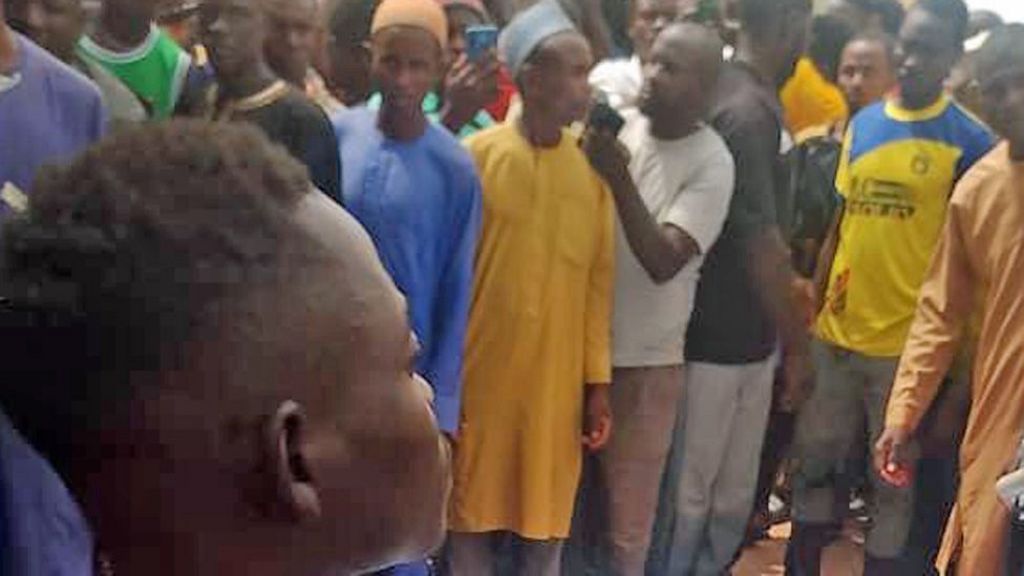
    DAKAR, Senegal — Before dawn breaks over Senegal’s capital, an extraordinary scene unfolds along Dakar’s coastline. Approximately 100 participants clad in swimwear and life jackets gather on the beach, preparing for their daily aquatic exercise regimen in the chilly Atlantic waters. This innovative aquagym program has emerged as a transformative healthcare solution for Senegalese citizens grappling with chronic mobility conditions.

  • Mandate or defining moment? The UAE’s upcoming eInvoicing regulation is about more than compliance

    Mandate or defining moment? The UAE’s upcoming eInvoicing regulation is about more than compliance

    While July 2026 might appear distant on the calendar, the UAE’s impending eInvoicing mandate demands immediate strategic attention from businesses. Contrary to viewing this as merely another regulatory hurdle, forward-thinking organizations recognize it as a transformative opportunity to revolutionize financial operations and procurement ecosystems.

    This regulatory shift fundamentally differs from previous implementations like VAT or corporate tax. eInvoicing operates at the transactional level in real-time, creating an embedded governance mechanism that validates compliance at the moment of issuance. This transforms compliance from retrospective control to continuous assurance, reconnecting the traditionally fragmented invoicing process into a seamless Source-to-Pay lifecycle.

    Early adopters gain significant competitive advantages beyond compliance. They secure choice in platform selection, alignment with broader digital transformation initiatives, and phased implementation strategies. The automation potential is substantial: where manual processing limits employees to approximately 6,000 invoices annually, automated systems can handle over 90,000—a 1,400% efficiency increase according to Ernst & Young research.

    The strategic value extends far beyond productivity gains. Integrated eInvoicing platforms create a single auditable truth that connects supplier agreements, purchase orders, and payment execution. This ensures automatic validation against agreed terms, reducing disputes while strengthening governance across the entire procurement value chain.

    Financial benefits materialize through accelerated payment cycles—reducing the typical 41-day invoice processing timeline—and access to early-payment discounts up to 2% per invoice. For international operations, early implementation allows organizations to establish global compliance platforms capable of adapting to diverse jurisdictional requirements.

    The current budget planning period presents an ideal opportunity for finance leaders to position eInvoicing as working capital optimization strategy rather than compliance cost. Proactive investment avoids the premium costs of last-minute implementations while future-proofing organizations against evolving regulatory landscapes.

    Ultimately, the July 2026 deadline will distinguish organizations viewing this as a compliance exercise from those leveraging it to build connected, future-ready digital ecosystems. The true mandate represents a watershed moment for financial leadership to replace fragmented processes with integrated digital transformation.

  • Advancing healthcare resilience through innovation in the Middle East

    Advancing healthcare resilience through innovation in the Middle East

    The Middle East is fundamentally redefining healthcare resilience, moving beyond traditional supply chain security toward advanced biomedical innovation and regional scientific collaboration. Across GCC nations, governments are implementing ambitious long-term strategies that transform healthcare from reactive crisis management to proactive scientific leadership.

    The region’s shifting health demographics, marked by rising rates of diabetes, cancer, and neurodegenerative conditions, have catalyzed this strategic pivot. Rather than merely securing essential medicines, countries are now building sophisticated biomedical ecosystems with genomics, biotechnology, and advanced pharmaceutical manufacturing at their core.

    The UAE’s comprehensive genome program aims to map every Emirati’s DNA, creating the foundation for personalized medicine while supporting nascent biotechnology capabilities. Saudi Arabia’s Vision 2030 incorporates a National Biotechnology Strategy focused on achieving self-sufficiency in vaccines, biomanufacturing, and genomics. Qatar is developing university-industry innovation pathways, while Kuwait advances its healthcare digitalization and health technology assessment frameworks under Kuwait Vision 2035.

    This transformation extends to industrial policy, with sovereign investments creating substantial life sciences platforms. Abu Dhabi’s ADQ consolidated holdings across Swiss, Turkish, and Egyptian entities to form Arcera Life Sciences, now developing over 2,000 medicines across 60+ markets with 40% of its UAE portfolio produced locally. This model maintains global supply chain integration while ensuring predictable medicine access.

    The region’s capabilities are already yielding advanced therapies, including recent introductions of treatments addressing antibiotic resistance and an upcoming Alzheimer’s therapy commercialization across Middle Eastern markets. These developments demonstrate tangible progress in translating scientific innovation into patient access, particularly for areas with significant unmet medical needs.

    Building resilient healthcare systems requires sustained collaboration between governments, industry, academia, and regulators. Investments in talent development, advanced manufacturing, digital infrastructure, and AI-powered insights are proceeding at varying paces but with shared long-term vision across the region.

    The Middle East’s approach leverages complementary strengths across nations, combining robust domestic capabilities with global partnerships. This strategy not only prepares the region for future health challenges but actively shapes innovative solutions, creating opportunities for improved health outcomes for generations to come.

  • Looming Fed rate pause nudges bond investors back into risk

    Looming Fed rate pause nudges bond investors back into risk

    With the Federal Reserve poised to maintain its current benchmark interest rate at 3.50%-3.75% during Wednesday’s policy meeting, bond investors are strategically reallocating portfolios toward slightly riskier assets. This anticipated pause follows three consecutive quarter-point reductions in September, October, and December 2025, marking a significant shift in the central bank’s approach to monetary policy.

    Driving this strategic repositioning are two fundamental factors: a surprisingly resilient U.S. economy and newly proposed fiscal stimulus measures expected to bolster consumer spending throughout 2026. Rather than pursuing aggressive credit investments, portfolio managers are primarily extending duration exposure—purchasing longer-dated Treasury securities that demonstrate heightened sensitivity to interest rate fluctuations.

    Market indicators reveal substantially tempered expectations for monetary easing, with rate futures pricing in approximately 44 basis points of cuts for the year, notably reduced from the 53 basis points anticipated just two weeks prior. This recalibration reflects stabilizing labor market conditions, peaking inflation trends, and the federal funds rate approaching a theoretically neutral level that neither restricts nor stimulates economic activity.

    According to Tony Rodriguez, Nuveen’s head of fixed income strategy, ‘When incorporating anticipated policy implementations including new tax reductions and the delayed economic impact of previous Fed rate cuts, an extended pause represents a logically sound approach.’

    Despite this measured risk-taking, investment-grade credit spreads have tightened to historically minimal levels—currently approximately 73 basis points over Treasuries according to ICE BofA index data—creating valuation concerns that limit aggressive positioning. Insight Investment’s John Flahive cautions clients against excessive aggression within fixed income portfolios given current valuation constraints.

    Geopolitical considerations further complicate investment decisions, with Thornburg Investment Management’s Christian Hoffmann noting that central banks’ accelerating gold accumulation partially reflects ‘long-term concerns about our fiscal position’ and desire to diversify away from U.S. debt exposure.

    The duration-extension strategy finds support in yield curve dynamics, as Morgan Stanley’s Vishal Khanduja observes that steeper curves provide compensation for moving out along the maturity spectrum. Historical patterns additionally demonstrate that longer-dated debt typically outperforms shorter-term Treasuries during Fed easing cycles.

    However, DWS’s George Catrambone highlights fiscal limitations, noting that current deficit levels constrain additional stimulus effectiveness and make high-yield credit investments particularly precarious at this juncture.