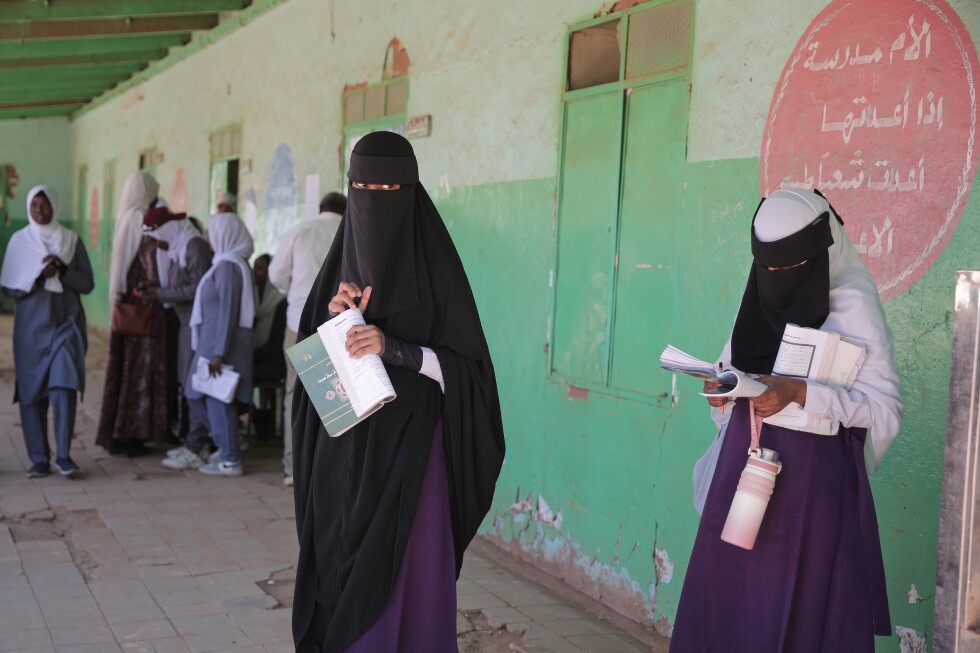
As Sudan entered the fourth year of its devastating civil conflict on Wednesday, the country’s catastrophic humanitarian collapse has been sidelined by rising tensions in the Middle East, leaving millions of Sudanese in a state of unaddressed catastrophe that top United Nations officials have labeled an “abandoned crisis.”
What began as a 2023 power struggle between two rival military factions — Sudan’s official national military led by Gen. Abdel-Fattah Burhan, and the paramilitary Rapid Support Forces (RSF) commanded by Gen. Mohamed Hamdan Dagalo — has since shattered the East African nation, displacing 13 million people from their homes and creating what aid organizations call the world’s most severe humanitarian emergency. Three years of continuous combat have left large swathes of the vast Darfur region in ruins, with no diplomatic breakthrough on the horizon to end the fighting.
International attention and diplomatic resources have shifted sharply away from Sudan following the outbreak of new open conflict in the Middle East, leaving existing ceasefire efforts led by the United States and regional powers dead in the water. Mounting evidence confirms that multiple regional powers continue to back opposing factions from behind the scenes, prolonging the bloodshed with no accountability. UN humanitarian chief Tom Fletcher summarized the global failure in a stark statement: “This grim and chastening anniversary marks another year when the world has failed to meet the test of Sudan.”
### A Catastrophe Measured in Human Cost
The human toll of Sudan’s war is staggering. Official counts record at least 59,000 people killed, with a single three-day RSF offensive on the Darfur city of el-Fasher last October leaving an estimated 6,000 people dead. UN-backed independent experts have concluded that this operation carried all the defining characteristics of genocide. The International Criminal Court is currently conducting active investigations into potential war crimes, crimes against humanity, and acts of genocide in Darfur, a region that first became synonymous with mass atrocities two decades ago.
Widespread starvation is now a daily reality across large parts of the country, with the conflict pushing multiple regions into outright famine. The Integrated Food Security Phase Classification, the global leading authority on food insecurity, projected in February that the number of Sudanese suffering from severe acute malnutrition — the deadliest form of hunger — will rise to 800,000 by the end of 2025. Overall, the UN estimates that 34 million Sudanese — nearly two-thirds of the entire population — require urgent life-saving humanitarian assistance. The World Health Organization reports that less than two-thirds of the country’s health facilities remain even partially operational, while cholera and other preventable diseases spread rapidly across unassessed communities.
The ongoing conflict in the Middle East has only exacerbated Sudan’s crisis: fuel prices across the country have spiked by more than 24% in recent months, driven by regional shipping disruptions tied to Middle East tensions, which have in turn pushed already sky-high food prices even higher out of reach for most families.
Denise Brown, the UN’s top humanitarian official based in Sudan, issued a searing rebuke of global inaction earlier this week. “A plea from me: Please don’t call this the forgotten crisis. I’m referring to this as an abandoned crisis,” she said, emphasizing that international neglect is a deliberate choice that prolongs the suffering of the Sudanese people.
### The Origins and Risk of Regional Spillover
The current war grew out of a fractured democratic transition that followed the 2019 popular uprising that ousted longtime authoritarian ruler Omar al-Bashir. After Bashir’s removal, Burhan and Dagalo shared power on a transitional ruling council, but long-simmering tensions over military integration and political control boiled over into open civil war in April 2023. Today, Sudan is effectively split into two competing blocs: the internationally recognized military-backed government centered in the capital Khartoum, and the RSF’s rival administration that controls most of Darfur and parts of the Kordofan region along the South Sudan border.
Neither faction is positioned to win a decisive military victory, according to Sudanese journalist and researcher Shamel Elnoor, who added that the Sudanese people “have become powerless and are subjected to foreign dictates.” The military currently holds control over northern, eastern, and central Sudan, including critical Red Sea shipping ports, national oil refineries, and key pipeline infrastructure. The RSF and its allied militias hold Darfur and most of Kordofan, regions that hold the majority of Sudan’s valuable gold mines and remaining untapped oil reserves.
Regional states have openly backed opposing sides, prolonging the conflict. Egypt has publicly supported the Sudanese military, while UN experts and human rights organizations have repeatedly accused the United Arab Emirates of supplying arms to the RSF — an accusation the UAE has repeatedly denied. Earlier this month, the Yale School of Public Health’s Humanitarian Research Lab, which tracks the conflict via satellite imagery, documented that the RSF has received consistent military support from a base inside neighboring Ethiopia. The RSF has not issued any public response to the allegation.
Josef Tucker, senior Horn of Africa analyst at the International Crisis Group, warned that the risk of the conflict spreading across Sudan’s national borders is growing, which would make the already intractable war even more difficult to resolve.
### Widespread Atrocities Continue Unchecked
Three years of combat have seen mass atrocities become routine across Sudan, including systematic mass killings, widespread sexual violence including gang rapes, and deliberate attacks on civilian infrastructure. The World Health Organization confirms that more than 2,000 medical workers, patients, and first responders have been killed in targeted attacks on hospitals and ambulances across the country.
Most of the documented atrocities have been attributed to the RSF and its allied Janjaweed militias, the same Arab militias that carried out mass genocide in Darfur in the early 2000s. The modern RSF grew directly out of the original Janjaweed, and experts warn that the pattern of atrocities targeting non-Arab communities in Darfur has remained consistent for decades.
Brown, the UN’s Sudan envoy, warned that there is no sign the mass killing will slow. “We have … no reason at all to believe it will stop the mass atrocities that we saw in el-Fasher,” she said.
While the Sudanese military’s 2025 recapture of Khartoum and other central urban areas allowed roughly 4 million displaced people to return to their home regions, those returns have not brought peace or normalcy. Tjada D’Oyen McKenna, CEO of international aid group Mercy Corps, explained that “It’s not really a return to normal. It is trying to survive amidst a new normal” — a reality defined by destroyed infrastructure, collapsed basic services, and persistent economic instability.