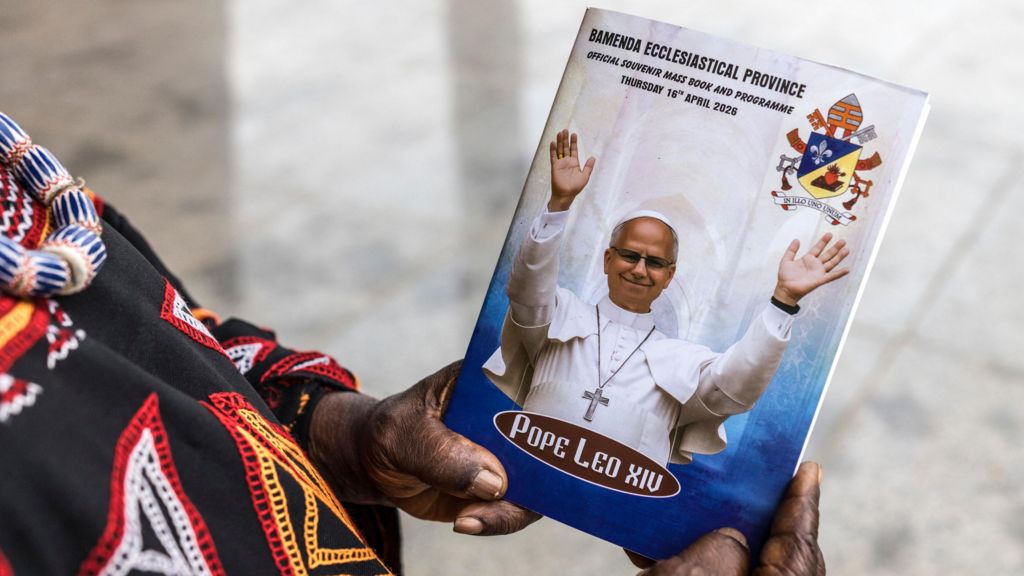
As Pope Leo XIV continues the second day of his landmark 11-day tour across four African nations, a remarkable development has unfolded in violence-wracked Cameroon, where armed Anglophone separatist groups have agreed to a three-day ceasefire to open a “safe travel passage” ahead of the pontiff’s upcoming visit.
The ceasefire, announced by the Unity Alliance — a coalition of major armed secessionist groups active in Cameroon’s two English-speaking regions — will come into effect ahead of Pope Leo’s arrival on Wednesday. In an official statement, the alliance framed the pause in hostilities as a recognition of the “profound spiritual importance” of the papal visit, and a commitment to protecting civilian life and facilitating smooth movement for pilgrims and attendees gathering for the papal events. The statement emphasized that the decision reflects a deliberate commitment to responsibility, restraint, and respect for human dignity, even amid years of ongoing conflict. The alliance also added that the visit should remain strictly spiritual and pastoral in nature, warning against any attempts to politicize the historic occasion.
Cameroon’s francophone-dominated national government has not yet issued an official comment on the ceasefire announcement, though local authorities have confirmed that comprehensive security measures have already been put in place to protect the pontiff and all visitors at scheduled event locations across the country. Local preparations in Bamenda, the capital of Cameroon’s North-West region and the focal point of the separatist conflict where Pope Leo will hold a key peace gathering, are already well underway: street billboards featuring portraits of Pope Leo and Cameroonian President Paul Biya have been erected across the city, and officials have confirmed that all papal event sites will be open to visitors free of charge.
The conflict in Cameroon’s Anglophone regions erupted nearly a decade ago, when separatist movements launched an armed campaign for secession from the country’s majority French-speaking government. The violence has claimed at least 6,000 lives and displaced hundreds of thousands of civilians from their homes. A 2019 national dialogue convened by the Cameroonian government failed to resolve the standoff, leaving the region locked in a cycle of persistent violence. Pope Leo’s planned stop in Bamenda is widely viewed as a symbolic outreach by the Catholic Church to advance peace and reconciliation in the divided region, where he is scheduled to host a special peace gathering at the city’s Saint Joseph’s Cathedral.
Pope Leo launched his 11-day African tour on Monday, with his first stop in Algeria — marking the first ever papal visit to the North African nation, which is predominantly populated by Sunni Muslims. Algeria also holds deep personal significance for the new pontiff: it is the birthplace of St Augustine, and Pope Leo is the first pope from the religious order that follows St Augustine’s teachings. Currently based in Annaba, where St Augustine served as bishop centuries ago, the pontiff visited the archaeological site of the ancient city of Hippo Regius on Tuesday, and is scheduled to lead a public Mass at the Basilica of Saint Augustine later that same day.
After concluding his stop in Cameroon, Pope Leo will continue his tour with visits to Angola and Equatorial Guinea, adding up to 11 stops across four African nations overall. This trip marks only his second major foreign visit since he was elected to the papacy in 2025, and it underscores the growing global importance of the Catholic Church in Africa. Latest 2024 demographic data shows that Africa is home to roughly 288 million Catholics — accounting for more than one-fifth of the global Catholic population, a share that continues to grow steadily year over year.