标签: Africa

非洲

  • Morocco and Senegal pledge to stay friends and boost trade after Africa Cup soccer tensions

    Morocco and Senegal pledge to stay friends and boost trade after Africa Cup soccer tensions

    In a significant demonstration of diplomatic resilience, Morocco and Senegal have reaffirmed their bilateral commitment through the signing of seventeen comprehensive agreements, effectively transcending recent tensions arising from a contentious soccer match. The signing ceremony, held in Rabat on Monday, witnessed both nations’ prime ministers formalizing enhanced cooperation across multiple economic sectors including agricultural development, infrastructure projects, fisheries management, and mineral resource extraction.

    This diplomatic initiative follows the turbulent Africa Cup of Nations final that previously strained relations between the two African nations. The match, won by Senegal 1-0, was marred by on-field protests from Senegalese players and attempted field invasions by spectators. Subsequent weeks saw Moroccan rights organizations documenting increased hate speech, which both governments have characterized as emotional reactions rather than substantive political divisions.

    Senegalese Prime Minister Ousmane Sonko emphasized the enduring nature of bilateral relations during the opening of the Moroccan-Senegalese joint commission, stating: ‘These excesses must be understood as emotional outbursts produced by fervor rather than political or cultural rifts. The friendship between Morocco and Senegal transcends temporary emotions.’

    The economic foundation of this relationship remains particularly robust. Senegal, as a heavily indebted West African nation, considers Morocco among its foremost African investors, with substantial Moroccan capital flowing into Senegalese banking institutions, energy infrastructure, and agricultural enterprises. Conversely, Senegal serves as a crucial export market for Moroccan goods, with trade volumes exceeding $200 million in 2024 alone.

    Moroccan Prime Minister Aziz Akhannouch highlighted the relationship’s ‘solid foundations,’ noting both nations remain ‘faithful to the spirit of brotherhood, solidarity and mutual respect.’ The agreements strategically align with Morocco’s broader continental expansion strategy while supporting Senegal’s foreign investment attraction objectives. Additionally, religious connections through the Tijaniyya Sufi order, which maintains significant Senegalese membership in Morocco, further strengthen cultural bonds between the two nations.

  • Kenyan cult leader faces charges over 52 further deaths

    Kenyan cult leader faces charges over 52 further deaths

    Kenyan prosecutors have announced expanded criminal charges against self-proclaimed pastor Paul Nthenge Mackenzie, the alleged mastermind behind a mass starvation cult that resulted in hundreds of fatalities. The new indictment covers 52 additional deaths at the Binzaro homestead in Kilifi County, occurring approximately 30 kilometers from the initial massacre site in Shakahola forest.

    Mackenzie, who has been detained since April 2023 following the exhumation of 429 bodies from mass graves, now faces allegations of orchestrating further fatalities while imprisoned. According to the Office of the Director of Public Prosecutions, investigators discovered handwritten notes from Mackenzie’s prison cell detailing mobile phone transactions used to coordinate the expanded operation.

    The latest charges include radicalization, facilitation of terrorist acts, and murder, supplementing existing manslaughter charges from the Shakahola incident. Prosecutors assert Mackenzie employed “radical teachings and coordinated structures” to lure followers to remote locations where they were instructed to starve themselves in preparation for the apocalypse.

    This development follows the recent guilty plea by Enos Amanya Ngala, Mackenzie’s former security chief, regarding the deaths of 191 children discovered in the initial mass graves. Survivor accounts reveal a hierarchical starvation order devised by Mackenzie: children first, followed by unmarried adults, women, men, and finally church leaders.

    Mackenzie established the Good News International Church in 2003, formally closing it in 2019 while continuing operations. His teachings denounced formal education as satanic and unbiblical, resulting in prior arrests in 2017 and 2018 for encouraging school abandonment. The case has sparked significant criticism of Kenyan authorities for insufficient regulatory oversight that might have prevented the tragedy.

  • Nigerian officers to face trial over coup-plot allegations

    Nigerian officers to face trial over coup-plot allegations

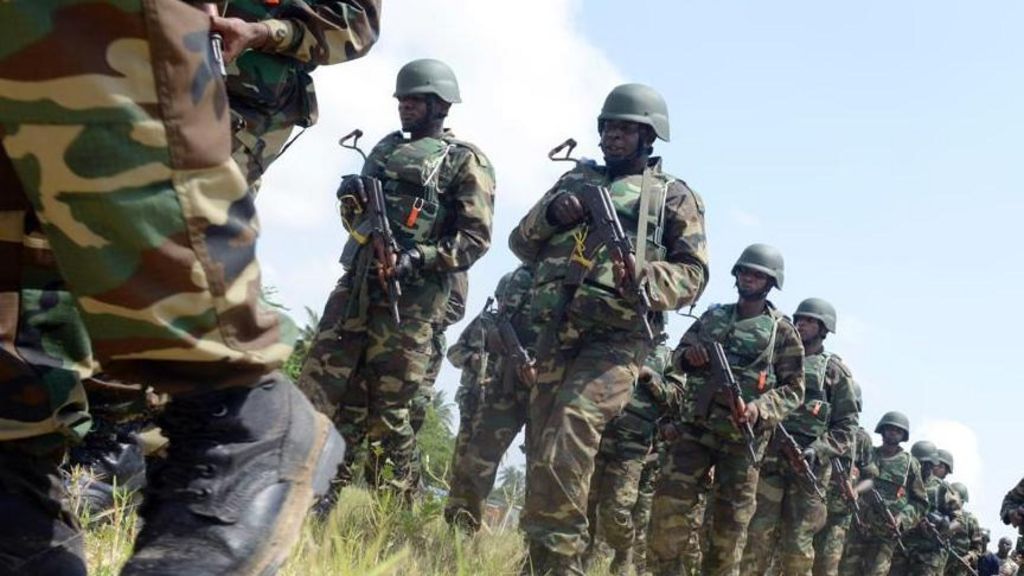
    Sixteen Nigerian military officers will face court-martial proceedings over allegations of plotting to overthrow President Bola Tinubu’s government last year, according to an official armed forces statement. The officers, arrested in October following what authorities described as “acts of indiscipline and breaches of service regulations,” are now formally charged with attempting to subvert the constitutional order.

    While military officials initially dismissed rumors of an attempted coup, subsequent investigations have led to acknowledging that some of the detained officers will undergo trial before a military judicial panel. The armed forces emphasized that the judicial process would uphold principles of fairness and due process while ensuring accountability.

    This development occurs against Nigeria’s complex historical backdrop of military involvement in politics, which included multiple successful coups between 1966 and 1993. The sensitivity surrounding coup allegations reflects the nation’s transition to sustained civilian governance since 1999.

    The military statement explicitly condemned any attempts to unseat elected government as “inconsistent with the ethics, values and professional standards” of Nigeria’s armed forces. Recent years have seen occasional rumors about military dissent amid concerns over national instability, security challenges, and public frustration—all of which the military has consistently denied.

    Nigeria’s armed forces have repeatedly publicly reaffirmed their commitment to democratic governance and loyalty to civilian authority throughout the current period of uninterrupted civilian rule.

  • A Shared Ascent: The UAE–India Growth Story

    A Shared Ascent: The UAE–India Growth Story

    As India commemorates its 77th Republic Day, the profound economic and cultural synergy between the United Arab Emirates and India emerges as a blueprint for successful bilateral partnership. This relationship, characterized by mutual values and ambitious growth trajectories, finds embodiment in enterprises like Jumbo Group, whose five-decade evolution mirrors the broader UAE-India success story.

    Vidya Chhabria, Chairperson of Jumbo Group, reflects on how Indian principles of resilience, innovation, and progress have fundamentally shaped the company’s journey from a single retail store to a major UAE distribution powerhouse. The organization’s growth strategy has consistently leveraged opportunities within the UAE market while maintaining its foundational Indian ethos.

    The company’s commercial evolution illustrates the bilateral partnership’s practical application. Beginning with longstanding collaborations with global brands like Sony and expanding through recent partnerships including international lifestyle brand Christy, Jumbo has demonstrated how UAE-India cooperation drives business diversification and market relevance.

    This economic interconnection extends beyond corporate strategy to human capital development. Jumbo’s workforce prominently features talented Indian diaspora professionals whose contributions have been instrumental to the company’s achievements. Through both retail operations and distribution networks, the organization has actively participated in job creation, talent cultivation, and the UAE’s broader innovation-focused economic agenda.

    The timing of this reflection coincides with the UAE’s designation of the Year of Family, creating cultural resonance with Indian family-centric values. These shared principles influence business approaches toward customer service and community engagement, ensuring commercial activities contribute meaningfully to quality of life for residents and visitors alike.

    This symbiotic relationship continues to strengthen through aligned ambitions and heritage, positioning the UAE-India partnership as a model of international cooperation with tangible economic and social benefits.

  • Health as a Pillar of National Strength

    Health as a Pillar of National Strength

    On India’s Republic Day commemoration, national discourse has turned toward redefining progress through the lens of holistic wellness. The country’s leadership emphasizes that true national strength extends beyond economic and technological advancement to encompass the comprehensive well-being of its citizens.

    India possesses a unique confluence of assets positioning it as a potential global healthcare innovator: world-class medical expertise, rapidly developing healthcare infrastructure, and ancient philosophical traditions that conceptualize health as an intricate balance between physical, mental, and environmental harmony. This distinctive combination of scale, historical continuity, and scientific advancement offers unprecedented opportunities.

    Globally, healthcare systems face mounting challenges from lifestyle-related diseases, mental health crises, and the limitations of reactive treatment models. The future demands a paradigm shift toward preventive care, resilience-building, and sustained vitality across lifespans rather than merely addressing illness episodically.

    India’s ancient knowledge systems—emphasizing disciplined living, natural harmony, and inner equilibrium—provide foundational principles for this transformation. When rigorously integrated with contemporary medical science and advanced diagnostics, these traditions can inform healthcare models that are both scientifically validated and profoundly human-centered.

    The recently established tulåh Clinical Wellness initiative in Kerala exemplifies this synthesis. Designed as an evidence-based clinical wellness ecosystem, it merges cutting-edge medical diagnostics with India’s time-tested healing traditions within a structured, disciplined framework that approaches health as a lifelong pursuit.

    International partnerships, particularly the strategic relationship between India and the UAE, accelerate this vision. Combining India’s depth in medical science and traditional knowledge with the UAE’s role as a global innovation platform creates powerful opportunities to develop health models with worldwide applicability.

    This Republic Day serves as a reminder that investing in comprehensive wellness is fundamental to sustainable development, directly influencing productivity, social cohesion, and intergenerational thriving. The constitutional promise of dignity for all finds expression in building systems that support healthier, more balanced, and purposeful lives for India’s future generations.

  • Former BCCI president Inderjit Singh Bindra passes away at 84

    Former BCCI president Inderjit Singh Bindra passes away at 84

    The cricketing world mourns the loss of I.S. Bindra, the former President of the Board of Control for Cricket in India (BCCI), who passed away in New Delhi at the age of 84. The BCCI officially confirmed the news, paying tribute to one of the most transformative figures in the sport’s administration.

    Bindra’s tenure as BCCI president from 1993 to 1996 marked a pivotal era in Indian cricket. His influence, however, extended far beyond those years. He held an unprecedented 36-year presidency at the Punjab Cricket Association (PCA), a testament to his enduring commitment to the game’s development at the regional level.

    His legacy is physically embodied in the PCA Stadium in Mohali, a world-class venue he was instrumental in developing. This ground has been the stage for numerous historic contests, including the electrifying 2011 World Cup semifinal between India and Pakistan and a dramatic run-chase led by Virat Kohli in the 2016 T20 World Cup.

    Perhaps his most profound impact was on the global stage. Bindra, alongside contemporaries NKP Salve and Jagmohan Dalmiya, was a central architect in shifting cricket’s power dynamics. They successfully brought the 1987 World Cup to the Indian subcontinent, breaking the Anglo-Australian monopoly on hosting the sport’s premier event. This move catalyzed a new era, empowering Asian cricketing nations and leading to subsequent World Cup victories for Pakistan (1992) and Sri Lanka (1996).

    A skilled diplomat, Bindra played a crucial role in diffusing geopolitical tensions, notably ahead of the 1987 tournament. His strategic thinking continued to shape international cricket as a principal advisor to ICC President Sharad Pawar from 2010 to 2012. Tributes have poured in from across the cricket community, with current ICC Chairman Jay Shah highlighting Bindra’s enduring legacy as an inspiration for future generations.

  • Beckham family tensions put spotlight on celebrity trademark disputes

    Beckham family tensions put spotlight on celebrity trademark disputes

    The Beckham family’s internal conflicts have escalated into public discourse, revealing the complex legal landscape of celebrity trademark practices. Brooklyn Beckham, eldest son of global icons David and Victoria Beckham, recently made explosive allegations that his parents prioritized ‘Brand Beckham’ over family relationships, particularly regarding control of his name rights.

    UK Intellectual Property Office records confirm that all four Beckham children’s names were registered as trademarks, with Victoria Beckham listed as legal owner in her capacity as parent and guardian. Brooklyn’s name was specifically trademarked in 2016 when he was 17, covering extensive commercial categories including beauty products, cosmetics, apparel, toys, and entertainment services. This registration is scheduled to expire in December of this year.

    According to Brooklyn’s social media statements, his parents pressured him to ‘sign away the rights to my name’ preceding his 2022 marriage to Nicola Peltz, daughter of American billionaire Nelson Peltz. While Beckham family representatives have remained silent on these allegations, the controversy has highlighted how celebrity families increasingly utilize trademark protections to safeguard their commercial interests.

    This practice has become increasingly common among high-profile figures seeking to prevent unauthorized commercial exploitation of their names. Notable precedents include Australian singer Kylie Minogue’s opposition to reality star Kylie Jenner’s trademark application for ‘Kylie,’ and singer Katy Perry’s ongoing legal battle with Australian fashion designer Katie Perry.

    Legal experts note that trademark registration remains relatively accessible in both UK and US jurisdictions. In Britain, basic registration costs approximately £170 plus £50 for each additional commercial class, providing protection for a decade. The Beckhams have built a multimillion-pound empire through strategic brand management, with David’s football legacy and Victoria’s fashion and beauty ventures creating a comprehensive commercial ecosystem.

    Intellectual property specialists suggest Brooklyn could potentially challenge trademark renewal or pursue independent registration if the name hasn’t been actively commercially exploited. However, complications arise from the inherent connection between ‘Brooklyn’ and the powerful ‘Beckham’ brand identity. Any resolution would likely involve negotiated settlements determining permissible usage across various product categories.

    Notably, Brooklyn has already begun incorporating his wife’s surname into his professional identity, using the initials ‘BPB’ (Brooklyn Peltz Beckham) for endorsements and his Cloud23 hot sauce venture, signaling a possible shift toward independent brand development outside the Beckham family enterprise.

  • Dubai’s Al Habtoor Group warns Lebanon of legal action over Dh6-billion losses

    Dubai’s Al Habtoor Group warns Lebanon of legal action over Dh6-billion losses

    Dubai-based conglomerate Al Habtoor Group has issued a formal warning to the Lebanese government, signaling imminent legal proceedings over substantial financial losses exceeding $1.7 billion (Dh6.24 billion). The multinational corporation alleges systematic violations of bilateral investment agreements through restrictive measures imposed by Lebanese authorities and the central bank, Banque du Liban.

    The dispute centers on the Group’s diversified portfolio across Lebanon’s hospitality, retail, leisure, real estate, and banking sectors. According to official statements, these investments have suffered severe deterioration due to capital control measures preventing access to lawfully deposited funds in Lebanese financial institutions. These financial restrictions, exacerbated by Lebanon’s prolonged political and economic crises, have created an unsustainable operational environment for foreign investors.

    Al Habtoor Group emphasized having exhausted all diplomatic channels and good-faith negotiation attempts since formally notifying Lebanon of the investment dispute in January 2024. The six-month cooling-off period mandated under UAE-Lebanon bilateral investment treaties concluded without resolution, despite the Group’s engagement with relevant authorities.

    The conglomerate now asserts that international legal action represents the only remaining recourse to enforce its rights under binding international agreements. These treaties obligate Lebanon to ensure protection, fair treatment, and effective remedies for foreign investors. While maintaining openness to constructive solutions, the Group stated it cannot continue absorbing losses resulting from what it characterizes as systemic failure and prolonged governmental inaction.

    This development follows Chairman Khalaf Al Habtoor’s January 2025 announcement canceling all Lebanese investment projects and divesting existing properties, citing security concerns including personal threats received in 2024. The case highlights worsening investor confidence in Lebanon’s ability to stabilize its financial systems and protect foreign investments amid ongoing economic collapse.

  • With ‘Border 2’ running to packed houses, Karan Johar says ‘Bollywood is here to stay’

    With ‘Border 2’ running to packed houses, Karan Johar says ‘Bollywood is here to stay’

    Bollywood’s resurgence finds powerful validation as two major war dramas dominate box office charts, prompting industry titan Karan Johar to proclaim the enduring strength of Hindi cinema. The momentum builds with ‘Border 2,’ directed by Anurag Singh, achieving one of the most impressive openings in recent memory while rapidly approaching the coveted ₹1 billion (approximately Dh40.1 million) benchmark.

    Johar took to Instagram to celebrate the consecutive successes of ‘Border 2’ and ‘Dhurandhar,’ asserting that these commercial triumphs definitively silence critics questioning Bollywood’s relevance. His social media declaration emphasized that emotional resonance with audiences remains the ultimate determinant of cinematic success, enabling quality productions to transcend perceived boundaries.

    The box office performance substantiates Johar’s enthusiasm. According to trade analyst Taran Adarsh, ‘Border 2’ garnered ₹321 million net in India on its opening day alone, demonstrating robust performance across both single-screen theaters and urban multiplexes. Despite weather-related disruptions in Northern regions, industry observers anticipate substantial growth throughout the weekend and Republic Day holiday period due to overwhelmingly positive audience reception.

    Featuring an ensemble cast including Sunny Deol, Varun Dhawan, Diljit Dosanjh, and Ahan Shetty, the January 23rd release continues its strong theatrical run. Simultaneously, ‘Dhurandhar’ starring Ranveer Singh and Akshaye Khanna has achieved a remarkable 50-day theatrical presence, surpassing the previous record held by ‘Pushpa 2: The Rule’ to become the highest-grossing Hindi film to date.

    This dual success story signals a revitalized phase for Indian cinema, demonstrating that strategically crafted productions with emotional depth can achieve both critical and commercial acclaim while reinforcing the industry’s cultural significance.

  • Europe’s rising diversity is not reflected at the Winter Olympics. Culture plays a big role

    Europe’s rising diversity is not reflected at the Winter Olympics. Culture plays a big role

    In the snow-covered landscapes of northern Sweden, Maryan Hashi’s journey from feeling like an “alien” on ski slopes to becoming an advocate for winter sports integration represents a powerful narrative of cultural adaptation. The 30-year-old Somali student initially confronted overwhelming self-doubt when she first attempted snowboarding near her Skelleftea home, questioning everything from her attire to her technique as a Black woman in a predominantly white environment.

    Her perseverance transformed snowboarding from an unfamiliar activity into a profound passion that significantly enhanced her integration into Swedish society. Hashi’s experience highlights a broader demographic reality: while approximately 20% of Sweden’s 10 million residents are foreign-born—with about half originating from Asia or Africa—this diversity remains strikingly absent from winter sports arenas.

    The Milan Cortina Winter Olympics roster exemplifies this disparity, with Sweden’s team consisting almost exclusively of ethnically Swedish athletes. NHL player Mika Zibanejad, whose father is from Iran, stands as a rare exception. This homogeneity persists across European winter sports nations including France, Germany, and Switzerland, despite their increasingly diverse populations.

    Researchers identify multiple barriers preventing immigrant participation, including social unfamiliarity, financial constraints, and geographical limitations. Professor Josef Fahlen of Umea University emphasizes that parental influence plays a crucial role in sports participation, noting that children of non-European immigrants are unlikely to encounter sports unfamiliar to their parents.

    Financial accessibility remains another significant hurdle, with equipment rentals, clothing, travel expenses, and slope passes creating substantial economic barriers. While Sweden’s ski federation promotes inclusion through programs like “Alla På Snö” (Everyone On Snow)—reaching approximately 30,000 children annually with free equipment and slope access—and the Leisure Bank project offering free sports equipment rentals, these initiatives don’t specifically target immigrant communities.

    Hashi, who now teaches snowboarding to skeptical immigrant friends and children, advocates for targeted outreach: “Open the door for us. We’re going to take care of the next generation for you.” Her story underscores the transformative potential of winter sports as an integration tool while highlighting the need for systematic changes to make these activities truly accessible to Sweden’s diverse population.