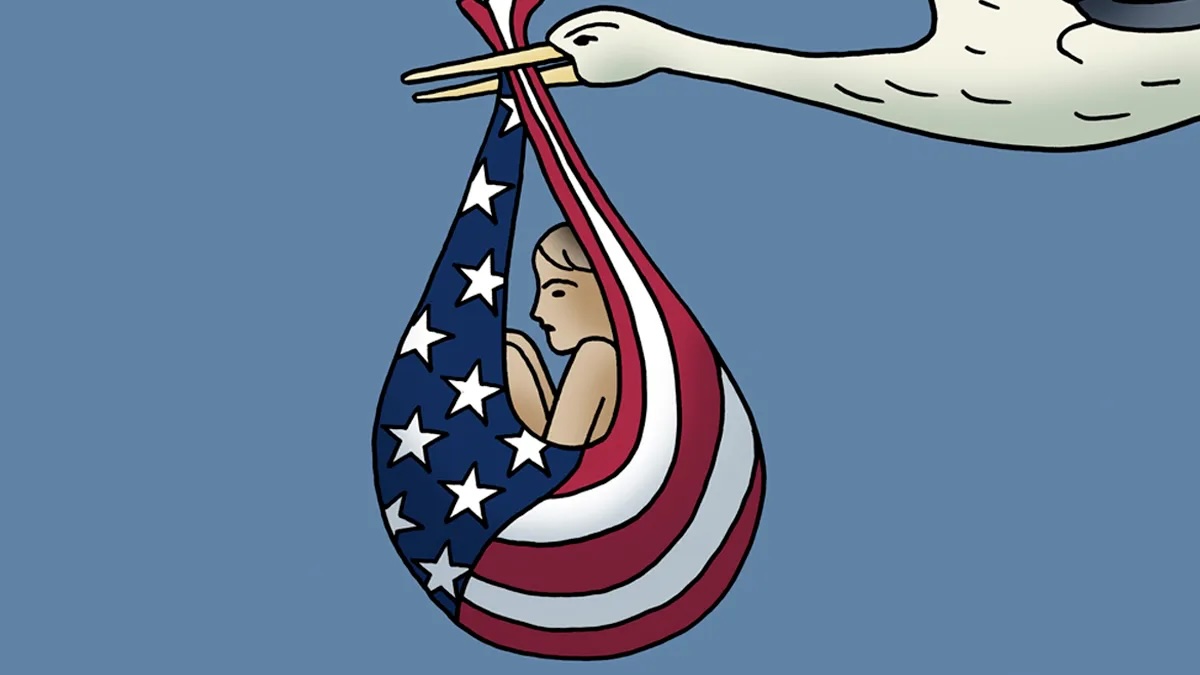
On a Tuesday in Washington D.C., the U.S. Supreme Court delivered a landmark rejection of former President Donald Trump’s controversial effort to rewrite the longstanding interpretation of birthright citizenship enshrined in U.S. constitutional law. The 6-3 vote delivered a decisive victory for established constitutional interpretation, with a majority of justices reaffirming the century-old principle of automatic citizenship for anyone born on U.S. soil, no matter the immigration status of the newborn’s parents.
Writing the majority opinion for the court, Chief Justice John G. Roberts Jr. made clear that Trump’s executive order directly contravened the text and intent of the 14th Amendment to the U.S. Constitution. “Arguments for limiting birthright citizenship to those domiciled in the United States fail,” Roberts wrote in his opinion. “Children born in the United States to parents unlawfully or temporarily present are ‘subject to the jurisdiction’ of the United States and are citizens at birth under the Fourteenth Amendment’s Citizenship Clause. Under the Constitution, they are citizens at birth.”
This policy push originated on the first day of Trump’s second presidential term, when he signed the executive order aimed at stripping automatic birthright citizenship from children born in the U.S. to parents without permanent legal status, including those holding temporary visas or living in the country without formal authorization. Legal analysts and policy experts had repeatedly warned that allowing the order to stand would create a large new class of stateless people, triggering widespread administrative chaos for U.S. hospitals and local government agencies tasked with recording births and issuing key documentation.
In a break from typical presidential precedent, Trump made the rare move of attending oral arguments for the case in person ahead of the ruling. Ahead of the decision, Trump acknowledged he would abide by the court’s final call, while still making his preference clear: “It’s up to them, but in terms of for the good of the country, it’d be great if they … didn’t allow it,” he told reporters from the Oval Office. The White House had not issued an immediate formal response to the ruling when contacted by States Newsroom shortly after the decision was announced.
The ruling marks a significant setback for Trump, who positioned the redefinition of birthright citizenship as a core plank of his broader hardline immigration policy agenda, which seeks to restrict entry and reshape who qualifies as a U.S. citizen. Notably, the defeat comes on the heels of two recent high court rulings that expanded presidential authority over immigration policy: one that curbed asylum seeker claims at the U.S. Southern border, and another that removed deportation protections for approximately 350,000 Haitian migrants and 6,000 Syrian migrants living in the U.S.