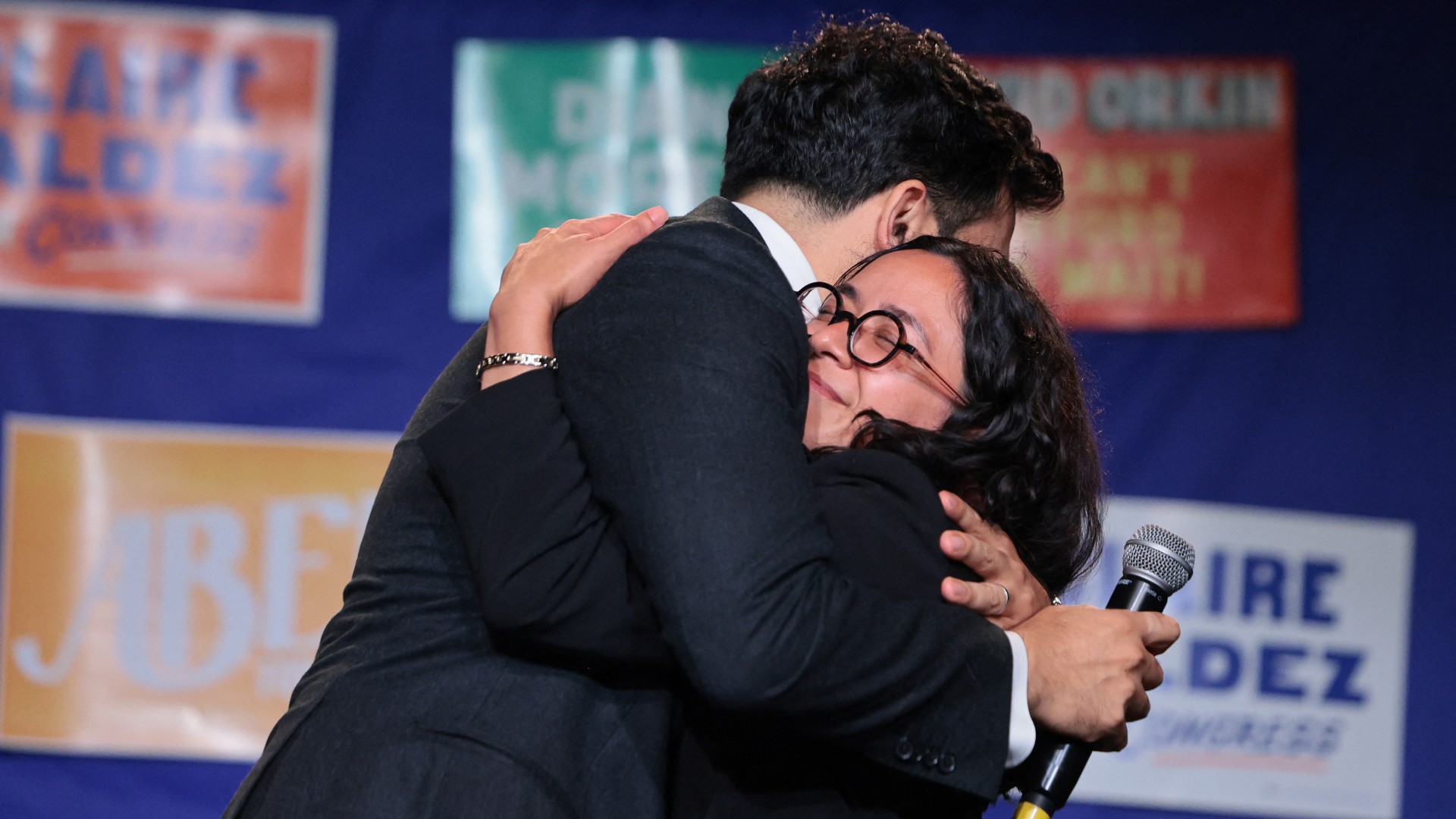
For a large share of young New York City voters, the 2026 Democratic primary elections were not defined by the usual bread-and-butter local issues of housing affordability, public safety, or neighborhood services. Instead, a single, urgent moral and political question overshadowed all other policy debates: candidates’ public stances on Israel’s ongoing military campaign in Gaza, which progressive contenders openly labeled a genocide. Driven by this anger and moral conviction, Generation Z voters rallied behind left-wing challengers, delivering shock primary upsets to three establishment-backed incumbents, all of whom were endorsed by New York Mayor Zohran Mamdani.\n\nNew York City Comptroller Brad Lander defeated centrist incumbent Dan Goldman, community organizer Darializa Avila Chevalier (widely known as DAC) ousted five-term Congressman Adriano Espaillat, and New York State Assemblymember Claire Valdez beat an opponent backed by nearly the entire city Democratic Party infrastructure. All three winning candidates are members of the Democratic Socialists of America (DSA), a left-wing faction whose policy and foreign policy platforms would have been considered far outside the Democratic Party’s mainstream just 10 years ago.\n\nMultiple young Democratic voters told Middle East Eye that the ongoing humanitarian catastrophe in Gaza made it impossible to support any candidate who refused to take a clear, uncompromising stance against Israel’s military action. Voters specifically rejected candidates who avoided labeling Israel’s actions as genocide, continued to support U.S. military funding for Israel, or hid behind the cautious, equivocal language that has characterized the national Democratic Party’s official response to the war.\n\n“The genocide in Gaza is the biggest moral issue of my lifetime,” said Eleanor Babaev, a 28-year-old event planner from Sunnyside, Queens. “I have attended protests against the genocide in Gaza with Claire Valdez, so I knew I could trust her. That was the single central reason I voted for her.” Babaev, whose mother is an Ashkenazi Jew from the former Soviet Union, added that her own family background reinforced her commitment to opposing the violence in Gaza.\n\nAdnan Bukhari, a veteran political organizer with more than a decade of experience working for Democratic candidates and a DSA member who campaigned for both Chevalier and Valdez, said the unifying thread across all three winning campaigns was not just a broad progressive platform, but a willingness to openly and consistently call Israel’s actions in Gaza genocide. “If you dissect the entire campaign, from day one, all these candidates stood fast and called it a genocide,” Bukhari explained. “They never backed away from that statement, from campaign rallies to phone banking to one-on-one voter conversations. I would say Gaza was 100 percent the main deciding factor in this election.” Bukhari added that this conclusion came directly from thousands of conversations with voters: “If we made 10,000 calls, this was the main discussion point in 7,000 of them.”\n\nProgressive organizers say the Gaza war has become a political tipping point for younger Democratic voters, because it ties opposition to U.S. military intervention abroad directly to domestic concerns over economic inequality and strained public spending at home. “I think the left has done a very good job of connecting what’s happening in our own neighborhoods to foreign policy,” said Bilal Tahir, field director for Chevalier’s campaign and a senior Democratic Party organizer. “If we attack Iran at Israel’s urging, that’s connected to Gaza: we’re pouring billions of dollars, weapons and resources into destroying societies overseas, while we still don’t have affordable universal healthcare, fully funded public education, or accessible housing for working people here at home.”\n\nTahir noted that many younger voters frame the war in Gaza through the lens of the U.S.’s decades-long costly wars in Afghanistan and Iraq, building on a long-simmering generational backlash against endless U.S. military intervention. “This is a broad, cross-constituency anti-war movement, and that’s how the left has positioned itself to voters,” he said.\n\nThese anti-war, pro-justice themes were not unique to the congressional primaries: they were also a core pillar of Mayor Zohran Mamdani’s own 2025 mayoral campaign, where opposition to Israel’s war in Gaza was woven into a broader critique of corporate power, economic inequality, and the unaccountable Democratic Party establishment. Gabriel Tennen, an assistant professor of history at Baruch College, noted that Mamdani has retained remarkable political popularity even halfway through his first term in office, and his endorsement carried significant weight with young progressive voters.\n\nTennen added that the primary results upend two long-held assumptions about U.S. politics. First, they show that “socialism” is no longer a toxic label in U.S. electoral politics, especially among younger Democratic voters. Second, the iconic political adage that “all politics is local” is no longer entirely true: a global foreign policy issue can overshadow all local concerns to drive election results. Most importantly, Tennen argued, the upsets reflect a broad generational political realignment, not a divide along ethnic or religious lines. Brad Lander, for example, won his primary in one of New York’s largest Jewish-majority districts, despite his outspoken criticism of Israel’s actions in Gaza.\n\nTuesday’s results highlight shifting attitudes among New York’s Jewish voters, a constituency long considered a core pillar of pro-Israel politics in one of the most politically influential pro-Israel centers in the United States. New York is home to roughly 1.3 million Jewish residents, the largest Jewish population of any city outside of Israel. Yet both Valdez and Lander won their races in districts with large Jewish electorates, despite their unapologetic criticism of Israel’s war in Gaza.\n\n“The genocide is the most important issue of our time,” said Sam Leviton, a 23-year-old recent Columbia University public health graduate and Harlem resident who voted for Chevalier. “I’ve been a Jewish New Yorker my whole life, and the core lesson I was raised with is that every person, no matter their race, religion, creed, or color, deserves a life of dignity. The idea that my tax dollars are going to destroy homes and lives overseas is absolutely contrary to everything I was taught and everything I believe.”\n\nRecent polling confirms that these shifting attitudes are part of a broader trend across the electorate. A March 2026 survey conducted by The Mellman Group found that while most Jewish voters still identify as Democrats, a majority opposed recent U.S. military strikes on Iran and said the president should have obtained formal congressional approval before launching military action. The poll also found that just 39 percent of respondents held a favorable view of the American Israel Public Affairs Committee (Aipac), the powerful pro-Israel lobbying group, indicating that the organization no longer commands overwhelming support among Jewish voters.\n\nAipac emerged as a major flashpoint during the primary campaigns, with Mayor Mamdani repeatedly accusing the group of spending millions of dollars in unregulated “dark money” to defend establishment Democratic incumbents. The issue resonated deeply with progressive supporters on election night: at Valdez’s election watch party, supporters chanted against Aipac as Dan Goldman delivered his concession speech on live television.\n\n“Aipac is clearly on the side of whoever holds existing power, and it uses big money and front groups to manipulate election outcomes, which takes away a fair shot from voters trying to elect representatives who actually represent their views,” said Michael Kranz, an Ashkenazi Jewish software engineer from Park Slope, Brooklyn. Kranz pointed to Goldman’s vote alongside far-right Republicans to censure the International Criminal Court as a clear example of Aipac’s undue influence on elected officials. “An interest group that acts on behalf of a foreign government has no place shaping the politics of New York’s 10th Congressional District,” he added.\n\nGoldman himself later acknowledged that the war in Gaza played an “outsized role” in his election defeat.\n\nFor many young progressive activists, the primary results are more than just a handful of local election wins. They represent concrete evidence that the mass anti-war movement, which has mobilized hundreds of thousands of protesters across the U.S. over the Gaza war, is beginning to translate street protest into lasting, institutional political change through the electoral process.\n\n“America has needed a serious anti-war movement my entire life,” said Joe Whitcomb, a 24-year-old law student who voted for Valdez, referencing the decades-long U.S. war on terror. “You can get millions of people out in the streets, and nothing changes. So we’ve started building strategies to make political interventions that actually deliver tangible results.”’
Gaza emerges as a defining issue for Gen Z voters in New York Democratic primaries