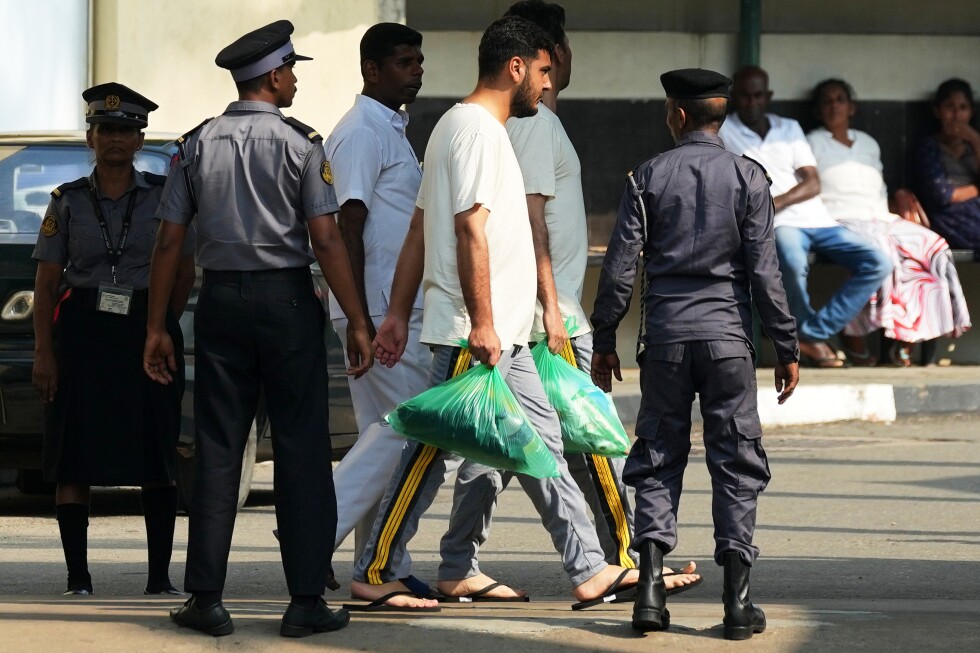
COLOMBO, Sri Lanka – In a move that highlights the South Asian island nation’s careful diplomatic navigation amid heightened U.S.-Iran tensions, Sri Lanka has completed the repatriation of 238 Iranian sailors, including 32 survivors of a U.S. torpedo attack that sank their naval vessel IRIS Dena in the Indian Ocean earlier this year, senior defense officials confirmed Friday.
The incident dates back to March 4, when a U.S. submarine struck and sank the IRIS Dena. At the time of the attack, the Iranian ship was en route back to Iran after completing a scheduled participation in a multinational naval exercise held on invitation from the Indian government. Following the sinking, Sri Lanka’s navy launched a large-scale search and recovery operation, pulling 87 bodies of deceased crew members from the ocean and evacuating 32 injured survivors for emergency hospital care in Sri Lanka.
A second Iranian vessel, which diverted to Sri Lanka after its crew reported unspecified technical malfunctions shortly after the sinking, was escorted to a southern port of the country for inspections. Defense Ministry spokesman Brigadier Franklin Joseph confirmed Friday that all but a small number of crew from the second disabled ship have already been flown back to Iran earlier this week. The empty Iranian vessel currently remains anchored at Sri Lanka’s eastern deep-water port of Trincomalee, and authorities have not yet announced a final decision on its future disposition.
For a country still grappling with the aftermath of a catastrophic multi-year economic crisis, balancing relations with both the United States and Iran is a high-stakes diplomatic challenge. The U.S. has been a key international backer of Sri Lanka’s economic recovery, playing a critical role in unlocking a major International Monetary Fund bailout package and providing support to the country’s agricultural sector to prevent a widespread food emergency. Both the U.S. and Iran also rank as major trading partners for the island nation.
Retired veteran diplomat H.M.G.S. Palihakkara, a former Sri Lankan foreign secretary and ex-permanent representative to the United Nations, praised the government’s handling of the sensitive incident. According to Palihakkara, President Anura Kumara Dissanayake faced an immediate critical test days after the sinking when he received two simultaneous, conflicting requests: one from the U.S. asking for permission to land military aircraft on Sri Lankan soil, and a second from Iran requesting permission to dock additional Iranian warships in Sri Lankan ports. Dissanayake declined both requests, a decision Palihakkara called a difficult but necessary balancing act.
“Sri Lanka has proven its neutral policy posture not just through public statements, but through concrete action,” Palihakkara said. He added that the government structured its response around legal obligations, humanitarian principles, and established international law, deliberately avoiding any perception of taking sides in the ongoing U.S.-Iran confrontation. “All parties involved in the incident have acknowledged this even-handed approach. This has significantly boosted the credibility of the Sri Lankan government on the global diplomatic stage,” Palihakkara noted.