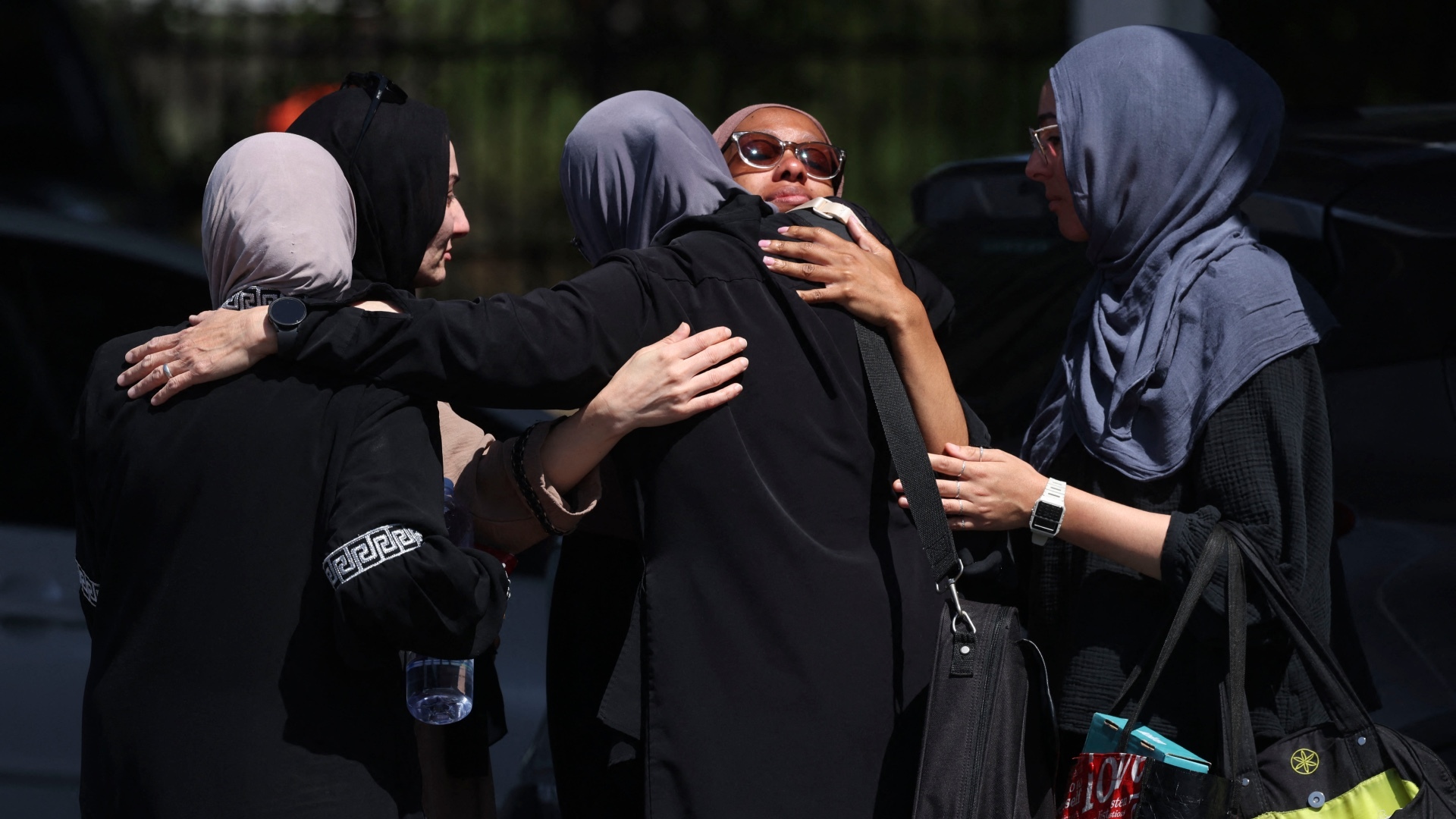
A groundbreaking new analysis from the Muslim Public Affairs Council (MPAC) has uncovered stark inequity in the distribution of U.S. federal security grants designed to protect religious nonprofits, revealing that Muslim American organizations have received less than 4% of total funding allocated over the past nine years. The funding in question is distributed annually through the Nonprofit Security Grant Program (NSGP), a Federal Emergency Management Agency (FEMA) initiative overseen by the Department of Homeland Security (DHS) that provides up to $200,000 per site to cover physical security upgrades such as surveillance cameras, bulletproof glazing, perimeter barriers, and security staff training. According to MPAC’s data, Jewish organizations have claimed nearly 60% of the $850 million distributed through the program since 2017, when Donald Trump first took office, while Christian groups have received just over 25%. Muslim organizations, by contrast, have only secured 3.8% of the total pot, despite facing a rapidly growing risk of targeted hate violence.
“Of the $850m awarded through this program over nine years, Muslim organisations only got 3.8 percent of the funding… it’s a really, really small amount going to a community that is under threat, and a growing threat,” Dr. Sarah Mohamed, co-author of the report and senior researcher at MPAC’s Center for Security, Technology, and Policy, told Middle East Eye in an interview Monday.
The inequitable distribution comes amid a years-long campaign by conservative actors to block Muslim access to the program. A year ago, right-leaning think tank Middle East Forum released a controversial report falsely claiming that DHS had funneled U.S. tax dollars to “terror-linked and extremist” Muslim organizations between 2013 and 2023, naming 49 Muslim American groups and labeling NSGP “the greatest source of DHS funding to extremist groups.” MPAC’s managing director in Washington D.C. and report co-author Sameer Hossein pushed back on these unsubstantiated claims, noting that “Even members of Congress have not been able to verify that.”
Hossein added that new restrictions imposed by the current Trump administration have made it far harder for Muslim and other marginalized community organizations to access the critical grant funding. The administration has added prohibitions targeting activities that conflict with its policy agenda, including Diversity, Equity and Inclusion (DEI) work, support for undocumented immigrants, and boycotts of Israel, leaving grantees that engage in any of these activities exposed to heightened legal risk.
Because no public data is available on the total number of organizations that applied for NSGP funding each year, researchers cannot confirm whether the low share of funding awarded to Muslim groups stems primarily from lower application rates or systemic bias. But Hossein pointed to structural advantages that have helped other religious groups secure more funding: Jewish American organizations, which first advocated for the creation of a program like NSGP in the aftermath of the 9/11 attacks shortly after DHS was founded, have more existing resources and greater experience navigating the grant program’s complex, bureaucratic application process. MPAC has already collaborated with Jewish American groups on this issue to address shared concerns around community security.
The lack of equitable security funding comes as anti-Muslim sentiment across the U.S. has surged to unprecedented levels following Trump’s return to the White House in 2025. Much of the current administration’s policy agenda, pre-developed by the far-right Heritage Foundation in its Project 2025 blueprint, explicitly targets Muslim American communities and Muslim-majority nations. Top Republican elected officials have openly promoted anti-Muslim rhetoric and called for punitive or violent action against Muslim Americans, with high-profile examples including Florida Congressman Randy Fine, Tennessee Congressman Andy Ogles, and Alabama Senator Tommy Tuberville.
Trump himself has amplified anti-Muslim hate repeatedly on his social platform Truth Social. Most recently, he shared a photo of Muslim kindergarten students in Minnesota wearing hijabs, and has repeatedly called for the investigation and deportation of Somali Americans living in the state, including hijab-wearing Congresswoman Ilhan Omar.
Data from independent hate monitoring groups confirms the rapid spread of online and offline anti-Muslim aggression. Ahead of last year’s New York City mayoral election, which saw Zohran Mamdani become the city’s first Muslim mayor, the Center for the Study of Organized Hate (CSOH) documented that Islamophobic and xenophobic discourse about Mamdani on X reached 1.5 billion user accounts between his June Democratic primary win and the end of October. CSOH called on X to implement election-specific content protections, enforce existing community guidelines targeting religious and racial hate speech, and adjust the platform’s algorithm to prioritize corrective counter-narratives to disinformation and hate.
CSOH also recorded a sharp spike in anti-Muslim content on X immediately after the U.S. and Israel launched a joint military campaign against Iran on February 28. Between January 1 and March 5, a period when Trump repeatedly threatened to launch military action against Iran, CSOH tracked thousands of posts that explicitly dehumanized Muslims, called for their exclusion, or incited violence against the community. On the day the war began, daily volumes of these harmful posts jumped from fewer than 2,000 to more than 6,000.
Offline attacks have also reached alarming levels. In April, MPAC reported that targeted attacks against Muslim American individuals and institutions hit a 15-month high in the first quarter of 2025 under the Trump administration, with an 11-fold increase in targeted incidents compared to previous periods. At least nine attacks were recorded in March alone, ranging from mosque vandalism and bomb threats to sexual assaults against Muslim women, according to MPAC’s policy paper *The Pitfalls of Operation Epic Fury: How the Undeclared War Against Iran Hurts Americans’ Interests Abroad and at Home.*
In May, a mass shooting outside a California mosque that hosted a children’s school left three people dead. Muslim American advocacy groups immediately blamed the attack on the mainstreaming of anti-Muslim hate speech by Republican lawmakers and far-right influencers. “We are deeply disturbed, but not at all surprised,” the Council on American-Islamic Relations said in a statement following the shooting. “Hate against American Muslims is completely out of control.”
As the 2025 Senate campaign in Michigan heads toward a potentially historic outcome, with Democratic candidate Abdul El-Sayed positioned to become the first Muslim U.S. senator in American history, anti-Muslim rhetoric has seeped into the race. His Republican opponent Mike Rogers has released a attack ad against El-Sayed that features images of deceased al-Qaeda leader Osama bin Laden, echoing a long pattern of Islamophobic dog whistles in American electoral politics.