A string of mysterious killings of women near Johannesburg, South Africa, has triggered nationwide alarm, pushing President Cyril Ramaphosa to promise a sweeping investigation to hold perpetrators accountable.
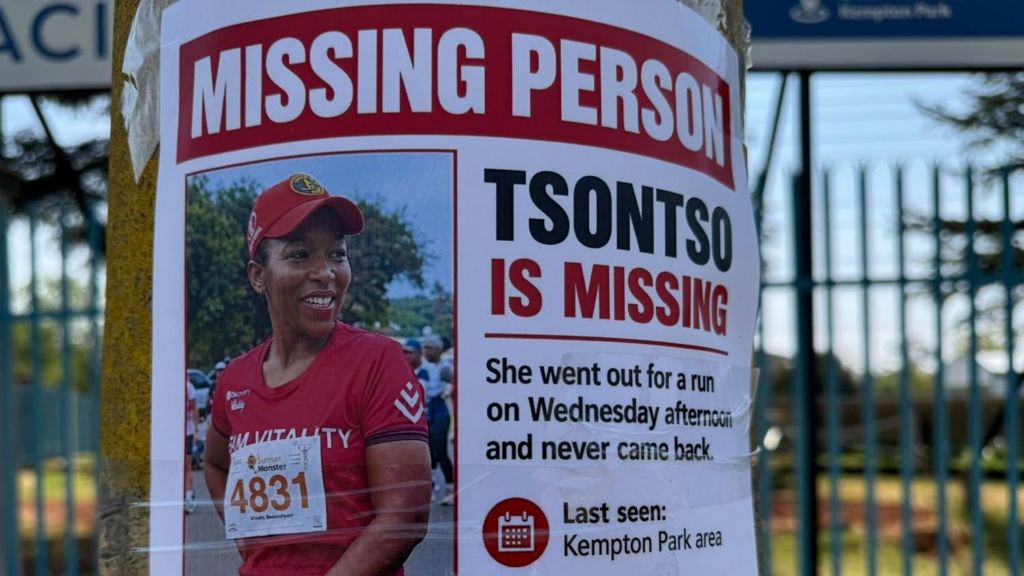
The most high-profile victim is 38-year-old Elizabeth Moselakgomo, who vanished while out on her habitual daily jog last Wednesday. It was Moselakgomo’s young daughter who first alerted authorities when her mother failed to return home, sparking a wide public search that ended Saturday when her body was recovered. She was formally identified by family members on Monday.
A new victim’s body was added to the investigation on Tuesday morning, bringing the total number of deaths linked to this case to seven. Most of the victims’ bodies have been found either fully or partially naked, scattered across Kempton Park, a commuter town northeast of South Africa’s largest city Johannesburg that sits adjacent to the country’s main OR Tambo International Airport. The first body was discovered in mid-July, the second in late August, with four more found this month alone — two of those within just the last 48 hours. The most recent addition was a previously uncounted body of a woman in her late 20s, found in a river adjacent to a local shopping mall after police reviewed open cases following the string of discoveries, Gauteng province acting police chief Major-General Fred Kekana confirmed at a media briefing.
Thus far, only two of the seven victims have been formally identified. One arrest has been made in connection with the first body found, and that suspect remains in police custody. While investigators have not ruled out the potential that these killings are connected to a group of perpetrators, or even copycat attacks, law enforcement currently says there is no evidence linking the deaths to a single serial killer. “It could be that it’s a copycat crime that is happening right here but so far, no linkages as yet,” police spokesperson Brigadier Athlenda Mathe explained.
President Ramaphosa has made addressing the killings a top priority for law enforcement, saying he has directed national agencies to expedite their work. “These incidents are causing fear and uncertainty in our communities, and especially among women,” Ramaphosa said in a statement. “Our law enforcement agencies are working urgently to establish the facts, keep communities safe and bring the perpetrator or perpetrators to justice,” he added, vowing that “no stone will be left unturned” to identify and prosecute those responsible.
Local authorities have issued a public safety advisory urging all women in the Kempton Park area to avoid solitary outdoor activity, particularly in isolated or underpopulated areas. The South African Commission for Gender Equality has called on local residents to collaborate with investigators to crack the case, noting that the killings highlight a long-running national crisis that puts ordinary women at deadly risk just for moving through daily life. “Women should be able to run, walk to work, use public transport, return home, visit friends and participate in community life without having to calculate whether an ordinary activity could place their lives at risk,” the commission said.
The killings have reignited national outrage over South Africa’s enduring gender-based violence crisis. UN Women data ranks South Africa among the most dangerous countries in the world for women, with a femicide rate five times the global average. Critics across the country have slammed government and law enforcement for failing to implement consistent protections that keep women safe from violence.