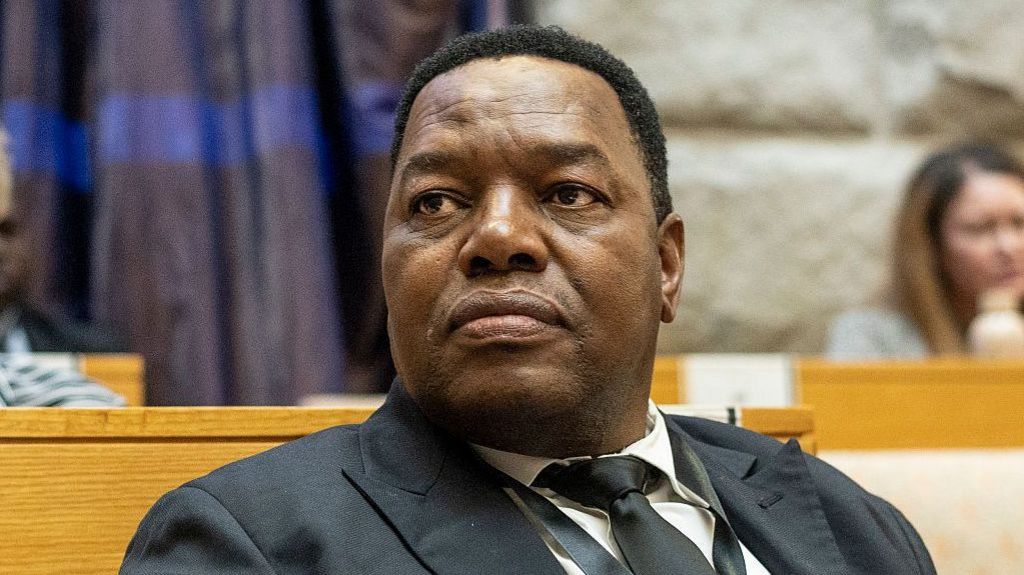
South African national prosecutors have formally announced the withdrawal of criminal charges against the country’s suspended national police commissioner, General Fannie Masemola, after a full evidence review found no solid basis to secure a conviction in court. The 62-year-old top law enforcement official was first indicted in April this year on allegations of dereliction of duty, charged with failing to exercise adequate oversight over a controversial multi-million-dollar police health services tender that later triggered a wide-ranging corruption investigation. Masemola has maintained his innocence on all counts since the charges were first filed.
Shortly after the criminal case was opened, President Cyril Ramaphosa placed Masemola on administrative precautionary suspension pending the outcome of the legal proceedings. On Tuesday, the National Director of Public Prosecutions Andy Mothibi confirmed that after a thorough assessment of evidence collected by the Independent Directorate Against Corruption (IDAC), his office had determined there are “no reasonable prospects of a successful prosecution” against the suspended police chief. Mothibi emphasized that moving forward with a criminal trial on the basis of insufficient evidence would run counter to the public interest.
The charges against Masemola stem from a $21 million health tender that was ultimately canceled after corruption allegations came to light. The tender, which was meant to secure medical services for South Africa’s police force, has already led to formal criminal charges against a dozen senior police officers for their roles in the awarding process. The allegations were first uncovered during a national public inquiry into systemic corruption within the national police service, the Madlanga Commission, which Ramaphosa established in September of last year. The commission was launched in response to explosive claims from Lieutenant-General Nhlanhla Mkhwanazi, a provincial police commissioner, that transnational organized crime syndicates had infiltrated the highest levels of South Africa’s national government.
In a surprising development following the withdrawal announcement, Mothibi also confirmed that the National Prosecuting Authority will launch a separate internal probe into the circumstances that led to Masemola being charged in the first place. The investigation will examine whether any misconduct occurred during the initial evidence assessment and legal application processes that resulted in the charges being filed. Even with the withdrawal ordered, Masemola is still required to make a scheduled court appearance for the withdrawal to be formally entered into the official court record.
Acting Police Minister Firoz Cachalia has publicly expressed support for the prosecution’s decision, and confirmed that Masemola will meet with President Ramaphosa in the near future to discuss the next steps for his career. As of Tuesday, the presidency has not issued any formal statement confirming whether Masemola will be reinstated to his position as national police chief.
Masemola’s case marks the third time that a sitting South African national police chief has been the subject of a criminal investigation during their tenure, highlighting the long-running battle against systemic corruption within the country’s law enforcement institutions. Jackie Selebi, the longest-serving police commissioner in South Africa’s post-apartheid history, was convicted in 2010 of accepting bribes from Italian drug kingpin Glen Agliotti in exchange for ignoring Agliotti’s criminal operations, and was sentenced to 15 years in prison. In 2017, former commissioner Khomotso Phahlane was hit with corruption charges; those charges were dropped in 2018, but he was rearrested on similar allegations in 2019, charges he continues to deny.