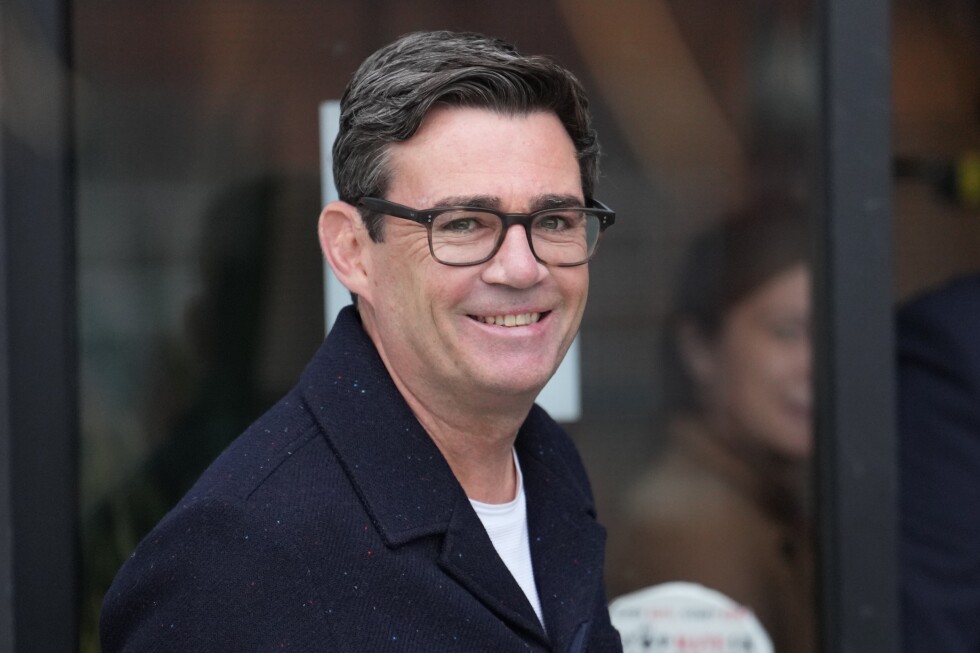
The United Kingdom’s ruling Labour Party is facing its deepest internal crisis in years, with embattled Prime Minister Keir Starmer clinging to power amid plummeting public approval, a devastating local election rout, and growing calls from within his own party for his resignation. At the center of the growing push for change is one of the party’s most popular figures — Andy Burnham, the Mayor of Greater Manchester — who just secured a path to challenge Starmer, though the road to Downing Street is still lined with major obstacles.
To mount a formal leadership challenge, Burnham must first win a seat in the House of Commons, a requirement he currently fails to meet after 16 years as a Member of Parliament ended when he stepped down to take the Greater Manchester mayoral role in 2017. That path opened earlier this week: sitting Labour MP Josh Simons announced he would resign his safe Labour seat of Makerfield, located roughly 20 miles west of Manchester, to clear the way for Burnham’s by-election run. On Friday, Labour’s national executive committee confirmed it would not block Burnham from contesting the vote, which is scheduled to take place within the next two months.
Widely known by his popular nickname the “King of the North” — a moniker inspired by the *Game of Thrones* character that nods to his fierce advocacy for northern England’s working-class communities and his distance from the London-centric political establishment — Burnham has emerged as Starmer’s most formidable potential rival. The 56-year-old politician, who leans further left than the centrist Starmer, has notched three consecutive mayoral election victories since 2017, proving his broad appeal to voters. His tenure as mayor has reshaped both his public image and political skill: out of office in Westminster, he swapped formal suits and ties for a approachable smart-casual look often paired with sneakers, a small change that helped him build closer rapport with working-class voters. More significantly, his profile rose dramatically during the COVID-19 pandemic, when he became the de facto voice for northern England, repeatedly criticizing then-Conservative Prime Minister Boris Johnson for his government’s London-focused pandemic response that shortchanged northern communities.
This is not Burnham’s first attempt at the Labour leadership: he ran unsuccessfully twice before, in 2010 and 2015, and was widely criticized for his stiff, unpolished campaign style. But supporters argue his time outside Westminster has turned him into the party’s most effective communicator, a skill Starmer has notably failed to master amid his current slump.
The Makerfield by-election will be far from a guaranteed win for Burnham, however. Two years ago, Simons took the seat for Labour by a 5,400-vote margin during Labour’s 2024 national landslide that ended 14 years of Conservative rule. But the political landscape has shifted dramatically since then: Starmer’s government has suffered heavy losses in recent local elections, driven by the rise of the right-wing anti-immigration Reform UK party. All local wards in the Makerfield constituency were won by Reform in this month’s local elections, and Reform leader Nigel Farage has already pledged the party will “throw absolutely everything at” defeating Burnham.
Burnham has acknowledged the steep challenge ahead. “I truly do not take a single vote for granted and will work hard to regain the trust of people in the Makerfield constituency, many of whom have long supported our party but lost faith in recent times,” he said in his announcement.
Political analysts note the by-election is more than a simple parliamentary race — it is a critical test of Burnham’s national viability. “Andy Burnham is a big name in the northwest. There will be a lot of people who would like to see him get back into Parliament, not least to take down Keir Starmer,” said Tim Bale, professor of politics at Queen Mary University of London. “In some ways, it’s a useful test for Burnham because if he can’t beat Reform in that constituency, then quite frankly, he’s not much use to the Labour Party as leader.”
If Burnham does win the by-election, the path to a leadership contest will open quickly. Under Labour rules, any MP can trigger a leadership challenge if they secure the support of one-fifth of the Parliamentary Labour Party — 81 out of Labour’s 403 current MPs. Right now, more than 80 MPs have already called on Starmer to step down, and one senior cabinet member, former Health Secretary Wes Streeting, has already resigned. Streeting, who was widely expected to announce his own leadership bid after resigning, instead pulled back and endorsed Burnham on Friday, writing on X that Labour “needs its best players on the pitch.” Other potential candidates include former Deputy Prime Minister Angela Rayner, Defense Secretary Al Carns, and former Labour leader Ed Miliband, all of whom have been reported to be considering a run if a contest opens.
Starmer has repeatedly vowed to fight to keep his job, and would automatically be included on the ballot to defend his leadership if a challenge is called. But political observers say a Burnham win in Makerfield would likely force Starmer to step down before a contest even begins. “Were Burnham to win the by-election, it’s unlikely that Keir Starmer will actually stand in that leadership contest,” Bale noted. “If Burnham fails, then Starmer might feel he has a chance against Streeting and Rayner.” For now, the entire future of Britain’s government hinges on the outcome of one high-stakes by-election in the northwest of England.