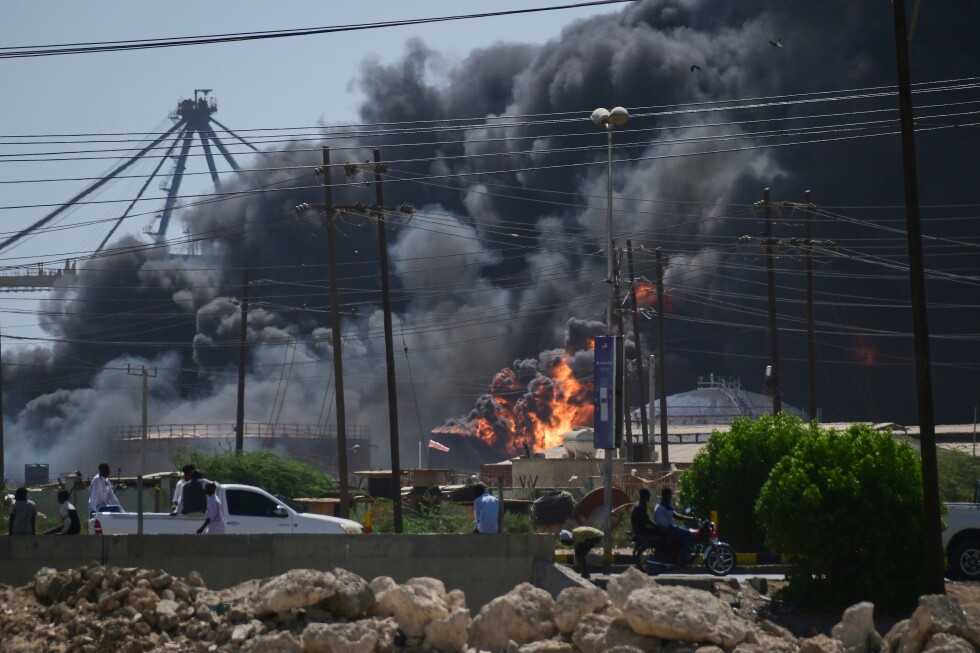
Two years into Sudan’s devastating civil conflict between the national military and the rival Rapid Support Forces (RSF) paramilitary group, experts and international monitors warn that remotely piloted drones have emerged as the single deadliest threat to non-combatant populations, with foreign powers continuing to funnel advanced drone technology to both warring sides despite widespread humanitarian outcry.
United Nations High Commissioner for Human Rights Volker Türk confirmed this week that armed drones are responsible for more than 80% of all conflict-related civilian deaths in Sudan, with at least 880 civilians killed by drone strikes between January and April 2025 alone. Most of these fatalities have been concentrated in Sudan’s central Kordofan region, but deadly drone attacks have spread across seven provinces in recent weeks, targeting vulnerable populations and critical civilian infrastructure.
The Sudanese conflict, which erupted in April 2023, has already claimed at least 59,000 lives, displaced 13 million people, and pushed large swathes of the country into catastrophic famine conditions. Data collected by the Armed Conflict Location & Event Data Project (ACLED) underscores the rapidly growing toll of drone warfare: between 2024 and 2025, drone-related fatalities surged 600%, while the number of drone attacks jumped 81%, leaving 2,670 people dead across both combatant and civilian groups in 2025.
Unlike the early months of the war, when drone use was limited to the Sudanese military, the RSF has rapidly expanded its drone capabilities over the past 12 months, using the technology to enable offensive operations in contested territory including the North Darfur capital el-Fasher. In the 2024 capture of el-Fasher, RSF drones employed a coordinated “hunter-killer” strategy that targeted civilians attempting to send distress signals, shutting down communications and trapping populations in densely populated areas before launching strikes. United Nations experts have already labeled the violence in el-Fasher as carrying the “hallmarks of genocide,” with at least 6,000 people killed over three days of fighting. Nathaniel Raymond, executive director of the Humanitarian Research Lab at the Yale School of Public Health, noted that the RSF could not have seized the city without its advanced external drone support.
Worryingly, both warring parties have systematically targeted protected civilian infrastructure in their drone strikes, including hospitals, dams, schools, public markets, and displacement camps. In one high-profile incident last year, a drone strike on Al Daein Teaching Hospital in East Darfur killed at least 64 civilians. While the Sudanese military officially denied responsibility for the attack, two anonymous military officials later confirmed the strike had targeted an adjacent police station. Recent on-the-ground reports also document 26 civilian deaths in drone strikes across South and North Kordofan in early May, more than 70 civilian fatalities in Kordofan strikes earlier this year, and 36 people killed in nine separate drone attacks on civilian vehicles over a 10-day period in May 2025. Sudanese human rights group Emergency Lawyers has warned that many drones deployed by both sides are equipped with advanced visual target identification technology, raising the disturbing possibility that attacks on civilians are deliberate, not accidental.
Multiple independent analysts confirm that neither Sudanese warring party produces its own advanced drones, relying entirely on foreign suppliers to build up their strike capabilities. ACLED’s latest assessment confirms the Sudanese military receives drone technology from Turkey, Russia, Iran, and Egypt, while the RSF obtains drones through transnational smuggling networks linked to the United Arab Emirates (UAE), with transit routes running through Ethiopia, Chad, and Libya. Research from The Soufan Center notes that both sides are actively competing to acquire newer, more sophisticated drone models primarily manufactured in China, with satellite imagery from Yale’s Humanitarian Research Lab confirming the RSF operates Chinese-built CH-95 and FH-95 drones – large systems comparable in size to small manned aircraft. The UAE has repeatedly denied supplying drones to the RSF, while Ethiopia has also rejected Sudanese government accusations that it facilitated recent RSF drone strikes on Khartoum International Airport and other capital-area targets. Gabriella Tejeda, a research associate at The Soufan Center, however, notes that the allegations are not unfounded, given Ethiopia’s close strategic partnership with the UAE and clear shared interest in shaping the outcome of the Sudanese conflict.
Jalale Getachew Birru, ACLED’s senior East Africa analyst, explained that drones have transformed the trajectory of the Sudanese civil war, acting as a “force multiplier” that allows both sides to expand strikes into densely populated residential areas, secure contested territory, disrupt enemy mobilization, and spread widespread insecurity across rival-held regions. The proliferation of foreign-supplied drones has not only driven a catastrophic rise in civilian deaths, experts warn, but has also complicated international peace efforts and stoked fears that the conflict could escalate into a full-blown regional proxy war. With foreign backers continuing to invest in military capabilities and both warring parties ramping up their battle tempo, analysts say there is little indication either side is willing to pursue a negotiated end to the conflict.