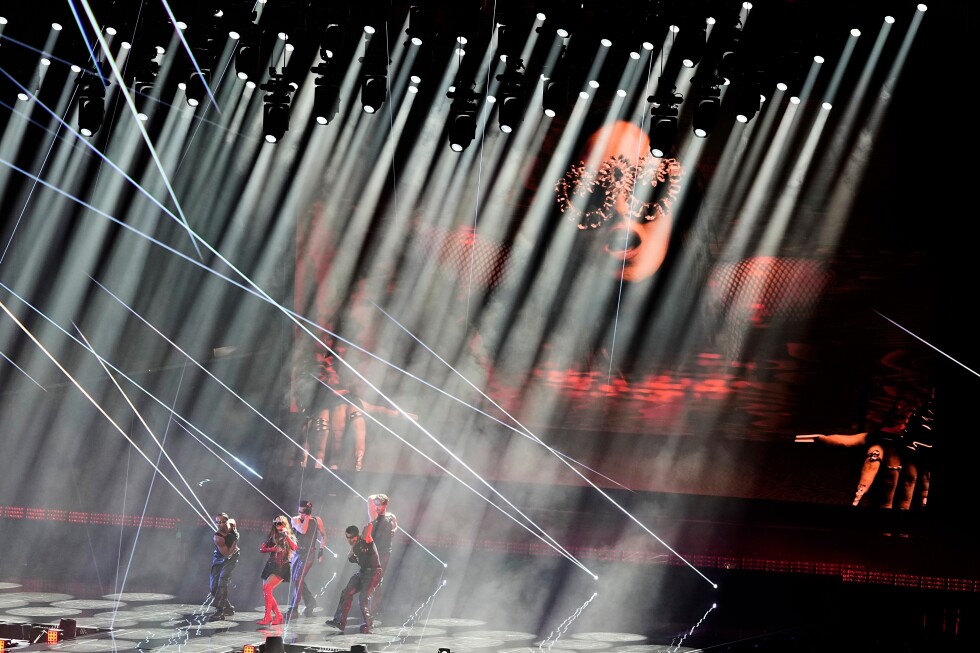
The 2025 Eurovision Song Contest grand final is unfolding in Vienna this week, but for millions of Spanish viewers and long-time fans, the beloved annual celebration of music looks drastically different this year. For the first time in seven years, Madrid resident Silvia Díaz will not gather her close group of friends for their traditional viewing party, complete with shared snacks, friendly banter and collective excitement over each competing performance. The annual gathering was canceled after Spain’s public broadcaster RTVE pulled out of the iconic contest, joining a growing boycott of the event over the European Broadcasting Union’s (EBU) decision to allow Israel to compete amid its ongoing military campaign against Hamas in Gaza. While Díaz plans to stream the final on YouTube if her schedule allows, she says the experience will never measure up to the group tradition. “It’s not the same watching it alone at home as it is with friends. That’s the only thing that upsets me,” she shared.
Eurovision, a five-day international song competition that draws global audiences far larger than many major U.S. sporting events, recorded 166 million total viewers in 2024 – outpacing average viewership for the annual Super Bowl. For Spaniards, Eurovision has long been a deeply ingrained cultural tradition, even though the country has not claimed the top prize since 1969. In typical years, Spain’s competing entry gets months of heavy airplay on national radio and television, watch parties draw crowds in private homes and bars across the country, and the contestant’s performance dominates front-page news the day after the final. Fans who travel to the event famously show national pride by waving Spanish flags, dressing in the country’s iconic red colors, and even donning traditional bullfighting costumes for the crowd.
Spain first announced its boycott in December, shortly after the EBU confirmed Israel would be permitted to participate in this year’s contest. Spain has since been joined by four other European public broadcasters: Ireland, Slovenia, the Netherlands and Iceland. The boycott has triggered a full media blackout of the event on state-controlled airwaves in each boycotting nation, altering how fans can engage with the iconic contest.
RTVE has repeatedly voiced its public opposition to Israel’s inclusion in this year’s lineup. During 2024’s semifinal round, RTVE commentators paired their introduction of Israel’s competing artist with a mention of Palestinian civilian casualties in the Gaza war. Ahead of last year’s grand final, the network also displayed a clear on-screen message reading “Peace and justice for Palestine” on a black background for hundreds of thousands of Spanish viewers tuning in. This year, instead of airing Eurovision’s final from Vienna, RTVE will broadcast a retrospective tribute to the network’s long musical history, headlined by the two artists it would have sent to represent Spain at the contest: Tony Grox and Lucycalys. Other boycotting nations have replaced Eurovision with alternate programming: Ireland’s public broadcaster will air a documentary following a couple’s quiet life in the Irish countryside, while Slovenian public television will broadcast an episode of a 10-part documentary series focused on Palestinian life. While frustrated fans can still access the contest via the EBU’s official YouTube channel, the absence of national broadcasters, homegrown competitors and native-language commentators has stripped much of the passionate, patriotic energy that draws casual and diehard fans alike each year.
Israel has competed in Eurovision for 50 years, claiming four championship titles over that span. For Israeli audiences, participation in the contest is widely viewed as a marker of international acceptance and normalcy; each year’s competing artist becomes an instant national celebrity, and a strong showing – even one that stops short of a win – is a widely celebrated source of national pride.
Across Spain, the boycott has deeply divided the country’s tight-knit community of Eurovision fans, splitting them between those who back the political stand and those who argue the beloved music event should remain separate from global geopolitics. For 42-year-old Madrid marketing executive Rebeca Carril, a lifelong fan who revisits classic contest performances from the 1960s and 1970s, the decision to support the boycott came after years of growing discomfort with Israeli sponsorship of the contest. “I have Palestinian friends and I began to understand a little better how things worked,” she explained, noting she did not want to support Israeli-linked marketing efforts by tuning in.
On the other side of the divide is Guillermina Bastida, a 47-year-old communications professional from Asturias province who drove three and a half days with her two daughters in a van to attend last year’s contest in Basel – her third time attending the event in person. Bastida holds her own critical views of Israel’s military campaign, but argues politics have no place at a global music celebration. “It’s a song festival, period,” she said. “I also have my own stance, which is critical, but not to the point of boycotting the festival.” This year, she will watch the final on YouTube after making the difficult decision to skip the in-person event.
Eurovision’s official motto is “United by Music,” and organizers have long framed the event as an apolitical space that brings diverse European nations together through art. But in recent years, that effort to keep politics out of the competition has repeatedly failed. Just months after Russia’s full-scale invasion of Ukraine in 2022, the EBU disqualified Russia from the contest, and the country has not been permitted to rejoin since. Official contest rules already ban overtly political lyrics or symbols, and organizers emphasize the competition is a contest between national broadcasters, not national governments.
Jose García, co-director of a popular Spanish Eurovision news website with a combined social media following of nearly 100,000, notes that the boycott carries tangible costs for both sides. As one of Eurovision’s “Big Five” countries – the group of nations that provide the largest financial contributions to the contest – Spain’s withdrawal means the event loses not only substantial broadcasting rights revenue but also significant domestic publicity, which García argues erodes the contest’s credibility across the region. Even so, he says most diehard Spanish fans will still find a way to watch. “It has marked the television and personal history of many people, and fans will watch it via international channels or YouTube. But it’s one thing to be able to watch it and another to agree with what’s happening,” García explained.
On the ground in Vienna, the absence of the boisterous, high-energy Spanish fan contingent is already noticeable to attendees. Vicente Rico, a 40-year-old Madrid perfumery owner who is attending his 18th consecutive Eurovision, said that Spanish fans are famously one of the most visible and lively groups at the annual event. “We’re a group that, just like at other events, makes its presence felt — we’re among the happiest, the loudest and the most fun,” he noted. Rico said he struggled deeply with his decision to make his annual pilgrimage to Vienna this year, even though he agrees the boycott is morally justified. He argues that Eurovision has become an unfair scapegoat for broader political inaction on the Gaza conflict, pointing out that no similar boycotts have been called for other major upcoming international events, including the FIFA World Cup scheduled to begin in just one month. With no Spanish competitor to root for, Rico says he and many other Spanish fans in Vienna have adopted a simple rule for this year’s contest: “This year, we’re rooting for everyone except Israel.”