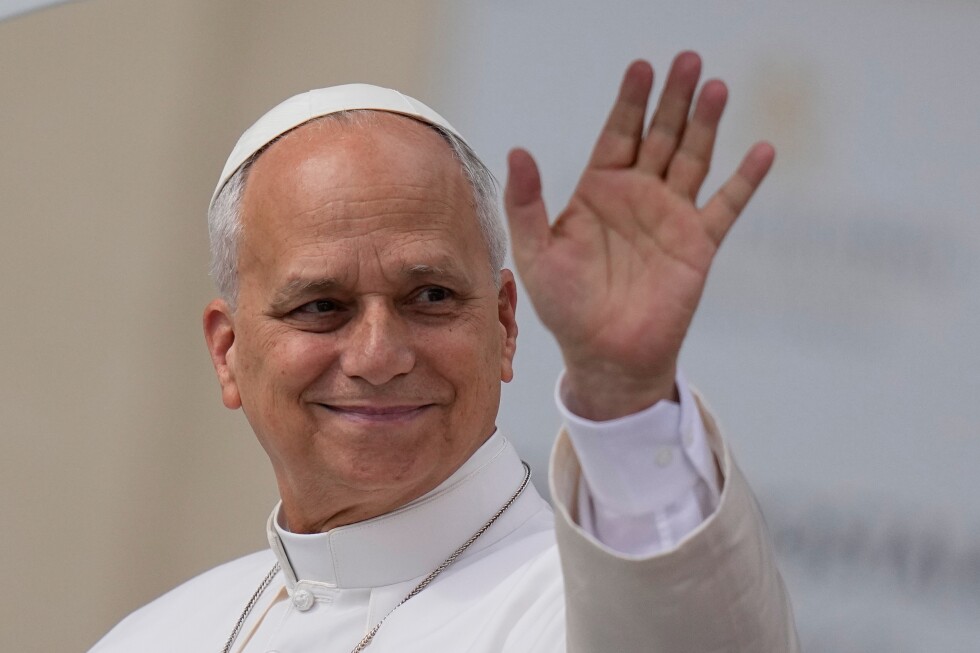
As the global race to advance artificial intelligence accelerates amid fierce debate over regulation and human impact, the Vatican is finalizing the public release of Pope Leo XIV’s first encyclical — a sweeping moral document that will frame AI development through a lens of Catholic social teaching, demanding an ethics-first approach centered on human dignity, authentic social connection, and global peace.
Vatican spokespersons confirmed the pontiff signed the landmark text on Friday, a date intentionally chosen to mark 135 years to the day that his namesake, Pope Leo XIII, signed his transformative 1891 encyclical *Rerum Novarum* (Of New Things). That foundational text addressed the explosive inequality and upheaval of the first Industrial Revolution, outlining the inherent rights of workers, setting boundaries for unregulated capitalism, and defining the moral obligations of states and employers to laborers. It has remained the cornerstone of modern Catholic social thought for more than a century, and Pope Leo XIV has already invoked its legacy to contextualize the current AI revolution, arguing the technology poses the same fundamental existential questions about work, humanity, and justice that industrialization did in the 1800s. The new encyclical will embed discussions of AI within the church’s centuries-old tradition of social teaching, which covers interconnected issues of labor rights, global justice, and peace.
Meghan Sullivan, director of the University of Notre Dame’s ethics institute and a professor of philosophy, notes the Catholic Church is uniquely positioned to shape the global AI conversation. “I think that the Catholic Church in many ways is going to be the adult in the room on some of these debates about how we are going to integrate AI into the rest of our society,” Sullivan said. “For sure, the pope is going to be one of the most forceful advocates for human dignity in these discussions.”
Just days after his election in 2025, Pope Leo XIV, the first American-born pontiff from Chicago, told the College of Cardinals that the Catholic Church had a moral duty to bring its “treasury of her social teaching” to bear on the threats AI poses to human dignity, justice, and the future of work. A mathematics major with a documented familiarity with digital technology — he is known to regularly use a smartphone for browsing — Pope Leo is expected to address the issue publicly this weekend, as the Vatican marks its annual Social Communications Day with a pre-released message focused on the hidden human toll of the global AI race. In that earlier message, the pope warned of the urgent need to preserve authentic human connection in an era of chatbot “friends,” protect human creative genius against AI-generated music and video, and defend factual reality against the spread of generative AI deepfakes.
The public release of the encyclical, expected within the coming weeks, is already projected to create new tension between Pope Leo and the U.S. Trump administration, which has prioritized unimpeded rapid AI development as a core national economic and security priority. The U.S. has repeatedly rejected international regulatory efforts to rein in unchecked AI growth, and domestically the administration has rolled back numerous bureaucratic barriers that slowed technology development. The encyclical’s signing coincided with the conclusion of U.S. President Donald Trump’s official visit to China, a trip focused heavily on AI trade and development. Trump was joined on Air Force One by high-profile tech leaders including Elon Musk, owner of X (which hosts Musk’s AI chatbot Grok), and Nvidia CEO Jensen Huang, who recently secured U.S. federal approval to sell advanced H200 AI chips to Chinese buyers.
Since the generative AI boom began with ChatGPT’s public debut, the technology has drawn both widespread awe for its transformative capabilities and growing alarm from experts over its risks. These hazards range from hypothetical but catastrophic long-term threats such as unaligned rogue AI systems to immediate, everyday harms including algorithmic bias in hiring, misinformation, and erasure of human connection. Multilateral discussions have so far yielded limited progress: the United Nations adopted a nonbinding AI governance framework last year after summits hosted by Britain, South Korea, and France also produced only voluntary pledges, while the European Union implemented its binding AI Act in 2024, which uses a risk-based classification system to regulate the technology.
The Vatican has long sought to insert its moral voice into this global debate, publishing targeted ethical guidelines for AI use across sectors from military combat to education and healthcare. Its core argument has remained consistent: AI should serve as a tool that complements human intelligence, not one that replaces it. The church has also drawn attention to the underdiscussed environmental cost of the AI race, highlighting the massive amounts of energy and water required to power AI data centers and large-scale computational processes.
Thomas Harmon, a theology professor at the University of St. Thomas in Houston, says the church’s influence on the conversation extends far beyond its 1.5 billion global followers. “There are almost a billion and a half Catholics in the world, so that alone is reason to pay attention,” Harmon said. “But beyond the numbers, the Catholic Church has a deep and sophisticated tradition of thinking through what it means to be human.”
As early as 2020, the Vatican brought major tech companies together to sign the Rome Call for AI Ethics, a pledge that laid out core principles for responsible AI development including inclusiveness, accountability, impartiality, and user privacy. Major global tech firms including Microsoft, IBM, and Cisco were among the initial signatories. Pope Francis, Pope Leo’s predecessor, spent his final years advocating for a binding international treaty to regulate AI, arguing that the risks of developing AI without embedding core human values of compassion, mercy, morality, and forgiveness were too great to leave self-governance to researchers and developers alone. In 2024, Francis addressed a special G7 session on AI’s perils and promise, urging world leaders to ensure all AI development remains human-centric, insisting that all decisions involving the use of force — even for less-lethal tools — must remain in human hands. He also called for a full global ban on lethal autonomous weapons, often referred to as “killer robots.”
Within the church, Pope Leo has warned clergy against relying on AI to write their homilies, but his concerns extend far beyond internal practice to the broader global implications of AI for peace, labor, and the very nature of reality. As a member of the Augustinian order, which centers the search for truth as a core spiritual value, he has repeatedly highlighted the unique threat generative AI poses through deepfakes and widespread misinformation. In a June 2025 address to an international AI conference, he acknowledged the technology’s meaningful contributions to medical advancement and scientific discovery, but questioned “its possible repercussions on humanity’s openness to truth and beauty, on our distinctive ability to grasp reality.”
A consistent advocate for global peace, Pope Leo has also called for increased scrutiny of AI development and use in ongoing conflicts including Ukraine and the Middle East, where automated weapons systems are already deployed across aerial drones, maritime vessels, and ground combat platforms. “What is happening in Ukraine, in Gaza and the Palestinian territories, in Lebanon and in Iran illustrates the inhuman evolution of the relationship between war and new technologies in a spiral of annihilation,” he stated earlier this week during an address at Rome’s La Sapienza University, Europe’s largest institution of higher education.